Liberty Matters
Edward Gibbon - Historian of Republics
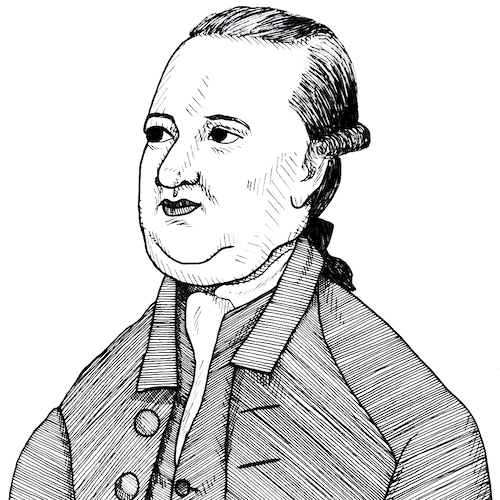
Edward Gibbon, the eminent historian of empire, had many other interests, including, and perhaps surprisingly, the history of republics. Although Gibbon never actually published a work specifically dedicated to this field, in his correspondence, travel journals, and some of the manuscripts that were subsequently published by his friend, Lord Sheffield, he frequently commented on the administration and politics of Europe’s city republics, how they had managed to acquire their freedom and, in some cases, also lost it. Before arriving in Rome, for example, Gibbon visited several of the once famous Italian city-states. In Genova, where he arrived on 28 May 1764, he commented on how the local aristocracy managed to maintain its hold on power. The highest magistrates were paid very little, while lower and much more lucrative offices were passed on to the most important citizens. Meanwhile, those excluded from political life, the "common people", were offered the "flattering perspective" of gaining access to the Genovese citizenry through a complicated process that occurred every ten years. Even though the chances for being co-opted into the select group of citizens were slim at best, the mere hope of a possible change in status, Gibbon concluded, was "enough for man to suffer all the hardship" of the republic’s autocratic rule.[1] In Florence, which he visited in June, the only trace he could detect of the city’s glorious republican past was the popular horse race, the Corsa dei Barbari, which the Florentines cherished as the "sole remnant of their ancient liberty", the rare occasion where the citizens reunited "under the eyes of their magistrates".[2] The city of Lucca, which he reached on Sunday 23 September, reminded him of Geneva, partly because of its industriousness, but more so because of its determination to defend the city’s independence against much larger neighbours. The extended fortifications, he maintained, served the double purpose of fending off any surprise attack while at the same time keeping the "courage of its citizens" alive. Gibbon regretted not being able to stay long enough to study the city’s constitution, claiming that "republics always merit our attention. They are as different to one another as monarchies resemble each other".[3] Pisa, finally, which he reached the following day, was a mere shadow of its former greatness. Once a centre of maritime trade, its population had fallen from 150,000 to a mere 20,000.[4]
Prior to his journey to Rome, Gibbon had lived for nine months in Lausanne (1763-1764), a municipal town of the Vaud which the republic of Bern had conquered in the sixteenth century. Gibbon commented on the political principles of Bern and how it affected life in the vassal territory in an anti-Bernese tract, Lettre sur le Gouvernement de Berne, which was composed during that time, probably after having read Rousseau’s Contrat Social.[5] During its over two hundred years of occupation, Gibbon claimed, Bern had failed economically to develop the subject territories, instead siphoning off riches and storing them in the vaults of the capital’s city hall. The widening gap between members of Bern’s sovereign citizenry and the rest of the population reminded him of Rome’s treatment of its allies with all the dangers this entailed.
Given Gibbon’s critical comments in 1763 and 1764 on the few remaining republics, it might seem surprising that his first serious attempt at writing a historical study was to become his history of Swiss liberty which he started working on after his return to Britain in 1765. Together with his close friend from Lausanne, George Deyverdun, who stayed at Buriton over the summer months of that year, he set out to gather material for a study that was to cover the first period of the Swiss Confederation, spanning the late thirteenth century up to the Italian wars of the early sixteenth century which saw the end of the Swiss republics’ direct involvement in European politics. Looking back, Gibbon claimed that:
[a]ccording to the plan, which was soon conceived and digested, I embraced a period of two hundred years from the association of the three peasants of the Alps to the plenitude and prosperity of the Helvetic body in the sixteenth Century. I should have described the deliverance and victory of the Swiss who have never shed the blood of their tyrants, but in a field of battle; the trophies of the Austrian, Burgundian, and Italian wars; and the wisdom of a nation, who after some sallies of martial adventure has been content to guard the blessings of peace with the sword of freedom.[6]
Gibbon’s interest in Swiss history and the constitutions of its republics, in fact, can be traced back to his first stay in Lausanne (1753-1758) when he visited several of the historical sights during a tour he undertook in the autumn of 1755.[7] In Grandson and Murten, where an alliance of Swiss cantons had defeated the armies of Charles of Burgundy (1476), he mused over the effect these wars had had on the history of Europe, while his stay in Bern prompted a lengthy reflection on how once military republics could consolidate their power. Gibbon’s decision to write about the rise of republican liberty (rather than about the decline of the Florentine republic, a topic which Gibbon had also at one point considered) coincides with his service as captain in the South Hampshire militia (1759-1762) and the republican fervour that seemed to have gripped parts of the English public during the Seven Years’ War. English patriots, Gibbon recalled, “complained that the sword had been stolen from the hands of the people […] and they applauded the happiness and independence of Switzerland which, in the midst of the great monarchies of Europe is sufficiently defended by a constitutional and effective militia.”[8] Perhaps the sudden veneration for the Swiss militias helped Gibbon overcome the boredom of having to march his regiment up and down the English coast. What seems more certain is that he saw a market for a study recounting the military exploits of small republics. Thus, in July 1762 he noted that the topic he preferred to all others was the history of the liberty of the Swiss: “From such a theme, so full of public spirit, of military glory, of examples of virtue, of lessons of government the dullest stranger would catch fire: what might not I hope, whose talents, whatsoever they may be, would be inflamed by the zeal of patriotism."[9]
In the autumn of 1767, after two years of preparations, Gibbon finally composed a draft of his history of the Swiss of which the first two chapters survive. Despite an encouraging response from David Hume, Gibbon soon dismissed the project, claiming that the distance from Swiss archives and his lack of German rendered the task impossible. Another reason was that after Britain’s commercial and military victory over France, patriotically-minded British readers would probably have been less interested in the exploits of republican militias now that trade and industry had revealed themselves to be the real sinews of a nation’s military power. In his Memoirs, Gibbon argued that the British republicans from the early 1760s “overlooked the modern changes in the art of war, and the insuperable difference of the government and manners”.[10] Wars were no longer won by virtuous “shepherds and husbandmen”, which is how Gibbon described the Swiss militias. What mattered most was technological advancement and the industrial and financial resources to sustain the enormous costs of modern warfare. Not surprisingly, in his General Observations on the Fall of the Roman Empire in the West, which Gibbon added to volume three of the Decline and Fall, the small republics play a negligible role in the history of modern liberty. The “two thousand three hundred walled towns” in Germany, Gibbon mentions, appear not as centres of civic culture, but serve their purpose solely as physical obstacles to potential invaders from the East.[11] Nor did the city republics seem to have any role in the development and spread of modern liberty. The gradual transformation of Europe’s old monarchies into modern quasi-republican states, “imbibed [with] the principles of freedom, or, at least, of moderation” was mainly due to the “the progress of knowledge and industry”.[12] In this Enlightenment narrative, the superiority of the West rested squarely on the commercial rivalry between moderate monarchies, not on any strong commitment to the common good associated with Europe’s small republics.
By 1776 when the first volume of Decline and Fall was published, Gibbon seemed to have given up on his earlier interest in the history of the late-medieval republics’ struggle for liberty. But there was another part of the story that he kept coming back to and which eventually found its way into the Decline and Fall. This was the topic of how liberty, once gained, could be preserved. This is something Gibbon would have encountered in Montesquieu’s Considerations of the Causes of the Greatness of the Romans and their Decline, which he read closely during his first stay in Lausanne. In chapter nine, Montesquieu had singled out the Roman Social War (91-88 BC) as one of the key moments in the Roman republic’s path towards empire. As Montesquieu had explained, the alliances that Rome had forged with the Italian peoples had become strained once Rome had grown too big to be recognised as a neutral arbiter and guardian of peace. In the decades prior to the outbreak of the Social War, Rome and its allies had come to a common agreement, whereby, in exchange for local autonomy, Rome’s allies relinquished the right to declare war and peace and participated in Rome’s war efforts. However, the vastly uneven distribution of the spoils of war between Rome and her allies – notably, the increasingly unequal access to the ager publicus, together with the closing of Roman citizenship - widened the gulf between those who enjoyed all of the political and social benefits that came with membership of the Roman universitas and those who were excluded. The accumulated privileges that came with Roman citizenship, Montesquieu claimed, became a major cause for the decline of the republic: “when this right meant universal sovereignty, and that man was nothing in this world if he was not a Roman citizen and everything if he was, the peoples of Italy decided to perish or become Romans.”[13]
The ultimate decline of Rome was hastened when after three years of civil war Rome finally allowed all Italian peoples to become Roman citizens. At the same time as this move strengthened the peninsula, it also weakened Rome itself because the republic ceased to be animated by the same spirit of equality or united in its rejection of all forms of tyranny. With the arrival of different peoples into the city and the mixing of various cultures and religions, citizenship effectively became “a chimerical thing”. As a consequence, the republic took on a different meaning, not just with regard to its citizenship, but, more fundamentally, in respect of how the republic was governed. This transformation was accompanied by a shift from what Montesquieu called ‘good laws’ to ‘suitable laws’.[14] While good laws had allowed Rome to gain strength and conquer its neighbours, suitable laws allowed it to maintain its power.
It was at this point that Montesquieu had alerted his readers to the existence of a republic in the midst of Europe that perfectly illustrated the challenges Rome had faced during its transition from city republic to empire.
There exists in the world at this moment a republic that hardly anyone knows about, and that – in secrecy and silence – increases its strength every day. Certainly, if it ever attains the greatness for which its wisdom destines it, it will necessarily change its laws. And this will not be the work of a legislator but of corruption itself.[15]
To make sure that his readers understood what republic he was referring to, Montesquieu added a footnote which read : “The canton of Bern”. It is worth recalling Montesquieu’s comparison between the republic of Rome before the Social War and eighteenth-century Bern because it had an impact on Gibbon : this is how he came to read Bern’s relation to the Vaud. To the young historian, Bern was a living example of the problems Rome was facing in the first century BC. Already during his first visit to the city in October 1755 Gibbon commented on the way Bern treated its allies and vassal territories. After repeating, in part verbatim, the passage from Montesquieu on the Italian peoples’ resolve to fight for Roman citizenship or perish, Gibbon concluded : “the Bernese have read the history, why have they not realised that the same causes produce the same effects?”[16] So far, the advantages of a Pax Bernensis seem to outweigh the vassals’ exclusion from political life, something that Gibbon believed had less to do with Bern’s legal or political institutions than with the moral disposition of the ruling elite – a quality, he later claimed, the Genovese aristocracy was sorely missing.[17]
Comparing the canton of Bern to Rome prior to the outbreak of the Social War became a staple item in the political literature Bernese writers produced during the Seven Years War. Here, Bern was repeatedly portrayed as a superior version of Rome, not only, as Rudolf Tschifeli claimed, because during its initial phase it had expanded even faster than Rome, but, more importantly, because Bern had then managed to consolidate its power before tensions between the sovereign city and the peoples it had conquered became a cause for instability. Following Rome’s example, “far from destroying the vanquished enemy, the first principle of reconciliation was that he became a supporter, a co-defender, a citizen of the state. The remaining fortresses became [as in Rome] open houses of the republic”.[18] The Swiss historian Johannes Müller, whom contemporaries sometimes described as a German equivalent to Gibbon, summarised this debate in his essay on Bern’s constitution (1781), when arguing that “the Bernese [unlike the Romans] preserved the state, because they were wise enough to content themselves with what they had acquired. They lay down their victorious arms without forgetting how to use them.”[19]
During the 1760s, Gibbon seemed in two minds about the advantages of Bernese rule. In a lengthy entry in his journal for 1st November 1763 where he commented on the Abbé Vertot’s Histoire des revolutions de la république romaine he took issue with the French historian’s account of the alliance that the Italic peoples had formed and the reasons which allegedly incited them to break with Rome.[20] Not only had the allies who demanded entry into Roman citizenship violated ancient treaties that they themselves had agreed upon, they also misrepresented Rome’s interests and its right to exist as an independent republic: “the Italians forgot to act with prudence when taking up arms [against Rome], they also forgot justice.”[21] Instead, they should have trusted Rome’s policy of granting citizenship to the most talented families amongst its allies thereby keeping open a path to gradual promotion. Here, Gibbon insisted that he had first-hand knowledge of the benefits of such a process: “I am writing in the Pays de Vaud”.[22] Knowing how Roman liberty, once “Italy itself had become one single city ”, had turned into “a form of fiction”, Gibbon felt obliged to take “position against the allies”.[23]
Only a few months later, in April 1764, when preparing for his departure from Lausanne, Gibbon struck a rather different tone: " Today, I see a badly built city in the midst of a pleasant country that enjoys peace and tranquility and which mistakes them for freedom."[24] This, of course, was a central message of his Lettre sur le Gouvernement de Berne from 1764, in which an anonymous Swedish traveller chastised the Vaudois elite for mistaking Berne’s policy of non-interference as political liberty.
We do not hear among you of those sentences without trial, without crime, without accuser, which tear a citizen from the midst of his family. We never see the sovereign. We rarely feel it. However, if liberty consists in being subject only to laws whose object is the common good of society, you are not free.[25]
Despite early nineteenth-century Vaudois commentators who read Gibbon’s text as a justification for the liberation of the Vaud from Bernese yoke, Gibbon clearly advocated the enjoyment of peace and tranquility over a perilous and uncertain fight for political liberty. The Vaudois were no Samnites, nor, unlike Rome, was Bern committed to further territorial expansion. Tellingly, in chapter two of the Decline and Fall, where Gibbon mentions the Social War, his sympathies clearly lay with the senate of Rome who “preferred the chance of arms to an ignominious concession” to its allies. Like Montesquieu, he considered the subsequent admission of the Italian peoples into Roman citizenship as a key step towards “the ruin of public freedom” and empire. After that, citizenship was no longer exclusively linked to a city, but rather to a shared legal system and a common language.
When in 1783 Gibbon returned once more to Lausanne, where he was to remain until a few months before his death in 1794, the canton of Bern seemed to finally have escaped the sceptre of Rome. “[T]he country, the people, the manners, the language were congenial to my taste”, Gibbon wrote in his Memoirs. The Lausanne he found after a twenty-year absence was a place that seemed to have reached the level of general happiness and cultural refinement that could be attained under republican rule. This was not Rome under the Antonines, but a society of educated rentiers, “seldom disturbed by the pursuits of avarice or ambition”, and almost entirely occupied with domestic affairs. Whatever misgivings Gibbon might have previously expressed regarding Bern’s treatment of its vassal territories, with the revolutionary rumblings in France and Geneva getting closer, Gibbon declared himself a firm supporter of the republican aristocracy of Bern as the best possible guardian of social peace:
While the Aristocracy of Bern protects the happiness, it is superfluous to enquire whether it be founded in the rights, of man: the oeconomy of the state is liberally supplied without the aid of taxes; and the magistrates must reign with prudence and equity, since they are unarmed in the midst of an armed nation.[26]
In this respect, the advantages of Bernese rule, Gibbon wrote to his friend, Catherine de Charrière de Sévery in autumn 1787, were perhaps even preferable to the “stormy liberty” of British politics. Lausanne had something unique that could not be found anywhere else, “a gentle and simple society, politeness combined with simple manners”.[27] His praise of small, late medieval, common-law republics presents an interesting development from the General Observations, where his hope for the advancement of a civilized Europe had rested squarely on commercial, moderate monarchies. With the French Revolution, these new states looked increasingly fragile. By the early 1790s, Gibbon feared that the canton of Bern, too, which he, following Edmund Burke, called the last bastion of liberty on the Continent, could be infected by “the arts, of the blackest daemon in hell, the daemon democracy”, turning the otherwise peace-loving peasants in the Vaud into modern day Samnites.[28] If Bern helped Gibbon’s historical imagination towards a better understanding some of the challenges Rome had faced in dealing with its Italian allies, revolutionary France – Gibbon called the French the “new Romans”[29] – provided quite a different spectacle, that of a capital turning into an “independent Republic” set to dominate all other provinces.[30]
Endnotes
[1] Edward Gibbon, Gibbon’s Journey from Geneva to Rome. His Journal from 20 April to 2 October 1764, ed. G. Bonnard, London : Thomas Nelson, 1961, p.78-9.
[2] Ibid., p,127.
[3] Ibid., 127-8.
[4] Ibid., p.227.
[5] Edward Gibbon, ‘La lettre de Gibbon sur le gouvernement de Berne’, dans Miscellanea Gibboniana, ed. G.R. de Beer, G. Bonnard, L. Junod, Lausanne : Librairie de l’Université, 1952, p.109-141. ON Gibbon’s Lausanne and Swiss context, see B. Kapossy and B. Lovis, eds., Gibbon et Lausanne. Le Pays de Vaud à la rencontre des Lumières européennes, Gollion : Infolio, 2022.
[6] Memoirs, p.140-1.
[7] Edward Gibbon, ‘Journal du voyage en Suisse (1755)’, in Miscellanea Gibboniana, p. 5-84.
[8] Memoirs, p.108-9.
[9] Ibid., p.122.
[10] Ibid., p. 108.
[11] Edward Gibbon, The History of the Decline and Fall of the Roman Empire, ed. D. Womersley, vol.2., London : Penguin Classics, 1995, p. 512.
[12] Ibid., p. 513.
[13] Charles-Louis de Secondat de Montesquieu, Considérations sur les causes de la grandeur des Romains et de leur décadence, Lausanne : Marc-Michel Bousquet, 1749, p. 104.
[14] Ibid., p.108.
[15] Ibid., p. 109.
[16] Gibbon, Journal du voyage en Suisse, p.57.
[17] Edward Gibbon, Gibbon’s Journey from Geneva to Rome, p.79. "The Bernese constitutions might be more defective, but its administration is wiser and more moderate than that of Genova. Perhaps this difference is due more to manners than laws."
[18] Patriotische Reden, gehalten vor dem hochlöblichen Stande der Stadt Bern, Bern: Beat Ludwig Walthard, 1773 , p.27.
[19] Johannes Müller, Essais historiques, Berlin : G.J. Decker, 1781, p.72.
[20] Edward Gibbon, Le Journal de Gibbon à Lausanne 17 août 1763-19 avril 1764, ed. G. Bonnard, Lausanne : Librairie de l’Université de Lausanne, 1945, p.122-30.
[21] Ibid., p.128.
[22] Ibid., p.127.
[23] Ibid., p.126.
[24] Ibid., p.263. See also his comment on Chambery which Gibbon visited later that month on his trip to Italy: “Chamberry est la capitale de la Savoye. Les rues sont larges et bien percées, mais les maisons baties sur des arcades plutôt commodes que belles, me paroissent très laides. Il n’y pas un seul edifice qui merite l’attention d’un Etranger. On dit cependant que la ville est remplie de Noblesse et qu’on y vit très agréablement. Combien de rapports avec Lausanne. " Gibbon’s Journey from Geneva to Rome. His Journal from 20 April to 2 October, ed. Georges Bonnard, Londres: Thomas Nelson, 1961, p.2.
[25] Edward Gibbon, 'Gibbon's Letter on the Government of Berne', in Miscellanea Gibboniana, p.125.
[26] Memoirs, p.185.
[27] Edward Gibbon to Catherine de Sévery, mid-September 1787, The Letters of Edward Gibbon, 1784-1794, Jane Elizabeth Norton (éd.), London: Cassel and Company, 1956, vol.3, p. 71.
[28] Edward Gibbon to Lady Elizabeth Foster, 8 November 1792, ibid., p.288. edmund Burke, in his Reflections on the Revolution in France, described the republic of Bern as " one of the happiest, the most prosperous, and the best governed countries upon earth ". London : J. Dodsley, 1790, p. 226.
[29] Edward Gibbon to Lord Sheffield, 27 October 1792, Ibid., p.283.
[30] Edward Gibbon to Lord Sheffield, 9 September 1789, Ibid., p.165.
Copyright and Fair Use Statement
“Liberty Matters” is the copyright of Liberty Fund, Inc. This material is put on line to further the educational goals of Liberty Fund, Inc. These essays and responses may be quoted and otherwise used under “fair use” provisions for educational and academic purposes. To reprint these essays in course booklets requires the prior permission of Liberty Fund, Inc. Please contact oll@libertyfund.org if you have any questions.