Arriving in 1776, as the Declaration of Independence gave birth to a new nation and Adam Smith’s An Inquiry into the Nature and Causes of the Wealth of Nations gave birth to a new discipline--modern economics, Gibbon’s Decline and Fall explored the enduring significance of one of the most influential works of historical scholarship.
Perspective Essay Edward Gibbon: Empire, Barbarism, and Religion
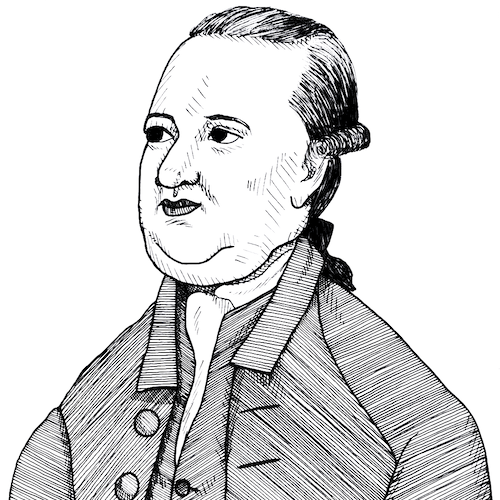
2026 sees the 250th anniversary of the publication of volume one of Edward Gibbon's The History of the Decline and Fall of the Roman Empire. It is a book that demands to be read on its own terms, as by general consent the greatest historical narrative we possess, and one devoted to describing and understanding one of the major points of inflection in European history. But equally, as a profound study of empire, barbarism, and religion, it has the power to provoke reflection on the energies that are reshaping and reforming our modern world.
It is sometimes carelessly assumed that The Decline and Fall is an elegy for empire, but in fact nothing could be further from the truth. The very first sentence of the first book Gibbon published, the Essai sur l'étude de la littérature (1761), is unequivocal in its condemnation: 'L'Histoire des Empires est celle de la misère des hommes.'[1] A few years later, when Gibbon was in Rome, he was enraptured by what he saw, but no more reconciled to empire as a political form: ' I am now Dear Sir at Rome. [...] I have already found such a fund of entertainment for a mind somewhat prepared for it by an acquaintance with the Romans, that I am really almost in a dream. Whatever ideas books may have given us of the greatness of that people, Their accounts of the most flourishing state of Rome fall infinitely short of the picture of its ruins. I am convinced there never never existed such a nation and I hope for the happiness of mankind that there never will again.'[2]
From where did Gibbon derive this idea that empire was an unnatural and oppressive political formation? Of course, there are many places where he could have found it. But the most likely source is in the work of David Hume, who was a great influence on Gibbon from the 1760s onwards. Hume gives a very clear statement about the unnaturalness of empire in his essay ‘On the Balance of Power’, which was first published in 1752, but composed between 1750 and 1751: 'Enormous monarchies are, probably, destructive to human nature; in their progress, in their continuance, and even in their downfal, which never can be very distant from their establishment.'[3]
One wonders which empires Hume had in mind when he wrote that, because the world in his day contained at least one ‘zombie’ empire, namely the Ottoman Empire. Nevertheless, Hume clearly states, from a normative standpoint, that enormous monarchies are precarious and transient. This was an insight Hume had long been pondering. There is a very interesting manuscript in the Hume papers in the National Library of Scotland, referred to normally as the ‘Early Memoranda’. It comprises about twenty or so pages of manuscript jottings, arranged rather like a commonplace book, but not organised by subject. And this is one of the entries from that manuscript:
There seems to be a natural Course of Things, which brings on the Destruction of great Empires. They push their Conquests till they come to barbarous Nations, which stop their Progress, by the Difficulty of subsisting great Armies. After that, the Nobility & considerable Men of the conquering Nation & best Provinces withdraw gradually from the [frontier inserted above the line] Army, by reason of its Distance from the Capital & barbarity of the Country, in which they quarter: They forget the Use of War. Their barbarous Soldiers become their Masters. These have no Law but their Sword, both from their bad Education, & from their Distance from the Sovereign [to whom they bear no Affection inserted above the line]. Hence Disorder, Violence, Anarchy, & Tyranny, & a Dissolution of Empire. [4]
What Hume is describing here is a natural history of the decline of empire; a sequence of stages that explains why it is that immoderate greatness will naturally (i.e. inescapably, and without conscious human intention) bring in its wake collapse and disorder. When Gibbon began thinking about empires, his thought was very much modelled on these insights of Hume’s.
But as soon as Gibbon began work on the manuscript of the Decline and Fall (which happened, he says, about February 1773), his thought about empire underwent further development. We can see this if we consider the ‘General Observations on the Fall of the Roman Empire in the West’, which is a free-standing essay that Gibbon placed at the end of the second instalment of the Decline and Fall, published in 1781. It is however a very misleading positioning, because we know that in fact Gibbon composed the ‘General Observations’ between February 1773 and May 1774.
How do we know that? Because in the ‘General Observations’ Gibbon makes a disparaging comment about the idleness of the Bourbon monarchy. When it was published in 1781, Louis XVI took offence at this as a personal reflection on him. To exonerate himself from the charge of having insulted a reigning monarch, Gibbon explained in his ‘Memoirs of My Life’ that these words had been written before the accession of Louis XVI. In other words, if these words are a reflection on a king of France, then they reflect on Louis XV (to whom in fact they are much more appropriate). The ‘General Observations’ were thus composed between February 1773 (when Gibbon began work on the text of the Decline and Fall) and May 1774 (the accession of Louis XVI). They show that for Gibbon, the nature of the problem of empire has once again shifted. Hume thinks that empire is an unnatural form and that it is necessarily very transient. For Hume, the thing to be explained is how empires come into existence. How could such an unnatural political form arise? But for Gibbon, as he starts working on the subject of Roman decline, the problem is not the origins, but rather the durability of the Roman empire:
The rise of a city, which swelled into an empire, may deserve, as a singular prodigy, the reflection of a philosophic mind. But the decline of Rome was the natural and inevitable effect of immoderate greatness. Prosperity ripened the principle of decay; the causes of destruction multiplied with the extent of conquest; and as soon as time or accident had removed the artificial supports, the stupendous fabric yielded to the pressure of its own weight. The story of its ruin is simple and obvious; and instead of inquiring why the Roman empire was destroyed, we should rather be surprised that it had subsisted so long.[5]
That movement away from the positions about empire that I think were influential on Gibbon as a younger man is an example of a paradigm that I believe is true also of his comments on barbarism and on religion. That is to say, Gibbon’s points of intellectual departure on all these subjects tended to be close to those of Hume. But the process of composition and research drew Gibbon away from those positions towards greater complication. The process of historical research and composition had brought to light aspects of the past, from which the sociological philosopher, always drawn towards a trans-historical template, had tended to be distracted.
We see something very similar when we consider Gibbon's comments about barbarism. Again, I will begin with the 'General Observations', since that seems to have been written as a kind of ‘scoping document’, composed at the very outset of Gibbon's research and as a way of organising his thoughts.
The first part of the 'General Observations' is all about why Europe is safe from a future irruption of barbarians. Gibbon says western Europe is now secure since before any modern barbarians can conquer, they must cease to be barbarous. In other words, barbarism somehow evaporates on contact with civilisation. Why does Gibbon think that? He grounds his confidence on improvements in military technology. The military technology of modern Europe means that the west is now safe. As he would write of the German tribes in chapter nine of The Decline and Fall:
Impatient of fatigue or delay, these half-armed warriors rushed to battle with dissonant shouts and disordered ranks; and sometimes, by the effort of native valour, prevailed over the constrained and more artificial bravery of the Roman mercenaries. But as the barbarians poured forth their whole souls on the first onset, they knew not how to rally or to retire. A repulse was a sure defeat; and a defeat was most commonly total destruction.[6]
But when, in the instalment published in 1781, Gibbon considered the military discipline of the pastoral nomads, it is clear that they have moved on from the northern barbarians, because they possess a discipline to which the northern barbarians were strangers. They have acquired this through something that is halfway between hunting and sport:
They acquire [through general hunting-matches] the habit of directing their eye, and their steps, to a remote object; of preserving their intervals; of suspending, or accelerating, their pace, according to the motions of the troops on their right and left; and of watching and repeating the signals of their leaders. Their leaders study, in the practical school, the most important lesson of the military art; the prompt and accurate judgment of ground, of distance, and of time. To employ against a human enemy the same patience and valour, the same skill and discipline, is the only alteration which is required in real war; and the amusements of the chace serve as a prelude to the conquest of an empire.[7]
The pastoral nomads are very different people from the stereotypical northern barbarians. Gibbon is beginning to grasp that barbarism has a history, and does not stand outside history, as it had seemed to do for Tacitus. Gibbon was no follower of Rousseau. He probably would have had little time personally for any barbarian, had he happened to meet one, and certainly he was no subscriber to the idea of the ‘Noble Savage’. But he nevertheless realised that the historical record does not allow us to stigmatise barbarism as some kind of pure negativity, still less as a static or motionless form of the human character. Gibbon came to realise that barbarism and civilisation are not simple antagonists. For the barbarian contribution to civilisation is something much more far-reaching than just the replacement of imperial servitude by rough liberty.
We see a similar movement from simplicity to subtlety in Gibbon's treatment of religion. Gibbon tells us in his Memoirs that the notorious skeptical history of early Christianity in chapters fifteen and sixteen had caused him great difficulty:
[...] the fifteenth and sixteenth Chapters have been reduced, by three successive revisals, from a large Volume to their present size, and they might still be compressed without any loss of facts or sentiments.[8]
In these chapters Gibbon was wrestling with material that was intractable or difficult in some way. This is confirmed by a letter that Hume wrote to congratulate Gibbon on the publication of the first volume in 1776:
When I heard of your Undertaking (which was some time ago), I own I was a little curious to see how you woud [sic] extricate yourself from the Subject of your two last Chapters. I think you have observ’d a very prudent Temperament; but it was impossible to treat the Subject so as not to give Grounds of Suspicion against you, and you may expect that a Clamour will arise.[9]
As of course it did. So the subject was inescapable, but in the event Gibbon was unable, in 1775 when he was probably writing those chapters, to resist succumbing to an ‘off the peg’ eighteenth-century solution to how you write about early Christianity, which was to flavour the prose with a deistical seasoning. Yet Gibbon was not a deist, so it was unfortunate that, enmeshed in compositional difficulties, he should reach for that solution to his problem, because his views about religion were about to become much more complicated.
Let us begin with a quotation from chapter three:
But, unless public liberty is protected by intrepid and vigilant guardians, the authority of so formidable a magistrate will soon degenerate into despotism. The influence of the clergy, in an age of superstition, might be usefully employed to assert the rights of mankind; but so intimate is the connexion between the throne and the altar, that the banner of the church has very seldom been seen on the side of the people.[10]
This seems to me to be completely aligned with what Hume says about the political tendency of ecclesiastical establishments. But Gibbon’s opinions have already started to change by the second instalment in 1781, when he is fascinated by Athanasius. This is perhaps surprising. After all, Athanasius is the church father associated most closely with the doctrine of the Trinity, which in the eighteenth-century Church of England was the cornerstone of sacerdotalism and the claims of the priesthood to possess and exercise a supernatural power. But Gibbon was impressed by Athanasius not because of his doctrinal opinions, but because of the political resistance he mounted to the emperor Constantius: 'the son of Constantine [i.e. Constantius] was the first of the Christian princes who experienced the strength of those principles, which, in the cause of religion, could resist the most violent exertions of the civil power.'[11] That shift in Gibbon's opinions about how ecclesiastical establishments and political authority might come together or clash is confirmed by a passage from the third instalment of 1788: '[...] in the implacable discord of the two factions, the Ghibelins were attached to the emperor, while the Guelfs displayed the banner of liberty and the church.'[12] Roman Catholicism, despite everything that Hume had written about its oppressiveness, might (so the historical record tells us) align itself with the cause of liberty.
What of Protestantism? Here we must turn to chapter fifty-four, the chapter on the Paulicians, which creates an extraordinary line of sight down more than a millennium of ecclesiastical history, from 660 to 1788. The Paulicians, as Gibbon says early in that chapter, sustained a ‘perpetual alliance with the enemies of the empire and the Gospel’. One might expect that this would induce Gibbon to think kindly of them. But in the final three or four pages of this chapter, Gibbon gives us an extraordinary. account of the Reformation and its effects on morals and politics. Protestantism gets rid of transubstantiation and the Protestants themselves make a great deal of noise about this cleansing of the theological stables of Roman Catholicism. But what Gibbon draws attention to in addition is how the Protestant churches have themselves invented many doctrines which are just as irrational as transubstantiation, such as 'the stupendous doctrines of original sin, redemption, faith, grace, and predestination'.[13] Gibbon then goes on to think about the political risks of reformation. The problem is that reformation can have only two outcomes: enthusiasm or indifference. Both of those outcomes pose threats to the fabric of society:
It only remains to observe, whether such sublime simplicity be consistent with popular devotion; whether the vulgar, in the absence of all visible objects, will not be inflamed by enthusiasm, or insensibly subside in languor and indifference.[14]
This prepares the way for the astonishing conclusion to the chapter:
The liberty of conscience has been claimed as a common benefit, and inalienable right: the free governments of Holland and England introduced the practice of toleration; and the narrow allowance of the laws has been enlarged by the prudence and humanity of the times. In the exercise, the mind has understood the limits, of its powers, and the words and shadows that might amuse the child can no longer satisfy his manly reason. The volumes of controversy are overspread with cobwebs: the doctrine of a Protestant church is far removed from the knowledge or belief of its private members; and the forms of orthodoxy, the articles of faith, are subscribed with a sigh or a smile by the modern clergy. Yet the friends of Christianity are alarmed at the boundless impulse of enquiry and scepticism. The predictions of the Catholics are accomplished: the web of mystery is unravelled by the Arminians, Arians, and Socinians, whose numbers must not be computed from their separate congregations. And the pillars of revelation are shaken by those men who preserve the name without the substance of religion, who indulge the licence without the temper of philosophy.[15]
In these sentences, we are privileged to overhear a great historical intelligence communing with itself.
Endnotes
[1] L'Essai sur l'étude de la littérature (1761), p. 1. (The history of empires is that of the misery of mankind.)
[2] The Letters of Edward Gibbon, ed. J. E. Norton, 3 vols (London: Cassell, 1956), vol. I, p. 184.
[3] David Hume, Essays Moral, Political, and Literary, ed. Eugene F. Miller (Indianapolis: Liberty Fund, 1987), pp. 340-41.
[4] NLS, MS 23159, item 14, p. 27.
[5] Edward Gibbon, The History of the Decline and Fall of the Roman Empire, ed. David Womersley, 3 vols (London: Allen Lane, 1994), vol. II, p. 509. Hereafter cited as Decline and Fall.
[6] Decline and Fall, vol. I, p. 248.
[7] Decline and Fall, vol. I, p. 1030.
[8] The Autobiographies of Edward Gibbon, ed. John Murray (1896), p. 308.
[9] Hume to Gibbon, 18 March 1776, in The Letters of David Hume, ed. J. Y. T. Grieg, 2 vols (Oxford: Clarendon Press, 1932), vol. II, p. 310.
[10] Decline and Fall, vol. I, p. 85.
[11] Decline and Fall, vol. I, p. 814.
[12] Decline and Fall, vol. III, p. 144.
[13] Decline and Fall, vol. III, p. 437.
[14] Decline and Fall, vol. III, p. 437.
[15] Decline and Fall, vol. III, pp. 438-39.