Liberty Matters
Gibbon and Freedom
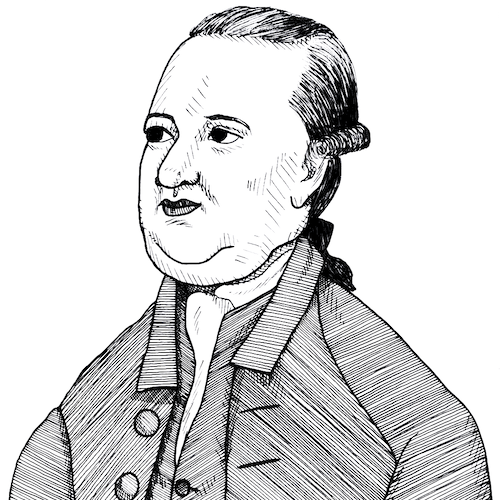
In the last sentence of the second chapter of his Memoirs of My Life (1788-93), Edward Gibbon turns with relief from remembering his years at school, ‘the cavern of fear and sorrow’, to another model of self-directed education. It is that of a grown-up, and driven by a single natural instinct and desire:
Freedom is the first wish of our heart; freedom is the first blessing of our nature; and, unless we bind ourselves with the voluntary chains of interest or passion, we advance in freedom as we advance in years.[1]
This is a Johnsonian thought in the sense that it acknowledges, albeit only in passing, the power of ‘voluntary chains’ to imprison us, however strong our appetite for liberty may be. However, if this sentence had been written by Johnson rather than by Gibbon it would most likely serve not as the conclusion but as the opening of a moral essay, one which would go on to demonstrate the general vulnerability of human beings to their interests and passions. The different momentum of Gibbon’s culminating sentence is created by the repeated word ‘first’ yielding to the repeated word ‘advance’. He probably had at the back of his mind John Dryden’s lines, quoted under the initial definition of ‘FREEDOM’ (‘Liberty; exemption from servitude; independence’) in Johnson’s Dictionary (1755):
O freedom! first delight of human kind!Not that which bondmen from their masters find,
The privilege of doles; nor yet t’ inscribe
Their names in this or t’ other Roman tribe:
That false enfranchisement with ease is found;
Slaves are made citizens by turning round.
Dryden’s Pers. [Fifth Satire of Persius][2]
Dryden’s speaker, the Stoic philosopher and rhetorician Cornutus, is at pains to demonstrate the tendency to mistake ‘false’ liberty for genuine freedom, and Gibbon’s brief, exhilarating vision of ceaseless progression and accumulated liberties does not itself ring entirely true. For one thing, it cannot be quite right to say that we continue to the very end of our lives to advance in freedom—a point ruefully conceded in the final paragraph of the Memoirs, where the author permits himself to imagine his old age:
This day may possibly be my last; but the laws of probability, so true in general, so fallacious in particular, still allow me about fifteen years; and I shall soon enter into the period, which, as the most agreeable of his long life, was selected by the judgement and experience of the sage Fontenelle. His choice is approved by the eloquent historian of nature, who fixes our moral happiness to the mature season, in which our passions are supposed to be calmed, our duties fulfilled, our ambition satisfied, our fame and fortune established on a solid basis. I am far more inclined to embrace than to dispute this comfortable doctrine; I will not suppose any premature decay of the mind or body; but I must reluctantly observe that two causes, the abbreviation of time and the failure of hope, will always tinge with a browner shade the evening of life.[3]
Gibbon died three years later, aged fifty-six. The progress through life that he tentatively envisaged for himself here was not the trajectory he was permitted to follow. It is as if his sentences already accommodate such a possibility—of human wishes proving to be at odds with reality; of any individual being at best only dimly able to apprehend futurity. Even were he to be granted a long life, he also recognises that its ‘supposed’ advantages may not really be those celebrated by some of his predecessors. A similarly dynamic multiplicity and combination of attitudes governs his interpretations of the past, but there is always an anti-climactic quality to his autobiographical writing—apt for the author of a work whose title was the Montesquieu-influenced Decline and Fall rather than (say) The Origins and Rise of the Roman Empire. Having cast about for many years in search of the right subject upon which to exercise his mind—another possibility was a ‘History of the Liberty of the Swiss’—Gibbon chose to narrate an empire in its twilight years rather than in its period of ascendance.[4] Such a choice entailed the development of a style that was capable of acknowledging not only the human appetite for improvement, enlargement, and progress, but also the human reality with which such desires are frequently met: decline, disappointment, and futility. Gibbon, author of a work to which he refers in the Memoirs as ‘my Roman decay’, saw himself, it seems, as the end of a line.[5]
The freedom to write history is directly related to the freedom to act in it as well as to travel imaginatively across its vast territories; David Womersley has written of Gibbon’s ‘mind ranging freely over world literature and making intelligent connexions with a perfect liberty of movement’.[6] (Such liberties include, as was usual in the period, the invention of speeches for historical figures; as Gibbon puts it in a footnote to volume 4 of Decline and Fall: ‘I give this speech as original and genuine. Ammianus might hear, could transcribe, and was incapable of inventing it.’)[7] Hence, in part, the interest and value of reading his Memoirs alongside The Decline and Fall; of considering the private alongside the published historian. Not that the Memoirs are overtly confessional or anecdotal, for Gibbon—despite claiming there to ‘have exposed my private feelings, as I shall always do, without scruple or reserve’—disapproved of such tendencies in eighteenth-century life-writing.[8] The record of his youth and middle age duly repudiates gossip and the inclusion of what he represents as needless commentary on other people. Instead, he seeks to identify in the growth and development of his own emerging character the traits he had already observed and remarked upon in other, historical figures; to discern patterns and impose form on what are presented as typical as well as individual experiences (hence his intermittent habit of referring to himself in the third person). Gibbon’s Memoirs reflect primarily the intensity with which he appreciated the freedom to shape his own life as well as his capacity to perceive the strengths and weaknesses of ancient leaders in appreciating the true meanings and value of liberty.
There are more and less desirable kinds of freedom, of course; it may be barbaric or civilised, ‘tumultuous’ or ‘rational’, private (e.g. conversational) or public (e.g. electoral), and it will be more or less dependable and lasting a condition as a result.[9] Freedom may be natural, but it is not always secure; it is sometimes described as a right, at other times as a gift. Most obviously, it is not guaranteed to whole swathes of ancient societies—those kept in slavery, for whom it could be at best an aspiration:
Hope, the best comfort of our imperfect condition, was not denied to the Roman slave; and, if he had any opportunity of making himself either useful or agreeable, he might very naturally expect that the diligence and fidelity of a few years would be rewarded with the inestimable gift of freedom.[10]
Here, ‘freedom’ is quite properly the last word—the motivation and the goal—of the sentence.
In volume 2 of Decline and Fall we learn of ‘the balance of freedom’ and ‘the equality of freedom’, phrases which are invoked to describe the relationship of the people to their leaders (without any leaders at all, freedom is unworthy of the name).[11] Such phrasing also captures Gibbon’s sense in the Memoirs of the emergence of his own ‘impartial’ character as a historian, how he handles rival or multiple claims on his attention, and the ways in which his style adjudicates between them.[12] Freedom in this context is best understood as the ability to keep more than one interpretation of the same character or event in play, without losing command of the sentence or the capacity to govern the historical scene.
It is a truth in both personal and national terms that ‘freedom is the first step to curiosity and knowledge’.[13] Gibbon’s infancy and adolescence left, inevitably, a marked impression on his approach to history. Largely ignored by his mother, the only survivor of seven children, he found his greatest comfort in solitary reading (initially guided by his aunt Catherine). After a patchy early education which was further disrupted by illness, he arrived at Magdalen College, Oxford, in his ‘fifteenth year’, only to be neglected once again by those officially charged with his care.[14] Guided by his own miscellaneous and fitful reading, he converted to Roman Catholicism in 1753. His father responded to the crisis by sending Gibbon to live with a pastor in Lausanne in Switzerland. The ensuing period saw him not only return to Protestantism but embark on a demanding programme of study in ancient and modern literature. By the time he came back to England in 1758, he had become the fiercely ambitious yet guarded man whose devoted friendships belied a seemingly chilly emotional life. Crucial to his sense of self and of history was the ability to impose structure and order on his surroundings.
Just as hierarchy and subordination do not entail the loss but guarantee the possibility of freedom in a public or social sense, so Gibbon’s capacity as a historian to organise his materials permits the reader to reach a variety of conclusions about his attitudes to those whose conduct he is surveying. Another sense of freedom is relevant here: not so much the licence to do something as the liberty to refrain from it. He may refer in Decline and Fall to ‘the truth and simplicity of historic prose’, but Gibbon’s own writing of history insinuates a combination of opinions and judgements whose effects are far from simple or resolute and which offer a multi-faceted, inconclusive appraisal of the past.[15]
Take this passage, which is itself concerned with the gradual corruption of virtue. The Roman and the Asian, the West and the East, have by this stage become impossible to separate, so that, eventually, ‘not a vestige was left of that severe simplicity which, in the ages of freedom and victory, had distinguished the line of battle of a Roman army from the confused host of an Asiatic monarch’:[16]
The manly pride of the Romans, content with substantial power, had left to the vanity of the East the forms and ceremonies of ostentatious greatness. But when they lost even the semblance of those virtues which were derived from their ancient freedom, the simplicity of Roman manners was insensibly corrupted by the stately affectation of the courts of Asia. The distinctions of personal merit and influence, so conspicuous in a republic, so feeble and obscure under a monarchy, were abolished by the despotism of the emperors; who substituted in their room a severe subordination of rank and office, from the titled slaves, who were seated on the steps of the throne, to the meanest instruments of arbitrary power.[17]
Such passages in Decline and Fall often turn on the distinction between, or more properly the loss of a distinction between, virtue and vice. It is characteristic of an empire in decline that the difference between good and evil should become harder to discern, even more so in a passage such as this in which individual human beings are not distinguished as agents but represented instead by abstracted elements such as ‘pride’, ‘vanity’, and ‘manners’. The mixture of passive and active constructions contributes to the overall effect of vigour and direction being slowly, fatally, compromised by hypocrisy and insincerity, and this is a carefully chosen stylistic effect throughout the history—it communicates the general point that the Roman Empire fell not only to the barbarians, but because its citizens themselves ceased to be active participants in their own society and became instead unthinkingly obedient to those above them. The introduction of Christianity had its own role to play in this insidious process of enervation, dependence, and the fatal depletion of martial vigour:
The clergy successfully preached the doctrines of patience and pusillanimity; the active virtues of society were discouraged; and the last remains of the military spirit were buried in the cloister; a large portion of public and private wealth was consecrated to the specious demands of charity and devotion; and the soldiers’ pay was lavished on the useless multitudes of both sexes, who could only plead the merits of abstinence and chastity.[18]
In volume 9, Gibbon expands again on the distinction between eastern and western varieties of freedom, or between the ‘simple’ and the ‘nice and artificial’:
The slaves of domestic tyranny may vainly exult in their national independence; but the Arab is personally free; and he enjoys, in some degree, the benefits of society, without forfeiting the prerogatives of nature. […] The grandfather of Mahomet and his lineal ancestors appear in foreign and domestic transactions as the princes of their country; but they reigned, like Pericles at Athens, or the Medici at Florence, by the opinion of their wisdom and integrity; their influence was divided with their patrimony; and the sceptre was transferred from the uncles of the prophet to a younger branch of the tribe of Koreish. On solemn occasions they convened the assembly of the people; and, since mankind must be either compelled or persuaded to obey, the use and reputation of oratory among the ancient Arabs is the clearest evidence of public freedom. But their simple freedom was of a very different cast from the nice and artificial machinery of the Greek and Roman republics, in which each member possessed an undivided share of the civil and political rights of the community. In the more simple state of the Arabs the nation is free, because each of her sons disdains a base submission to the will of a master. His breast is fortified with the austere virtues of courage, patience, and sobriety; the love of independence prompts him to exercise the habits of self-command; and the fear of dishonour guards him from the meaner apprehension of pain, of danger, and of death. The gravity and firmness of the mind is conspicuous in his outward demeanour; his speech is slow, weighty, and concise; he is seldom provoked to laughter; his only gesture is that of stroking his beard, the venerable symbol of manhood; and the sense of his own importance teaches him to accost his equals without levity and his superiors without awe.[19]
This passage, adjudicating at once boldly and uncertainly between the rival merits of personal and public freedom, between the simple and the artificial, the Arab and the Greek, then merely invites us to smile at ‘the venerable symbol of manhood’ which amounts to no more than a beard. We naturally turn to the historian’s or narrator’s voice to help us negotiate the past, to establish who was right and who was wrong—a despotic persona hardly seems desirable in this context, and Gibbon was himself no defender of empire, but does he offer us a sufficiently clear sense of his own character or position? Does he enjoy a personal authorial freedom without explaining its origins or intentions? Some readers have found the absence of explicit direction a positive enjoyment in his work; others have found it maddening. Clive James, reflecting on the fact that he had never reached the end of Decline and Fall, concluded that the style of the work was complicated for its own sake; that, while its author may have affected compression, he achieved effects that were excessively laboured:
He gives you contrivance. In him we can study the arrangement of prose pushed to its limit—not to the limit of prose, but to the limit of arrangement, where a trellis weighs like a bronze door. Though the intention might be the opposite, there is a risk of turning the permanent into the evanescent.[20]
Guidance to the reader is markedly absent, then, even if we retain the indubitable sense of an authorial personality at work on organising its materials; the risk of what Fred Parker has described as the ‘overtly constructed quality of Gibbon’s prose—so unlike the facility and flow of Hume’s History’ is that no strong impression is left behind.[21]
There could, however, be very good reasons for refraining from a definitive judgement on the past. One and the same cause might be responsible for vices and virtues, such that there is no possibility of meaningful judgement on its rightness or wrongness:
Whatever evils either reason or declamation have imputed to extensive empire, the power of Rome was attended with some beneficial consequences to mankind; and the same freedom of intercourse which extended the vices, diffused likewise the improvements, of social life.[22]
While the reader may look for clear distinctions, the past often yields a bewildering and seemingly paradoxical combination of qualities: that ‘mixture of servitude and freedom’, for instance, which Gibbon diagnoses (with characteristic nicety) as ‘not unfrequent in Oriental history’.[23] Perhaps one conclusion that may be offered is that, as Johnson put it to Boswell, ‘the natural tendency of all things is downwards’.[24] History is not itself exempt from the laws of gravity, or from the effects of time and accident; they govern all of our efforts to understand and interpret the evidence of the world around us, and they define the limits of the freedom with which we attempt to act. As Gibbon puts it in one of the most climactic passages of his story of ‘Roman decay’:
[T]he decline of Rome was the natural and inevitable effect of immoderate greatness. Prosperity ripened the principle of decay; the causes of destruction multiplied with the extent of conquest; and as soon as time or accident had removed the artificial supports, the stupendous fabric yielded to the pressure of its own weight.[25]
Endnotes
[1] Edward Gibbon, Memoirs of My Life, ed. with an Introduction by Betty Radice (London: Penguin, 1984, repr. 1990), pp. 73-4.
[2] Samuel Johnson, A Dictionary of the English Language [1755], https://johnsonsdictionaryonline.com.
[3] Memoirs of My Life, p. 175.
[4] Memoirs of My Life, p. 132.
[5] Memoirs of My Life, p. 151.
[6] David Womersley, The Transformation of The Decline and Fall of the Roman Empire (Cambridge: Cambridge University Press, 1988), pp. 96-7.
[7] Online Library of Liberty: The History of the Decline and Fall of the Roman Empire, ed. J. B. Bury with an Introduction by W. E. H. Lecky (New York: Fred de Fau and Co., 1906), in 12 vols., vol. 4.
[8] Memoirs of My Life, p. 43.
[9] Online Library of Liberty: Decline and Fall, vol. 1.
[10] Online Library of Liberty: Decline and Fall, vol. 1.
[11] Online Library of Liberty: Decline and Fall, vol. 2.
[12] Memoirs of My Life, p. 163.
[13] Online Library of Liberty: Decline and Fall, vol. 11.
[14] Memoirs of My Life, p. 75.
[15] Online Library of Liberty: Decline and Fall, vol. 3.
[16] Online Library of Liberty: Decline and Fall, vol. 3.
[17] Online Library of Liberty: Decline and Fall, vol. 3.
[18] Online Library of Liberty: Decline and Fall, vol. 6.
[19] Online Library of Liberty: Decline and Fall, vol. 9.
[20] https://archive.clivejames.com/books/gibbo.htm.
[21] Fred Parker, ‘Gibbon’s Style in The Decline and Fall’, in The Cambridge Companion to Gibbon, ed. Karen O’Brien and Brian Young (Cambridge: Cambridge University Press, 2018), pp. 167-83 (p. 179).
[22] Online Library of Liberty: Decline and Fall, vol. 2.
[23] Online Library of Liberty: Decline and Fall, vol. 11.
[24] Samuel Johnson and James Boswell, A Journey to the Western Islands of Scotland and The Journal of a Tour to the Hebrides, ed. Jack Lynch and Celia Barnes (Oxford: Oxford World’s Classics, 2020), p. 240.
[25] Online Library of Liberty: Decline and Fall, vol. 6.
Copyright and Fair Use Statement
“Liberty Matters” is the copyright of Liberty Fund, Inc. This material is put on line to further the educational goals of Liberty Fund, Inc. These essays and responses may be quoted and otherwise used under “fair use” provisions for educational and academic purposes. To reprint these essays in course booklets requires the prior permission of Liberty Fund, Inc. Please contact oll@libertyfund.org if you have any questions.