Essays by "The Free Republican," 1784-1786
- Benjamin Lincoln, Jr. (author)
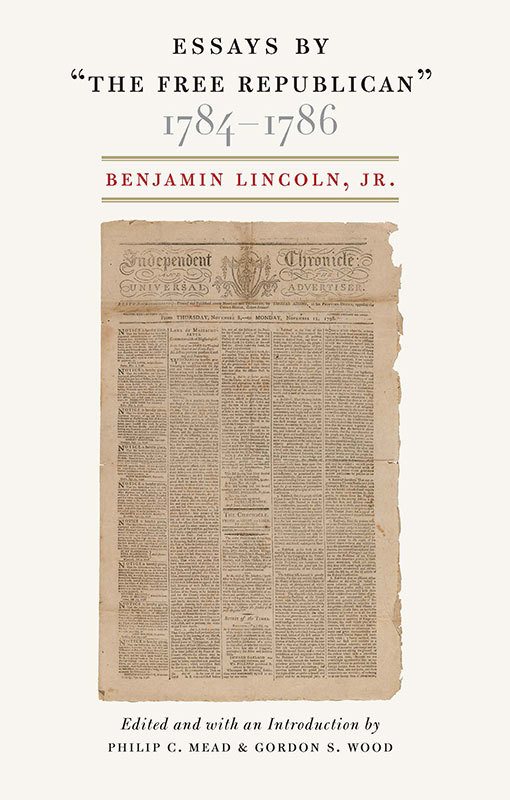
This is the first modern publication of ten essays published in the popular Boston newspaper The Independent Chronicle, a significant intellectual event in Massachusetts politics.
Show more
The essays deal primarily with the problem of mixed government in a republic. Lincoln writes, “Two distinct and different orders of men seems incident to every society,” and these “two contending interests,” fed by a “spirit of jealousy and distrust,” would always be in dispute with one another. “Whether the parties to the contests style themselves the Rich and the Poor, the Great and the Small, the High and the Low, the Elders and People, Patricians and Plebeians, Nobility and Commons, still,” the Free Republican writes, “the source and effects of the dispute are the same.”
Lincoln saw this division of men directly linked with property: “Power, or the ability of controlling others, ever has been, and ever will be attached to property… . The glare of wealth, and the splendor of its favours, will create an influence which no civil constitution can control.” To Lincoln the solution was obvious: “Let us therefore regulate an evil we cannot prevent.” The interests of the “Few” and of the “Many” should be represented in a house of a bicameral legislature with the executive preserving the balance between the two parties. “A balance,” Lincoln writes, “supposes three things, the two scales and the hand that holds it.”
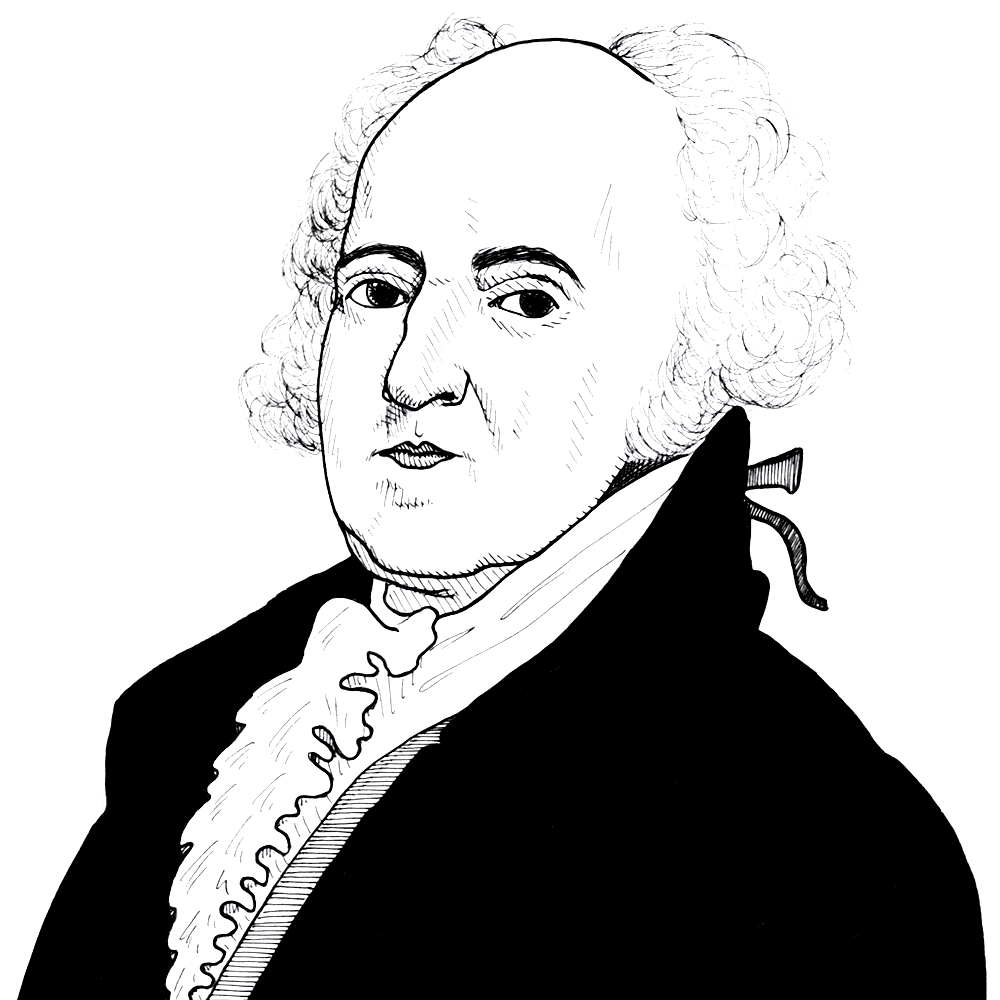
Lincoln’s essays anticipate John Adams’s Defence of the American Constitutions (1787) on every major point. It is doubtful that Adams read the essays, but the educated elites in Massachusetts had been discussing the problems of organizing government since 1776. The editors believe that Lincoln’s essays grew out of a conversation that Massachusetts people were having about the problem of a bicameral legislature in a republic. The publication of these essays may provoke an entirely new appraisal of the political thinking of the founding era.
Related People
Critical Responses
Book
The Rights of ManThomas Paine
Paine attacks mixed government, hereditary elements, and bicameral structures—implicitly challenging the institutional philosophy that Lincoln defends.

What to read next...
Thoughts upon the Mode of Education Proper in a RepublicBenjamin Rush
Rush’s arguments emphasize civic virtue and democratic homogeneity over structural balances among social orders.
Connected Readings
Book
The Works of John Adams, vol. 4Charles Francis Adams
A Defence of the Constitutions of Government of the United States of America