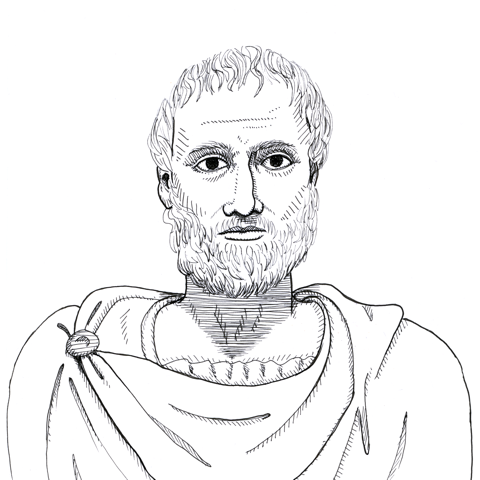
CHAP. IV.: Draco’s laws. - Aristotle, Constitution of Athens [320 BC]
Edition used:
Aristotle’s Constitution of Athens, trans. Thomas J. Dymes (London: Seeley and Co., 1891).
About Liberty Fund:
Liberty Fund, Inc. is a private, educational foundation established to encourage the study of the ideal of a society of free and responsible individuals.
Copyright information:
The text is in the public domain.
Fair use statement:
This material is put online to further the educational goals of Liberty Fund, Inc. Unless otherwise stated in the Copyright Information section above, this material may be used freely for educational and academic purposes. It may not be used in any way for profit.
- Introduction.
- Explanation of Terms For the English Reader.
- The Constitution of Athens.
- Chap. I.: Kylon.
- Chap. II.: The Oligarchical Constitution.
- Chap. III.: Before Draco’s Time.
- Chap. IV.: Draco’s Laws.
- Chap. V.: Civil Dissensions; Solon.
- Chap. VI.: Solon; Charge Against Him.
- Chap. VII.: His Constitution.
- Chap. VIII.: Solon’s Constitution.
- Chap. IX.: How Solon Gave Power to the People.
- Chap. X.: Reforms the Currency, Weights and Measures.
- Chap. XI.: Goes Abroad.
- Chap. XII.: The Testimony of His Own Poems.
- Chap. XIII.: Party Divisions Immediately Following.
- Chap. XIV.: Peisistratus Makes Himself Tyrant; His Exile and Return.
- Chap. XV.: How He Disarmed the People.
- Chap. XVI.: His Government Moderate and Popular.
- Chap. XVII.: Succeeded By His Sons.
- Chap. XVIII.: Harmodius and Aristogeiton.
- Chap. XIX.: Expulsion of the Peisistratidæ.
- Chap. XX.: Isagoras and Kleisthenes.
- Chap. XXI.: The Constitution of Kleisthenes.
- Chap. XXII.: The Times Immediately Following; Ostracism; Building of a Hundred Triremes.
- Chap. XXIII.: Recovery of Power By the Areopagus; Themistokles and Aristides.
- Chap. XXIV.: Athens Lays Claims to the Leadership of Greece.
- Chap. XXV.: Overthrow of the Areopagus By Ephialtes and Themistokles.
- Chap. XXVI.: Growth of the Democracy; Kimon.
- Chap. XXVII.: Perikles.
- Chap. XXVIII.: His Successors; Nikias, Kleon, Thucydides, Theramenes.
- Chap. XXIX.: The Four Hundred; the Proposals of Pythodorus.
- Chap. XXX.: The Constitution As Proposed For the Future.
- Chap. XXXI.: The Constitution As Proposed For the Immediate Present.
- Chap. XXXII.: The Government of the Four Hundred.
- Chap. XXXIII.: It Lasted Four Months, and Was Good.
- Chap. XXXIV.: Arginusæ ægospotami Lysander and Establishment of the Oligarchy.
- Chap. XXXV.: The Thirty and Their Government.
- Chap. XXXVI.: Protests of Theramenes.
- Chap. XXXVII.: Theramenes Put to Death, and the Lacedæmonans Call Ed In.
- Chap. XXXVIII.: End of the Thirty, and Reconciliation of Parties.
- Chap. XXXIX.: Terms of the Reconciliation.
- Chap. Xl.: Its Conclusion; Action of Archinus.
- Chap. Xli.: Recapitulation of the Preceding Changes; the Sovereign Power of the People.
- Chap. Xlii.: Admission to Citizenship; Training of the Ephebi.
- Chap. Xliii.: Election to Offices, By Lot Or Vote.
- Chap. Xliv.: the Council Continued.
- Chap. Xlv.: Deprived of the Power of Putting to Death.
- Chap. Xlvi.: the Council Continued.
- Chap. Xlvii.: the Treasurers of Athena; the Government-sellers.
- Chap. Xlviii.: the Receivers; Auditors.
- Chap. Xlix.: the Council Holds a Muster of the Knights, Etc.
- Chap. L: Surveyors of Temples; City Magistrates.
- Chap. Li.: Clerks of the Market; Inspectors of Weights and Measures, Etc.
- Chap. Lii.: the Eleven; Suits Decided Within a Month.
- Chap. Liii.: Judicial Officers; Arbitrators.
- Chap. Liv.: Surveyors of Roads; Auditors; Secretaries.
- Chap. Lv.: the Archons; How They Are Appointed.
- Chap. Lvi.: the Archon (eponymus); His Duties.
- Chap. Lvii.: the King Archon; His Duties.
- Chap. Lviii: the Commander-in-chief, Polemarch
- Chap. Lix.: the Thesmothetæ; Their Functions.
- Chap. Lx.: the Directors of Games; the Sacred Oil.
- Chap. Lxi.: Election By Vote to All Offices of War Department.
- Chap. Lxii.: Pay Attached to Offices
- Chap. Lxiii.: Appointment of Jurors.
CHAP. IV.
Draco’s laws.
Now, this is a sketch of the first form of government. And after this, at no long interval, when Aristaechmus was archon, Draco made his laws; and this constitution was as follows. Share in the government was assigned to those who provided themselves with arms; and they chose for the nine archons and the treasurers such as were possessed of property to the value of not less than ten minæ free of all encumbrances, and for the other minor offices such as provided themselves with arms, and for generals and commanders of cavalry such as could show property of not less than a hundred minæ free of all encumbrances, and children born in lawful wedlock above ten years of age; these were to be the presidents of the council and generals and commanders of cavalry . . . up to the time of the audit of their accounts . . . . and receiving from the same rating as the generals and commanders of cavalry. The Council was to consist of four hundred and one, selected by lot from the whole body of citizens; such as were over thirty years of age were to obtain this and the other offices by lot, and the same man was not to hold office twice before all had had their turn; and then appointment was to be made afresh by lot. If any member of the Council, when there was a sitting of the Council or Assembly, was absent from the meeting, he had to pay a fine, the Pentakosiomedimnos (the possessor of land which produced five hundred medimni yearly) three drachmæ, the Knight two, and the Zeugitæ (those who possessed a team of oxen) one. And the council of Areopagus was the guardian of the laws, and jealously watched the magistrates to see that they administered their offices according to the laws. And an injured party had the right of bringing his indictment before the council of the Areopagitæ, on showing in contravention of what law he had sustained his injury. (But all this was of no avail, because) the lower classes were bound on the security of their persons, as has been said, and the land was in the hands of a few.