EconlibThe LibraryOther Sites |
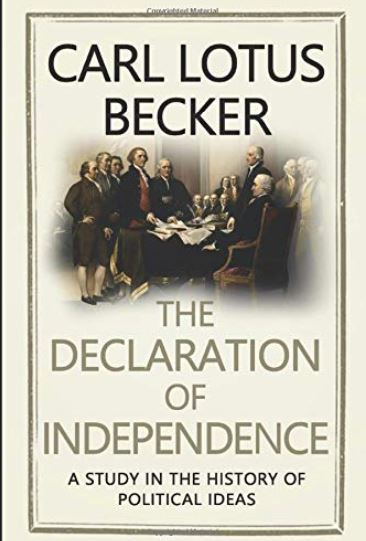
Front Page Titles (by Subject) THE DECLARATION OF INDEPENDENCE - The Declaration of Independence: A Study on the History of Political Ideas
Return to Title Page for The Declaration of Independence: A Study on the History of Political IdeasThe Online Library of LibertyA project of Liberty Fund, Inc.Search this Title:Also in the Library:
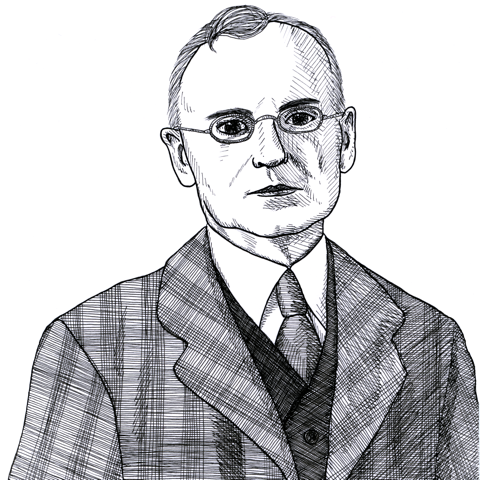
THE DECLARATION OF INDEPENDENCE - Carl Lotus Becker, The Declaration of Independence: A Study on the History of Political Ideas [1922]Edition used:The Declaration of Independence: A Study on the History of Political Ideas (New York: Harcourt, Brace and Co., 1922).
About Liberty Fund:Liberty Fund, Inc. is a private, educational foundation established to encourage the study of the ideal of a society of free and responsible individuals. Copyright information:The text is in the public domain. Fair use statement:This material is put online to further the educational goals of Liberty Fund, Inc. Unless otherwise stated in the Copyright Information section above, this material may be used freely for educational and academic purposes. It may not be used in any way for profit.
THE DECLARATION OF INDEPENDENCECHAPTER ITHE DECLARATION OF INDEPENDENCEIt is often forgotten that the document which we know as the Declaration of Independence is not the official act by which the Continental Congress voted in favor of separation from Great Britain. June 7, 1776, Richard Henry Lee, on behalf of the Virginia delegation, submitted to the Continental Congress three resolutions, of which the first declared that “these United Colonies are, and of right ought to be, free and independent States, that they are absolved from all allegiance to the British Crown, and that all political connection between them and the State of Great Britain is, and ought to be, totally dissolved.”1 This resolution, which may conveniently be called the Resolution of Independence, was finally voted by the Continental Congress on the 2 of July, 1776.2 Strictly speaking, this was the official declaration of independence; and if we were a nation of antiquaries we should no doubt find an incongruity in celebrating the anniversary of our independence on the 4 of July. Meanwhile, on the 10 of June, three days after Richard Henry Lee introduced the Resolution of Independence, it was voted to appoint a committee to “prepare a declaration to the effect of the said first resolution.” The committee, appointed on the following day, consisted of Thomas Jefferson, John Adams, Benjamin Franklin, Roger Sherman, and Robert R. Livingston.1 On the 28 of June, the committee reported to Congress the draft of a declaration which, with modifications, was finally agreed to by Congress on the 4 of July.2 This is the document which is popularly known as the Declaration of Independence. This title is not, strictly speaking, the official title of the document in question. The document never knew itself, in any of its various forms, by that name. Jefferson, in making the first draft, gave it the following title: A Declaration by the Representatives of the United States of America, in General Congress assembled. This title was retained in all the copies of the Declaration, except the engrossed parchment copy. On the 19 of July, 1776, Congress voted that the Declaration be engrossed on parchment, “with the title and stile of The unanimous Declaration of the thirteen united States of America.” It is true, the Declaration, in the form adopted by Congress, incorporates in its final paragraph the resolution of July 2; and so the Declaration may be said to be a declaration of independence, inasmuch as in it Congress once more declared what it had already declared two days before. Nevertheless, the primary purpose of the Declaration was not to declare independence, but to proclaim to the world the reasons for declaring independence. It was intended as a formal justification of an act already accomplished. The purpose of the Declaration is set forth in the first paragraph — a striking sentence, in which simplicity of statement is somehow combined with an urbane solemnity of manner in such a way as to give that felicitous, haunting cadence which is the peculiar quality of Jefferson’s best writing. When in the course of human events, it becomes necessary for one people to dissolve the political bands, which have connected them with another, and to assume, among the powers of the earth, the separate and equal station, to which the laws of nature and of nature’s God entitle them a decent respect to the Opinions of mankind requires that they should declare the causes which impel them to the separation.1 The ostensible purpose of the Declaration was, therefore, to lay before the world the causes which impelled the colonies to separate from Great Britain. We do in fact find, in the Declaration, a list or catalogue of acts, attributed to the king of Great Britain, and alleged to have been done by him with the deliberate purpose of establishing over the colonies “an absolute tyranny.” These “causes” which the Declaration sets forth are not quite the same as those which a careful student of history, seeking the antecedents of the Revolution, would set forth. The reason is that the framers of the Declaration were not writing history, but making it. They were seeking to convince the world that they were justified in doing what they had done; and so their statement of “causes” is not the bare record of what the king had done, but rather a presentation of his acts in general terms, and in the form of an indictment intended to clear the colonists of all responsibility and to throw all the blame on the king. From whatever causes, the colonists were in rebellion against established and long recognized political authority. The Declaration was not primarily concerned with the causes of this rebellion; its primary purpose was to present those causes in such a way as to furnish a moral and legal justification for that rebellion. The Declaration was essentially an attempt to prove that rebellion was not the proper word for what they were doing. Rebellion against established authority is always a serious matter. In that day kings were commonly claiming to rule by divine right, and according to this notion there could be no ‘right’ of rebellion. The framers of the Declaration knew very well that however long their list of grievances against the king of Great Britain might be, and however oppressive they might make out his acts to have been, something more would be required to prove to the world that in separating from Great Britain they were not really engaged in rebellion against a rightful authority. What they needed, in addition to many specific grievances against their particular king, was a fundamental presupposition against kings in general. What they needed was a theory of government that provided a place for rebellion, that made it respectable, and even meritorious under certain circumstances. Before enumerating the specific grievances against the king of Great Britain, Jefferson therefore proceeded to formulate a general political philosophy — a philosophy upon which the case of the colonies could solidly rest. This philosophy, which affirms the right of a people to establish and to overturn its own government, is formulated in the first part of the second paragraph of the Declaration. We hold these truths to be self-evident, That all men are created equal, that they are endowed by their creator with certain unalienable rights; that among these are life, liberty &the pursuit of happiness; that to secure these rights governments are instituted among men, deriving their just powers from the consent of the governed; that whenever any form of government becomes destructive of these ends, it is the right of the people to alter or to abolish it, and to institute new government, laying its foundation on such principles and organizing its powers in such form, as to them shall seem most likely to effect their safety and happiness. This is a frank assertion of the right of revolution, whenever “the people” are convinced that the existing government has become destructive of the ends for which all government is instituted among men. Many difficulties lie concealed in the words “the people”; but it is sufficient to note in passing that a large part of the people in the colonies, not being convinced that the British government had as yet become destructive of their liberties, or for some other reason, were either indifferently or strongly opposed to separation. Yet the leaders of the Revolution, being now committed to independence, found it politically expedient to act on the assumption that the opposition was negligible. Very naturally, therefore, Jefferson endeavored to make it appear that the people of the colonies were thoroughly united in wishing to ‘institute new government’ in place of the government of the king. Accordingly, having affirmed the right of revolution under certain conditions, the Declaration goes on to state that as a matter of fact these conditions prevail in the colonies, and that ‘the people’ have submitted to them as long as it is humanly possible to do. Prudence, indeed, will dictate, that governments long established should not be changed for light and transient causes; and accordingly all experience hath shewn that mankind are more disposed to suffer, while evils are sufferable than to right themselves by abolishing the forms, to which they are accustomed. But when a long train of abuses &usurpations pursuing invariably the same object evinces a design to reduce them under absolute despotism, it is their right, it is their duty to throw off such government and to provide new guards for their future security. — Such has been the patient sufferance of these colonies, and such is now the necessity, which constrains them to alter their former systems of government. The history of the present king of great Britain is a history of repeated injuries and usurpations, all having in direct object the establishment of an absolute tyranny over these states. To prove this let facts be submitted to a candid world. So at last we come to the ‘facts,’ the list or catalogue of oppressive measures, the ‘repeated injuries and usurpations’ of the king of Great Britain. He has refused his assent to laws the most wholesome and necessary for the public good. He has forbidden his governors to pass laws of immediate and pressing importance, unless suspended in their operation until his assent should be obtained, and when so suspended, he has utterly neglected to attend to them. He has refused to pass other laws for the accommodation of large districts of people, unless those people would relinquish the right of representation in the legislature, a right inestimable to them and formidable to tyrants only. He has called together legislative bodies at places unusual, uncomfortable and distant from the depository of their public records, for the sole purpose of fatiguing them into compliance with his measures. He has dissolved representative houses repeatedly for opposing with manly firmness his invasions on the rights of the people. He has refused for a long time, after such dissolutions, to cause others to be elected; whereby the legislative powers incapable of annihilation have returned to the people at large for their exercise; the state remaining in the meantime exposed to all the dangers of invasion from without and convulsions within. He has endeavored to prevent the population of these states; for that purpose obstructing the laws for naturalization of foreigners; refusing to pass others to encourage their migrations hither & raising the conditions of new appropriations of lands. He has obstructed the administration of Justice by refusing his assent to laws for establishing judiciary powers. He has made judges dependent on his will alone for the tenure of their offices and the amount and payment of their salaries. He has erected a multitude of new offices, and sent hither swarms of officers to harass our people and eat out their substance. He has kept among us in times of peace standing armies, without the consent of our legislatures. He has affected to render the military independent of & superior to the civil power. He has combined with others to subject us to a jurisdiction foreign to our constitution and unacknowledged by our laws, giving his assent to their acts of pretended legislation for quartering large bodies of troops1 among us; for protecting them by a mock trial from punishment for any murders, which they should commit on the inhabitants of these states. for cutting off our trade with all parts of the world; for imposing taxes on us without our consent; for depriving us in many cases of the benefits of trial by jury; for transporting us beyond seas to be tried for pretended offences; for abolishing the free system of english laws in a neighboring province, establishing therein an arbitrary government and enlarging its boundaries, so as to render it at once an example & fit instrument for introducing the same absolute rule into these colonies. for taking away our charters, abolishing our most valuable laws and altering fundamentally the forms of our governments. for suspending our own legislatures and declaring themselves invested with power to legislate for us in all cases whatsoever. He has abdicated government here by declaring us out of his protection and waging war against us. He has plundered our seas, ravaged our coasts burnt our towns & destroyed the lives of our people. He is at this time transporting large armies of foreign mercenaries to compleat the works of death, desolation and tyranny, already begun with circumstances of cruelty and perfidy scarcely paralleled in the most barbarous ages and totally unworthy the head of a civilized nation. He has constrained our fellow citizens taken captive on the high seas to bear arms against their country, to become the executioners of their freinds and brethren or to fall themselves by their hands. He has excited domestic insurrections amongst us and has endeavoured to bring on the inhabitants of our frontiers the merciless indian savages, whose known rule of warfare is an undistinguished destruction of all ages, sexes and conditions. Such were the ‘facts’ submitted to a candid world. It is important to note that they were not submitted as being, in themselves, a justification for rebellion; they were submitted to prove that the deliberate and persistent purpose of the king was to establish an ‘absolute tyranny’ over the colonies. A most significant thing about this long list of the king’s alleged actions is the assumption that in each case the king acted with deliberate intention and from a bad motive. It is the bad general purpose of the king, rather than his bad particular acts, that makes the indictment so effective. And this effect is enhanced by the form in which the ‘facts’ are presented — the steady, laborious piling up of ‘facts,’ the monotonous enumeration, without comment, of one bad action after another. How could a candid world deny that the colonies were rightly absolved from allegiance to so malevolent a will! Nevertheless, in spite of multiplied and long continued grievances, the colonies had not rushed into rebellion. In every stage of these oppressions we have petitioned for redress in the most humble terms: Our repeated petitions have been answered only by repeated injury. A prince whose character is thus marked by every act, which may define a tyrant, is unfit to be the ruler of a free people. Nor have we been wanting in attentions to our british brethren. We have warned them from time to time of attempts by their legislature to extend an unwarrantable jurisdiction over us. We have reminded them of the circumstances of our emigration and settlement here. We have appealed to their native justice and magnanimity and we have conjured them by the ties of our common kindred to disavow these usurpations, which would inevitably interrupt our connections & correspondence. They too have been deaf to the voice of justice & consanguinity.1 We must therefore acquiesce in the necessity, which denounces our separation, and hold them, as we hold the rest of mankind, enemies in war, in peace friends. Thus the framers of the Declaration presented their case. Having formulated a philosophy of government which made revolution right under certain conditions, they endeavored to show that these conditions prevailed in the colonies, not on account of anything which the people of the colonies had done, or had left undone, but solely on account of the deliberate and malevolent purpose of their king to establish over them an ‘absolute tyranny.’ The people of the colonies must, accordingly (such is the implication), either throw off the yoke or submit to be slaves. As between these alternatives, there could be but one choice for men accustomed to freedom. We therefore the representatives of the united States of America in general Congress assembled appealing to the supreme judge of the world for the rectitude of our intentions do in the name and by authority of the good people of these colonies solemnly publish and declare— That these united colonies are and of right ought to be free and independent States; that they are absolved from all allegiance to the british Crown, and that all political connection between them and the state of great Britain is & ought to be totally dissolved; and that as free & independent states they have full power to levy war, conclude peace, contract alliances, establish commerce, and to do all other acts & things, which independent states may of right do. And for the support of this declaration, with a firm reliance on the protection of divine providence, we mutually pledge to each other our lives, our fortunes & our sacred honor. From the foregoing analysis it is clear that, apart from the preamble and the conclusion, the Declaration consists of two parts, apparently quite distinct. The first part is contained in the second paragraph. In these few lines the Declaration formulates, in general terms, a democratic political philosophy. The second and much longer part of the Declaration enumerates the specific grievances against the king of Great Britain, which, ostensibly, are presented as the historical causes of the Revolution. These two parts of the Declaration, apparently quite distinct, are nevertheless intimately related in the logic and purpose of the Declaration. Superficially, the Declaration seems chiefly concerned with the causes of the Revolution, with the specific grievances; but in reality it is chiefly, one might say solely, concerned with a theory of government — with a theory of government in general, and a theory of the British empire in particular. The theory of government in general is explicitly formulated; the theory of the British empire is not explicitly formulated but is implicitly taken for granted; and the second part of the Declaration was carefully phrased so that no assertion or implication might appear as a contradiction or a denial of the assumed theory. The Declaration thus bcomes interesting for what it omits as well as for what it includes. For example, it does not, in its final form, contain the word ‘Parliament’ — a most significant omission, considering that the controversy of the preceding decade was occasioned, not by the acts of the king, who plays the leading part in the Declaration, but by the acts of the British Parliament. In all the controversy leading up to the Revolution the thing chiefly debated was the authority of the British Parliament.What is the nature, and what precisely are the limits, of the authority of the British Parliament over the colonies? This question was in fact the central issue. Nevertheless, the Declaration does not mention the British Parliament. So striking an omission must have been intentional. It was of course impossible to make out a list of grievances against Great Britain without referring to such acts as the Stamp Act, the Declaratory Act, the Boston Port Bill, and many other legislative measures; and the framers of the Declaration, when they brought these measures into the indictment, had accordingly to resort to circumlocution in order to avoid naming the Parliament that passed them. There are, in the Declaration, two such veiled references to the Parliament. The first is this: “He [the king] has combined with others to subject us to a jurisdiction foreign to our constitution and unacknowledged by our laws, giving his assent to their pretended acts of legislation.” These ‘others’ who have passed pretended acts of legislation are the members of the British Parliament. The second reference is this: “We have warned them [our british brethren]….of attempts by their legislature to extend an unwarrantable jurisdiction over us.” Obviously, the framers of the Declaration make it a point of principle not on any account to pronounce the word Parliament. “Of course,” we seem to hear them saying, “our British brethren have their legislature, as we have ours. But with their legislature we have nothing to do, God forbid! The very name of the thing escapes us! At least, let us pretend so.” Another significant omission is the term ‘rights of British subjects.’ Throughout the controversy the colonists had commonly protested against parliamentary taxation precisely on the ground that they possessed the rights of British subjects. They said that the British Parliament could not constitutionally tax British subjects without their consent, and that British subjects in the colonies were not, and in the nature of the case could not well be, represented in the British Parliament. For ten years the colonists had made the ‘rights of British subjects’ the very foundation of their case. Yet this is just what the framers of the Declaration carefully refrain from doing: the term ‘rights of British subjects’ does not appear in the Declaration. Trial by jury is mentioned, but not as a right of British subjects. ‘The system of free English laws’ is mentioned, but it is not stated, or even implied, that the validity of these laws arises from the fact that they are English laws. Nowhere does the Declaration say, and nowhere does it imply, that the acts of the king are intolerable because they violate the rights of British subjects. The framers of the Declaration refrained from mentioning Parliament and the ‘rights of British subjects’ for the same reason that they charged all their grievances against the king alone. Being now committed to independence, the position of the colonies could not be simply or convincingly presented from the point of view of the rights of British subjects. To have said: ‘We hold this truth to be self-evident, that it is a right of British subjects not to be taxed except by their own consent,’ would have made no great appeal to mankind, since mankind in general could not be supposed to be vitally interested in the rights of British subjects, or much disposed to regard them as axioms in political speculation. Separation from Great Britain was therefore justified on more general grounds, on the ground of the natural rights of man; and in order to simplify the issue, in order to make it appear that the rights of man had been undeniably and flagrantly violated, it was expedient that these rights should seem to be as little as possible limited or obscured by the positive and legal obligations that were admittedly binding upon British subjects. To place the Resolution of Independence in the best light possible, it was convenient to assume that the connection between the colonies and Great Britain had never been a very close connection, never, strictly speaking, a connection binding in positive law, but only a connection voluntarily entered into by a free people. On this ground the doctrine of the rights of man would have a free field and no competitors. The specific grievances enumerated in the Declaration were accordingly presented from the point of view of a carefully considered and resolutely held constitutional theory of the British empire. The essence of this theory, nowhere explicitly formulated in the Declaration, but throughout implicitly taken for granted, is that the colonies became parts of the empire by their own voluntary act, and remained parts of it solely by virtue of a compact subsisting between them and the king. Their rights were those of all men, of every free people; their obligations such as a free people might incur by professing allegiance to the personal head of the empire. On this theory, both the Parliament and the rights of British subjects could be ignored as irrelevant to the issue. The specific grievances complained of in the Declaration are grievances no longer. As concrete issues they are happily dead. But the way in which the men of those days conceived of these concrete issues, the intellectual preconceptions, illusions if you like, which were born of their hopes and fears, and which in turn shaped their conduct — these make the Declaration always interesting and worthy of study. It is not my intention to search out those particular measures of the British government which served in the mind of Jefferson and his friends to validate each particular charge against the king. This could indeed be done, and has been sufficiently done already; but the truth is that when one has found the particular act to which in each case the particular charge was intended to refer, one is likely to think the poor king less malevolently guilty than he is made out to be. Yet that Jefferson and his friends, honest and good men enough, and more intelligent than most, were convinced that the Declaration was a true bill, we need not doubt. How this could be may be understood, a little at least, by seeing how the pressure of circumstances enabled the men of those days to accept as true their general philosophy of human rights and their particular theory of the British empire. CHAPTER IIHISTORICAL ANTECEDENTS OF THE DECLARATION: THE NATURAL RIGHTS PHILOSOPHYWhether the political philosophy of the Declaration of Independence is “true” or “false” has been much discussed. In the late eighteenth century it was widely accepted as a commonplace. At a later time, in 1822, John Adams made this a ground for detracting from the significance of Jefferson’s share in the authorship of the famous document. He was perhaps a little irritated by the laudation which Fourth of July orators were lavishing on his friend, and wished to remind his countrymen that others had had a hand in the affair. “There is not an idea in it,” he wrote to Pickering, “but what had been hackneyed in Congress for two years before.”1 This is substantially true; but as a criticism, if it was intended as such, it is wholly irrelevant, since the strength of the Declaration was precisely that it said what everyone was thinking. Nothing could have been more futile than an attempt to justify a revolution on principles which no one had ever heard of before. In replying to Adams’ strictures, Jefferson had only to state this simple fact. Pickering’s observations, and Mr. Adams’ in addition, that it contained no new ideas, that it is a commonplace compilation, its sentiments hacknied in Congress for two years before….may all be true. Of that I am not to be the judge. Richard H. Lee charged it as copied from Locke’s treatise on Government…. I know only that I turned to neither book nor pamphlet while writing it. I did not consider it as any part of my charge to invent new ideas altogether and to offer no sentiment which had ever been expressed before.1 In writing to Lee, in 1825, Jefferson said again that he only attempted to express the ideas of the Whigs, who all thought alike on the subject. The essential thing was Not to find out new principles, or new arguments, never before thought of, not merely to say things which had never been said before; but to place before mankind the common sense of the subject, in terms so plain and firm as to command their assent…. Neither aiming at originality of principles or sentiments, nor yet copied from any particular and previous writing, it was intended to be an expression of the American mind…. All its authority rests then on the harmonizing sentiments of the day, whether expressed in conversation, in letters, printed essays, or the elementary books of public right, as Aristotle, Cicero, Locke, Sidney, etc.1 Not all Americans, it is true, would have accepted the philosophy of the Declaration, just as Jefferson phrased it, without qualification, as the ‘common sense of the subject’; but one may say that the premises of this philosophy, the underlying preconceptions from which it is derived, were commonly taken for granted. That there is a ‘natural order’ of things in the world, cleverly and expertly designed by God for the guidance of mankind; that the ‘laws’ of this natural order may be discovered by human reason; that these laws so discovered furnish a reliable and immutable standard for testing the ideas, the conduct, and the institutions of men — these were the accepted premises, the preconceptions, of most eighteenth century thinking, not only in America but also in England and France. They were, as Jefferson says, the ’sentiments of the day, whether expressed in conversation, in letters, printed essays, or the elementary books of public right.’ Where Jefferson got his ideas is hardly so much a question as where he could have got away from them. Since these sentiments of the day were common in France, and were most copiously, and perhaps most logically, expressed there, it has sometimes been thought that Jefferson and his American contemporaries must have borrowed their ideas from French writers, must have been ‘influenced’ by them, for example by Rousseau. But it does not appear that Jefferson, or any American, read many French books. So far as the ‘Fathers’ were, before 1776, directly influenced by particular writers, the writers were English, and notably Locke. Most Americans had absorbed Locke’s works as a kind of political gospel; and the Declaration, in its form, in its phraseology, follows closely certain sentences in Locke’s second treatise on government. This is interesting, but it does not tell us why Jefferson, having read Locke’s treatise, was so taken with it that he read it again, and still again, so that afterwards its very phrases reappear in his own writing. Jefferson doubtless read Filmer as well as Locke; but the phrases of Filmer, happily, do not appear in the Declaration. Generally speaking, men are influenced by books which clarify their own thought, which express their own notions well, or which suggest to them ideas which their minds are already predisposed to accept. If Jefferson had read Rousseau’s Social Contract we may be sure he would have been strongly impressed by it. What has to be explained is why the best minds of the eighteenth century were so ready to be impressed by Locke’s treatise on civil government and by Rousseau’s Social Contract. What we have to seek is the origin of those common underlying preconceptions that made the minds of many men, in different countries, run along the same track in their political thinking. It is well known that Locke’s treatise, written in reply to Filmer’s Patriarcha, was an apology for the Revolution of 1688. “Kings,” said Filmer, “are as absolute as Adam over the creatures” and in general the Stuart partisans had taken their stand, as Sir Frederick Pollock says, “on a supposed indefeasible right of kings, derived from a supposed divine institution of monarchy…. The Whigs needed an antidote, and Locke found one in his modified version of the original compact.”1 This means that political circumstances had brought the Whigs to the point of overturning the existing government, that they were human enough to wish to feel that this was a decent and right thing to do, and that, accordingly, their minds were disposed to welcome a reasoned theory of politics which would make their revolution, as a particular example under the general rule, respectable and meritorious. The Whigs needed a theory of politics that would make their revolution of 1688 a ‘glorious revolution.’ Locke said himself that he had made all his discoveries by “steadily intending his mind in a given direction.” Inevitably the Whigs steadily ‘intended their minds’ away from the idea of a divine right in kings, since no glorious revolution was to be found there, and towards a new idea — in fact, towards Locke’s modified version of the compact theory. It is significant that English writers were formulating a new version of the compact theory in the seventeenth century, while French and American writers made little use of it until the late eighteenth century. This does not necessarily mean that British writers were more intelligent and up-to-date, but is probably due to the fact that in British history the seventeenth century was the time of storm and stress for kings, whereas this time fell later in France and America. Jefferson used the compact theory to justify revolution just as Locke did: the theory came with the revolution in both cases. Rousseau was indeed not justifying an actual revolution; but, as Chateaubriand said, the Revolution in France “was accomplished before it occurred.” It was accomplished in men’s minds before they made it the work of their hands; and Rousseau spoke for all those who were ‘intending their minds’ away from an actual, irrational, and oppressive political order which rested in theory upon the divine right of kings and priests to rule — and misrule. In all three countries this common influence — the widespread desire to limit the power of kings and priests — was one source of those underlying presuppositions which determined the character of political speculation in the eighteenth century; a strong antipathy to kings and priests predisposed Jefferson and Rousseau, as it predisposed Locke, to ‘intend their minds’ towards some new sanction for political authority. The idea that secular political authority rested upon compact was not new — far from it; and it had often enough been used to limit the authority of princes. It could scarcely have been otherwise indeed in that feudal age in which the mutual obligations of vassal and overlord were contractually conceived and defined. Vassals were often kings and kings often vassals; but all were manifestly vassals of God who was the Lord of lords and the King of kings. Thus mediaeval philosophers had conceived of the authority of princes as resting upon a compact with their subjects, a compact on their part to rule righteously, failing which their subjects were absolved from allegiance; but this absolution was commonly thought to become operative only through the intervention of the Pope, who, as the Vicegerent of God on earth, possessed by divine right authority over princes as well as over other men. Thus princes ruled by divine right after all, only their right was a second hand right, deriving from God through the Pope. Afterwards the princes, when they had become kings and as kings had got the upper hand, jostled the Pope out of his special seat and became coequals with him in God’s favor; so that in the seventeenth century the right of kings to rule was commonly thought to come directly from God, and the Pope lost his power of intervening to absolve subjects from allegiance to a bad king. Charles II of England and Louis XIV of France both thought this a reasonable doctrine, nor did either of them lack learned men to back them up; Bossuet proved that it was obviously good religious doctrine — Politique tirée de l’Écriture Sainte; while Cambridge University assured Charles II that “Kings derive not their authority from the people but from God;…. To Him only they are accountable.”1 This clearly closed the door to relief in case there should be any bad kings. In the sixteenth and seventeenth centuries there were a number of bad kings; and so some people were always to be found seeking a method of bringing bad kings to book. Popular resistance to kings was commonly taught both by the Jesuits and the Protestant dissenters: by the Jesuits (by Catholic monarchists called “dissenters”) on the ground that only the Pope has Divine authority; by Protestant Dissenters (by Protestant monarchists called “Jesuits”) on the ground that it was possible for subjects themselves to claim as intimate relations with God as either king or Pope. Calvin was one of the writers who opened up this latter inviting prospect to suceeding generations. The first duty of subjects towards their rulers is to entertain the most honorable views of their office, recognizing it [the office not the king as a delegated jurisdiction from God, and on that account receiving and reverencing them as the ministers and ambassadors of God. This is admitted; but then the ambassador must clearly abide by his instructions; and therefore, In that obedience which we hold to be due to the commands of rulers we must….be particularly careful that it is not incompatible with obedience to Him to whose will the wishes of all kings should be subject…. The Lord, therefore, is King of Kings…. We are subject to men who rule over us, but subject only in the Lord. If they command anything against Him, let us not pay the least heed to it.1 What God had commanded, subjects might plainly read in holy writ — the scriptures as interpreted by those ministers whose business it was to understand them; for which reason, no doubt, Calvin would have ministers and magistrates walk together in close communion. In 1579, another Frenchman, Hubert Languet, or whoever it was that wrote the Vindiciae contra tyrannos, gave greater precision to this idea. Subjects are obviously not bound to obey a king who commands what is contrary to the will of God. But are they bound to resist such a king? According to the Vindiciae they are. When kings were set up, two compacts were entered into: in the first, God on the one side, and people and king on the other, engaged to maintain the ancient covenant which God had formerly made with his chosen people of Israel; in the second, the king contracted with his subjects to rule justly, and they with him to be obedient.1 Thus kings are under binding contract to rule justly, while subjects have a covenant with God to see that they do so. In the seventeenth century English sectaries not only preached but practiced resistance to kings and magistrates, finding their justification, not so much in an explicit compact with God, as in natural law, which was that right reason or inner light of conscience which God had given to men for their guidance. The Levellers were complained of because, be the “Lawes and customes of a Kingdom never so plain and cleer against their wayes, yet they will not submit, but cry out for natural rights derived from Adam and right reason.” Milton spoke for the refractory dissenters of that age when he said, There is no power but of God (Paul, Rom. 13), as much as to say, God put it in man’s heart to find out that way at first for common peace and preservation, approving the exercise thereof…. For if it needs must be a sin in them to depose, it may as likely be a sin to have elected. And contrary, if the people’s act in election be pleaded by a king, as the act of God and the most just title to enthrone him, why may not the people’s act of rejection be as well pleaded by the people as the act of God, and the most just reason to depose him?1 Here was a ‘version of the original compact’ which Locke might have used to justify the Revolution of 1688. He might have said, with any amount of elaboration, that the people had a compact with God which reserved to them the right to rebel when kings ruled unrighteously. Why was Locke not satisfied with this version? Certainly no one had less desire than Locke to deny that God was the maker and ruler of all. He could quote scripture too, as well as Milton or Filmer. We see, he says, that in the dispute between Jephthah and the Ammonites, “he [Jephthah] was forced to appeal to Heaven: “The Lord the Judge (says he) be judge this day.” Well, of course, says Locke, “everyone knows what Jephthah here tells us, that the Lord the Judge shall judge.”1 But the trouble is the Lord does not do it now; he reserves his decision till the Day of Judgment. Jephthah appealed to the Lord, but the Lord did not speak, did not decide the dispute between Jephthah and the Ammonites; the result of which was that Jephthah had to decide it himself by leading out his armies. So it always is in the affairs of men: whether I shall appeal to Heaven, “I myself can only be the judge in my own conscience, as I will answer it, at the great day, to the supreme judge of all men.” If we resist kings, God will no doubt judge us for it in the last day; but men will judge us now. Let us, therefore, ask whether there is not happily a compact between men and kings, God not interfering, on which we can stand to be judged by men when we resist kings. The truth is that Locke, and the English Whigs, and Jefferson and Rousseau even more so, had lost that sense of intimate intercourse and familiar conversation with God which religious men of the sixteenth and seventeenth centuries enjoyed. Since the later seventeenth century, God had been withdrawing from immediate contact with men, and had become, in proportion as he receded into the dim distance, no more than the Final Cause, or Great Contriver, or Prime Mover of the universe; and as such was conceived as exerting his power and revealing his will indirectly through his creation rather than directly by miraculous manifestation or through inspired books. In the eighteenth century as never before, ‘Nature’ had stepped in between man and God; so that there was no longer any way to know God’s will except by discovering the ‘laws’ of Nature, which would doubtless be the laws of ‘nature’s god’ as Jefferson said. “Why should I go in search of Moses to find out what God has said to Jean Jacques Rousseau?” Why indeed, when the true revelation was all about him in Nature, with sermons in stones, books in the running brooks, and God in everything. The eighteenth century, seeking a modified version of the original compact, had to find it in nature or forever abandon the hope of finding it. The concept of Nature was of course nothing new either, any more than the theory of compact. Stoic philosophers and Roman jurists had made much of Nature and Natural Law. Thomas Aquinas, in the thirteenth century, noted three distinct meanings of the word natural as applied to man. The third of these meanings, which mediaeval writers had taken over from the classical world, Aquinas defines as “an inclination in man to the good, according to the rational nature which is proper to him; as, for example, man has a natural inclination to know the truth about God, and to live in society.” Natural law was accordingly that part of law discoverable by right reason, and as such occupied a strictly subordinate place in the mediaeval hierarchy of laws. According to Aquinas, the highest of all laws, comprehending all others, was the Eternal Law, which was nothing less than the full mind of God. Something, but not all, of the mind of God could be known to man: part of it had been revealed in the Bible or might be communicated through the Church (Positive Divine Law); and part of it could be discovered by human reason (Natural Law);lowest of all in the hierarchy came Human Law, or the positive laws of particular states.1 Thus Natural Law obviously took precedence over Human Law, but must always be subordinate to that part of the Eternal Law which God had revealed in the Bible or through the Church. Natural Law was in fact not the law of nature, but a natural method of learning about the law of God. Above all, what could be learned by this method was strictly limited: Natural Law was that part of the mind of God which man could discover by using his reason, but God had provided beforehand, through the Bible and the Church, a sure means of letting man know when his reason was not right reason but unreason. The concept of Nature which held the field in the eighteenth century seems at first sight very different from this; but the difference is after all mainly on the surface. The eighteenth century did not abandon the old effort to share in the mind of God; it only went about it with greater confidence, and had at last the presumption to think that the infinite mind of God and the finite mind of man were one and the same thing. This complacent view of the matter came about partly through the Protestant Reformation, which did much to diminish the authority of the Church as the official interpreter of God’s will; but it came about still more through the progress of scientific investigation which had been creating, since the time of Copernicus, a strong presumption that the mind of God could be made out with greater precision by studying the mechanism of his created universe than by meditating on the words of his inspired prophets. Some of the ‘laws’ of this curious mechanism had already been formulated by Kepler and Galileo. Well, what if all the ‘laws’ of God’s universe could be discovered by the human reason? In that case would not the infinite mind of God be fully revealed, and the Natural Law be identical with the Eternal Law? Descartes was bold enough to suggest this wonderful possibility. “I think, therefore, I am.” Whatever is, is rational; hence there is an exact correspondence between human reason and the objective world. I think, therefore I am; and if I can think straight enough and far enough, I can identify myself with all that is. This ‘all that is’ the eighteenth century understood as Nature; and to effect a rational explanation of the relation and operation of all that is, was what it meant by discovering the ‘laws’ of Nature. No doubt Natural Law was still, as in the time of Aquinas, that part of the mind of God which a rational creature could comprehend; but if a rational creature could comprehend all that God had done, it would, for all practical purposes, share completely the mind of God, and the Natural Law would be, in the last analysis, identical with the Eternal Law. Having deified Nature, the eighteenth century could conveniently dismiss the Bible and drop the concept of Eternal Law altogether. In this deification of Nature, a decisive influence must be ascribed to Isaac Newton, whose great work, the Principia, was first published in 1686. Newton probably had no intention of deifying Nature. He was engaged in more commonplace occupations: noting the effect which an ordinary glass prism had upon rays of light which passed through it; determining whether the deflection of the moon’s orbit, in any minute of the moon’s progress, was the same as the distance which a body at that height would move in the first minute of its fall towards the earth. But Newton struck the imagination of his time, as Darwin did of his time, just because his important conclusions were arrived at by such commonplace methods. If the character of so intangible a thing as light could be discovered by playing with a prism, if, by looking through a telescope and doing a sum in mathematics, the force which held the planets could be identified with the force that made an apple fall to the ground, there seemed to be no end to what might be definitely known about the universe. Perhaps after all God moved in these clear ways to perform his wonders; and it must be that he had given man a mind ingeniously fitted to discover these ways. Newton, more than any man before him, so it seemed to the eighteenth century, banished mystery from the world. In his hands ‘Philosophy’ came to be no more than a matter of observation and mathematics, an occupation which any intelligent person might in some measure pursue, instead of the manipulation of a subtle dialectic which only the adept could follow and which created more difficulties than it solved. The interest of the scientific world in Newton’s work is indicated by the appearance, prior to 1789, of some eighteen editions or reprintings of the Principia.1 British universities were teaching the new doctrine before the end of the seventeenth century; and when Newton, crowned with honors and offices, died in 1727, his funeral was a national event, observed with forms usually accorded only to royalty. At that time Descartes was still in the ascendant in France. Newton was not indeed unknown there, having been admitted, as early as 1699, to the small number of foreign associates of the Academy of Sciences; but it was not until after his death that his doctrines were much attended to in France. In 1734, the annual prize of the Academy was shared by John Bernoulli, who had submitted a Cartesian memoir, and his son Daniel, who had defended the Newtonian theories. The last prize granted for a Cartesian paper was in 1740. Voltaire, who was in England at the time of Newton’s death, came home and devoted himself to convincing his countrymen that they were behind the times in still holding to Descartes, for that purpose preparing the very influential book of exposition, Elemens de la philosophie de Neuton, which was published in 1738. Fontenelle, the most distinguished defender of Cartesianism in France, died in 1756; and by 1759, when the Principia appeared in a French translation, it may be said that French scientists had generally accepted the Newtonian philosophy.1 But the fame of Newton was not confined to the scientific fraternity. It was not necessary to read the Principia in order to be a good Newtonian, any more than it is necessary to read the Origin of Species in order to be a good Darwinian. Relatively few people read the Principia, which contains much difficult mathematics. No less a person than Dr. Richard Bentley wrote to Newton for a list of books on mathematics by the aid of which he could study the Principia intelligently; and John Locke, himself no mean philosopher, had to take the word of Huygens that the mathematical parts of the book were sound.2 “Very few people read Newton,” said Voltaire, ‘because it is necessary to be learned to understand him. But everybody talks about him.”1 These people could subscribe to the Newtonian philosophy without ever having to open the formidable Principia; and they were well aware that the great scientist had uncovered the secrets of Nature, and of Nature’s God, in a way that, to an earlier generation, might have seemed almost indiscreet. They were indoctrinated into the new philosophy through conversation, and through popular lectures and books which humanely omitted the mathematics of the Principia, devoting the space thus gained to a confident and edifying amplification of its cautious conclusions which might have astonished Sir Isaac himself, but which made the new philosophy interesting and important to the average man. The number of such books of popularization was, relatively speaking, very great. In Mr. Gray’s admirable bibliography one may count, among the books about the Principia published before 1789, 40 in English, 17 in French, 3 in German, II in Latin, I in Portuguese, and I in Italian. This does not include books about the other works of Newton, such as the Optics; nor does it include separate editions of the books enumerated above, of which, in the case of the most popular works, there were sometimes a half dozen or more. For example, in 1720 J. T. Desaguliers published a two-volume translation of ’s Gravesande’s Latin work, Physices elementa mathematica, under the title, Mathematical Elements of Natural Philosophy, confirmed by Experiments; or an Introduction to Sir Isaac Newton’s Philosophy. To meet the demand for this book a one-volume edition was issued the following year; while a fourth edition appeared in 1731, and a sixth in 1747. Desaguliers evidently found a great deal in the Newtonian philosophy, more than Newton ever discovered; for we find him publishing, in 1728, The Newtonian System of the World the Best Model of Government, an Allegorical Poem. Another successful popularizer was Benjamin Martin, who went about giving courses of lectures, with experiments. The ladies and gentlemen who paid their money for this new learning, finding some difficulties, petitioned Mr. Martin, so at least he tells us, “to draw up such an Introduction to Philosophy as might prepare them to understand the several subjects of my lectures and experiments, and when these are over to refresh their memories.” What they wanted was an easy textbook; and their “constant importunity” induced Mr. Martin, in 1751, to publish such a book: A Plain and Familiar Introduction to the Newtonian Philosophy in Six Lectures. Illustrated by Six Copper Plates. Designed for the use of such Gentlemen and Ladies as would acquire a competent Knowledge of this Science without Mathematical Learning; and more especially those who have or may attend the Author’s Course of Six Lectures and Experiments on these subjects. The demand for this celebrated work was such that five editions were printed within fifteen years. Besides, it was not alone in the field. James Ferguson’s Astronomy Explained upon Newton’s Principles, and made easy to those who have not studied mathematics, first published in 1756, went into the seventh edition in 1773. Voltaire’s Elemens de la philosophie de Neuton, ‘revised and corrected,’ was translated into English by John Hanna and published the same year it appeared in the original (1738). Nor were the ladies barred from the new philosophy. Mr. Martin’s lectures were designed for ‘gentlemen and ladies’; and in 1737 Count Alogrotti published, at Naples, Il Newtonianismo per le dame, of which there were successive editions in 1738, 1739, and 1746. The work was translated into French in 1738 (Le newtonianisme pour les dames), and into English in 1739 (Theory of Light and Colours), with new editions of the latter in 1742 and 1745. In the hands of the popularizers, the Newtonian philosophy became a ‘Philosophy’ indeed: was broadened out into a ’system of the World’ which could be made to serve as a model of government, an argument to confound atheists and ‘libertines,’ a sure mathematical foundation for natural religion, or a major premise from which a strictly materialistic interpretation could be derived. It was these broader uses of the Newtonian philosophy that made it so popular, and that gave to the work of Newton a significance beyond the narrow field of physics and astronomy. In truth Newton’s name and fame played much the same part in eighteenth century thought which the name and fame of Darwin have played in the thought of our own day. His name became a symbol which called up, in the mind of the reading and thinking public, a generalized conception of the universe, a kind of philosophical premise of the most general type, one of those uncriticized preconceptions which so largely determined the social and political as well as the strictly scientific thinking of the age. This generalized conception of the universe, through which the work of Newton so powerfully affected the social and political thought of the eighteenth century, is very clearly formulated by M. Leon Bloch, a competent modern student, in his recent book, La philosophie de Newton. What the human spirit owes to Newton….is the rapprochement effected by this great man between God and nature. Henceforth it will be possible for natural science, that is to say physics, not only to struggle against theology, but to supplant it. The contradictory Gods of the revealed religions will be replaced by a new idea, that of a being who is known to us through his works, and to whom we can attain only through science. The universal order, symbolized henceforth by the law of gravitation, takes on a clear and positive meaning. This order is accessible to the mind, it is not preestablished mysteriously, it is the most evident of all facts. From this it follows that the sole reality which can be accessible to our means of knowledge, matter, nature, appears to us as a tissue of properties, precisely ordered, and of which the connection can be expressed in terms of mathematics.1 This is very neatly put, perhaps too neatly. We may, however, find much the same idea, less neatly put, put more in the English way, and with more of the eighteenth century flavor, in a contemporary work, An Account of Sir Isaac Newton’s Philosophical Discoveries, by Colin Maclaurin. This was perhaps the most substantial of the British works of exposition, yet sufficiently popular to run to three editions. Maclaurin was the most distinguished scientific disciple of Newton, a professor of mathematics in the University of Edinburgh. His exposition of Newton’s experiments is doubtless correct enough, yet he does not hesitate to deduce from these experiments a general philosophy of the universe, in which the relation of God to Nature, and of man to both, is dogmatically expounded. To describe the phenomena of nature, to explain their causes, to trace the relation and dependence of these causes, and to inquire into the whole constitution of the universe, is the business of Natural Philosophy. A strong curiosity has prompted men in all times to study nature; every useful art has some connection with this science; and the inexhaustible beauty and variety of things makes it even agreeable, new, and surprising. But Natural Philosophy is subservient to purposes of a higher kind, and is chiefly to be valued as it lays a sure foundation for Natural Religion and Moral Philosophy; by leading us, in a satisfactory manner, to the knowledge of the Author and Governor of the universe…. We are, from His works, to seek to know God, and not to pretend to mark out the scheme of His conduct, in nature, from the very different ideas we are able to form of that great mysterious Being…. To study Nature is to study into His workmanship; every new discovery opens up to us a new part of His scheme…. We may also learn….to be less fond of perfect and finished schemes of Natural Philosophy; to be willing to stop where we find we are not in a position to proceed further; and to leave to posterity to make greater advances…. For we cannot doubt that Nature has discoveries in store for future times also…. By proceeding with due care, every age will add to the common stock of knowledge; the mysteries that still lie concealed in Nature may be gradually opened, arts will flourish and increase, mankind will improve, and appear more worthy of their situation in the universe, as they approach more towards a perfect knowledge of Nature…. Our views of Nature, however imperfect, serve to represent to us, in the most sensible manner, that mighty power which prevails throughout, acting with a force and efficacy that appears to suffer no diminution from the greatest distances of space or intervals of time; and that wisdom which we see equally displayed in the exquisite structure and just motions of the greatest and subtilest parts. These, with perfect goodness, by which they are evidently directed, constitute the supreme object of the speculations of a philosopher; who, while he contemplates and admires so excellent a system, cannot but be himself excited and animated to correspond with the general harmony of Nature.1 The eighteenth century, obviously, did not cease to bow down and worship; it only gave another form and a new name to the object of worship: it deified Nature and denatured God. Since Nature was now the new God, source of all wisdom and righteousness, it was to Nature that the eighteenth century looked for guidance, from Nature that it expected to receive the tablets of the law; and it was just as necessary now as ever for the mind of the rational creature to share in the mind of this new God, in order that his conduct, including the ‘positive laws of particular states,’ might conform to the universal purpose. The Philosopher, as Maclaurin says, ‘while he contemplates and admires so excellent a System, cannot but be himself excited and animated to correspond with the general harmony of Nature.’ The words may be taken as a just expression of the eighteenth century state of mind: on its knees, with uplifted eyes contemplating and admiring the Universal Order, it was excited and animated to correspond with the general harmony. This was no doubt an inspiring idea, but certainly not a new one. Great and good men in all ages had endeavored to correspond with the general harmony. Formerly this was conceived as an endeavor to become one with God; and for some centuries the approved method, in Europe, was thought to be fasting and prayer, the denial of the flesh, the renunciation of the natural man. “Who shall deliver me from the body of this death!” cried the saint. The physical and material world was thought to be a disharmony, a prison house, a muddy vesture of decay, closing in and blinding the spirit so that it could not enter into the harmony that was God. But the eighteenth century, conceiving of God as known only through his work, conceived of his work as itself a universal harmony, of which the material and the spiritual were but different aspects. In breaking down the barriers between the material and the spiritual world, between man and nature, John Locke played a great rôle. His Essay Concerning the Human Understanding, published in 1690, was an enquiry into “the original, certainty, and extent of human knowledge,” an enquiry which the author thought of the highest use “since it is the understanding that sets man above the rest of sensible beings, and gives him all the advantage and dominion which he has over them.” The first part of this enquiry was devoted to ‘ideas,’ and ‘how they come into the mind.” On this point Locke thought he had something new to say, and his first task was to show how untenable the currently accepted view was. It is an established opinion amongst some men, that there are in the understanding certain innate principles, some primary notions….stamped upon the mind of man, which the soul receives in its very first being, and brings into the world with it. It would be sufficient to convince unprejudiced readers of the falseness of this supposition, if I should only show….how men, barely by the use of their natural faculties, may attain to all the knowledge they have, without the help of any innate impressions…. For I imagine any one will easily grant that it would be impertinent to suppose the ideas of colours innate in a creature, to whom God hath given sight and power to receive them by the eyes, from external objects: and no less unreasonable would it be to attribute several truths to the impressions of nature, and innate characters, when we may observe in ourselves faculties fit to attain as easy and certain knowledge of them, as if they were originally imprinted on the mind.1 Although this alone, Locke thought, ought to convince a reasonable man, he nevertheless devoted sixty pages of fine print to proving that there is no such thing as an innate idea; and having demonstrated this point, he devoted more pages still to proving that “all ideas come from sensation or reflection.” Let us then suppose the mind to be, as we say, white paper, void of all characters, without any ideas; how comes it to be furnished?…. To this I answer, in one word, from experience; in that all our knowledge is founded, and from that it ultimately derives itself. Our observation employed either about external sensibleobjects, or about the internal operations of our minds, perceived and reflected on by ourselves, is that which supplies our understandings with all the materials of thinking. These two are the fountains of knowledge, from which all the ideas we have, or can naturally have, do spring.1 Of these two fountains of knowledge, the more important was the first — impressions received from external sensible objects. This “great source of most of the ideas we have, depending wholly upon our senses, and derived from them to the understanding, I call SENSATION.” Locke’s ’sensational’ philosophy became, with some modifications in detail, the psychological gospel of the eighteenth century. A trained philosopher might think that the conception of ‘innate ideas’ which Locke destroyed was no more than a man of straw, a “theory of innate ideas,” as Mr. Webb says, “so crude that it is difficult to suppose any serious thinker ever held it.”2 That may be. Yet it is certain that Locke’s book had a great influence on the common thought of his age, which may be due to the fact that serious thinkers are few, while crude theories, generally speaking, rule the world. Put in the form in which it entered into the common thought of the eighteenth century, Locke’s theory may be stated as follows: God has not revealed the truth that is necessary for man’s guidance, once for all, in holy writ, or stamped upon the minds of all men certain intuitively perceived intellectual and moral ideas which correspond to the truth so revealed; on the contrary, all the ideas we can have come from experience, are the result of the sensations that flow in upon us from the natural and social world without, and of the operations of the reflecting mind upon these sensations; from which it follows that man, as a thinking and an acting creature, is part and parcel of the world in which he lives, intimately and irrevocably allied to that Universal Order which is at once the work and the will of God. Locke’s Essay Concerning the Human Understanding went into the 26th edition in 1828. There is in existence a copy of this edition which contains an autograph letter from Andrew Lang to a friend: “Dear Grose, This is yours; I never read one word of Mr. Locke, but how did the dreary devil stagger like Crockett to a 26th edition?”1 The answer to this question is that most of the twenty-six editions were printed in the eighteenth century, and the eighteenth century prized Locke because he furnished a formal argument in support of the idea that “men, barely by the use of their natural faculties, may attain to all the knowledge they have.” Locke, more perhaps than any one else, made it possible for the eighteenth century to believe what it wanted to believe: namely, that in the world of human relations as well as in the physical world, it was possible for men to ‘correspond with the general harmony of Nature’; that since man, and the mind of man, were integral parts of the work of God, it was possible for man, by the use of his mind, to bring his thought and conduct, and hence the institutions by which he lived, into a perfect harmony with the Universal Natural Order. In the eighteenth century, therefore, these truths were widely accepted as self evident: that a valid morality would be a ‘natural morality,’ a valid religion would be a ‘natural religion,’ a valid law of politics would be a ‘natural law.’ This was only another way of saying that morality, religion, and politics ought to conform to God’s will as revealed in the essential nature of man. It went without saying that kings and ministers and priests, as well as philosophers, ought to be ‘excited and animated to correspond with the general harmony of Nature’; and if, once fully enlightened on that point, they would not do so, they must unquestionably be pronounced no better than rebels against the Great Contriver, the Author and Governor of the Universe. But how, after all, could you tell for sure whether kings and ministers and priests were, or were not, in accord with Nature? The presumption was no doubt against them, but how be sure? In appealing from custom and positive law to the over-ruling law of God, the eighteenth century followed well established precedent; but a practical difficulty arose when the will of God was thought to be revealed, neither in papal command nor in the words of scripture, but in the endless, half-deciphered Book of Nature. Nature was doubtless an open book, yet difficult to read, and likely to convey many meanings, so various a language did it speak. George III, as well as Sam Adams, was presumably God’s work; and if God’s will was revealed in his work, how were you to know that the acts of George III, whose nature it was to be tyrannical, were not in accord with Natural Law, while the acts of Sam Adams, whose nature it was to be fond of Liberty, were in accord with Natural Law? Everything in the physical world was certainly part of God’s universe, and therefore according to nature; why was not everything in the world of human relations part of God’s universe also, and equally according to nature? It was easy enough to read the Book of Nature in this sense, and even to make verse out of it, as Pope did. All are but parts of one stupendous whole, Whose body Nature is, and God the soul;…. All Nature is but art, unknown to thee; All chance, direction, which thou canst not see; All discord, harmony not understood; All partial evil, universal good: And, spite of pride, in erring reason’s spite, One truth is clear, whatever is, is right. According to this reading it seemed that Nature, having devoured God, was on the point of incontinently swallowing Man also — a monstrous conclusion for those who were convinced that all was not right. That all was not right was a belief that became widespread and profoundly held in the latter eighteenth century; and those who were thus ’steadily intending their minds’ away from the actual political and social order in search of a better, had at all hazards to make out that certain aspects of actual human relations were not in harmony with Nature, while other aspects were. Convinced that the torture of Calas, for example, or the Stamp Act, or George III, was something less than ‘harmony not understood,’ they had to demonstrate that ‘life, liberty, and the pursuit of happiness’ were according to Nature and the will of God, whereas tyranny and cruelty and the taking of property without consent were not. This is only another way of saying that in order to find a fulcrum in Nature for moving the existing order, the eighteenth century had to fall back upon the commonplace distinction between good and bad; unless the will of God, as revealed in the nature of man, was to be thought of as morally indifferent, some part of this nature of man had to be thought of as good and some part as bad. The eighteenth century had to appeal, as it were, from nature drunk to nature sober. Now the test or standard by which this appeal could be validly made was found in nature itself — in reason and conscience; for reason and conscience were parts of man’s nature too, and God had manifestly given man reason and conscience, as natural guides, precisely in order that he might distinguish that part of his own thought and conduct which was naturally good from that which was naturally bad. Natural law, as a basis for good government, could never be found in the undifferentiated nature of man, but only in human reason applying the test of good and bad to human conduct. Thus the eighteenth century, having apparently ventured so far afield, is nevertheless to be found within hailing distance of the thirteenth; for its conception of natural law in the world of human relations was essentially identical, as Thomas Aquinas’ conception had been, with right reason. It is true that right reason had a much freer field in the eighteenth century than in the thirteenth; it was not limited either by a special revelation or by an established Church; and above all it could appeal for support to history, to the experience of mankind. From the record of human activities in all times and in all places, as well as from the established laws of the material universe, it would be easily possible to verify and to substantiate the verdict of right reason. Whatever the Bible might say, right reason could reject miracles because they were contrary to common sense and the observed procedure of the physical world. Whatever the Church might command, right reason could denounce cruelty and intolerance because the common conscience of mankind revolted at cruelty and intolerance. Whatever the dogmas of particular religions might be, right reason could prefer the precepts of natural Religion which were to be found as Voltaire said, in the “principles of morality common to the human race.” Whatever customs and positive laws might prevail in particular states, right reason could estimate their value in the light of the customs and laws common to all states. What I have searched for, said Montaigne, is “la connaissance de l’homme en général” —the knowledge of man in general.1 This is precisely what the eighteenth century did: with the lantern of enlightenment it went up and down the field of human history looking for man in general, the universal man, man stripped of the accidents of time and place; it wished immensely to meet Humanity and to become intimate with the Human Race. If it could find Humanity it would have found man in general, the natural man; and so it would have some chance of knowing what were the rights and laws which, being suited to man in general, were most likely to be suited to particular men, everywhere and always. We have now got a long way from the Declaration of Independence and Thomas Jefferson, and even from John Locke, in whose book Jefferson found so well expressed the ideas which he put into the Declaration. Let us then return to John Locke, whom we have too long left to his own devices, seeking a ‘modified form of the original compact,’ being unable to make use of the older version. The older version, which was a compact between the people and God in person, Locke could not use because, as we saw, nature had stepped in between God and man. Locke, like every one else, had therefore to make his way, guided by reason and conscience, through Nature to find the will of God; and the only version of the original compact from which he could derive governmental authority, was such a compact as men, acting according to their nature, would enter into among themselves. Since the will of God was revealed in Nature, you could find out what God had willed governments to be and do only by consulting Nature — the nature of man. The question which Locke had to answer was therefore this: What kind of political compact would men enter into, if they acted according to the nature which God had given them? To answer this question, Locke says, we must consider What state all men are naturally in, and that is, a state of perfect freedom to order their actions and dispose of their possessions and persons, as they think fit, within the bounds of the law of nature, without asking leave, or depending upon the leave of any other man. A state also of equality, wherein all power and jurisdiction is reciprocal, no one having more than another.1 This state which all men are ‘naturally in,’ this state of nature, is not a state of licence; it is a state of perfect freedom and equality, but of freedom and equality only ‘within the bounds of the law of nature.’ What is this law of nature? The state of nature has a law to govern it, which obliges every one: and reason, which is that law, teaches all mankind, who will but consult it, that being all equal and independent, no one ought to harm another in his life, health, liberty, or possessions…. In transgressing the law of nature, the offender declares himself to live by another rule than that of reason and common equity, which is that measure God has set to the actions of men…. A criminal, who having renounced reason, the common rule and measure God bath given to mankind, hath, by the unjust violence and slaughter he hath committed no one, declared war against all mankind.1 In Locke’s state of nature all men are thus free and all are bound. Is not this a paradox? No, because the state of nature, in which Locke seeks the origin of government, is not the actual pre-social state of history, but an imaginative state rationally constructed. Locke, like the political writers of the eighteenth century, was not concerned to know how governments had come to be what they were; what he wanted to know was whether there was any justification for their being what they were. “Man is born free, and is everywhere in chains,” exclaimed Rousseau. “How was this change made? I do not know. What can make it legitimate? I believe I can answer that question.”1 This is the question Locke seeks to answer — what can justify governments in binding men by positive laws? In order to answer it he first asks what law would bind men if government, positive law, and custom were, conceivably, non-existent? His answer is that in that case no law would bind them except the law of reason. Reason would bind them, because reason is the ‘common rule and measure God hath given to mankind’; reason would at once bind and make free; it would, as Locke says, oblige every one: but it would oblige them precisely in this, that it would teach them that all are perfectly free and equal and that no one ‘ought to harm another in his life, health, liberty, or possessions.’ Locke’s natural law is the law of reason, its only compulsion is an intellectual compulsion, the relations which it prescribes such as would exist if men should follow reason alone. Such a state as this, an ideal state, in which all men follow the law of reason and no compulsion is necessary — such a state never in fact existed. Therefore let us modify this hypothetical state, so as to bring it a little nearer the reality. Suppose a few men in this rational state, refusing to act rationally, violate the law of nature which is reason, by taking away the ‘life, health, liberty or possessions of another.’ What is to be done about it? In that case, Locke says, “the execution of the law of nature is….put into every man’s hands, whereby every one has a right to punish the transgressor of the law,….but only….so far as calm reason and conscience dictate, what is proportionate to his transgression.”1 Any one who should, for example, commit a murder, might, according to the law of reason, be put to death. “Cain was so fully convinced, that every one had a right to slay such a criminal, that after the murder of his brother, he cries out: ‘Every one that findeth me, shall slay me.’ So plain was it writ in the hearts of mankind.”2 Thus in this new rational Garden of Eden every one is the executor of that natural law of reason which God has written in the hearts of men: if a Cain appears now and then, any one may take his life. Now it may be, let us suppose so at all events, that a good many Cains will appear, so that all the Abels, the great majority who still live by reason, are in danger of their lives, and are at great inconvenience to defend them. And suppose further that all these rational and conscientious Abels, being a great majority, come together saying: Why should we all be forever going up and down to watch where many Cains come to strike? Go to, let us appoint a few to watch for all. The question is, how might these many Abels be supposed to proceed in this business? Would they not say: These few, whom we appoint to watch for us, that we may be safe in our lives, our health, our liberty and our possessions, are to make what rules are necessary for that purpose, but for that purpose only; and we agree in return to abide by those rules, so long as the few whom we appoint to make the rules do effectively, by means of these rules, make us safe in our lives, our liberties, and our possessions. Such is the modified version of the original compact which Locke finds in the state of nature. Men being, as has been said, all free, equal, and independent, no one can be put out of his estate, and subjected to the political power of another, without his consent. The only way, whereby any one divests himself of his liberty, and puts on the bonds of civil society, is by agreeing with other men to join and unite into a community, for their comfortable, safe, and peaceable living one amongst another, in a secure enjoyment of their properties, and a greater security against any, that are not of it…. When any number of men have so consented to make one community or government, they are thereby presently incorporated, and make one body politic, wherein the majority have a right to act and conclude the rest.1 This is all very well, in a hypothetical state of nature; but it might be asked, “it is often asked as a mighty objection, ‘Where are, or ever were men in such a state of nature?’”2 Well, they are so, Locke replies in substance, whenever they find themselves in relation without any positive law to bind them; as, for example, rulers of sovereign states in relation to each other, or the “two men on the desert island, mentioned by Garcilasso de la Vega in his history of Peru.” These are in a state of nature “in reference to one another: for truth and keeping of faith belongs to men as men, and not to members of society.” Men as men (that is to say man in the abstract, Montaigne’s ‘man in general’) are in the state of nature. Locke’s state of nature is not the actual pre-social state of history, but the logical nonsocial state, which he constructs imaginatively, as a premise from which to deduce the rational limits of governmental authority. In the actual pre-social state of history there may well have been more Cains than Abels; and no doubt governments have in fact been established by custom unconsciously and irrationally submitted to, or by force, by conquest, or by the flagrant usurpation of kings. This is admitted; but the fact of tyranny is no more a justification of tyranny in the social state, than the fact of murder is a justification of murder in the pre-social state. What Locke is seeking is not the historical origin, but the rational justification, of government. If, therefore, any one says that men never did in fact live in a state where conduct was guided by reason, but that in fact they originally lived in a state of confusion and anarchy, in a state of war, and that “therefore God hath certainly appointed government to restrain the partiality and violence of men,” the answer is that this is no doubt true. But what do you deduce from this truth? Do you say that because God has appointed governments to restrain the violence of men, it follows that God approves of tyrannical governments because tyrannical governments do in fact exist? If you say so, then you say, with Hobbes, that God approves any government which gets itself established because it gets itself established, and in so far as it has power to maintain itself. Well, Locke says, I do not agree with you. I easily grant, that civil government is the proper remedy for the inconveniences of the state of nature, which must certainly be great where men may be judges in their own case:….but I shall desire those who make this objection, to remember, that absolute monarchs are but men; and if government is to be the remedy of those evils, which necessarily follow from men’s being judges in their own cases, and the state of nature is therefore not to be endured; I desire to know what kind of government that is, and how much better it is than the state of nature, where one man commanding a multitude, has the liberty to be judge in his own case, and may do to all his subjects whatever he pleases, without the least liberty to any one to question or control those who execute his pleasure?1 The sum and substance of Locke’s elaborate enquiry into the origin and character of government is this: since reason is the only sure guide which God has given to men, reason is the only foundation of just government; and so I ask, not what authority any government has in fact, but what authority it ought in reason to have; and I answer that it ought to have the authority which reasonable men, living together in a community, considering the rational interests of each and all, might be disposed to submit to willingly; and I say further that unless it is to be assumed that any existing government has of right whatever authority it exercises in fact, then there is no way of determining whether the authority which it exercises in fact is an authority which it exercises of right, except by determining what authority it ought in reason to have. Stripped of its decorative phrases, of its philosophy of ‘Nature’ and ‘Nature’s God’ and the ‘Universal Order,’ the question which Locke asked was a simple one: ‘I desire to know what kind of government that is….where one man….may do to all his subjects whatever he pleases, without the least liberty to any one to question or control those who execute his pleasure?’ This, generally speaking, was what the eighteenth century desired to know. The answer which it gave to that question seemed self-evident: Such a government is a bad government; since governments exist for men, not men for governments, all governments derive their just powers from the consent of the governed. If the philosophy of Locke seemed to Jefferson and his compatriots just ‘the common sense of the matter,’ it was not because Locke’s argument was so lucid and cogent that it could be neither misunderstood nor refuted. Locke’s argument is not particularly cogent unless you accept his assumptions as proved, nor lucid until you restate it to suit yourself; on the contrary, it is lumbering, involved, obscured by innumerable and conflicting qualifications — a dreary devil of an argument staggering from assumption posited as premise to conclusion implicit in the assumption. It was Locke’s conclusion that seemed to the colonists sheer common sense, needing no argument at all. Locke did not need to convince the colonists because they were already convinced; and they were already convinced because they had long been living under governments which did, in a rough and ready way, conform to the kind of government for which Locke furnished a reasoned foundation. The colonists had never in fact lived under a government where ‘one man….may do to all his subjects whatever he pleases.’ They were accustomed to living under governments which proceeded, year by year, on a tacitly assumed compact between rulers and ruled, and which were in fact very largely dependent upon ‘the consent of the governed.’ How should the colonists not accept a philosophy, however clumsily argued, which assured them that their own governments, with which they were well content, were just the kind that God had designed men by nature to have! The general philosophy which lifted this common sense conclusion to the level of a cosmic law, the colonists therefore accepted, during the course of the eighteenth century, without difficulty, almost unconsciously. That human conduct and institutions should conform to the will of God was an old story, scarcely to be questioned by people whose ancestors were celebrated, in so many instances, for having left Europe precisely in order to live by God’s law. Living by God’s law, as it turned out, was much the same as living according to “the strong bent of their spirits.” The strong bent of their spirits, and therefore God’s law, had varied a good deal according to the locality, in respect to religion more especially; but so far as one could judge at this late enlightened date, God had showered his blessings indifferently upon all alike — Anglicans and Puritans, Congregationalists and Presbyterians, Catholics, Baptists, Shakers and Mennonites, New Lights and Old Lights. Even Quakers, once thought necessary to be hanged as pestilent blasphemers and deniers of God’s will, now possessed a rich province in peace and content. Many chosen peoples had so long followed God’s law by relying upon their own wits, without thereby running into destruction, that experience seemed to confirm the assertion that nature was the most reliable revelation of God’s will, and human reason the surest interpreter of nature. The channels through which the philosophy of Nature and Natural Law made its way in the colonies in the eighteenth century were many. A good number of Americans were educated at British universities, where the doctrines of Newton and Locke were commonplaces; while those who were educated at Princeton, Yale, or Harvard could read, if they would, these authors in the original, or become familiar with their ideas through books of exposition. The complete works of both Locke and Newton were in the Harvard library at least as early as 1773. Locke’s works were listed in the Princeton catalogue of 1760. As early as 1755 the Yale library contained Newton’s Principia and Locke’s Essay; and before 1776 it contained the works of Locke, Newton, and Descartes, besides two popular expositions of the Newtonian philosophy. The revolutionary leaders do not often refer to the scientific or philosophical writings of either Newton or Locke, although an occasional reference to Locke’s Essay is to be found; but the political writings of Locke, Sidney, and Milton are frequently mentioned with respect and reverence. Many men might have echoed the sentiment expressed by Jonathan Mayhew in 1766: Having been initiated, in youth, in the doctrines of civil liberty, as they were taught by such men as Plato, Demosthenes, Cicero and other renowned persons among the ancients; and such as Sidney and Milton, Locke and Hoadley, among the moderns, I liked them; they seemed rational.1 And Josiah Quincy expressed the common idea of his compatriots when, in 1774, he wrote into his will these words: I give to my son, when he shall arrive at the age of 15 years, Algernon Sidney’s Works, John Locke’s Works, Lord Bacon’s Works, Gordon’s Tacitus, and Cato’s Letters. May the spirit of Liberty rest upon him!1 For the general reader, the political philosophy of the eighteenth century was expounded from an early date in pamphlet and newspaper by many a Brutus, Cato, or Popliocola. An important, but less noticed, channel through which the fundamental ideas of that philosophy — God, Nature, Reason — were made familiar to the average man, was the church. Both in England and America preachers and theologians laid firm hold of the Newtonian conception of the universe as an effective weapon against infidelity. Dr. Richard Bentley studied Newton in order to preach a ‘Confusion of Atheism,’ deriving a proof of Divine Providence from the physical construction of the universe as demonstrated by that ‘divine theorist,’ Sir Isaac Newton.2 What a powerful support to Revelation (and to Revolution) was that famous argument from design! The sermons of the century are filled with it — proving the existence and the goodness of God from the intelligence which the delicately adjusted mechanism of Nature everywhere exhibited.1 In 1750 there was published at Boston a book of Twenty Sermons, delivered in the Parish Church at Charleston, South Carolina, by the Reverend Samuel Quincy. In these sermons we find the Nature philosophy fully elaborated. For a right knowledge of God by the Light of Nature, displays his several amiable Perfections; acquaints us with the Relation he stands in to us, and the Obligations we owe to him…. It teaches us that our greatest Interest and Happiness consists in loving and fearing God, and in doing his Will; that to imitate his moral Perfections in our whole Behaviour, is acting up to the Dignity of our Natures, and that he has endowed us with Reason and Understanding (Faculties which the Brutes have not) on purpose to contemplate his Beauty and Glory, and to keep our inferior Appetites in due Subjection to his Laws, written in our Hearts.2 In his famous election sermon of 1754, Jonathan Mayhew uses this philosophy, without the formulae, for deriving the authority of government. Government, he says, is both the ordinance of God, and the ordinance of man: of God, in respect to his original plan, and universal Providence; of man, as it is more immediately the result of human prudence, wisdom and concert.1 In later Massachusetts election sermons, from 1768 to 1773, we find both the philosophy and the formulae; the three concepts of God, Nature, and Reason, which Samuel Quincy made the foundation of religion, are there made the foundation of politics and government as well.2 And so there crept into the mind of the average man this conception of Natural Law to confirm his faith in the majesty of God while destroying his faith in the majesty of Kings. English writers in the nineteenth century, perhaps somewhat blinded by British prejudice against the French Revolution and all its works, complacently took it for granted that the political philosophy of Nature and natural rights upon which the Revolution was founded, being particularly vicious must be peculiarly French; from which it followed, doubtless as the night the day, that the Americans, having also embraced this philosophy, must have been corrupted by French influence. The truth is that the philosophy of Nature, in its broader aspects and in its particular applications, was thoroughly English. English literature of the seventeenth and eighteenth centuries is steeped in this philosophy. The Americans did not borrow it, they inherited it. The lineage is direct: Jefferson copied Locke and Locke quoted Hooker. In political theory and in political practice the American Revolution drew its inspiration from the parliamentary struggle of the seventeenth century. The philosophy of the Declaration was not taken from the French. It was not even new; but good old English doctrine newly formulated to meet a present emergency. In 1776 it was commonplace doctrine, everywhere to be met with, as Jefferson said, “whether expressed in conversation, in letters, printed essays, or the elementary books of public right.” And in sermons also, he might have added. But it may be that Jefferson was not very familiar with sermons. CHAPTER IIIHISTORICAL ANTECEDENTS OF THE DECLARATION: THEORY OF THE BRITISH EMPIREWhen the controversy with Great Britain began in 1764, the preconceptions of the Natural Rights philosophy lay quiescent in colonial minds, ready to be drawn upon in case of need, but never yet having been called forth in the service of any concrete issue. With a possible exception here and there, the colonists had never even contemplated the idea of independence. They were, on the contrary, proud to be counted British subjects and citizens within the empire, the burdens of which, such as they were, had never rested heavily upon them. Each colony had its own government, consisting of a governor, appointed by the Crown in most cases, and a legislature of which the lower house was in all cases elected by certain defined classes of people resident in the colony. Before 1764 the British Parliament had in the main confined its supervision to the regulation of colonial trade, so that each colony had long been accustomed to exercise, in respect to all internal affairs, a pretty full measure of self-government. Laws passed by the colonial legislatures were often vetoed by the governors, or disallowed by the Crown; but the British government had rarely intervened with regulations of a positive sort, and it had never, with some slight and negligible exceptions, laid a tax on the colonies by act of Parliament. With this situation the colonies were in the main well satisfied; and when they thought of the constitutional relations by which the colonies were connected with the British empire, they thought of them as relations which permitted the colonists, and doubtless would always permit them, to regulate their own affairs in their own way: the immunities which they in fact enjoyed, they thought of as ‘rights’ which they ought constitutionally to possess. The truth is, however, that the colonists had not given a great deal of thought to these matters. They had thought a good deal about the respective ‘rights’ of their assemblies as against the ‘rights’ of their governors; but there had been no great occasion to ask what were the rights of the assemblies as against the rights of Parliament. The Sugar Act suddenly raised this question; and suddenly called upon to define their rights as colonies within the empire, called upon to say what constitutional barriers there were, if any, against an unlimited Parliamentary control of the colonies, they could immediately find at hand no elaborate or very convincing answer. What most men were thinking was doubtless well enough expressed by two men who committed their opinions to writing in this year of 1764 — Stephen Hopkins, afterwards one of the signers of the Declaration of Independence, and Thomas Hutchinson, afterwards a self-exiled Loyalist. In a pamphlet entitled The Rights of the Colonies Examined, Hopkins argued that all colonies, in ancient and modern times, have always enjoyed “as much freedom as the mother state,” and it could hardly be supposed, he thought, that the British colonies were an exception to that rule. Until now, at all events, the British Parliament had understood the rights of the colonies in this sense. Why then should the ancient practices be changed? The parliament, it is confessed, have power to regulate the trade of the whole empire; and hath it not full power, by this means, to draw all the wealth of the colonies into the mother country at pleasure? What motive, after all this, can remain to induce the parliament to abridge the privileges and lessen the rights of the most loyal and dutiful subjects, — subjects justly entitled to ample freedom, who have long enjoyed, and not abused or forfeited, their liberties, who have used them to their own advantage in dutiful subserviency to the orders and interests of Great Britain? Why should the gentle current of tranquility, that has so long run with peace through all the British states, and flowed with joy and happiness in all her countries, be at last obstructed, be turned out of its true course into unusual and winding channels, by which many of those states must be ruined, but none of them can possibly be made more rich or more happy? Hopkins does not really define the rights of the colonies; he raises questions about them. Have we not rights? We have always enjoyed rights and privileges, why should we not continue to enjoy them? We have been very dutiful. Thomas Hutchinson, writing to a friend in England, speaks of the rights claimed by the colonies a little more precisely, but still in much the same sense. The colonists claim a power of making laws, and a privilege of exemption from taxes, unless voted by their own representatives…. Not one tenth part of the people of Great Britain have a voice in the elections to Parliament; and, therefore, the colonies can have no claim to it; but every man of property in England may have his voice, if he will. Besides, acts of Parliament do not generally affect individuals, and every interest is represented. But the colonies have an interest distinct from the interest of the nation; and shall the Parliament be at once party and judge?…. The nation treats her colonies as a father who should sell the services of his sons to reimburse what they had cost him, but without the same reason; for none of the colonies, except Georgia and Halifax, occasioned any charge to the Crown or kingdom in the settlement of them. The people of New England fled for the sake of civil and religious liberty; multitudes flocked to America with this dependence, that their liberties should be safe. They and their posterity have enjoyed them to their content, and therefore have endured with greater cheerfulness all the hardships of settling new countries. No ill use has been made of these privileges; but the domain and wealth of Great Britain have received amazing addition. Surely the services we have rendered the nation have not subjected us to any forfeitures?1 Such were the first, tentative steps in the effort to find a theory that would meet the emergency — a kind of timid groping about in the dark in search of the half-forgotten British Constitution. During the year 1765, as a result of the discussion which was accompanied by the passage and the practical nullification of the Stamp Act, the conception of colonial rights began to take on a more definite form. Forcible resistance to the Stamp Act, which few people anticipated, proved to be singularly easy, because the act could not take effect without the use of stamped papers, and the bundles of stamped papers, when they were once landed, could be easily destroyed without any one in particular being held responsible for their destruction. The colonists therefore found themselves facing a new emergency. They had to find good and sufficient reasons for having ventured to violate, by open and forcible means, an act of Parliament. They had to have a definition of colonial rights which would make the Stamp Act out to be, not merely an inexpedient measure, but an unconstitutional measure, a measure which the British Parliament had no ‘right’ to pass. To meet this emergency, the colonists seized upon the well-established tradition that British liberty had originally been won, and had always been maintained, by a stubborn and persistent parliamentary opposition to arbitrary taxation. This opposition, as a matter of sober historical fact, had never been more than intermittently effective until the seventeenth century; but the parliamentary party of that time, in defense of their rights, maintained that the parliamentary control of taxation was as old as Magna Carta. And so in the eighteenth century it was commonly accepted as a principle of the British Constitution that no Englishman could be legally taxed except by his own consent, that is, by his representatives in Parliament. This being so, the colonists reasoned, we, being British subjects with all the rights of Englishmen born within the realm, cannot be legally taxed except with our consent; and therefore, we cannot be legally taxed by the British Parliament since we are not represented in it. Thus stated, the argument was open to attack at two points: it could be affirmed that Parliament had as a matter of fact taxed the colonies in the past without any opposition on their part; and it could be said that the colonies were represented in Parliament in the same sense that Englishmen were. Soame Jenyns, in a pamphlet widely read in England,1 pointed out that many English communities, such as Manchester and Sheffield, were taxed without being privileged to send representatives to Parliament, so that the colonies were represented as much or as little as these English communities; either Manchester is not represented in Parliament, in which case Parliament can and does tax Englishmen without their consent, or else Boston is represented in Parliament, in which case she has no grievance. In other words, it was held that relatively few Englishmen had a right to vote for their representatives in Parliament; that they were nevertheless ‘virtually represented’ by the members of Parliament chosen by those who had a right to vote; and that accordingly the people residing in the colonies were also ‘virtually represented’ in Parliament in the same way as the non-electors residing in Great Britain. This argument was most effectively answered by Daniel Dulany, of Maryland, in a pamphlet entitled Considerations on the Propriety of Imposing Taxes in the British Colonies for the Purpose of Raising a Revenue by Act of Parliament. The people of the colonies, says Dulany, are in a very different situation from the non-electors residing in Great Britain, because in the latter case the interests of the non-electors, the electors, and the representatives, are individually the same, to say nothing of the connection among neighbors, friends, and relations. The security of the non-electors against oppression is that their oppression will fall also upon the electors and the representatives…. Further, if the non-electors should not be taxed by th |

Titles (by Subject)