EconlibThe LibraryOther Sites |
Front Page Titles (by Subject) §54. - Of the Nature and Qualification of Religion, in Reference to Civil Society
Return to Title Page for Of the Nature and Qualification of Religion, in Reference to Civil SocietyThe Online Library of LibertyA project of Liberty Fund, Inc.Search this Title:Also in the Library:
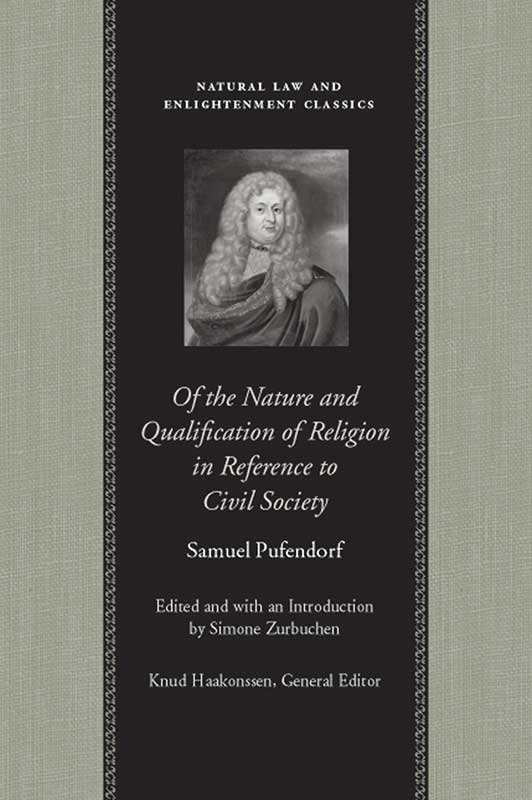
§54. - Samuel von Pufendorf, Of the Nature and Qualification of Religion, in Reference to Civil Society [1687]Edition used:Of the Nature and Qualification of Religion, in Reference to Civil Society, trans. Jodocus Crull, ed. and with an introduction by Simone Zurbuchen (Indianapolis: Liberty Fund, 2002).
About Liberty Fund:Liberty Fund, Inc. is a private, educational foundation established to encourage the study of the ideal of a society of free and responsible individuals. Copyright information:The copyright to this edition, in both print and electronic forms, is held by Liberty Fund, Inc. Fair use statement:This material is put online to further the educational goals of Liberty Fund, Inc. Unless otherwise stated in the Copyright Information section above, this material may be used freely for educational and academic purposes. It may not be used in any way for profit.
§54.Whether Subjects, without the Consent of their Sovereigns, may separate themselves from an Erroneous Religion? But it is not a very difficult Task to introduce a Reformation in Religion with the mutual Consent of Sovereign and Subjects; so it may be questioned, whether Subjects may attempt a Reformation, when their Sovereigns, and the whole Clergy, or at least the greatest part of them, do not acknowledge their Error, but rather pretend to maintain it? In this case, it is our Opinion that, provided these Errors to touch the Fundamental Points of our Faith, such Subjects, as by the Grace of God, and the Light of his holy Spirit have attained the true Knowledge, may separate themselves from the Communion of that Church, without the consent of their Sovereigns or the Clergy. For, every body being accountable to God for his Religion, and answerable for his own Soul, whose Salvation cannot absolutely be committed to any Body else; and, a Christian, in Matters of Faith, being not altogether to rely upon his Sovereign or the Clergy, (at least no farther than their Doctrine is congruous with the holy Scripture.) It is undeniable, that Subjects may separate themselves from the Communion of that Church, which is professed by their Sovereign and Clergy, provided they can make it evidently appear, that such a Church is infected with gross Abuses, and dangerous Errors. For, the Church is a Colledge, whose Members are not kept in Union by any Temporal Power, but by the Union of the Faith; and, whosoever relinquishes that, he dissolves the sacred Tye of the Believers. Besides that, it is not absolutely necessary for our Salvation, that the Church be composed of a great Number, but the same may be obtained, either by a greater or lesser Number of the Believers. Neither can this Separation prove in the least prejudicial to the Sovereign Authority, it being supposed, that those who have separated themselves adhere to the true pure Doctrine of the Gospel, free from all Poison, and Principles dangerous or prejudicial to the Government. For, civil Society was not instituted for Religion’s sake; neither does the Church of Christ participate of the nature of a Temporal State; and therefore a Prince that embraces the Christian Faith, does not thereby acquire an absolute Sovereignty over the Church or Mens Consciences. So, that, if, notwithstanding this Separation, the Subjects pay due Allegiance to their Prince in Temporal Affairs, there is no reason sufficient which can oblige him to trouble them meerly upon the score of their Consciences. For, what loss is it to the Prince, whether his Subjects are of the same Religion with himself, or of another? Or, (which was supposed before) whether they did maintain the same Errors, as he does? The case indeed, would be quite different, if they should endeavour to withdraw themselves from their Allegiance, to set up a separate Society without his Consent; tho’ it is undeniable, that there are some Cases of Necessity, when this civil Tye or Allegiance may be dissolved, as for Instance; when Subjects, for want of sufficient Protection from their natural Prince, are so hardly pressed upon by a more Potent Enemy, that they are forc’d to submit to his Power. And granted the Power of Sovereigns in the Church to be much greater, than in effect it is, Subjects are nevertheless bound to take care of their Souls, whose Salvation is to be preferr’d before all other things, in regard of which they may separate themselves from an Established Religion, provided they are convinced of its Errors. For, that Subject who sacrifices his Life for his Prince, does doubtless a glorious Action; but what Prince can be so unreasonable, as to expect that his Subjects should Sacrifice their Souls to the Devil for his sake. That Prince therefore who does trouble his faithful Subjects for no other reason, but because they cannot conform to his Opinion (especially if they can maintain theirs out of the Holy Scripture) commits an Act of Injustice; Nay, I cannot see how he can with Justice force them out of his Territories. It is true, he may refuse to receive Hereticks into his Dominions, unless it be for Reasons of State; Neither can a true Believer take it amiss, if he is not permitted to settle in a Commonwealth govern’d by Hereticks. For, the Right of Naturalization belongs to Sovereigns, which they may refuse and give to whom they think it convenient. But, as it is certainly the greatest Injustice in the World, to force an in-born Natural Subject, who has settled all his Fortunes in a Commonwealth, meerly for his Religion’s sake, without being convicted of his Error, out of his Native Country, to the great detriment and danger of himself and his Family. So, if a Subject inclines voluntarily to leave his Native Country, either to avoid the Frowns of his Prince, or the hatred of the Clergy and Common People, and to serve God with more freedom according to his own Conscience, it ought not to be refused by his Sovereign. I remember there is a certain Proverb used among the Germans, viz. He that Commands the Country, Commands Religion. But this cannot be applied to the Princes of the Roman Catholick Religion, who cannot lay any Claim to it, it being evident that the Popish Clergy do not allow any such thing to these Princes; And, as to what concerns the Protestant Estates of Germany, it cannot be denied, but that they made use of this Pretension against the Emperor at the time of the Reformation, which however ought to be thus interpreted; That they denied the Emperor to have any Power of intermedling in the Affairs relating to their own Dominions, not, that only they claim’d it as belonging to the Rights of Sovereignty to impose any Religion, tho’ never so false, upon their Subjects; notwithstanding all which, there are not wanting Examples, that Princes have acted conformable to this Proverb with their Subjects. A Prince, who troubles his faithful Subjects meerly upon the score of Religion, commits a gross Error; no Christian Prince being obliged to propagate his Religion by forcible means; provided his Subjects stand firm to their Allegiance to him, he being not answerable in particular for their Religion. It cannot be taken notice of without astonishment, how both in former times and our Age, some Princes, who were naturally not enclined to Cruelty, having in other respects given great Proofs of their Clemency, yet have been prevailed upon to raise the most horrid Persecutions against their Subjects, barely upon the score of Religion. But it has been foretold in Holy Scripture, that this Fate should attend the Christian Church, when it is said, That Mighty Kings upon Earth should commit Whoredom with the Whore of Babylon.209 And, who is ignorant that Gallants will often commit the most barbarous Acts, meerly to please their Harlots? All true Christians therefore ought couragiously to oppose the Threats and Attempts of this Beast, committing the rest to Divine Providence. And, as for such Princes and States, as have shaken off the Yoke of Popish Slavery, if they seriously reflect, how their fellow-Protestants are persecuted, and in what barbarous manner they are treated, will, questionless without my Advice, take such measures, as may be most convenient for to secure themselves from so imminent a Danger. The following ANIMADVERSIONS Made by the Author, upon some Passages of a Book, Entituled, A POLITICAL EPITOMY, Concerning the Power of Sovereigns in Ecclesiastical Affairs. Written By ADRIAN HOUTUYN,210 Having a very near Relation to the former TREATISE, it was thought fit to Insert them here by way of APPENDIX It is a Question of the greatest moment, which, if rightly determined, tends to the Benefit of Mankind in general, viz. Unto whom, and under what Limitations the Power in Ecclesiastical Affairs is to be ascribed in the State? If the old Proverb, That those who chuse the middle way are commonly the most successful, has not lost its force, it may without question, be most properly applied in this Case, where both Extreams are equally dangerous, since thereby the Consciences of Subjects are left to the arbitrary disposal, either of the Pope of Rome, or their Sovereigns. There having not been wanting, both in the last and our Age, Men eminent for their Learning, who have with very solid Arguments opposed the Tyranny of the first, it is but reasonable for us, to take heed, that since we have escaped the danger of Scylla, we may not be swallowed up by Charybdis. For, as scarce any body that is in his right Senses can go about to deny, that the Sovereign Power ows its original either to God, or the general Consent of the People; So it is a matter mutually advantageous both to the Prince and Subjects, to understand, how far this Power is limited in the State, that the first may not transgress their due Bounds, and, instead of being Fathers of their Subjects, prove their most dangerous Enemies. Adrian Houtuyn, a Civilian in Holland, having in a Treatise, called A Political Epitomy, inserted several Assertions tending to the latter of these two Extremes, and it having been observed of late, that this Book has been recommended by some Doctors in the Law, to the great detriment of young Students; I thought it not amiss to make some Animadversions upon his LXIII, and following SECTIONS, which may serve as a Guide to the younger Sort, lest they, under the Cloak of asserting the Prerogatives of Sovereigns, may be mislead into the latter of these Extremes, and attribute that to the Prince, which God has reserved as his own Prerogative, and thus, irrecoverably, play the Prodigal with their own Liberty and Property. This Author speaking concerning the Prerogative of Princes, Sect. LXIII, runs on thus: He has an uncontroul’d Power over all External, Ecclesiastical Affairs, which are not determined in the Holy Scripture. He alledges for a Reason, because that Power is granted to Sovereigns at the same time when Subjects submitted themselves and their Fortunes to their Disposal. But it ought to be taken into Consideration, that certain Matters belonging to the external Exercise of Religious Worship have so strict an Union with the internal Part, that, if the first be not disposed in a manner agreeable to this inseparable Tye, the latter must of necessity undergo such Alterations, as are inconsistent with its Nature. And, since Mr. Houtuyn do’s not leave the internal Part to the Disposal of Sovereigns, how can the exterior Worship be submitted to their meer Pleasure, considering this strict Union betwixt them? Besides this General Submission, he admits of Limitation, in regard of that End, for which Civil Societies were Instituted, which is, the mutual defence against Violences: From whence it is evident, that there are certain Matters, belonging to every private Person, derived from the State of natural Freedom, which were not absolutely left to the Disposal of Sovereigns, at least, no further than they were necessary to obtain that End. Religion having not any relation to this End, it is not to be imagined, that Subjects did submit their Religion to the arbitrary Pleasure of Sovereigns. And, it being unquestionable, that Subjects may exercise certain Acts belonging to them by Vertue of an inherent Right, derived from the free State of Nature, and independent from their Sovereigns, it may rationally be concluded, that, when Subjects did submit themselves, in Matters of Religion, to their Sovereigns, it was done with this Supposition, that both the Prince and Subjects were of one and the same Religion; and that the external Exercise of Religious Worship was not left to the Disposal of the first, any further, than in such Matters as are indifferent in regard of the internal Part of it. What is alledged concerning the maintaining a good Order, and avoiding of Confusion, it is to be observed, that this is not the main End, for which Civil Societies were Instituted, nor has it any relation to it, but only thus far, as it may be instrumental to maintain the Publick Tranquility. As to N. 2. It is to be observed, that, because Priests have a dependance from the Civil Power in certain Respects belonging to its Jurisdiction, this does not involve Religion (considered as such) under the same Subjection. The following words ought also to be taken notice of: A Christian Prince commands over the Church, as being a Colledge, and representing one single Person in the Commonwealth. The Church, thus considered, is a Civil Society or Body Politick, founded upon the Publick Authority and Power, and ought to be regarded, as being in the same condition with other Colledges and Bodies Politick; and in this Sense a King is the Head of the Church in his Dominions. Whoever will consider the real difference betwixt the Church and Commonwealth, must needs find as many Errors, as there are words here. For, because a Prince has the Sovereign Jurisdiction in a Commonwealth, consisting of Christian Subjects; no inference is to be made, that therefore he may, in the same degree, exercise his Sovereignty in the Church, as in the Commonwealth, and that in the same Sense, he may be called, The Supream Head of the Church, as of the Commonwealth. ’Tis true, the Church is a Society, but not a Body Politick, founded upon the Publick Authority, but owes its Original to a higher Principle, having not, like other Colledges, its dependency from the State, What is alledged out of Titus, 2:9. Colos. 3:20, 22. Rom. 13:3, 4. 1 Pet. 2:14. is strangely misrepresented to evince, that Ecclesiastical Matters are dependent from the absolute Pleasure of Sovereigns. What Follows might also very well deserve some Animadversions, if it were not beyond our scope at present. N. 13. It is a gross Error, That, as a Consequence of this Sovereign Power in Ecclesiastical Affairs, he attributes to them, the Titles of Pastors, Ministers, Heralds of God, Bishops, Priests, and Apostles. Pray, with what Authority, and with what sense? For, the Duty belonging to Sovereigns, which entitles them to the name of being the Guardians of both Tables of the Decalogue, and of being the Foster-Fathers and Defenders of the Church, is of a far different Nature from what he would insinuate here. And, if it be not to be left to the absolute Judgment of the Clergy it self, with exclusion of the rest of the Members of the Church, to determine in Ecclesiastical Affairs, what is agreeable to the Word of God, how can this Judgment belong to the Sovereign alone, without allowing a share to the rest of the Members of the Church? These words in the §. LXIV. Each Sovereign may establish what Religion he pleases in his Dominions, ought not to be let pass by without a severe Correction. The Reason alledged is very frivolous: Because all Publick and external Actions depend from the Publick Authority. Is this your Assertion, good Mr. Houtuyn, that Princes may impose what Religion they please upon their Subjects, and by their absolute Authority make it the establish’d Religion, with exclusion to all others, who, if not complying, must, forsooth, fly the Country? What Religion they please, do you say! the Pagan, False, Fictious, or Superstitious, it matters not which. From whence, pray, was this Power derived to Sovereigns? Not certainly from God, except you can shew us a Divine Authority for it. Not from the common consent of those that entred into Civil Societies; Commonwealths not being instituted for Religion’s sake, and of a later date; besides, that such a Power is not requisite for the attaining that end, for which Civil Societies were establish’d. Neither is it left to the bare pleasure of any Person, tho’ considered as in the Natural state of Freedom, to profess what Religion he pleases: But, supposing it was, no Inference can be made from thence, that the same may be forc’d upon others. The distinction he makes betwixt the internal and external Religion, must also be taken with a great deal of Circumspection, lest some People might perswade themselves, that it is indifferent what Religion a Man professes in outward shew, provided he be satisfied as to the internal part of it. Furthermore, it is absolutely false, that all Publick Actions, that is, every thing done in Publick in the Commonwealth, owes its Original to the Sovereign Power; there being several things to be done by Subjects in publick, depending meerly from that Liberty belonging to them in the Natural state of Liberty, or from God’s Command, or from a certain Power granted to them by God Almighty. It is no less false, That all exterior Actions depend from the Civil Authority; For, according to Mr. Houtuyn’s Opinion, the Doctrine of Divinity, and the Confession of Faith, as comprehended in a certain form, are to be reckoned among those exterior Actions. Mr. Houtuyn is much in the wrong, when he pretends to draw an Inference from thence; that, because it belongs to Sovereigns to take care, that their Subjects may be well instructed concerning what Opinion they ought to have of God, as the Establisher of Justice; they therefore have a Right of disposing (in an Arbitrary way) of revealed Religion, and to declare any Religion whatsoever, which pretends to Revelation, the Establish’d Religion in the Commonwealth. It is a much grosser Mistake yet, when he asserts: That any Religion establish’d in a State, tho’ never so false, contributes to the Publick Tranquility of that Commonwealth. It is possible that a Religion defective in some Points, may nevertheless lead People into the way of Salvation; but those that contain false Doctrines of God and his Attributes, are incapable of producing that Effect. The Publick Tranquility, founded upon such false Opinions, will be very unstable, and may with more ease, or at least with the same conveniency be obtained by the true Doctrine; especially if it be taken into consideration, that, tho’ it be possible that such Impostures may beguile the giddy-headed Multitude, they cannot always pass for currant among Men of a sound Understanding: It is to be remembred, that the Southsayers at Rome cannot forbear laughing, when they meet another of the same Profession. We must beg Mr. Houtuyn’s Pardon, if we question his Authority, when he pretends to perswade us: That Faith, which he is pleased to call every ones private Religion, independent from any Temporal Power, will not be impaired by a Man’s professing any other Religion, established by the Sovereign Authority; and he leaves it to the discretion of those Civil Governours, which of all Religions they will be pleased to establish in their Dominions, whether that of the Japoneses, of the Brachmans, Mahometans, Jews, or Christians; and among all those that pretend to the Christian Name, such a one as may be most agreeable to their own Fancy. I much question, whether he will meet with many Tools, that will take his Word for it. A great part of Christendom did look upon it as a thing insufferable, that the Pope of Rome should set up for the great Arbitrator of Christendom in matters relating to the Christian Faith, tho’ his Pretences did not reach further than to force one Religion upon the World, which he knew was most likely to turn to his own Advantage: But now it seems it has pleased God, that Sovereigns should be invested with a Power of establishing any Religion at pleasure; and it being beyond question, that there are several Religions which have not the least relation to one another, they may, with the same Right, at several times, declare, several distinct Religions, nay, even those that are quite opposite to one another, the establish’d Religion, and nevertheless every one of these must be accepted, forsooth, as the true Religion. The next Consequence will be, that Sovereigns, having a Right of defending and altering the establish’d Religion, and to punish such as trespass against it, one Prince will have no more Right to cherish and maintain one Religion, but his Successors may, with the same Right, abolish it, and punish such of his Subjects as adhere to it. So that according to the Doctrine of Mr. Houtuyn’s Gospel, the establish’d Religion will be settled upon the same Foundation with some Statutes, which may be enacted and repeal’d by Sovereigns at pleasure. In §. LXV. He entirely, and without limitation, ascribes to the Prince the Power of Constituting Ministers of the Gospel, in the same manner as if they were Ministers of the State. But in the Commonwealth of the Jews, regulated according to God’s own Institution, no such Power was granted to their Kings; Neither had the Apostles themselves, tho’ the most general Teachers that ever were (as being sent to Preach the Gospel to all the World) their Authority of Teaching from any Temporal Sovereigns. Neither can it be proved, that the Church, at the time, when Sovereigns first embraced the Christian Faith, did transfer this Power of constituting Ministers of the Gospel, without limitation, to those Princes; tho’ at the same time it is not to be denied, but that Sovereigns have a considerable share in it. His Argument taken from the care Parents ought to have of the Salvation of their Children, does not reach to what he pretends to prove; for, says he, Princes being the Publick Fathers of the Commonwealth; it belongs to their Princely Office, to provide for the Eternal Salvation of their Subjects. For, besides that, the Title of Father of the Commonwealth is a Metaphorical Expression, the Fatherly and the Regal Office depend from a quite different Principle, and the care to be taken of Children of a tender Age, is of another Nature with that which ought to be employed for the Safety of a whole People; neither were Sovereigns invested with the Supream Authority to enable them to procure Eternal Salvation to their Subjects, God having prescribed other ways and means for the obtaining of it. It cannot be denied, but that a Prince must not be regardless of this Care, nevertheless ought the same not to reach beyond its due Bounds, but must be effected by such Methods as are approved of in the Holy Scripture, and suit with the true Genius of the Christian Religion; Wherefore, it is in vain to attribute to Sovereigns a Power of obtruding any Religion, at pleasure, upon their Subjects; it being beyond question, that not all Religions are conducing to obtain Eternal Salvation. So Abraham, the Father of Believers, did not impose upon his Children what Religion he thought most convenient, but he charged them to walk in the ways of the Lord, such as were manifested to them in the Holy Scripture. What St. Paul says, 1 Tim. 2:2. is very well worth taking notice of, viz. That the chief care of the Supream Governours shall be, so to Rule over their Subjects, that they may live under them, not only honestly, but piously; this being the way to Eternal Salvation. It is to be observed, that those Princes, for whom the Apostle enjoined the Christians to pray, being Pagans, made but little account of Piety, especially of that belonging to the Christians; but it was thought sufficient for the Christians to enjoy the common Benefit of the Publick Tranquility under their Protection, the rest being left to their own care. So we read that the Poet’s enjoyment of his Muses, was owing to Augustus Caesar’s Protection; nevertheless the Emperor did not concern himself about the Rules of Poetry. Furthermore, it is a very gross way of Arguing, when he Asserts: That, the Commonwealth and Church are both one and the same thing under a Christian Prince, whose Subjects also profess the Christian Religion, the only difference being in respect of their different Qualifications: They being in the Commonwealth to be considered as they are Subjects, in the Church as Believers. It seems, Mr. Houtuyn looks upon that Difference to be of little moment, which arises from divers Moral Qualifications, and includes different Obligations, and is founded upon another Legal Principle. It is confess’d, that in such a case where the Head is not differing in his Natural Constitution from the Rights and Power belonging to him, the rest of the Members, tho’ differently considered under divers Qualifications, are nevertheless to be look’d upon as one and the same Society. As for instance: If a Prince puts himself at the Head of all his Subjects upon an Expedition, these, tho’ they may be considered either as Soldiers or Subjects, yet do not differ in any Essential Part; As for Example: The People of Israel, when going upon their Expedition under the Conduct of Joshua, was the very same that afterwards, under his Protection, enjoyed and inhabited the Country of Canaan. But the Church and Commonwealth, tho’ composed out of the self-same Persons, do not only differ in their very Foundation, but also a Sovereign cannot claim the same Right and Name of being the Supream Head of the Church in the same sense, as he is the Supream Governour of the State. For, in the latter he exercises his Authority without controul, being subject to no body; But, the Head of the Church is Christ, who Rules it by his Word, announced to us by the Teachers of the Church; so, that a Sovereign cannot as much as claim the Right of being Christ’s Vicegerent in the Church; And, on the other hand, tho’ it is said of Christ, That all Power is given unto him in Heaven, and upon Earth,211 nevertheless it cannot be said of him, to be, in the same manner, the Head of Civil Societies, as of the Church. The next following Assertion runs thus: Where the whole Commonwealth is not composed out of Christians, the Church is a Congregation of the Believers in the Commonwealth. But, where all Subjects are Christians, the Church is nevertheless nothing else than a Colledge in the Commonwealth. But what he alledges of the Church being sometimes taken in the same sense with the Commonwealth, is absolutely false. For the words, κατ’ ἐκκλησίαν in Acts 14:23. and those in Titus 1:5. κατα πόλιν are no Synonyms; but the latter is to be understood thus: In all the Towns and Cities, where there was any Christian Church. The Inference he would make from the Military Function, and the Administration of Justice, being both included in one Government, is to no purpose; both of them owing their Off-spring to that End for which Civil Societies were instituted, which is not the same in the Church; and Sovereigns are entrusted with the Sword of War and Justice, not with the Ministerial Function of Preaching the Gospel. From whence it comes, that Generals and Judges are subordinate to the Princely Office, but not the Ministers of the Gospel, they being (barely considered as such) not properly Ministers of the Prince and State, but Ministers of Christ and the Church. He says further; That the assignation of the Ministerial Function does not appertain to the Internal part of Religion. But if Faith comes from hearing, and no body can believe, without being instructed; it is undeniable, that those that Preach the Gospel, have a share in the internal part of Religion, they being considered as the Instruments, by the help of whom, the Gospel, and consequently the Faith, is conveyed to their Auditors. It is false, when he asserts, That Sovereigns, tho’ no Christians, have a Right of constituting Ministers; For, says he, their Right is the same. But a Prince, who makes not Profession of the Christian Faith, tho’ he has Christian Subjects under his Jurisdiction, and allows them the free Exercise of their Religion, has nevertheless not the least Power over their Church, as being no Member of it. It is no less false, what he says, that since Princes are become Christians, the Vocation of Ministers does no more depend from the Church; Just as a Man, by submitting himself under another Jurisdiction, is no more at his own disposal. For, a Prince by becoming a Member of the Church, does thereby not make himself Master of that Church, but rather submits to the Obedience of Christ, the Head of the Church; and therefore does not incroach all its Rights to himself, but only can claim his share as such, unless a certain Church should voluntarily surrender its Rights, as far as it lies in its power, to the Sovereign. And I see no reason, why the Church may not be under the Protection of a Christian Sovereign, as representing a certain Person in the Commonwealth; and therefore to Act and Decree by plurality of Votes, which implies a Right, at least by Consent. For, there is a Medium betwixt the State or Commonwealth and a disorderly Multitude, viz. a Colledge, where there is no occasion for a coercive Sovereign Power. This may be illustrated by an Example: For, supposing in a Commonwealth a certain Society or Company of Merchants, regulated by certain Statutes of their own, under the Direction of some of its own Members. Into this Colledge a Prince has a mind to be received as a Member, paying his certain share. By being thus made a Member of this Company, he has not obtained an absolute disposal over this Society; but rather has accommodated himself to the Statutes of the Colledge, neither can he claim any other Prerogative there, but what is derived either from his share in that Company, or from a free Gift, and voluntary consent of the rest of its Members; and as a Member of this Colledge he is to be considered, not as a Prince, but as a Merchant. There is nevertheless one remarkable difference, viz. That it is in the Power of a Sovereign to hinder the setting up of such a Society, which is not the same in regard of the Church. He plainly betrays his Ignorance, when he says; That the Church is to be considered as a multitude of People, comprehended in the Person of one Prince; from whence the Prince represents the People, like one Publick Person, through whom the whole People declare their Sentiments. For, tho’ this be appliable to the Commonwealth, it is not to the Church, they being quite different from one another. It cannot be denied, but that those who have the Sovereign Power in the State, may Enact what Laws they think most convenient; But to attribute the same Power to Sovereigns over the Church, is a Madness, and savours of Blasphemy. And, supposing a Prince should be misled into Errors, or Heresie, must therefore the whole Church be accounted Erroneous, or Heretical? Except he would perswade us also, that Princes are Infallible. Wherefore in those places where the Election of Ministers is independent from the Prince, it is supposed to proceed from a Right transferred unto him by the Church; The same is to be understood, where this Election is managed either by the Bishops or Presbyters. But in case the same be done by the whole Church, it would be preposterous to say, that such an Election was made by vertue of a Priviledge granted by the Prince. Mr. Houtuyn having granted before, That the Pastoral Function, not being annexed to any certain Person, (considered as such) had no dependency from the Civil Jurisdiction, but owed its Institution to Christ. Nevertheless in §. LXVI. he affirms: That the actual Administration of the Ministerial Function is an External Publick Act, such as is subject to the Civil Power. Which is the same in effect, as if he said, Matrimony is a Divine Institution, but it depends from the Prince, whether he will allow his Subjects to Marry actually or not. For, supposing a Sovereign should take a Resolution to forbid the antient Exercise of the Ministerial Function, what would, in such a Case, become of this Pastoral or Ministerial Function? It is also insufferable what he says immediately after: An Election is a voluntary Act, therefore revocable at pleasure; it being certain, that it cannot be done without impairing the Reputation of the Minister. What relates to §. LXVII. It is denied, that Nebuchadonosor had any legal Authority to put to Death such as refused to adore the great Statue, set up by his Order. For, a Prince who inflicts any Punishment upon his Subjects, against the express Command of the holy Scripture, does not, at that time exercise his legal Authority, but commits an hostile and tyrannical Act. So, when King Ahab, under pretence of a legal Process, and by subborning of false Witnesses,212 possess’d himself of Naboth’s Vineyard, did no more exercise his legal Jurisdiction, than a Guardian may be said to do, when he commits a Rape upon a Pupil committed to his Management. But, when the same Nebuchadonosor publishes his Edict, That no body dare to blaspheme the God of the Jews, he did, without all question, nothing but what belong’d to his high Station. He runs on further; viz. That Peter, John, Stephen, Paul, nay, even our Saviour himself, did appear before the Sanhedrim, before Felix, Festus, Caesar and Pilate, without taking the least Exception against the legality of their Jurisdiction. What could be more falsely invented? Did Peter and John acknowledge the Jurisdiction of the Sanhedrim in respect of the Christian Doctrine, when they told them to their very Faces, that they would not obey their Command, of not preaching in the Name of Jesus?213 Did Stephen acknowledge the Jurisdiction of the Sanhedrim, when he told them, You uncircumcised in your Hearts and Ears, you always resist the holy Ghost? Neither is it an Argument, that Paul, and an infinite Number of Martyrs did acknowledge the Jurisdiction of those Princes, and other Civil Magistrates, when they, being forced to appear before them, endeavoured to prove their Innocence, there being no other Tribunal to which they could appeal; and it being at that time look’d upon as a Crime deserving Death, for any one to profess himself a Christian. All the defence they made may be reduced under two Heads: For they either denied those Crimes laid to their Charge, as calumnious, or else they asserted even to the last, That the profession of the Christian Religion did not depend from the Civil Jurisdiction. And those Magistrates that absolved the Confessors of this Truth, did in effect give this Sentence: That this was a Cause not belonging to their Jurisdiction. It is a wonder to me how Mr. Houtuyn, who pretends to be a Lawyer, can find out any thing in the least resembling a legal Process in that Action of Pilate, it being to be considered no otherwise than a publick Robbery, and a power of darkness,214 since in all his Proceedings, there is not a footstep of a legal Process to be met with. And it is so manifest, that, when religious Matters were in question, the due Method and judicial Order of a legal Process have been violated a thousand times over and over, that it would be superfluous to alledge any Examples of it here. When Sovereigns punish or chastise a Pastor or Minister of the Church, who has abused his Function, or been defective in it, this power does properly not proceed from the Civil Jurisdiction, but from a Right translated to the Sovereign by the Church. But those that are punished by the Civil Authority, because they have stirr’d up, by their turbulent Speeches and Sermons, the People to Rebellion against their Sovereigns, or have attempted to withdraw the Auditors from, and to resist the Power of a legal jurisdiction, cannot be said to undergo Punishment on the account of the Christian Religion. Furthermore, it is false, that the Church (considered as such) can claim any Jurisdiction, properly speaking. It is no less false, that the Power of disposing and exercising those Functions, belonging to each Church, is a civil Act, in regard of its publick Effect. Mr. Houtuyn has been drawn into all these Errors, by confounding the Commonwealth with the Church. If these two be not very nicely distinguished, but we allow the Church to be entirely swallowed up in the civil Power, what have we got by shaking off the Popish Yoak? For, the condition of the Church will be never the better, if all Ecclesiastical Matters, without Exception are left to the arbitrary Disposal of Sovereigns; To maintain which, Mr. Houtuyn, in contradiction to all Reason and the Scripture it self, has invented; A spiritual Good, or the eternal Welfare of People, as the main End and Duty of the Sovereign Power; By Vertue of which, he enables his Prince to force his Subjects to profess publickly what Religion he will be pleased to impose upon them; tho’ never so contrary to their own Opinion. For it may be sufferable for a Man to keep his own Opinion concealed to himself, but to be oblig’d to profess what is quite contrary to it, is both abominable and intolerable. The Saying of Constantine the Great, so much extoll’d by Mr. Houtuyn himself, is contradictory to his Assertion, viz. That he could have wish’d, all his Subjects to have been Christians, but that he never forced any. For, this Emperour not only never attempted to force any one from his own Opinion (which indeed was beyond his Power) but also never constrained his Subjects to profess themselves Christians against their own Inclinations. Our Author does also not a little contradict himself, in what he says concerning Words, sometimes exempting them from any civil Cognisance; whereas, before he had made them liable to the civil Jurisdiction: What, says he; if our Faith express’d by Words should come to the knowledge of our Sovereign? It ought to be look’d upon not so much as a Crime, but rather as an Error, to correct which, is not to be effected by Punishments (which do illuminate our Mind) but rather by good Instructions. But those that know the real difference betwixt the Commonwealth and Church, that is to say, betwixt the State and a Colledge, may without much difficulty dissolve these knotty Questions, which he has started concerning the Jurisdiction and Legislative Power of Princes over the Church. As to the §. LXIX. It is to be observed, that it is put beyond all question, that Sovereigns have a Right to give the Authority and Force of a Law to such Statutes as they find suitable to the State, it being their Prerogative to determine, according to what Laws Judgment is to be given in Civil Courts of Judicature, what is punishable, and what is to be left to the Conscience of every Subject. But it implies in Absurdity, to attribute to Sovereigns a Right of giving publick Authority to Prophesies themselves, neither the Intrinsick nor Historical Faith having any dependence on the Civil Jurisdiction, by the force of which Subjects may be obliged to act, but not to believe. From whence it is evident, that if any Prophecy appear to be from God, it cannot receive any Addition by the Authority of the Prince, no more than if he should declare Cicero to be a good Latin Author. But in case a pretended Prophecy be either ambiguous or suppositious in it self, and a Prince should persuade himself to be able by his own Authority to make it pass current for Truth, he would be look’d upon as one beyond his Senses; What he insinuates concerning the New Testament in general, is much of the same Stamp: It was not, says he, in the power of Christ and his Apostles, to establish this Doctrine (of the New Testament) by Publick Authority, which was the reason it remain’d in a private condition, till such time when Princes having received the Christian Faith, they gave it a publick Authority, and the force of Laws. But the Rules and Doctrine of Christ cannot receive any additional Strength from the Civil Power, it being contrary to its Genius to be established and promoted by civil Punishments; For, whosoever out of fear of Temporal Punishments, professes in outward shew only this Doctrine, does not act according to, nor fulfil the Will of Christ. The same may be reply’d to §. LXX. For, as the Scripture and the Christian Doctrine do not owe their Authority to the civil Jurisdiction, the latter being introduced in the Government by God’s peculiar Assistance, in spite of all the Resistance of the civil Powers; So ought the Interpretation of the ambiguous and controverted Passages in the holy Scripture, not to be determined by the Sovereign Authority; it belonging not to the Prince only, but to the whole Church, or such as are authorised by the Church; tho’ at the same time, the Prince, considered as the Chief Member of it, cannot be excluded from having his share in such a Debate. Is it a prophane Expression when he says: Christ himself having an unquestionable Power of introducing a new Law, must needs have a right to interpret the same. But, since during the time of his abode here, he lived among those, that either out of Ignorance or Disobedience did not own Christ, and that in a private Condition, subject to the civil Power; it is evident, that his Laws, Doctrine, and the Interpretation of them, did acquire their obliging Power, and publick Authority from the civil Constitution. A little more would have made the Office of Christ, as being Mediator of the World, also dependent from the civil Jurisdiction. It is not a prodigious Absurdity to affirm; That the Doctrine of Christ has received its publick Authority from the civil Power, among those, who denied Christ? And what follows: That, if at the time of Christ, Princes had been Christians, they would have acknowledged him for the true God, and the Son of God, submitting themselves to his Judgment; so, that the Interpretation of the Christian Doctrine would have been owing by Christ, to their Submission. Away with such Fictions not aggreeable even to common Sense. He might as well say, that God’s Power over us Mortals did owe its original to the submission of Princes; and in case they thought fit to withdraw themselves from this Obedience, God Almighty (I cannot relate it without horror) must thereby be reduced to the Condition of a private Person. In the next Assertion, he is not altogether so much beyond his Senses when he grants, even to Pagan Princes, a Right of determining the controverted Points among Christians, which is as much as to make a blind Man a competent Judge of the difference of Colours. When the Primitive Christians were forced to appear before the Pagan Judges, it was not on the Account of the Interpretation of the Scripture; The Christians could never be guilty of so gross an Error, as to Consult with the Unbelieving concerning the controverted Articles of Faith; But, being forced, against their will, to appear before them, they could not avoid to receive their Judgment, such as they were pleased to give, as having no way left them to decline it. Furthermore, our Author is pleased to affirm, That such an Interpretation ought to be look’d upon as establish’d by Publick Authority, which carries along with it an obliging force, at least in outward appearance; so, that Subjects are obliged to conform themselves to it by a verbal Confession, tho’ never so discrepant, from that Opinion, they keep concealed within their hearts. But; the outward Behaviour, and verbal Confessions of a Christian, which are not aggreeable to the true Sentiments of his Heart, having not the least affinity with Religion it self, I don’t see, upon what Account this Chimerical Power is attributed to Princes, unless it be, to furnish them with a specious pretext to afflict their Innocent Subjects. Thus much is certain, that Christ did not command his Doctrine to be propagated by forcible means; so that, supposing the Articles, thus established by the Civil Authority, to be never so consonant to Truth, it is nevertheless inconsistent with the Genius of the Christian Religion, to impose them upon Subjects by force, and under severe Penalties; But, supposing them to be false, the case of Subjects must needs be very miserable, when they suffer Punishment, because they will not profess an erroneous or false Doctrine. I see no other benefit to be reap’d from the egregious Assertions of our Author, than to serve for a Justification of the most Tyrannical Persecutions that have been, and to declare them to have been done by Vertue of a Legal Authority. At this rate it will be no difficult Task to justifie the Proceedings against the Protestants in France, which move both Pity and Horror in all good Men, at least, Mr. Houtuyn has very freely offered his Advice and Patronage. What follows next, is very smartly said, to wit, That the Coercive Power may be Legal, whereas the Act of Obedience is not allowable. No body of common sense but will acknowledge, that this implies a most manifest Contradiction, and, that the Legal Sovereign Authority, and the Obligation of paying Obedience to it, are inseparable from one another. Yet with this Nicety Mr. Houtuyn is so mightily taken, that he does not consider, that at the same time, he grants an absolute Authority to his Prince, to persecute his Subjects on the Account of Religion, he takes away from them the Power of denying the true Religion. But, what Reason can be given, why the one should have a coersive Power, where the other cannot obey; unless it be done on purpose to encourage ambitious and imperious Princes, either to force their Subjects to a sinful compliance, or never to want an Opportunity of afflicting the Innocent at Pleasure? For those that take to these violent ways of propagating the Faith, or rather (to speak Truth) Hypocrisie and Superstition, by their booted Apostles, are not contented to silence their Subjects, dissenting from them in Point of Religion, who are also debarr’d even to save themselves by flight; (tho’ it be no small Misfortune to a Subject, to be forced to leave his Native Country) but they compel them to profess publickly those things for Truth, which they abhor in their Hearts, and appear to be Idolatrous, Superstitious, or Fictitious; invented on purpose by those that make their Market by Religion. Mr. Houtuyn himself cannot but confess, That no body can safely acquiesce in any determination made concerning all Articles of Faith, unless by his own private Judgment he find it aggreeable to the Word of God. And, if he find it not consonant to that, he ought not to rest satisfied in it, for fear he should disown his Faith this being the worst and most unbecoming thing belonging to a Christian. But, if it be unbecoming a Christian to deny his faith, which is the same in effect, as to rest satisfied in one’s own private Opinion and Conscience, to keep secret within the heart what one believes, not to indulge one’s Tongue, and to refrain from External Actions. This being the Advice (which in contradiction to himself he had not long before given to the Dissenting Subjects) what Reason can he give for his Assertion; when he attributes to his Prince a Power so unlimited that his Christian Subjects must either be forced to undergo such an indignity, or else the most horrible Persecutions that can be invented? The first Inventer of this unlimited Power, as far as ever I could learn, was Mr. Thomas Hobbs, the worst Interpreter that ever was in Divinity; whose Opinion, as to this kind, no body has taken so much pains to revive with the same Impudence, as Mr. Adrian Houtuyn. What I most admire at, is, that this should be attempted by one living in a State, whose Maxims are quite opposite to these Principles, and where consequently he could not reasonably propose to himself any Reward of his Adulation; There being not the least likelihood that the States General of the United Provinces should ever lay claim to such Power; As it is not very probable that Princes will apply themselves to the Ministry of the Church and undertake the Publick Exercise of the Pastoral Function in Person; so that I cannot see to what purpose our Author has been so careful in asserting it, in the behalf of Sovereigns; Unless he has pleased himself with this Fancy, that his Assertions cannot fail to make him to be the more admired among the Youngsters, by how much the more remote they are from common Sense. Thus much at present for Mr. Houtuyn. selected bibliographySelected Works by Samuel Pufendorf with the Titles under Which They Appeared in EnglishDe statu imperii Germanici (The Present State of Germany), by Severinus de Monzambano (Pufendorf). 1667. De jure naturae et gentium libri octo (The Law of Nature and Nations). 1672. De officio hominis et civis juxta legem naturalem libri duo (The Whole Duty of Man According to the Law of Nature). 1673. Basilii Hyperetae [Pufendorf’s] Historische und politische Beschreibung der geistlichen Monarchie des Stuhls zu Rom (A Historical and Political Description of the Spiritual Monarchy of Rome [never translated into English]). 1679. Later included in the following work. Einleitung zu der Historie der vornehmsten Reiche und Staaten so itziger Zeit in Europa sich befinden (An Introduction to the History of the Principal Kingdoms and States of Europe). 1682–86. De habitu religionis christianae ad vitam civilem (Of the Nature and Qualification of Religion in Reference to Civil Society). 1687. Jus feciale divinum sive de consensu et dissensu protestantium exercitatio posthuma (The Divine Feudal Law: Or, Covenants with Mankind, Represented). 1695. Studies Related to Of the Nature and Qualification of Religion in Reference to Civil SocietyBlumgart, Alice. Pufendorfs Toleranzbegriff im Zusammenhang mit seinem Staatsbegriff. Dissertation. Munich, 1923. Döring, Detlef. Pufendorf-Studien: Beiträge zur Biographie Samuel von Pufendorfs und zu seiner Entwicklung als Historiker und theologischer Schriftsteller. Berlin: Duncker & Humblot, 1992. ———. “Säularisierung und Moraltheologie bei Samuel von Pufendorf.” Zeitschrift für Theologie und Kirche 90 (1993): 156–74. ———. “Untersuchungen zur Entwicklung der theologischen und religionspolitischen Vorstellungen Samuel von Pufendorfs.” In Religion und Religiosität im Zeitalter des Barock, part 2, 873–82, ed. Dieter Breuer. Wiesbaden: Harrassowitz, 1995. ———. “Samuel von Pufendorf and Toleration.” In Beyond the Persecuting Society. Religious Toleration before the Enlightenment, 178–96, ed. John C. Laursen and Cary J. Nederman. Philadelphia: University of Pennsylvania Press, 1998. Dreitzel, Horst. “Gewissensfreiheit und soziale Ordnung. Religionstoleranz als Problem der politischen Theorie am Ausgang des 17. Jahrhunderts.” Politische Vierteljahresschrift 36 (1995): 3–34. ———. “Toleranz und Gewissensfreiheit im konfessionellen Zeitalter. Zur Diskussion im Reich zwischen Augsburger Religionsfrieden und Aufklärung.” In Religion und Religiosität im Zeitalter des Barock, part 1, 115–28, ed. Dieter Breuer. Wiesbaden: Harrassowitz, 1995. Hunter, Ian. “Religious Toleration and the Pluralisation of Personhood. Christian Thomasius’ Program for the Deconfessionalisation of Society.” Southern Review 31, no. 1 (1998): 38–53. Lezius, Friedrich. Der Toleranzbegriff Lockes und Pufendorfs. Ein Beitrag zur Geschichte der Gewissensfreiheit. Second reprint of the Leipzig 1900 edition. Aalen: Scientia, 1987. Link, Christoph. Herrschaftsordnung und bürgerliche Freiheit. Grenzen der Staatsgewalt in der äeren deutschen Staatslehre, 240–52. Vienna: Böhlau, 1979. ———. “Christentum und moderner Staat. Zur Grundlegung eines freiheitlichen Staatskirchentums im Aufklärungszeitalter.” In Christentum, Säularisation und modernes Recht, 853–72, ed. L. L. Vallauri and G. Dilcher. Milan: Giuffre, 1981. Rabe, Horst. Naturrecht und Kirche bei Samuel von Pufendorf. Cologne: Böhlau, 1958. Stolleis, Michael. “Religion und Politik im Zeitalter des Barock. ‘Konfessionalisierung’ oder ‘Säularisierung’ bei der Entstehung des frühmodernen Staates?” In Religion und Religiosität im Zeitalter des Barock, part 1, 23–42, ed. Dieter Breuer. Wiesbaden: Harrassowitz, 1995. Zurbuchen, Simone. Naturrecht und natürliche Religion. Zur Geschichte des Toleranzbegriffs von Samuel Pufendorf bis Jean-Jacques Rousseau. Würzburg: Königshausen & Neumann, 1991. ———. “Samuel Pufendorf’s Concept of Toleration.” In Difference and Dissent: Theories of Toleration in Medieval and Early Modern Europe, 163–84, ed. Cary J. Nederman and John C. Laursen. Lanham, Md.: Rowman & Littlefield, 1996. ———. “From Denominationalism to Enlightenment: Pufendorf, Le Clerc, and Thomasius on Toleration.” In Religious Toleration: “The Variety of Rites” from Cyrus to Defoe, 191–209, ed. John C. Laursen. New York: St. Martin’s, 1999. This book is set in Adobe Garamond, a modern adaptation by Robert Slimbach of the typeface originally cut around 1540 by the French typographer and printer Claude Garamond. The Garamond face, with its small lowercase height and restrained contrast between thick and thin strokes, is a classic “old-style” face and has long been one of the most influential and widely used typefaces. Printed on paper that is acid free and meets the requirements of the American National Standard for Permanence of Paper for Printed Library Materials, z39.48-1992. ∞ Book design by Louise OFarrell, Gainesville, Florida Typography by Impressions Book and Journal Services, Inc., Madison, Wisconsin Printed and bound by Worzalla Publishing Company, Stevens Point, Wisconsin [209.]Rev. 18:3. [210.]See section V of the editor’s introduction. [SZu] [211.]Matt. 16:19. [212.]1 Kgs. 21:2ff. [213.]Acts 4:19, 20. [214.]Luke 22:53. |

Titles (by Subject)