Econlib

The Library

Other Sites

Front Page arrow Titles (by Subject) arrow §52. - Of the Nature and Qualification of Religion, in Reference to Civil Society

Return to Title Page for Of the Nature and Qualification of Religion, in Reference to Civil Society

Search this Title:

§52. - Samuel von Pufendorf, Of the Nature and Qualification of Religion, in Reference to Civil Society [1687]

Edition used:

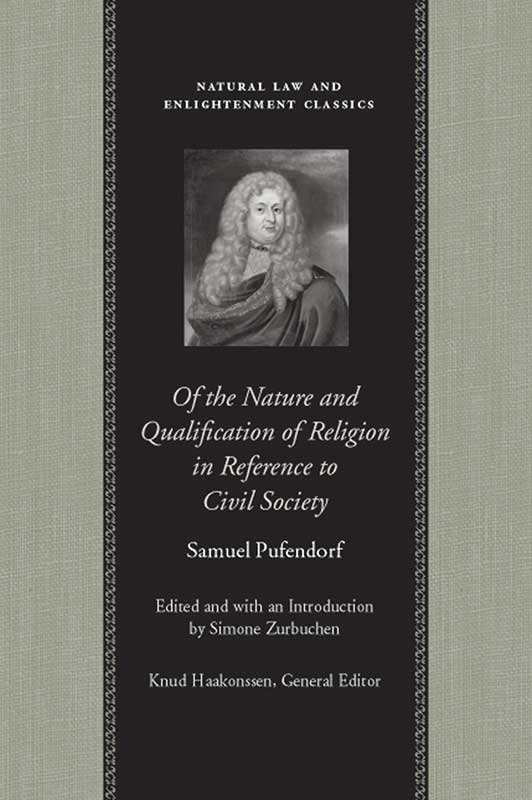
Of the Nature and Qualification of Religion, in Reference to Civil Society, trans. Jodocus Crull, ed. and with an introduction by Simone Zurbuchen (Indianapolis: Liberty Fund, 2002).

About Liberty Fund:

Liberty Fund, Inc. is a private, educational foundation established to encourage the study of the ideal of a society of free and responsible individuals.


§52.

Sovereigns are often encroached upon in their rights under a religious pretext. Lastly, Since Sovereigns ought to be jealous of their own Prerogatives, they may without Injustice make an Enquiry, whether the Protestant or the Popish Religion be most encroaching upon their Authority, and which of these two be most consistent with the Civil Government. For whenever the Civil Power bears any diminution under a Religious Pretence, it is then high time for Sovereigns to look about them, to examine upon what Foundation these Pretensions are built; it being evident, that Civil Government was introduced before the Christian Religion, and that therefore it ought plainly to be demonstrated, how Civil Authority came to be diminished by the Christian Religion. Now, if we look into the Constitution of the Popish Clergy, it is manifest, that by many steps and degrees, and by various Artifices and Intrigues; they have at last patch’d up a Potent State of their own; and that their Supream Head, for these many Ages past, is possess’d of great Territories, and Acts as a Sovereign; and, not only this, but also obtrudes his Authority upon all such as profess the Roman Catholick Religion. For, they don’t think it sufficient that the whole Clergy have their dependance from him, but he pretends to an Absolute Authority of determining all Matters of Faith, by which means he is sure to guide the Minds of the People where ever he pleases. If any thing in the World is destructive to the Civil Powers, it must of necessity be this, when a Party inhabiting their Territories, disown their Jurisdiction and depending from a Foreign Power; deny the Authority of their Natural Prince over them, or at least acknowledge it no longer than they think it convenient. If Neighbouring States are commonly the most jealous of one another, must it not be look’d upon as a great Solecism of State, to permit such as depend from a Foreign Jurisdiction to abide in the Commonwealth? It is next door to take Foreign Garisons into our Forts, or to allow a Foreign Force to Encamp in the midst of our Dominions. And this Mischief seems to be the more pernicious, when the Revenues, by which the Grandeur of this Ecclesiastical State is maintained, are squeezed out of the Subjects of any Prince, and the best part of his Territories exhausted; whereas on the contrary, these Leeches are not only freed from all manner of Taxes, but also pretend to a Legislative Authority, so as to inflict Punishments upon the Subjects, and to Absolve them from their Allegiance due to their Sovereigns. I cannot see how Princes, without great Prejudice to the Commonweal, can allow the least Authority over their Persons, to the Clergy; For, if the Prince and they happen to jar together, the poor Subjects pay for it with a Vengeance, when they are to serve two Masters of a contrary side at one time; and the Taxes must fall the heavier upon the Subjects, where the Clergy are exempted from all Contributions. Lastly, is it not a heavy Burthen to the Subjects, to be subject both to an Ecclesiastical and Temporal Jurisdiction? The former being generally the most severe; as is most evident in Spain and Italy, where the Courts of Inquisition are in vogue. It being therefore beyond all question, that all these things are practised by the Roman Catholicks, but in no wise by the Protestants, such Princes, as, being misled by the Popish Clergy, endeavour to extirpate their Protestant Subjects, Act not only contrary to Justice, but even against the very Dictates of right Reason. What has been objected by some, viz. That Protestants have not been altogether free from the imputation of raising Disturbances in the State, and having joined with a Foreign Power, scarce deserves an Answer; For, this is not to be imputed to Religion it self, but rather, to some dangerous Juncture, and other Circumstances, which often prove the occasion of dangerous Commotions in a State; Or else, the Papists have first begun the Dance, and what Wonder is it, if some Protestants, to avoid their cruel Designs against them, have endeavoured to repel the Fury of their Adversaries; and when they found themselves insufficient, have sought for Aid by Foreign Princes. For, as it is the greatest piece of Injustice to compel Subjects by force of Arms to any Religion, so these may justly defend their Religion by force of Arms, especially if they live under a Government where they have a Right belonging to them of Protecting their Liberties against any Invaders.