Econlib

The Library

Other Sites

Front Page arrow Titles (by Subject) arrow §48. - Of the Nature and Qualification of Religion, in Reference to Civil Society

Return to Title Page for Of the Nature and Qualification of Religion, in Reference to Civil Society

Search this Title:

§48. - Samuel von Pufendorf, Of the Nature and Qualification of Religion, in Reference to Civil Society [1687]

Edition used:

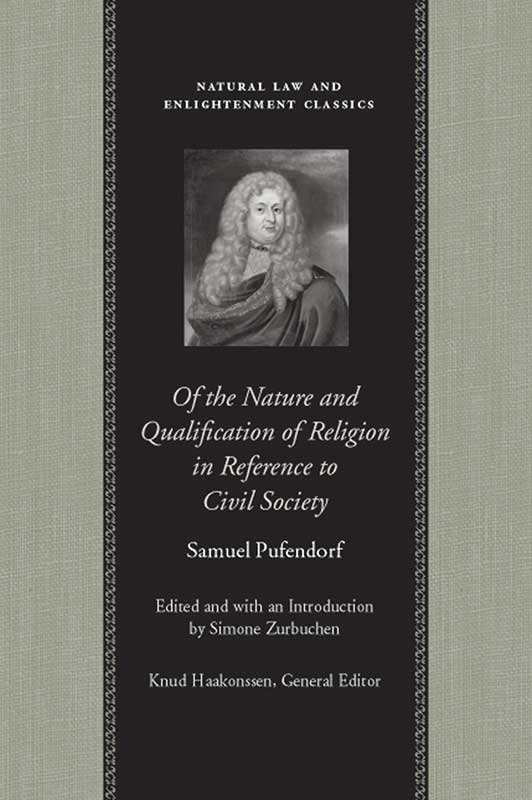
Of the Nature and Qualification of Religion, in Reference to Civil Society, trans. Jodocus Crull, ed. and with an introduction by Simone Zurbuchen (Indianapolis: Liberty Fund, 2002).

About Liberty Fund:

Liberty Fund, Inc. is a private, educational foundation established to encourage the study of the ideal of a society of free and responsible individuals.


§48.

Concerning the Power of making Ecclesiastical Canons or Statutes. Since the Christian Religion does not in any wise diminish the Rights of Soveraigns, these, if entred into the Communion of the Church, have a Power to examine, what Canons or Ecclesiastical Statutes are received in the Church; and if some of them are found superfluous, or interfering with the Soveraign Power, to abolish the same; and if there appears any deficiency, to supply what is wanting towards the maintaining a good Order, and the Glory of the Church (which however, ought not to be done without the Advice, at least, of the chief Men of the Church) and lastly, give to those Statutes the force of Civil Laws. This Power nevertheless, of making Ecclesiastical Statutes, must be exercised with a great deal of caution, the same being limited to the outward form of the Church-Government, and to maintain its Order and Decency, Christians being not to be over-heap’d with a vast number of Canons.202 For, those that stretch the Power of Soveraigns to such a pitch, as to make them the absolute Judges of the Christian Religion, and to attribute to them a Right of establishing certain Articles of Faith by Civil Laws, or to annex to them a force equal to the Civil Constitutions, and to force upon their Subjects a certain Religion, under severe Penalties, or oblige them either to profess or to deny certain Points of Doctrine, which are controverted amongst Christians; These, I say, act quite contrary to the true Genius of the Christian Religion, and to the Method made use of by Christ and his Apostles, for the propagating of this Doctrine; They destroy the very Essential part of our Faith, which being a Gift of the Holy Ghost, and a Belief founded in our Hearts, is transmuted into an outward Confession, where the Tongue, to avoid Temporal Punishment, is forced to speak those things which are in no wise agreeable to the Heart. This however admits again of a Limitation; For herein are not comprehended these Points, which proceeding from Natural Religion, are also contained in the Christian Doctrine, and all of them imply a profound Reverence to be paid to the Supream BEING. For, it is beyond all question, that those that act against the very Dictates of Reason, ought to be subject to Civil Punishments, since they strike at the very Foundation of Civil Societies: Such are Idolatry, Blasphemy, Profanation of the Sabbath; where nevertheless great care is to be taken, that a due difference be made betwixt the Moral part of that Precept concerning the Sabbath, which is unalterable, and the Ceremonial part of it. Princes therefore at their first entrance into the Communion of the Christian Church, might Lawfully destroy the Images and Temples of the Idols, and the Groves, and other Meeting places dedicated to their superstitious Worship. Neither can it be called in question, but that Christian Soveraigns have a Right to inflict Civil Punishments upon such as revile the whole System of the Christian Religion, and ridicule the Mysteries of the Christian Faith, at least, they may Banish them the Country. But for the rest, it is in vain to believe, that the true enlightning of our Mind, and the inward consent to such Articles of Faith as surpass our Understanding, can be procured by violent means, or temporal punishments. For, supposing you force a Man to dissemble his thoughts, to speak contrary to what he conceives in his own Opinion, let his Confession be never so formal, and his Gestures never so well composed and conformable to certain prescribed Rules, this has not the least affinity with true Religion, unless he at the same time does feel an inward motion, and hearty compliance with what he professes. Neither ought People, according to the true Genius of the Doctrine of Christ, be enticed to receive the Christian Religion by Temporal Interest, Honours, or other such like Advantages; for, Christ did promise, that those that followed him, should receive their Reward in the life to come, but fore-told them nothing but Crosses and Tribulations in this. And, those that embrace any Religion out of a Motive of Temporal Advantages, do plainly shew, that they have a greater Value for their own interest than Religion. And certainly, scarce any body, that has but common sense, can perswade himself, that such a sort of Worship can be pleasing to God Almighty. Sovereigns being not constituted for Religion’s sake, they cannot under that colour exact from their Subjects a blind Obedience in matters of Religion, it being unquestionable, that if Subjects should blindfold follow the Religion of their Sovereign, they cannot by all his Authority be assured of their Salvation; from whence it is evident, that, in case any Subject be fully convinced, that he can out of the Holy Scripture discover any Errors, which are crept into the Church, even that by Law established (especially concerning any Principal Point of Faith), he neither can, nor ought to be hindered in his design by the Sovereign Authority, before his Reasons be heard, and well debated in the presence of the best and ablest Judges; and, if by them he be legally and plainly convicted of his Error, then, and not before, ought he to be silenced. To force People into the Church by the bare Civil Authority, must needs fill the Commonwealth with Hypocrites, who cannot be supposed to Act according to the Dictates of their Consciences. For, since in Religious Matters an absolute Uniformity betwixt the Heart and Tongue is required, how can it otherwise be, but that such as profess a Religion disagreeable to their Opinion, should never be satisfied in their Consciences; when they consider, that they impose upon God Almighty.

[202.]Coloss. 2:16, 21, 22, 23; 1 Tim. 4:34.