Econlib

The Library

Other Sites

Front Page arrow Titles (by Subject) arrow §43. - Of the Nature and Qualification of Religion, in Reference to Civil Society

Return to Title Page for Of the Nature and Qualification of Religion, in Reference to Civil Society

Search this Title:

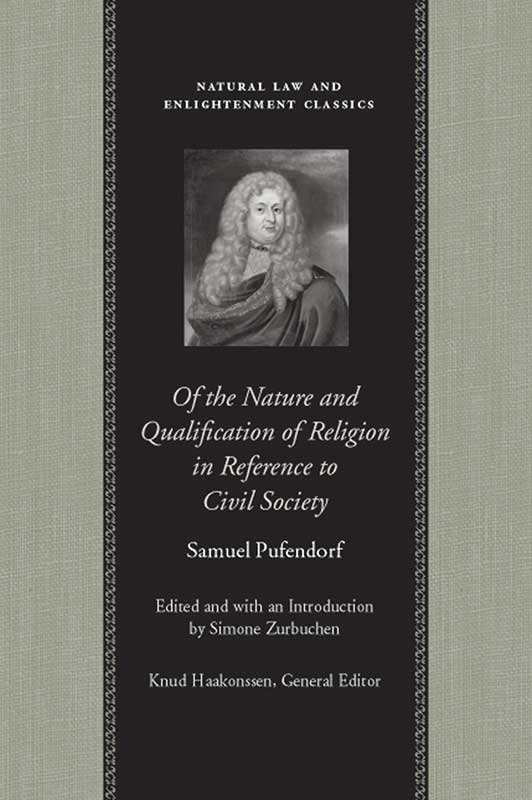
§43. - Samuel von Pufendorf, Of the Nature and Qualification of Religion, in Reference to Civil Society [1687]

Edition used:

Of the Nature and Qualification of Religion, in Reference to Civil Society, trans. Jodocus Crull, ed. and with an introduction by Simone Zurbuchen (Indianapolis: Liberty Fund, 2002).

About Liberty Fund:

Liberty Fund, Inc. is a private, educational foundation established to encourage the study of the ideal of a society of free and responsible individuals.


§43.

Concerning the Duty and Right of Christian Princes of defending the Church. Notwithstanding all this, it is not to be supposed that Sovereigns, by becoming Christians, have acquir’d no peculiar Rights, or have not a more particular Duty laid upon them than before; There being certain Obligations, which owe their off-spring to the union of that Duty, which is incumbent to every Christian, with that of the Royal Office. The first and chiefest of these Obligations seems to be, that Sovereigns ought to be Defenders of the Church, which they are oblig’d to protect not only against all such of their Subjects, as dare to attempt any thing against it, but also against Foreigners, who pretend to be injurious to their Subjects upon that score. And, tho’ the Christian Doctrine is not to be propagated by violence or force of Arms, and our Saviour has highly recommended Patience and Sufferings as peculiar Vertues belonging to Christians, Princes are nevertheless not debarr’d from their Right of Protecting the Christian Religion by all lawful means, and Patience ought not to take place here, except when no other lawful means can secure us against our Enemies. So we see that St. Paul saved himself from being scourged by declaring himself to be a Roman, and escaped the Fury of the Jews by making his Appeal to the Emperour.197 And our Saviour himself left this Advice to his Disciples, That when they were persecuted in one City, they should fly into another.198 And, it being an incumbent Duty belonging to all Sovereigns, to defend their Subjects against all violence; they ought to take more effectual care that they do not suffer any Injuries for the Christian Religions sake; for, what could be more reproachful to a Christian Prince, than that his Subjects should be sufferers upon that account? The next care which belongs to Christian Princes, is, to provide necessary Revenues for the exercise of the Christian Religion. For as has been shewn before, that no other Patrimony belonged to the Primitive Church, but the Alms and free Contributions of the Believers, and that these cannot but be supposed to be very uncertain, the Ministers and Teachers in the Church run no small hazard of being exposed to want, if they have nothing else to rely upon, but the bare contributions of the Congregation, who being in some places poor, and Subject to other Taxes, are incapable of supplying their want. And, not to dissemble the Truth, after Princes and entire States have received the Doctrine of Christ, it would appear very ill, that, whereas they enjoy such ample Revenues, they would deal so sparingly with the Church, the more, because it is a general Maxim among Men, to value a Function according to its Revenues. What St. Paul recommends to the Romans in the 15th Chapter, v. 27. and in the 1 Epist. to the Corinthians 9:11. ought to be the more taken notice of by Christian Princes, because they can with less difficulty, or any sensible injury to themselves, put it in practise in their Station, they having the management of the Publick Revenues in their hands. It cannot be denied, but that too vast Revenues are not always useful to Ministers of the Church, and prove sometimes prejudicial both to Church and State; and that such as make profession of the Ministry of the Gospel, ought not to make a Trade of their Function, or to think it their main Business to gather Riches, and take the Ministry for their By-work; nevertheless, if it be duely considered, that he who cordially (as he ought to do) applies himself to the Ministerial Function, has no other ways left him to provide for his Family; and that the vulgar Sort scarce pay a due Respect to a Minister, unless they see him live handsomely and well; whereas he, who is starv’d by his Function is the May-Game of the common People, unto whom may be applied that old Saying of the Poet; That this Man appears to be the Servant of a poor and wretched Lord. Apparet servum hunc esse Domini pauperis miserique. Princes ought therefore to look upon this as one main part of their Devotion, to settle certain and constant Sallaries or Revenues upon the Ministers of the Church, as much as may be, at least sufficient for their Maintainance. In the Old Testament the Priests were to live from the Altar, but those of the best kind were brought to the Altar.199 Besides this, Princes ought not only to take care of Church-Buildings, but also to erect and maintain Schools, which being the Seminaries both of the Church and State, if the first Rudiments of Christianity be not implanted in the Schools, it cannot scarce be expected, that Men, when grown up, should receive much benefit by publick Sermons.

[197.]Acts 22:25.

[198.]Matt. 10:23.

[199.]Galat. 6:6; 2 Tim. 2:6.