Econlib

The Library

Other Sites

Front Page arrow Titles (by Subject) arrow §23. - Of the Nature and Qualification of Religion, in Reference to Civil Society

Return to Title Page for Of the Nature and Qualification of Religion, in Reference to Civil Society

Search this Title:

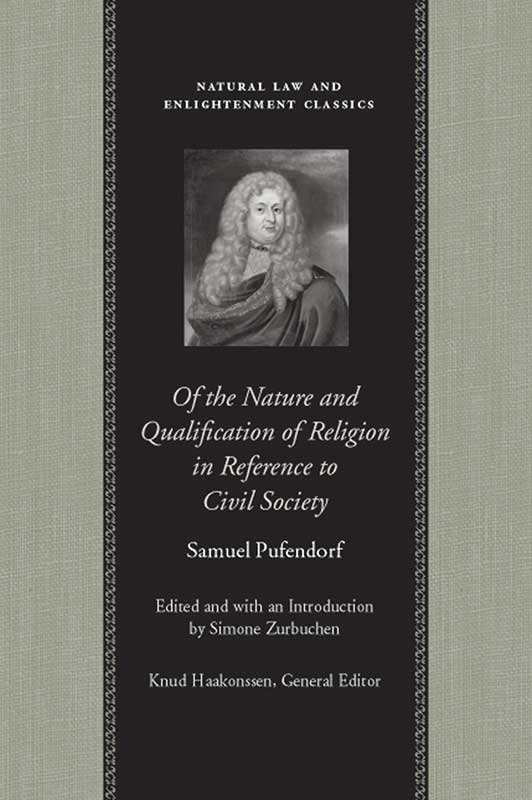
§23. - Samuel von Pufendorf, Of the Nature and Qualification of Religion, in Reference to Civil Society [1687]

Edition used:

Of the Nature and Qualification of Religion, in Reference to Civil Society, trans. Jodocus Crull, ed. and with an introduction by Simone Zurbuchen (Indianapolis: Liberty Fund, 2002).

About Liberty Fund:

Liberty Fund, Inc. is a private, educational foundation established to encourage the study of the ideal of a society of free and responsible individuals.


§23.

What is to be understood by absolving from Sins. Furthermore, it is to be considered, That the use of these Keys is appropriated to the binding and forgiving of Sins: For as soon as our Sins are taken away, (or which is the same in effect) if our Sins are forgiven, (other Means of Salvation being not neglected) the Kingdom of Heaven is open to us. But as long as the Sins remain upon us, and produce their pernicious Effects, the Kingdom of Heaven is shut up against us, nothing of unclean being to enter there. If therefore a true Judgment is to be given, of what share of Power the Apostles had in forgiving, and retaining of Sins, a due enquiry must be made, of what is to be understood, by forgiving and retaining of Sins? He, that does an unjust Act, commits an Offence both against the Legislator, whose Authority is thereby violated, and against him, who is damnified by it. Besides this, there are some Offences of such a Nature, as to touch whole Societies, as far as their Reputation is thereby impair’d, the Crime committed by one of their Members, being oftentimes attributed to the whole Body. It is therefore from the Damage, which the Legislator, a single Person, or whole Society, receive by such an Offence, that an Action lies, against the Offender; In the same manner as a Creditor has a right to sue his Debtor for a Debt, contracted with him. In which respect it is, that Sins are often called Debts in the holy Scripture. But, in this double, or sometimes, threefold Action, which arises from one Offence committed against several Persons, each is to be considered as separate from the other; so, that, tho’ one Action be taken off, the other remains notwithstanding this, in full force: For, as God does not remit Sins, without Satisfaction given from the Offender, to the offended Person;84 So, tho’ the Offender be reconciled to the offended, nevertheless is he obliged to seek for Remission of his Sin by God; And, if the Offence be hainous, and of such a Nature, as to be scandalous to a whole Society, he ought there, also to endeavour his Reconciliation, by begging forgiveness of them. Therefore, to remit a Sin, is the same Thing, as to remit an Action, or to release one from an Action, which the offended Party had against the Offender. And he, that has an Action against another, by reason of some Offence committed against him, may properly be said, to have Power to remit that Offence or Sin, as far as his Action reaches. For, God himself does not make use of his uncontrouled Power of remitting of Sins; so, as without any further Respect, and by his mere Pleasure to remit their Sins to some, and to punish others. For, to pardon Offences promiscuously, without any further regard but bare Pleasure, is in effect to render Laws ineffectual; and Laws are made to no purpose by him, who at the same time grants a License of Trespassing against them.85 And, because it was beyond all Human Power to give Satisfaction to God Almighty for our Offences, our Saviour Jesus Christ has made use of a most wonderful Moderation betwixt Justice and Mercy, in giving due Satisfaction in his own Person; So, that, whoever by the Faith appropriates the same to himself, thereby obtains Remission of his Sins from God. And, as to that part, which belongs to Men to forgive, God has commanded them not to be rigorous, if the Offender beg forgiveness, because every one of us must every day expect Forgiveness of his Sins from God Almighty; and we all commit sometimes Offences against our Neighbours, who, if they would all act rigorously with us, our Condition would be most deplorable. Wherefore we ought to forgive our Debts; as we would have others forgive us their Debts.86 Neither are we to be too rigorous against such Sinners, as have by their Offences proved scandalous to a whole Society, but if they seriously repent, we ought not to deny them our Pardon.87 It is also worth our further Observation, That the following Words; Verily I say unto you, whatsoever you shall bind on Earth, shall be bound in Heaven, and whatsoever you shall loosen on Earth, shall be loosened in Heaven, are spoken by Christ also of the Remission of an Offence by the Party offended;88 Neither does the Sense of the preceding Words allow to apply them only to his Disciples, they being spoken not only to the Apostles, but to the Believers in general.

[84.]Matt. 5:23, 24.

[85.]Hebr. 9:22; Matt. 5:18. [Puf.]

[86.]Matt. 6:12, 14, 15; 5:25; 18:21ff.

[87.]2 Cor. 2:6, 7, 8.

[88.]Matt. 18:18.