Econlib

The Library

Other Sites

Front Page arrow Titles (by Subject) arrow §6. - Of the Nature and Qualification of Religion, in Reference to Civil Society

Return to Title Page for Of the Nature and Qualification of Religion, in Reference to Civil Society

Search this Title:

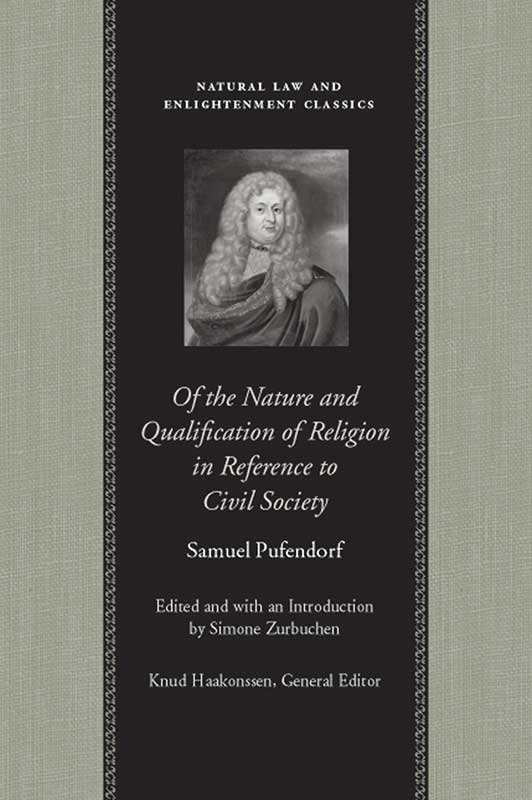
§6. - Samuel von Pufendorf, Of the Nature and Qualification of Religion, in Reference to Civil Society [1687]

Edition used:

Of the Nature and Qualification of Religion, in Reference to Civil Society, trans. Jodocus Crull, ed. and with an introduction by Simone Zurbuchen (Indianapolis: Liberty Fund, 2002).

About Liberty Fund:

Liberty Fund, Inc. is a private, educational foundation established to encourage the study of the ideal of a society of free and responsible individuals.


§6.

Subjects did not submit their Opinions in Matters of Religion, to the Disposal of their Sovereigns. It being therefore beyond question, That Commonwealths were not erected for Religions sake, it is easie to be understood, that the antient Fathers of Families, when they first submitted themselves under a Civil Government, were thereby, not obliged to surrender at the same time, their Religion in the same manner, as they did their Lives and Fortunes to their Sovereigns, for the obtaining the End of Civil Society, which was their common Security. The more, because Religion was not instituted for the obtaining of this mutual Security, and as such, do’s not contribute any thing towards the maintaining of Civil Society. Religion arises from a much more noble Spring, than Civil Government; and more strictly obliges Mankind, than any Civil Power; and therefore is unalterable in its Nature. Thus it would be not only useless, but imply a Contradiction; if a Man, who is to become a Subject to a Civil Government, should be obliged to swear Allegiance to his Sovereign, in these following Terms: J. N. N. Submit my Will entirely to your Commands; I promise to love, honour, and trust in God, according to your Pleasure; and to put more Confidence in you than in God Almighty; to set aside all your Command, all Love, Respect and Duty, which I owe to God Almighty, and to perform such things as I know to be contrary to him and his Commands. For, here ought to be remembred, what the Apostles said: We ought to obey God rather than Man.17 And, whenever Sovereigns pretend to extend thus far their Authority, they transgress their Bounds; and if they inflict any Punishment on their Subjects, for refusing to be obedient to their Commands, on this Account; such an Act ought to be look’d upon, as illegal, unjust, and tyrannical. God has verified this by extraordinary Miracles: It was an absurd and illegal Proceeding, when Darius, overpersuaded by his Courtiers, who intended to lay a Trap for Daniel, issued out his Proclamation, That no body, for thirty Days should ask a Petition of any God or Man.18 For, what concerns had the King with his Subjects; Prayers (unlawful Prayers, being not accepted of by God Almighty), especially with those made in private? For, if any one should have prayed in publick against the King, it would been a quite different Case; and such a one had deservedly received Punishment, as an Enemy to his Sovereign. Wherefore, Daniel did very well, in continuing his daily private Prayers, according to his former Custom; notwithstanding the King’s impious and foolish Command; and, was, for this Reason, by an extraordinary Miracle, delivered out of the Lions Den. In the same manner did God preserve Daniel’s three Companions in the midst of the Flames, because they refused to worship the Golden Image, according to the King’s Command:19 Though, at the same time, it is very probable, that this Image, set up by Nebuchadnezar, was not intended to be worshipped as a God; but only as a Sign or Emblem of that Eternal Being, which he would have to be Adored and Worshipped by his Subjects. Certainly, Jeroboam, could not be so much besides himself, as to imagine, or to pretend to persuade the Jews, That the Golden Calves, which he had caused to be made,20 were the same God, by whose Power they were brought out of Aegypt; But he set them up as a Token, or Representative, whereby to put them in mind of the Benefits received from God, the great Deliverer of Israel; and that they might not want places where to pay their Devotions, and perform their religious Duties. So, that, though he did not fall off from God, but only, for Reasons of State; and because he thought it belonging to his Royal Prerogative, made an Alteration in the outward Form of Worship; Yet was he, with his whole Family, rooted out of Israel, and the Jews, for having obeyed and followed their King, in his Idolatry, paid for it with the Loss of the Holy Land.21

[17.]Acts 5:29.

[18.]Dan. 6:7, 9.

[19.]Dan. 3:27, 28.

[20.]2 Chron. 13:8.

[21.]Joseph. Arch. 8:3; 2 Kgs. 19:17, 18.