Econlib

The Library

Other Sites

Front Page arrow Titles (by Subject) arrow §5. - Of the Nature and Qualification of Religion, in Reference to Civil Society

Return to Title Page for Of the Nature and Qualification of Religion, in Reference to Civil Society

Search this Title:

§5. - Samuel von Pufendorf, Of the Nature and Qualification of Religion, in Reference to Civil Society [1687]

Edition used:

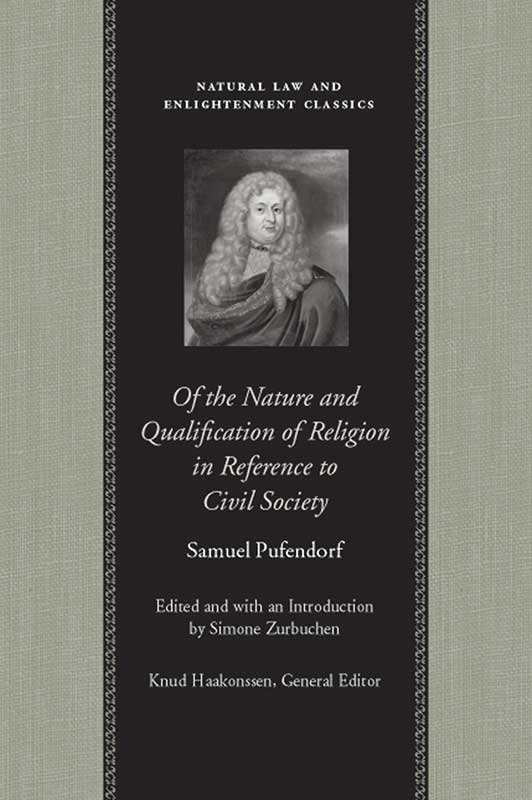
Of the Nature and Qualification of Religion, in Reference to Civil Society, trans. Jodocus Crull, ed. and with an introduction by Simone Zurbuchen (Indianapolis: Liberty Fund, 2002).

About Liberty Fund:

Liberty Fund, Inc. is a private, educational foundation established to encourage the study of the ideal of a society of free and responsible individuals.


§5.

Civil Societies were not Instituted for Religions sake. Out of what has been said before, it is most evident, That Civil Governments were not erected for Religions sake; or that Men did not enter into Civil Societies, that they might with more conveniency establish, and exercise their Religion. For, since Religious Exercises could be performed as well by a few, as by a great Number; and in a small Congregation as well as in a great one, it was unnecessary to erect several great Societies on that account: Besides, that those who committed open violences against others, which was the first motive that obliged Men to enter into Societies for their mutual Defence, did not aim at the Religion of Mankind; but, to robb these that were weaker than themselves of their Liberty, Life, and Fortunes. Neither does a Man’s Probity and Piety receive the least addition, by the Number of People, which join in their Devotion; For every one must be acceptable to God Almighty upon his own account; neither is a Man always deem’d the more pious, because he lives among such as are pious themselves. Those Patriarchs that liv’d before Civil Societies were erected, are no less Famous for their Piety, than those that lived afterwards under a settled Government. From whence it is evident, That Religion is not an ingenious Invention of the first Founders of Commonwealths, but as antient as Humane Race it self; it being sufficiently apparent, that Mankind did not enter into Civil Societies; till long after, being enforced thereunto, by great and weighty Reasons; tho’ at the same time, it cannot be deny’d, but that some have cunningly abused Religion, for obtaining their Ends in the State; But, Religion in it self considered, Is not made subordinate to the State; or to be deem’d a proper Instrument to serve a States Turn, and to keep the People in Obedience. And, when Religion is called, Vinculum Societatis Civilis, The Cement of Civil Society, it must be taken in this Sense; That if all Religion and Regard, which ought to be had to God’s displeasure, were abolished, there would be no Tie left, strong enough to oblige Mankind to a compliance with those Laws and fundamental Constitutions, which are the original Foundation of all Commonwealths; And, that, without the fear of being accountable to God Almighty, no Human Power alone would be prevailing enough to bridle the Enormities of some stubborn and refractory Spirits.