EconlibThe LibraryOther Sites |
Front Page Titles (by Subject) Book III - The Elements of Moral Philosophy
Return to Title Page for The Elements of Moral PhilosophyThe Online Library of LibertyA project of Liberty Fund, Inc.Search this Title:Also in the Library:
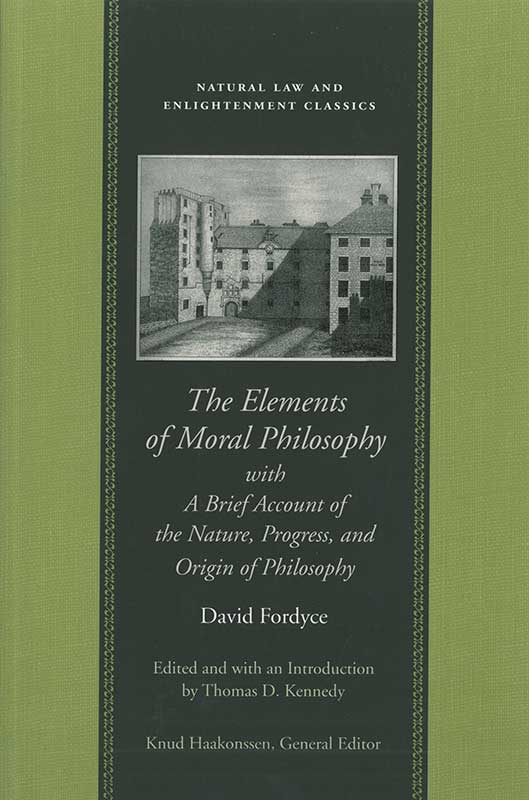
Book III - David Fordyce, The Elements of Moral Philosophy [1754]Edition used:The Elements of Moral Philosophy, in Three Books with a Brief Account of the Nature, Progress, and Origin of Philosophy, ed. Thomas Kennedy (Indianapolis: Liberty Fund, 2003).
About Liberty Fund:Liberty Fund, Inc. is a private, educational foundation established to encourage the study of the ideal of a society of free and responsible individuals. Copyright information:The copyright to this edition, in both print and electronic forms, is held by Liberty Fund, Inc. Fair use statement:This material is put online to further the educational goals of Liberty Fund, Inc. Unless otherwise stated in the Copyright Information section above, this material may be used freely for educational and academic purposes. It may not be used in any way for profit.
Book IIIsection iOf Practical Ethics, or the Culture of the MindDignity and Importance of the SubjectWe have now gone thro’ a particular Detail of the several Duties we owe to Ourselves, to Society, and to God. In considering the first Order of Duties, we just touched on the Methods of acquiring the different kinds of Goods, which we are led by Nature to pursue; only we left the Consideration of the Method of acquiring the Moral Goods of the Mind to a Section by itself, because of its singular Importance. This Section then will contain a brief Enumeration of the Arts of acquiring Virtuous Habits, and of eradicating Vitious Ones, as far as is consistent with the Brevity of such a Work; a Subject of the utmost Difficulty as well as importance in Morals; to which, nevertheless, the least Attention has been generally given by Moral Writers. This will properly follow a Detail of Duty, as it will direct us to such Means or Helps as are most necessary and conducive to the Practice of it. Sensible Ideas and sensible TasteIn the first Part of this Inquiry we traced the Order in which the Passions shoot up in the different Periods of human Life. That Order is not accidental, or dependent on the Caprice of Men, or the Influence of Custom and Education; but arises from the Original Constitution and Laws of our Nature; of which this is one, viz. “That senseble Objects make the first and strongest Impressions on the Mind.” These, by means of our outward Organs being conveyed to the Mind, become Objects of its Attention, on which it reflects, when the outward Objects are no longer present, or, in other words, when the Impressions upon the outward Organs cease. These Objects of the Mind’s Reflection are called Ideas or Images. Towards these, by another Law of our Nature, we are not altogether indifferent, but correspondent Movements of Desire or Aversion, Love or Hatred, arise, according as the Objects, of which they are Images or Copies, made an agreeable or disagreeable Impression on our Organs. Those Ideas and Affections which we experience in the first Period of Life, we refer to the Body, or to Sense; and the Taste which is formed towards them, we call a sensible, or a merely naturalTaste; and the Objects corresponding to them we in general call good or pleasant. Ideas of Beauty and a fine TasteBut, as the Mind moves forward in its Course, it extends its Views, and receives a new and more complex Set of Ideas, in which it observes Uniformity, Variety, Similitude, Symmetry of Parts, Reference to an End, Novelty, Grandeur. These compose a vast Train and Diversity of Imagery, which the Mind compounds, divides, and moulds into a thousand Forms, in the Absence of those Objects which first introduced it. And this more complicated Imagery suggests a new Train of Desires and Affections, full as sprightly and engaging as any which have yet appeared. This whole Class of Perceptions or Impressions is referred to the Imagination, and forms an higher Taste than the Sensible, and which has an immediate and mighty Influence on the finer Passions of our Nature, and is commonly termed a fineTaste. The Objects which correspond to this Taste we use to call beautiful, harmonious, great, or wonderful, or in general by the Name of Beauty. Moral Ideas and a Moral TasteThe Mind still pushing onwards and increasing its Stock of Ideas, ascends from those to an higher Species of Objects, viz. the Order and Mutual Relations of Minds to each other, their reciprocal Affections, Characters, Actions, and various Aspects. In these it discovers a Beauty, a Grandeur, a Decorum, more interesting and alluring than in any of the former kinds. These Objects, or the Images of them, passing in review before the Mind, do, by a necessary Law of our Nature, call forth another and nobler Set of Affections, as Admiration, Esteem, Love, Honour, Gratitude, Benevolence, and others of the like Tribe. This Class of Perceptions and their correspondent Affections, we refer because of their Objects (Manners) to a Moral Sense, and call the Taste or Temper they excite Moral. And the Objects which are agreeable to this Taste or Temper we denominate by the general Name of MoralBeauty, in order to distinguish it from the other which is termed Natural. Sources of AssociationThese different Sets of Ideas or Images are the Materials about which the Mind employs itself, which it blends, ranges, and diversifies ten thousand different ways. It feels a strong Propension to connect and associate those Ideas among which it observes any Similitude, or any Aptitude, whether original and natural, or customary and artificial, to suggest each other. Thus it is ready to associate the Ideas of Natural and Moral Beauty, as both partake of the same Principle, viz. Design, Harmony of Parts, or Reference to an End, and are Relative to Mind, the common Origin of Both. A fine Face, or a graceful Deportment, naturally suggests Ideas of Moral Beauty. And many outward Badges, as Crowns, Crosiers, Purple Robes, and Statues, do often, by the Force of Custom, excite Moral Sentiments, as Majesty, Piety, Justice, Virtue. If any particular Sets of Ideas have been found, at any time, to co-exist in the same Objects, the Mind shall ever after have a Propensity to unite them, even when they no longer co-exist. Thus, because we have sometimes seen a good Temper accompany a good Aspect, Virtue annexed to Politeness, Merit to Fame, we are strongly inclined to fancy that they can never be disunited. When any Ideas or Sets of Ideas have been produced by certain Objects or Occasions immediately and presently, which Objects or Occasions have afterwards given rise to a different and perhaps quite opposite Set of Ideas or Impressions, the same Objects recurring, shall bring in view the former Set, while the latter, being posterior in time, shall be entirely forgot. Thus the Drinker or Rake, upon seeing his Bottle, and his Companion, or Mistress, shall amuse himself with all the gay Ideas of agreeable Fellowship, Friendship, Gentleman-like Enjoyment, giving and receiving Pleasures, which those Objects first excited, but, by an unhappy Self-delusion, shall over-look those Head achs, Heart-achs, that Satiety, and those other mortifying Impressions which accompanied though more laterly, his intemperate Indulgences. Laws of AssociationBut whatever the Reasons are, whether Similitude, Co-existence, Causality, or any other Aptitude or Relation, why any two or more Ideas are connected by the Mind at first, it is an established Law of our Nature, “That when two or more Ideas have often started in Company, they form so strong an Union, that it is very difficult ever after to separate them.” Thus the Lover cannot separate the Idea of Merit from his Mistress; the Courtier that of Dignity from his Title or Ribbon; the Miser that of Happiness from his Bags. Here the Mind’s Process is often the same as in its more abstracted Operations. When it has once been convinced of the Truth of any Geometrical Proposition, it may strongly retain the Connection of the Terms of the Proposition, suppose the Equality of the Angles of a Triangle to two Right ones, though it does not attend to, or has perhaps forgot, the intervening Ideas which shewed that Connection. In like manner, tho perhaps it was the Tendency of Wealth and Power, when well employed, to private Pleasure, or public Happiness, that gave the fond Admirers of either the first Notion of their Value, yet their Mind having once settled that Connection, frequently forgets the immediate Link, viz. the wise or generous Use, and by degrees come to admire Wealth and Power for themselves, fancying them intrinsically valuable, however they are used, and whether used or not. By these and many other ways the strongest Associations of Ideas are formed, the different Sets of Ideas before mentioned are shuffled together without Regularity or Distinction, often without any Natural Alliance or Relation, by mere Accident, Example, Company, Sympathy, Education, and sometimes by Caprice. So that any kind of Natural Good shall be combined with Moral Beauty, nay Ideas the most opposite in Nature shall be coupled together, so as hardly to be ever disunited in the Observer’s Mind: as for instance, Prudence with Craft, Honour with Injustice, Religion with Inhumanity, Corruption or Sedition with Patriotism.—It is these Associations of Worth or Happiness with any of the different Sets of Objects or Images before specified, that form our Taste, or Complex Idea of Good. By another Law of our Nature, “our Affections follow and are governed by this Taste. And to these Affections our Character and Conduct are similar and proportioned, on the general Tenour of which our Happiness principally depends.” Leading Passions follow TasteAs all our Leading Passions then depend on the Direction which our Taste takes, and as it is always of the same Strain with our Leading Associations, it is worth while to enquire a little more particularly how these are formed, in order to detect the secret Sources from whence our Passions derive their principal Strength, their various Rises and Falls. For this will give us the true Key to their Management, and let us into the right Method of correcting the bad and improving the good. The Importance and Use of the ImaginationA very slight Inspection into human Nature suggests to us, that no kind of Objects make so powerful an Impression on us as those which are immediately impressed on our Senses, or strongly painted on our Imaginations. Whatever is purely Intellectual, as abstracted or scientific Truths, the subtile Relations and Differences of Things, has a fainter sort of Existence in the Mind; and though it may exercise and whet the Memory, the Judgment, or the Reasoning Powers, gives hardly any Impulse at all to the Active Powers, the Passions, which are the main Springs of Motion. On the other hand, were the Mind entirely under the Direction of Sense, and impressible only by such Objects as are present, and strike some of the outward Organs, we should then be precisely in the State of the Brute-Creation, and be governed solely by Instinct or Appetite, and have no Power to controul whatever Impressions are made upon us: Nature has therefore endued us with a middleFaculty, wonderfully adapted to our mixed State, which holds partly of Sense and partly of Reason, being strongly allied to the former, and the common Receptacle in which all the Notices that come from that quarter are treasured up, and yet greatly subservient and ministerial to the latter, by giving a Body, a Coherence, and Beauty to its Conceptions. This middle Faculty is called the Imagination, one of the most busy and fruitful Powers of the Mind. Into this common Storehouse are likewise carried all those Moral Images or Forms which are derived from our Moral Faculties of Perception, and there they often undergo new Changes and Appearances, by being mixed and wrought up with the Images and Forms of Sensible or Natural Things. By this Coalition of Imagery, Natural Beauty is dignified and heightened by Moral Qualities and Perfections, and Moral Qualities are at once exhibited, and set off by Natural Beauty. The sensible Beauty, or Good, is refined from its Dross by partaking of the Moral, and the Moral receives a Stamp, a visible Character and Currency from the Sensible.—But in order to judge of this mutual Influence, it will be proper to give a few Instances of the Process of the Imagination, or of the Energy of the associating Principle. Its Energy in various Instances, in heightening sensible PleasuresAs we are first of all accustomed to sensible Impressions and sensible Enjoyments, we contract early a Sensual Relish, or Love of Pleasure, in the lower Sense of the Word. In order however to justify this Relish, the Mind, as it becomes open to higher Perceptions of Beauty and Good, borrows from thence a nobler Set of Images, as fine Taste, Generosity, social Affection, Friendship, good Fellowship, and the like; and, by dressing out the old Pursuits with these new Ornaments, gives them an additional Dignity and Lustre. By these ways the Desire of a Table, Love of Finery, Intrigue, and Pleasure, are vastly increased beyond their natural Pitch, having an Impulse combined of the Force of the natural Appetites and of the super-added Strength of those Passions which tend to the Moral Species. In heightening the Pleasures of Beauty, Harmony, &c.When the Mind becomes more sensible to those Objects or Appearances, in which it perceives Beauty, Uniformity, Grandeur, and Harmony, as fine Cloaths, elegant Furniture, Plate, Pictures, Gardens, Houses, Equipage, the Beauty of Animals, and particularly the Attractions of the Sex; to these Objects the Mind is led by Nature, or taught by Custom, the Opinion and Example of others, to annex certain Ideas of Moral Character, Dignity, Decorum, Honour, Liberality, Tenderness, and Active or Social Enjoyment. The Consequence of this Association is, that the Objects to which these are annexed, must rise in their Value, and be pursued with proportionable Ardor. The Enjoyment of them is often attended with Pleasure, and the mere Possession of them, where that is wanting, frequently draws Respect from one’s Fellow-creatures: this Respect is, by many, equivalent to the Pleasure of Enjoyment. Hence it happens that the Idea of Happiness is connected with the mere Possession, which is therefore eagerly sought after, without any regard to the generous Use, or honourable Enjoyment. Thus the Passion resting on the Means, not the End, i.e. losing sight of its natural Object, becomes wild and extravagant. In raising the Value of external Symbols, &c.In fine, any Object, or External Denomination, a Staff, a Garter, a Cup, a Crown, a Title, may become a Moral Badge, or Emblem of Merit, Magnificence or Honour, according as these have been found, or thought by the Possessors or Admirers of them, to accompany them; yet, by the Deception formerly mentioned, the Merit or the Conduct which entitled, or should entitle, to those Marks of Distinction, shall be forgot or neglected, and the Badges themselves be passionately affected, or pursued, as including every Excellency. If these are attained by any Means, all the Concomitants which Nature, Custom, or Accidents have joined to them, will be supposed to follow of course. Thus, Moral Ends, with which the unhappy Admirer is apt to colour over his Passion and Views, will, in his opinion, justify the most Immoral Means, as Prostitution, Adulation, Fraud, Treachery, and every Species of Knavery, whether more open, or more disguised. In heightening the Value of Wealth, Power, &c.When Men are once engaged in Active Life, and find that Wealth and Power, generally called Interest, are the great Avenues to every kind of Enjoyment, they are apt to throw in many engaging Moral Forms to the Object of their Pursuit, in order to justify their Passion, and varnish over the Measures they take to gratify it, as Independency on the Vices or Passions of others, Provision and Security to themselves and Friends, Prudent Oeconomy or well-placed Charity, Social Communication, Superiority to their Enemies, who are all Villains, honourable Service, and many other Ingredients of Merit. To attain such Capacities of Usefulness or Enjoyment, what Arts, nay what Meannesses can be thought blameable by those cool Pursuers of Interest?—Nor have they, whom the gay World is pleased to indulge with the Title of Men of Pleasure, their Imaginations less pregnant with Moral Images, with which they never fail to ennoble, or, if they cannot do that, to palliate their gross Pursuits. Thus Admiration of Wit, of Sentiments and Merit, Friendship, Love, generous Sympathy, mutual Confidence, giving and receiving Pleasure, are the ordinary Ingredients with which they season their Gallantry and pleasurable Entertainments; and by which they impose on themselves and endeavour to impose on others, that their Amours are the joint Issue of Good-sense and Virtue. Its Influence on all the PassionsThese Associations, variously combined and proportioned by the Imagination, from the chief private Passions, which govern the Lives of the Generality, as the Love of Action, of Pleasure, Wealth, and Fame; they influence the Defensive, and affect the public Passions, and raise Joy or Sorrow, as they are gratified or disappointed. So that in effect, these Associations of Good and Evil, Beauty and Deformity, and the Passions they raise, are the main Hinges of Life and Manners, and the great Sources of our Happiness or Misery. It is evident, therefore, that the whole of Moral Culture must depend on giving a right Direction to the Leading Passions, and duly proportioning them to the Value of the Objects or Goods pursued, under what Name soever they may appear. Moral Culture, by Correcting our Taste or ImaginationNow, in order to give them this right Direction and due Proportion, it appears, from the foregoing Detail, that those Associations of Ideas, upon which the Passions depend, must be duly regulated; that is to say, as an exorbitant Passion for Wealth, Pleasure, or Power, flows from an Association or Opinion that more Beauty and Good, whether Natural or Moral, enters into the Enjoyment or Possession of them, than really belongs to either; therefore, in restoring those Passions to their just Proportion, we must begin with correcting the Opinion, or breaking the false Association, or, in other words, we must decompound the Complex Phantom of Happiness or Good, which we fondly admire; disunite those Ideas, that have no natural Alliance; and separate the Original Ideas of Wealth, Power, or Pleasure, from the foreign Mixtures incorporated with it, which enhance its Value, or give it its chief Power to enchant and seduce the Mind. For instance, let it be considered how poor and inconsiderable a Thing Wealth is, if it be disjoined from real Use, or from Ideas of Capacity in the Possessor to do good from Independency, Generosity, Provision for a Family or Friends, and Social Communication with others. By this Standard let its true Value be fixed; let its Misapplication, or unbenevolent Enjoyment be accounted sordid and infamous; and nothing worthy or estimable be ascribed to the mere Possession of it, which is not borrowed from its generous Use. By Self-denial, and Counter-ProcessIf that complex Form of Good which is called Pleasure, engages us, let it be analysed into its constituent Principles, or those Allurements it draws from the Heart and Imagination, in order to heighten the low part of the Indulgence; let the separate and comparative Moment of each be distinctly ascertained, and deduced from that gross part, and this Remainder of the accumulative Enjoyment will dwindle down into a poor, insipid, transitory thing. In proportion as the Opinion of the Good pursued abates, the Admiration must decay, and the Passion lose Strength of course. One effectual way to lower the Opinion, and consequently to weaken the Habit founded on it, is to practice lesser pieces of Self-denial, or to abstain, to a certain pitch, from the Pursuit or Enjoyment of the favourite Object; and, that this may be the more easily accomplished, one must avoid those Occasions, that Company, those Places and the other Circumstances that enflamed one and endeared the other. And, as a Counter-process, let higher or even different Enjoyments be brought in view, other Passions played upon the former, different Places frequented, other Exercises tried, Company kept with Persons of a different, or more correct way of thinking, both in Natural and Moral Subjects. By a Sound and Natural EducationAs much depends on our setting out well in Life, let the Youthful Fancy, which is apt to be very florid and luxuriant, be early accustomed, by Instruction, Example, and significant Moral Exercises, nay by Looks, Gestures, and every other Testimony of just Approbation or Blame, to annex Ideas of Merit, Honour and Happiness, not to Birth, Dress, Rank, Beauty, Fortune, Power, Popularity, and the like outward Things, but to Moral and truly virtuous Qualities, and to those Enjoyments which spring from a well-informed Judgment, and a regular Conduct of the Affections, especially those of the social and disinterested kind. Such dignified Forms of Beauty and Good, often suggested, and, by moving Pictures and Examples, warmly recommended to the Imagination, enforced by the Authority of Conscience, and demonstrated by Reason to be the surest Means of Enjoyment, and the only independent, undeprivable and durable Goods, will be the best Counter-balance to meaner Passions, and the firmest Foundation and Security to Virtue. By rightly studying Human NatureIt is of great Importance to the forming a just Taste, or pure and large Conceptions of Happiness, to study and understand Human Nature well, to remember what a complicated System it is, particularly to have deeply imprinted on our Mind that Gradation of Senses, Faculties, and Powers of Enjoyment formerly mentioned, and the Subordination of Goods resulting from thence, which Nature points out, and the Experience of Mankind confirms; who, when they think seriously, and are not under the immediate Influence of some violent Prejudice or Passion, prefer not the Pleasures of Action, Contemplation, Society, and most Exercises and Joys of the Moral kind, as Friendship, Natural Affection, and the like, to all Sensual Gratifications whatsoever. Where the different Species of Pleasure are blended into one Complex Form, let them be accurately distinguished, and be referred each to its proper Faculty and Sense, and examined apart what they have peculiar, what common with others, and what foreign and adventitious. Let Wealth, Grandeur, Luxury, Love, Fame, and the like, be tried by this Test, and their true Alloy will be found out. By comparing the Moment and Abatements of different GoodsLet it be farther considered, whether the Mind may not be easy and enjoy itself greatly, though it want many of those Elegancies and Superfluities of Life which some possess, or that Load of Wealth and Power which others eagerly pursue, and under which they groan. Let the Difficulty of attaining, the Precariousness of possessing, and the many Abatements in enjoying over-grown Wealth and envyed Greatness, of which the weary Possessors so frequently complain—as the Hurry of Business, the Burthen of Company, of paying Attendance to the Few, and giving it to the Many, the Cares of keeping, the Fears of losing, and the Desires of increasing what they have, and the other Troubles which accompany this pitiful Drudgery and pompous Servitude—let these and the like Circumstances be often considered that are conducive to the removing or lessening the Opinion of such Goods, and the attendant Passions or Set of Passions will decay of course. By observing our own Bent and Character, &c.Let the peculiar Bent of our Nature and Character be observed, whether we are most inclined to form Associations and relish Objects of the Sensible, Intellectual, or Moral kind. Let that which has the Ascendant be particularly watched, let it be directed to right Objects, be improved by proportioned Exercises, and guarded by proper Checks from an opposite Quarter. Thus, the Sensible turn may be exalted by the Intellectual, and a Taste for the Beauty of the fine Arts, and both may be made subservient to convey and rivet Sentiments highly Moral and public spirited. This inward Survey must extend to the Strength and Weaknesses of one’s Nature, one’s Condition, Connections, Habitudes, Fortune, Studies, Acquaintance, and the other Circumstances of one’s Life, from which every Man will form the justest Estimate of his own Dispositions and Character, and the best Rules for correcting and improving them. And, in order to do this with more Advantage, let those Times, or Critical Seasons be watched, when the Mind is best disposed towards a Change, and let them be improved by vigorous Resolutions, Promises, or whatever else will engage the Mind to persevere in Virtue. Let the Conduct, in fine, be often reviewed, and the Causes of its Corruption or Improvement be carefully observed. By frequent Moral ExercisesIt will greatly conduce to refine the Moral Taste and strengthen the virtuous Temper, to accustom the Mind to the frequent Exercise of Moral Sentiments and Determinations, by reading History, Poetry, particularly of the Picturesque and Dramatic kind, the Study of the fine Arts; by conversing with the most eminent for Good-sense and Virtue; but above all by frequent and repeated Acts of Humanity, Compassion, Friendship, Politeness and Hospitality. It is Exercise gives Health and Strength. He that reasons most frequently becomes the wisest, and most enjoys the Pleasures of Wisdom. He who is most often affected by Objects of Compassion in Poetry, History, or real Life, will have his Soul most open to Pity and its delightful Pains and Duties. So he also who practices most diligently the Offices of Kindness and Charity, will by it cultivate that Disposition, from whence all his Pretensions to personal Merit must arise, his present and his future Happiness. By an honest EmploymentAn useful and honourable Employment in Life will administer a thousand Opportunities of this kind, and greatly strengthen a Sense of Virtue and good Affections, which must be nourished by right Training, as well as our Understandings. For such an Employment, by enlarging one’s Experience, giving an Habit of Attention and Caution, or obliging one from Necessity or Interest, to keep a Guard over the Passions, and study the outward Decencies and Appearances of Virtue, will by degrees produce good Habits, and at length insinuate the Love of Virtue and Honesty for its own Sake. By viewing Men and Manners in a fair LightIt is a great Inducement to the Exercise of Benevolence to view Human Nature in a favourable Light, to observe the Characters and Circumstances of Mankind on the fairest Sides, to put the best Constructions on their Actions they will bear, and to consider them as the Result of partial and mistaken, rather than ill Affections, or, at worst, as the Excesses of a pardonable Self-love, seldom or never the Effect of pure Malice. By Consideration and pious ExercisesAbove all, the Nature and Consequences of Virtue and Vice, their Consequences being the Law of our Nature and Will of Heaven; the Light in which they appear to our Supreme Parent and Law-giver, and the Reception they will meet with from him, must be often attended to. The Exercises of Piety, as Adoration and Praise of the Divine Excellency, Invocation of, and Dependence on his Aid, Confession, Thanksgiving, and Resignation, are habitually to be indulged, and frequently performed, not only as medicinal, but highly improving to the Temper. By just Views of Human Life and its Connection with a futureTo conclude: it will be of admirable Efficacy towards eradicating bad Habits, and implanting good ones, frequently to contemplate Human Life, as the great Nursery of our future and immortal Existence, as that State of Probation, in which we are to be educated for a Divine Life. To remember, that our Virtues or Vices will be immortal as ourselves, and influence our future as well as our present Happiness—and therefore, that every Disposition and Action is to be regarded as pointing beyond the present to an immortal Duration. An habitual Attention to this wide and important Connection will give a vast Compass and Dignity to our Sentiments and Actions, a noble Superiority to the Pleasures and Pains of Life, and a generous Ambition to make our Virtue as immortal as our Being. SECTION IIMotives to Virtue from Personal HappinessMotives from personal HappinessWe have already considered our Obligations to the Practice of Virtue, arising from the Constitution of our Nature, by which we are led to approve a certain Order and Oeconomy of Affections, and a certain Course of Action correspondent to it.* —But besides this, there are several Motives, which strengthen and secure Virtue, though not themselves of a Moral kind. These are, its Tendency to personal Happiness, and the contrary Tendency of Vice. “Personal Happiness arises, either from the State of a Man’s own Mind, or from the State and Disposition of external Causes towards him.” Happiness of Virtue from withinWe shall first examine the “Tendency of Virtue to Happiness with respect to the State of a Man’s own Mind.”—This is a Point of the utmost Consequence in Morals, because, unless we can convince ourselves, or shew to others, that, by doing our Duty, or fulfilling our Moral Obligations, we consult the greatest Satisfaction of our own Mind, or our highest Interest on the whole, it will raise strong and often unsurmountable Prejudices against the Practice of Virtue, especially whenever there arises any Appearance of Opposition between our Duty, and our Satisfaction or Interest. To Creatures so desirous of Happiness, and averse to Misery as we are, and often so oddly situated amidst contending Passions and Interests, it is necessary that Virtue appear not only an honourable, but a pleasing and beneficent Form. And in order to justify our Choice to ourselves, as well as before others, we must ourselves feel and be able to avow in the Face of the whole World, that her Ways are Ways of Pleasantness and her Paths the Paths of Peace. This will shew, beyond all Contradiction, that we not only approve, but can give a sufficient Reason for what we do. Influence of Vice on the Temper of the MindLet any Man, in a cool Hour, when he is disengaged from Business, and undisturbed by Passion, as such cool Hours will sometimes happen, sit down, and seriously reflect with himself what State or Temper of Mind he would chuse to feel and indulge, in order to be easy and to enjoy himself. Would he chuse, for that purpose, to be in a constant Dissipation and Hurry of Thought; to be disturbed in the Exercise of his Reason; to have various, and often interfering Phantoms of Good playing before his Imagination, soliciting and distracting him by turns, now soothing him with amusing Hopes, then torturing him with anxious Fears; and to approve this Minute what he shall condemn the next? Would he chuse to have a strong and painful Sense of every petty Injury; quick Apprehensions of every impending Evil; incessant and insatiable Desires of Power, Wealth, Honour, Pleasure; an irreconcileable Antipathy against all Competitors and Rivals; insolent and tyrannical Dispositions to all below him; fawning, and at the same time envious, Dispositions to all above him; with dark Suspicions and Jealousies of every Mortal? Would he chuse neither to love nor be beloved of any, to have no Friend in whom to confide, or with whom to interchange his Sentiments or Designs; no Favourite, on whom to bestow his Kindness, or vent his Passions; in fine, to be conscious of no Merit with Mankind, no Esteem from any Creature, no good Affection to his Maker, no Concern for, or Hopes of his Approbation; but instead of all these, to hate, and know that he is hated, to contemn, and know that he is contemned by, all; by the Good, because he is so unlike; and by the Bad, because he is so like themselves; to hate or to dread the very Being that made him; and in short, to have his Breast the Seat of Pride and Passion, Petulance and Revenge, deep Melancholy, cool Malignity, and all the other Furies that ever possessed and tortured Mankind?—Would our calm Enquirer after Happiness pitch on such a State, and such a Temper of Mind, as the most likely means to put him in possession of his desired Ease and Self-enjoyment? Influence of Virtue on the TemperOr would he rather chuse a serene and easy Flow of Thoughts; a Reason clear and composed; a Judgment unbiassed by Prejudice, and undistracted by Passion; a sober and well-governed Fancy, which presents the Images of Things true and unmixed with delusive and unnatural Charms, and therefore administers no improper or dangerous Fuel to the Passions, but leaves the Mind free to chuse or reject as becomes a reasonable creature; a sweet and sedate Temper, not easily ruffled by Hopes or Fears, prone neither to Suspicion nor Revenge, apt to view Men and Things in the fairest Lights, and to bend gently to the Humours of others rather than obstinately to contend with them? Would he chuse such Moderation and Continence of Mind, as neither to be ambitious of Power, fond of Honours, covetous of Wealth, nor a Slave to Pleasure; a Mind of course neither elated with Success, nor dejected with Disappointment; such a modest and noble Spirit as supports Power without Insolence, wears Honours without Pride, uses Wealth without Profusion or Parsimony; and rejoices more in giving than in receiving Pleasure; such Fortitude and Equanimity as rises above Misfortunes, or turns them into Blessings; such Integrity and Greatness of Mind, as neither flatters the Vices, nor triumphs over the Follies of Men; as equally spurns Servitude and Tyranny, and will neither engage in low Designs, nor abet them in others? Would he chuse, in fine, such Mildness and Benignity of Heart as takes part in all the Joys, and refuses none of the Sorrows of others; stands well-affected to all Mankind; is conscious of meriting the Esteem of all, and of being beloved by the best; a Mind which delights in doing good without any Shew, and yet arrogates nothing on that account; rejoices in loving and being beloved by its Maker, acts ever under his Eye, resigns itself to its Providence, and triumphs in his Approbation?—Which of these Dispositions would be his Choice, in order to be contented, serene and happy?—The former Temper is Vice, the latterVirtue. Where One prevails, there Misery prevails, and by the Generality is acknowledged to prevail. Where the other reigns, there Happiness reigns, and by the Confession of Mankind is acknowledged to reign. The Perfection of either Temper is Misery, or Happiness in Perfection.Therefore every Approach to either Extreme, is an Approach to Misery, or to Happiness; that is to say, every Degree of Vice or Virtue is accompanied with a proportionable Degree of Misery or Happiness. An Objection from an imaginary Coalition of Virtue and ViceBut many are of opinion, and, by their Practice seem to avow the Opinion, that, by blending or softening the Extremes, and artfully reconciling Virtue with Vice, they bid fairer to strike a just Medium of Happiness, to pass more smoothly through Life, and to have more Resources in the present embarassed Scene. Honesty (they acknowledge) “is, in the main, the best Policy, but it is often too blunt and surly, and always too scrupulous, and therefore to temper and season it with a little discreet Craft in critical and well-chosen Conjunctures, will, they think, make it more palatable to others and more profitable to one’s self. Kind Affection is a good Thing in its own Place, and when it costs a Man nothing; but Charity begins at home; and one’s Regard for others must still look that way, and be subservient to the main Chance. Besides, why suffer unnecessary Disquiet on the Account of others? Our own Happiness is Charge enough to us; and if we are not to be happy till others are so too, it is a mere Utopian Dream ever to expect it. One would not chuse to do Ill for the sake of Ill, but when Necessity requires it, the lesser Good must submit to the greater, that is, to our own personal Good; for in it, by the first and fundamental Law of our Nature, we are most interested. By such a Conduct we shall have least Reason to accuse ourselves, be most easy within, and best secured against the Misfortunes and Assaults of others.” The Temper and Condition of Half-honesty or KnaveryThis is the Language of great Partiality of Thought, as well as great Partiality of Heart.—But as it is one of the main Forts in which Selfishness and Knavery use to intrench themselves, it may be worth while to beat it down, to make way for the full Triumphs of their fair Adversary. That Man may neglect, or hurt their own Interest by an indiscreet Concern about that of others—that Honesty may sometimes degenerate into a blunt Surliness, or a peevish Scrupulosity—that important Occasions may demand the Sacrifice of a less public, to a greater private Good—that it were Folly to make one’s self miserable, because others are not so happy as one would wish, we do not deny. But is there not the justest reason to suspect, that the dishonest, or the half-honest and contracted turn of Mind here pleaded for, is the very reverse of that Temper which begets true Satisfaction and Self-enjoyment, and of that Character which entitles to Credit, Security, and Success? The Man who doubts and hesitates, whether he may not, in some Instances, play the Knave, cannot, in any Sense, be termed honest. And surely, he cannot approve himself for that Conduct, which, by an inviolable Law of his Nature, he is compelled to condemn; and if he cannot approve himself for his Conduct, he is deprived of one of the sweetest Feelings of the human Heart. But, suppose he could disguise the immoral Deed or Disposition under the fair Name of some Virtue, or the Mask at least of a necessary Self-regard, as is often done, to elude the awful Decision of Conscience, which when uninfluenced is always unerring; yet he must be conscious he cannot stand the Test of Judges less interested than himself; and must therefore be under constant Dread of Discovery, and consequently of public Censure, with all its mortifying Attendants. This Dread must be so much the greater, if he has had Companions or Tools of his Knavery, which generally it must have in order to supply its native Impotence and Deficiency. This then is to be insecure, obnoxious, and dependent, and that too on the worst Set of Men, on whom one can have no hold but by their Vices, which, like undisciplined wild Beasts, often turn upon their Masters. Such an insecure, obnoxious, dependent State, must necessarily be a State of Suspicion, Servitude and Fear, which instead of begetting Serenity and Self-enjoyment, are the Parents of Disquiet and Misery. Besides, the fluctuating perpetually between opposite Principles, the Violence done to a native Sense of Honesty, the Reluctance against the first Advances of young and blushing Knavery, the hot and cold Fits of alternate Virtue and Vice, the Suspense and Irresolution of a Mind distracted between interfering Passions, are the first painful Symptoms of that dreadful Disease which afterwards lays waste every thing goodly and ingenuous, and raises Agonies intolerable to the Patient, and quite inconceivable by others. Whether such an inconsistent Conduct, divided between Vice and Virtue, will serve the Views of Interest proposed by it, will be afterwards examined. Temper and Condition of the good benevolent ManAs to the other Part of the Objection, let it be considered, that a Man of an enlarged benevolent Mind, who thinks, feels, and acts for others, is not subject to half the Disquietudes of the contracted selfish Soul;—finds a thousand Alleviations to soften his Disappointments, which the other wants;—and has a fair Chance for double his Enjoyments. His Desires are moderate, and his Wants few in comparison of the other’s, because they are measured by Nature, which has Limits, not by Fancy or Passion, which has none. He is cautious, without being distrustful or jealous; careful, but not anxious; busy, but not distracted. He tastes Pleasure, without being dissipated; bears Pain, without Dejection or Discontent; is raised to Power, without turning giddy; feels few of the Pains of Competition, and none of the Pains of Envy. The Alleviations of his IllsThe principal Alleviations of his Calamities are these—that, though some of them may have been the Effect of his Imprudence, or Weakness, yet few of them are sharpened by a Sense of Guilt, and none of them by a Consciousness of Wickedness, which surely is their keenest Sting;—that they are common to him with the best of Men;—that they seldom or never attack him quite unprepared, but rather guarded with a Consciousness of his own Sincerity and Virtue, with a Faith and Trust in Providence, and a firm Resignation to its perfect Orders;—that they may be improved as Means of Correction, or Materials to give Scope and Stability to his Virtues;—and, to name no more, they are considerably lessened, and often sweetened to him by the general Sympathy of the Wise and Good. His EnjoymentsHis Enjoyments are more numerous, or, if less numerous, yet more intense than those of bad Men; for he shares in the Joys of others by Rebound; and every Increase of general or particular Happiness is a real Addition to his own. It is true, his friendly Sympathy with others subjects him to some Pains which the hard-hearted Wretch does not feel; yet to give a loose to it is a kind of agreeable Discharge. It is such a Sorrow as he loves to indulge; a sort of pleasing Anguish, that sweetly melts the Mind, and terminates in a Self-approving Joy. Though the good Man may want Means to execute, or be disappointed in the Success of his benevolent Purposes, yet, as was formerly* observed, he is still conscious of good Affections, and that Consciousness is an Enjoyment of a more delightful Savour than the greatest Triumphs of successful Vice. If the Ambitious, Covetous, or Voluptuous are disappointed, their Passions recoil upon them with a Fury proportioned to their Opinion of the Value of what they pursue, and their Hope of Success; while they have nothing within to balance the Disappointment, unless it is an useful Fund of Pride, which however frequently turns mere Accidents into mortifying Affronts, and exalts Grief into Rage and Frenzy. Whereas the meek, humble, and benevolent Temper is its own immediate Reward, is satisfied from within, and as it magnifies greatly the Pleasure of Success, so it wonderfully alleviates, and in a manner annihilates, all Pain for the want of it. From merited Esteem and SympathyAs the good Man is conscious of loving and wishing well to all Mankind, he must be sensible of his deserving the Esteem and Good-will of all; and this supposed Reciprocation of social Feelings, is, by the very Frame of our Nature, made a Source of very intense and enlivening Joys. By this Sympathy of Affections and Interests he feels himself intimately united with the Human Race; and being sensibly alive over the whole System, his Heart receives, and becomes responsive to every Touch given to any Part. So that, as an eminent Philosopher† finely expresses it, he gathers Contentment and Delight from the pleased and happy States of those around him, from Accounts and Relations of such Happinesses, from the very Countenances, Gestures, Voices and Sounds even of Creatures foreign to our kind, whose Signs of Joy and Contentment he can any way discern. Do not interfere with other JoysNor do those generous Affections stop any other natural Source of Joy whatever, or deaden his Sense of any innocent Gratification. They rather keep the several Senses and Powers of Enjoyment open and disengaged, intense and uncorrupted by Riot or Abuse; as is evident to any one who considers the dissipated, unfeeling State of Men of Pleasure, Ambition, or Interest, and compares it with the serene and gentle State of a Mind at peace with itself, and friendly to all Mankind, unruffled by any violent Emotion, and sensible to every good-natured and alluring Joy. He who daily dwells with Temperance and Virtue, those everlasting Beauties and of the highest Order, cannot be insensible to the Charms of Society, or Friendship, the Attractions of virtuous Love, the Delights of Reading, or to any Beauty of a lower Species, the Unbendings of innocent Mirth, or whatever else sets the Soul at Ease, and gives him a Relish of his Being. By enjoying himself, he is in the best posture for enjoying every thing else. All is pure and well-ordered in such a Heart, and therefore whatever Pleasure is poured into it has an original Savour, not a single Drop is lost. For Virtue draws off all but the Dregs, and by mixing something of her own with the most ordinary Entertainments, refines them into exalted Enjoyments. The Misery of Excess in the Private PassionsIt were easy, by going through the different Sets of Affections mentioned formerly,* to shew, that it is only by maintaining the Proportion settled there that the Mind arrives at true Repose and Satisfaction. If Fear exceeds that Proportion, it sinks into Melancholy and Dejection. If Anger passes just Bounds, it ferments into Rage and Revenge, or subsides into a sullen corroding Gloom, which embitters every Good, and renders one exquisitely sensible to every Ill. The Private Passions, the Love of Honour especially, whose Impulses are more generous as its Effects are more diffusive, are Instruments of private Pleasure; but if they are disproportioned to our Wants, or to the Value of their several Objects, or to the Balance of other Passions, equally necessary, and more amiable, they become Instruments of intense Pain and Misery. For, being now destitute of that Counter-poise which held them at a due pitch, they grow turbulent, peevish, and revengeful, the Cause of constant Restlessness and Torment, sometimes flying out into a wild delirious Joy, at other times settling into a deep splenetic Grief. The Concert between Reason and Passion is then broke: all is Dissonance and Distraction within. The Mind is out of Frame, and feels an Agony proportioned to the Violence of the reigning Passion. In the Public AffectionsThe Case is much the same, or rather worse, when any of the particular kind Affections are out of their natural Order and Proportion; as happens in the case of effeminate Pity, exorbitant Love, parental Dotage, or any Party Passion, where the just Regards to Society are supplanted. The more social and disinterested the Passion is, it breaks out into the wilder Excesses, and makes the more dreadful Havock, both within and abroad, as is but too apparent in those Cases where a false Species of Religion, Honour, Zeal, or Party Rage has seized on the natural Enthusiasm of the Mind, and worked it up to Madness. It breaks through all Ties, Natural and Civil, counteracts the most sacred and solemn Obligations, silences every other Affection, whether Public or Private, and transforms the most gentle Natures into the most savage and inhuman. Such an exorbitant Passion is like the enormous Growth of a natural Member, which not only draws from the Nourishment of the rest, but threatens the Mortification of the whole Body, and in the mean time occasions intolerable Pain and Anguish. In fine, all the natural Affections, like the animal Spirits, or Humours of a strong Body, if restrained from their proper Play, turn furious or melancholic, and generally force their way by some violent Discharge, no less hurtful to the Patient than offensive to those with whom he is connected. Happiness of well- proportion’d PassionsWhereas the Man who keeps the Balance of Affection even, is easy and serene in his Motions; mild and yet affectionate; uniform and consistent with himself; is not liable to disagreeable Collisions of Interests and Passions; gives always place to the most friendly and humane Affections, and never to Dispositions or Acts of Resentment, but on high Occasions, when the Security of the private, or Welfare of the public System, or the great Interests of Mankind necessarily require a noble Indignation; and even then he observes a just Measure in Wrath; and last of all he proportions every Passion to the Value of the Object he affects, or to the Importance of the End he pursues. Sum of the ArgumentTo sum up this Part of the Argument, the honest and good Man has eminently the Advantage of the knavish and selfish Wretch in every respect. The Pleasures which the last enjoys flow chiefly from external Advantages and Gratifications; are superficial and transitory; dashed with long Intervals of Satiety, and frequent Returns of Remorse and Fear; dependent on favourable Accidents and Conjunctures; and subjected to the Humours of Men. But the good Man is satisfied from himself; his principal Possessions lie within, and therefore beyond the Reach of the Caprice of Men or Fortune; his Enjoyments are exquisite and permanent; accompanied with no inward Checks to damp them, and always with Ideas of Dignity and Self-Approbation; may be tasted at any time and in any Place.* The Gratifications of Vice are turbulent and unnatural, generally arising from the Relief of Passions in themselves intolerable, and issuing in tormenting Reflections; often irritated by Disappointment, always inflamed by Enjoyment; and yet ever cloyed with Repetition. The Pleasures of Virtue are calm and natural; flowing from the Exercise of kind Affections, or delightful Reflections in consequence of them; not only agreeable in the Prospect, but in the present Feeling; they never satiate, or lose their Relish; nay, rather the Admiration of Virtue grows stronger every Day; and not only is the Desire but the Enjoyment heightened by every new Gratification; and unlike to most others, it is increased, not diminished by Sympathy and Communication. In fine, the Satisfactions of Virtue may be purchased without a Bribe, and possessed in the humblest, as well as the most triumphant Fortune; they can bear the strictest Review, do not change with Circumstances, nor grow old with Time. Force cannot rob, nor Fraud cheat us of them; and, to crown all, instead of abating, they enhance every other Pleasure. External Effects of VirtueBut the happy Consequences of Virtue are seen, not only in the Internal Enjoyments it affords a Man, but “in the favourable Disposition of External Causes towards him, to which it contributes.” On the BodyAs Virtue gives the sober Possession of one’s self and the Command of one’s Passions, the Consequence must be Heart’s Ease, and a fine natural Flow of Spirits, which conduce more than any thing else to Health and long Life. Violent Passions, and the Excesses they occasion, gradually impair and wear down the Machine. But the calm placid State of a temperate Mind, and the healthful Exercises in which Virtue engages her faithful Votaries, preserve the natural Functions in full Vigour and Harmony, and exhilarate the Spirits, which are the chief Instruments of Action. We might add, what will appear perhaps too refined, that as Virtue is the sound Temperament and beautiful Complexion of the Soul, so it even diffuses sometimes a congenial Air of Beauty over the Body, lights up, and spreads out the Countenance into a certain Openness, Chearfulness and Dignity, those natural Irradiations of inward Worth, which Politeness, that Ape of Virtue, may imitate, but can never fully attain.—In fine, Temperance, which has been called sometimes the Mother, and at other times the Nurse of the Virtues, is beautifully described by an ingenious Author,* to be that Virtue without Pride, and Fortune without Envy, that gives Indolence of Body and Tranquillity of Mind; the best Guardian of Youth and Support of old Age, the Tutelar Goddess of Health, and universal Medicine of Life, that clears the Head, strengthens the Nerves, enlightens the Eyes, and comforts the Heart. On one’s Fortune, Interest, &c.It may by some be thought odd to assert, that Virtue is no Enemy to a Man’s Fortune in the present State of Things.—But if, by Fortune, be meant a moderate or competent Share of Wealth, Power, or Credit, not overgrown Degrees of them, what should hinder the virtuous Man from obtaining that? He cannot cringe or fawn, it is true, but he can be civil and obliging as well as the Knave; and surely, his Civility is more alluring, because it has more Manliness and Grace in it than the mean Adulation of the other; he cannot cheat or undermine, but he may be cautious, provident, watchful of Occasions, and equally prompt with the Rogue in improving them; he scorns to prostitute himself as a Pandar to the Passions, or as a Tool to the Vices of Mankind, but he may have as sound an Understanding and as good Capacities for promoting their real Interests as the veriest Court-Slave; and then, he is more faithful and true to those who employ him. In the common Course of Business, he has the same Chances with the Knave of acquiring a Fortune, and rising in the World. He may have equal Abilities, equal Industry, equal Attention to Business; and in other respects he has greatly the Advantage of him. People love better to deal with him; they can trust him more; they know he will not impose on them, nor take Advantage of them, and can depend more on his Word than on the Oath or strongest Securities of others. Whereas what is commonly called Cunning, which is the Offspring of Ignorance, and constant Companion of Knavery, is not only a mean-spirited, but a very short-sighted Talent, and a fundamental obstacle in the Road of Business. It may procure indeed immediate and petty Gains, but it is attended with dreadful Abatements, which do more than over-balance them, both as it sinks a Man’s Credit when discovered, and cramps that Largeness of Mind, which extends to the remotest as well as the nearest Interest, and takes in the most durable, equally with the most transient Gains. It is therefore easy to see how much a Man’s Credit and Reputation, and consequently his Success, depend on his Honesty and Virtue. The truly good Man has no Character to personate, no Mask to wear; his Designs are transparent, and one Part of his Discourse and Conduct exactly tallies with another. Having no sordid Views to promote, no mean Passions to serve, but wishing well to every body, and doing all the Good he can, he is intrenched and guarded round by Innocence and Virtue; and, though he is not secured against Misfortunes, yet his Character and the Friends his Merit has procured him will frequently retrieve him. Whereas Tricking, as one well expresses it, is a sort of Disguise, by which a Man hides himself in one Place, and exposes himself in another. Besides, Falshood and Roguery are variable unsettled Things, and the Source of a Conduct both irresolute and inconsistent. They must often change hands, and be ever contriving new Expedients as Accidents vary; and one lame Measure must always limp on after another to support and back it. So that an inexhausted Fund of Craft is necessary to play the Knave to any purpose, and to maintain for any time a counterfeit Character. When he is once detected, his Credit is blown for ever; and, unless he is a great Master in Dissimulation, his artificial Conduct will ever render him obnoxious to Suspicion, which is ever sharp-sighted. Even the good Man is not secure against the Attacks of Calumny, but he is armed against its Sting. If he cannot silence, he will confute Detraction by obstinately persisting in being virtuous and doing good; in time almighty Truth will prevail, and he might extort Veneration from the Partial, as well as obtain a chearful Tribute from the Candid Judges of Merit. But should the Cloud, in which Malice or Envy may have involved his Virtue, never be entirely dissipated in his Life, yet Death, that Soother of Envy and the Malevolent Passions, will totally dispel any remaining Gloom, and display his Character in all its genuine and unstained Glory. For the Bed of Virtue is a Bed of Honour, and he who dies in it, cannot die unlamented by the Good, nor unreverenced by the Bad. On one’s Peace and SecurityWith regard to Security and Peace with his Neighbours, it may be thought perhaps, that the Man of a quiet forgiving Temper, and a flowing Benevolence and Courtesy, is much exposed to Injury and Affronts from every proud or peevish Mortal, who has the Power or Will to do Mischief. If we suppose indeed, this Quietness and Gentleness of Nature accompanied with Cowardice or Pusillanimity, this may often be the Case; but in reality, the good Man is bold as a Lion, and so much the bolder for being the calmer. Such a Person will hardly be a But to Mankind. The ill-natured will be afraid to provoke him, and the good-natured will not incline to do it. Besides, true Virtue, which is conducted by Reason, and exerted gracefully and without Parade, is a most insinuating and commanding Thing; if it cannot disarm Malice and Resentment at once, it will wear them out by Degrees, and subdue them at length. How many have, by Favours and prudently yielding, triumphed over an Enemy who would have been enflamed into tenfold Rage by the fiercest Opposition! In fine, Goodness is the most universally popular Thing that can be. Though the Prejudices or Passions of Men may sometimes dress it up in the Disguise of Weakness, or deface it with unlovely Features, yet let the Mask be dropt, and the lovely Form appear as it is, the most prejudiced will respect, the unprejudiced admire and love it, and all will be afraid, or at least ashamed, to traduce or offend a Thing so innocent and so God-like. On one’s FamilyTo conclude, the good Man may have some Enemies, but he will have more Friends, and having given so many Marks of private Friendship or public Virtue, he can hardly be destitute of a Patron to protect, or a Sanctuary to entertain him, or to entertain and protect his Children when he is gone. Tho’ he should have little else to leave them, he bequeaths them the fairest, and generally the most unenvied Inheritance of a good Name, which, like good Seed sown in the Field of Futurity, will often raise up unsolicited Friends, and yield a benevolent Harvest of unexpected Charities. But should the Fragrance of the Parent’s Virtue prove offensive to a perverse or envious Age, or even draw Persecution on the friendless Orphans, there is one in Heaven who will be more than a Father to them, and recompense their Parent’s Virtues by showering down Blessings on them. The Thoughts of leaving them in such good Hands sustain the honest Parent, and make him smile in the Agonies of Death; being secure that that almighty Friend, who has dispensed such a Profusion of Bounties to himself, cannot prove an unkind Guardian, or an unfaithful Trustee to his fatherless Offspring.—This leads to consider a sublime Motive, and noble Mould to Virtue, from whence it derives its firmest Support, and in which it receives its highest Finishing and Lustre. section iiiMotives to Virtue from the Being and Providence of GodTwo external Motives to VirtueBesides the interesting Motives mentioned in the last Section, there are two great Motives to Virtue, strictly connected with human Life, and resulting from the very Constitution of the human Mind. The First is the Being and Providence of God; the Second is the Immortality of the Soul, with future Rewards and Punishments. Their ImportanceIt appears from Sect. 4. of Book II that Man, by the Constitution of his Nature, is designed to be a religious Creature. He is intimately connected with the Deity, and necessarily dependent on him. From that Connection and necessary Dependence result various Obligations and Duties, without fulfilling which, some of his sublimest Powers and Affections would be incomplete and abortive. If he be likewise an immortal Creature, and if his present Conduct shall affect his future Happiness in another State as well as in the present, it is evident that we take only a partial View of the Creature if we leave out this important Property of his Nature, and make a partial Estimate of human Life, if we strike out of the Account, or over-look that Part of his Duration which runs out into Eternity.—We shall therefore consider the Motives which arise from the former Connection in this Section, and those arising from the latter in the next. PietyIt is evident from the above-mentioned Section,* that “to have a Respect to the Deity in our Temper and Conduct, to venerate and love his Character, to adore his Goodness, to depend upon and resign ourselves to his Providence, to seek his Approbation, and act under a Sense of his Authority, is a fundamental Part of moral Virtue, and the Completion of the highest Destination of our Nature.” A Support to VirtueBut as Piety is an essential Part of Virtue, so likewise it is a great Support and Enforcement to the Practice of it. To contemplate and admire a Being of such transcendent Dignity and Perfection as God, must naturally and necessarily open and enlarge the Mind, give a Freedom and Ampleness to its Powers, and a Grandeur and Elevation to its Aims. For, as an excellent Divine† observes, “the Greatness of an Object, and the Excellency of the Act of any Agent about a transcendent Object, doth mightily tend to the Enlargement and Improvement of his Faculties.” Little Objects, mean Company, mean Cares, and mean Business cramp the Mind, contract its Views, and give it a creeping Air and Deportment. But when it soars above mortal Cares and mortal Pursuits, into the Regions of Divinity, and converses with the greatest and best of Beings, it spreads itself into a wider Compass, takes higher Flights in Reason and Goodness, and becomes God-like in its Air and Manners. Virtue is, if one may say so, both the Effect and Cause of Largeness of Mind. It requires that one think freely, and act nobly. Now what can conduce more to Freedom of Thought and Dignity of Action, than to conceive worthily of God, to reverence and adore his unrivalled Excellency, to imitate and transcribe that Excellency into our own Nature, to remember our Relation to him, and that we are the Image and Representatives of his Glory to the rest of the Creation? Such Feelings and Exercises must and will make us scorn all Actions that are base, unhandsome, or unworthy our State; and the Relation we stand in to God, will irradiate the Mind with the Light of Wisdom, and ennoble it with the Liberty and Dominion of Virtue. A Guard and Enforcement to VirtueThe Influence and Efficacy of Religion may be considered in another Light. We all know the Presence of a Friend, a Neighbour, or any Number of Spectators, but especially an august Assembly of them, to be a considerable Check upon the Conduct of one who is not lost to a Sense of Honour and Shame, and contributes to restrain many irregular Sallies of Passion. In the same manner we may imagine, that the Awe of some superior Mind, who is supposed privy to our secret Conduct, and armed with full Power to reward or punish it, will impose a Restraint on us in such Actions as fall not under the Controul or Animadversion of others. If we go still higher, and suppose our inmost Thoughts and darkest Designs, as well as our most secret Actions, to lie open to the Notice of the supreme and universal Mind, who is both the Spectator and Judge of human Actions, it is evident that the Belief of so august a Presence, and such awful Inspection, must carry a Restraint and Weight with it proportioned to the Strength of that Belief, and be an additional Motive to the Practice of many Duties which would not have been performed without it.—As our Sense of Honour or Blame is increased in proportion to the Esteem we have of those who bestow either, shall we suppose no Sensibility to the Applause, or Censure of him whom we believe to be the Judge as well as Standard of all Perfection? And if we suppose such a Sensibility, can we deny that it will operate on every Mind which feels it, both as an Incentive to deserve that Applause and as a Guard to avoid that Censure? We may suppose some Cases in which the virtuous Man, through the Force of Prejudices against him, and because of the false Lights in which his Actions are viewed, may be tempted to renounce the honest Cause by which he happens to incur Reproach or Ridicule. But if he can make his Appeal from the Opinions of Men to the Searcher of Hearts, it is evident that the Consciousness of so high a Sanction may bear him out in his Course, and consequently be a Support to his Virtue, and in due time may teach him to despise the Strife of Tongues, nay the utmost Efforts of Malice and Envy. In Cases of the greatest TrialBut a good Man may likewise fall a Sacrifice to Power or to Injustice; his Life may be a Series of Misfortunes, and his Virtue may have exposed him to many of them; the Constitution and State of his Body, and peculiar Pressures on his Mind, may incapacitate him for enjoying the natural Fruits of Virtue, at least with an high Relish. How supporting in such a Case, nay how preservative must it be to his Integrity, and what an Antidote against that Gloom and Fretfulness which are apt to invade the Mind in such Circumstances of Trial, to believe that infinite Wisdom and Goodness preside in the Universe;—that every Event being under their Direction, is the Cause or Consequence of some greater Good to him, or to the whole;—that those Misfortunes which befall him are appointed by Heaven to correct his Follies, to improve or secure his Virtues, and consequently to increase his Happiness! These Sentiments thoroughly felt must and will serve as a Charm to sooth his Sorrows, and confirm his Loyalty and Resignation to the supreme Providence. In fine, let the Disposition of external Causes be ever so unfavourable to the good Man, yet, as he is conscious that the almighty Governor is his Parent, Patron and Friend, he may rest secure that he will either sustain and guard him in the midst of his Troubles, or direct and over-rule them to his greatest Good. Exercises of Piety improving to VirtueIt may be observed farther, that “to live under an habitual Sense of the Deity and his great Administration, is to be conversant with Wisdom, Order and Beauty in the highest Subjects, and to receive the delightful Reflections and benign Feelings which these excite, while they irradiate upon him from every Scene of Nature and Providence.” How improving must such Views be to the Mind, in dilating and exalting it above those puny Interests and Competitions which agitate and enflame the Bulk of Mankind against each other! What genial and propitious Influence on the Temper must the Admiration and Love of Divine Goodness have, when it is considered as diffused through infinite Space, to infinite Races of Creatures, and stretching from Eternity to Eternity! What Candor, Mildness, Benignity of Heart, and what Grandeur as well as Sweetness of Manners must it inspire? To conclude, with what alluring and commanding Energy must his Benefits call forth our Gratitude, his Example our Imitation, his Wisdom, Power and Goodness, our Confidence and Hope, his Applause our Ambition to deserve it? And how must his Presence strongly believed, or rather powerfully felt, enliven and fortify these and every other Principle of Virtue? section ivMotive to Virtue from the Immortality of the Soul, &c.Metaphysical Arguments for its ImmortalityThe other Motive mentioned was the Immortality of the Soul, with future Rewards and Punishments. The metaphysical Proofs of the Soul’s Immortality, are commonly drawn from its simple, uncompounded, and indivisible Nature, from whence it is concluded, that it cannot be corrupted or extinguished by a Dissolution or Destruction of Parts,—from its having a Beginning of Motion within itself, whence it is inferred, that it cannot discontinue and lose its Motion,—from the different Properties of Matter and Mind, the Sluggishness and Inactivity of one, and the immense Activity of the other, its prodigious Flight of Thought and Imagination, its Penetration, Memory, Foresight, and Anticipations of Futurity, from whence it is concluded, that a Being of so divine a Nature cannot be extinguished. But as these metaphysical Proofs depend on intricate Reasonings concerning the Nature, Properties, and Distinctions of Body and Mind, with which we are not very well acquainted, they are not obvious to ordinary Understandings, and are seldom so convincing even to those of higher Reach, as not to leave some Doubts behind them. Therefore perhaps it is not so safe to rest the Proof of such an important Article, on what many may call the Subleties of School-Learning. Those Proofs which are brought from Analogy, from the moral Constitution and Phenomena of the human Mind, the moral Attributes of God, and the present Course of Things, and which are therefore called the moral Arguments, are the plainest, and generally the most satisfying. We shall select only one or two from the rest. Moral Proof from AnalogyIn tracing the Nature and Destination of any Being, we form the surest Judgment from his Powers of Action, and the Scope and Limits of these compared with his State, or with that Field in which they are exercised. If this Being passes through different States, or Fields of Action, and we find a Succession of Powers adapted to the different Periods of his Progress, we conclude that he was destined for those successive States, and reckon his Nature Progressive. If, besides the immediate Set of Powers which fit him for Action in his present State, we observe another Set which appears superfluous, if he was to be confined to it, and which point to another or higher one, we naturally conclude, that he is not designed to remain in his present State, but to advance to that for which those supernumerary Powers are adapted. Thus we argue that the Insect, which has Wings forming or formed, and all the Apparatus proper for Flight, is not destined always to creep on the Ground, or to continue in the torpid State of adhering to a Wall, but is designed in its Season to take its Flight in Air. Without this farther Destination, the admirable Mechanism of Wings and the other Apparatus, would be useless and absurd. The same kind of Reasoning may be applied to Man, while he lives only a sort of vegetative Life in the Womb. He is furnished even there with a beautiful Apparatus of Organs, Eyes, Ears, and other delicate Senses, which receive Nourishment indeed, but are in a manner folded up, and have no proper Exercise or Use in their present Confinement.* Let us suppose some intelligent Spectator, who had never any Connection with Man, nor the least Acquaintance with human Affairs, to see this odd Phenomenon, a Creature formed after such a manner, and placed in a Situation apparently unsuitable to such various Machinery, must he not be strangely puzzled about the Use of his complicated Structure, and reckon such a Profusion of Art and admirable Workmanship lost on the Subject; or reason by Way of Anticipation, that a Creature, endued with such various, yet unexerted Capacities, was destined for a more enlarged Sphere of Action, in which those latent Capacities shall have full Play? The vast Variety, and yet beautiful Symmetry and Proportions of the several Parts and Organs with which the Creature is endued, and their apt Cohesion with, and Dependence on, the curious Receptacle of their Life and Nourishment, would forbid his concluding the Whole to be the Birth of Chance, or the bungling Effort of an unskilful Artist, at least would make him demur a-while at so harsh a Sentence. But if, while he is in this State of Uncertainty, we suppose him to see the Babe, after a few successful Struggles, throwing off his Fetters, breaking loose from his little dark Prison, and emerging into open Day, then unfolding his recluse and dormant Powers, breathing in Air, gazing at Light, admitting Colours, Sounds, and all the fair Variety of Nature, immediately his Doubts clear up, the Propriety and Excellency of the Workmanship dawn upon him with full Lustre, and the whole Mystery of the first Period is unravelled by the opening of this new Scene. Though in this second Period the Creature lives chiefly a kind of animal Life, i.e. of Sense and Appetite, yet by various Trials and Observations, he gains Experience, and by the gradual Evolution of the Powers of Imagination, he ripens apace for an higher Life, for exercising the Arts of Design and Imitation, and of those in which Strength or Dexterity are more requisite than Acuteness or Reach of Judgment. In the succeeding rational or intellectual Period, his Understanding, which formerly crept in a lower, mounts into an higher Sphere, canvasses the Natures, judges of the Relations of Things, forms Schemes, deduces Consequences from what is past, and from present as well as past, collects future Events. By this Succession of States, and of correspondent Culture, he grows up at length into a moral, a social, and a political Creature. This is the last Period, at which we perceive him to arrive in this his mortal Career. Each Period is introductory to the next succeeding one; each Life is a Field of Exercise and Improvement for the next higher one, the Life of the Foetus for that of the Infant, the Life of the Infant for that of the Child, and all the lower for the highest and best.* —But is this the last Period of Nature’s Progression? Is this the utmost Extent of her Plot, where she winds up the Drama, and dismisses the Actor into eternal Oblivion? Or does he appear to be invested with supernumerary Powers, which have not full Exercise and Scope, even in the last Scene, and reach not that Maturity or Perfection of which they are capable; and therefore point to some higher Scene, where he is to sustain another and more important Character than he has yet sustained? If any such there are, may we not conclude by Analogy, or in the same Way of Anticipation as before, that he is destined for that After-part, and is to be produced upon a more august and solemn Stage, where his sublimer Powers shall have proportioned Action, and its Nature attain its Completion? Powers in Man which point to an After-LifeIf we attend to that Curiosity, or prodigious Thirst of Knowledge, which is natural to the Mind in every Period of its Progress, and consider withal the endless Round of Business and Care, and the various Hardships to which the Bulk of Mankind are chained down,Intellectual it is evident, that in this present State, it is imposible to expect the Gratification of an Appetite at once so insatiable and so noble. Our Senses, the ordinary Organs by which Knowledge is let into the Mind, are always imperfect, and often fallacious; the Advantages of assisting, or correcting them, are possessed by few; the Difficulties of finding out Truth amidst the various and contradictory Opinions, Interests, and Passions of Mankind, are many; and the Wants of the Creature, and of those with whom he is connected, numerous and urgent; so that it may be said of most Men, that their intellectual Organs are as much shut up and secluded from proper Nourishment and Exercise in that little Circle to which they are confined, as the bodily Organs are in the Womb. Nay, those who to an aspiring Genius have added all the Assistances of Art, Leisure, and the most liberal Education, what narrow Prospects can even they take of this unbounded Scene of Things from that little Eminence on which they stand? And how eagerly do they still grasp at new Discoveries, without any Satisfaction or Limit to their Ambition? Moral PowersBut should it be said, that Man is made for Action, and not for Speculation, or fruitless Searches after Knowledge, we ask, for what kind of Action? Is it only for bodily Exercises, or for moral, political, and religious ones? Of all these he is capable, yet by the unavoidable Circumstances of his Lot, he is tied down to the former, and has hardly any Leisure to think of the latter, or, if he has, wants the proper Instruments of exerting them. The Love of Virtue, of one’s Friends and Country, the generous Sympathy with Mankind, and heroic Zeal of doing Good, which are all so natural to great and good Minds, and some Traces of which are found in the lowest, are seldom united with proportioned Means or Opportunities of exercising them; so that the moral Spring, the noble Energies and Impulses of the Mind, can hardly find proper Scope, even in the most fortunate Condition; but are much depressed in some, and almost entirely restrained in the Generality, by the numerous Clogs of an indigent, sickly, or embarrassed Life. Were such mighty Powers, such God-like Affections planted in the human Breast to be folded up in the narrow Womb of our present Existence, never to be produced into a more perfect Life, nor to expatiate in the ample Career of Immortality? Unsatisfied Desires of Existence and Happiness, &c.Let it be considered, at the same time, that no Possession, no Enjoyment within the Round of Mortal Things is commensurate to the Desires, or adequate to the Capacities of the Mind. The most envied Condition has its Abatements, the happiest Conjuncture of Fortune leaves many Wishes behind, and after the highest Gratifications the Mind is carried forward in Pursuit of new ones without End. Add to all, the fond Desire of Immortality, the secret Dread of Non-existence, and the high unremitting Pulse of the Soul beating for Perfection, joined to the Improbability or the Impossibility of attaining it here; and then judge whether this elaborate Structure, this magnificent Apparatus of inward Powers and Organs, does not plainly point out an Here-after, and intimate Eternity to Man? Does Nature give the finishing Touches to the lesser and ignobler Instances of her Skill, and raise every other Creature to the Maturity and Perfection of his Being, and shall she leave her principal Workmanship unfinished? Does she carry the Vegetative and Animal Life in Man to their full Vigour, and highest Destination, and shall she suffer his Intellectual, his Moral, his Divine Life to fade away, and be for ever extinguished? Would such Abortions in the moral World be congruous to that Perfection of Wisdom and Goodness, which upholds and adorns the Natural? Therefore Man immortalWe must therefore conclude, from this Detail, that the Present State, even at its best, is only the Womb of Man’s Being, in which the noblest Principles of his Nature are in a manner fettered, or secluded from a correspondent Sphere of Action, and therefore destined for a future and unbounded State, where they shall emancipate themselves, and exert the Fulness of their Strength. The most accomplished Mortal, in this low and dark Apartment of Nature, is only the Rudiments of what he shall be, when he takes his Etherial Flight, and puts on Immortality. Without a Reference to that State, Man were a mere Abortion, a rude unfinished Embryo, a Monster in Nature. But this being once supposed, he still maintains his Rank, of the Master-piece of the Creation; his latent Powers are all suitable to the Harmony and Progression of Nature, his noble Aspirations, and the Pains of his Dissolution, are his Efforts toward a second Birth, the Pangs of his Delivery into Light, Liberty, and Perfection; and Death, his Discharge from Gaol, his Separation from his Fellow-Prisoners, and Introduction into the Assembly of those heroic Spirits who are gone before him, and of their great eternal Parent. The Fetters of his Mortal Coil being loosened, and his Prison-Walls broke down, he will be bare and open on every Side to the Admission of Truth and Virtue, and their fair Attendant, Happiness; every Vital and Intellectual Spring will evolve itself, with a divine Elasticity, in the free Air of Heaven. He will not then peep at the Universe and its glorious Author through a dark Grate, or a gross Medium, nor receive the Reflections of his Glory through the strait Openings of sensible Organs, but will be all Eye, all Air, all Etherial and Divine Feeling* .—Let one part however of the Analogy be attended to, that, as in the Womb we receive our Original Constitution, Form, and the essential Stamina of our Being, which we carry along with us into the Light, and which greatly affect the succeeding Periods of our Life; so our Temper and Condition in the future Life will depend on the Conduct we have observed, and the Character we have formed in the present Life. We are here in Miniature what we shall be at full Length here-after. The first rude Sketch, or Out-lines of Reason and Virtue, must be drawn at present, to be afterwards enlarged to the Stature and Beauty of Angels. Immortality a Guard and Incentive to VirtueThis, if duly attended to, must prove not only a Guard, but an admirable Incentive to Virtue. For he who faithfully and ardently follows the Lights of Knowledge, and pants after higher Improvements in Virtue, will be wonderfully animated and inflamed in that Pursuit, by a full Conviction that the Scene does not close with Life—that his Struggles arising from the Weakness of Nature, and the Strength of Habit, will be turned into Triumphs—that his Career in the Tracks of Wisdom and Goodness will be both swifter and smoother—and those generous Ardors with which he glows towards Heaven, i.e. the Perfection and Immortality of Virtue, will find their adequate Object and Exercise in a Sphere proportionably enlarged, incorruptible, immortal. On the other hand, what an inexpressible Damp must it be to the good Man, to dread the total Extinction of that Light and Virtue, without which Life, nay Immortality itself, were not worth a single Wish? Proof from the Inequality of present DistributionsMany Writers draw their Proofs of the Immortality of the Soul, and of a future State of Rewards and Punishments, from the unequal Distribution of these here. It cannot be dissembled that wicked Men often escape the outward Punishment due to their Crimes, and do not feel the inward in that measure their Demerit seems to require, partly from the Callousness induced upon their Nature by the Habits of Vice, and partly from the Dissipation of their Minds abroad by Pleasure or Business—and sometimes good Men do not reap all the natural and genuine Fruits of their Virtue, through the many unforeseen or unavoidable Calamities in which they are involved. This no doubt, upon the Supposition of an all-wise and good Providence, where an Argument, and a strong one too, for a future State, in which those Inequalities shall be corrected. But unless we suppose a prepollent good Order in the present Scene of Things, we weaken the Proof of the Divine Administration, and the Presumption of any better Order in any future Period of it. Belief of Immortality, &c. a great Support amidst TrialsFrom Section the second of this Book it appears, that Virtue has present Rewards, and Vice present Punishments annexed to it, such Rewards and Punishments as make Virtue, in most Cases that happen, far more eligible than Vice; but, in the infinite Variety of Human Contingencies, it may sometimes fall out, that the inflexible Practice of Virtue shall deprive a Man of considerable Advantages to himself, his Family or Friends, which he might gain by a well-timed piece of Roguery, suppose by betraying his Trust, voting against his Conscience, selling his Country, or any other Crime, where the Security against Discovery shall heighten the Temptation. Or, it may happen, that a strict Adherence to his Honour, to his Religion, to the Cause of Liberty and Virtue, shall expose him, or his Family, to the Loss of every thing, nay to Poverty, Slavery, Death itself, or to Torments far more intolerable. Now, what shall secure a Man’s Virtue in Circumstances of such Trial? What shall enforce the Obligations of Conscience against the Allurements of so many Interests, the Dread of so many and so terrible Evils, and the almost unsurmountable Aversion of human Nature to excessive Pain? The Conflict is the greater, when the Circumstances of the Crime are such as easily admit a Variety of Alleviations from Necessity, Natural Affection, Love to one’s Family, or Friends, perhaps in Indigence? These will give it even the Air of Virtue. Add to all, that the Crime may be thought to have few bad Consequences,—may be easily concealed—or imagined possible to be retrieved in a good measure, by future good Conduct. It is obvious to which Side most Men will lean in such a Case, and how much need there is of a Balance in the opposite Scale, from the Consideration of a God, of a Providence, and of an immortal State of Retribution, to keep the Mind firm and uncorrupt in those or like Instances of singular Trial, or Distress. In the general Course of LifeBut without supposing such peculiar Instances, a Sense of a Governing Mind, and a Persuasion that Virtue is not only befriended by him here, but will be crowned by him hereafter with Rewards suitable to its Nature, vast in themselves, and immortal in their Duration, must be not only a mighty Support and Incentive to the Practice of Virtue, but a strong Barrier against Vice. The Thoughts of an almighty Judge and of an impartial future Reckoning, are often alarming, inexpressibly so, even to the stoutest Offenders. On the other hand, how supporting must it be to the good Man, to think that he acts under the Eye of his Friend, as well as Judge! How improving, to consider the present State as connected with a future one, and every Relation in which he stands as a School of Discipline for his Affections, every Trial as the Exercise of some Virtue, and the virtuous Deeds which result from both, as introductory to higher Scenes of Action and Enjoyment! Finally, how transporting is it to view Death as his Discharge from the Warfare of Mortality, and a triumphant Entry into a State of Freedom, Security and Perfection in which Knowledge and Wisdom shall break upon him from every Quarter; where each Faculty shall have its proper Object, and his Virtue, which was often damped or defeated here, shall be enthroned in undisturbed and eternal Empire! Advantages of the Christian Scheme, and its Connection with Natural Religion or MoralityOn reviewing this short System of Morals, and the Motives which support and enforce it, and comparing both with the ChristianScheme, what Light and Vigour do they borrow from thence! How clearly and fully does Christianity lay open the Connections of our Nature, both material and immaterial, and future as well as present! What an ample and beautiful Detail does it present of the Duties we owe to God, to Society and Ourselves, promulgated in the most simple, intelligible, and popular manner; divested of every Partiality of Sect or Nation; and adapted to the general State of Mankind! With what bright and alluring Examples does it illustrate and recommend the Practice of those Duties; and with what mighty Sanctions does it enforce that Practice! How strongly does it describe the Corruptions of our Nature; the Deviations of our Life from the Rule of Duty; and the Causes of both! How marvellous and benevolent a Plan of Redemption does it unfold, by which those Corruptions may be remedied, and our Nature restored from its Deviations, to transcendent Heights of Virtue and Piety! Finally, what a fair and comprehensive Prospect does it give us of the Administration of God, of which it represents the present State only as a small Period; and a Period of Warfare and Trial! How solemn and unbounded are the Scenes which it opens beyond it; the Resurrection of the Dead; the General Judgment; the Equal Distribution of Rewards and Punishments to the Good and the Bad; and the full Completion of Divine Wisdom and Goodness in the final Establishment of Order, Perfection and Happiness!—How glorious then is that Scheme of Religion, and how worthy of Affection as well as of Admiration, which, by making such Discoveries, and affording such Assistances, has disclosed the unfading Fruits and Triumphs of Virtue, and secured its Interests beyond the Power of Time and Chance! [*] Vid. Book I. Sect. 1, 2, &c. [*] See Book 2. §. 2. [†] Vid. Shaftsb. Inq. into Virtue, Book 2. [Anthony Ashley Cooper, third Earl of Shaftesbury (1671–1713), published a corrected version of his An Inquiry Concerning Virtue, or Merit (1699) in 1711 as part of his Characteristics of Men, Manners, Opinions, Times. A second revised edition appeared in 1714, after his death. In Book 2, section 2, part 1 (paragraph 176) of the Inquiry he observes, “So insinuating are these pleasures of sympathy, and so widely diffused through our whole lives, that there is hardly such a thing as satisfaction or contentment of which they make not an essential part.”] [*] See Book 1. §. 1. 2. [*] Vid. the late ingenious Dial. on Happiness by J. H. [James Harris (1709–80) of Salisbury was a nephew of Lord Shaftesbury, a member of Parliament, and an independent scholar best known for his Hermes: or, a Philosophical Inquiry Concerning Language and Universal Grammar (London, 1751). His essay on happiness was published as the third of Three Treatises (London, 1744). The first of the three treatises, “Concerning Art,” was dedicated to his uncle, Lord Shaftesbury. The second treatise addressed music, painting, and poetry.] [*] See Temple’s Miscell. Part 1. Treat. 6. [Sir William Temple (1608–99) was an English diplomat and author. In the final essay of part one of his Miscellanea, 4th ed. (London, 1704–5), “An essay upon the cure of the gout by moxa,” he discusses the contribution of temperance to good health.] [*] Sect. 4. Book II. [†] Vid. Whichcot’s Serm. Part II. Serm. VI. [The English divine Benjamin Whichcote (1609–83) spent most of his career in Cambridge, first as a Sunday lecturer at Trinity Church and later as Provost of King’s College. Shaftesbury selected twelve of Whichcote’s sermons and, writing an anonymous preface to the sermons, first published them in London in 1698 as Select Sermons of Dr. Whichcote. This book was later published in Edinburgh (1742) with a message to young ministers and divinity students from William Wishart, principal of Edinburgh University. See Select Sermons of Dr. Whichcote, In Two Parts, 281.] [*] Vid. Ludov. Viv. de Rel. Christ. Lib. II. de Vita Uteri, &c. [The reference is to the Spanish humanist Juan Luis Vives (1492–1540), friend and correspondent of Erasmus and Thomas More, whose unfinished apologia for Christianity De veritae fidei Christianae was published in 1543. In book 1, chapter 7, “De vita uteri, et de hac nostra, et altera,” Vives compares the passage from the womb to life outside the womb to the passage from death into life after death. See Ioannis Ludovici Valentini Opera Omnia (Valencia: Montfort, 1782–90; reprint London: Gregg Press, 1964), vol. 8, 51–53.] [*] See Butler’s Analogy, Part I. [Bishop Joseph Butler’s The Analogy of Religion, Natural and Revealed, to the Constitution and Course of Nature was published in London in 1736. Part 1 is an examination of natural religion. In chapter 5 of part 1, “Of a State of Probation, as Intended for Moral Discipline and Improvement,” Butler discusses natural moral development.] [*] Vid. Relig. of Nat. §. 9. [Wollaston, The Religion of Nature Delineated, section 9, “Truths belonging to a Private Man, and respecting (directly) only himself.”] |

Titles (by Subject)