EconlibThe LibraryOther Sites |
Front Page Titles (by Subject) CHAPTER 32: Executive Vigor Confronts War, Rebellion, and Treaty-making (January 1794 to June 1796) - The Life of George Washington
Return to Title Page for The Life of George WashingtonThe Online Library of LibertyA project of Liberty Fund, Inc.Search this Title:Also in the Library:
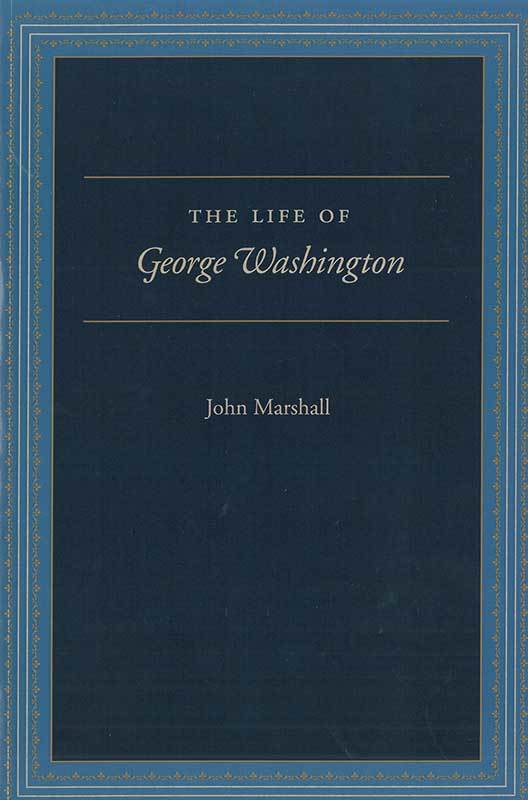
CHAPTER 32: Executive Vigor Confronts War, Rebellion, and Treaty-making (January 1794 to June 1796) - John Marshall, The Life of George Washington [1838]Edition used:The Life of George Washington. Special Edition for Schools, ed. Robert Faulkner and Paul Carrese (Indianapolis: Liberty Fund, 2000).
About Liberty Fund:Liberty Fund, Inc. is a private, educational foundation established to encourage the study of the ideal of a society of free and responsible individuals. Copyright information:The copyright to this edition, in both print and electronic forms, is held by Liberty Fund, Inc. Fair use statement:This material is put online to further the educational goals of Liberty Fund, Inc. Unless otherwise stated in the Copyright Information section above, this material may be used freely for educational and academic purposes. It may not be used in any way for profit.
CHAPTER 32Executive Vigor Confronts War, Rebellion, and Treaty-making (January 1794 to June 1796)Genêt recalled.—Is succeeded by Mr. Fauchet.—Mr. Morris recalled.—Is succeeded by Mr. Monroe.—Kentucky Remonstrance.—Intemperate Resolutions of the people of that State.—General Wayne Defeats the Indians on the Miamis.—Insurrection in the western part of Pennsylvania.—Quelled.—Meeting of Congress.—President’s Speech.—Democratic Societies.—Resignation of Colonel Hamilton.—He is succeeded by Mr. Wolcott.—Resignation of General Knox.—He is succeeded by Colonel Pickering.—Treaty with Great Britain.—Conditionally ratified.—Is unpopular.—Mr. Randolph resigns.—Is succeeded by Colonel Pickering.—Mr. McHenry appointed Secretary of War.—Charges against the President rejected.—Treaty with the Indians.—With Algiers.—With Spain.—Meeting of Congress.—President’s Speech.—Mr. Adet succeeds Mr. Fauchet.—The House of Representatives call on the President for papers.—He declines sending them.—Debates on the treaty-making power.—On the bill for making appropriations to carry the Treaty with Great Britain into effect.—Congress adjourns.—The President endeavours to procure the liberation of Lafayette. 1794That the most material of those measures on which the two great parties in the United States were divided might be presented in one unbroken view, some transactions have been passed over which will now be noticed. The resolution of the President to bear with the insults of Mr. Genêt until his appeal to the French government should be fairly tried, was shaken by fresh proofs, received in January, of conduct which could not be tolerated. That minister had deliberately planned two expeditions to be carried on against the dominions of Spain, and had granted commissions to citizens of the United States, who were privately recruiting troops for the service. The first was destined against the Floridas, and the second against Louisiana. That against the Floridas, while in progress, was fully developed1 by the vigilance of the legislature of South Carolina, and some of its principal agents were arrested. About the same time, intelligence was received that the expedition against Louisiana, which was to be carried on from Kentucky, down the Ohio, was in equal maturity. Believing further forbearance to be incompatible with the dignity, perhaps with the safety of the United States, the cabinet came to the resolution of superseding his diplomatic functions; and a message was prepared, communicating to Congress the determination to carry this measure into execution, unless it should be disapproved by that body, when the business was arrested by a letter received from Mr. Morris, announcing the recall of this rash minister. His successor, Mr. Fauchet, arrived in February, and brought with him strong assurances that his government disapproved the conduct of his predecessor.2 Not long afterwards, the executive of France requested the recall of Mr. Morris. Mr. Monroe, a senator from Virginia, who had embraced the cause of the French Republic with ardor, and was particularly acceptable to the party in opposition, was appointed to succeed him.3 The discontents long fomented in the west, had assumed an alarming appearance. May 1794A remonstrance from the inhabitants of Kentucky, respecting the navigation of the Mississippi, was laid before the executive and each branch of the legislature. In the language of an offended sovereign people, injured by the maladministration of public servants, it demanded the use of the Mississippi as a natural right, which had been unjustly withheld; and charged the government openly with being under the influence of a local policy, which had prevented its making a single real effort for the security of a good which was all-essential to the western people. Several intemperate aspersions on the legislature and executive were accompanied by threats obviously pointing to dismemberment. Both branches of the legislature expressed their conviction, that the executive was urging the claim of the United States to the navigation of the Mississippi in the manner most likely to prove successful; and the Senate added a resolution, “that the President of the United States be, and he is hereby required, to cause to be communicated to the executive of the state of Kentucky, such part of the existing negotiation between the United States and Spain, relative to this subject, as he may deem advisable, and consistent with the course of the negotiation.” Had the measures pursued in the western country been dictated exclusively by a wish to obtain an important good, these resolutions would have allayed the ferment. But when the real motives for human action are latent, it is vain to demonstrate the unreasonableness of those which are avowed. After they were received, a number of the principal citizens, from various parts of Kentucky, assembled at Lexington, and passed other resolutions, breathing the same intemperate and dangerous spirit. These proceedings were intimately connected with the machinations of Mr. Genêt. Authentic information of the measures taken by that minister, for the expedition against New Orleans, had been communicated to the Governor of Kentucky, so early as October, 1793, by Mr. Jefferson, with a request that he would use those means of prevention which the law enabled him to employ. This letter was accompanied with one from the Secretary of War, conveying the desire of the President, that should preventive means fail, he would employ military force to arrest the expedition; and General Wayne was ordered to hold a body of troops at the disposal of the Governor, should he find the militia insufficient for his purpose. The Governor was apprised of the proposed expedition, but doubted the lawfulness of arresting it; and was unwilling to exercise the power, if he possessed it. On the reception of the very extraordinary letter which announced this determination, the President directed General Wayne to establish a post at fort Massac, on the Ohio, for the purpose of stopping by force, if peaceable means should fail, any body of armed men who should be proceeding down that river. This precaution appears to have been necessary. The preparations for the expedition were still carried on with considerable activity; and there is reason to believe that it was not absolutely relinquished until Spain ceased to be the enemy of France. While these turbulent scenes were acting, the loud plaudits of France were re-echoed from every part of the American continent. The friendship of that republic for the United States, her respect for their rights, the ingratitude with which her continuing benefits were repaid, the injustice done her by the executive, and its tameness under British insults, were the inexhaustible themes of loud, angry, and unceasing declamation. Nov. 1793After the total failure of the attempt to treat with the hostile Indians, the campaign was opened with as much vigor as circumstances would permit. It was too late to complete the preparations which would enable General Wayne to enter their country, and to hold it. He therefore contented himself with establishing his troops for the winter about six miles in advance of fort Jefferson, and taking possession of the ground on which the Americans had been defeated in 1791, on which he erected fort Recovery. These positions afforded considerable protection to the frontiers. The delays inseparable from the transportation of supplies through an uninhabited country, infested by an active enemy, peculiarly skilled in partisan war, unavoidably protracted the opening of the campaign until near midsummer. Meanwhile, several sharp skirmishes took place, in one of which a few white men were said to be mingled with the Indians. 1794On the 8th of August, General Wayne reached the confluence of the Au Glaize and the Miamis of the Lakes. The richest settlements of the western Indians lay about this place. The mouth of the Au Glaize is distant about thirty miles from a post then occupied by the British, on the Miamis of the Lakes; in the vicinity of which, the whole strength of the enemy, amounting, as General Wayne was informed, to rather less than two thousand men, was collected. The legion was not much inferior in number to the Indians; and a reinforcement of eleven hundred mounted militia, commanded by General Scott, had been received from Kentucky. On the 15th of August, the American army advanced down the Miamis; and on the 18th, arrived at the rapids, where they halted, on the 19th, in order to erect a temporary work for the protection of the baggage, and to reconnoitre the situation of the enemy. The Indians were advantageously posted behind a thick wood, and behind the British fort. At eight, in the morning of the 20th, the American army advanced in columns, the right flank of the legion covered by the Miamis. One brigade of mounted volunteers, commanded by General Todd, was on the left; the other, commanded by General Barbee, brought up the rear. A select battalion, commanded by Major Price, moved in front of the legion. After marching about five miles, Major Price received a heavy fire from a concealed enemy, and was compelled to retreat. The Indians had chosen their ground with judgment. They had advanced into a thick wood in front of the British works, and had taken a position rendered almost inaccessible to horse by a quantity of fallen timber. They were drawn up in three lines, extending at right angles with the river, about two miles, and their immediate effort was to turn the left flank of the American army. On the discharge of the first rifle, the legion was formed in two lines, and the front was ordered to advance with trailed arms,4 and rouse the Indians from their covert at the point of the bayonet; then, and not till then, to deliver a fire, and to press the fugitives too closely to allow them time to load after discharging their pieces. Perceiving that the enemy was endeavoring to turn the American left, the general ordered up the second line. The legion cavalry, led by Captain Campbell, was directed to penetrate between the Indians and the river, in order to charge their left flank; and General Scott, at the head of the mounted volunteers, was directed to make a considerable circuit, and to turn their right. These orders were executed with spirit and promptitude; but so impetuous was the charge made by the first line of infantry, so entirely was the enemy broken by it, and so rapid was the pursuit, that only a small part of the second line, and of the mounted volunteers could get into the action. In the course of one hour, the Indians were driven more than two miles, through thick woods; when the pursuit terminated within gun-shot of the British fort. General Wayne remained three days on the banks of the Miamis, in front of the field of battle, during which time the houses and corn-fields above and below the fort, some of them within pistol-shot of it, were reduced to ashes. During these operations, a correspondence took place between General Wayne and Major Campbell, the commandant of the fort, which shows that hostilities between them were prevented only by the prudent acquiescence of the latter in this destruction of property within the range of his guns. On the 28th, the army returned to Auglaize by easy marches, destroying, on its route, all the villages and corn within fifty miles of the river. In this decisive battle, the loss of the Americans, in killed and wounded, amounted to one hundred and seven. Among the dead, was Captain Campbell of the cavalry, and Lieutenant Towles of the infantry. General Wayne bestowed great and well-merited praise on every part of the army. The hostility of the Indians still continuing, their whole country was laid waste, and forts were erected in the heart of their settlements, to prevent their return. This seasonable5 victory rescued the United States from a general war with the Indians. About this time, the resistance to the execution of the law imposing duties on spirits distilled within the United States, had advanced, in the western counties of Pennsylvania, to a point which required the decisive interposition of government. In consequence of a steady adherence to the system of counteraction, adopted by the executive, the law was slowly gaining ground, and several distillers in the disaffected country were induced to comply with its requisites. Congress having at length passed an act containing those provisions which had been suggested by the chief of the Treasury Department, the malcontents perceived that the certain loss of a market for the article, added to the penalties to which delinquents were liable, would gradually induce a compliance on the part of the distillers, unless they could deprive the government of the means it employed for carrying the law into execution. Bills of indictment had been found in a court of the United States against some of the perpetrators of the outrages which had been committed, upon which, as well as against several of the non-complying distillers, process6 was directed to issue. On the 15th of July, while the marshal was in the execution of his duty, he was fired on by a party of armed men; and, at daybreak the ensuing morning, a party attacked the house of General Neville the inspector, but were compelled to retreat.7 Apprehending that it would be repeated, he applied to the magistrates and militia officers8 for protection, but could obtain none. On the succeeding day, the insurgents reassembled to the number of about five hundred men, to renew the attack. The inspector had obtained a detachment of eleven men from the garrison at fort Pitt, who were joined by Major Kirkpatrick. Successful resistance being hopeless, a parley took place, at which the assailants, after all their other demands were conceded, required that the party in the house should march out and ground their arms. This being refused, the assault commenced. The action continued until the assailants set fire to several adjacent buildings, which compelled the party defending the house to surrender. The marshal was seized on his way to General Neville’s house, and his life was threatened. He obtained his liberty only by entering into a solemn engagement to serve no more processes on the western side of the Allegheny Mountains. The perpetrators of these treasonable practices, desirous of discovering their latent enemies, intercepted the mail from Pittsburg to Philadelphia, and took out the letters it contained. On acquiring the intelligence they sought, delegates were deputed to Pittsburg, to demand the banishment of the offenders. The inhabitants of Pittsburg complied with this demand, and also agreed to assemble the next day in Braddock’s field, and to elect delegates to a convention which was to meet on the 14th of August at Parkinson’s ferry. The avowed objects of these outrages were to compel the resignation of all officers engaged in the collection of duties; to withstand the authority of the United States by force of arms; to extort the repeal of the law imposing those duties; and to compel an alteration in the conduct of the government. The opposition had now reached a point which seemed to forbid the continuance of a temporizing system. The alternative of subduing resistance, or of submitting to it, was presented to the government. The act of Congress, which provided for calling forth the militia, required, as a prerequisite to the exercise of the power, that a judge should certify “that the laws of the United States were opposed, or their execution obstructed, by combinations too powerful to be suppressed by the ordinary course of judicial proceedings, or by the powers vested in the marshals.” It also provided, “that if the militia of the state where such combination may happen, shall refuse or be insufficient to suppress the same, the President may employ the militia of other states.” Aug. 1794The certificate of the judge having been obtained, the subject was again seriously considered in the cabinet; and the Governor of Pennsylvania was also consulted. All concurred in the appointment of commissioners, who should convey a full pardon for past offences, upon the condition of future submission; but a difference of opinion prevailed respecting ulterior eventual measures. The act made it the duty of the President, previous to the employment of military force, to issue his proclamation commanding the insurgents to disperse within a limited time. The Secretary of State, (and the Governor of Pennsylvania was understood to concur with him,) was of opinion that this conciliatory mission should be unaccompanied by any measure which might wear the appearance of coercion. The Secretaries of the Treasury and of War, and the Attorney General, were of a different opinion. They thought that the occasion required a full trial of the ability of the government to enforce obedience to the laws; and that the employment of a force which would render resistance desperate, was dictated equally by humanity and sound policy. The insurgent counties contained sixteen thousand men capable of bearing arms; and the computation was that they could bring seven thousand into the field. An army of twelve thousand would present an imposing force, which the insurgents could not venture to meet. Aug. 7, 1794It was impossible that the President could hesitate to embrace the latter of these opinions. The proclamation, therefore, was issued, and, on the same day, a requisition was made on the Governors of New Jersey, Pennsylvania, Maryland, and Virginia, for their several quotas of militia, to compose an army of twelve thousand men. While steps were taking to bring this force into the field, a last essay was made to render its employment unnecessary. Three distinguished and popular citizens of Pennsylvania were deputed as the bearers of a general amnesty on the sole condition of future obedience to the laws. Meanwhile the insurgents omitted nothing which might enlarge the circle of disaffection. They made incursions into the counties east of the Allegheny, and into the neighboring counties of Virginia, for the purpose of spreading their principles, and suppressing offices of inspection. The convention at Parkinson’s ferry had appointed a committee of safety, consisting of sixty members, who chose fifteen of their body to receive and report the propositions of the commissioners. They expressed themselves unanimously in favor of accepting the terms offered by the government. The committee of safety appeared rather inclined to the same opinion, but determined finally to refer the question to the people. This reference resulted in demonstrating that, though many were disposed to demean9 themselves peaceably, a vast mass of opposition remained, determined to obstruct the re-establishment of civil authority. From some causes, among which was disaffection, the prospect of bringing the Pennsylvania quota into the field was at first unpromising. But the assembly, which was convened by the Governor, expressed its abhorrence of this daring attempt to subvert the government: and a degree of ardor was displayed by the people of other states which exceeded the hopes of the most sanguine friends of the administration. Some feeble and insidious attempts to produce disobedience to the requisition, by declaring, among other things, that the people would never be made the instruments of the Secretary of the Treasury to shed the blood of their fellow-citizens, were silenced by the general sense of the nation, which loudly proclaimed that the government and laws must be supported. From the exertions of her Governor, Pennsylvania was not behind10 her sister states. On the 25th of September, the President issued a second proclamation, stating the perverse spirit in which the lenient propositions of government had been received, and declaring his fixed determination, in obedience to the high duty consigned to him by the constitution, to reduce the refractory to obedience. The troops of New Jersey and Pennsylvania were directed to rendezvous at Bedford, and those of Maryland and Virginia at Cumberland, on the Potomac. The command of the expedition had been conferred on Governor Lee of Virginia.11 Sept. 1794From Cumberland and Bedford, the army marched in two divisions into the country of the insurgents. The disaffected did not venture to assemble in arms. Several of the leaders, who had refused to give assurance of future submission to the laws, were seized, and some of them detained for legal prosecution. But although no direct and open opposition was made, the spirit of insurrection was not subdued. A sour and malignant temper was displayed, which indicated, too plainly, that the disposition to resist had sunk under the great military force brought into the country, but would rise again should that force be withdrawn. It was therefore thought advisable to station a detachment to be commanded by Major-General Morgan,12 in the centre of the disaffected country, for the winter. Thus, without shedding a drop of blood, did the prudent vigor of the executive terminate an insurrection which, at one time, threatened to shake the government to its foundation. That so perverse a spirit should have been excited in the bosom of prosperity, without the pressure of a single grievance, is among those political phenomena which occur, not unfrequently, in the course of human affairs, and which the statesman can never safely disregard. To the intemperate abuse which was cast on the measures of the government, and on all who supported them; to the violence with which the discontents of the opponents of those measures were expressed; and especially to the denunciations which were uttered against them by the democratic societies; the friends of the administration ascribed that criminal attempt which had been made to oppose the will of the nation by force. Had these misguided men believed that the opposition was confined within their own narrow limits, they could not have been so mad or so weak as to engage in it. The ideas of the President on this subject were freely given to his confidential friends. “The real people,” he said, “occasionally assembled in order to express their sentiments on political subjects, ought never to be confounded with permanent self-appointed societies usurping the right to control the constituted authorities, and to dictate to public opinion. While the former is entitled to respect, the latter is incompatible with all government, and must either sink into general disesteem, or finally overturn the established order of things.” Nov. 1794In his speech at the opening of Congress, the President detailed the progress of opposition, and the measures finally taken to reduce the refractory to submission. After bestowing a high encomium on the alacrity with which persons in every station had come forward to assert the dignity of the laws, he added, “but let them persevere in their affectionate vigilance over that precious deposit of American happiness—the constitution of the United States. And when in the calm moments of reflection, they shall have retraced the origin and progress of the insurrection, let them determine whether it has not been fomented by combinations of men who, careless of consequences, and disregarding the unerring truth that those who rouse cannot always appease a civil convulsion, have disseminated, from an ignorance or perversion of facts, suspicions, jealousies, and accusations of the whole government.” He mentioned the intelligence from the army, the state of Indian affairs, recommended a revisal of the militia system, and urged a definitive plan for the redemption of the public debt. After referring to subsequent communications respecting the intercourse of the United States with foreign nations, he added, “it may not, however, be unreasonable to announce that my policy in our foreign transactions has been, to cultivate peace with all the world; to observe treaties with pure and inviolate faith; to check every deviation from the line of impartiality; to explain what may have been misapprehended, and correct what may have been injurious to any nation; and having thus acquired the right, to lose no time in acquiring the ability, to insist upon justice being done to ourselves.” An answer was reported in the Senate, containing a direct censure on the disorganizing proceedings of certain self-created societies, and an unequivocal approbation of the policy adopted by the executive with regard to foreign nations. To the latter, no objection was made. The clause respecting democratic societies was seriously opposed; but the address reported by the committee was agreed to without alteration. The same spirit did not prevail in the House of Representatives. In that branch of the legislature, the opposition party continued to be the most powerful, and the respect of their leaders for the person and character of the Chief Magistrate was visibly diminishing. His interference with a favorite system was not forgotten; and the mission of Mr. Jay still rankled in their bosoms. No direct censure of the democratic societies, or approbation of the conduct of the administration towards foreign powers, could be carried. This triumph over the administration revived for a moment the drooping energies of these pernicious societies. But it was only for a moment. The agency ascribed to them by the opinion of the public as well as of the President, in producing an insurrection which was generally execrated, had essentially affected them; and while languishing under this wound, they received a deadly blow from a quarter whence hostility was least expected. The remnant of the French convention, rendered desperate by the ferocious despotism of the Jacobins, and of the sanguinary tyrant who had become their chief, had at length sought for safety by confronting danger; and, succeeding in a desperate attempt to bring Robespierre to the guillotine, had terminated his reign of terror.13 The colossal power of the clubs fell with that of their favorite member, and they sunk into long-merited disgrace. Not more certain is it that the boldest streams must disappear if the fountains which fed them be emptied, than was the dissolution of the democratic societies in America, when the Jacobin clubs were denounced in France. As if their destinies depended on the same thread, the political death of the former was the unerring signal for that of the latter. Notwithstanding the disagreement between the President and one branch of the legislature, concerning self-created societies, and the policy observed towards foreign nations, his speech was treated with marked respect; and the several subjects which it recommended engaged the immediate attention of Congress. He had repeatedly pressed on the legislature the adoption of measures which might effect the gradual redemption of the public debt; but, although that party which had been reproached with a desire to accumulate debt as a means of subverting the republican system, had exerted themselves to accomplish this object, their efforts had hitherto been opposed by obstacles they were unable to surmount. These were intrinsic difficulties in the subject. The duty on imported articles and on tonnage could not, immediately, be rendered sufficiently productive to meet the various exigencies of the treasury, and yield a surplus for the secure establishment of a fund to redeem the principal of the debt. Additional sources of revenue were to be explored. New taxes are the never-failing sources of discontent. In a government where popularity is power, it requires no small degree of patriotism to encounter the odium which, however necessary, they seldom fail to excite. No clamour could deter the Secretary of the Treasury from continuing to recommend measures which he believed to be essential toJan. 1795 the due administration of the finances. While the legislature was engaged in discussing a report made by a select committee on a resolution moved by Mr. Smith, of South Carolina,14 purporting that farther provision ought to be made for the reduction of the public debt, he addressed a letter to the House of Representatives, through their Speaker, informing them that he had digested and prepared a plan on the basis of the actual revenues, for the farther support of public credit, which he was ready to communicate. This comprehensive and valuable report presented the result of his laborious and useful investigations, on a subject equally intricate and interesting. It was the last official act of Colonel Hamilton. The penurious provision made for those who filled high offices in the executive departments, excluded from a long continuance in them, all men of moderate fortune, whose professional talents placed a decent independence within their reach. While slandered as the accumulator of thousands by illicit means, he had wasted in the public service a great part of the property acquired by his previous labors, and had found himself compelled to decide on retiring from political station. The accusations brought against him in the last session of the second Congress, had postponed the execution of this design, and subsequent events of a nature to render the continuance of peace precarious, deferred it still longer. On the first of December, on his return from the western country, the dangers of domestic insurrection or foreign war having subsided, he gave notice that he should, on the last day of January, give in his resignation. Seldom has any minister excited the opposite passions of love and hate in a higher degree than Colonel Hamilton. His talents were too prominent not to receive the tribute of profound respect from all; and his integrity and honor as a man, not less than his official rectitude, though slandered at a distance, were admitted to be superior to reproach by those enemies who knew him. But with respect to his political principles and designs, the most contradictory opinions were entertained. While one party sincerely believed his object to be the preservation of the Constitution of the United States in its purity; the other, with perhaps equal sincerity, imputed to him the insidious intention of subverting it. While his friends were persuaded that, as a statesman, he viewed foreign nations with an equal eye, his enemies could perceive in his conduct only hostility to France, and attachment to her rival. In the good opinion of the President, to whom he was best known, he had always held a high place; and he carried with him out of office the same cordial esteem for his character, and respect for his talents, which had induced his appointment. The vacant office was filled by Mr. Wolcott, of Connecticut, a gentleman of sound judgment, who was well versed in its duties.15 The report of the select committee recommended additional objects for internal taxation, and that the temporary duties already imposed should be rendered permanent. The opposition was so ardent that the bill did not pass till late in February. At length, by the persevering exertions of the federal party, it was carried, and a system adopted which would discharge all the engagements of the United States. 1795On the 3d of March, this important session was ended. Although the party in opposition had obtained a small majority in one branch of the legislature, several circumstances had concurred to give great weight to the recommendations of the President. Among these, were the victory obtained by General Wayne, and the suppression of the western insurrection. In some points, however, which he had pressed with earnestness, his sentiments did not prevail. One of these was a plan for preserving peace with the Indians by protecting them from the intrusions of the whites. He had scarcely permitted a Congress to pass without calling their attention to this subject. It had been mentioned in his speech at the commencement of this session, and had been farther enforced by a message accompanying a report made upon it by the Secretary of War. The plan suggested in this report was, to add to those arrangements respecting trade which were indispensable to the preservation of peace, a chain of garrisoned posts within the territory of the Indians, provided their assent could be obtained; and to subject all trespassers on their lands to martial law. A bill founded on this report passed the Senate, but was lost in the House of Representatives. This report preceded the resignation of the Secretary of War but a few days. This valuable officer, too, was driven from the service of the public by the scantiness of the compensation allowed him. Colonel Pickering, a gentleman who had filled many important offices through the war of the revolution; who had discharged several trusts of confidence under the present government; and who, at the time, was Post-Master General, was appointed to succeed him.16 On the 7th of March, the treaty of amity, commerce, and navigation, between the United States and Great Britain, which had been signed on the 19th of the preceding November, was received at the office of State. From his arrival in London, Mr. Jay had been assiduously employed on the objects of his mission. By a deportment respectful, yet firm, this minister avoided those little asperities which frequently embarrass measures of great concern, and smoothed the way to the adoption of those which were suggested by the real interests of both nations. Many and intricate were the points to be discussed. On some of them an agreement was found to be impracticable; but, at length, a treaty was concluded, which Mr. Jay declared to be the best that was attainable, and which he believed it to be for the interest of the United States to accept. Indeed it was scarcely possible to contemplate the evidence of extreme exasperation which was given in America, and the nature of the differences between the two countries, without feeling a conviction that war was inevitable should this attempt to adjust those differences prove unsuccessful. On Monday, the 8th of June, the Senate, in conformity with a summons from the President, convened in the Senate chamber, and the treaty, with the documents connected with it, were submitted to their consideration. On the 24th of the same month, after a minute and laborious investigation, the Senate, by precisely a constitutional majority, advised and consented to its conditional ratification. In regulating the intercourse between the United States and the British West Indies, the parties intended to admit the direct trade, but not to permit the productions of the latter to be carried to Europe in the vessels of the former. To give effect to this intention, the exportations from the United States of those articles which were the principal productions of the islands, was to be prohibited. Among these was cotton. This article, which a few years before was scarcely raised in sufficient quantity for domestic consumption, was becoming one of the richest staples of the southern states. The Senate, being informed of this fact, which was unknown to Mr. Jay, advised and consented that the treaty should be ratified, on condition that an article be added thereto, suspending that part of the 12th article, which related to the intercourse with the West Indies. This resolution of the Senate presented difficulties which required consideration. Whether they could advise and consent to an article which had not been laid before them, and whether their resolution was to be considered as the final exercise of their power, were questions not free from difficulty. Nor was it clear that the executive could ratify the treaty, under the advice of the Senate, until the suspending article should be introduced into it. When these doubts were removed, intelligence was received from Europe, which superseded the determination the President had formed.17 July 1795The English papers contained an account that the order of the 8th of June, 1793, respecting provisions going to French ports, was renewed. In the apprehension that this order might be intended as a practical construction of the article which seemed to favor the idea that provisions might occasionally become contraband, a construction in which he had determined not to acquiesce, he thought it wise to reconsider his decision. A strong memorial against this objectionable order was directed; and the propositions a) to withhold the ratification of the treaty, until the same should be repealed; b) to make the exchange of ratifications dependent on that event; and c) to connect his ratification with the memorial he had directed, as explanatory of the sense in which his ratification was made, were severally under consideration.18 In conformity with his practice of withholding his opinion on controverted points, until it should become necessary to decide them, he suspended his determination until the memorial should be prepared and laid before him. In the mean time, his private affairs required that he should visit Mount Vernon. Meanwhile, the restless, uneasy temper of parties was active in its operations. That the instrument itself was not communicated to the public even previous to its being laid before the Senate, and that the Senate deliberated upon it with closed doors, were considered as additional evidences of the contempt in which their rulers held the people. Although the contents of the treaty were unknown, a decisive judgment was extensively formed on any reconciliation between the two countries. The sentiments called forth by the occasion, demonstrated that no possible adjustment with Great Britain could be satisfactory. That a treaty of amity and commerce should have been concluded, whatever might be its principles, was said to be a degrading insult to the American people, a pusillanimous surrender of their honor, and an insidious injury to France. Such was the state of parties, when the Senate advised the ratification of the treaty. In violation of common usage, and of a positive resolution of the Senate, an abstract of this instrument, not very faithfully taken, was given to the public; and, on the 29th of June, a senator of the United States transmitted a copy of it to the most distinguished editor of the opposition party in Philadelphia, for publication. If amicable arrangement, whatever might be its character, had been previously condemned, it was not to be expected that the treaty would assuage the irritation. If the people at large enter keenly into the points of controversy with a foreign power, they can seldom be satisfied with any equal adjustment of those points: nor will it be difficult, unless there be undue attachment to the adversary nation, to prove to them that they give too much, and receive too little. The operation of this principle was not confined to those whose passions urged them to take part in the war, nor to the open enemies of the executive. The friends of peace and of the administration had generally received impressions unfavorable to the fair exercise of judgment in the case, which it required time and reflection to efface. Even among them, strong prejudices had been imbibed in favor of France, which her open attempts on the sovereignty of the United States had only weakened. The treaty, therefore, found one party prepared for an intrepid attack; but the other not ready in its defence. That an instrument involving many complicated national interests, and adjusting differences of long standing, would require a patient and laborious investigation before even those most conversant in diplomatic transactions could form a just estimate of its merits, would be conceded by all reflecting men. But an immense party in America, not in the habit of considering national compacts, without understanding the instrument, and in most instances without reading it, rushed impetuously to its condemnation; and, confident that public opinion would be surprised by the suddenness, and stormed by the fury of the assault, expected that the President would be compelled to yield to its violence. In the populous cities, meetings of the people were immediately summoned to take the instrument into consideration, and express their opinion of it. Those who distrusted their capacity to form intuitively a correct judgment on so complex a subject, and who were disposed to act knowingly, declined attending these meetings. The most intemperate assumed as usual the name of the people, pronounced an unqualified condemnation of every article in the treaty, and, with the utmost confidence, assigned reasons for their opinions which, in many instances, had no real existence, and in some, were obviously founded on their strong prejudices with regard to foreign powers. The first meeting was held in Boston. The example was soon followed by New York, Philadelphia, Baltimore, and Charleston; and, their addresses being designed at least as much for their fellow-citizens as for their President, while one copy was transmitted to him, another was committed to the press. The precedent set by these large cities was followed with wonderful rapidity throughout the Union; and the spirit of violence sustained no diminution in its progress. 1795On the 18th of July, at Baltimore, on his way to Mount Vernon, the President received the resolutions passed at Boston, in a letter from the selectmen of that town. His answer evinced the firmness with which he had resolved to meet the effort that was obviously making to control the exercise of his constitutional functions, by giving promptness and vigor to the expressions of the sentiments of party, which might impose it on the world as the deliberate judgment of the public. He viewed the opposition which the treaty was receiving in a very serious light:—“not because there was more weight in any of the objections than was foreseen; for in some, there was none; and in others, there were gross misrepresentations: nor as respected himself personally, for that should have no influence on his conduct.” But he was alarmed on account of the effect it might have on France, and the advantage which the government of that country might be disposed to make of the spirit which was at work, to cherish a belief that the treaty was calculated to favor Great Britain at her expense. “Whether she believed or disbelieved these tales, their effect,” he said, “would be nearly the same.” In the afternoon of the 11th of August, the President returned to Philadelphia; and, on the next day, the question respecting the immediate ratification of the treaty was laid before the cabinet. The Secretary of State maintained, singly, the opinion that, during the existence of the provision order, this step ought not to be taken. His opinion did not prevail. The resolution was adopted to ratify the treaty immediately, and to accompany its ratification with a strong memorial against the provision order, which should convey, in explicit terms, the sense of the American government on that subject. By this course, the views of the executive were happily accomplished. The order was revoked, and the ratifications of the treaty were exchanged. The President was most probably determined to the immediate adoption of this measure by the extreme violence with which the treaty was opposed, and the rapid progress which this violence was making. It was obvious that, unless this temper could be checked, it would soon become so extensive, as to threaten dangerous consequences. It had become necessary either to attempt a diminution of its action by rendering its exertions hopeless, and by giving to the treaty the weight of his character and influence, or to yield to it. The soundness of this policy was proved by the event. The confidence which was reposed in the judgment and virtue of the Chief Magistrate, induced many, who, swept away by the popular current, had yielded to the common prejudices, to re-examine and discard opinions which had been too hastily embraced; and many were induced to take a more active part in the general contest than they would otherwise have pursued. The consequence was, that more moderate opinions began to prevail. If the ratification of the treaty increased the number of its open advocates, it also gave increased acrimony to the opposition. Previous to the mission of Mr. Jay, charges against the Chief Magistrate, though frequently insinuated, had seldom been directly made. That mission visibly affected the decorum which had been usually observed towards him; and the ratification of the treaty brought sensations into open view, which had long been ill-concealed. His military and political character was attacked with equal violence; and it was averred that he was totally destitute of merit, either as a soldier or a statesman. The calumnies with which he was assailed were not confined to his public conduct; even his qualities as a man were the subjects of detraction. That he had violated the constitution in the treaty lately negotiated with Great Britain, was openly maintained, for which an impeachment was publicly suggested; and that he had drawn from the treasury for his private use, more than the salary annexed to his office, was asserted without a blush. This last allegation was said to be supported by extracts from the treasury accounts which had been laid before the legislature, and was maintained with the most persevering effrontery. Oct. 1795Though the Secretary of the Treasury denied officially in the papers, that the appropriations made by the legislature had ever been exceeded, the atrocious charge was still confidently repeated; and the few who could triumph in any spot which might tarnish the lustre of Washington’s fame, felicitated themselves on the prospect of obtaining a victory over the reputation of a patriot to whose single influence they ascribed the failure of their political plans. The confidence felt by the real public in the integrity of their Chief Magistrate, remained unshaken; but so imposing was the appearance of the documents adduced, as to excite an apprehension that the transaction might be placed in a light to show that some indiscretion in which he had not participated, had been inadvertently committed. This state of anxious suspense was of short duration. The late Secretary of the Treasury, during whose administration of the finances this peculation19 was alleged to have taken place, came forward with a full explanation of the fact. It appeared that the President himself had never touched any part of the compensation annexed to his office, but that the whole was received and disbursed by the gentleman who superintended the expenses of his household;—that it was the practice of the Treasury, when a sum had been appropriated for the current year, to pay it to that gentleman occasionally, as the situation of the family might require. The expenses at some periods of the year exceeded, and at others fell short of the allowance for the quarter; so that sometimes money was paid in advance for the ensuing quarter, and at others, that which was due at the end of the quarter was not completely drawn out; the Secretary entered into an examination of the constitution and laws to show that this practice was justifiable; and illustrated his arguments by many examples in which an advance on account of money appropriated to a particular object, before the service was completed, would be absolutely necessary. However this might be, it was a transaction in which the President, personally, was unconcerned. When possessed of the entire fact, the public viewed with just indignation, this attempt to defame a character which was the nation’s pride. Americans felt themselves involved in this atrocious calumny on their most illustrious citizen; and its propagators were frowned into silence. Nov. 1795 to Jan. 1796The Secretary of State had resigned on the 19th of August, and, after some time, was succeeded by Colonel Pickering. Mr. McHenry was appointed to the Department of War.20 By the death of Mr. Bradford, a vacancy was also produced in the office of Attorney-General, which was filled by Mr. Lee.21 Many of those embarrassments in which the government had been involved from its institution, were now ended or approaching their termination. The opposition to the laws in the western counties of Pennsylvania existed no longer. A firm peace had been made with the north-western Indians; and an accommodation had taken place with the powerful tribes of the south. After the failure of several attempts to purchase peace from the regency of Algiers, a treaty was at length negotiated on terms which, though disadvantageous, were the best that could be obtained. The unwearied exertions of the executive to settle the controversy with Spain had at length been successful. That power, embarrassed by its war with France, had lately discovered symptoms of a temper more inclined to conciliation, and a treaty was concluded on the 20th of October, at Madrid, in which the claims of the United States on the important points of boundary, and the navigation of the Mississippi, were fully conceded. Dec. 1795Although the signature of the treaties with Spain and Algiers had not been officially announced, the intelligence was such as to enable the President, in his speech at the opening of Congress, to assure the legislature that those negotiations were in a train which promised a happy issue. After expressing his gratification at the prosperous state of American affairs, the various favorable events which have been enumerated were detailed in a succinct statement, at the close of which he mentioned the treaty with Great Britain. In the Senate, an address was reported which echoed back the sentiments of the speech. In this House of Representatives, as in the last, the party in opposition to the administration had obtained the majority.22 This party was unanimously hostile to the treaty with Great Britain. The answer reported by the committee, contained a declaration that the confidence of his fellow-citizens in the Chief Magistrate remained undiminished. On a motion to strike out this clause, it was averred that it asserted an untruth. It was not true, that the confidence of the people in the President was undiminished. The friends of the administration opposed the motion with zeal, but were outnumbered; and, to avoid a direct vote, the address was recommitted, and two members were added to the committee, who so modified it as to avoid the exception. 1796Early in the month of January, the President transmitted a message to both Houses of Congress, accompanying certain communications from the French government, which were well calculated to cherish those ardent feelings that prevailed in the legislature. It was the fortune of Mr. Monroe to reach Paris soon after the death of Robespierre. On his reception, which was in the convention, he delivered to the President of that body, with his credentials, two letters addressed by the Secretary of State to the committee of public safety. So fervent were the sentiments expressed on this occasion, that the convention decreed that the flags of the two republics should be united, and suspended in its own hall. To evince the impression made by this act, Mr. Monroe presented to the convention the flag of the United States, which he prayed that body to accept as a proof of the sensibility with which his country received every mark of friendship from its ally. The committee of safety again addressed the legislature in terms adapted to that department of government which superintends its foreign intercourse. Mr. Adet, the successor of Mr. Fauchet, was the bearer of this letter, and also brought with him the colors of France, which he was directed to present to the United States.23 He announced them late in December; and the first day of the new year was named for their reception, when they were delivered to the President, with the letter directed to Congress. In executing this duty, Mr. Adet addressed a speech to the President, which, in the glowing language of his country, represented France as struggling not only for her own liberty, but for that of the world. To answer this speech was a task of some delicacy. It was necessary to express feelings adapted to the occasion, without implying sentiments respecting the belligerent powers, which the Chief Magistrate of a neutral country could not properly avow. The President, in his reply, kept both these objects in view. The address of Mr. Adet, the answer of the President, the colors of France, and the letter from the committee of safety, were transmitted to Congress. In the House of Representatives, a resolution was passed unanimously, requesting the President to make known to the representatives of the French republic the sincere and lively sensations which were excited by this honorable testimony of the existing sympathy and affection of the two republics. In the Senate, a resolution passed expressing these sentiments to the President, unaccompanied with a request to communicate them to the government of France. In February, the treaty with Great Britain was returned, ratified by his Britannic Majesty. The constitution having declared a treaty to be the supreme law of the land, the President announced it officially to the people in a proclamation requiring its observance by all persons; a copy of which was transmitted to each House on the 1st of March. The party in opposition having openly denied the right of the President to negotiate a treaty of commerce, was not a little dissatisfied at his venturing to issue this proclamation before the sense of the House of Representatives had been declared on the obligation of the instrument. 1796On the 7th of March, Mr. Livingston24 moved a resolution requesting the President “to lay before the House a copy of the instructions to the minister of the United States who negotiated the treaty with the King of Great Britain, communicated by his message of the 1st of March, together with the correspondence and other documents relative to the said treaty.” The debate on this resolution soon glided into an argument on the nature and extent of the treaty-making power. The opposition contended that the power to make treaties, if applicable to every object, conflicted with powers which were vested exclusively in Congress. That it must be so limited as not to touch these objects, or the assent and co-operation of the House of Representatives must be required to the validity of any compact, so far as it might comprehend them. A treaty, therefore, so far as it required an act of Congress to carry it into effect, had no obligatory force until the House of Representatives had acted on it. They were at liberty to withhold such law without incurring the imputation of violating any existing obligation, or of breaking the faith of the nation. The debate was protracted until the 24th of March, when the resolution was carried by sixty-two to thirty-seven voices. The situation in which this vote placed the President was peculiarly delicate. The popularity of a demand for information, the large majority by which that demand was supported, the additional force which a refusal to comply with it would give to suspicions already insinuated, that circumstances had occurred in the negotiation which the administration dared not expose, and that the President was separating himself from the representatives of the people, furnished motives not lightly to be overruled, for yielding to the request which had been made. But these considerations were opposed by others which possess an irresistible influence over a mind resolved to pursue steadily the path of duty, however it may abound with thorns. That the future diplomatic transactions of the government might be seriously affected by establishing the principle that the House of Representatives could demand as a right, the instructions given to a foreign minister, and all the papers connected with a negotiation, was too apparent to be unobserved. It was, too, a subject for serious reflection, that the information was asked for the avowed purpose of determining whether the House of Representatives would give effect to a public treaty, and that, in an elaborate debate, that House had claimed a right of interference in the formation of treaties, which, in his judgment, the constitution had denied them. TheMarch 30, 1796 opinion of the President being completely formed on the course it became him to pursue, he returned an answer to the resolution which had been presented to him, in which, after detailing his reasons in an argument of great strength, he declined making the communications which had been required. The terms in which this decided, and it would seem unexpected, negative to the call for papers had been conveyed, appeared to break the last cord of that attachment which had theretofore bound some of the active leaders of the opposition to the President personally. Amidst all the irritations of party, a sincere respect and real affection for the Chief Magistrate, the remnant of former friendship, had still lingered in the bosoms of some who had engaged with ardor in the political contests of the day. If the last spark of this affection was not now extinguished, it was concealed under the more active passions of the moment. A motion to refer the message of the President to a committee of the whole house was carried by a large majority. In committee, resolutions were moved by Mr. Blount of North Carolina,25 declaring the sense of the House respecting its own power on the subject of treaties. Those resolutions take a position less untenable than had been maintained in argument, and rather inexplicit on an essential part of the question. In the course of the month of March, the treaties with his Catholic Majesty, and with the Dey of Algiers, were ratified by the President, and were laid before Congress.26 On the 13th of April, Mr. Sedgwick moved “that provision ought to be made by law for carrying into effect with good faith, the treaties lately concluded with the Dey and Regency of Algiers, the King of Great Britain, the King of Spain, and certain Indian tribes north-west of the Ohio.” This motion produced a warm altercation. After a discussion manifesting great irritation, the resolution was so amended as to declare that it was expedient to make provision by law for carrying into effect the treaty lately concluded with the King of Spain. The resolution, thus amended, was agreed to without a dissenting voice; and then similar resolutions passed respecting the treaties with Algiers, and with the Indians. This business being dispatched, the treaty with Great Britain was brought before the House. The friends of that instrument urged an immediate decision of the question. They appeared to have entertained the opinion that the majority would not dare to encounter the immense responsibility of breaking that treaty without previously ascertaining that the great body of the people were willing to meet the consequences of the measure. But its opponents, though confident of their power to reject the resolution, called for its discussion. The minority soon desisted from urging an immediate decision of the question; and the spacious field which was opened by the propositions before the House, was entered with equal avidity and confidence by both parties. At no time have the members of the national legislature been stimulated to great exertions by stronger feelings than impelled them on this occasion. Never has a greater display been made of argument, of eloquence, and of passion, and never has a subject been discussed in which all classes of their fellow-citizens took a deeper interest. Those who supported the resolution, believed firmly that the faith of the nation was pledged, and that its honor, its character, and its constitution, depended on the vote about to be given. They also believed that the best interests of the United States required an observance of the compact as formed. The opposite party was undoubtedly of opinion that the treaty contained stipulations really injurious to the United States. But no consideration appears to have had more influence than the apprehension that the amicable arrangements made with Great Britain, would seriously affect the future relations of the United States with France. Might a conjecture be hazarded, it would be that, in the opinion of many intelligent men, the preservation of that real neutrality at which the executive had aimed, was impracticable; that America would probably be forced into the war; and that the possibility of a rupture with France, was a calamity too tremendous not to be avoided at every hazard. As had been foreseen, this animated debate drew forth the real sentiments of the people. The whole country was agitated; meetings were again held throughout the United States; and the strength of parties was once more tried. The fallacy of many objections to the treaty had been exposed, the odium originally excited against it had been diminished, and the belief that its violation must precipitate the nation into a war was almost universal. These considerations brought reflecting men into action; and the voice of the nation was pronounced unequivocally with the minority in the House of Representatives. This manifestation of the public sentiment was decisive with Congress. On the 29th of April, the question was taken in committee of the whole, and was determined by the casting vote of the chairman in favor of making the necessary laws. The resolution was finally carried, fifty-one voting in the affirmative, and forty-eight in the negative.27 That necessity to which a part of the majority had reluctantly yielded, operated on no other subject. So excessive had been the hostility of the opposition to a maritime force, that, even under the pressure of the Algerine war, the bill providing a naval armament could not be carried through the House without the insertion of a section suspending all proceedings under the act, should that war be terminated. That event having occurred, not a single frigate could be completed without further authority from the legislature. Although no peace had been concluded with Tunis or Tripoli, it was with the utmost difficulty, that a bill for the completion of three, instead of six frigates could be carried. To secure the complete execution of the system for the gradual redemption of the public debt, it was believed that some additional aid to the treasury would be required. The friends of the administration were in favor of extending the system of indirect internal taxation. But those who wished power to change hands had generally manifested a disposition to oblige those who exercised it to resort to a system of revenue by which a greater degree of sensibility will always be excited. The indirect taxes proposed were strongly resisted; and only that for augmenting the duty on carriages for pleasure was passed into a law. On the 1st day of June, this long and interesting session was terminated. It may not be unacceptable to turn aside for a moment from this view of the angry conflicts of party, and to look back to a transaction in which the movements of a feeling heart were disclosed. No one of those foreigners who, during the war of the revolution, had engaged in the service of the United States, had embraced their cause with so much enthusiasm, or had held so distinguished a place in the affections of General Washington, as the Marquis de Lafayette. For his friend while guiding the course of a revolution which fixed the anxious attention of the world, or while a prisoner in Prussia, or in the dungeon of Olmutz, the President manifested the same esteem, and felt the same solicitude.28 The extreme jealousy however with which those who administered the government of France as well as a large party in America, watched his deportment towards all whom the ferocious despotism of the Jacobins had banished from their country, imposed upon him the painful necessity of observing great circumspection in his official conduct, on this delicate subject. A formal interposition in favor of the virtuous and unfortunate victim of their fury would have been unavailing. But the American ministers at foreign courts were instructed to seize every fair occasion to express, unofficially, the interest taken by the President in the fate of Lafayette. A confidential person had been sent to Berlin to solicit his liberation;29 but before this message had reached his destination, the King of Prussia had delivered over his illustrious prisoner to the Emperor of Austria. Mr. Pinckney had been instructed not only to indicate the wishes of the President to the Austrian minister at London, but to endeavor unofficially to obtain the powerful mediation of Britain. May 1796After being disappointed in these attempts, he addressed a private letter to the Emperor of Germany. How far it operated in mitigating immediately the rigor of Lafayette’s confinement, or in obtaining his liberation, is unknown. Part ThreeThe First of Americans[1. ]The opposite of enveloped: removed from concealment, exposed (from the French, développer, to unwrap, unravel, display). [2. ]Joseph (Jean-Antoine) Fauchet (1761–1834), appointed by the Jacobin government of Robespierre as minister plenipotentiary to the United States; he arrived in February 1794. [3. ]James Monroe (1758–1831) of Virginia, Major in the Continental army, state legislator, Confederation Congressman (1783–86), Anti-Federalist in Virginia ratifying convention, U.S. Senator (1790–94), ambassador to France 1794 to 1796; later Governor of Virginia (1799–1802), envoy and negotiator for Jefferson in Europe (1801–6), Secretary of State (1811–17), Secretary of War (1814–15), fifth President of the United States (1816–25). [4. ]With rifles or muskets carried by the trail (the stock) and held in a horizontal position extending in front of the soldier; used when troops are attacking, especially with the bayonet. [5. ]Opportune, timely. [6. ]Legal proceedings in a court of law. [7. ]General John Neville had recently been appointed Inspector of the Western Survey; both he and the marshal were federal government officials. [8. ]Of the county government of Pennsylvania, state officials. [9. ]To behave or conduct oneself. [10. ]I.e., not trailing behind or failing to support the other states in their support of the federal government. [11. ]Henry “Light-Horse Harry” Lee (1756–1818) of Virginia, Colonel in the Continental army, famous commander of the irregular cavalry unit known as “Lee’s Legion”; Confederation Congressman (1785–88), Federalist; Governor of Virginia (1792–95). Lee was appointed General in the United States army in 1794 to command the army assembled to quell the Whiskey Rebellion; from 1799 to 1801 he returned to the U.S. Congress as a Federalist. Father of Robert E. Lee. [12. ]Daniel Morgan (1736–1802) of New Jersey (Pennsylvania?) and Virginia, Brigadier General in the Continental army, famous commander of successive corps of riflemen, rangers, and light troops in the war; appointed Major General in the U.S. army in 1794 to quell the Whiskey Rebellion, commanding the Virginia militia; U.S. Representative from Virginia (1797–99), Federalist. [13. ]The National Convention had Robespierre executed on July 28, 1794; the Jacobin Club was suppressed by the Convention and abolished by that November. The Terror, which had begun during the September Massacres of 1793, and which had eluded Robespierre’s control (having made him its last famous victim), was ended by more moderate deputies of the Convention by the end of August 1794. Roughly 17,000 persons had been executed under some form of Revolutionary legislation; another roughly 20,000 died or were killed without any trial or procedure, whether in prisons, after surrendering in battle, or being declared enemies of the Republic. [14. ]William Loughton Smith (c. 1758–1812) of South Carolina, U.S. Representative (1789–97), Federalist; later U.S. Minister to Portugal (1797–1801). [15. ]Oliver Wolcott, Jr. (1760–1833) of Connecticut, lawyer, appointed Auditor of the U.S. Treasury in 1789 and Comptroller of the Treasury in 1791, he served as Secretary of the Treasury from 1795 to 1800; having become a Democratic-Republican, he was elected Governor of Connecticut and served from 1817 to 1827, during which time he ushered in a new state constitution. [16. ]Timothy Pickering (1745–1829) of Massachusetts, Quartermaster General of the Continental army (1780–83), Indian negotiator for the United States from 1790, U.S. Postmaster General from 1791 to 1795; served as Secretary of War in 1795, and U.S. Secretary of State from 1795 to 1800; later U.S. Senator (1803–11) and U.S. Representative (1813–17). [17. ]That is, the determination that Washington had made to ratify the treaty if the Senate approved it. Unlike today’s constitutional parlance, in which a president sends a treaty to the Senate for it to ratify, Washington read Article II, section 2, of the Constitution (“He shall have power . . . to make treaties”) as giving the ratifying function ultimately to the president. Indeed, a treaty could not be ratified without “the Advice and Consent of the Senate” (“two-thirds of Senators present” being required), but this did not mean that the president must accept, or ratify, a treaty simply because the Senate endorses it; if the Senate approved, the President must still choose to ratify and promulgate the treaty as the law of the land. In the full Life Marshall writes: “before transmitting [the Jay Treaty] to the senate, he had resolved to ratify it, if approved by that body” (II, p. 428). See note 26 below. [18. ]The sequence of letters and semicolons has been added to this long sentence in order to clarify its meaning. [19. ]Embezzlement of public funds. [20. ]James McHenry (1753–1816) of Ireland and Maryland, surgeon in the Continental army, later aide to Washington and Lafayette, eventually holding rank of Major; Confederation Congressman (1783–86), Federalist; delegate to the 1787 Constitutional Convention; state legislator (1788–96); U.S. Secretary of War from 1796 to 1800. [21. ]Charles Lee (1758–1815) of Virginia, lawyer, state legislator, U.S. Attorney General from 1795 to 1801; later Federal Circuit Court judge (1801–2); brother of Henry “Light-Horse Harry” Lee. [22. ]Party control in the first several Congresses is a somewhat speculative question, since the party affiliations of certain members were fluid or difficult to ascertain in the first years of American political parties. According to The Encyclopedia of the United States Congress, ed. Donald C. Bacon, Roger H. Davidson, and Morton Keller (New York: Simon & Schuster, 1995), the House elections of the fall of 1794 produced fifty-four Federalists and fifty-two Democratic-Republicans. [23. ]Pierre-Auguste Adet (1763–1834), appointed to succeed Joseph Fauchet as ambassador to the United States in October 1794 after the Jacobins fell from power; Adet arrived in the United States in June 1795 and served until November 1796. [24. ]Edward Livingston (1764–1836) of New York, lawyer, U.S. Representative from 1795 to 1801, Democratic-Republican; later Mayor of New York, U.S. Attorney for New York; an aide to General Andrew Jackson in the Battle of New Orleans in 1815, he returned to Congress as Representative from Louisiana (1823–29) and Senator (1829–31); U.S. Secretary of State (1831–33), U.S. Ambassador to France (1833–35). [25. ]Thomas Blount (1759–1812) of North Carolina, U.S. Representative (1793–99, 1805–9, 1811–12), Democratic-Republican. [26. ]See note 17 above on Washington’s understanding of the ratifying function. The treaty with Spain reached the United States in February, 1796, and the Senate unanimously approved it on March 3; Washington then ratified it and promulgated it to Congress on March 29. Similarly, after the Senate had ratified the treaty with the Dey of Algiers, Washington ratified it and promulgated it as law to Congress on March 7, 1796. [27. ]See chapter 27, note 6, on the procedural device of adjourning the entire House into a committee (the Committee of the Whole) before taking a final vote on a bill or resolution. [28. ]See chapter 29, notes 16 and 18. After Lafayette was stripped of his command in the French army and declared a traitor by the Legislative Assembly in August 1792, he and members of his general staff fled across the Prussian border; they were arrested by Prussian sentinels and taken prisoner. In May of 1793 the Prussians transferred Lafayette to the Austrians, who imprisoned him at Olmutz; he remained there in squalid conditions until a special provision of the 1797 Treaty of Campoformio (between Napoleon and the Hapsburgs of Austria) secured his release, which occurred in September 1797. [29. ]This was James Marshall (1764–1848) of Virginia, lawyer, land owner, brother of John Marshall; later assistant judge of the District of Columbia, 1801–2. |

Titles (by Subject)