EconlibThe LibraryOther Sites |
Front Page Titles (by Subject) Part Two: Father and President of the New Republic - The Life of George Washington
Return to Title Page for The Life of George WashingtonThe Online Library of LibertyA project of Liberty Fund, Inc.Search this Title:Also in the Library:
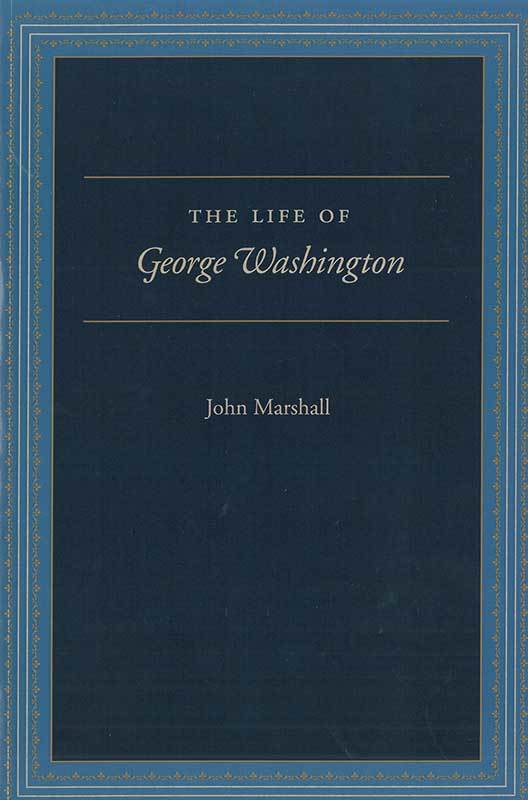
Part Two: Father and President of the New Republic - John Marshall, The Life of George Washington [1838]Edition used:The Life of George Washington. Special Edition for Schools, ed. Robert Faulkner and Paul Carrese (Indianapolis: Liberty Fund, 2000).
About Liberty Fund:Liberty Fund, Inc. is a private, educational foundation established to encourage the study of the ideal of a society of free and responsible individuals. Copyright information:The copyright to this edition, in both print and electronic forms, is held by Liberty Fund, Inc. Fair use statement:This material is put online to further the educational goals of Liberty Fund, Inc. Unless otherwise stated in the Copyright Information section above, this material may be used freely for educational and academic purposes. It may not be used in any way for profit.
Part TwoFather and President of the New RepublicCHAPTER 25Private Statesmanship: Agriculture, Improvements, Union (1783 to 1785)General Washington devotes his time to agriculture, to the duties of friendship, and to institutions of public utility.—Resolves of Congress and of the Legislature of Virginia for erecting statues to his honor.—He recommends the improvement of internal navigation.—Declines accepting a donation offered by his native state.—The Society of the Cincinnati.—The causes which led to a change of the government of the United States.—Circular letter to the Governors of the several states. 1784When an individual, long in possession of great power, and almost unlimited influence, retires from office with alacrity, and resumes the character of a private citizen with pleasure, the mind is gratified in contemplating the example of virtuous moderation, and dwells upon it with approving satisfaction. Such was the example exhibited by General Washington. His feelings were thus described in his letter to his friend Lafayette:—“I have not only retired from all public employments, but am retiring within myself, and shall be able to view the solitary walk, and tread the paths of private life, with heartfelt satisfaction. Envious of none, I am determined to be pleased with all; and this, my dear friend, being the order of my march, I will move gently down the stream of life, until I sleep with my fathers.” Every day brought to Mount Vernon testimonials of the grateful and ardent affection universally felt by his fellow-citizens. Congress, soon after peace was proclaimed, unanimously passed a resolution for the erection of an equestrian statue of their General, at the place which should be established as the seat of government. The legislature of Virginia too, at its first session after his resignation, passed the following resolution. “Resolved that the executive be requested to take measures for procuring a statue of General Washington, to be of the finest marble and best workmanship, with the following inscription on its pedestal: “The general assembly of the commonwealth of Virginia have caused this statue to be erected as a monument of affection and gratitute to George Washington, who, uniting to the endowments of the hero, the virtues of the patriot, and exerting both in establishing the liberties of his country, has rendered his name dear to his fellow-citizens, and given the world an immortal example of true glory.” This statue stands in the capitol of his native state. The time of Washington was now chiefly devoted to agriculture, that great source of national prosperity. The energies of his active mind were directed to its improvement. His energies were extended beyond his own country; and he entered into a correspondence on this interesting subject with those foreigners who had been most distinguished for their additions to the stock of agricultural science. Mingled with this favorite pursuit, were the multiplied avocations resulting from the high office he had lately filled. But their numerous occupations could not withdraw his mind entirely from objects tending to promote and secure the prosperity of his country. A person looking beyond the present moment, could not inspect the map of the United States, without perceiving the importance of connecting the west with the east, by facilitating the intercourse between them. The attention of General Washington had been directed to this subject in early life; and he had obtained the passage of a bill for opening the Potomac and the James. This business was in a train which promised success when the war of the revolution diverted the attention of its patrons from internal improvements to the still greater objects of liberty and independence. As that war approached its termination, internal navigation reclaimed its just place with the wise and thinking part of society. Accustomed to contemplate America as his country, Washington now took a more enlarged view of the advantages to be derived from opening both the eastern and western waters. After peace had been proclaimed, he traversed the western parts of New England and New York; and saw with prophetic eye the immense advantages which have since been derived from executing the plans he meditated. Scarcely had he answered those spontaneous offerings of the heart which flowed in upon him from every part of a grateful nation, when his views were seriously turned to this interesting subject. In the autumn of 1784, he made a tour as far west as Pittsburg; after returning from which, his first moments of leisure were devoted to the task of engaging his countrymen in a work which appeared to him to merit still more attention from its political, than from its commercial influence on the Union. In a long and interesting letter to the Governor of Virginia, he detailed the advantages which might be derived from opening the great rivers, the Potomac and the James, as far as should be practicable. His plan also extended to the navigable waters of the west, and to a communication with the great lakes of that region. By these means alone, he thought, could the connexion of the western with the Atlantic country be preserved. This idea was pressed with much earnestness in his letters to several members of Congress. His letter to the Governor of Virginia was communicated to the legislature, and the internal improvements it recommended were zealously supported by the wisest members of that body. While the subject remained undecided, General Washington, accompanied by the Marquis de Lafayette, who had crossed the Atlantic for the purpose of devoting a part of his time to the delights of an enthusiastic friendship, paid a visit to the capital of the state. Amidst the festivities which were produced by the occasion, the great business of internal improvement was assiduously pressed; and the ardour of the moment was seized to conquer those objections to the plan which still lingered in the bosoms of members who thought that no future advantages could compensate for the present expense. An exact conformity between the acts of Virginia and Maryland being indispensable to the improvement of the Potomac, a resolution was passed soon after the return of General Washington to Mount Vernon, requesting him to attend the legislature of Maryland, in order to agree on a bill which might receive the sanction of both states. This agreement being happily completed, those bills were enacted which form the first essay towards connecting the navigation of the eastern with the western waters of the United States. Dec. 1784These acts were succeeded by one which conveys the liberal1 wishes of the legislature with a delicacy not less honorable to its framers than to him who was its object. The treasurer had been instructed to subscribe, in behalf of the state, for a specified number of shares in each company. At the close of the session, a bill was suddenly brought in, and passed unanimously by both houses, authorizing the treasurer to subscribe for the benefit of General Washington, the same number of shares in each company as were to be taken for the state. A preamble was prefixed to the enacting clause of this bill, which enhanced its value. With simple elegance it conveyed the sentiment that, in seizing this occasion to make a donation which would in some degree testify their sense of the merits of their most favored and most illustrious citizen, the donors would themselves be the obliged. This delicate and flattering testimony of the affection of his fellow-citizens was not without its embarrassments. From his early resolution to receive no pecuniary compensation for his services, he could not permit himself to depart; and yet this mark of the gratitude and attachment of his country could not easily be rejected, without furnishing occasion for sentiments he was unwilling to excite. To the friend who conveyed to him the first intelligence of this bill, his difficulties were fully expressed. Oct. 1785A correspondence with the Governor on this subject was closed with a letter in which he said, “whilst I repeat therefore my fervent acknowledgments to the legislature for their very kind sentiments and intentions in my favor, and at the same time beg them to be persuaded that a remembrance of this singular proof of their goodness towards me will never cease to cherish returns of the warmest affection and gratitude, I must pray that their act, so far as it has for its object my personal emolument, may not have its effect; but if it should please the General Assembly to permit me to turn the destination of the fund vested in me, from my private emolument to objects of a public nature, it will be my study, in selecting these, to prove the sincerity of my gratitude for the honor conferred upon me, by preferring such as may appear most subservient to the enlightened and patriotic views of the legislature.” The wish suggested in this letter was gratified: and, at a subsequent time, the trust was executed by conveying the shares respectively, to the use of a seminary of learning established in the vicinity of each river.2 General Washington felt too strong an interest in the success of these works, to refuse the presidency of the companies instituted for their completion. These were not the only institutions which occasionally drew the farmer of Mount Vernon from his retreat. The sentiments with which the officers of the American army contemplated a final separation from each other will be comprehended by all who are conversant with the feelings of the human heart. Companions in virtuous suffering, in danger, and in glory—attached to each other by common exertions made in a severe struggle for the attainment of a common object—they felt that to part forever was a calamity too afflicting to be supported. The means of perpetuating those friendships which had been formed, and of renewing that endearing social intercourse which had taken place in camp, were universally desired. Some expedient was sought which might preserve the memory of the army, while it cheered the officers who were on the point of separating with the hope that the separation would not be eternal; that the bonds by which they were connected would not be totally dissolved; and that for many beneficial purposes, they would still form one great society. May 1783This idea was suggested by General Knox, and matured in a meeting at which the Baron Steuben presided. An agreement was then entered into by which the officers were to constitute themselves into one society of friends, to be denominated the society of the Cincinnati,3 to endure as long as they should endure, or any of their eldest male posterity; and, in failure thereof, any collateral branches judged worthy of becoming members were to be admitted into it. Distinguished individuals of the respective states might be admitted as honorary members for life. The society was to be designated by a medal of gold representing the American eagle. The insignia of the order were to be presented to the ministers who had represented his Most Christian Majesty at Philadelphia, and to the French officers who had served in the United States, and they were to be invited to consider themselves as members of the society, at the head of which the commander-in-chief was respectfully solicited to place his name. An incessant attention to the preservation of the exalted rights and privileges of human nature, and an unalterable determination to promote and cherish union and national honor between the respective states, were declared to be the immutable principles of the society. Its objects were to perpetuate the remembrance of the American revolution, as well as cordial affection and the spirit of brotherly kindness among the officers, and to extend acts of beneficence to those officers and their families who might require assistance. For this purpose a common fund was to be created by the contribution of one month’s pay on the part of each officer becoming a member. The military gentlemen of each state were to constitute a distinct society, deputies from which were to assemble triennially in order to form a general meeting. Soon after the organization of this institution, those jealousies which had in its first moments been concealed, burst forth into open view. In October 1783, a pamphlet was published by Mr. Burke of South Carolina, pourtraying in the fervid and impetuous language of passion the dangers to equal rights with which it was supposed to be replete.4 The alarm was spread through every state, and a high degree of jealousy pervaded the mass of the people. It was impossible for General Washington to view this state of the public feeling with indifference. Bound to the officers of the army by the strictest ties of esteem and affection, he was alive to every thing which might affect their reputation or their interest. However ill-founded the public prejudices might be, he thought this a case in which they ought to be respected; and if it should be found impracticable to convince the people that their fears were misplaced, he was disposed “to yield to them in a degree, and not to suffer that which was intended for the best of purposes, to produce a bad one.” A general meeting was to be held in Philadelphia in May 1784, and, in the meantime, he had been appointed temporary president. The most exact enquiries assiduously made into the true state of the public mind, resulted in a conviction that opinions unfriendly to the institution, in its actual form, were extensively entertained; and that those opinions were founded in real apprehensions for equal liberty. A wise and necessary policy required, he thought, the removal of these apprehensions; and at the general meeting in May, the hereditary principle, and the power of adopting honorary members, were relinquished. The result demonstrated the propriety of this alteration. While General Washington thus devoted his time to rural pursuits, to the duties of friendship, and to institutions of public utility, the political state of his country, becoming daily more embarrassed, attracted more and more deeply the anxious solicitude of every enlightened and virtuous patriot. From peace, from independence, and from governments of their own choice, the United States had confidently anticipated every blessing. The glorious termination of their contest with one of the most powerful nations of the earth; the steady and persevering courage with which that contest had been maintained, and the unyielding firmness with which the privations attending it had been supported, had surrounded the infant republics with a great degree of splendor, and had bestowed upon them a character which could be preserved only by a national and dignified system of conduct. A very short time was sufficient to demonstrate that something not yet possessed was requisite, to ensure the public and private prosperity expected to flow from self-government. After a short struggle so to administer the existing system as to make it competent to the great objects for which it was instituted, the effort became apparently desperate; and American affairs were impelled rapidly to a crisis, on which the continuance of the United States as a nation appeared to depend. A government authorized to declare war, but relying on independent states for the means of prosecuting it, capable of contracting debts, but depending on thirteen distinct sovereignties for the means of payment, could not be rescued from ignominy and contempt but by finding those sovereignties administered by men exempt from the passions incident to human nature. It has been already stated that the continent was divided into two great political parties, the one of which contemplated America as a nation, and labored incessantly to invest Congress with powers competent to the preservation of the Union. The other attached itself to the state governments, viewed all the powers of Congress with jealousy, and assented reluctantly to measures, however indispensable, which would enable the head to act, in any respect independently of the members. Men of enlarged and liberal5 minds who, in the imbecility of the General Government could discern the imbecility of the nation itself, who felt the full value of national character, and the full obligation of national faith, arranged themselves in the first party. The officers of the army, whose local prejudices had been weakened by associating with each other, and whose experience had furnished lessons on the inefficacy of requisitions not soon to be forgotten, threw their weight into the same scale. The other party, if not more intelligent, was more numerous and more powerful. It was nourished by prejudices and feelings which grew without effort, and gained strength from the intimate connexion between a state and its citizens. It required a concurrence of extrinsic circumstances to force on minds unwilling to receive the demonstration, a conviction of the necessity of an effective national government, and to give even a temporary ascendency to that party which had long foreseen and deplored the crisis to which the affairs of the United States were hastening. Sensible that the character of the government would be decided by the measures which should immediately follow the treaty of peace, patriots of the first ability sought a place in the Congress of 1783. Combining their efforts for the establishment of principles which might maintain the honor and promote the interests of the nation, they exerted all their talents to impress on the states the necessity of conferring powers on the government which might be competent to its preservation. With unwearied perseverance, they obtained the assent of Congress to a system which, though unequal to what their judgments would have approved, was believed to be the best that was attainable. The committee to whom this interesting subject was referred, reported sundry resolutions recommending it to the several states to vest in Congress permanent funds, adequate to the immediate payment of the interest on the national debt, and to the gradual extinction of the principal. April 1783After a tedious debate, the report was adopted; and a committee, consisting of Mr. Madison, Mr. Hamilton, and Mr. Ellsworth,6 was appointed to prepare an address, which should accompany the recommendation to the several states. This able state paper will excite, even at this day, emotions of admiration for its authors, and of astonishment at its failure. In the refusal of the states to comply with the measures it recommended, we find a complete demonstration of the impracticability of preserving union without investing its government with adequate powers. No person felt more anxious solicitude for the complete success of the plan recommended by Congress, than General Washington. Availing himself of the usage of communicating on national subjects with the state governments, and of the opportunity given by his approaching resignation of the command of the army, to convey to them his sentiments impressively, he had determined to employ all the influence which the circumstances of his life had created, in earnest recommendation of measures on which the happiness and prosperity of his country were believed to depend. On the 8th of June, 1783, he addressed a paternal and affectionate letter to the Governors of the respective states, in which his congratulations on the successful termination of their revolutionary struggle, and on the high destinies in prospect, were mingled with solemn admonitions warning them of the perils with which their new situation was environed. With impressive earnestness he urged upon them “four things,” as essential “to the existence of the United States as an independent power.” “1st. An indissoluble union of the states under one federal head. “2d. A sacred regard to public justice. “3d. The adoption of a proper peace establishment.7 “4th. The prevalence of that pacific and friendly disposition among the people of the United States, which will induce them to forget their local prejudices and politics, to make those mutual concessions which are requisite to the general prosperity, and, in some instances, to sacrifice their individual advantages to the interest of the community.” The letter enlarged upon these topics, and pressed them on the consideration of those to whom it was addressed, with that anxious earnestness which grew out of a most devoted love of country, and a deep-felt conviction that the prosperity of that country would be determined by the measures it was about to adopt. This solemn and affecting admonition was laid by the Governors of the several states before their respective assemblies. Its impression could not be surpassed. Like the counsel of a parent, on whom the grave is about to close forever, it sunk deep into the hearts of all. But, like the counsels of a parent withdrawn from view, the advice was too soon forgotten. The recommendations of Congress did not receive that prompt consideration which the exigence demanded, nor did they meet that universal assent which was necessary to give them effect.8 Not immediately perceiving that the error lay in a system which was unfit for use, the distinguished patriots of the revolution contemplated with increasing anxiety, the anti-American temper which displayed itself in almost every part of the Union. That the imbecility of the federal government, and the impotence of its requisitions, would abase the American character in the estimation of the world, was no longer a prediction. That course of national degradation had already commenced. While the system recommended on the 18th of April, 1783, was depending before the states, requisitions for the intermediate supply of the national demands were annually repeated by Congress, and were annually neglected. Happily, a loan had been negotiated in Holland by Mr. Adams, out of which the interest of the foreign debt had been partly paid; but that fund was exhausted, and the United States had no means of replacing it. Unable to pay the interest, they would, in the succeeding year, be liable for the first instalment of the principal; and the humiliating circumstance was to be encountered of a total failure to comply with the most solemn engagements, unaccompanied with the prospect of being enabled to give assurances that, at any future time, their situation would be more eligible. If the condition of the domestic creditors was not absolutely desperate, their prospect of obtaining payment was so distant and uncertain, that their evidences of debt were transferred at an eighth, and even at a tenth of their nominal value. In 1786, the revenue system of April, 1783, was again solemnly recommended to the consideration of the several states, and again failed to receive their unanimous assent; and thus was finally defeated the laborious and persevering effort made by Congress to obtain the means of preserving the faith of the nation. General Washington’s letters of that period abound with passages showing the solicitude with which he watched the progress of this recommendation. In a letter of October, 1785, he said—“The war has terminated most advantageously for America, and a fair field is presented to our view; but I confess to you freely, my dear sir, that I do not think we possess wisdom or justice enough to cultivate it properly. Illiberality, jealousy, and local policy, mix too much in our public counsels for the good government of the Union. In a word, the confederation appears to me to be little more than a shadow without the substance; and Congress a nugatory body, their ordinances being little attended to. To me, it is a solecism9 in politics;—indeed, it one of the most extraordinary things in nature, that we should confederate as a nation, and yet be afraid to give the rulers of that nation, who are the creatures of our own making, appointed for a limited and short duration, and who are amenable for every action, recallable at any moment, and subject to all the evils they may be instrumental in producing—sufficient powers to order and direct the affairs of the same. By such policy as this the wheels of government are clogged; and our brightest prospects, and that high expectation which was entertained of us by the wondering world, are turned into astonishment.”10 CHAPTER 26Political Imbecility; Constituting a Government (1784 to 1789)Differences between the United States and Great Britain.—Mr. Adams appointed Minister to Great Britain.—Discontents excited by the commercial regulations of that power.—Parties in the United States.—Convention at Annapolis.—Virginia appoints deputies to a convention at Philadelphia.—General Washington chosen one of them.—Insurrection in Massachusetts.—Convention at Philadelphia.—Form of government submitted to the several states.—Ratified by eleven of them.—General Washington elected President.—Meeting of the first Congress. 1784–85While the friends of the national government were making these unavailing efforts to invest it with a revenue which might enable it to preserve the national faith, many causes concurred to prepare the public mind for some great and radical change in the political system of America. Scarcely had the war of the revolution terminated, when the United States and Great Britain reciprocally charged each other with violations of the treaty of peace. A serious difference of opinion prevailed, on the construction of that part of the seventh article which stipulates against the “destruction or carrying away of any negroes, or other property of the American inhabitants.” In addition to this circumstance, the troops of his Britannic majesty still retained possession of the posts on the American side of the great lakes; which gave them a decided influence over the warlike tribes of Indians in their neighborhood. On the other hand, the United States were charged with infringing the fourth, fifth, and sixth articles, which contain agreements respecting the payment of debts, the confiscation of property, and prosecution of individuals, for the part taken by them during the war. These causes of mutual complaint, being permitted to rankle for some time in the bosoms of both nations, produced a considerable degree of irritation. But the cause of most extensive disquiet was, the vigorous commercial system1 pursued by Great Britain. While colonists, the Americans had carried on a free and gainful trade with the British West Indies. These ports were closed against them, as citizens of an independent state; and their accustomed intercourse with other parts of the empire, was also interrupted by the Navigation Act. To explore new channels of commerce, was opposed by obstacles which almost discouraged the attempt. On every side, they met with rigorous and unexpected restrictions. Their trade with the colonies of other powers, as well as with those of England, was prohibited; and they encountered regulations in all the ports of Europe, which were extremely embarrassing. From the Mediterranean, they were excluded by the Barbary powers; whose hostility they had no force to subdue, and whose friendship they had no money to purchase.2 With many, the desire of counteracting this injurious system triumphed over the attachment to state sovereignty; and the converts to the opinion that Congress ought to be empowered to regulate trade, were daily multiplied. Meanwhile, the United States were unremitting in their endeavors to form commercial treaties. Three commissioners had been deputed for that purpose; and at length, Mr. John Adams was appointed minister plenipotentiary to the Court of St. James.3 His endeavors were not successful. His overtures were declined, because the government of the United States was unable to secure the observance of any general commercial regulations. Many other causes contributed to diffuse such a general dissatisfaction with the existing state of things, as to prepare the way for some essential change in the American system. In the course of the long war which had been carried on in the bosom of their country, the people of the United States had been greatly impoverished. Their property had been seized for the support of both armies; much of their labor had been drawn from agriculture for military service; the naval power of the enemy had almost annihilated their commerce; those consumable articles which habit had rendered necessary, were exhausted; and peace found the American people not only destitute of the elegancies, and even of the conveniences of life, but also without the means of procuring them, otherwise than by anticipating the proceeds of future industry. On opening their ports, an immense quantity of foreign merchandise was introduced into the country; and they were tempted, by the sudden cheapness of imported goods, and by their own wants, to purchase beyond their capacities for payment. Under the impression made by paper-money, many individuals had made extensive purchases, at high prices, and had thus contributed to prolong the deception imposed upon themselves by those who supposed that the revolution was a talisman whose magic powers were capable of changing the nature of things. The delusive hopes created by these visionary calculations, were soon dissipated; and a great proportion of the people found themselves involved in debts they were unable to discharge. The consequence of this unprosperous state of things was, a general dissatisfaction with the course of trade, and a desire to compel foreign nations, by retaliatory restrictions, to the adoption of a more liberal and equal system. These dispositions displayed themselves in angry publications, animated resolutions, and addresses to the state legislatures and to the general government, urging the necessity of investing Congress with power to regulate commerce. During these transactions, the public attention was called to another subject, which increased the impression made on every reflecting mind, of the necessity of enlarging the powers of the general government. The uneasiness occasioned by the infractions of the treaty of peace on the part of Great Britain, has been noticed. To obtain its complete execution, constituted one of the objects for whichNov. 1785 Mr. Adams had been deputed to the Court of St. James. A memorial from that minister, pressing for a full compliance with the treaty, was answered by an explicit acknowledgment of the obligationsFeb. 1786 created by the seventh article, to evacuate every post within the United States. But the British minister insisted, that the obligation to remove every lawful impediment to the recovery of bona fide debts, was equally clear; and concluded his letter with the assurance, “that whenever America should manifest a real determination to fulfil her part of the treaty, Great Britain would not hesitate to prove her sincerity to co-operate in whatever points depended on her for carrying every article of it into real and complete effect.” Copies of both documents were immediately transmitted to Congress, by whom they were referred to Mr. Jay, the Minister of Foreign Affairs.4 The report of that upright minister did not affect to exculpate his country. The government of the United States did not possess the power to carry the treaty into execution on their part; and this inability rendered any attempt to obtain its prior execution on the part of Great Britain entirely hopeless. The discontents arising from the embarrassments of individuals continued to increase. At length, two great parties were formed in every state, which pursued distinct objects with systematic arrangement. The one struggled for the exact observance of public and private contracts. Those who composed it were the uniform friends of a regular administration of justice, and of a vigorous course of taxation, which would enable the state to comply with its engagements. By a natural association of ideas, they were also in favor of enlarging the powers of the federal government, and of enabling it to protect the dignity and the character of the nation abroad, and its interests at home. The other party marked out for themselves a more indulgent course. They were uniformly in favor of relaxing the administration of justice, of affording facilities for the payment of debts or of suspending their collection, and of remitting taxes. The same course of opinion led them to resist every attempt to transfer from their own hands into those of Congress, powers which others deemed essential to the preservation of the Union. Wherever this party was predominant, the emission of paper-money, the delay of legal proceedings, and the suspension of taxes, were the fruits of their rule. Even where they failed to carry their measures, their strength was such as to encourage the hope of succeeding in a future attempt. Throughout the Union the contest between these parties was annually revived, and the public mind was perpetually agitated with hopes and fears on subjects which affected essentially the fortunes of a considerable portion of society. This instability in principles which ought to be rendered immutable, produced a long train of ills; and is believed to have been among the operating causes of those pecuniary embarrassments which influenced the legislation of almost every state. The wise and thinking part of the community, who could trace evils to their source, laboured unceasingly to inculcate opinions favorable to the incorporation of some principles into the political system, which might correct its obvious vices, without endangering its free spirit. While the advocates of union were exerting themselves to impress its necessity on the public mind, measures were taken in Virginia which, though originating in different views, terminated in a proposition for a general convention to revive the federal system. Commissioners were appointed by the legislatures of that state, and of Maryland, to form a compact relative to the navigation of the rivers Potomac and Pocomoke, and part of the bay of Chesapeake, who assembled in Alexandria in March 1785. While at Mount Vernon on a visit, they agreed to propose to their respective governments the appointment of other commissioners, with power to make conjoint arrangements with the assent of Congress, for maintaining a naval force in the Chesapeake; and to establish a tariff of duties on imports. Virginia also directed that the resolution relative to the duties on imports should be communicated to all the states in the Union, who were invited to send deputies to the meeting. A few days after the passage of these resolutions, another was adopted appointing commissioners, “who were to meet such as might be appointed by the other states in the Union, at a time and place to be agreed on, to take into consideration the trade of the United States,” “and to report to the several states such an act relative to this great object, as, when unanimously ratified by them, will enable the United States in Congress assembled, effectually to provide for the same.” Annapolis in Maryland was proposed as the place, and the ensuing September as the time of meeting. Before the arrival of the time at which these commissioners were to assemble, the idea was carried, by those who saw and deplored the complicated calamities which flowed from the inefficiency of the General Government, much farther than was avowed by the resolutions of Virginia. Sept. 1786The convention at Annapolis was attended by commissioners from only five states. Perceiving that more ample powers would be required to effect the beneficial purposes which they contemplated, and hoping to procure a representation from a greater number of states, the convention determined to rise without coming to any specific resolutions on the subject referred to them. They agreed, however, on a report to be made to their respective states, in which they represented the necessity of extending the revision of the federal system to all its defects, and recommended that deputies for that purpose be appointed by the several legislatures, to meet in convention in the city of Philadelphia, on the second day of the ensuing May. Nov. 1786A copy of this report was transmitted to Congress, and to the legislatures of the respective states. On receiving it, the legislature of Virginia passed an act for the appointment of deputies to meet such as might be appointed by other states. In communicating this act to General Washington, Mr. Madison, its most effective advocate, intimated the intention of aiding it by the influence and character of the chief of the revolution. “Although,” said the General in reply, “I have bid a public adieu to the public walks of life, and had resolved never more to tread that theatre; yet, if upon an occasion so interesting to the well-being of the confederacy, it had been the wish of the assembly that I should be an associate in the business of revising the federal system, I should, from a sense of the obligation I am under for repeated proofs of confidence in me, more than from any opinion I could entertain of my usefulness, have obeyed its call; but it is now out of my power to do this with any degree of consistency—the cause I will mention.” The General then proceeded to state, that the triennial general meeting of the Cincinnati was to be held in Philadelphia at the time the convention was to assemble. He had, a few days previously, addressed a circular letter to each state society and to the Vice-President, informing them of his intention not to be at the meeting, and of his desire not to be re-chosen President. He could not consent to appear at the same time and place, on any other occasion. Dec. 1786Notwithstanding this letter, the name of General Washington was not withdrawn, and he was unanimously chosen a member of the convention. On receiving private information of this appointment, he addressed a second letter to his confidential friend, detailing more at large the motives which induced him to decline a service the importance of which no man felt more sensibly. His name, however, was continued in the appointment. The gloomy state of affairs in the North was supposed to render this the more necessary. The Governor of Virginia,5 who was himself elected a member of the convention, transmitted to him the act and the vote of the assembly in a letter, pressing most earnestly on him all those motives for yielding to the general wish, which were furnished by the importance of the crisis, and the gloomy state of American affairs. He was urged, at all events, not to decide positively against it, but to leave himself at liberty to be determined by future events. General Washington, however, still thought that the delicacy of his situation obliged him to decline the appointment. But it was obvious, that he refused himself reluctantly to the anxious wishes of the wisest of his countrymen; and the executive, unwilling to relinquish the advantages which the legislature expected to derive from exhibiting his name at the head of the Virginia delegation, refused to consider him as having declined the appointment. In the meantime those who expected much good from the proposed convention, continued to urge him, with delicacy but with earnestness, not to withhold on this great and particular occasion, those inestimable services which the confidence so justly reposed in his talents and character enabled him alone to render. Earnestly as General Washington wished success to the experiment about to be made, he could not surrender his objections to the step its friends urged him to take, without the most serious consideration. In addition to that which grew out of his connexion with the Cincinnati, and to his reluctance to be drawn, on any occasion, into a political station, there were others which could not be disregarded. A convention, not originating in a recommendation of Congress, was deemed by many an illegitimate meeting; and, as the New England states had neglected the invitation to appear by their delegates at Annapolis, it was apprehended they might be equally inattentive to the request now made them to assemble at Philadelphia. To appear in a public character for a purpose not generally deemed of the utmost importance, would not only be unpleasant to himself, but diminish his capacity to be useful on occasions which subsequent events might produce. His enquiries therefore into the public sentiment were carefully and assiduously made. The ultimate decision of the states on this interesting proposition seems to have been influenced, in no inconsiderable degree, by the commotions which at that time agitated all New England, and particularly Massachusetts. Those causes of discontent which existed in every part of the Union, were particularly operative in New England. The great exertions which had been made by those states in support of the war had accumulated a mass of debt, the taxes for the payment of which were the more burdensome, because their fisheries had become unproductive. The restlessness produced by the uneasy situation of individuals, connected with lax notions concerning public and private faith, and erroneous opinions which confound liberty with an exemption from the control of law, produced a state of things which alarmed all reflecting men. Aug. 1786This disorderly spirit was stimulated by unlicensed conventions, which, after voting their own constitutionality, and assuming the name of the people, arrayed themselves against the legislature, and detailed, at great length, the grievances by which they alleged themselves to be oppressed. Its hostility was directed principally against the compensation promised to the officers of the army, against taxes, and against the administration of justice. A depreciated currency was required, as a relief from the pressure of public and private burdens, which had become, it was alleged, too heavy to be longer borne. To such a dangerous extent were these dispositions indulged, that, in many instances, tumultuous assemblages arrested the course of law, and restrained the judges from proceeding in the execution of their duty. The ordinary recourse to the power of the country was found an insufficient protection, and the appeals made to reason were unavailing. The forbearance of the government was attributed to timidity, rather than to moderation, and the spirit of insurrection appeared to be organized into a regular system for the suppression of courts.6 Oct. 1786In the bosom of Washington, these tumults excited attention and alarm. To a member of Congress, who suggested the idea of resorting to his influence for the purpose of quieting them, he said—“You talk, my good sir, of employing influence to appease the present tumults of Massachusetts; I know not where that influence is to be found; nor, if attainable, that it would be a proper remedy for these disorders. Influence is not government. Let us have a government, by which our lives, liberties, and properties will be secured; or let us know the worst at once. Under these impressions, my humble opinion is that there is a call for decision. Know precisely what the insurgents aim at. If they have real grievances, redress them, if possible; or acknowledge the justice of them, and your inability to do it in the present moment. If they have not, employ the force of the government against them at once.”7 Dec. 1786Finding that the lenient measures adopted by the legislature, to reclaim the insurgents, only enlarged their demands; and that they were proceeding systematically to organize a military force for the subversion of the constitution, Governor Bowdoin determined, with the advice of his council, on a vigorous exertion of all the powers he possessed, for the protection and defence of the commonwealth. Upwards of four thousand militia were ordered into service, and were placed under the command of the veteran General Lincoln. The difficulty arising from an empty treasury was removed by the patriotism of individuals. A number of gentlemen in Boston, preceded by the Governor, subscribed8 a sufficient sum to carry on the proposed expedition. Jan. 1787In the depth of winter, the troops from the eastern part of the state assembled near Boston, and marched towards the scene of action. Those from the western counties, met in arms under General Shepherd, and took possession of the arsenal at Springfield. Before the arrival of Lincoln, a party of insurgents attempted to dislodge Shepherd, but were repulsed with some loss. Lincoln urged his march with the utmost celerity, and soon came up. Pressing the insurgent army, he endeavored by a succession of rapid movements, in which the ardor of his troops triumphed over the severity of the season, to disperse, or to bring it to action. Their generals retreated from post to post, with a celerity which, for some time, eluded his designs; and, rejecting every proposition to lay down their arms, used all their address to procure a suspension of hostilities until an accommodation might be negotiated with the legislature. “Applications were also made,” says General Lincoln, “by committees and selectmen of the several towns in the counties of Worcester and Hampshire, praying that the effusion of blood might be avoided, while the real design of these applications was supposed to be, to stay our operations until a new court should be elected. They had no doubt, if they could keep up their influence until another choice of the legislature and of the executive, that matters might be moulded in general court to their wishes. To avoid this was the duty of government.” In answer to their applications, Lincoln exhorted those towns who sincerely wished to put an end to the rebellion, without the effusion of blood, “to recall their men now in arms, and to aid in apprehending all abettors of those who should persist in their treason, and all who should yield them any comfort or supplies.” Feb. 1787The army of the government continued to brave the rigors of the season, and to press the insurgents without intermission. At length, with the loss of a few killed, and several prisoners, the rebels were dispersed, their leaders driven out of the state, and this formidable and wicked rebellion was quelled. The same love of country which had supported the officers and soldiers of the late army through a perilous war, still glowed in their bosoms; and the patriot veterans of the revolution, uninfected by the wide-spreading contagion of the times, arranged themselves, almost universally, under the banners of the constitution and of the laws. The most important effect of this unprovoked rebellion, was a deep conviction of the necessity of enlarging the powers of the general government; and the consequent direction of the public mind towards the convention which was to assemble at Philadelphia. In producing this effect, a resolution of Congress had also considerable influence. New York, by giving her final veto to the impost system, had virtually decreed the dissolution of the existing government. The confederation was apparently expiring from mere debility. Congress was restrained from giving its sanction to the proposed convention, only by the apprehension that taking an interest in the measure would impede rather than promote it. That body was at length relieved from this embarrassment by the legislature of New York. A vote of that state, which passed in the senate by a majority of only one voice, instructed its delegation to move a resolution in Congress, recommending to the several states to appoint deputies to meet in convention, for the purpose of revising and proposing amendments to the federal constitution. On the succeeding day, the 21st of February, 1787, it was declared, “in the opinion of Congress, to be expedient that, on the second Monday in May next, a convention of delegates, who shall have been appointed by the several states, be held at Philadelphia, for the sole and express purpose of revising the articles of confederation, and reporting to Congress, and the several legislatures, such alterations and provisions therein as shall, when agreed to in Congress, and confirmed by the states, render the federal constitution adequate to the exigencies of government, and the preservation of the Union.” This recommendation removed all objections to the regularity of the convention; and co-operated with the impressions made by the licentious and turbulent spirit which had lately endangered the peace and liberty of New England, to incline those states to favor the measure. By giving the proposed meeting a constitutional sanction, and by postponing it to a day subsequent to that on which the Cincinnati were to assemble, it also removed one impediment, and diminished another, to the attendance of General Washington as a member. He persuaded himself, that by repairing to Philadelphia previous to the second Monday in May, in order to attend the meeting of the Cincinnati, he should efface any unfavorable impressions which might be excited in the bosoms of his military friends. On the 28th of March, he addressed a letter to the Governor of Virginia, declaring his purpose to attend the convention, provided the executive had not turned their thoughts to some other person. May 1787At the time and place appointed, the representatives of twelve states convened. Rhode Island alone refused to send deputies. Having unanimously chosen General Washington for their President, the convention proceeded, with closed doors, to discuss the interesting and extensive subject submitted to their consideration. More than once, there was reason to fear that the rich harvest of national felicity which had been anticipated from the ample stock of worth collected in convention, would be blasted by the rising9 of that body, without effecting the object for which it was formed. At length, the importance attached to union triumphed over local interests; and, on the 17th of September, that constitution, which has been alike the theme of panegyric and invective, was presented to the American public. The instrument, with its accompanying resolutions, was, by the unanimous order of the convention, transmitted to Congress, in a letter subscribed10 by the President, in which it was said to be “the result of a spirit of amity, and of that mutual deference and concession, which the peculiarity of their political situation rendered indispensable.” Congress resolved, unanimously, that the report, with the letter accompanying it, be transmitted to the several legislatures, in order to be submitted to a convention of delegates chosen in each state, by the people thereof. 1787–88Neither the intrinsic merits of the constitution, nor the imposing weight of character by which it was supported, gave assurance that it would be adopted. Its friends and its enemies were stimulated to exertion by motives equally powerful; and, during the interval between its publication and adoption, every faculty of the mind was strained to secure its reception or rejection. The press teemed with the productions of genius, of temperate reason, and of passion. To decide the interesting question which agitated a continent, the best talents of the several states were assembled in their several conventions. So balanced were parties in some of them, that even after the subject had been discussed for a considerable time, the fate of the constitution could scarcely be conjectured; and so small, in many instances, was the majority in its favor, as to afford strong ground for the opinion, that had the influence of character been removed, the intrinsic merits of the instrument would not have secured its adoption. Nov. 1788At length, the conventions of eleven states assented to, and ratified the constitution; and the preparatory measures were taken for carrying it into operation. The attention of all was directed to General Washington, as the first President of the United States. He alone possessed so entirely the confidence of the people, that under his auspices, the friends of the government might hope to see it introduced, with a degree of firmness which would enable it to resist the open assaults and secret plots of its numerous adversaries. Fears were entertained, by all who knew him, that his fondness for private life would prevail over the wishes of the public; and, soon after the adoption of the constitution was ascertained, its friends began to press him on a point which was believed to be essential to the great work on which the grandeur and happiness of America was supposed to depend. The interesting correspondence of the time evinces with how much difficulty he yielded to the very earnest representations and arguments of the friends of a government which might preserve the Union. 1789After the elections had taken place,11 a general persuasion prevailed, that the public will, respecting the chief magistrate of the Union, had been too unequivocally manifested not to be obeyed; and several applications were made to General Washington for those offices in the respective states which would be in the gift of the President of the United States. The following extract from one of the many letters written to persons whose pretensions he was disposed to favor, speaks the frame of mind with which he came into the government. “Should it become absolutely necessary for me to occupy the station in which your letter presupposes me, I have determined to go into it perfectly free from all engagements, of every nature whatsoever. A conduct in conformity to this resolution, would enable me, in balancing the various pretensions of different candidates for appointments, to act with a sole reference to justice and the public good. This is, in substance, the answer that I have given to all applications (and they are not a few) which have already been made.” The impotence of the late government, added to the dilatoriness inseparable from its perplexed mode of proceeding, had produced such habitual disregard of punctuality in the attendance of members, that although the new government was to commence its operations on the 4th of March, 1789, a House of Representatives was not formed until the 1st, nor a Senate until the 6th day of April. At length the votes for President and Vice-President of the United States were opened and counted in the Senate. Neither the animosity of parties, nor the preponderance of the enemies of the new government in some of the states, could deprive General Washington of a single vote. By the unanimous voice of the people, he was called to the chief magistracy of the nation. The second number of votes was given to Mr. John Adams.12 George Washington and John Adams were therefore declared to be duly elected President and Vice-President of the United States, to serve for four years, from the 4th day of March, 1789. CHAPTER 27Conciliating the Public: Election, Inauguration, and First Appointments (1789)The election of General Washington officially announced to him.—He proceeds to the seat of government.—Marks of affection shown him on his journey.—His inauguration.—His system of intercourse with the world.—Answers of both houses of Congress to his speech.—Domestic and foreign relations of the United States.—Debates in Congress.—Amendments to the constitution.—Appointments to office.—Adjournment of Congress.—The President visits New England.—North Carolina adopts the constitution. 1789The election of General Washington to the office of chief magistrate of the United States, was announced to him at Mount Vernon, on the 14th of April, 1789. Accustomed to respect the wishes of his fellow-citizens, he did not think himself at liberty to decline an appointment conferred upon him by the suffrage of an entire people. As the public business required the immediate attendance of the President at the seat of government, he hastened his departure; and, on the second day after receiving notice of his appointment, took leave of Mount Vernon. In an entry made in his diary, the feelings of the occasion are thus described. “About ten o’clock I bade adieu to Mount Vernon, to private life, and to domestic felicity; and, with a mind oppressed with more anxious and painful sensations than I have words to express, set out for New York in company with Mr. Thompson and Colonel Humphries, with the best dispositions to render service to my country in obedience to its call, but with less hope of answering its expectations.” Throughout his journey the people continued to manifest the ardent and respectful affection which animated almost every bosom. Crowds flocked around him wherever he stopped; and corps of militia, and companies of the most respectable citizens escorted him through their respective states. At Philadelphia, and at Trenton, he was received with peculiar splendor, and in a manner calculated to excite the deepest interest. At Brunswick, he was joined by the Governor of New Jersey, who accompanied him to Elizabethtown Point. A committee of Congress received him on the road, and conducted him with military parade to the Point, where he took leave of the Governor and other gentlemen of Jersey, and embarked for New York in an elegant barge of thirteen oars, manned by thirteen branch pilots,1 prepared for the purpose by the citizens of New York. “The display of boats,” says the General in his private journal, “which attended and joined on this occasion, some with vocal and others with instrumental music on board, the decorations of the ships, the roar of cannon, and the loud acclamations of the people which rent the sky as I passed along the wharves, filled my mind with sensations as painful (contemplating the reverse of this scene which may be the case after all my labors to do good) as they were pleasing.” At the stairs on Murray’s wharf, he was received by the Governor of New York, and conducted with military honors through an immense concourse of people, to the apartments provided for him. These were attended by all who were in office, and by many private citizens of distinction. It is no equivocal mark of the worth of Washington, and of the soundness of his judgment, that it could neither be corrupted nor misguided by these flattering testimonials of attachment. A President of the United States being a new political personage, to a great portion of whose time the public was entitled, it was obviously proper to digest a system of conduct to be observed in his intercourse with the world, which would keep in view the duties of his station, without entirely disregarding his personal accommodation, or the course of public opinion. After consulting those most capable of advising on the subject, some rules were framed by General Washington for his government in these respects. As one of them, the allotment of a particular hour for receiving visits not on business, became the subject of much animadversion,2 and has constituted not the least important of the charges made against his administration, the motives assigned by himself for the rule, may not be unworthy of attention. Not long after the government came into operation, a gentleman nearly connected with the President, addressed to him a letter stating the accusations which were commonly circulating in Virginia on various subjects; and especially on the regal manners of those who administered the affairs of the nation. In answer to this letter, the President observed, “while the eyes of America, perhaps of the world, are turned to this government, and many are watching the movements of all those who are concerned in its administration, I should like to be informed through so good a medium, of the public opinion of both men and measures, and of none more than myself;—not so much of what may be thought commendable parts, if any, of my conduct, as of those which are conceived to be of a different complexion.” After some other general observations, the letter adds, “this leads me to think that a system which I found it indispensably necessary to adopt upon my first coming to this city might have undergone severe strictures, and have had motives very foreign from those that governed me, assigned as causes thereof. I mean first, returning no visits; second, appointing certain days to receive them generally, not to the exclusion however of visits on any other days under particular circumstances.” After stating a third rule, he added “a few days evinced the necessity of the two first in so clear a point of view that, had I not adopted it, I should have been unable to attend to any sort of business, unless I had applied the hours allotted to rest and refreshment, to this purpose; for, by the time I had done breakfast, and thence until dinner, and afterwards until bed-time, I could not get relieved from the ceremony of one visit before I had to attend to another. In a word, I had no leisure to read or to answer the dispatches that were pouring in upon me from all quarters.” The ceremonies of the inauguration having been adjusted by Congress, the President attended in the Senate chamber, on the 30th of April, in order to take the oath prescribed by the constitution, in the presence of both houses. To gratify the public curiosity, an open gallery adjoining the Senate chamber had been selected as the place in which the oath should be administered. Having taken it in the view of an immense concourse of people, whose loud and repeated acclamations attested the joy with which the occasion inspired them, he returned to the Senate chamber, where he delivered the first address ever made by a President to a Congress of the United States.3 In their answer to his speech the Senate say, “the unanimous suffrage of the elective body in your favor is peculiarly expressive of the gratitude, confidence and affection of the citizens of America, and is the highest testimonial at once of your merit and their esteem. We are sensible, sir, that nothing but the voice of your fellow-citizens could have called you from a retreat, chosen with the fondest predilection, endeared by habit, and consecrated to the repose of declining years. We rejoice, and with us all America, that, in obedience to the call of our common country, you have returned once more to public life. In you, all parties confide; in you, all interests unite, and we have no doubt that your past services, great as they have been, will be equalled by your future exertions; and that your prudence and sagacity as a statesman will tend to avert the dangers to which we were exposed, to give stability to the present government, and dignity and splendor to that country, which your skill and valor as a soldier, so eminently contributed to raise to independence and to empire.” The answer of the House of Representatives glowed with equal affection for the person and character of the President. “The representatives of the people of the United States,” says this address, “present their congratulations on the event by which your fellow-citizens have attested the pre-eminence of your merit. You have long held the first place in their esteem. You have often received tokens of their affection. You now possess the only proof that remained of their gratitude for your services, of their reverence for your wisdom, and of their confidence in your virtues. You enjoy the highest because the truest honor, of being the first magistrate, by the unanimous choice of the freest people on the face of the earth.” A perfect knowledge of the antecedent state of things being essential to a due administration of the executive department, its attainment engaged the immediate attention of the President; and he required the temporary heads of departments to prepare and lay before him such statements and documents as would give this information. His attention was attracted to the West, by discontents which were expressed with some violence, and which originated in circumstances and interests peculiar to that country. Spain, in possession of the mouth of the Mississippi, had refused to permit the citizens of the United States to follow its waters into the ocean; and had occasionally tolerated or interdicted their commerce to New Orleans, as had been suggested by interest or caprice. The eyes of the inhabitants adjacent to the waters of that river, were turned down it, as the only channel through which the surplus produce of their luxurious soil could be conveyed to the markets of the world; and they had given some evidence of a disposition to drop from the confederacy, if this valuable acquisition could not be otherwise made. The President had received intelligence, previous to his departure from Mount Vernon, of private machinations, by real or pretended agents, both of Spain and Great Britain. Spain had intimated that the navigation of the Mississippi could never be conceded, while the inhabitants of the western country remained connected with the Atlantic states, but might be freely granted to them, if they should form an independent empire. On the other hand, a gentleman from Canada, whose ostensible business was the recovery of some lands formerly granted to him on the Ohio, frequently discussed the vital importance of the navigation of the Mississippi, and privately assured several individuals of great influence that, if they were disposed to assert their rights, he was authorized by the Governor of Canada to assure them that they might rely confidently on his assistance.4 In contemplating the situation of the United States, no subject demanded more immediate attention than the hostility of the Indian tribes. The nations between the lakes, the Mississippi and the Ohio, could bring five thousand men into the field. Of these, about fifteen hundred were at war with the United States. Treaties had been concluded with the residue; but there was cause for the apprehension that these treaties would soon be broken. In the South, the Creeks, whose force amounted to six thousand fighting men, were at war with Georgia. The subject of contest was a tract of land on the Oconee, which Georgia claimed under a purchase, the validity of which was denied by the Indians. The army of the United States was less than six hundred men. Not only the policy of accommodating differences by negotiation, which the government was in no condition to terminate by the sword, but a real respect for the rights of the natives, disposed the President to endeavor, in the first instance, to remove every cause of quarrel by treaty. The United States had formed a treaty with the Emperor of Morocco, but had been unable to purchase peace from Algiers, Tunis, or Tripoli; and those regencies considered all as enemies to whom they had not sold their friendship. The unprotected vessels of America presented a tempting object to their rapacity; and their hostility was the more terrible, because, by their public law, prisoners become slaves. The United States were at peace with all the powers of Europe; but controversies of a delicate nature existed with some of them. The attempt to form a treaty with Spain had been ineffectual. His Catholic Majesty adhered inflexibly to the exclusion of the citizens of the United States from the navigation of the Mississippi below their southern boundary. The violence with which the discontents of the western people were expressed, furnished Spain with additional motives for perpetuating the evil of which they complained. A contest respecting boundary also existed with the same power. The treaty of peace had extended the limits of the United States down the Mississippi to the thirty-first degree of north latitude; but the pretensions of the Catholic King were carried north of that line to an undefined extent. He claimed as far as he had conquered from Britain; but the precise limits of his conquest were not ascertained. The difference with Great Britain was still more serious, because a temper unfavorable to accommodation had been uniformly displayed. The resentments growing out of the war were not terminated with their cause. The idea that Great Britain was the natural enemy of America had become habitual. The general restrictions on commerce, by which every maritime power sought to promote its own navigation, and that part of the European system, in particular, by which each aimed at a monopoly of the trade of its colonies, were felt with peculiar keenness when enforced by England. The people of America were the more sensible to the British regulations on this subject, because, having composed a part of that empire, they had grown up in the habit of a free intercourse with all its ports. The failure of an attempt to form a commercial treaty with Portugal, was attributed to the influence of the cabinet of London. The depredations of the Barbary corsairs,5 and the bloody incursions of the Indians, were also ascribed to the machinations of the same power. With France, the most perfect harmony subsisted. Those attachments which originated in the signal services received from his Most Christian Majesty during the war of the revolution, had sustained no diminution; and a disposition was felt extensively to enable the merchants of that nation, by legislative encouragements, to compete with those of Britain in the American market. A great revolution had commenced in that country, the first stage of which was completed by limiting the powers of the monarch, and by establishing a popular assembly. In no part of the globe was this revolution hailed with more joy than in America. Its ulterior effects were not distinctly foreseen, and but one sentiment existed respecting it. The relations of the United States with the other powers of Europe, were rather friendly than otherwise. The subjects which pressed for immediate attention on the first legislature, were numerous and important. Much was to be created, and much to be reformed. The qualification of the members was succeeded by a motion for the House to resolve itself into a committee of the whole6 on the state of the Union, in which Mr. Madison moved a resolution, declaring that certain duties ought to be levied on goods, wares, and merchandise imported into the United States; and on the tonnage of vessels. He presented a scheme of impost, by which specific duties were imposed on certain enumerated articles; and an ad valorem duty on those not enumerated; to which he added a general proposition for a duty on tonnage. In proceeding to fill up the blanks with the sum taxable on each article, great contrariety of opinion prevailed. The taxes proposed were believed to press unequally on the states; and apprehensions were expressed that, in the form of protecting duties, the industry of one part of the Union would be encouraged by premiums charged on the labor of another part. On the discrimination between the duty on the tonnage on foreign and American bottoms, a great degree of sensibility was discovered. It was said that the increased tonnage on foreign bottoms operated as a tax on agriculture, and a premium to navigation. This discrimination, therefore, ought to be very small. These arguments were answered with great ability by Mr. Madison. No part of the system was discussed with more animation than that which proposed to favor those nations with whom the United States had formed commercial treaties. In the debate on this subject, opinions and feelings were disclosed, which, strengthening with circumstances, afterwards agitated every part of the Union. At length, the bills passed the House of Representatives, and were carried to the senate, where they were amended, by expunging the discrimination made in favor of the tonnage and distilled spirits of those nations with which commercial treaties had been formed. These amendments were disagreed to; and each house insisting on its opinion, a conference took place; after which, the point was reluctantly yielded by the House of Representatives. This debate was succeeded by one on the question in what manner the high officers who filled the executive departments should be removable. In a committee of the whole House, on the bill “to establish an executive department, to be denominated the department of foreign affairs,” Mr. White7 moved to strike out the clause which declared the secretary to be removable by the President. The power of removal, where no express provision existed, was, he said, in the nature of things, incidental to that of appointment; and, as the Senate was associated with the President in making appointments, that body must, in the same degree, participate in removing from office. The amendment was opposed by arguments drawn from the constitution, and from general convenience. The friends of the original bill relied especially on that part of the constitution which vests the executive power in the President. No power, it was said, could be more completely executive in its nature, than that of removal from office. After an ardent discussion, which consumed several days, the committee divided; and the amendment was negatived. But the express grant of the power rather implied a right in the legislature to give or to withhold it at discretion. To obviate any misunderstanding of the principle, a motion was made in the House to amend the clause, so as to imply clearly that the power of removal resided solely in the President; after which, the whole was stricken out; thus leaving the President to exercise the power as a constitutional privilege. As the bill became a law, it has ever been considered as a full expression of the sense of the legislature, on this important part of the American constitution. The bill to establish the treasury department contained a clause making it the duty of the secretary, “to digest and report plans for the improvement and management of the revenue, and for the support of public credit.” This clause encountered serious opposition. After a very animated discussion, the motion to strike it out was rejected. Among the interesting points which were settled in the first Congress, was the question by what style the President and Vice-President should be addressed. Mr. Benson,8 from a committee appointed to confer with a committee of the Senate on the subject, reported, “that it is not proper to annex any style or title to the respective styles or titles of office expressed in the constitution;” and this report was agreed to in the House of Representatives. In the senate, it was disapproved. A committee of conference not being able to agree, the subject was permitted to rest; and the Senate, conforming to the precedent given by the House of Representatives, addressed the President, in their answer to his speech, by the terms used in the constitution. While the representatives were preparing bills for organizing the great executive departments, the senate was occupied with digesting the system of a national judiciary. This complex and extensive subject was taken up in the commencement of the session, and was completed towards its close. In the course of the session, Mr. Madison brought forward a proposition for recommending to the consideration and adoption of the states, several articles to be added to the constitution. To conciliate the affection of their brethren to the government, was an object greatly desired by its friends. Disposed to respect what they deemed the errors of their opponents, when that respect could be manifested without a sacrifice of essential principles, they were anxious to annex to the constitution, those explanations and barriers against the possible encroachments of rulers on the liberties of the people, which had been loudly demanded, however unfounded, in their judgments, the fears by which those demands were suggested might be. Among the most zealous friends of the constitution, were found the first and warmest advocates for amendments. The government being completely organized, and a system of revenue established, the important duty of filling the offices which had been created, remained to be performed. In the execution of this delicate trust, the purest virtue and the most impartial judgment were exercised in selecting the best talents, and the greatest weight of character, which the United States could furnish. At the head of the department of foreign affairs, since denominated the Department of State, the President placed Mr. Jefferson.9 This gentleman had been a distinguished member of the second Congress, and had been offered a diplomatic appointment, which he declined. On withdrawing from the administration of continental affairs, he had been elected Governor of Virginia, which office he filled for two years. He afterwards again represented his native state in the government of the Union; and, in the year 1784, was appointed to succeed Dr. Franklin at the court of Versailles. In that situation, he had acquitted himself much to the public satisfaction. His Notes on Virginia, which were read with applause, were believed to evince sound political opinions; and the declaration of independence was universally ascribed to his pen. He had been long placed by America among the most eminent of her citizens, and had long been classed by the President with those who were most capable of serving the nation. Having obtained permission to return for a short time to the United States, he was, while on his passage, nominated to this important office; and, on his arrival in Virginia, found a letter from the President, giving him the option of becoming the Secretary of Foreign Affairs, or of retaining his station at the court of Versailles. In changing his situation, he appears to have consulted the wishes of the Chief Magistrate, more than the preference of his own mind. The task of restoring public credit, of drawing order and arrangement from the chaotic confusion in which the finances of America were involved, and of devising means which should produce revenue in a manner least burdensome to the people, was justly classed among the most arduous of the duties which were devolved on the new government. In discharging it, much aid was expected from the head of the treasury. This important, and at that time intricate department, was assigned to Colonel Hamilton. This gentleman, with all the enthusiasm of youth, engaged first his pen, and afterwards his sword, in the stern contest between the American colonies and their parent state. Among the first troops raised by New York, was a corps of artillery, in which he was appointed a captain. Soon after the war was transferred to the Hudson, his superior endowments recommended him to the commander-in-chief, into whose family, before completing his twenty-first year, he was invited to enter. Equally brave and intelligent, he continued to display, in this situation, a degree of firmness and capacity, which commanded the confidence and esteem of his general, and of the principal officers of the army. After the capitulation of Yorktown, the war languished throughout America; and the probability that its termination was approaching, daily increased. The critical circumstances of the existing government gave a deep interest to the events of the civil government; and Colonel Hamilton accepted a seat in the Congress of the United States. He was greatly distinguished amongst those eminent men whom the crisis had attracted to the councils of their country. He had afterwards been active in promoting those measures which led to the convention in Philadelphia, of which he was a member, and had contributed greatly to the adoption of the constitution by the state of New York. In the pre-eminent part he had performed, both in the military and civil transactions of his country, he had acquired a great degree of well-merited fame; and the frankness of his manners, the openness of his temper, the warmth of his feelings, and the sincerity of his heart, had secured him many valuable friends. The department of war was already filled by General Knox, and he was again nominated to it.10 Throughout the contest of the revolution, this officer had continued at the head of the American artillery. In this important station, he had maintained a high military character; and, on the resignation of General Lincoln, had been appointed secretary of war. To his past services, and to unquestionable integrity, he was admitted to unite a sound understanding; and the public judgment, as well as that of the chief magistrate, pronounced him to be competent in all respects to the station he occupied. The office of attorney-general was filled by Mr. Edmund Randolph. To a distinguished reputation in his profession, this gentleman added a considerable degree of political eminence. After having been for several years the attorney-general of Virginia, he had been elected its Governor. While in this office, he was chosen a member of the convention which framed the constitution, and also of that by which it was adopted. After having served the term permitted by the constitution in the executive of the state, he entered into its legislature, where he preserved a great share of influence. Such was the first cabinet council. In its composition, public opinion as well as intrinsic worth had been consulted, and a high degree of character had been combined with real talent. In the selection of persons for high judicial offices, the President was guided by the same principles. At the head of this department he placed Mr. John Jay. From the commencement of the revolution, this gentleman had filled a large space in the public mind. Remaining without intermission in the service of his country, he had passed through a succession of high offices, and, in all of them had merited the approbation of his fellow-citizens. To his pen, while in Congress, America was indebted for some of those masterly addresses which reflected most honor upon the government; and to his firmness and penetration, the happy issue of those intricate negotiations which terminated the war was, in no small degree, to be ascribed. On returning to the United States, he had been appointed secretary of foreign affairs, in which station he had displayed his accustomed ability. A sound judgment improved by extensive reading and great knowledge of public affairs, unyielding firmness, and inflexible integrity, were qualities of which Mr. Jay had given frequent and signal proofs. Although withdrawn for some years from that profession to which he was bred, the acquisitions of his early life had not been lost, and the subjects on which his mind had been exercised were not entirely foreign from those which would, in the first instance, employ the courts in which he was to preside. John Rutledge of South Carolina, James Wilson of Pennsylvania, William Cushing of Massachusetts, Robert Harrison of Maryland, and John Blair of Virginia, were appointed associate justices.11 Some of those gentlemen had filled the highest law offices in their respective states; and all of them had received distinguished marks of the public confidence. In the systems of the several states, offices corresponding to those created by the revenue laws of Congress, had been established. Uninfluenced by considerations of personal regard, the President could not be induced to change men whom he found in place, if worthy of being employed.12 In deciding between candidates for vacant offices, if an equality of fitness existed, former merits and sufferings in the service of the public, gave claims to preference which could not be overlooked. In the legislature as well as the executive and judicial departments, great respectability of character was also associated with an eminent degree of talent. Impelled by an anxious solicitude respecting the first measures of the government, its zealous friends had pressed into its service; and men were found in both branches of the legislature, who possessed the fairest claims to public confidence. The Vice-President of the United States, though not a member of the legislature, was classed, in the public estimation, with that department. Mr. John Adams was one of the earliest and most ardent friends of the revolution. Bred to the bar, he had necessarily studied the constitution of his country, and was among the most determined asserters of its rights. Active in guiding that high spirit which animated all New England, he became a member of the Congress of 1774, and was among the first who dared to avow sentiments in favor of independence. He soon attained eminence in that body, and was chosen one of the commissioners to whom the interests of the United States in Europe were confided. In his diplomatic character, he had contributed greatly to those measures which drew Holland into the war; had negotiated the treaty with the Dutch republic, and had, at critical points of time, obtained loans which were of great advantage to his country. In the negotiations which terminated the war, he had also rendered important services; and, after the ratification of the treaty of peace, had been deputed to Great Britain for the purpose of effecting commercial arrangements with that nation. As a statesman, this gentleman had always ranked high in the estimation of his countrymen. He had improved a sound understanding by extensive political and historical reading; and perhaps no American had reflected more profoundly on the science of government.13 The exalted opinion he entertained of his own country was flattering to his fellow-citizens; and the purity of his mind, the unblemished integrity of a life spent in the public service, had gained their confidence. A government supported in all its departments by so much character and talent, at the head of which was placed a man whose capacity was undoubted, whose life had given one great and continued lesson of patriotism, and for whom almost every bosom glowed with an attachment bordering on enthusiasm, could not fail to make a rapid progress in conciliating the affection of the people. Towards the close of the session, a petition which had been presented by the creditors of the public residing in Pennsylvania was taken up by the House of Representatives, and two resolutions were passed; the one declaring “that the house considered an adequate provision for the support of the public credit, as a matter of high importance to the national honor and prosperity;” and the other directing “the secretary of the treasury to prepare a plan for that purpose, and to report the same to the house at its next meeting.” On the 29th of September, Congress adjourned to the first Monday in the succeeding January. Anxious to visit New England, to observe in person the condition of the country, and the dispositions of the people towards the government and its measures, the President determined to avail himself of the short respite from official duties afforded by the recess of Congress, to make a tour through the eastern states. He left New York on the 15th of October; and, passing through Connecticut and Massachusetts, proceeded as far as Portsmouth in New Hampshire. From that place he returned by a different route to the seat of government, where he arrived on the 13th of November. The reappearance of their General in the high station he now filled, renewed the recollection of the perilous transactions of the war; and the reception universally given to him attested the unabated love which was felt for his person and character, and indicated unequivocally the growing popularity, at least in that part of the Union, of the government he administered. Soon after his return to New York, the President was informed of the failure of his first attempt to negotiate a treaty with the Creeks. Some difficulties arose on the subject of boundary; but the principal obstacles to a peace were supposed to grow out of the personal interests of Mr. McGillivray, their chief, and his connexions with Spain.14 This information was more than counterbalanced by the intelligence from North Carolina. A second convention had met under the authority of the legislature of that state, in the month of November, and had adopted the constitution by a great majority. CHAPTER 28Defense, Finance, Foreign Affairs— and the First “Systematic Opposition” (1790 to 1791)Meeting of Congress.—President’s speech.—Report of the Secretary of the Treasury.—Debate thereon.—Bill for fixing the seat of government.—Adjournment of Congress.—Treaty with the Creek Indians.—Relations of the United States with Great Britain and Spain.—Constitution adopted by Rhode Island.—Congress meets at Philadelphia.—Speech of the President.—Debates on the excise.—On the bank.—Division in the cabinet on the law.—Defeat of Harmar.—Adjournment of Congress. 1790On the 8th of January, 1790, the President met both Houses of Congress in the Senate chamber. In his speech, which was delivered from the chair of the Vice-President, after congratulating Congress on the adoption of the constitution by the important state of North Carolina, and on the prosperous aspect of American affairs, he proceeded to recommend certain great objects of legislation to their more especial consideration.1 A provision for the common defence merited, he said, their particular regard. “To be prepared for war,” he added, “is one of the most effectual means of preserving peace. “A free people ought not only to be armed, but disciplined; to which end a uniform and well-digested plan is requisite; and their safety and interest require that they should promote such manufactories as tend to render them independent on others for essential, particularly for military supplies.” He suggested the propriety of providing the means of keeping up their intercourse with foreign nations, and the expediency of establishing a uniform rule of naturalization. After expressing his confidence in their attention to many improvements essential to the prosperity of the interior, he recommended the promotion of science and literature to their patronage. “Knowledge,” he added, “is, in every country, the surest basis of public happiness. In one in which the measures of government receive their impression so immediately from the sense of the community as in ours, it is proportionably essential.” “Whether this desirable object will be best promoted by affording aids to seminaries of learning already established, by the in |

Titles (by Subject)