Econlib

The Library

Other Sites

Front Page arrow Titles (by Subject) arrow CHAPTER SIX: Washington's Knowledge of His Countrymen 1783 - George Washington: A Collection

Return to Title Page for George Washington: A Collection

Search this Title:

Also in the Library:

Subject Area: Political Theory
Subject Area: History
Topic: The American Revolution and Constitution

CHAPTER SIX: Washington’s Knowledge of His Countrymen 1783 - George Washington, George Washington: A Collection [1988]

Edition used:

George Washington: A Collection, compiled and edited by W.B. Allen (Indianapolis: Liberty Fund, 1988).

About Liberty Fund:

Liberty Fund, Inc. is a private, educational foundation established to encourage the study of the ideal of a society of free and responsible individuals.


CHAPTER SIX

Washington’s Knowledge of His Countrymen

1783

WASHINGTON’s famous “Circular Letter” constitutes the centerpiece of his statesmanship, carrying directly to his countrymen a coherent vision of the unfinished work which lay before them in the aftermath of peace. His view of that work was that “we have a national character to establish.”

79

TO JOSEPH JONES

The storm which seemed to be gathering with unfavourable prognostics, when I wrote to you last, is dispersed; and we are again in a state of tranquility. But do not, My dear Sir, suffer this appearance of tranquility to relax your endeavors to bring the requests of the Army to an issue.Requests of the army for pay Believe me, the Officers are too much pressed by their present wants, and rendered too sore by the recollection of their past sufferings to be touched much longer upon the string of forbearance, in matters wherein they can see no cause for delay. Nor would I have further reliance placed on any influence of mine to dispel other Clouds if any should arise, from the causes of the last.

By my official Letter to Congress, and the Papers inclosed in it, you will have a full view of my assurances to, and the expectations of the Army; and I perswade myself that the well wishers to both, and of their Country, will exert themselves to the utmost to irradicate the Seeds of distrust, and give every satisfaction that justice requires, and the means which Congress possess, will enable them to do.

In a former letter I observed to you, that a liquidation of Accts, in order that the Ballances might be ascertained, is the great object of the Army; and certainly nothing can be more reasonable. To have these Ballances discharged at this, or in any short time; however desirable, they know is impracticable, and do not expect it; altho’, in the meantime, they must labour under the pressure of those sufferings; which is felt more sensibly by a comparison of circumstances.

The situation of these Gentlemen merit the attention of every thinking and grateful mind. As Officers, they have been obliged to dress, and appear in character, to effect which, they have been obliged to anticipate their pay, or participate their Estates. By the first, debts have been contracted. By the latter, their patrimony is injured. To disband Men therefore under these circumstances, before their Accts. are liquidated, and the Ballances ascertained, would be, to sett open the doors of the Gaols, and then to shut them upon Seven Years faithful and painful Services. Under any circumstances which the nature of the case will admit, they must be considerable Sufferers; because necessity will compell them to part with their certificates for whatever they will fetch; to avoid the evil I have mentioned above: and how much this will place them in the hands of unfeeling, avaricious speculators a recurrence to past experience will sufficiently prove.

It may be said by those who have no disposition to compensate the Services of the Army, that the Officers have too much penetration to place dependance (in any alternative) upon the strength of their own Arm; I will readily concede to these Gentlemen that no good could result from such an attempt; but I hope they will be equally candid in acknowledging, that much mischief may flow from it,Possible response of army to unfair treatment and that nothing is too extravagent to expect from men, who conceive they are ungratefully, and unjustly dealt by; especially too if they can suppose that characters are not wanting, to foment every passion which leads to discord, and that there are—but—time shall reveal the rest.

Let it suffice, that the very attempt, wd. imply a want of justice, and fix an indelible stain upon our national character; as the whole world, as well from the enemies publication (without any intention to serve us) as our own, must be strongly impressed with the sufferings of this army from hunger, cold and nakedness in allmost every stage of the War. Very sincerely etc.

80

TO MAJOR GENERAL NATHANAEL GREENE

Dear Sir:

I have the pleasure to inclose to you a letter from the Marquis de la Fayette, which came under cover to me, by the Packet Triumph, dispatched by the Marquis and the Count de Estaing from Cadiz to Phila.

All the Accounts which this Vessel has bro’t, of a Conclusion of a General Peace, you will receive before this can reach you.

You will give the highest Credit to my Sincerity, when I beg you to accept my warmest Congratulations on this glorious and happy Event, an Event which crowns all our Labors and will sweeten the Toils which we have experienced in the Course of Eight Years distressing War. The Army here, universally participate in the general Joy which this Event has diffused, and, from this Consideration, together with the late Resolutions of Congress, for the Commutation of the Half pay, and for a Liquidation of all their Accounts, their Minds are filled with the highest Satisfaction. I am sure you will join with me in this additional occasion of joy.

It remains only for the States to be Wise, and to establish their Independence on that Basis of inviolable efficacious Union, and firm Confederation, which may prevent their being made the Sport of European Policy; may Heaven give them Wisdom to adopt the Measures still necessary for this important Purpose. I have the honor etc.

81

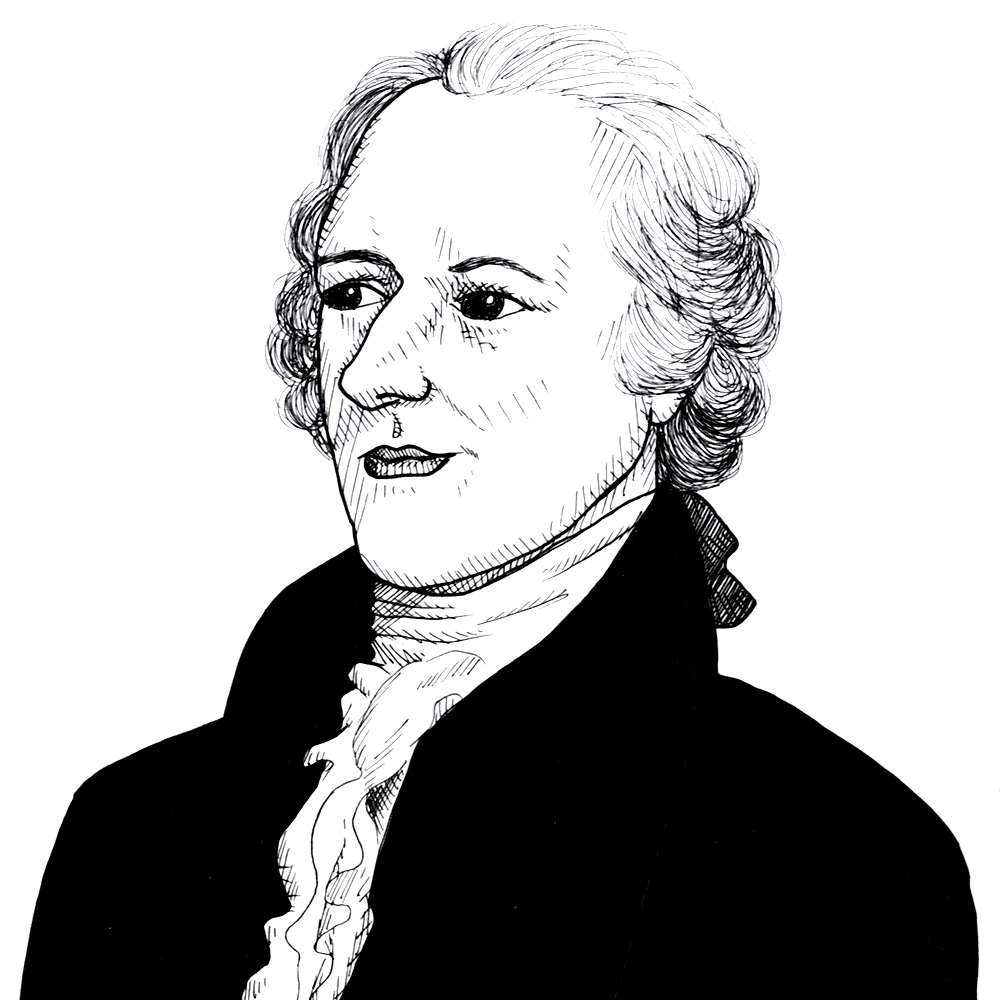
TO ALEXANDER HAMILTON

Dear Sir:

I have duly received your favors of the 17th. and 24th. Ulto. I rejoice most exceedingly that there is an end to our Warfare, and that such a field is opening to our view as will, with wisdom to direct the cultivation of it, make us a great, a respectable, and happy People; but it must be improved by other means than State politics, and unreasonable jealousies and prejudices; or (it requires not the second sight to see that) we shall be instruments in the hands of our Enemies, and those European powers who may be jealous of our greatness in Union to dissolve the confederation; but to attain this, altho’ the way seems extremely plain, is not so easy.

Union of the statesMy wish to see the Union of these States established upon liberal and permanent principles, and inclination to contribute my mite in pointing out the defects of the present Constitution, are equally great. All my private letters have teemed with these Sentiments, and whenever this topic has been the subject of conversation, I have endeavoured to diffuse and enforce them; but how far any further essay by me might be productive of the wished for end, or appear to arrogate more than belongs to me, depends so much upon popular opinions, and the timper and dispositions of People, that it is not easy to decide. I shall be obliged to you however for the thoughts which you have promised me on this Subject, and as soon as you can make it convenient.

Need to reform the ConfederationNo Man in the United States is, or can be more deeply impressed with the necessity of a reform in our present Confederation than myself. No Man perhaps has felt the bad effects of it more sensibly; for the defects thereof, and want of Powers in Congress, may justly be ascribed the prolongation of the War, and consequently the expenses occasioned by it. More than half the perplexities I have experienced in the course of my command, and almost the whole of the difficulties and distress of the Army, have their origin here; but still the prejudices of some, the designs of others, and the mere Machinery of the Majority, makes address and management necessary to give weight to opinions which are to Combat the doctrines of those different classes of Men, in the field of Politics.

I would have been more full on this subject but the bearer (in the Clothing department) is waiting. I wish you may understand what I have written. I am etc.

PS: The inclosed extract of a Letter to Mr. Livingston, I give you in confidence; I submit it to your consideration, fully perswaded that you do not want inclination to gratify the Marquis’s Wishes as far as is consistent with our National honor.

82

TO THEODORICK BLAND

Dear Sir:

On Sunday last the Baron de Steuben handed me your obliging favor of the 22d. Ulto. permit me to offer you my unfeigned thanks for the clear and candid opinions which you have given me of European politics. your reasonings upon the conduct of the different Powers at War would have appeard conclusive had not the happy event which has been since announced to us, and on which I most sincerely congratulate you, proved how well they were founded. Peace has given rest to speculative opinions respecting the time, and terms of it. The first has come as soon as we could well have expected under the disadvantages we have labd. and the latter, is abundantly satisfactory. It is now the bounden duty of every one, to make the blessing thereof as diffusive as possible.

Nothing would so effectually bring this to pass as the removal of those local prejudices which intrude upon and embarrass that great line of policy which alone can make us a free, happy, and powerful people. Unless our Union can be fixed upon such a basis as to accomplish these ends certain I am we have toiled, bled and spent our treasure to very little purpose.

Establishment of a national characterWe have now a National character to establish; and it is of the utmost importance to stamp favourable impressions upon it; let justice then be one of its characteristics, and gratitude another.Payment of national obligations Public Creditors of every denomination will be comprehended in the first. The Army in a particular manner will have a claim to the latter; to say that no distinction can be made between the claims of public Creditors, is to declare that there is no difference in circumstances or, that the Services of all Men are equally alike. This Army, is of near 8 years standing; 6 of which they have spent in the field, without any other shelter from the inclemency of the Seasons than Tents, or such Houses as they could build for themselves, without expence to the public. they have encountered hunger, cold and Nakedness. they have fought many Battles, and bled freely. they have lived without pay, and in consequence of it, Officers as well as Men have been obliged to subsist upon their Rations: they have often, very often been reduced to the necessity of eating Salt Porke or Beef not for a day or a week only but months together without Vegetables of any kind or money to buy them; or a cloth to wipe on. Many of them, to do better and to dress as Officers, have contracted heavy Debts, or spent their Patrimonies; the first see the doors of Gaols opening to receive them whilst those of the latter are shut against them. Is there no discrimination then, no extra exertion to be made in favor of men under these Circumstances in the hour of their Military dissolution? Or, if no worse comes of it, are they to be turned adrift soured and discontented, complaining of the ingratitude of their Country, and under the irritation of these passions to become fit subjects for unfavourable impressions and unhappy dissentions? For permit me to add, tho’ every Man in the Army feels the distress of his situatn it is not every one that reasons to the cause of it.

I would not, from the observatns. here made, be understood to mean that Congress should (because I know they cannot, nor does the Army expect it) pay the full arrearages due to them till Continental or State funds are established for the purpose; they would, from what I can learn, go home contented; nay thankful, to receive what I have mentioned in a more public Letter of this date, and in the manner there expressed. and surely this may be effected with proper exertions; or what possibility was there of keeping the Army together if the war had continued when the victualling, clothing and other exps were to have. . . . Another thing Sir, (as I mean to be frank and free in my communications on this subject) I will not conceal from you, it is dissimilarities in the payments of Men in Civil and Military life. the first receive every thing, the other get nothing, but bare subsistence. They ask what this is owing to? and reasons have been assigned, which say they, amount to this: that Men in Civil life have stronger passions and better pretensions to indulge them or less virtue and regd. for their Country than us; otherwise, as we are all contending for the same prize and equally interested in the attainment of it, why is not the burthen borne equally.

These, and other comparisons, which are unnecessary to enumerate, give a keener edge to their feelings, and contribute not a little to sour their tempers.

As it is the first wish of my Soul to see the war happily and speedily terminated, and those who are now in Arms return to Citizenship with good dispositions, I think it a duty which I owe to candor and to friendship to point you to such things as will have a tendency to harmony and to bring them to pass. With great esteem etc.

83

TO MARQUIS DE LAFAYETTE

My dear Marqs.:

It is easier for you to conceive than for me to express the sensibility of my Heart at the communications in your letter of the 5th. of February. from Cadiz. It is to these communications we are indebted for the only acct.The report of a general peace yet recd of a general Pacification. My mind upon the receipt of this news was instantly assailed by a thousand ideas, all of them contending for pre-eminence, but believe me my dear friend none could supplant, or ever will eradicate that gratitude, which has arisen from a lively sense of the conduct of your Nation: from my obligations to many illustrious characters of it, among whom (I do not mean to flatter, when) I place you at the head of them; And from my admiration of the Virtues of your August Sovereign; who at the same time that he stands confessed the Father of his own people, and defender of American rights has given the most exalted example of moderation in treating with his Enemies.

We now stand an Independent People, and have yet to learn political Tactics. We are placed among the Nations of the Earth, and have a character to establish; but how we shall acquit ourselves time must discover; the probability, at least I fear it is, that local, or state Politics will interfere too much with that more liberal and extensive plan of government which wisdom and foresight, freed from the mist of prejudice, would dictate; and that we shall be guilty of many blunders in treading this boundless theatre before we shall have arrived at any perfection in this Art. In a word that the experience which is purchased at the price of difficulties and distress, will alone convince us that the honor, power, and true Interest of this Country must be measured by a Continental scale; and that every departure therefrom weakens the Union, and may ultimately break the band, which holds us together. To avert these evils,A constitution of sufficient powers to form a Constitution that will give consistency, stability and dignity to the Union; and sufficient powers to the great Council of the Nation for general purposes is a duty which is incumbent upon every Man who wishes well to his Country, and will meet with my aid as far as it can be rendered in the private walks of life; for hence forward my Mind shall be unbent; and I will endeavor to glide down the stream of life ‘till I come to that abyss, from whence no traveller is permitted to return.

The Armament wch. was preparing at Cadiz, and in which you were to have acted a distinguished part would have carried such conviction with it, that it is not to be wondered at, that Great Britain should have been impressed with the force of such reasoning. To this cause I am perswaded, the Peace is to be ascribed. Your going to Madrid from thence, instead of coming immediately to this Country, is another instance My Dear Marquis of your Zeal for the American Cause; and lays a fresh claim to the gratitude of her Sons, who will, at all times, receive you with open Arms; but as no Official dispatches are yet received, either at Phila. or New York of the completion of the treaty, nor any measures taken for the reduction of the Army, my detention therewith is quite uncertain; to say then (at this time) where I may be at the epoch for your intended visit to this Continent is too vague even for conjecture; but nothing can be more true than that the pleasure with which I shall receive you, will be equal to your wishes. I shall be better able to determine then than now, on the practicability of accompanying you to France. A Country to which I shall ever feel a Warm Affection; and if I do not pay it that tribute of respect which is to be derived from a visit it may be ascribed with more justice to any other cause, than a want of inclination; or the pleasure of going there under the auspices of your friendship.

Lack of congressional action on army reliefI have already observed, that the determinations of Congress, if they have come to any, respecting the Army, is yet unknown to me; but as you wish to be informed of every thing that concerns it, I do, for your satisfaction, transmit authentic documents of some very interesting occurrences, which have happened within the last Six Months. but I ought first to have premised, that from accumulated sufferings, and little or no prospect of relief, the discontents of the Officers last Fall put on the threatning appearance of a total resignation, till the business was diverted into the channel which produced the Address and Petition to Congress which stands first on the file herewith inclosed. I shall make no comment on these proceedings; to one as well acquainted with the sufferings of the American Army as you are, it is unnecessary, it will be sufficient to observe, that the more Virtue and forbearence of it is tried, the more resplendent it appears. My hopes, that the military exit of this valuable class of the community will exhibit such a proof of Amor patri[FCael] as will do them honor in the page of history.

These papers with my last letter (which was intended to go by Colo. Gouvion, containing extensive details of Military Plans) will convey to you every information I can give, in the present uncertainty, worthy of attention. If you should get sleepy, and tired of reading them, recollect, for my exculpation, that it is in compliance with your request, I have run into such prolixity.

I made a proper use of the confidential part of your Letter of the 5th. of February.

Black emancipationThe scheme, my dear Marqs. which you propose as a precedent, to encourage the emancipation of the black people of this Country from that state of Bondage in wch. they are held, is a striking evidence of the benevolence of your Heart. I shall be happy to join you in so laudable a work; but will defer going into a detail of the business, ‘till I have the pleasure of seeing you.

Lord Stirling is no more; he died at Albany in Jany. last, very much regretted. Colo. Barber was snatched from us about the same time; in a way equally unexpected, sudden and distressing; leaving many friends to bemoan his fate.

Tilghman is on the point of Matrimony with a namesake and Couzin; Sister to Mrs. Carroll of Baltimore. It only remains for me now, My dear Marqs., to make a tender of my respectful Compliments in which Mrs. Washington unites, to Madame La Fayette; and to wish you, her, and your little offspring, all the happiness this life can afford. I will extend my Compliments to the Gentlemen, with whom I have the honor of an Acquaintance, in your circle. I need not add how happy I shall be to see you in America, and more particularly at Mount Vernon; or with what truth and warmth of Affection I am etc.

84

GENERAL ORDERS

Parole Kenalal. Countersigns Litchfield, Montreal.

For the day tomorrow Brigadier Genl. Stark.

Brigd. Qr. Mr. York Brigade.

The Jersey regiment gives the Guards and the Jersey battalion the fatigues tomorrow.

Cessation of hostilitiesThe Commander in Chief orders the Cessation of Hostilities between the United States of America and the King of Great Britain to be publickly proclaimed tomorrow at 12 o’clock at the Newbuilding, and that the Proclamation which will be communicated herewith, be read tomorrow evening at the head of every regiment and corps of the army. After which the Chaplains with the several Brigades will render thanks to almighty God for all his mercies,Orders to chaplains particularly for his over ruling the wrath of man to his own glory, and causing the rage of war to cease amongst the nations.

Although the proclamation before alluded to, extends only to the prohibition of hostilities and not to the annunciation of a general peace, yet it must afford the most rational and sincere satisfaction to every benevolent mind, as it puts a period to a long and doubtful contest, stops the effusion of human blood, opens the prospect to a more splendid scene, and like another morning star, promises the approach of a brighter day than hath hitherto illuminated the Western Hemisphere; on such a happy day, a day which is the harbinger of Peace, a day which compleats the eighth year of the war, it would be ingratitude not to rejoice! it would be insensibility not to participate in the general felicity.

The Commander in Chief far from endeavouring to stifle the feelings of Joy in his own bosom, offers his most cordial Congratulations on the occasion to all the Officers of every denomination, to all the Troops of the United States in General, and in particular to those gallant and persevering men who had resolved to defend the rights of their invaded country so long as the war should continue. For these are the men who ought to be considered as the pride and boast of the American Army; And, who crowned with well earned laurels, may soon withdraw from the field of Glory, to the more tranquil walks of civil life.

The accomplishments of independenceWhile the General recollects the almost infinite variety of Scenes thro which we have passed, with a mixture of pleasure, astonishment, and gratitude; While he contemplates the prospects before us with rapture; he can not help wishing that all the brave men (of whatever condition they may be) who have shared in the toils and dangers of effecting this glorious revolution, of rescuing Millions from the hand of oppression, and of laying the foundation of a great Empire, might be impressed with a proper idea of the dignifyed part they have been called to act (under the Smiles of providence) on the stage of human affairs; for, happy, thrice happy shall they be pronounced hereafter, who have contributed any thing, who have performed the meanest office in erecting this steubendous fabrick of Freedom and Empire on the broad basis of Indipendency; who have assisted in protecting the rights of humane nature and establishing an Asylum for the poor and oppressed of all nations and religions. The glorius task for which we first fleu to Arms being thus accomplished, the liberties of our Country being fully acknowledged, and firmly secured by the smiles of heaven, on the purity of our cause, and the honest exertions of a feeble people (determined to be free) against a powerful Nation (disposed to oppress them) and the Character of those who have persevered, through every extremity of hardship; suffering and danger being immortalized by the illustrious appellation of the patriot Army:Remaining tasks of army Nothing now remains but for the actors of this mighty Scene to preserve a perfect, unvarying, consistency of character through the very last act; to close the Drama with applause; and to retire from the Military Theatre with the same approbation of Angells and men which have crowned all their former vertuous Actions. For this purpose no disorder or licentiousness must be tolerated, every considerate and well disposed soldier must remember it will be absolutely necessary to wait with patience untill peace shall be declared or Congress shall be enabled to take proper measures for the security of the public stores &ca.; as soon as these Arrangements shall be made the General is confident there will be no delay in discharging with every mark of distinction and honor all the men enlisted for the war who will then have faithfully performed their engagements with the public. The General has already interested himself in their behalf; and he thinks he need not repeat the assurances of his disposition to be useful to them on the present, and every other proper occasion. In the mean time he is determined that no Military neglects or excesses shall go unpunished while he retains the command of the Army.

The Adjutant General will have such working parties detailed to assist in making the preperations for a general rejoycing as the Chief Engineer with the Army shall call for, and the Quarter Master Genl. will also furnish such materials as he may want.

The Quarter Master General will without delay procure such a number of Discharges to be printed as will be sufficient for all the men enlisted for the War; he will please to apply to Head Quarters for the form.

An extra ration of liquor to be issued to every man tomorrow, to drink Perpetual Peace, Independence and Happiness to the United States of America.

85

TO LIEUTENANT COLONEL TENCH TILGHMAN

Dear Sir:

I received with much pleasure the kind congratulations contained in your letter of the 25th. Ulto. from Philadelphia, on the honorable termination of the War. No Man, indeed, can relish the approaching Peace with more heart felt,The approach of peace and grateful satisfaction than myself. A Mind always upon the stretch, and tortured with a diversity of perplexing circumstances, needed a respite; and I anticipate the pleasure of a little repose and retirement. It has been happy for me, always to have Gentlemen about me willing to share my troubles, and help me out of difficulties. To none of these can I ascribe a greater share of merit than to you.

I can scarce form an idea at this moment, when I shall be able to leave this place. The distresses of the Army for want of Money; the embarrassments of Congress, and the conseqt. delays, and disappointments on all sides, encompass me with difficulties; and produce, every day, some fresh source for uneasiness. But as I now see the Port opening to which I have been steering, I shall persevere till I have gained admittence. I will then leave the States to improve their present constitution, so as to make that Peace and Independencey for which we have fought and obtained, a blessing to Millions yet unborn; but to do this, liberallity must supply the place of prejudice, and unreasonable jealousies must yield to that confidence, which ought to be placed in the sovereign Power of these States. In a word the Constitution of Congress must be competent to the general purposes of Government; and of such a nature as to bind us together. Otherwise, we may well be compared to a rope of Sand,A rope of sand and shall as easily be broken and in a short time become the sport of European politics, altho’ we might have no great inclination to jar among ourselves.

From the intimation in your Letter, and what I have heard from others I presume this letter will find you in the State of Wedlock. On this happy event I pray you, and your Lady, to accept of my best wishes, and sincerest congratulations; in which Mrs. Washington joins hers most cordially. With the most Affectionate esteem, etc.

86

CIRCULAR TO THE STATES

Sir:

Domestic retirementThe great object for which I had the honor to hold an appointment in the Service of my Country, being accomplished, I am now preparing to resign it into the hands of Congress, and to return to that domestic retirement, which, it is well known, I left with the greatest reluctance, a Retirement, for which I have never ceased to sigh through a long and painful absence, and in which (remote from the noise and trouble of the World) I meditate to pass the remainder of life in a state of undisturbed repose; But before I carry this resolution into effect, I think it a duty incumbent on me, to make this my last official communication,Congratulations to congratulate you on the glorious events which Heaven has been pleased to produce in our favor, to offer my sentiments respecting some important subjects, which appear to me, to be intimately connected with the tranquility of the United States, to take my leave of your Excellency as a public Character, and to give my final blessing to that Country, in whose service I have spent the prime of my life, for whose sake I have consumed so many anxious days and watchfull nights, and whose happiness being extremely dear to me, will always constitute no inconsiderable part of my own.

Impressed with the liveliest sensibility on this pleasing occasion, I will claim the indulgence of dilating the more copiously on the subjects of our mutual felicitation. When we consider the magnitude of the prize we contended for, the doubtful nature of the contest, and the favorable manner in which it has terminated, we shall find the greatest possible reason for gratitude and rejoicing; this is a theme that will afford infinite delight to every benevolent and liberal mind, whether the event in contemplation, be considered as the source of present enjoyment or the parent of future happiness; and we shall have equal occasion to felicitate ourselves on the lot which Providence has assigned us, whether we view it in a natural, a political or moral point of light.

America’s futureThe Citizens of America, placed in the most enviable condition, as the sole Lords and Proprietors of a vast Tract of Continent, comprehending all the various soils and climates of the World, and abounding with all the necessaries and conveniencies of life, are now by the late satisfactory pacification, acknowledged to be possessed of absolute freedom and Independency; They are, from this period, to be considered as the Actors on a most conspicuous Theatre, which seems to be peculiarly designated by Providence for the display of human greatness and felicity; Here, they are not only surrounded with every thing which can contribute to the completion of private and domestic enjoyment, but Heaven has crowned all its other blessings, by giving a fairer oppertunity for political happiness, than any other Nation has ever been favored with. Nothing can illustrate these observations more forcibly, than a recollection of the happy conjuncture of times and circumstances, under which our Republic assumed its rank among the Nations;Foundation of American empire The foundation of our empire was not laid in the gloomy age of Ignorance and Superstition, but at an Epocha when the rights of mankind were better understood and more clearly defined, than at any former period; the researches of the human mind, after social happiness, have been carried to a great extent; the Treasures of knowledge, acquired through a long succession of years, by the labours of Philosophers, Sages and Legislatures, are laid open for our use, and their collected wisdom may be happily applied in the Establishment of our forms of Government; the free cultivation of Letters, the unbounded extension of Commerce, the progressive refinement of Manners, the growing liberality of sentiment, and above all, the pure and benign light of Revelation, have had a meliorating influence on mankind and increased the blessings of Society. At this auspicious period, the United States came into existence as a Nation, and if their Citizens should not be completely free and happy, the fault will be intirely their own.

Such is our situation, and such are our prospects: but notwithstanding the cup of blessing is thus reached out to us, notwithstanding happiness is ours, if we have a disposition to seize the occasion and make it our own; yet, it appears to me there is an option still left to the United States of America, that it is in their choice, and depends upon their conduct, whether they will be respectable and prosperous, or contemptable and miserable as a Nation;A time of political probation This is the time of their political probation; this is the moment when the eyes of the whole World are turned upon them; this is the moment to establish or ruin their national Character forever; this is the favorable moment to give such a tone to our Federal Government, as will enable it to answer the ends of its institution; or this may be the ill-fated moment for relaxing the powers of the Union, annihilating the cement of the Confederation, and exposing us to become the sport of European politics, which may play one State against another to prevent their growing importance, and to serve their own interested purposes. For, according to the system of Policy the States shall adopt at this moment, they will stand or fall; and by their confirmation or lapse, it is yet to be decided, whether the Revolution must ultimately be considered as a blessing or a curse: a blessing or a curse, not to the present age alone, for with our fate will the destiny of unborn Millions be involved.

The importance of the present crisisWith this conviction of the importance of the present Crisis, silence in me would be a crime; I will therefore speak to your Excellency, the language of freedom and of sincerity, without disguise; I am aware, however, that those who differ from me in political sentiment, may perhaps remark, I am stepping out of the proper line of my duty, and they may possibly ascribe to arrogance or ostentation, what I know is alone the result of the purest intention, but the rectitude of my own heart, which disdains such unworthy motives, the part I have hitherto acted in life, the determination I have formed, of not taking any share in public business hereafter, the ardent desire I feel, and shall continue to manifest, of quietly enjoying in private life, after all the toils of War, the benefits of a wise and liberal Government, will, I flatter myself, sooner or later convince my Countrymen, that I could have no sinister views in delivering with so little reserve, the opinions contained in this Address.

Four pillars of independenceThere are four things, which I humbly conceive, are essential to the well being, I may even venture to say, to the existence of the United States as an Independent Power:

1st. An indissoluble Union of the States under one Federal Head.

2dly. A Sacred regard to Public Justice.

3dly. The adoption of a proper Peace Establishment, and

4thly. The prevalence of that pacific and friendly Disposition, among the People of the United States, which will induce them to forget their local prejudices and policies, to make those mutual concessions which are requisite to the general prosperity, and in some instances, to sacrifice their individual advantages to the interest of the Community.

These are the Pillars on which the glorious Fabrick of our Independency and National Character must be supported; Liberty is the Basis, and whoever would dare to sap the foundation, or overturn the Structure, under whatever specious pretexts he may attempt it, will merit the bitterest execration, and the severest punishment which can be inflicted by his injured Country.

On the three first Articles I will make a few observations, leaving the last to the good sense and serious consideration of those immediately concerned.

Principles of unionUnder the first head, altho’ it may not be necessary or proper for me in this place to enter into a particular disquisition of the principles of the Union, and to take up the great question which has been frequently agitated, whether it be expedient and requisite for the States to delegate a larger proportion of Power to Congress, or not, Yet it will be a part of my duty, and that of every true Patriot, to assert without reserve, and to insist upon the following positions, That unless the States will suffer Congress to exercise those prerogatives, they are undoubtedly invested with by the Constitution, every thing must very rapidly tend to Anarchy and confusion, That it is indispensable to the happiness of the individual States, that there should be lodged somewhere, a Supreme Power to regulate and govern the general concerns of the Confederated Republic, without which the Union cannot be of long duration. That there must be a faithfull and pointed compliance on the part of every State, with the late proposals and demands of Congress,Union and liberty or the most fatal consequences will ensue, That whatever measures have a tendency to dissolve the Union, or contribute to violate or lessen the Sovereign Authority, ought to be considered as hostile to the Liberty and Independency of America, and the Authors of them treated accordingly, and lastly, that unless we can be enabled by the concurrence of the States, to participate of the fruits of the Revolution, and enjoy the essential benefits of Civil Society, under a form of Government so free and uncorrupted, so happily guarded against the danger of oppression, as has been devised and adopted by the Articles of Confederation, it will be a subject of regret, that so much blood and treasure have been lavished for no purpose, that so many sufferings have been encountered without a compensation, and that so many sacrifices have been made in vain. Many other considerations might here be adduced to prove, that without an entire conformity to the Spirit of the Union, we cannot exist as an Independent Power; it will be sufficient for my purpose to mention but one or two which seem to me of the greatest importance. It is only in our united Character as an Empire, that our Independence is acknowledged, that our power can be regarded, or our Credit supported among Foreign Nations. The Treaties of the European Powers with the United States of America, will have no validity on a dissolution of the Union. We shall be left nearly in a state of Nature, or we may find by our own unhappy experience, that there is a natural and necessary progression, from the extreme of anarchy to the extreme of Tyranny; and that arbitrary power is most easily established on the ruins of Liberty abused to licentiousness.

Justice to public creditorsAs to the second Article, which respects the performance of Public Justice, Congress have, in their late Address to the United States, almost exhausted the subject, they have explained their Ideas so fully, and have enforced the obligations the States are under, to render compleat justice to all the Public Creditors, with so much dignity and energy, that in my opinion, no real friend to the honor and Independency of America, can hesitate a single moment respecting the propriety of complying with the just and honorable measures proposed; if their Arguments do not produce conviction, I know of nothing that will have greater influence; especially when we recollect that the System referred to, being the result of the collected Wisdom of the Continent, must be esteemed, if not perfect, certainly the least objectionable of any that could be devised; and that if it shall not be carried into immediate execution, a National Bankruptcy, with all its deplorable consequences will take place, before any different Plan can possibly be proposed and adopted, So pressing are the present circumstances! and such is the alternative now offered to the States!

The ability of the Country to discharge the debts which have been incurred in its defence, is not to be doubted; an inclination, I flatter myself, will not be wanting; the path of our duty is plain before us; honesty will be found on every experiment, to be the best and only true policy; let us then as a Nation be just; let us fulfil the public Contracts, which Congress had undoubtedly a right to make for the purpose of carrying on the War, with the same good faith we suppose ourselves bound to perform our private engagements; in the mean time, let an attention to the chearfull performance of their proper business, as Individuals, and as members of Society, be earnestly inculcated on the Citizens of America, then will they strengthen the hands of Government, and be happy under its protection: every one will reap the fruit of his labours; every one will enjoy his own acquisitions without molestation and without danger.

TaxationIn this state of absolute freedom and perfect security, who will grudge to yield a very little of his property to support the common interest of Society, and insure the protection of Government? Who does not remember, the frequent declarations, at the commencement of the War, that we should be compleatly satisfied, if at the expence of one half, we could defend the remainder of our possessions? Where is the Man to be found, who wishes to remain indebted, for the defence of his own person and property, to the exertions, the bravery, and the blood of others, without making one generous effort to repay the debt of honor and of gratitude? In what part of the Continent shall we find any Man, or body of Men, who would not blush to stand up and propose measures, purposely calculated to rob the Soldier of his Stipend, and the Public Creditor of his due? and were it possible that such a flagrant instance of Injustice could ever happen, would it not excite the general indignation, and tend to bring down, upon the Authors of such measures, the aggravated vengeance of Heaven?

. . . and disunionIf after all, a spirit of disunion or a temper of obstinacy and perverseness, should manifest itself in any of the States, if such an ungracious disposition should attempt to frustrate all the happy effects that might be expected to flow from the Union, if there should be a refusal to comply with the requisitions for Funds to discharge the annual interest of the public debts, and if that refusal should revive again all those jealousies and produce all those evils, which are now happily removed, Congress, who have in all their Transaction shewn a great degree of magnanimity and justice, will stand justified in the sight of God and Man, and the State alone which puts itself in opposition to the aggregate Wisdom of the Continent, and follows such mistaken and pernicious Councils, will be responsible for all the consequences.

Military payFor my own part, conscious of having acted while a Servant of the Public, in a manner I conceived best suited to promote the real interests of my Country; having in consequence of my fixed belief in some measure pledged myself to the Army, that their Country would finally do them compleat and ample Justice; and not wishing to conceal any instance of my official conduct from the eyes of the World, I have thought proper to transmit to your Excellency the inclosed collection of Papers, relative to the half pay and commutation granted by Congress to the Officers of the Army; From these communications, my decided sentiment will be clearly comprehended, together with the conclusive reasons which induced me, at an early period, to recommend the adoption of the measure, in the most earnest and serious manner. As the proceedings of Congress, the Army, and myself are open to all, and contain in my opinion, sufficient information to remove the prejudices and errors which may have been entertained by any; I think it unnecessary to say any thing more, than just to observe, that the Resolutions of Congress, now alluded to, are undoubtedly as absolutely binding upon the United States, as the most solemn Acts of Confederation or Legislation. As to the Idea, which I am informed has in some instances prevailed, that the half pay and commutation are to be regarded merely in the odious light of a Pension, it ought to be exploded forever; that Provision, should be viewed as it really was, a reasonable compensation offered by Congress, at a time when they had nothing else to give, to the Officers of the Army, for services then to be performed. It was the only means to prevent a total dereliction of the Service, It was a part of their hire, I may be allowed to say, it was the price of their blood and of your Independency, it is therefore more than a common debt, it is a debt of honour, it can never be considered as a Pension or gratuity, nor be cancelled until it is fairly discharged.

Compensation for soldiersWith regard to a distinction between Officers and Soldiers, it is sufficient that the uniform experience of every Nation of the World, combined with our own, proves the utility and propriety of the discrimination. Rewards in proportion to the aids the public derives from them, are unquestionably due to all its Servants; In some Lines, the Soldiers have perhaps generally had as ample a compensation for their Services, by the large Bounties which have been paid to them, as their Officers will receive in the proposed Commutation, in others, if besides the donation of Lands, the payment of Arrearages of Cloathing and Wages (in which Articles all the component parts of the Army must be put upon the same footing) we take into the estimate, the Bounties many of the Soldiers have received and the gratuity of one Year’s full pay, which is promised to all, possibly their situation (every circumstance being duly considered) will not be deemed less eligible than that of the Officers. Should a farther reward, however, be judged equitable, I will venture to assert, no one will enjoy greater satisfaction than myself, on seeing an exemption from Taxes for a limited time, (which has been petitioned for in some instances) or any other adequate immunity or compensation, granted to the brave defenders of their Country’s Cause;Commutation of half pay but neither the adoption or rejection of this proposition will in any manner affect, much less militate against, the Act of Congress, by which they have offered five years full pay, in lieu of the half pay for life, which had been before promised to the Officers of the Army.

Before I conclude the subject of public justice, I cannot omit to mention the obligations this Country is under, to that meritorious Class of veteran Non-commissioned Officers and Privates, who have been discharged for inability,Disabled soldiers in consequence of the Resolution of Congress of the 23d of April 1782, on an annual pension for life, their peculiar sufferings, their singular merits and claims to that provision need only be known, to interest all the feelings of humanity in their behalf: nothing but a punctual payment of their annual allowance can rescue them from the most complicated misery, and nothing could be a more melancholy and distressing sight, than to behold those who have shed their blood or lost their limbs in the service of their Country, without a shelter, without a friend, and without the means of obtaining any of the necessaries or comforts of Life; compelled to beg their daily bread from door to door! Suffer me to recommend those of this discription, belonging to your State, to the warmest patronage of your Excellency and your Legislature.

It is necessary to say but a few words on the third topic which was proposed, and which regards particularly the defence of the Republic, As there can be little doubt but Congress will recommend a proper Peace Establishment for the United States,A regular and uniform militia in which a due attention will be paid to the importance of placing the Militia of the Union upon a regular and respectable footing; If this should be the case, I would beg leave to urge the great advantage of it in the strongest terms. The Militia of this Country must be considered as the Palladium of our security, and the first effectual resort in case of hostility; It is essential therefore, that the same system should pervade the whole; that the formation and discipline of the Militia of the Continent should be absolutely uniform, and that the same species of Arms, Accoutrements and Military Apparatus, should be introduced in every part of the United States; No one, who has not learned it from experience, can conceive the difficulty, expence, and confusion which result from a contrary system, or the vague Arrangements which have hitherto prevailed.

If in treating of political points, a greater latitude than usual has been taken in the course of this Address, the importance of the Crisis, and the magnitude of the objects in discussion, must be my apology: It is, however, neither my wish or expectation, that the preceding observations should claim any regard, except so far as they shall appear to be dictated by a good intention, consonant to the immutable rules of Justice; calculated to produce a liberal system of policy, and founded on whatever experience may have been acquired by a long and close attention to public business. Here I might speak with the more confidence from my actual observations, and, if it would not swell this Letter (already too prolix) beyond the bounds I had prescribed myself: I could demonstrate to every mind open to conviction, that in less time and with much less expence than has been incurred, the War might have been brought to the same happy conclusion, if the resourses of the Continent could have been properly drawn forth, that the distresses and disappointments which have very often occurred, have in too many instances, resulted more from a want of energy, in the Continental Government, than a deficiency of means in the particular States. That the inefficiency of measures, arising from the want of an adequate authority in the Supreme Power, from a partial compliance with the Requisitions of Congress in some of the States, and from a failure of punctuality in others, while it tended to damp the zeal of those which were more willing to exert themselves; served also to accumulate the expences of the War, and to frustrate the best concerted Plans, and that the discouragement occasioned by the complicated difficulties and embarrassments, in which our affairs were, by this means involved, would have long ago produced the dissolution of any Army, less patient, less virtuous and less persevering, than that which I have had the honor to command. But while I mention these things, which are notorious facts,Defects of federal government in time of war as the defects of our Federal Government, particularly in the prosecution of a War, I beg it may be understood, that as I have ever taken a pleasure in gratefully acknowledging the assistance and support I have derived from every Class of Citizens, so shall I always be happy to do justice to the unparalleled exertion of the individual States, on many interesting occasions.

I have thus freely disclosed what I wished to make known, before I surrendered up my Public trust to those who committed it to me, the task is now accomplished, I now bid adieu to your Excellency as the Chief Magistrate of your State, at the same time I bid a last farewell to the cares of Office, and all the imployments of public life.

It remains then to be my final and only request, that your Excellency will communicate these sentiments to your Legislature at their next meeting, and that they may be considered as the Legacy of One, who has ardently wished, on all occasions, to be useful to his Country, and who, even in the shade of Retirement, will not fail to implore the divine benediction upon it.

An earnest prayerI now make it my earnest prayer, that God would have you, and the State over which you preside, in his holy protection, that he would incline the hearts of the Citizens to cultivate a spirit of subordination and obedience to Government, to entertain a brotherly affection and love for one another, for their fellow Citizens of the United States at large, and particularly for their brethren who have served in the Field, and finally, that he would most graciously be pleased to dispose us all, to do Justice, to love mercy, and to demean ourselves with that Charity, humility and pacific temper of mind, which were the Characteristicks of the Divine Author of our blessed Religion, and without an humble imitation of whose example in these things, we can never hope to be a happy Nation.