Econlib

The Library

Other Sites

Front Page arrow Titles (by Subject) arrow CHAPTER FIVE: Washington's Knowledge of Himself and His Army 1782-1783 - George Washington: A Collection

Return to Title Page for George Washington: A Collection

Search this Title:

Also in the Library:

Subject Area: Political Theory
Subject Area: History
Topic: The American Revolution and Constitution

CHAPTER FIVE: Washington’s Knowledge of Himself and His Army 1782-1783 - George Washington, George Washington: A Collection [1988]

Edition used:

George Washington: A Collection, compiled and edited by W.B. Allen (Indianapolis: Liberty Fund, 1988).

About Liberty Fund:

Liberty Fund, Inc. is a private, educational foundation established to encourage the study of the ideal of a society of free and responsible individuals.


CHAPTER FIVE

Washington’s Knowledge of Himself and His Army

1782–1783

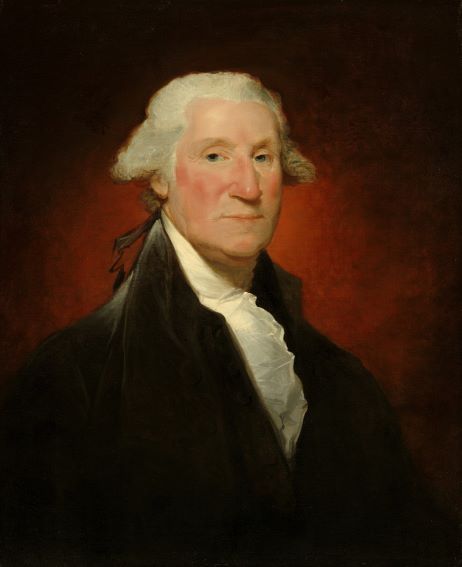
VICTORY did not bring the end of Washington’s troubles. The British remained in place on American soil for two years more. Thus, it was as difficult as it was prudent to maintain readiness in the face of general expectations of the end of conflict. Similarly, there was a very real possibility of the soldiers’ countrymen simply dismissing them with thanks and forgetting the fact that they had served dutifully through great trials without compensation. Instead of elation, therefore, Washington’s attitude in triumph was to preserve in his men and himself the sense of a “duty to bear present trials with fortitude.” This feat proved no less valuable to his country than his skill in the field of battle.

Many charges have been made through the years that Washington’s military officers plotted to make him king. A favorite villain in this set piece has always been Alexander Hamilton, but no solid evidence against him has ever surfaced. The most definite monarchical proposals that have been established were those of Colonel Lewis Nicola in a letter to Washington of May 22, 1782. Washington’s immediate and stern rebuke to Nicola, often remembered since, is reprinted here. Nicola, an Irishman naturalized in America, was generally respected and had been shown a particular courtesy by Washington. He, who was himself Washington’s age, was so stung by Washington’s rebuke that he wrote three successive apologies in the days following.

Nicola settled into comfortable republican habits thereafter, but agitation continued to wrack an army which had been woefully mistreated by its countrymen. No one exerted himself more than Washington to obtain justice for the officers and soldiers.

In February and March of 1783, new threats arose which culminated in the famous “Newburgh Addresses” to Congress. The first of these respectfully expressed the army’s dismay at the union’s inefficacy. The second address, unofficial and anonymous, broached the threat of a refusal to disband without obtaining pay. This latter address led to the famous Newburgh meeting in which the officers, who were supposed to concert their plans to obtain redress, needed to be restrained by Washington. While his letters are replete with sentiments of obtaining justice for the men, the remarks he made in his Newburgh speech, reprinted here, show how well he achieved the end of restraining them. It was reported that, as Washington commenced reading his address, he fumbled in his pockets to pull out spectacles he had only recently acquired. In the delay he remarked, “I have grown not only gray, but almost blind in my country’s service.” Washington carried the meeting. His officers voted him unanimous thanks and rejected “with disdain, the infamous propositions” of the anonymous pamphlets.

68

TO COLONEL LEWIS NICOLA

Sir:

Astonishment at Nicola’s offer to make Washington KingWith a mixture of great surprise and astonishment I have read with attention the Sentiments you have submitted to my perusal. Be assured Sir, no occurrence in the course of the War, has given me more painful sensations than your information of there being such ideas existing in the Army as you have expressed, and I must view with abhorrence, and reprehend with severety. For the present, the communicatn. of them will rest in my own bosom, unless some further agitation of the matter, shall make a disclosure necessary.

I am much at a loss to conceive what part of my conduct could have given encouragement to an address which to me seems big with the greatest mischiefs that can befall my Country. If I am not deceived in the knowledge of myself, you could not have found a person to whom your schemes are more disagreeable; at the same time in justice to my own feelings I must add, that no Man possesses a more sincere wish to see ample justice done to the Army than I do, and as far as my powers and influence, in a constitutional way extend, they shall be employed to the utmost of my abilities to effect it, should there be any occasion. Let me conjure you then, if you have any regard for your Country, concern for yourself or posterity, or respect for me, to banish these thoughts from your Mind, and never communicate, as from yourself, or any one else, a sentiment of the like Nature. With esteem I am.

69

TO THE SECRETARY AT WAR

My dear Sir:

Painful as the task is to describe the dark side of our affairs, it some times becomes a matter of indispensable necessity. Without disguize or palliation, I will inform you candidly of the discontents which, at this moment, prevail universally throughout the Army.

Discontent in armyThe Complaint of Evils which they suppose almost remediless are, the total want of Money, or the means of existing from One day to another, the heavy debts they have already incurred, the loss of Credit, the distress of their Families (i.e. such as are Maried) at home, and the prospect of Poverty and Misery before them. [It is vain Sir, to suppose that Military Men will acquiesce contently with bare rations, when those in the Civil walk of life (unacquainted with half the hardships they endure) are regularly paid the emoluments of Office; while the human Mind is influenced by the same passions, and have the same inclinations to endulge it cannt. be. A Military Man has the same turn to sociability as a person in Civil life; he conceives himself equally called upon to live up to his rank; and his pride is hurt when circumstans. restrain him. Only conceive then, the mortification they (even the Genl. Officers) must suffer when they cannot invite a French Officer, a visiting friend, or travelling acquaintance to a better repast than stinking Whiskey (and not always that) and a bit of Beef without Vegitables, will afford them.]

Complaints of officersThe Officers also complain of other hardships which they think might and ought to be remedied without delay, viz, the stopping Promotions where there have been vacancy’s open for a long time, the withholding Commissions from those who are justly entitled to them and have Warrants or Certificates of their Appointments from the Executive of their States, and particularly the leaving the compensation for their services, in a loose equivocal state, without ascertaining their claims upon the public, or making provision for the future payment of them.

While I premise, that tho’ no one that I have seen or heard of, appears opposed to the principle of reducing the Army as circumstances may require; Yet I cannot help fearing the Result of the measure in contemplation, under present circumstances when I see such a Number of Men goaded by a thousand stings of reflexion on the past, and of anticipation on the future, about to be turned into the World, soured by penury and what they call the ingratitude of the Public, involved in debts, without one farthing of Money to carry them home, after having spent the flower of their days [and many of them their patrimonies] in establishing the freedom and Independence of their Country, and suffered every thing human Nature is capable of enduring on this side of death; I repeat it, these irritable circumstances, without one thing to sooth their feelings, or frighten the gloomy prospects, I cannot avoid apprehending that a train of Evils will follow, of a very serious and distressing Nature. On the other hand could the Officers be placed in as good a situation as when they came into service, the contention, I am persuaded, would be not who should continue in the field, but who should retire to private life.

I wish not to heighten the shades of the picture, so far as the real life would justify me in doing, or I would give Anecdotes of patriotism and distress which have scarcely ever been paralleled, never surpassed in the history of Mankind; Patience of army almost exhaustedbut you may rely upon it, the patience and long sufferance of this Army are almost exhausted, and that there never was so great a spirit of Discontent as at this instant: While in the field, I think it may be kept from breaking out into Acts of Outrage, but when we retire into Winter Quarters (unless the Storm is previously dissipated) I cannot be at ease, respecting the consequences. It is high time for a Peace.

To you, my dear Sir, I need not be more particular in describing my Anxiety and the grounds of it. You are too well acquainted, from your own service, with the real sufferings of the Army to require a longer detail; I will therefore only add that exclusive of the common hardships of a Military life, Our Troops have been, and still are obliged to perform more services, foreign to their proper duty, without gratuity or reward, than the Soldiers of any other Army; for example, the immense labours expended [in doing the duties of Artificers] in erecting Fortifications and Military Works; the fatigue of building themselves Barracks or Huts annually; And of cutting and transporting Wood for the use of all our Posts and Garrisons, without any expence whatever to the Public.

Of this Letter, (which from the tenor of it must be considered in some degree of a private nature) you may make such use as you shall think proper. Since the principal objects of it were, by displaying the Merits, the hardships, the disposition and critical state of the Army, to give information that might eventually be useful, and to convince you with what entire confidence and esteem. I am etc.

70

TO JOSEPH JONES

Dear Sir:

In the course of a few days Congress will, I expect, receive an Address from the Army on the subject of their grievances.

This Address, tho’ couched in very respectful terms, is one of those things which tho’ unpleasing is just now unavoidable; for I was very apprehensive once, that matters would have taken a more unfavourable turn, from the variety of discontents which prevailed at this time.

The temper of the Army is much soured, and has become more irritable than at any period since the commencement of the War. This consideration alone, prevented me (for every thing else seemed to be in a state of inactivity and almost tranquility) from requesting leave to spend this Winter in Virginia, that I might give some attention to my long neglected private concerns.

Alarming dissatisfaction of the armyThe dissatisfactions of the Army had arisen to a great and alarming height, and combinations among the Officers to resign, at given periods in a body, were beginning to take place when by some address and management their resolutions have been converted into the form in which they will now appear before Congress. What that Honble. Body can, or will do in the matter, does not belong to me to determine; but policy, in my opinion, should dictate soothing measures; as it is an uncontrovertible fact, that no part of the community has undergone equal hardships, and borne them with the same patience and fortitude, that the Army has done.

Hitherto the Officers have stood between the lower order of the Soldiery and the public, and in more instances than one, at the hazard of their lives, have quelled very dangerous mutinies. But if their discontents should be suffered to rise equally high, I know not what the consequences may be.

The spirit of enthusiasm, which overcame every thing at first, is now done away; it is idle therefore to expect more from Military men, than from those discharging the Civil departments of Government. If both were to fare equally alike with respect to the emoluments of Office, I would answer for it that the Military character should not be the first to complain. But it is an inviduous distinction, and one that will not stand the test of reason or policy, the one set should receive all, and the other no part (or that wch. is next to it) of their pay. In a word, the experiment is dangerous, and if it succeeded would only prove that, the one is actuated by more Zeal than the other, not that they have less occasion for their money. I am etc.

71

TO MAJOR GENERAL NATHANAEL GREENE

My dear Sir:

I have the pleasure to inform you that your Packet for Govr. Greene which came inclosed to me (in your private Letter of the 12th. of December) was forwarded in an hour after it came to my hands by a Gentleman returning to Rhode Island (Welcome Arnold Esquire); there can be no doubt therefore of its having got safe to the Governor.

Congratulations to General Greene on conclusion of hostilitiesIt is with a pleasure which friendship only is susceptible of, I congratulate you on the glorious end you have put to hostilities in the Southern States; the honor and advantage of it, I hope, and trust, you will live long to enjoy. when this hemisphere will be equally free is yet in the womb of time to discover; a little while, however ‘tis presumed, will disclose the determinations of the British Senate with respect to Peace or War as it seems to be agreed on all hands, that the present Premeir (especially if he should find the opposition powerful) intends to submit the decision of these matters to Parliament. The Speech, the Addresses, and Debates for which we are looking in every direction, will give a data from which the bright rays of the one, or the gloomy prospect of the other, may be discovered.

If Historiographers should be hardy enough to fill the page of History with the advantages that have been gained with unequal numbers (on the part of America) in the course of this contest, and attempt to relate the distressing circumstances under which they have been obtained, it is more than probable that Posterity will bestow on their labors the epithet and marks of fiction; for it will not be believed that such a force as Great Britain has employed for eight years in this Country could be baffled in their plan of Subjugating it by numbers infinitely less, composed of Men oftentimes half starved; always in Rags, without pay, and experiencing, at times, every species of distress which human nature is capable of undergoing.

I intended to have wrote you a long letter on sundry matters but Majr. Burnett popped in unexpectedly, at a time when I was preparing for the Celebration of the day; and was just going to a review of the Troops, previous to the Fue de joy. As he is impatient, from an apprehension of the Sleighing failing, and as he can give you the occurrences of this quarter more in detail than I have time to do, I will refer you to him. I cannot omit informing you however, that I let no oppertunity slip to enquire after your Son George at Princeton, and that it is with pleasure I hear he enjoys good health, and is a fine promising boy.

Mrs. Washington joins me in most Affectionate regards, and best wishes for Mrs Greene and yourself. With great truth and sincerity and every sentiment of friendship. I am etc.

72

GENERAL ORDERS

Parole Gottenburgh. Countersigns Hannover, Inverness.

For the day tomorrow Major Gibbs.

For duty the 2d. Jersey regiment.

Completion of a chapel at headquartersThe New building being so far finished as to admit the troops to attend public worship therein after tomorrow, it is directed that divine Service should be performed there every Sunday by the several Chaplains of the New Windsor Cantonment, in rotation and in order that the different brigades may have an oppertunity of attending at different hours in the same day (when ever the weather and other circumstances will permit which the Brigadiers and Commandants of brigades must determine) Instructions to chaplainsthe General recommends that the Chaplains should in the first place consult the Commanding officers of their Brigades to know what hour will be most convenient and agreeable for attendance that they will then settle the duty among themselves and report the result to the Brigadiers and Commandants of Brigades who are desired to give notice in their orders and to afford every aid and assistance in their power for the promotion of that public Homage and adoration which are due to the supreme being, who has through his infinite goodness brought our public Calamities and dangers (in all humane probability) very near to a happy conclusion.

The General has been surprised to find in Winter Qrs. that the Chaplains have frequently been almost all absent, at the same time, under an idea their presence could not be of any utility at that season; he thinks it is proper, he should be allowed to judge of that matter himself, and therefore in future no furloughs will be granted to Chaplains except in consequence of permission from Head quarters, and any who may be now absent without such permission are to be ordered by the Commanding officers of their Brigades to join immediately, after which not more than one third of the whole number will be indulged with leave of absence at a time. They are requested to agree among themselves upon the time and length of their furloughs before any application shall be made to Head quarters on the subject.

The Commander in Chief also desires and expects the Chaplains in addition to their public functions will in turn constantly attend the Hospitals and visit the sick, and while they are thus publickly and privately engaged in performing the sacred duties of their office they may depend upon his utmost encouragement and support on all occasions, and that they will be considered in a very respectable point of light by the whole Army.

73

TO GOVERNOR BENJAMIN HARRISON

Dear Sir:

Your favor of the 31st. of Jany. came to my hands the Post before last, and the Acct. from Genl. Lavalette by the last Post. Upon receipt of the latter, your Letter and Lavalettes acct. was sent to Sir Guy Carleton with a request to remit the money to Colo. Smith at Dobbs’s Ferry; who is desired to forward it to the Chevr. de la Luzerne at Philadelphia.

Expectations of peaceYou ask what my expectations of Peace are? I answer, I am scarcely able to form any ideas at all on the subject, since I have seen (what is called, for we have no authentic acct. of its being so) the King’s Speech; and the variety of contradictory reports respecting the Negociations for it. The Enemy in New York are as impatient, and as much in the dark as we are on this occasion; not having received a Packet for more than two Months. Although I cannot give you a decided opinion, under present appearances, I will transcribe the answer I gave about the first of Jany. to a question similar to yours from a Gentleman of my acquaintance in Maryland; which as matters are yet undecided, or rather the decision, if any, unannounced, I see no occasion to depart from.

[The Fitzpatrick edition of Washington’s writings omits a passage here.]

Impost LawWhat, My dear Sir, could induce the State of Virginia to rescind its assent to the Impost Law? How are the numerous Creditors in Civil life and the Army to be paid if no regular and certain funds are established to discharge the Interest of Monies borrowed for these purposes? and what Tax can be more just or better calculated to this end than an Impost?

Discussion of Rhode Island complaintsThe alarm Bell, which has been rung with such tremendous sound by the State of Rhode Island, to shew the danger of entrusting Congress with the Money, is too selfish and feutile to require a serious answer. Congress are in fact, but the People; they return to them at certain short periods; are amenable at all times for their conduct, and subject to a recall at any moment. What interest therefore can a man have, under these circumstances distinct from his Constituents? Can it be supposed, that with design, he would form a junto, or pernicious Aristocracy that would operate agt. himself; in less than a month perhaps, after it was established? I cannot conceive it. But from the observations I have made in the course of this War (and my intercourse with the States in their United as well as seperate capacities has afforded ample oppertunities of judging) Enlargement of powers of CongressI am decided in my opinion, that if the powers of Congress are not enlarged, and made competent to all general purposes, that the Blood which has been spilt, the expence that has been incurred, and the distresses which have been felt, will avail us nothing; and that the band, already too weak, wch. holds us together, will soon be broken; when anarchy and confusion must prevail.

I shall make no apology for the freedom of these Sentiments. they proceed from an honest heart, altho’ they may be the result of erroneous thinking. They will at least prove the sincerity of my friendship, as they are altogether undisguised. With the greatest esteem etc.

74

TO ALEXANDER HAMILTON

Dear Sir:

I have received your favor of February, and thank you for the information and observations it has conveyed to me. I shall always think myself obliged by a free communication of Sentiments, and have often thought (but suppose I thought wrong as it did not accord with the practice of Congress) that the public interest might be benefitted, Role of Commander-in-Chiefif the Commander in Chief of the Army was let more into the political and pecuniary state of our Affairs than he is. Enterprises, and the adoption of Military and other arrangements that might be exceedingly proper in some circumstances would be altogether improper in others. It follows then by fair deduction, that where there is a want of information there must be chance medley; and a man may be upon the brink of a precipice before he is aware of his danger. when a little foreknowledge might enable him to avoid it. But this by the by.

Loan from HollandThe hint contained in your letter, and the knowledge I have derived from the public Gazettes respecting the non-payment of Taxes, contain all the information I have received of the danger that stares us in the face on Acct. of our funds, and so far was I from conceiving that our Finances was in so deplorable a state at this time that I had imbibed ideas from some source or another, that with the prospect of a loan from Holland, we should be able to rub along.

Political dissolutionTo you, who have seen the danger, to which the Army has been exposed, to a political dissolution for want of subsistence, and the unhappy spirit of licentiousness which it imbibed by becoming in one or two instances its own proveditors, no observations are necessary to evince the fatal tendency of such a measure; but I shall give it as my opinion, that it would at this day be productive of Civil commotions and end in blood. Unhappy situation this! God forbid we should be involved in it.

The army, Congress, and the statesThe predicament in which I stand as Citizen and Soldier, is as critical and delicate as can well be conceived. It has been the Subject of many contemplative hours. The sufferings of a complaining Army on one hand, and the inability of Congress and tardiness of the States on the other, are the forebodings of evil, and may be productive of events which are more to be deprecated than prevented; but I am not without hope, if there is such a disposition shewn as prudence and policy will dictate, to do justice, that your apprehensions, in case of Peace, are greater than there is cause for. In this however I may be mistaken, if those ideas, which you have been informed are propagated in the Army should be extensive; the source of which may be easily traced as the old leven, it is said, for I have no proof of it, is again, beginning to work, under a mask of the most perfect dissimulation, and apparent cordiallity.

Be these things as they may, I shall pursue the same steady line of conduct which has governed me hitherto; fully convinced that the sensible, and discerning part of the Army, cannot be unacquainted (altho’ I never took pains to inform them) of the Services I have rendered it on more occasions than one. This, and pursuing the suggestions of your Letter, which I am happy to find coincides with my practice for several Months past and which was the means of directing the business of the Army into the Channel it now is, leaves me under no great apprehension of its exceeding the bounds of reason and moderation, notwithstanding the prevailing sentiment in the Army is, that the prospect of compensation for past Services will terminate with the War.

Just claims of the armyThe just claims of the Army ought, and it is to be hoped will, have their weight with every sensible Legislature in the Union, if Congress point to their demands; shew (if the case is so) the reasonableness of them, and the impracticability of complying with them without their Aid. In any other point of view it would, in my opinion, be impolitic to introduce the Army on the Tapis; lest it should excite jealousy, and bring on its concomitants. The States cannot, surely, be so devoid of common sense, common honesty, and common policy as to refuse their aid on a full, clear, and candid representation of facts from Congress; more especially if these should be enforced by members of their own Body; who might demonstrate what the inevitable consequences of failure will lead to.

In my opinion it is a matter worthy of consideration how far an Adjournment of Congress for a few Months is advisable. The Delegates in that case, if they are in Unison themselves, respecting the great defects of their Constitution, may represent them fully and boldly to their Constituents. To me, who know nothing of the business which is before Congress, nor of the Arcanum, it appears that such a measure would tend to promote the public weal; for it is clearly my opinion, unless Congress have powers competent to all general purposes, that the distresses we have encountered, the expence we have incurred, and the blood we have spilt in the course of an Eight years war, will avail us nothing.

The contents of your letter is known only to myself, and your prudence will direct what should be done with this. With great esteem etc.

75

TO THE PRESIDENT OF CONGRESS

Sir:

It is with inexpressible concern, I make the followg Report to your Excellency.

A general meeting of army officersTwo Days ago, anonymous papers were circulated in the Army, requesting a general meeting of the Officers on the next day. A Copy of one of these papers is inclosed, No. 1. About the same Time, another anonymous paper purporting to be an Address to the Officers of the Army, was handed about in a clandestine manner: a Copy of this is mark’d No 2. To prevent any precipitate and dangerous Resolutions from being taken at this perilous moment, while the passions were all inflamed; as soon as these things came to my knowledge, the next Morng. I issued the inclosed Order No. 3.* And in this situation the Matter now rests.

As all opinion must be suspended until after the meeting on Saturday, I have nothing further to add, except a Wish, that the measures I have taken to dissipate a Storm, which had gathered so suddenly and unexpectedly, may be acceptable to Congress: and to assure them, that in every vicisitude of Circumstances, still actuated with the greatest zeal in their Service, I shall continue my utmost Exertions to promote the wellfare of my Country under the most lively Expectation, that Congress have the best Intentions of doing ample Justice to the Army, as soon as Circumstances will possibly admit. With the highest Respect etc.

PS: Since writing the foregoing another anonymous paper is put in Circulation, Copy of which is inclosed, No. 4.

76

TO JOSEPH JONES

Dear Sir:

I have received your letter of the 27th. Ulto., and thank you for the information and freedom of your communications.

Information on the temper of the armyMy Official Letter to Congress of this date will inform you of what has happened in this Quarter, in addition to which, it may be necessary it should be known to you, and to such others as you may think proper, that the temper of the Army, tho very irritable on acct. of their long-protracted sufferings has been apparently extremely quiet while their business was depending before Congress untill four days past. In the mean time, it should seem reports have been propagated in Philadelphia that dangerous combinations were forming in the Army; and this at a time when there was not a syllable of the kind in agitation in Camp.

It also appears, that upon the arrival of a certain Gentleman from Phila. in Camp, whose name, I do not, at present, incline to mention such sentiments as these were immediately and industriously circulated. That it was universally expected the Army would not disband untill they had obtained Justice. That the public creditors looked up to them for redress of their Grievances, would afford them every aid, and even join them in the Field, if necessary. That some Members of Congress wished the Measure might take effect, in order to compel the Public, particularly the delinquent States, to do justice. With many other suggestions of a Similar Nature; from whence, and a variety of other considerations it is generally believ’d the Scheme was not only planned, but also digested and matured in Philadelphia; and that some people have been playing a double game; spreading at the Camp and in Philadelphia Reports and raising jealousies equally void of Foundation untill called into being by their vile Artifices; for as soon as the Minds of the Army were thought to be prepared for the transaction, anonymous invitations were circulated, requesting a general Meeting of the Officers next day; at the same instant many Copies of the Address to the Officers of the Army was scattered in every State line of it.

So soon as I obtained knowledge of these things, I issued the order of the 11th. (transmitted to Congress;) in order to rescue the foot, that stood wavering on the precipice of despair, from taking those steps which would have lead to the abyss of misery while the passions were inflamed, and the mind trimblingly alive with the recollection of past sufferings, and their present feelings. I did this upon the principle that it is easier to divert from a wrong to a right path, than it is to recall the hasty and fatal steps which have been already taken.

Potential dangers of officers’ meetingIt is commonly supposed, if the Officers had met agreeable to the anonymous Summons, resolutions might have been formed, the consequences of which may be more easily conceived than expressed. Now, they will have leisure to view the matter more calmly and seriously. It is to be hoped they will be induced to adopt more rational measures, and wait a while longer for the settlemts. of their Accts.; the postponing of which gives more uneasiness in the Army than any other thing. there is not a man in it, who will not acknowledge that Congress have not the means of payment; but why not say they, one and all, liquidate the Accts. and certifie our dues? Are we to be disbanded and sent home without this? Are we, afterwards, to make individual applications for such settlements at Philadelphia, or any Auditing Office in our respective states; to be shifted perhaps from one board to another; dancing attendence at all, and finally perhaps be postponed till we loose the substance in pursuit of the shadow. While they are agitated by these considerations there are not wanting insiduous characters who tell them, it is neither the wish nor the intention of the public to settle your accounts; but to delay this business under one pretext or another till Peace wch. we are upon the eve of, and a seperation of the Army takes place when it is well known a general settlement never can be effected and that individual loss, in this instance, becomes a public gain.

However derogatory these ideas are with the dignity, honor, and justice of government yet in a matter so interesting to the Army, and at the same time so easy to be effected by the Public, as that of liquidating the Accounts, is delayed without any apparent, or obvious necessity, they will have their place in a mind that is soured and irritated. Justice to the armyLet me entreat you therefore my good Sir to push this matter to an issue, and if there are Delegates among you, who are really opposed to doing justice to the Army, scruple not to tell them, if matters should come to extremity, that they must be answerable for all the ineffable horrors which may be occasioned thereby. I am etc.

77

SPEECH TO THE OFFICERS OF THE ARMY

Gentlemen:

Opposition to the call for a general meetingBy an anonymous summons, an attempt has been made to convene you together; how inconsistent with the rules of propriety! how unmilitary! and how subversive of all order and discipline, let the good sense of the Army decide.

In the moment of this Summons, another anonymous production was sent into circulation, addressed more to the feelings and passions, than to the reason and judgment of the Army. The author of the piece, is entitled to much credit for the goodness of his Pen and I could wish he had as much credit for the rectitude of his Heart, for, as Men see thro’ different Optics, and are induced by the reflecting faculties of the Mind, to use different means, to attain the same end, the Author of the Address, should have had more charity, than to mark for Suspicion, the Man who should recommend moderation and longer forbearance, or, in other words, who should not think as he thinks, and act as he advises. But he had another plan in view, in which candor and liberality of Sentiment, regard to justice, and love of Country, have no part; and he was right, to insinuate the darkest suspicion, to effect the blackest designs.

That the Address is drawn with great Art, and is designed to answer the most insidious purposes. That it is calculated to impress the Mind, with an idea of premeditated injustice in the Sovereign power of the United States, and rouse all those resentments which must unavoidably flow from such a belief. That the secret mover of this Scheme (whoever he may be) intended to take advantage of the passions, while they were warmed by the recollection of past distresses, without giving time for cool, deliberative thinking, and that composure of Mind which is so necessary to give dignity and stability to measures is rendered too obvious, by the mode of conducting the business, to need other proof than a reference to the proceeding.

Thus much, Gentlemen, I have thought it incumbent on me to observe to you, to shew upon what principles I opposed the irregular and hasty meeting which was proposed to have been held on Tuesday last: and not because I wanted a disposition to give you every oppertunity consistent with your own honor, and the dignity of the Army, to make known your grievances. If my conduct heretofore, has not evinced to you, that I have been a faithful friend to the Army, my declaration of it at this time wd. be equally unavailing and improper. But as I was among the first who embarked in the cause of our common Country. As I have never left your side one moment, but when called from you on public duty. As I have been the constant companion and witness of your Distresses, and not among the last to feel, and acknowledge your Merits. As I have ever considered my own Military reputation as inseperably connected with that of the Army. As my Heart has ever expanded with joy, when I have heard its praises, and my indignation has arisen, when the mouth of detraction has been opened against it, it can scarcely be supposed, at this late stage of the War, that I am indifferent to its interests. But, how are they to be promoted? The way is plain, says the anonymous Addresser. If War continues, remove into the unsettled Country; there establish yourselves, and leave an ungrateful Country to defend itself. But who are they to defend? Our Wives, our Children, our Farms, and other property which we leave behind us. Or, in this state of hostile seperation, are we to take the two first (the latter cannot be removed), to perish in a Wilderness, with hunger, cold and nakedness? If Peace takes place, never sheath your Swords, Says he, untill you have obtained full and ample justice; this dreadful alternative, of either deserting our Country in the extremest hour of her distress, or turning our Arms against it, (which is the apparent object, unless Congress can be compelled into instant compliance) has something so shocking in it, that humanity revolts at the idea. My God! what can this writer have in view, by recommending such measures? Can he be a friend to the Army? Can he be a friend to this Country? Rather, is he not an insidious Foe? Some Emissary, perhaps, from New York, plotting the ruin of both, by sowing the seeds of discord and seperation between the Civil and Military powers of the Continent? And what a Compliment does he pay to our Understandings, when he recommends measures in either alternative, impracticable in their Nature?

But here, Gentlemen, I will drop the curtain, because it wd. be as imprudent in me to assign my reasons for this opinion, as it would be insulting to your conception, to suppose you stood in need of them. A moment’s reflection will convince every dispassionate Mind of the physical impossibility of carrying either proposal into execution.

There might, Gentlemen, be an impropriety in my taking notice, in this Address to you, of an anonymous production, but the manner in which that performance has been introduced to the Army, the effect it was intended to have, together with some other circumstances, will amply justify my observations on the tendency of that Writing. With respect to the advice given by the Author, to suspect the Man, who shall recommend moderate measures and longer forbearance, I spurn it, as every Man, who regards that liberty, and reveres that justice for which we contend, undoubtedly must; for if Men are to be precluded from offering their Sentiments on a matter, which may involve the most serious and alarming consequences, that can invite the consideration of Mankind, reason is of no use to us; the freedom of Speech may be taken away, and, dumb and silent we may be led, like sheep, to the Slaughter.

I cannot, in justice to my own belief, and what I have great reason to conceive is the intention of Congress, conclude this Address, without giving it as my decided opinion, that that Honble Body, entertain exalted sentiments of the Services of the Army; and, from a full conviction of its merits and sufferings, will do it compleat justice. That their endeavors, to discover and establish funds for this purpose, have been unwearied, and will not cease, till they have succeeded, I have not a doubt. But, like all other large Bodies, where there is a variety of different interests to reconcile, their deliberations are slow. Why then should we distrust them? and, in consequence of that distrust, adopt measures, which may cast a shade over that glory which, has been so justly acquired; and tarnish the reputation of an Army which is celebrated thro’ all Europe, for its fortitude and Patriotism? and for what is this done? to bring the object we seek nearer? No! most certainly, in my opinion, it will cast it at a greater distance.

For myself (and I take no merit in giving the assurance, being induced to it from principles of gratitude, veracity and justice), a grateful sence of the confidence you have ever placed in me, a recollection of the chearful assistance, and prompt obedience I have experienced from you, under every vicissitude of fortune, and the sincere affection I feel for an Army, I have so long had the honor to Command, will oblige me to declare, in this public and solemn manner, that, in the attainment of compleat justice for all your toils and dangers, and in the gratification of every wish, so far as may be done consistently with the great duty I owe my Country, and those powers we are bound to respect, you may freely command my Services to the utmost of my abilities.

While I give you these assurances, and pledge myself in the most unequivocal manner, to exert whatever ability I am possessed of, in your favor, let me entreat you, Gentlemen, on your part, not to take any measures, which, viewed in the calm light of reason, will lessen the dignity, and sully the glory you have hitherto maintained; let me request you to rely on the plighted faith of your Country, and place a full confidence in the purity of the intentions of Congress; that, previous to your dissolution as an Army they will cause all your Accts. to be fairly liquidated, as directed in their resolutions, which were published to you two days ago, and that they will adopt the most effectual measures in their power, to render ample justice to you, for your faithful and meritorious Services. And let me conjure you, in the name of our common Country, as you value your own sacred honor, as you respect the rights of humanity, and as you regard the Military and National character of America, to express your utmost horror and detestation of the Man who wishes, under any specious pretences, to overturn the liberties of our Country, and who wickedly attempts to open the flood Gates of Civil discord, and deluge our rising Empire in Blood. By thus determining, and thus acting, you will pursue the plain and direct road to the attainment of your wishes. You will defeat the insidious designs of our Enemies, who are compelled to resort from open force to secret Artifice. You will give one more distinguished proof of unexampled patriotism and patient virtue, rising superior to the pressure of the most complicated sufferings; And you will, by the dignity of your Conduct, afford occasion for Posterity to say, when speaking of the glorious example you have exhibited to Mankind, ``had this day been wanting, the World had never seen the last stage of perfection to which human nature is capable of attaining.”

78

TO THE PRESIDENT OF CONGRESS

Sir:

The result of the proceedings of the grand Convention of the Officers, which I have the honor of enclosing to your Excellency for the inspection of Congress, will, I flatter myself, be considered as the last glorious proof of Patriotism which could have been given by Men who aspired to A patriot armythe distinction of a patriot Army; and will not only confirm their claim to the justice, but will increase their title to the gratitude of their Country.

Having seen the proceedings on the part of the Army terminate with perfect unanimity, and in a manner entirely consonant to my wishes; being impressed with the liveliest sentiments of affection for those who have so long, so patiently and so chearfully suffered and fought under my immediate direction; having from motives of justice, duty and gratitude, spontaneously offered myself as an advocate for their rights; and having been requested to write to your Excellency earnestly entreating the most speedy decision of Congress upon the subjects of the late Address from the Army to that Honble. Body, it now only remains for me to perform the task I have assumed, and to intercede in their behalf, as I now do, that the Sovereign Power will be pleased to verify the predictions I have pronounced of, and the confidence the Army have reposed in the justice of their Country.

Pleading the army’s causeAnd here, I humbly conceive it is altogether unnecessary, (while I am pleading the cause of an Army which have done and suffered more than any other Army ever did in the defence of the rights and liberties of human nature,) to expatiate on their Claims to the most ample compensation for their meritorious Services, because they are perfectly known to the whole World, and because, (altho’ the topics are inexhaustible) enough has already been said on the subject.

To prove these assertions, to evince that my sentiments have ever been uniform, and to shew what my ideas of the rewards in question have always been, I appeal to the Archives of Congress, and call on those sacred deposits to witness for me. And in order that my observations and Arguments in favor of a future adequate provision for the Officers of the Army may be brought to remembrance again, and considered in a single point of view without giving Congress the trouble of having recourse to their files, I will beg leave to transmit herewith an Extract from a representation made by me to a Committee of Congress so long ago as the 29th of January 1778. and also the transcript, of a Letter to the President of Congress, dated near Passaic Falls Octr. 11th. 1780 That in the critical and perilous moment when the last mentioned communication was made, there was the utmost danger of a dissolution of the Army would have taken place unless measures similar to those recommended had been adopted, will not admit a doubt. That the adoption of the Resolution granting half-pay for life has been attended with all the happy consequences I had foretold, so far as respected the good of the service; let the astonishing contrast between the State of the Army at this instant, and at the former period determine. And that the establishment of funds, and security of the payment of all the just demands of the Army will be the most certain means of preserving the National faith and future tranquillity of this extensive Continent, is my decided opinion.

By the preceeding remarks it will readily be imagined that instead of retracting and reprehending (from farther experience and reflection) the mode of compensation so strenuously urged in the Inclosures, I am more and more confirmed in the Sentiment, and if in the wrong suffer me to please myself with the grateful delusion.

For if, besides the simple payment of their Wages, a farther compensation is not due to the sufferings and sacrifices of the Officers, then have I been mistaken indeed. If the whole Army have not merited whatever a grateful people can bestow, then have I been beguiled by prejudice, and built opinion on the basis of error. If this Country should not in the Event perform every thing which has been requested in the late Memorial to Congress, then will my belief become vain, and the hope that has been excited void of foundation. And “if, (as has been suggested for the purpose of inflaming their passions) the Officers of the Army are to be the only sufferers by this revolution; if retiring from the Field, they are to grow old in poverty wretchedness and contempt. If they are to wade thro’ the vile mire of dependency and owe the miserable remnant of that life to charity, which has hitherto been spent in honor,” then shall I have learned what ingratitude is, then shall I have realized a tale, which will imbitter every moment of my future life. But I am under no such apprehensions, a Country rescued by their Arms from impending ruin, will never leave unpaid the debt of gratitude.

Should any intemperate or improper warmth have mingled itself amongst the foregoing observations, I must entreat your Excellency and Congress it may be attributed to the effusion of an honest zeal in the best of Causes, and that my peculiar situation may be my apology. And I hope I need not, on this momentuous occasion make any new protestations of personal disinterestedness, having ever renounced for myself the idea of pecuniary reward. The consciousness of having attempted faithfully to discharge my duty, and the approbation of my Country will be a sufficient reccompense for my Services. I have the honor etc.

[*]Learning of an intended meeting by officers seeking to redress their grievances against Congress, Washington moved to avert the possibly evil consequences which could ensue. On March 11, 1783, “his General Orders” for the day (routine throughout the war) announced his awareness of the meeting (the Order No. 3 mentioned in the letter): “The Commander in Chief having heard that a general meeting of the officers of the Army was proposed . . . in an anonimous paper . . . conceives . . . his duty as well as the reputation and true interests of the Army require his disapprobation of such disorderly proceedings, at the same time he requests the General and Field officers . . . will assemble at 12 o’clock on Saturday next. . . . After mature deliberation they will devise what further measures ought to be adopted. . . .” Washington expressly disapproved of “such disorderly proceedings” and called the officers to assemble four days later to consider how best to pursue the just concerns of the army. He directed the “senior officer in Rank present” to report to him the result of the meeting, thereby implying an intention not to attend himself. When the time for the meeting arrived, however, Washington entered and delivered a dramatic appeal. The meeting was the occasion for the “Newburgh Address,” reprinted below (number 77).