Econlib

The Library

Other Sites

Front Page arrow Titles (by Subject) arrow CHAP. X.: Of the domestic Tribunal among the Romans. - Complete Works, vol. 1 The Spirit of Laws

Return to Title Page for Complete Works, vol. 1 The Spirit of Laws

Search this Title:

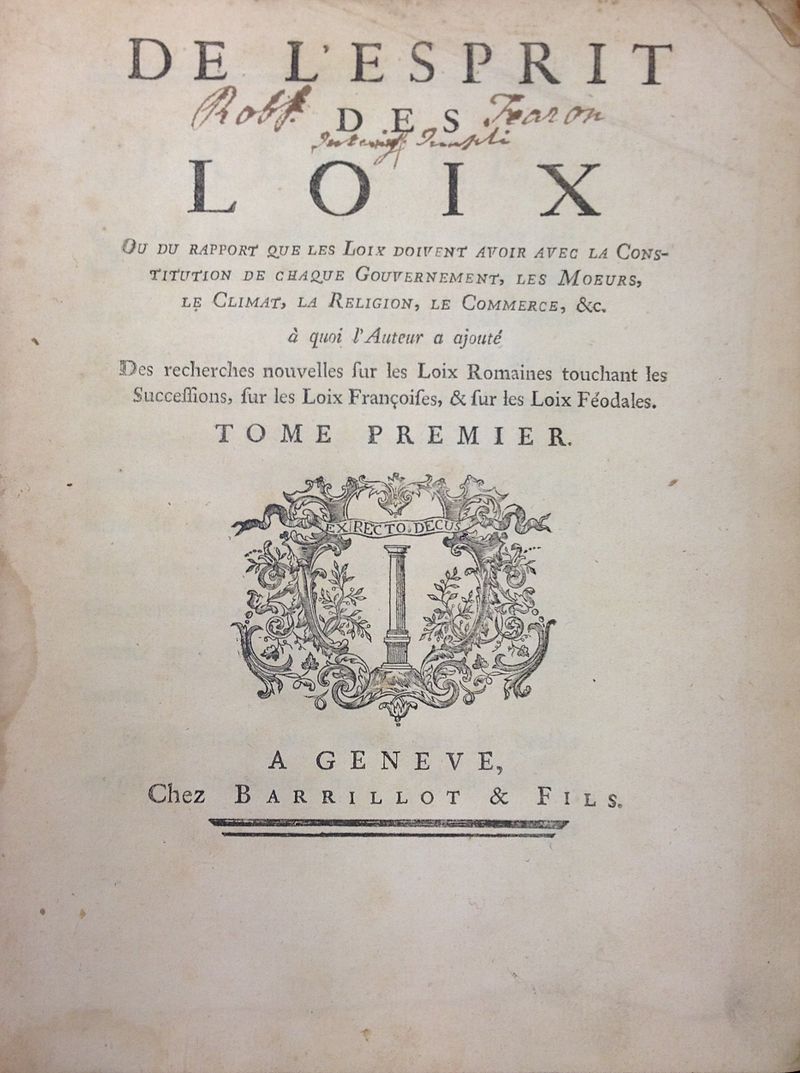
CHAP. X.: Of the domestic Tribunal among the Romans. - Charles Louis de Secondat, Baron de Montesquieu, Complete Works, vol. 1 The Spirit of Laws [1748]

Edition used:

The Complete Works of M. de Montesquieu (London: T. Evans, 1777), 4 vols. Vol. 1.

Part of: Complete Works of Montesquieu, 4 vols.

About Liberty Fund:

Liberty Fund, Inc. is a private, educational foundation established to encourage the study of the ideal of a society of free and responsible individuals.


CHAP. X.

Of the domestic Tribunal among the Romans.

THE Romans had no particular magistrates, like the Greeks, to inspect the conduct of women. The censors had not an eye over them but as over the rest of the republic. The institution of the domestic tribunal§ supplied the magistracy established among the Greeks .

The husband summoned the wife’s relations, and tried her in their presence . This tribunal preserved the manners of the republic, and, at the same time, those very manners maintained this tribunal. For it decided not only in respect to the violation of the laws, but also of manners: now, in order to judge of the violation of the latter, manners are requisite.

The penalties inflicted by this tribunal ought to be, and actually were, arbitrary: for all that relates to manners, and to the rules of modesty, can hardly be comprised under one code of laws. It is easy, indeed, to regulate by laws what we owe to others, but it is very difficult to comprise all we owe to ourselves.

The domestic tribunal inspected the general conduct of women. But there was one crime, which, beside the animadversion of this tribunal, was likewise subject to a public accusation: this was adultery: whether that, in a republic, so great a depravation of manners interested the government; or whether the wife’s immorality might render the husband’s suspected; or whether, in fine, they were afraid lest even honest people might choose that this crime should rather be concealed than punished.

[§ ]Romulus instituted this tribunal, as appears from Dionysius Halicarnass. book 2. p. 96.

[]See, in Livy, book 39. the use that was made of this tribunal at the time of the conspiracy of the Bacchanalians. They gave the name of conspiracy against the republic to assemblies in which the morals of women and young people were debauched.

[]It appears, from Dionys. Halicarn. lib. 2. that Romulus’s institution was, that, in ordinary cases, the husband should sit as judge in the presence of the wife’s relations, but that, in heinous crimes, he should determine in conjunction with five of them. Hence Ulpian, tit. 6. §. 9. 12. & 13. distinguishes, in respect to the different judgements of manners, between those which he calls important, and those which are less so; graviores, leviores.