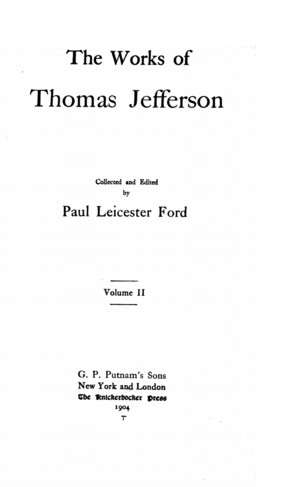
Part of: The Works of Thomas Jefferson, 12 vols. The Works, vol. 2 (1771-1779)
- Thomas Jefferson (author)
- Paul Leicester Ford (editor)
Volume 2 of the “Federal Edition” of Jefferson’s works in 12 volumes edited by Paul Leicester Ford in 1904-05. This volume contains Correspondence and Miscellaneous writings between 1771 and 1779, including the Summary View, the draft of the Constitution of Virginia, and the Declaration of Independence.
Key Quotes
Colonies, Slavery & Abolition
He has waged cruel War against human Nature itself, violating its most sacred Rights of Life and Liberty in the Persons of a distant People who never offended him, captivating and carrying them into Slavery in another Hemisphere, or to incur miserable Death, in their Transportation thither. This…
War & Peace
Our battalions for the continental service were some time ago so far filled as rendered the recommendation of a draught from the militia hardly requisite, and the more so as in this country it ever was the most unpopular and impracticable thing that could be attempted. Our people, even under the…
Presidents, Kings, Tyrants, & Despots
He has endeavoured to prevent the Population of these States; for that purpose obstructing the Laws for naturalization of foreigners; refusing to pass others to encourage their Migrations hither; and raising the Conditions of new Appropriations of Lands. He has suffered the Administration of…
Politics & Liberty
When in the Course of human events, it becomes necessary for one people to dissolve the political bands which have connected them with another, and to assume among the powers of the earth, the separate and equal station to which the Laws of Nature and of Nature’s God entitle them, a decent respect…