Econlib

The Library

Other Sites

Front Page arrow Titles (by Subject) arrow Chapter 3: Seduction - The Principles of Moral and Political Philosophy

Return to Title Page for The Principles of Moral and Political Philosophy

Search this Title:

Also in the Library:

Subject Area: Political Theory
Subject Area: Philosophy
Collection: Books Published by Liberty Fund
Topic: Property
Order this book from Liberty Fund

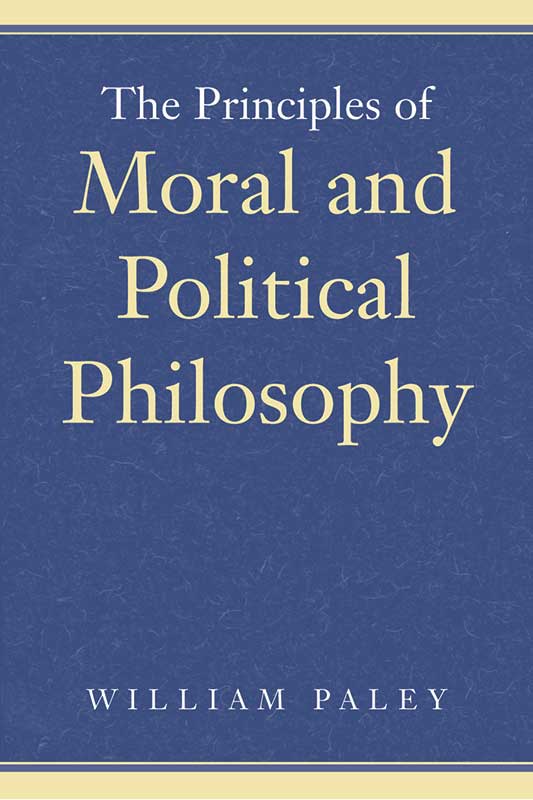
Chapter 3: Seduction - William Paley, The Principles of Moral and Political Philosophy [1785]

Edition used:

The Principles of Moral and Political Philosophy, Foreword by D.L. Le Mahieu (Indianapolis: Liberty Fund, 2002).

About Liberty Fund:

Liberty Fund, Inc. is a private, educational foundation established to encourage the study of the ideal of a society of free and responsible individuals.


Chapter 3

Seduction

The seducer practises the same stratagems to draw a woman’s person into his power, that a swindler does to get possession of your goods, or money; yet the law of honour, which abhors deceit, applauds the address of a successful intrigue; so much is this capricious rule guided by names, and with such facility does it accommodate itself to the pleasures and conveniency of higher life!

Seduction is seldom accomplished without fraud; and the fraud is by so much more criminal than other frauds, as the injury effected by it is greater, continues longer, and less admits reparation.

This injury is threefold: to the woman, to her family, and to the public.

I. The injury to the woman is made up of the pain she suffers from shame, or the loss she sustains in her reputation and prospects of marriage, and of the depravation of her moral principle.

1. This pain must be extreme, if we may judge of it from those barbarous endeavours to conceal their disgrace, to which women, under such circumstances, sometimes have recourse; comparing also this barbarity with their passionate fondness for their offspring in other cases. Nothing but an agony of mind the most insupportable can induce a woman to forget her nature, and the pity which even a stranger would show to a helpless and imploring infant. It is true, that all are not urged to this extremity; but if any are, it affords an indication of how much all suffer from the same cause. What shall we say to the authors of such mischief?

2. The loss which a woman sustains by the ruin of her reputation almost exceeds computation. Every person’s happiness depends in part upon the respect and reception which they meet with in the world; and it is no inconsiderable mortification, even to the firmest tempers, to be rejected from the society of their equals, or received there with neglect and disdain. But this is not all, nor the worst. By a rule of life, which it is not easy to blame, and which it is impossible to alter, a woman loses with her chastity the chance of marrying at all, or in any manner equal to the hopes she had been accustomed to entertain. Now marriage, whatever it be to a man, is that from which every woman expects her chief happiness. And this is still more true in low life, of which condition the women are who are most exposed to solicitations of this sort. Add to this, that where a woman’s maintenance depends upon her character (as it does, in a great measure, with those who are to support themselves by service), little sometimes is left to the forsaken sufferer, but to starve for want of employment, or to have recourse to prostitution for food and raiment.

3. As a woman collects her virtue into this point, the loss of her chastity is generally the destruction of her moral principle; and this consequence is to be apprehended, whether the criminal intercourse be discovered or not.

II. The injury to the family may be understood, by the application of that infallible rule, “of doing to others, what we would that others should do unto us.” Let a father or a brother say, for what consideration they would suffer this injury to a daughter or a sister; and whether any, or even a total, loss of fortune, could create equal affliction and distress. And when they reflect upon this, let them distinguish, if they can, between a robbery, committed upon their property by fraud or forgery, and the ruin of their happiness by the treachery of a seducer.

III. The public at large lose the benefit of the woman’s service in her proper place and destination, as a wife and parent. This, to the whole community, may be little; but it is often more than all the good which the seducer does to the community can recompense. Moreover, prostitution is supplied by seduction; and in proportion to the danger there is of the woman’s betaking herself, after her first sacrifice, to a life of public lewdness, the seducer is answerable for the multiplied evils to which his crime gives birth.

Upon the whole, if we pursue the effects of seduction through the complicated misery which it occasions, and if it be right to estimate crimes by the mischief they knowingly produce, it will appear something more than mere invective to assert, that not one half of the crimes, for which men suffer death by the laws of England, are so flagitious as this.*

[* ]Yet the law has provided no punishment for this offence beyond a pecuniary satisfaction to the injured family; and this can only be come at, by one of the quaintest fictions in the world; by the father’s bringing his action against the seducer, for the loss of his daughter’s service, during her pregnancy and nurturing.