Econlib

The Library

Other Sites

Front Page arrow Titles (by Subject) arrow Chapter 1: Of the Public Use of Marriage Institutions - The Principles of Moral and Political Philosophy

Return to Title Page for The Principles of Moral and Political Philosophy

Search this Title:

Also in the Library:

Subject Area: Political Theory
Subject Area: Philosophy
Collection: Books Published by Liberty Fund
Topic: Property
Order this book from Liberty Fund

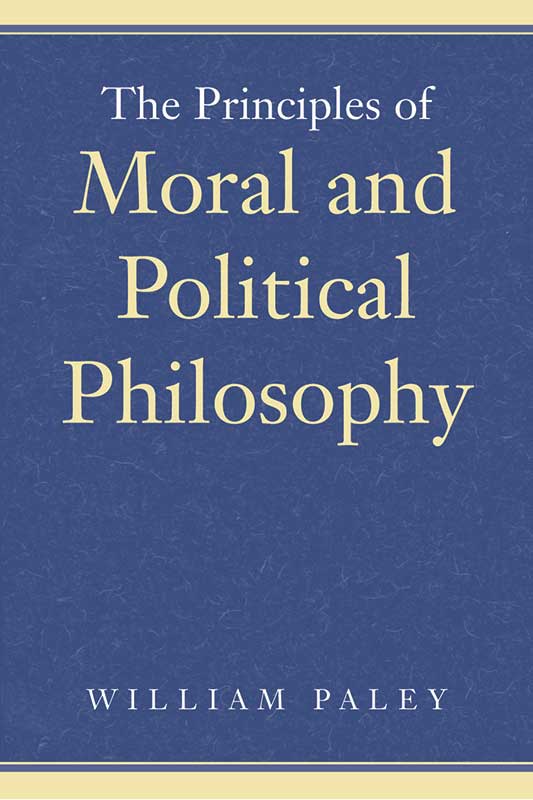
Chapter 1: Of the Public Use of Marriage Institutions - William Paley, The Principles of Moral and Political Philosophy [1785]

Edition used:

The Principles of Moral and Political Philosophy, Foreword by D.L. Le Mahieu (Indianapolis: Liberty Fund, 2002).

About Liberty Fund:

Liberty Fund, Inc. is a private, educational foundation established to encourage the study of the ideal of a society of free and responsible individuals.


Chapter 1

Of the Public Use of Marriage Institutions

The public use of marriage institutions consists in their promoting the following beneficial effects.

1. The private comfort of individuals, especially of the female sex. It may be true, that all are not interested in this reason; nevertheless, it is a reason to all for abstaining from any conduct which tends in its general consequence to obstruct marriage; for whatever promotes the happiness of the majority, is binding upon the whole.

2. The production of the greatest number of healthy children, their better education, and the making of due provision for their settlement in life.

3. The peace of human society, in cutting off a principal source of contention, by assigning one or more women to one man, and protecting his exclusive right by sanctions of morality and law.

4. The better government of society, by distributing the community into separate families, and appointing over each the authority of a master of a family, which has more actual influence than all civil authority put together.

5. The same end, in the additional security which the state receives for the good behaviour of its citizens, from the solicitude they feel for the welfare of their children, and from their being confined to permanent habitations.

6. The encouragement of industry.

Some ancient nations appear to have been more sensible of the importance of marriage institutions than we are. The Spartans obliged their citizens to marry by penalties, and the Romans encouraged theirs by the jus trium liberorum. A man who had no child, was entitled by the Roman law only to one half of any legacy that should be left him, that is, at the most, could only receive one half of the testator’s fortune.