Econlib

The Library

Other Sites

Front Page arrow Titles (by Subject) arrow Chapter 2: Charity The Treatment of Our Domestics and Dependants - The Principles of Moral and Political Philosophy

Return to Title Page for The Principles of Moral and Political Philosophy

Search this Title:

Also in the Library:

Subject Area: Political Theory
Subject Area: Philosophy
Collection: Books Published by Liberty Fund
Topic: Property
Order this book from Liberty Fund

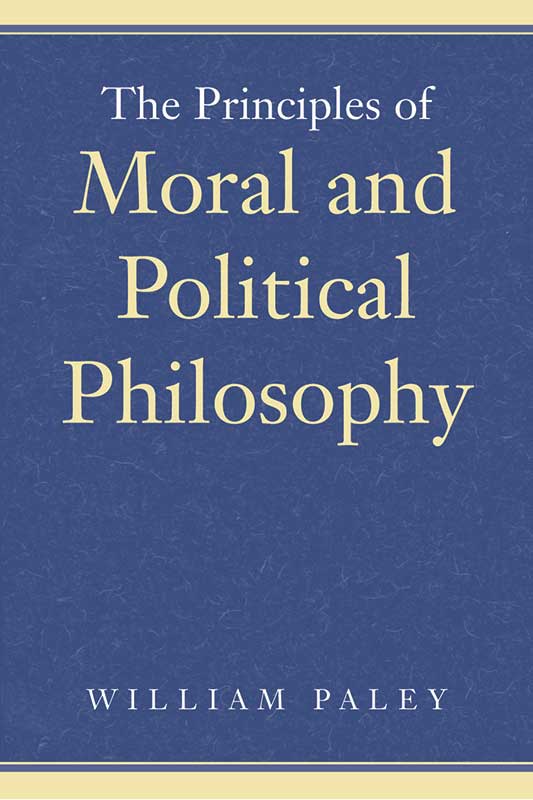
Chapter 2: Charity The Treatment of Our Domestics and Dependants - William Paley, The Principles of Moral and Political Philosophy [1785]

Edition used:

The Principles of Moral and Political Philosophy, Foreword by D.L. Le Mahieu (Indianapolis: Liberty Fund, 2002).

About Liberty Fund:

Liberty Fund, Inc. is a private, educational foundation established to encourage the study of the ideal of a society of free and responsible individuals.


Chapter 2

Charity

The Treatment of Our Domestics and Dependants

A party of friends setting out together upon a journey, soon find it to be the best for all sides, that while they are upon the road, one of the company should wait upon the rest; another ride forward to seek out lodging and entertainment; a third carry the portmanteau; a fourth take charge of the horses; a fifth bear the purse, conduct and direct the route; not forgetting, however, that, as they were equal and independent when they set out, so they are all to return to a level again at their journey’s end. The same regard and respect; the same forbearance, lenity, and reserve in using their service; the same mildness in delivering commands; the same study to make their journey comfortable and pleasant, which he whose lot it was to direct the rest, would in common decency think himself bound to observe towards them; ought we to show to those who, in the casting of the parts of human society, happen to be placed within our power, or to depend upon us.

Another reflection of a like tendency with the former is, that our obligation to them is much greater than theirs to us. It is a mistake to suppose, that the rich man maintains his servants, tradesmen, tenants, and labourers: the truth is, they maintain him. It is their industry which supplies his table, furnishes his wardrobe, builds his houses, adorns his equipage, provides his amusements. It is not the estate, but the labour employed upon it, that pays his rent. All that he does, is to distribute what others produce; which is the least part of the business.

Nor do I perceive any foundation for an opinion, which is often handed round in genteel company, that good usage is thrown away upon low and ordinary minds; that they are insensible of kindness, and incapable of gratitude. If by “low and ordinary minds” are meant the minds of men in low and ordinary stations, they seem to be affected by benefits in the same way that all others are, and to be no less ready to requite them: and it would be a very unaccountable law of nature if it were otherwise.

Whatever uneasiness we occasion to our domestics, which neither promotes our service, nor answers the just ends of punishment, is manifestly wrong; were it only upon the general principle of diminishing the sum of human happiness.

By which rule we are forbidden,

1. To enjoin unnecessary labour or confinement from the mere love and wantonness of domination.

2. To insult our servants by harsh, scornful, or opprobrious language.

3. To refuse them any harmless pleasures:

And, by the same principle, are also forbidden causeless or immoderate anger, habitual peevishness, and groundless suspicion.