Econlib

The Library

Other Sites

Front Page arrow Titles (by Subject) arrow Chapter 20: Oath Against Simony - The Principles of Moral and Political Philosophy

Return to Title Page for The Principles of Moral and Political Philosophy

Search this Title:

Also in the Library:

Subject Area: Political Theory
Subject Area: Philosophy
Collection: Books Published by Liberty Fund
Topic: Property
Order this book from Liberty Fund

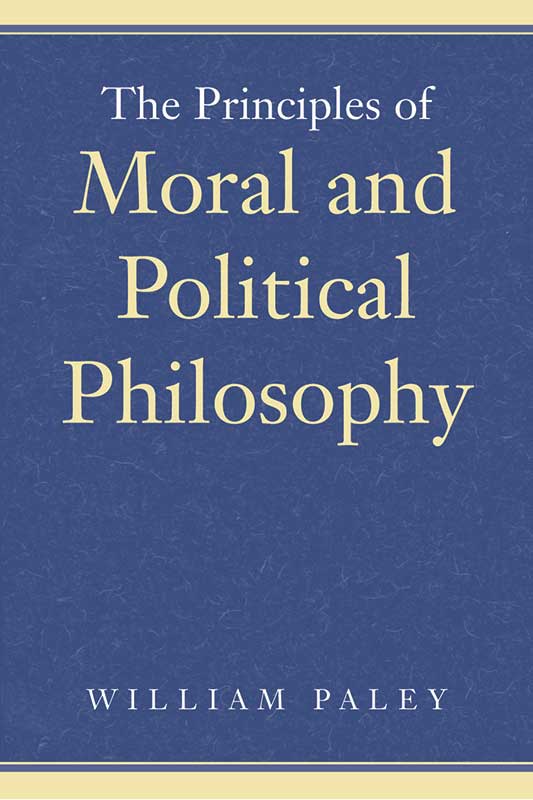
Chapter 20: Oath Against Simony - William Paley, The Principles of Moral and Political Philosophy [1785]

Edition used:

The Principles of Moral and Political Philosophy, Foreword by D.L. Le Mahieu (Indianapolis: Liberty Fund, 2002).

About Liberty Fund:

Liberty Fund, Inc. is a private, educational foundation established to encourage the study of the ideal of a society of free and responsible individuals.


Chapter 20

Oath Against Simony

From an imaginary resemblance between the purchase of a benefice, and Simon Magus’s attempt to purchase the gift of the Holy Ghost (Acts viii. 19), the obtaining of ecclesiastical preferment by pecuniary considerations has been termed Simony.

The sale of advowsons is inseparable from the allowance of private patronage; as patronage would otherwise devolve to the most indigent, and for that reason the most improper hands it could be placed in. Nor did the law ever intend to prohibit the passing of advowsons from one patron to another; but to restrain the patron, who possesses the right of presenting at the vacancy, from being influenced, in the choice of his presentee, by a bribe, or benefit to himself. It is the same distinction with that which obtains in a freeholder’s vote for his representative in parliament. The right of voting, that is, the freehold to which the right pertains, may be bought and sold as freely as any other property; but the exercise of that right, the vote itself, may not be purchased, or influenced by money.

For this purpose, the law imposes upon the presentee, who is generally concerned in the simony, if there be any, the following oath: “I do swear that I have made no simoniacal payment, contract, or promise, directly or indirectly, by myself, or by any other to my knowledge, or with my consent, to any person or persons whatsoever, for or concerning the procuring and obtaining of this ecclesiastical place, &c.; nor will, at any time hereafter, perform, or satisfy, any such kind of payment, contract, or promise, made by any other without my knowledge or consent: So help me God, through Jesus Christ!”

It is extraordinary that Bishop Gibson should have thought this oath to be against all promises whatsoever, when the terms of the oath expressly restrain it to simoniacal promises; and the law alone must pronounce what promises, as well as what payments and contracts, are simoniacal, and consequently come within the oath; and what do not so.

Now the law adjudges to be simony,

1. All payments, contracts, or promises, made by any person for a benefice already vacant. The advowson of a void turn, by law, cannot be transferred from one patron to another; therefore, if the void turn be procured by money, it must be by a pecuniary influence upon the then subsisting patron in the choice of his presentee, which is the very practice the law condemns.

2. A clergyman’s purchasing of the next turn of a benefice for himself, “directly or indirectly,” that is, by himself, or by another person with his money. It does not appear that the law prohibits a clergyman from purchasing the perpetuity of a patronage, more than any other person: but purchasing the perpetuity, and forthwith selling it again with a reservation of the next turn, and with no other design than to possess himself of the next turn, is in fraudem legis, and inconsistent with the oath.

3. The procuring of a piece of preferment, by ceding to the patron any rights, or probable rights, belonging to it. This is simony of the worst kind; for it is not only buying preferment, but robbing the succession to pay for it.

4. Promises to the patron of a portion of the profit, of a remission of tithes and dues, or other advantage out of the produce of the benefice; which kind of compact is a pernicious condescension in the clergy, independent of the oath; for it tends to introduce a practice, which may very soon become general, of giving the revenue of churches to the lay patrons, and supplying the duty by indigent stipendiaries.

5. General bonds of resignation, that is, bonds to resign upon demand.

I doubt not but that the oath against simony is binding upon the consciences of those who take it, though I question much the expediency of requiring it. It is very fit to debar public patrons, such as the king, the lord chancellor, bishops, ecclesiastical corporations, and the like, from this kind of traffic: because from them may be expected some regard to the qualifications of the persons whom they promote. But the oath lays a snare for the integrity of the clergy; and I do not perceive, that the requiring of it in cases of private patronage produces any good effect, sufficient to compensate for this danger.

Where advowsons are holden along with manors, or other principal estates, it would be an easy regulation to forbid that they should ever hereafter be separated; and would, at least, keep church preferment out of the hands of brokers.