Econlib

The Library

Other Sites

Front Page arrow Titles (by Subject) arrow Chapter 1: The Question Why Am I Obliged to Keep My Word? Considered - The Principles of Moral and Political Philosophy

Return to Title Page for The Principles of Moral and Political Philosophy

Search this Title:

Also in the Library:

Subject Area: Political Theory
Subject Area: Philosophy
Collection: Books Published by Liberty Fund
Topic: Property
Order this book from Liberty Fund

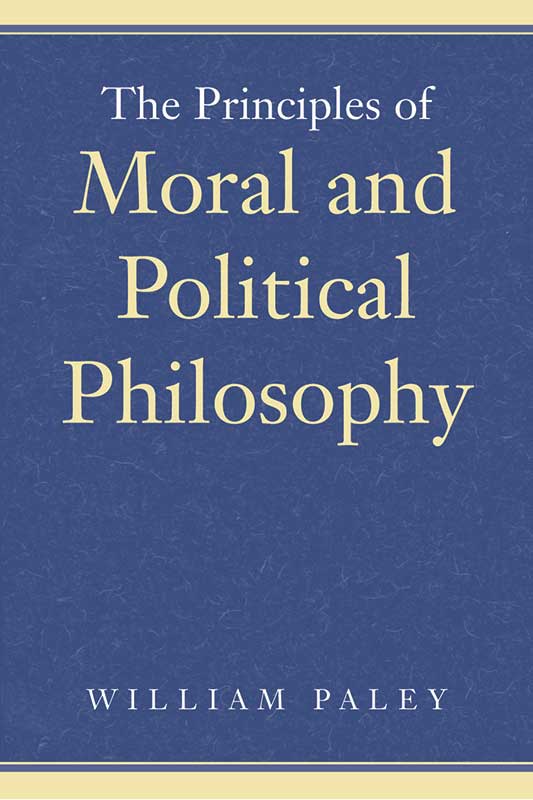
Chapter 1: The Question Why Am I Obliged to Keep My Word? Considered - William Paley, The Principles of Moral and Political Philosophy [1785]

Edition used:

The Principles of Moral and Political Philosophy, Foreword by D.L. Le Mahieu (Indianapolis: Liberty Fund, 2002).

About Liberty Fund:

Liberty Fund, Inc. is a private, educational foundation established to encourage the study of the ideal of a society of free and responsible individuals.


Chapter 1

The Question Why Am I Obliged to Keep My Word? Considered

Why am I obliged to keep my word?

Because it is right, says one. Because it is agreeable to the fitness of things, says another. Because it is conformable to reason and nature, says a third. Because it is conformable to truth, says a fourth. Because it promotes the public good, says a fifth. Because it is required by the will of God, concludes a sixth.

Upon which different accounts, two things are observable:

First, that they all ultimately coincide.

The fitness of things, means their fitness to produce happiness: the nature of things, means that actual constitution of the world, by which some things, as such and such actions, for example, produce happiness, and others misery; reason is the principle, by which we discover or judge of this constitution: truth is this judgement expressed or drawn out into propositions. So that it necessarily comes to pass, that what promotes the public happiness, or happiness on the whole, is agreeable to the fitness of things, to nature, to reason, and to truth: and such (as will appear by and by) is the Divine character, that what promotes the general happiness, is required by the will of God; and what has all the above properties, must needs be right; for, right means no more than conformity to the rule we go by, whatever that rule be.

And this is the reason that moralists, from whatever different principles they set out, commonly meet in their conclusions; that is, they enjoin the same conduct, prescribe the same rules of duty, and, with a few exceptions, deliver upon dubious cases the same determinations.

Secondly, it is to be observed, that these answers all leave the matter short; for the inquirer may turn round upon his teacher with a second question, in which he will expect to be satisfied, namely, Why am I obliged to do what is right; to act agreeably to the fitness of things; to conform to reason, nature, or truth; to promote the public good, or to obey the will of God?

The proper method of conducting the inquiry is, first, to examine what we mean, when we say a man is obliged to do any thing; and then to show why he is obliged to do the thing which we have proposed as an example, namely, “to keep his word.”