EconlibThe LibraryOther Sites |
Front Page Titles (by Subject) 54: [Division of the Connecticut General Assembly into Two Houses] - Colonial Origins of the American Constitution: A Documentary History
Return to Title Page for Colonial Origins of the American Constitution: A Documentary HistoryThe Online Library of LibertyA project of Liberty Fund, Inc.Search this Title:Also in the Library:
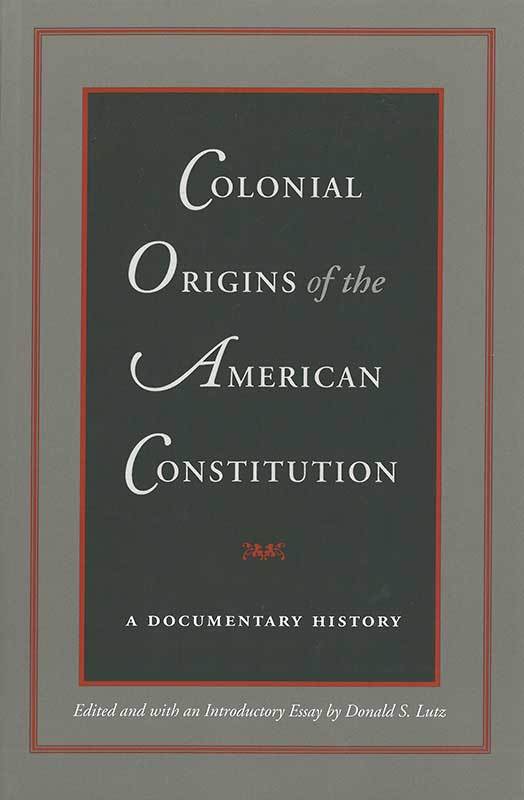
54: [Division of the Connecticut General Assembly into Two Houses] - Donald S. Lutz, Colonial Origins of the American Constitution: A Documentary History [1998]Edition used:Colonial Origins of the American Constitution: A Documentary History, ed. Donald S. Lutz (Indianapolis: Liberty Fund 1998).
About Liberty Fund:Liberty Fund, Inc. is a private, educational foundation established to encourage the study of the ideal of a society of free and responsible individuals. Copyright information:The copyright to this edition, in both print and electronic forms, is held by Liberty Fund, Inc. Fair use statement:This material is put online to further the educational goals of Liberty Fund, Inc. Unless otherwise stated in the Copyright Information section above, this material may be used freely for educational and academic purposes. It may not be used in any way for profit.
54[Division of the Connecticut General Assembly into Two Houses]Taken from Trumbull and Hoadly, Public Records of the Colony of Connecticut, vol. 4 (1850), 267. October 13, 1698 In this document Connecticut altered somewhat the joint government that had resulted from the 1662 charter. Because the charter was given by the king, there was a danger that such a unilateral amendment might be viewed as disloyalty. The colonists, therefore, were careful to reaffirm their allegiance to the king and to note that his charter permitted them to erect and conduct their own local government. The implicit but half-formed bicameralism found in the Fundamental Orders of Connecticut, 1639 [43] and New Haven Fundamentals, 1643 [50] is now explicitly and fully developed (see also Majority Vote of Deputies and Magistrates [51]). For bicameralism in other colonies, see the Massachusetts Bicameral Ordinance [24] and General Assembly of Rhode Island [41]. It is ordered by this court, and the authority thereof, that for the future its general assembly shall consist of two houses. The first shall consist of the governor, or, in his absence of the deputy-governor, and assistants, which shall be known by the name of the Upper House. The other shall consist of such deputies as shall be legally returned from the several towns within this colony to serve as members of this general assembly, which shall be known by the name of the Lower House wherein a speaker chosen by themselves shall preside. Which houses so formed shall have a distinct power to apoint all needful officers and to make such rules as they shall severally judge necessary for the regulating of themselves. And it is further ordered that no act shall be passed into a law of this colony, nor any law already enacted be repealed, nor any other act proper to this general assembly, but by the consent of both houses. 55[A Letter from Governor Richard Nicolls to the Inhabitants of Long Island]Taken from E. B. O’Callaghan, ed., Documents Relating to the Colonial History of the State of New York (Albany, 1883), 14: 564–65. The text is complete, with the spelling as found in O’Callaghan. February 1665 Colony-wide governments were often, but not always, built up from below through federations of already existing towns or colonies. William Penn organized his colony of Pennsylvania from above, as did Lord Calvert, in Maryland. Richard Nicolls was not a charter holder like Penn and Calvert but was instead a governor deputed by the charter holder, the Duke of York. Here he established a legislature for New York through the simple device of a letter. It is notable, however, that even the governors of Royal colonies instinctively felt the need to organize the population through elective bodies rather than govern them by edict. The legislature that eventually emerged from the complicated process initiated by this letter would a number of years later write a constitution for the colony (see Charter of Liberties and Privileges [56]). See also the discussion of Fundamentals of West New Jersey [57]. Whereas the Inhabitants of Long Island, have for a Long time groaned under many grievous inconveniences, and discouragements occasioned partly from their subjection, partly from their opposition to a forraigne Power, in which distracted condition, few or no Lawes could bee putt in due Execution, Bounds and Titles to Lands disputed, Civill Libertyes interrupted, and from this Generall Confusion, private dissentions and animosityes, have too much prevailed against Neighborly Love, and Christian Charity; To the preventing of the future growth of like Evils, his Majesty as a signall grace and honor to his subjects upon Long Island, hath at his owne charge reduc’t the forraigne Power to his obedience and by Pattent hath invested his Royall Highness the Duke of York with full and absolute Power, in and over all and every the Particular Tracts of Land therein mentioned, which said Powers by Comission from his Royall Highnesse the Duke of York, I am deputed to put in execution. In discharge therefore of my Trust and Duty, to Settle good and knowne Laws within this government for the future, and receive your best advice and Information in a General Meeting, I have thought fitt to Publish unto you, That upon the last day of this present February, at Hempsteed upon Long Island, shall be held a Generall Meeting, which is to consist of Deputyes chosen by the major part of the freemen only, which is to be understood of all Persons rated according to their Estates, whether English, or Dutch, within your severall Towns and precincts, whereof you are to make Publication to the Inhabitants, foure dayes before you proceed to an Election appointing a certain day to that purpose; You are futher to impart to the Inhabitants from mee, that I do heartily recommend to them the choice of the most sober, able and discreet persons, without partiality or faction, the fruite & benefitt whereof will return to themselves in a full and perfect settlement and composure of all controversyes, and the propagation of true Religion amongst us. They are also required to bring with them a Draught of each Towne Limits, or such writings as are necessary to evidence the Bounds and Limitts, as well as the right by which they challenge such Bounds and Limits, by Grant or Purchase, or both, as also to give notice of this meeting to Sachems of the Indyans, whose presence may in some cases bee accessary. Lastly I do require you to Assemble your Inhabitants and read this Letter to them, and then and there to nominate a day for the Election of two Deputyes from your Towne, who are to bring a certificate of their due election, (with full power to conclude any cause or matter relating to their serveral Townes) to mee at Hempsteed upon the last day of February, where (God willing) I shall expect them. |

Titles (by Subject)