Econlib

The Library

Other Sites

Front Page arrow Titles (by Subject) arrow 40: Charter of Providence - Colonial Origins of the American Constitution: A Documentary History

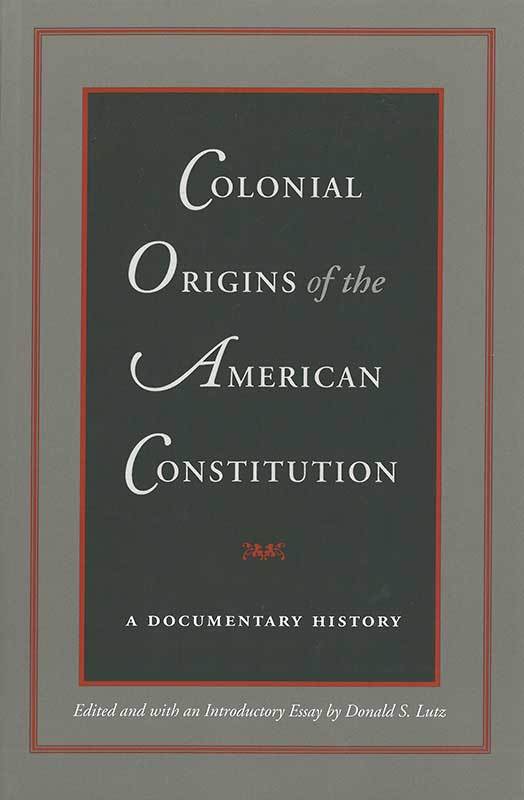
Return to Title Page for Colonial Origins of the American Constitution: A Documentary History

Search this Title:

40: Charter of Providence - Donald S. Lutz, Colonial Origins of the American Constitution: A Documentary History [1998]

Edition used:

Colonial Origins of the American Constitution: A Documentary History, ed. Donald S. Lutz (Indianapolis: Liberty Fund 1998).

About Liberty Fund:

Liberty Fund, Inc. is a private, educational foundation established to encourage the study of the ideal of a society of free and responsible individuals.


40

Charter of Providence

Taken from Bartlett, Vol. i, 1636 to 1663, 214–16. The text, with the original spelling, is complete.

This is not a true charter insofar as it does not proceed from the king. Rather it is typical of many early colonial documents because it proceeds from powers of self-government frequently granted in the original charters from England. It is one of the earliest examples of a town charter being granted from what we would today consider the state level—equivalent to the state of Texas granting Houston a city charter. Note the inhabitants are taking it upon themselves to act on their own and are careful to cite their authority to do so under the charter granted by the king, implying that the king is sanctioning this document. The colonists see a federal relationship between the king and colony and therefore have no difficulty imagining a federal relationship between the colony government and its town governments.

Charter of Providence

Whereas, by virtue of a free and absolute charter of civill incorporation, granted to the free inhabitants of the colonie of Providence, by the Right Honorable Robert, Earl of Warwick, Governor in chiefe with the rest of the Honorable Commoners, bearing the date the 7th day of March, Anno 1643, givinge and grantinge full power and authoritie vnto the said inhabitants to governe themselves and such others as shall come among them, as also to make, constitute and ordaine such lawes, orders and constitutions, and to inflict such punishments and penalties as is conformable to the lawes of England, so neare as the nature and constitution of the place will admit, and which may best suite the estate and condition thereof, and whereas the said towns of Providence, Portsmouth, Newport and Warwick are far remote from each other, whereby so often and free intercourse of help, in decidinge of differences and trying of causes and the like, cannot easilie and at all times be had and procured of that kind is requisite; therefore, upon the petition and humble request of the freemen of the Town of Providence, exhibited unto this present session of the General Assembly, wherein they desire freedome and libertie to incorporate themselves into a body politicke, and we, the said Assembly, having duly weighed and seriously considered the premises, and being willing and ready to provide for the ease and libertie of the people, have thought fit, and by the authoritie aforesaid, and by these presents, do give, grant and confirme unto the free Inhabitants of the towne of Providence, a free and absolute charter of civill incorporation and government, to be knowne by the Incorporation of Providence Plantation in the Narrangansett Bay, in New-England, together with full power and authoritie to governe and rule themselves, and such others as shall hereafter inhabit within any part of the said Plantation, by such a form of civill government, as by voluntarie consent of all, or the greater part of them, shall be found most suitable unto their estate and condition; and, to that end, to make and ordaine such civill orders and constitutions, to inflict such punishments upon transgressors, and for execution thereof, and of the common statute lawes of the colonye agreed unto, and the penalties and so many of them as are not annexed already unto the colonye court of trialls, so to place and displace officers of justice, as they or the greater parte of them shall, by one consent, agree unto. Provided, nevertheless, that the said lawes, constitutions and punishments, for the civill government of the said plantation, be conformable to the lawes of England, so far as the nature and constitution of the place will admit, yet, always reserving to the aforesaid General Assemblie power and authoritie so to dispose the generall governmente of that plantation as it stands in reference to the rest of the plantations, as they shall conceive, from time to time, most conducing to the generall good of the said plantations. And we the said Assemblie, do further authorise the aforesaid inhabitants to elect and engage such aforesaide officers upon the first second day of June, annually. And, moreover, we authorize the said inhabitants, for the better transacting of their publicke affaires, to make and use a publicke seal as the knowne seale of Providence Plantation, in the Narrangansett Bay, in New-England.

In testimonie whereof, we the said Generall Assemblie, have hereunto sett oure handes and seales the 14th of March, anno 1648.

John Warner

Clerk of the Assemblie.