Econlib

The Library

Other Sites

Front Page arrow Titles (by Subject) arrow 24: [Massachusetts Bicameral Ordinance] - Colonial Origins of the American Constitution: A Documentary History

Return to Title Page for Colonial Origins of the American Constitution: A Documentary History

Search this Title:

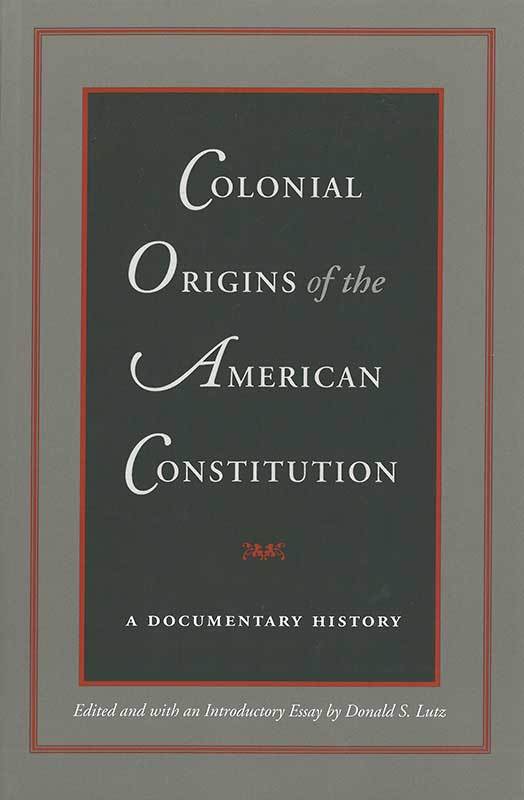
24: [Massachusetts Bicameral Ordinance] - Donald S. Lutz, Colonial Origins of the American Constitution: A Documentary History [1998]

Edition used:

Colonial Origins of the American Constitution: A Documentary History, ed. Donald S. Lutz (Indianapolis: Liberty Fund 1998).

About Liberty Fund:

Liberty Fund, Inc. is a private, educational foundation established to encourage the study of the ideal of a society of free and responsible individuals.


24

[Massachusetts Bicameral Ordinance]

Complete text with original spelling taken from Shurtleff, Massachusetts Colonial Records: Vol. ii, 58–59. Discussion of the historical context, as well as examples of related documents, can be found in Michael Kammen, Deputyes & Libertyes: The Origins of Representative Government in Colonial America (New York: Alfred A. Knopf, 1969).

It was not unusual for colonial legislatures to have two parts that together constituted the whole. One part elected by the towns (here the deputies) would elect the rest of the legislature (here termed the magistrates). Because the two parts sat together as the legislature, there was only an implicit bicameralism. The magistrates sat continuously to advise the governor, and only periodically would the deputies join them to form a sitting legislature. The Connecticut legislature was structured this way (see the Fundamental Orders of Connecticut, 1639 [43]), as was the Massachusetts legislature until this ordinance was passed in 1644. Here Massachusetts takes the next step and moves to two separate bodies. Note that the move to bicameralism rests on certain unspecified “inconveniences” as well as on the emulation of unspecified models rather than on theoretical principles. Americans would later develop a substantial theoretical justification for bicameralism—enhancing the pursuit of the common good through a more deliberative process as well as the preservation of liberty through separation of powers—but initially bicameralism had a practical, prudential grounding.

Forasmuch as, after long experience, wee find divers inconveniences in the manner of our proceeding in Courts by magistrates & deputies siting together, & accounting it wisdome to follow the laudable practice of other states who have layd groundworks for government & order in the issuing of business of greatest & highest consequence,—

It is therefore ordered, first, that the magistrates may sit & act busines by themselves, by drawing up bills & orders which they shall see good in their wisdome, which haveing agreed upon, they may present them to the deputies to bee considered of, how good & wholesome such orders are for the country, & accordingly to give their assent or dissent, the deputies in like manner siting apart by themselves, & consulting about such orders & lawes as they in their discretion & experience shall find meete for common good, which agreed upon by them they may present to the magistrates, who, according to their wisdome, haveing seriously considered of them, may consent unto them or disalow them; & when any orders have passed the approbation of both magistrates & deputies, then such orders to bee ingrossed, & in the last day of the Court to bee read deliberately, & full assent to bee given; provided, also, that all matters of judicature which this Court shall take cognisance of shal bee issued in like manner.