Econlib

The Library

Other Sites

Front Page arrow Titles (by Subject) arrow POINTS TO REMEMBER - Liberty, Order, and Justice: An Introduction to the Constitutional Principles of American Government

Return to Title Page for Liberty, Order, and Justice: An Introduction to the Constitutional Principles of American Government

POINTS TO REMEMBER - James McClellan, Liberty, Order, and Justice: An Introduction to the Constitutional Principles of American Government [1989]

Edition used:

Liberty, Order, and Justice: An Introduction to the Constitutional Principles of American Government (3rd ed.) (Indianapolis: Liberty Fund, 2000).

About Liberty Fund:

Liberty Fund, Inc. is a private, educational foundation established to encourage the study of the ideal of a society of free and responsible individuals.


POINTS TO REMEMBER

1. The initial task of the Constitutional Convention was to revise and improve the Articles of Confederation, not to write a new constitution.

2. The delegates were soon persuaded, however, that the Articles were fundamentally flawed and that a new constitution, based upon a separation of powers among three branches of the national government, and a division of powers between the national government and the States, was essential.

3. One of the major difficulties that the Framers confronted was reconciling the differences between the large States and the small States. This they accomplished by giving all of the States representation in the national government, while at the same time giving a substantial share of power to the large States.

4. The Framers of the Constitution were gentlemen of great learning and ability and religious conviction. The Convention was an unusual gathering of America’s greatest leaders of the day. They resolved their differences by careful reasoning and thoughtful deliberation, not by force or violence.

5. The form of government which the Framers sought to create was a republic, or more specifically an extended republic that was both democratic and federal.

6. The Virginia Plan, the first proposal for a new political system debated at the Convention, favored a strong national government. The delegates who opposed this scheme and wished to reserve most political power to the States rallied around the New Jersey Plan.

7. Under the “Connecticut Compromise,” the delegates satisfied the demands of both the small States and the large States on the crucial question of representation in Congress. The interests of the small States were protected by giving all of the States equal representation in the Senate, and those of the large States by establishing representation in the House of Representatives on population.

8. The delegates wanted a strong Chief Executive who was independent and not chosen by or subservient to the legislature. They also desired a judiciary independent of the executive, but subject to some control by the legislature.

9. The delegates also reached an agreement on questions pertaining to slavery. They agreed to allow Congress to prohibit the importation of slaves after 1808. They also allowed the States to include three-fifths of their slave population for purposes of establishing representation in the House of Representatives. This came to be known as the “Three-Fifths Compromise.” Under the fugitive slave clause, the new Constitution also provided that slaves who might escape from one State into another must be returned to their owners.

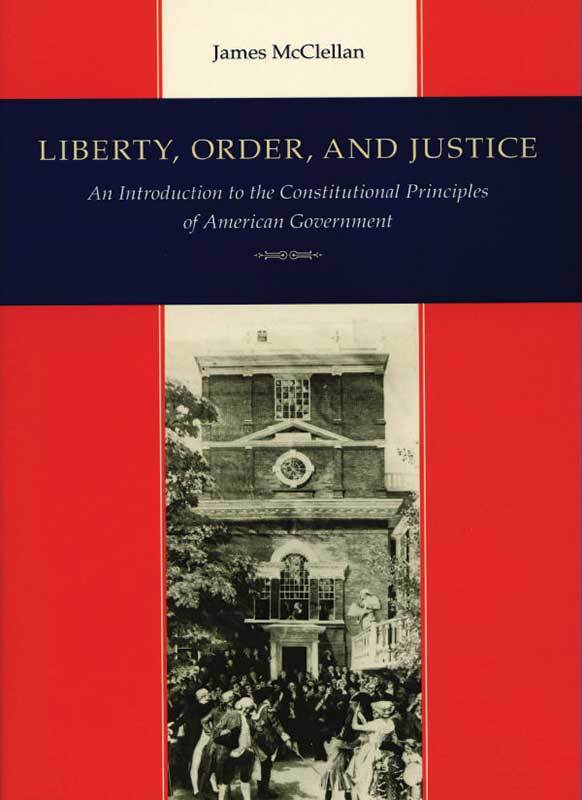
In the heart of Philadelphia stands a handsome two-story brick building with central tower, belfry, spire, and conspicuous exterior clocks. It was erected before 1735 as the State House of Pennsylvania. Today it is called Independence Hall.

Here, in 1776, the Declaration of Independence was signed. Here again, on May 25, 1787, twenty-nine gentlemen assembled to prepare a constitution for a nation. Some days later they were joined by twenty-six more delegates. Fifty-five delegates attended the Constitutional Convention in the summer of 1787, but for voting purposes the number of States represented during the Convention’s four months of debate never rose above eleven at any one time. None ever arrived from Rhode Island.

Great empires have crashed since that day in May, but the Constitution framed in Independence Hall endures. Related here is the story of what happened at that Pennsylvania State House during the summer of 1787.