EconlibThe LibraryOther Sites |
Front Page Titles (by Subject) Chapter i: A Declaration of the Rights of the Inhabitants of the Commonwealth of Massachusetts - Revolutionary Writings
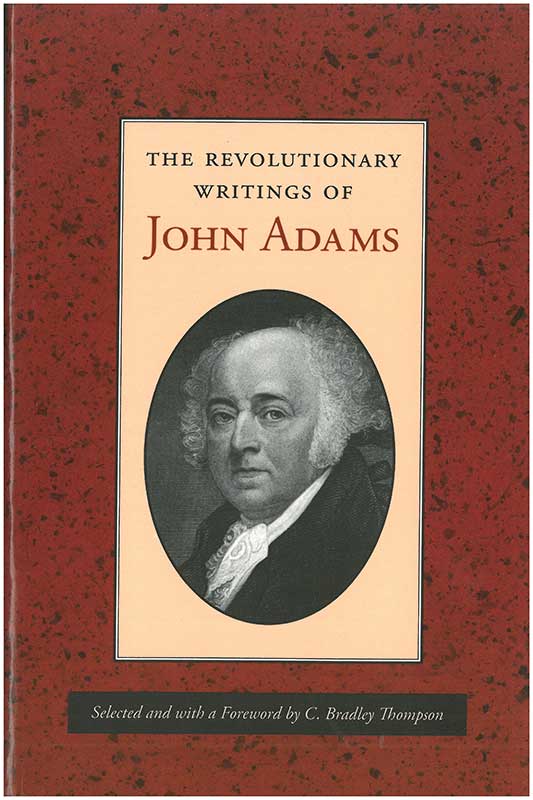
Return to Title Page for Revolutionary WritingsThe Online Library of LibertyA project of Liberty Fund, Inc.Search this Title:Also in the Library:Chapter i: A Declaration of the Rights of the Inhabitants of the Commonwealth of Massachusetts - John Adams, Revolutionary Writings [1763]Edition used:The Revolutionary Writings of John Adams, Selected and with a Foreword by C. Bradley Thompson (Indianapolis: Liberty Fund, 2000).
About Liberty Fund:Liberty Fund, Inc. is a private, educational foundation established to encourage the study of the ideal of a society of free and responsible individuals. Copyright information:The copyright to this edition, in both print and electronic forms, is held by Liberty Fund, Inc. Fair use statement:This material is put online to further the educational goals of Liberty Fund, Inc. Unless otherwise stated in the Copyright Information section above, this material may be used freely for educational and academic purposes. It may not be used in any way for profit.
Chapter iA Declaration of the Rights of the Inhabitants of the Commonwealth of MassachusettsArt. i.All men are born equally free and independent, and have certain natural, essential, and unalienable rights, among which may be reckoned the right of enjoying and defending their lives and liberties; that of acquiring, possessing, and protecting their property; in fine, that of seeking and obtaining their safety and happiness. ii. It is the duty of all men in society, publicly, and at stated seasons, to worship the Supreme Being, the great Creator and Preserver of the universe. And no subject shall be hurt, molested, or restrained, in his person, liberty, or estate, for worshipping God in the manner most agreeable to the dictates of his own conscience; or, for his religious profession or sentiments; provided he doth not disturb the public peace, or obstruct others in their religious worship. iii. Good morals being necessary to the preservation of civil society; and the knowledge and belief of the being of God, His providential government of the world, and of a future state of rewards and punishment, being the only true foundation of morality, the legislature hath, therefore, a right, and ought to provide, at the expense of the subject, if necessary, a suitable support for the public worship of God, and of the teachers of religion and morals; and to enjoin upon all the subjects an attendance upon their instructions at stated times and seasons; provided there be any such teacher on whose ministry they can conscientiously and conveniently attend. All moneys paid by the subject to the support of public worship, and of the instructors in religion and morals, shall, if he require it, be uniformly applied to the support of the teacher or teachers of his own religious denomination, if there be such whose ministry he attends upon; otherwise it may be paid to the teacher or teachers of the parish or precinct where he usually resides. iv. The people of this commonwealth have the sole and exclusive right of governing themselves, as a free, sovereign, and independent state; and do, and forever hereafter shall, exercise and enjoy every power, jurisdiction, and right, which are not, or may not hereafter be by them expressly delegated to the United States of America, in congress assembled. v. All power residing originally in the people, and being derived from them, the several magistrates and officers of government, vested with authority, whether legislative, executive, or judicial, are their substitutes and agents, and are at all times accountable to them. vi. No man, nor corporation or association of men, have any other title to obtain advantages, or particular and exclusive privileges, distinct from those of the community, than what arises from the consideration of services rendered to the public; and this title, being in nature neither hereditary nor transmissible to children, or descendants, or relations by blood, the idea of a man born a magistrate, lawgiver, or judge, is absurd and unnatural. vii. Government is instituted for the common good; for the protection, safety, prosperity, and happiness of the people; and not for the profit, honor, or private interest of any one man, family, or class of men; therefore, the people alone have an incontestable, unalienable, and indefeasible right to institute government; and to reform, alter, or totally change the same, when their protection, safety, prosperity, and happiness require it. viii. In order to prevent those who are vested with authority from becoming oppressors, the people have a right, at such periods and in such manner as may be delineated in their frame of government, to cause their public officers to return to private life, and to fill up vacant places by certain and regular elections. ix. All elections ought to be free; and all the male inhabitants of this commonwealth, having sufficient qualifications, have an equal right to elect officers, and to be elected, for public employments. x. Each individual of the society has a right to be protected by it in the enjoyment of his life, liberty, and property, according to standing laws. He is obliged, consequently, to contribute his share to the expense of this protection; and to give his personal service, or an equivalent, when necessary. But no part of the property of any individual can, with justice, be taken from him, or applied to public uses, without his own consent, or that of the representative body of the people. In fine, the people of this commonwealth are not controllable by any other laws than those to which their constitutional representative body have given their consent. xi. Every subject of the commonwealth ought to find a certain remedy, by having recourse to the laws, for all injuries or wrongs which he may receive in his person, property, or character. He ought to obtain right and justice freely, and without being obliged to purchase it; completely, and without any denial; promptly, and without delay, conformably to the laws. xii. No subject shall be held to answer for any crime or offence, until the same is fully and plainly, substantially and formally described to him. He cannot be compelled to accuse himself, or to furnish evidence against himself; and every subject shall have a right to be fully heard in his defence, by himself or his counsel at his election; to meet the witnesses against him face to face; to produce all proofs that may be favorable to him; to require a speedy and public trial by an impartial jury of the country, without whose unanimous consent, or his own voluntary confession, he cannot finally be declared guilty, or sentenced to loss of life, liberty, or property. xiii. In criminal prosecutions, the verification of facts in the vicinity where they happen, is one of the greatest securities of the life, liberty, and property of the citizen. xiv. No subject of the commonwealth shall be arrested, imprisoned, despoiled, or deprived of his property, immunities, or privileges, put out of the protection of the law, exiled, or deprived of his life, liberty, or estate, but by the judgment of his peers, or the law of the land. xv. Every man has a right to be secure from all unreasonable searches and seizures of his person, his houses, his papers, and all his possessions. All warrants, therefore, are contrary to this right, if the cause or foundation of them be not previously supported by oath or affirmation, and if the order in the warrant to a civil officer, to make search in suspected places, or to arrest one or more suspected persons, or to seize their property, be not accompanied with a special designation of the persons or objects of search, arrest, or seizure; and no warrant ought to be issued but in cases and with the formalities prescribed by the laws. xvi. In all controversies concerning property, and in all suits between two or more persons, the parties have a right to a trial by a jury; and this method of procedure shall be held sacred; unless in causes arising on the high seas, and such as relate to mariners’ wages, the legislature shall hereafter find it necessary to alter it. xvii. The people have a right to the freedom of speaking, writing, and publishing their sentiments. The liberty of the press, therefore, ought not to be restrained. xviii. The people have a right to keep and to bear arms for the common defence. And as in time of peace standing armies are dangerous to liberty, they ought not to be maintained without the consent of the legislature; and the military power shall always be held in an exact subordination to the civil authority, and be governed by it. xix. A frequent recurrence to the fundamental principles of the constitution, and a constant adherence to those of piety, justice, moderation, temperance, industry, and frugality, are absolutely necessary to preserve the advantages of liberty, and to maintain a free government. The people ought, consequently, to have a particular attention to all those principles, in the choice of their officers and representatives. And they have a right to require of their lawgivers and magistrates an exact and constant observance of them, in the formation and execution of the laws necessary for the good administration of the commonwealth. xx. The people have a right, in an orderly and peaceable manner, to assemble to consult upon the common good, give instructions to their representatives, and to request of the legislative body, by the way of addresses, petitions, or remonstrances, redress of the wrongs done them, and the grievances they suffer. xxi. The power of suspending the laws, or the execution of the laws, ought never to be exercised but by the legislature, or by authority derived from it, to be exercised in such particular cases only as the legislature shall expressly provide for; and there shall be no suspension of any law for the private interest, advantage, or emolument, of any one man, or class of men. xxii. The freedom of deliberation, speech, and debate, in either house of the legislature, is so essential to the rights of the people, that it cannot be the foundation of any accusation or prosecution, action or complaint, in any other court or place whatsoever. xxiii.The legislature ought frequently to assemble for the redress of grievances, for correcting, strengthening, and confirming the laws, and for making new laws as the common good may require. xxiv. No subsidy, charge, tax, impost, or duties ought to be established, fixed, laid, or levied, under any pretext whatsoever, without the consent of the people, or their representatives in the legislature. xxv. Laws made to punish for actions done before the existence of such laws, and which have not been declared crimes by preceding laws, are unjust, oppressive, and inconsistent with the fundamental principles of a free government. xxvi. No man ought in any case, or in any time, to be declared guilty of treason or felony by any act of the legislature. xxvii. No magistrate or court of law shall demand excessive bail, or sureties, impose excessive fines, or inflict cruel or unusual punishments. xxviii. In time of peace, no soldier ought to be quartered in any house without the consent of the owner; and in time of war, such quarters ought not to be made, but by the civil magistrate in a manner ordained by the legislature. xxix. No person can in any case be subjected to law martial, or to any penalties or pains by virtue of that law, except those employed in the army or navy, and except the militia in actual service, but by authority of the legislature. xxx. It is essential to the preservation of the rights of every individual, his life, liberty, property, and character, that there be an impartial interpretation of the laws, and administration of justice. It is the right of every citizen to be tried by judges as free, impartial, and independent as the lot of humanity will admit. It is, therefore, not only the best policy, but for the security of the rights of the people and of every citizen, that the judges should hold their offices as long as they behave themselves well, and that they should have honorable salaries ascertained and established by standing laws. xxxi. The judicial department of the state ought to be separate from, and independent of, the legislative and executive powers. |

Titles (by Subject)