EconlibThe LibraryOther Sites |
Front Page Titles (by Subject) No. xii - Revolutionary Writings
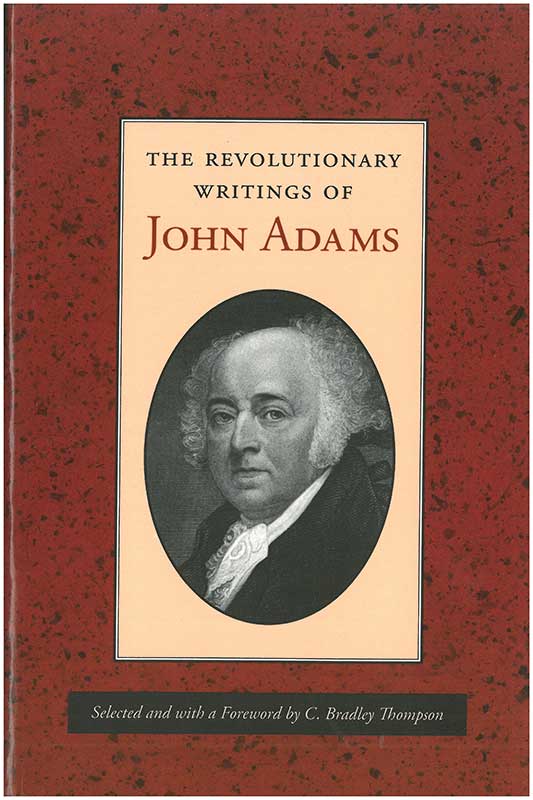
Return to Title Page for Revolutionary WritingsThe Online Library of LibertyA project of Liberty Fund, Inc.Search this Title:Also in the Library:No. xii - John Adams, Revolutionary Writings [1763]Edition used:The Revolutionary Writings of John Adams, Selected and with a Foreword by C. Bradley Thompson (Indianapolis: Liberty Fund, 2000).
About Liberty Fund:Liberty Fund, Inc. is a private, educational foundation established to encourage the study of the ideal of a society of free and responsible individuals. Copyright information:The copyright to this edition, in both print and electronic forms, is held by Liberty Fund, Inc. Fair use statement:This material is put online to further the educational goals of Liberty Fund, Inc. Unless otherwise stated in the Copyright Information section above, this material may be used freely for educational and academic purposes. It may not be used in any way for profit.
No. xiiWe now come to Jersey and Guernsey, which Massachusettensis says, “are no part of the realm of England, nor are they represented in parliament, but are subject to its authority.” A little knowledge of this subject will do us no harm; and, as soon as we shall acquire it, we shall be satisfied how these islands came to be subject to the authority of parliament. It is either upon the principle that the king is absolute there, and has a right to make laws for them by his mere will, and, therefore, may express his will by an act of parliament, or an edict, at his pleasure; or it is an usurpation. If it is an usurpation, it ought not to be a precedent for the colonies; but it ought to be reformed, and they ought to be incorporated into the realm by act of parliament and their own act. Their situation is no objection to this. Ours is an insurmountable obstacle. Thus, we see, that in every instance which can be found, the observation proves to be true, that, by the common law, the laws of England, the authority of parliament, and the limits of the realm, were confined within seas. That the kings of England had frequently foreign dominions, some by conquest, some by marriage, and some by descent. But, in all those cases, the kings were either absolute in those dominions, or bound to govern them according to their own respective laws, and by their own legislative and executive councils. That the laws of England did not extend there, and the English parliament pretended no jurisdiction there, nor claimed any right to control the king in his government of those dominions. And, from this extensive survey of all the foregoing cases, there results a confirmation of what has been so often said, that there is no provision in the common law, in English precedents, in the English government or constitution, made for the case of the colonies. It is not a conquered, but a discovered country. It came not to the king by descent, but was explored by the settlers. It came not by marriage to the king, but was purchased by the settlers of the savages. It was not granted by the king of his grace, but was dearly, very dearly earned by the planters, in the labor, blood, and treasure which they expended to subdue it to cultivation. It stands upon no grounds, then, of law or policy, but what are found in the law of nature, and their express contracts in their charters, and their implied contracts in the commissions to governors and terms of settlement. The cases of Chester and Durham, counties palatine within the realm, shall conclude this fatiguing ramble. Chester was an earldom and a county; and in the 21st year of King Richard II. 1397, it was, by an act of parliament, erected into a principality, and several castles and towns were annexed to it, saving to the king the rights of his crown. This was a county palatine, and had jura regalia before this erection of it into a principality. But the statute which made it a principality, was again repealed by 1 Henry IV. c. 3, and in 1399, by the 1 Henry IV. c. 18. Grievous complaints were made to the king, in parliament, of murders, manslaughters, robberies, batteries, riots, &c. done by people of the county of Chester in divers counties of England. For remedy of which it is enacted, “that if any person of the county of Chester commit any murder or felony in any place out of that county, process shall be made against him by the common law, till the exigent, in the county where such murder or felony was done; and if he flee into the county of Chester, and be outlawed and put in exigent for such murder or felony, the same outlawry or exigent shall be certified to the officers and ministers of the same county of Chester, and the same felon shall be taken, his lands and goods within that county shall be seized as forfeit into the hands of the prince, or of him that shall be lord of the same county of Chester for the time, and the king shall have the year and day, and the waste; and the other lands and goods of such felon, out of said county, shall remain wholly to the king, &c. as forfeit.” And a similar provision, in case of battery or trespass, &c. Considering the great seal of England and the process of the king’s courts did not run into Chester, it was natural that malefactors should take refuge there, and escape punishment, and, therefore, a statute like this was of indispensable necessity; and, afterwards, in 1535, another statute was made, 27 Henry VIII. c. 5, for the making of justices of the peace within Chester, &c. It recites, “the king, considering the manifold robberies, murders, thefts, trespasses, riots, routs, embraceries, maintenances, oppressions, ruptures of his peace, &c., which have been daily done within his county palatine of Chester, &c., by reason that common justice hath not been indifferently ministered there, like and in such form as it is in other places of this his realm, by reason whereof the said crimes have remained unpunished; for redress whereof, and to the intent that one order of law should be had, the king is empowered to constitute justices of peace, quorum, and gaol delivery in Chester,” &c. By the 32 Henry VIII. c. 43, another act was made concerning the county palatine of Chester, for shire days. These three acts soon excited discontent in Chester. They had enjoyed an exemption from the king’s English courts, legislative and executive, and they had no representatives in the English parliament, and, therefore, they thought it a violation of their rights, to be subjected even to those three statutes, as reasonable and absolutely necessary as they appear to have been. And, accordingly, we find, in 1542, 34 and 35 Henry VIII. c. 13, a zealous petition to be represented in parliament, and an act was made for making of knights and burgesses within the county and city of Chester. It recites a part of the petition to the king, from the inhabitants of Chester, stating, “that the county palatine had been excluded from parliament, to have any knights and burgesses there; by reason whereof, the said inhabitants have hitherto sustained manifold disherisons, losses, and damages, as well in their lands, goods, and bodies, as in the good civil and politic governance and maintenance of the commonwealth of their said country; and, forasmuch as the said inhabitants have always hitherto been bound by the acts and statutes, made by your highness and progenitors in said court,” (meaning when expressly named, not otherwise,) “as far forth as other counties, cities, and boroughs, which have had knights and burgesses, and yet have had neither knight nor burgess there, for the said county palatine; the said inhabitants, for lack thereof, have been oftentimes touched and grieved with acts and statutes made within the said court, as well derogatory unto the most ancient jurisdictions, liberties, and privileges of your said county palatine, as prejudicial unto the common weal, quietness, rest, and peace of your subjects, &c.” For remedy whereof, two knights of the shire and two burgesses for the city are established. I have before recited all the acts of parliament which were ever made to meddle with Chester, except the 51 Henry III. stat. 5, in 1266, which only provides that the justices of Chester and other bailiffs shall be answerable in the exchequer, for wards, escheats, and other bailiwicks; yet Chester was never severed from the crown or realm of England, nor ever expressly exempted from the authority of parliament; yet, as they had generally enjoyed an exemption from the exercise of the authority of parliament, we see how soon they complain of it as grievous, and claim a representation as a right; and we see how readily it was granted. America, on the contrary, is not in the realm; never was subject to the authority of parliament by any principle of law; is so far from Great Britain that she never can be represented; yet, she is to be bound in all cases whatsoever! The first statute which appears in which Durham is named, is 27 Henry VIII. c. 24, § 21; Cuthbert, Bishop of Durham, and his successors, and their temporal chancellor of the county palatine of Durham, are made justices of the peace. The next is 31 Elizabeth, c. 9, and recites, that “Durham is, and of long time hath been, an ancient county palatine, in which the Queen’s writ hath not, nor yet doth run.” It enacts that a writ of proclamation upon an exigent against any person dwelling in the bishopric shall run there for the future. And § 5 confirms all the other liberties of the bishop and his officers. And after this, we find no other mention of that bishopric in any statute until 25 Charles II. c. 9. This statute recites, “whereas, the inhabitants of the county palatine of Durham have not hitherto had the liberty and privilege of electing and sending any knights and burgesses to the high court of parliament, although the inhabitants of the said county palatine are liable to all payments, rates, and subsidies granted by parliament, equally with the inhabitants of other counties, cities, and boroughs, in this kingdom, who have their knights and burgesses in the parliament, and are therefore concerned equally with others, the inhabitants of this kingdom, to have knights and burgesses in the said high court of parliament, of their own election, to represent the condition of their county, as the inhabitants of other counties, cities, and boroughs of this kingdom have.” It enacts two knights for the county, and two burgesses for the city. Here, it should be observed, that, although they acknowledge that they had been liable to all rates, &c. granted by parliament, yet none had actually been laid upon them before this statute. Massachusettensis then comes to the first charter of this province; and he tells us, that in it we shall find irresistible evidence, that our being a part of the empire, subject to the supreme authority of the state, bound by its laws, and subject to its protection, were the very terms and conditions by which our ancestors held their lands and settled the province. This is roundly and warmly said, but there is more zeal in it than knowledge. As to our being part of the empire, it could not be the British empire, as it is called, because that was not then in being, but was created seventy or eighty years afterwards. It must be the English empire, then; but the nation was not then polite enough to have introduced into the language of the law, or common parlance, any such phrase or idea. Rome never introduced the terms Roman empire until the tragedy of her freedom was completed. Before that, it was only the republic or the city. In the same manner, the realm, or the kingdom, or the dominions of the king, were the fashionable style in the age of the first charter. As to being subject to the supreme authority of the state, the prince who granted that charter thought it resided in himself, without any such troublesome tumults as lords and commons; and before the granting that charter, had dissolved his parliament, and determined never to call another, but to govern without. It is not very likely, then, that he intended our ancestors should be governed by parliament, or bound by its laws. As to being subject to its protection, we may guess what ideas king and parliament had of that, by the protection they actually afforded to our ancestors. Not one farthing was ever voted or given by the king or his parliament, or any one resolution taken about them. As to holding their lands, surely they did not hold their lands of lords and commons. If they agreed to hold their lands of the king, this did not subject them to English lords and commons, any more than the inhabitants of Scotland, holding their lands of the same king, subjected them. But there is not a word about the empire, the supreme authority of the state, being bound by its laws, or obliged for its protection in that whole charter. But “our charter is in the royal style.” What then? Is that the parliamentary style? The style is this: “Charles, by the grace of God, King of England, Scotland, France, and Ireland, Defender of the Faith,” &c. Now, in which capacity did he grant that charter; as King of France, or Ireland, or Scotland, or England? He governed England by one parliament, Scotland by another. Which parliament were we to be governed by? And Ireland by a third; and it might as well be reasoned, that America was to be governed by the Irish parliament, as by the English. But it was granted “under the great seal of England.” True; but this seal runneth not out of the realm, except to mandatory writs, and when our charter was given, it was never intended to go out of the realm. The charter and the corporation were intended to abide and remain within the realm, and be like other corporations there. But this affair of the seal is a mere piece of imposition. In Moore’s Reports, in the case of the union of the realm of Scotland with England, it is resolved by the judges, that “the seal is alterable by the king at his pleasure, and he might make one seal for both kingdoms (of England and Scotland); for seals, coin, and leagues, are of absolute prerogative to the king without parliament, not restrained to any assent of the people;” and in determining how far the great seal doth command out of England, they made this distinction: “That the great seal was current for remedials, which groweth on complaint of the subject, and thereupon writs are addressed under the great seal of England; which writs are limited, their precinct to be within the places of the jurisdiction of the court that was to give the redress of the wrong. And therefore writs are not to go into Ireland, or the Isles, nor Wales, nor the counties palatine, because the king’s courts here have not power to hold pleas of lands or things there. But the great seal hath a power preceptory to the person, which power extendeth to any place where the person may be found,” &c. This authority plainly shows, that the great seal of England has no more authority out of the realm, except to mandatory or preceptory writs, (and surely the first charter was no preceptory writ,) than the privy seal, or the great seal of Scotland, or no seal at all. In truth, the seal and charter were intended to remain within the realm, and be of force to a corporation there; but the moment it was transferred to New England, it lost all its legal force, by the common law of England; and as this translation of it was acquiesced in by all parties, it might well be considered as good evidence of a contract between the parties, and in no other light; but not a whit the better or stronger for being under the great seal of England. But “the grants are made by the king, for his heirs and successors.” What then? So the Scots held their lands of him who was then king of England, his heirs and successors, and were bound to allegiance to him, his heirs and successors; but it did not follow from thence that the Scots were subject to the English parliament. So the inhabitants of Aquitain, for ten descents, held their lands, and were tied by allegiance to him who was king of England, his heirs and successors, but were under no subjection to English lords and commons. Heirs and successors of the king are supposed to be the same persons, and are used as synonymous words in the English law. There is no positive artificial provision made by our laws, or the British constitution, for revolutions. All our positive laws suppose that the royal office will descend to the eldest branch of the male line, or, in default of that, to the eldest female, &c., forever, and that the succession will not be broken. It is true that nature, necessity, and the great principles of self-preservation, have often overruled the succession. But this was done without any positive instruction of law. Therefore, the grants being by the king, for his heirs and successors, and the tenures being of the king, his heirs and successors, and the reservation being to the king, his heirs and successors, are so far from proving that we were to be part of an empire, as one state, subject to the supreme authority of the English or British state, and subject to its protection, that they do not so much as prove that we are annexed to the English crown. And all the subtilty of the writers on the side of the ministry, has never yet proved that America is so much as annexed to the crown, much less to the realm. “It is apparent the king acted in his royal capacity, as king of England.” This I deny. The laws of England gave him no authority to grant any territory out of the realm. Besides, there is no color for his thinking that he acted in that capacity, but his using the great seal of England; but if the king is absolute in the affair of the seal, and may make or use any seal that he pleases, his using that seal which had been commonly used in England is no certain proof that he acted as king of England; for it is plain he might have used the English seal in the government of Scotland, and in that case it will not be pretended that he would have acted in his royal capacity as king of England. But his acting as king of England “necessarily supposes the territory granted to be a part of the English dominions, and holden of the crown of England.” Here is the word “dominions” systematically introduced instead of the word “realm.” There was no English dominions but the realm. And I say, that America was not any part of the English realm or dominions. And therefore, when the king granted it, he could not act as king of England, by the laws of England. As to the “territory being holden of the crown, there is no such thing in nature or art.” Lands are holden according to the original notices of feuds, of the natural person of the lord. Holding lands, in feudal language, means no more than the relation between lord and tenant. The reciprocal duties of these are all personal. Homage, fealty, &c., and all other services, are personal to the lord; protection, &c. is personal to the tenant. And therefore no homage, fealty, or other services, can ever be rendered to the body politic, the political capacity, which is not corporated, but only a frame in the mind, an idea. No lands here, or in England, are held of the crown, meaning by it the political capacity; they are all held of the royal person, the natural person of the king. Holding lands, &c. of the crown, is an impropriety of expression; but it is often used; and when it is, it can have no other sensible meaning than this, that we hold lands of that person, whoever he is, who wears the crown; the law supposes he will be a right, natural heir of the present king forever. Massachusettensis then produces a quotation from the first charter, to prove several points. It is needless to repeat the whole; but the parts chiefly relied on are italicized. It makes the company a body politic in fact and name, &c., and enables it “to sue and be sued.” Then the writer asks, “whether this looks like a distinct state or independent empire?” I answer, no. And that it is plain and uncontroverted, that the first charter was intended only to erect a corporation within the realm; and the governor and company were to reside within the realm; and their general courts were to be held there. Their agents, deputies, and servants only were to come to America. And if this had taken place, nobody ever doubted but they would have been subject to parliament. But this intention was not regarded on either side; and the company came over to America, and brought their charter with them. And as soon as they arrived here, they got out of the English realm, dominions, state, empire, call it by what name you will, and out of the legal jurisdiction of parliament. The king might, by his writ or proclamation, have commanded them to return; but he did not. 9Thoughts on Government:In late 1775, John Adams assumed a leading role in the Continental Congress to encourage the thirteen colonies to begin designing and constructing new governments. The following May, Congress passed a resolution recommending to the various colonial assemblies that they establish new governments that would “best conduce to the happiness and Safety of their Constituents in particular and America in General.” Considered by many as the one person who had thought most deeply about constitutional design, Adams was frequently called upon to recommend various plans of government. Just prior to the May resolution, several members of the Continental Congress approached him for advice on how to frame new constitutions for their respective states. Adams responded to their requests with his most influential writing of the Revolutionary period, Thoughts on Government. Adams also wrote the Thoughts as an antidote to the political prescriptions advanced in Thomas Paine’s recently published Common Sense. This short essay stands as a distillation of Adams’s most advanced political thinking. The principles that he would later put forth in his great treatise, A Defence of the Constitutions of Government of the United States of America, are all found in Thoughts: republican government, frequent elections, separation of powers, bicameralism, a unitary executive armed with a strong veto power, and an independent judiciary. The influence of Thoughts on Government on American constitution-makers was widespread. The historical evidence strongly suggests that Thoughts was used as a constitutional blueprint in North Carolina, Virginia, New Jersey, New York, and Massachusetts. Applicable to the Present State of the American ColoniesMy dear Sir,—If I was equal to the task of forming a plan for the government of a colony, I should be flattered with your request, and very happy to comply with it; because, as the divine science of politics is the science of social happiness, and the blessings of society depend entirely on the constitutions of government, which are generally institutions that last for many generations, there can be no employment more agreeable to a benevolent mind than a research after the best. Pope flattered tyrants too much when he said,
Nothing can be more fallacious than this. But poets read history to collect flowers, not fruits; they attend to fanciful images, not the effects of social institutions. Nothing is more certain, from the history of nations and nature of man, than that some forms of government are better fitted for being well administered than others. We ought to consider what is the end of government, before we determine which is the best form. Upon this point all speculative politicians will agree, that the happiness of society is the end of government, as all divines and moral philosophers will agree that the happiness of the individual is the end of man. From this principle it will follow, that the form of government which communicates ease, comfort, security, or, in one word, happiness, to the greatest number of persons, and in the greatest degree, is the best. All sober inquirers after truth, ancient and modern, pagan and Christian, have declared that the happiness of man, as well as his dignity, consists in virtue. Confucius, Zoroaster, Socrates, Mahomet, not to mention authorities really sacred, have agreed in this. If there is a form of government, then, whose principle and foundation is virtue, will not every sober man acknowledge it better calculated to promote the general happiness than any other form? Fear is the foundation of most governments; but it is so sordid and brutal a passion, and renders men in whose breasts it predominates so stupid and miserable, that Americans will not be likely to approve of any political institution which is founded on it. Honor is truly sacred, but holds a lower rank in the scale of moral excellence than virtue. Indeed, the former is but a part of the latter, and consequently has not equal pretensions to support a frame of government productive of human happiness. The foundation of every government is some principle or passion in the minds of the people. The noblest principles and most generous affections in our nature, then, have the fairest chance to support the noblest and most generous models of government. A man must be indifferent to the sneers of modern Englishmen, to mention in their company the names of Sidney, Harrington, Locke, Milton, Nedham, Neville, Burnet, and Hoadly. No small fortitude is necessary to confess that one has read them. The wretched condition of this country, however, for ten or fifteen years past, has frequently reminded me of their principles and reasonings. They will convince any candid mind, that there is no good government but what is republican. That the only valuable part of the British constitution is so; because the very definition of a republic is “an empire of laws, and not of men.” That, as a republic is the best of governments, so that particular arrangement of the powers of society, or, in other words, that form of government which is best contrived to secure an impartial and exact execution of the laws, is the best of republics. Of republics there is an inexhaustible variety, because the possible combinations of the powers of society are capable of innumerable variations. As good government is an empire of laws, how shall your laws be made? In a large society, inhabiting an extensive country, it is impossible that the whole should assemble to make laws. The first necessary step, then, is to depute power from the many to a few of the most wise and good. But by what rules shall you choose your representatives? Agree upon the number and qualifications of persons who shall have the benefit of choosing, or annex this privilege to the inhabitants of a certain extent of ground. The principal difficulty lies, and the greatest care should be employed, in constituting this representative assembly. It should be in miniature an exact portrait of the people at large. It should think, feel, reason, and act like them. That it may be the interest of this assembly to do strict justice at all times, it should be an equal representation, or, in other words, equal interests among the people should have equal interests in it. Great care should be taken to effect this, and to prevent unfair, partial, and corrupt elections. Such regulations, however, may be better made in times of greater tranquillity than the present; and they will spring up themselves naturally, when all the powers of government come to be in the hands of the people’s friends. At present, it will be safest to proceed in all established modes, to which the people have been familiarized by habit. A representation of the people in one assembly being obtained, a question arises, whether all the powers of government, legislative, executive, and judicial, shall be left in this body? I think a people cannot be long free, nor ever happy, whose government is in one assembly. My reasons for this opinion are as follow:— 1. A single assembly is liable to all the vices, follies, and frailties of an individual; subject to fits of humor, starts of passion, flights of enthusiasm, partialities, or prejudice, and consequently productive of hasty results and absurd judgments. And all these errors ought to be corrected and defects supplied by some controlling power. 2. A single assembly is apt to be avaricious, and in time will not scruple to exempt itself from burdens, which it will lay, without compunction, on its constituents. 3. A single assembly is apt to grow ambitious, and after a time will not hesitate to vote itself perpetual. This was one fault of the Long Parliament; but more remarkably of Holland, whose assembly first voted themselves from annual to septennial, then for life, and after a course of years, that all vacancies happening by death or otherwise, should be filled by themselves, without any application to constituents at all. 4. A representative assembly, although extremely well qualified, and absolutely necessary, as a branch of the legislative, is unfit to exercise the executive power, for want of two essential properties, secrecy and despatch. 5. A representative assembly is still less qualified for the judicial power, because it is too numerous, too slow, and too little skilled in the laws. 6. Because a single assembly, possessed of all the powers of government, would make arbitrary laws for their own interest, execute all laws arbitrarily for their own interest, and adjudge all controversies in their own favor. But shall the whole power of legislation rest in one assembly? Most of the foregoing reasons apply equally to prove that the legislative power ought to be more complex; to which we may add, that if the legislative power is wholly in one assembly, and the executive in another, or in a single person, these two powers will oppose and encroach upon each other, until the contest shall end in war, and the whole power, legislative and executive, be usurped by the strongest. The judicial power, in such case, could not mediate, or hold the balance between the two contending powers, because the legislative would undermine it. And this shows the necessity, too, of giving the executive power a negative upon the legislative, otherwise this will be continually encroaching upon that. To avoid these dangers, let a distinct assembly be constituted, as a mediator between the two extreme branches of the legislature, that which represents the people, and that which is vested with the executive power. Let the representative assembly then elect by ballot, from among themselves or their constituents, or both, a distinct assembly, which, for the sake of perspicuity, we will call a council. It may consist of any number you please, say twenty or thirty, and should have a free and independent exercise of its judgment, and consequently a negative voice in the legislature. These two bodies, thus constituted, and made integral parts of the legislature, let them unite, and by joint ballot choose a governor, who, after being stripped of most of those badges of domination, called prerogatives, should have a free and independent exercise of his judgment, and be made also an integral part of the legislature. This, I know, is liable to objections; and, if you please, you may make him only president of the council, as in Connecticut. But as the governor is to be invested with the executive power, with consent of council, I think he ought to have a negative upon the legislative. If he is annually elective, as he ought to be, he will always have so much reverence and affection for the people, their representatives and counsellors, that, although you give him an independent exercise of his judgment, he will seldom use it in opposition to the two houses, except in cases the public utility of which would be conspicuous; and some such cases would happen. In the present exigency of American affairs, when, by an act of Parliament, we are put out of the royal protection, and consequently discharged from our allegiance, and it has become necessary to assume government for our immediate security, the governor, lieutenant-governor, secretary, treasurer, commissary, attorney-general, should be chosen by joint ballot of both houses. And these and all other elections, especially of representatives and counsellors, should be annual, there not being in the whole circle of the sciences a maxim more infallible than this, “where annual elections end, there slavery begins.” These great men, in this respect, should be, once a year,
This will teach them the great political virtues of humility, patience, and moderation, without which every man in power becomes a ravenous beast of prey. This mode of constituting the great offices of state will answer very well for the present; but if by experiment it should be found inconvenient, the legislature may, at its leisure, devise other methods of creating them, by elections of the people at large, as in Connecticut, or it may enlarge the term for which they shall be chosen to seven years, or three years, or for life, or make any other alterations which the society shall find productive of its ease, its safety, its freedom, or, in one word, its happiness. A rotation of all offices, as well as of representatives and counsellors, has many advocates, and is contended for with many plausible arguments. It would be attended, no doubt, with many advantages; and if the society has a sufficient number of suitable characters to supply the great number of vacancies which would be made by such a rotation, I can see no objection to it. These persons may be allowed to serve for three years, and then be excluded three years, or for any longer or shorter term. Any seven or nine of the legislative council may be made a quorum, for doing business as a privy council, to advise the governor in the exercise of the executive branch of power, and in all acts of state. The governor should have the command of the militia and of all your armies. The power of pardons should be with the governor and council. Judges, justices, and all other officers, civil and military, should be nominated and appointed by the governor, with the advice and consent of council, unless you choose to have a government more popular; if you do, all officers, civil and military, may be chosen by joint ballot of both houses; or, in order to preserve the independence and importance of each house, by ballot of one house, concurred in by the other. Sheriffs should be chosen by the freeholders of counties; so should registers of deeds and clerks of counties. All officers should have commissions, under the hand of the governor and seal of the colony. The dignity and stability of government in all its branches, the morals of the people, and every blessing of society depend so much upon an upright and skilful administration of justice, that the judicial power ought to be distinct from both the legislative and executive, and independent upon both, that so it may be a check upon both, as both should be checks upon that. The judges, therefore, should be always men of learning and experience in the laws, of exemplary morals, great patience, calmness, coolness, and attention. Their minds should not be distracted with jarring interests; they should not be dependent upon any man, or body of men. To these ends, they should hold estates for life in their offices; or, in other words, their commissions should be during good behavior, and their salaries ascertained and established by law. For misbehavior, the grand inquest of the colony, the house of representatives, should impeach them before the governor and council, where they should have time and opportunity to make their defence; but, if convicted, should be removed from their offices, and subjected to such other punishment as shall be thought proper. A militia law, requiring all men, or with very few exceptions besides cases of conscience, to be provided with arms and ammunition, to be trained at certain seasons; and requiring counties, towns, or other small districts, to be provided with public stocks of ammunition and intrenching utensils, and with some settled plans for transporting provisions after the militia, when marched to defend their country against sudden invasions; and requiring certain districts to be provided with field-pieces, companies of matrosses, and perhaps some regiments of light-horse, is always a wise institution, and, in the present circumstances of our country, indispensable. Laws for the liberal education of youth, especially of the lower class of people, are so extremely wise and useful, that, to a humane and generous mind, no expense for this purpose would be thought extravagant. The very mention of sumptuary laws will excite a smile. Whether our countrymen have wisdom and virtue enough to submit to them, I know not; but the happiness of the people might be greatly promoted by them, and a revenue saved sufficient to carry on this war forever. Frugality is a great revenue, besides curing us of vanities, levities, and fopperies, which are real antidotes to all great, manly, and warlike virtues. But must not all commissions run in the name of a king? No. Why may they not as well run thus, “The colony of NA to A. B. greeting,” and be tested by the governor? Why may not writs, instead of running in the name of the king, run thus, “The colony of NA to the sheriff,” &c., and be tested by the chief justice? Why may not indictments conclude, “against the peace of the colony of NA and the dignity of the same?” A constitution founded on these principles introduces knowledge among the people, and inspires them with a conscious dignity becoming freemen; a general emulation takes place, which causes good humor, sociability, good manners, and good morals to be general. That elevation of sentiment inspired by such a government, makes the common people brave and enterprising. That ambition which is inspired by it makes them sober, industrious, and frugal. You will find among them some elegance, perhaps, but more solidity; a little pleasure, but a great deal of business; some politeness, but more civility. If you compare such a country with the regions of domination, whether monarchical or aristocratical, you will fancy yourself in Arcadia or Elysium. If the colonies should assume governments separately, they should be left entirely to their own choice of the forms; and if a continental constitution should be formed, it should be a congress, containing a fair and adequate representation of the colonies, and its authority should sacredly be confined to these cases, namely, war, trade, disputes between colony and colony, the post-office, and the unappropriated lands of the crown, as they used to be called. These colonies, under such forms of government, and in such a union, would be unconquerable by all the monarchies of Europe. You and I, my dear friend, have been sent into life at a time when the greatest lawgivers of antiquity would have wished to live. How few of the human race have ever enjoyed an opportunity of making an election of government, more than of air, soil, or climate, for themselves or their children! When, before the present epocha, had three millions of people full power and a fair opportunity to form and establish the wisest and happiest government that human wisdom can contrive? I hope you will avail yourself and your country of that extensive learning and indefatigable industry which you possess, to assist her in the formation of the happiest governments and the best character of a great people. For myself, I must beg you to keep my name out of sight; for this feeble attempt, if it should be known to be mine, would oblige me to apply to myself those lines of the immortal John Milton, in one of his sonnets:—
10The Report of a Constitution, or Form of Government, for the Commonwealth of MassachusettsJohn Adams was elected in 1779 to a special convention to draft a constitution for Massachusetts. He was subsequently asked by the drafting committee to author a first report. The document that follows is the draft report approved and sent by the committee to the whole convention. Although a copy of Adams’s original draft is not known to exist, it is generally acknowledged that the draft report sent to the convention differs from Adams’s in only two respects: Article III of the Declaration of Rights, which provided tax support for religion, and Chapter VI, Section I, which protected the interests of Harvard College, were added in committee. In addition to various stylistic changes, the final document approved by the convention and ratified by the people differs from Adams’s draft in just two ways: it substitutes a qualified executive veto for an absolute veto and it did not include the governor’s power to appoint militia officers. Several principles and innovations are worth noting. First, Adams’s draft is remarkably democratic: the House of Representatives, Senate, and Governor were all to be elected annually. Second, with greater clarity and in greater detail than any other state constitution of that time, he organized his draft constitution around three independent and separate powers. Third, Adams provided for a true check-and-balance system. He established a tricameral legislature, with the Governor having an absolute veto. The Massachusetts Constitution is generally regarded as the most sophisticated and influential constitution produced during the Revolutionary period. As other states began to revise their constitutions in the post-Revolutionary period, they turned to the Massachusetts model for guidance, as did the framers of the United States Constitution. Agreed upon by the Committee,—to be laid before the Convention of Delegates, assembled at Cambridge, on the first day of September, 1779; and continued by adjournment to the twenty-eighth day of October following |

Titles (by Subject)