Econlib

The Library

Other Sites

Front Page arrow Titles (by Subject) arrow THE RIGHTS OF THE FAMILY AS A DOMESTIC SOCIETY. - The Philosophy of Law: An Exposition of the Fundamental Principles of Jurisprudence as the Science of Right

Return to Title Page for The Philosophy of Law: An Exposition of the Fundamental Principles of Jurisprudence as the Science of Right

Search this Title:

Also in the Library:

Subject Area: Political Theory
Subject Area: Law
Subject Area: Philosophy
Topic: Property

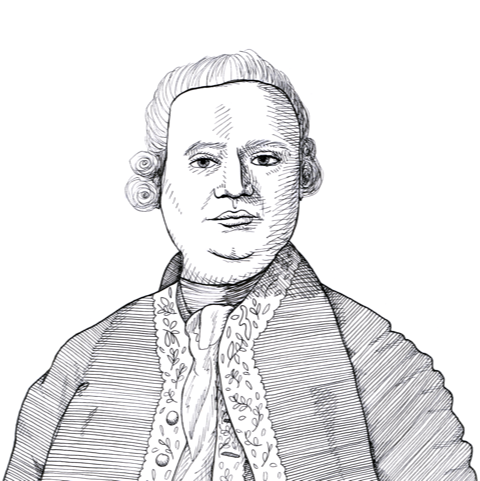
THE RIGHTS OF THE FAMILY AS A DOMESTIC SOCIETY. - Immanuel Kant, The Philosophy of Law: An Exposition of the Fundamental Principles of Jurisprudence as the Science of Right [1796]

Edition used:

The Philosophy of Law: An Exposition of the Fundamental Principles of Jurisprudence as the Science of Right, by Immanuel Kant, trans. W. Hastie (Edinburgh: Clark, 1887).

About Liberty Fund:

Liberty Fund, Inc. is a private, educational foundation established to encourage the study of the ideal of a society of free and responsible individuals.


THE RIGHTS OF THE FAMILY AS A DOMESTIC SOCIETY.

TITLE FIRST.
Conjugal Right. (Husband and Wife.)

24.

The Natural Basis of Marriage.

The domestic Relations are founded on Marriage, and Marriage is founded upon the natural Reciprocity or intercommunity (commercium) of the Sexes.1 This natural union of the sexes proceeds either according to the mere animal Nature (vaga libido, venus vulgivaga, fornicatio), or according to Law. The latter is Marriage (matrimonium), which is the Union of two Persons of different sex for life-long reciprocal possession of their sexual faculties.—The End of producing and educating children may be regarded as always the End of Nature in implanting mutual desire and inclination in the sexes; but it is not necessary for the rightfulness of marriage that those who marry should set this before themselves as the End of their Union, otherwise the Marriage would be dissolved of itself when the production of children ceased.

And even assuming that enjoyment in the reciprocal use of the sexual endowments is an end of marriage, yet the Contract of Marriage is not on that account a matter of arbitrary will, but is a Contract necessary in its nature by the Law of Humanity. In other words, if a man and a woman have the will to enter on reciprocal enjoyment in accordance with their sexual nature, they must necessarily marry each other; and this necessity is in accordance with the juridical Laws of Pure Reason.

25.

The Rational Right of Marriage.

For, this natural ‘Commercium’—as a ‘usus membrorum sexualium alterius’—is an enjoyment for which the one person is given up to the other. In this relation the human individual makes himself a ‘res,’ which is contrary to the Right of Humanity in his own Person. This, however, is only possible under the one condition, that as the one Person is acquired by the other as a res, that same Person also equally acquires the other reciprocally, and thus regains and re-establishes the rational Personality. The Acquisition of a part of the human organism being, on account of its unity, at the same time the acquisition of the whole Person, it follows that the surrender and acceptation of, or by, one sex in relation to the other, is not only permissible under the condition of Marriage, but is further only really possible under that condition. But the Personal Right thus acquired is at the same time, real in kind; and this characteristic of it is established by the fact that if one of the married Persons run away or enter into the possession of another, the other is entitled, at any time, and incontestably, to bring such a one back to the former relation, as if that Person were a Thing.

26.

Monogamy and Equality in Marriage.

For the same reasons, the relation of the Married Persons to each other is a relation of Equality as regards the mutual possession of their Persons, as well as of their Goods. Consequently Marriage is only truly realized in Monogamy; for in the relation of Polygamy the Person who is given away on the one side, gains only a part of the one to whom that Person is given up, and therefore becomes a mere res. But in respect of their Goods, they have severally the Right to renounce the use of any part of them, although only by a special Contract.

  • From the Principle thus stated, it also follows that Concubinage is as little capable of being brought under a Contract of Right, as the hiring of a person on any one occasion, in the way of a pactum fornicationis. For, as regards such a Contract as this latter relation would imply, it must be admitted by all that any one who might enter into it could not be legally held to the fulfilment of their promise if they wished to resile from it. And as regards the former, a Contract of Concubinage would also fall as a pactum turpe; because as a Contract of the hire (locatio, conductio), of a part for the use of another, on account of the inseparable unity of the members of a Person, any one entering into such a Contract would be actually surrendering as a res to the arbitrary Will of another. Hence any party may annul a Contract like this if entered into with any other, at any time and at pleasure; and that other would have no ground, in the circumstances, to complain of a lesion of his Right. The same holds likewise of a morganatic or ‘left-hand’ Marriage contracted in order to turn the inequality in the social status of the two parties to advantage in the way of establishing the social supremacy of the one over the other; for, in fact, such a relation is not really different from Concubinage, according to the principles of Natural Right, and therefore does not constitute a real Marriage. Hence the question may be raised as to whether it is not contrary to the Equality of married Persons when the Law says in any way of the Husband in relation to the Wife, ‘he shall be thy master,’ so that he is represented as the one who commands, and she as the one who obeys. This, however, cannot be regarded as contrary to the natural Equality of a human pair, if such legal Supremacy is based only upon the natural superiority of the faculties of the Husband compared with the Wife, in the effectuation of the common interest of the household; and if the Right to command, is based merely upon this fact. For this Right may thus be deduced from the very duty of Unity and Equality in relation to the End involved.

27.

Fulfilment of the Contract of Marriage.

The Contract of Marriage is completed only by conjugal cohabitation. A Contract of two Persons of different sex, with the secret understanding either to abstain from conjugal cohabitation or with the consciousness on either side of incapacity for it, is a simulated Contract; it does not constitute a marriage, and it may be dissolved by either of the parties at will. But if the incapacity only arises after marriage, the Right of the Contract is not annulled or diminished by a contingency that cannot be legally blamed.

The Acquisition of a Spouse either as a Husband or as a Wife, is therefore not constituted facto—that is, by Cohabitation—without a preceding Contract; nor even pacto—by a mere Contract of Marriage, without subsequent Cohabitation; but only lege, that is, as a juridical consequence of the obligation that is formed by two Persons entering into a sexual Union solely on the basis of a reciprocal Possession of each other, which Possession at the same time is only effected in reality by the reciprocal ‘usus facultatum sexualium alterius.’

RIGHTS OF THE FAMILY AS A DOMESTIC SOCIETY.

TITLE SECOND.
Parental Right. (Parent and Child.)

28.

The Relation of Parent and Child.

From the Duty of Man towards himself—that is, towards the Humanity in his own Person—there thus arises a personal Right on the part of the Members of the opposite sexes, as Persons, to acquire one another really and reciprocally by Marriage. In like manner, from the fact of Procreation in the union thus constituted, there follows the Duty of preserving and rearing Children as the Products of this Union. Accordingly Children, as Persons, have, at the same time, an original congenital Right—distinguished from mere hereditary Right—to be reared by the care of their Parents till they are capable of maintaining themselves; and this provision becomes immediately theirs by Law, without any particular juridical Act being required to determine it.

For what is thus produced is a Person, and it is impossible to think of a Being endowed with personal Freedom as produced merely by a physical process. And hence, in the practical relation, it is quite a correct and even a necessary Idea to regard the act of generation as a process by which a Person is brought without his consent into the world, and placed in it by the responsible free will of others. This Act, therefore, attaches an obligation to the Parents to make their Children—as far as their power goes—contented with the condition thus acquired. Hence Parents cannot regard their Child as, in a manner, a Thing of their own making, for a Being endowed with Freedom cannot be so regarded. Nor, consequently, have they a Right to destroy it as if it were their own property, or even to leave it to chance; because they have brought a Being into the world who becomes in fact a Citizen of the world, and they have placed that Being in a state which they cannot be left to treat with indifference, even according to the natural conceptions of Right.

  • We cannot even conceive how it is possible that Godcan createfree Beings; for it appears as if all their future actions, being predetermined by that first act, would be contained in the chain of natural necessity, and that, therefore, they could not be free. But as men we are free in fact, as is proved by the Categorical Imperative in the moral and practical relation as an authoritative decision of Reason; yet reason cannot make the possibility of such a relation of Cause to Effect conceivable from the theoretical point of view, because they are both suprasensible. All that can be demanded of Reason under these conditions, would merely be to prove that there is no Contradiction involved in the conception of a Creation of free beings; and this may be done by showing that Contradiction only arises when, along with the Category of Causality, the Condition of Time is transferred to the relation of suprasensible Things. This condition, as implying that the cause of an effect must precede the effect as its reason, is inevitable in thinking the relation of objects of sense to one another; and if this conception of Causality were to have objective reality given to it in the theoretical bearing, it would also have to be referred to the suprasensible sphere. But the Contradiction vanishes when the pure Category, apart from any sensible conditions, is applied from the moral and practical point of view, and consequently as in a non-sensible relation to the conception of Creation.
  • The philosophical Jurist will not regard this investigation, when thus carried back even to the ultimate Principles of the Transcendental Philosophy, as an unnecessary subtlety in a Metaphysic of Morals, or as losing itself in aimless obscurity, when he takes into consideration the difficulty of the problem to be solved, and also the necessity of doing justice in this inquiry to the ultimate relations of the Principles of Right.

29.

The Rights of the Parent.

From the Duty thus indicated, there further necessarily arises the Right of the Parents to the Management and Training of the Child, so long as it is itself incapable of making proper use of its body as an Organism, and of its mind as an Understanding. This involves its nourishment and the care of its Education. This includes, in general, the function of forming and developing it practically, that it may be able in the future to maintain and advance itself, and also its moral Culture and Development, the guilt of neglecting it falling upon the Parents. All this training is to be continued till the Child reaches the period of Emancipation (emancipatio), as the age of practicable self-support. The Parents then virtually renounce the parental Right to command, as well as all claim to repayment for their previous care and trouble; for which care and trouble, after the process of Education is complete, they can only appeal to the Children by way of any claim, on the ground of the Obligation of Gratitude as a Duty of Virtue.

From the fact of Personality in the Children, it further follows that they can never be regarded as the Property of the Parents, but only as belonging to them by way of being in their possession, like other things that are held apart from the possession of all others and that can be brought back even against the will of the Subjects. Hence the Right of the Parents is not a purely Real Right, and it is not alienable (jus personalissimum). But neither is it a merely Personal Right; it is a Personal Right of a real kind, that is, a Personal Right that is constituted and exercised after the manner of a Real Right.

It is therefore evident that the Title of a Personal Right of a Real Kind must necessarily be added, in the Science of Right, to the Titles of Real Right and Personal Right, the Division of Rights into these two being not complete. For, if the Right of the Parents to the Children were treated as if it were merely a Real Right to a part of what belongs to their house, they could not found only upon the Duty of the Children to return to them in claiming them when they run away, but they would be then entitled to seize them and to impound them like things or runaway cattle.

RIGHTS OF THE FAMILY AS A DOMESTIC SOCIETY.

TITLE THIRD.
Household Right. (Master and Servant.)

30.

Relation and Right of the Master of a Household.

The Children of the House, who, along with the Parents, constitute a Family, attain majority, and become Masters of Themselves (majorennes, sui juris), even without a Contract of release from their previous state of Dependence, by their actually attaining to the capability of self-maintenance. This attainment arises, on the one hand, as a state of natural Majority, with the advance of years in the general course of Nature; and, on the other hand, it takes form, as a state in accordance with their own natural condition. They thus acquire the Right of being their own Masters, without the interposition of any special juridical act, and therefore merely by Law (lege); and they owe their Parents nothing by way of legal debt for their Education, just as the parents, on their side, are now released from their Obligations to the Children in the same way. Parents and Children thus gain or regain their natural Freedom; and the domestic society, which was necessary according to the Law of Right, is thus naturally dissolved.

Both Parties, however, may resolve to continue the Household, but under another mode of Obligation. It may assume the form of a relation between the Head of the House as its Master, and the other members as domestic Servants, male or female; and the connection between them in this new regulated domestic economy (societas herilis) may be determined by Contract. The Master of the House, actually or virtually, enters into Contract with the Children, now become major and masters of themselves; or, if there be no Children in the Family, with other free Persons constituting the membership of the Household; and thus there is established a domestic relationship not founded on social equality, but such that one commands as Master, and another obeys as Servant (Imperantis et subjecti Domestici).

The Domestics or Servants may then be regarded by the Master of the household, as thus far his. As regards the form or mode of his Possession of them, they belong to him as if by a Real Right; for if any of them run away, he is entitled to bring them again under his power by a unilateral act of his will. But as regards the matter of his Right, or the use he is entitled to make of such persons as his Domestics, he is not entitled to conduct himself towards them as if he was their proprietor or owner (dominus servi); because they are only subjected to his power by Contract, and by a Contract under certain definite restrictions. For a Contract by which the one party renounced his whole freedom for the advantage of the other, ceasing thereby to be a person and consequently having no duty even to observe a Contract, is self-contradictory, and is therefore of itself null and void. The question as to the Right of Property in relation to one who has lost his legal personality by a Crime, does not concern us here.

This Contract, then, of the Master of a Household with his Domestics, cannot be of such a nature that the use of them could ever rightly become an abuse of them; and the judgment as to what constitutes use or abuse in such circumstances is not left merely to the Master, but is also competent to the Servants, who ought never to be held in bondage or bodily servitude as Slaves or Serfs. Such a Contract cannot, therefore, be concluded for life, but in all cases only for a definite period, within which one party may intimate to the other a termination of their connection. Children, however, including even the children of one who has become enslaved owing to a Crime, are always free. For every man is born free, because he has at birth as yet broken no Law; and even the cost of his education till his maturity, cannot be reckoned as a debt which he is bound to pay. Even a Slave, if it were in his power, would be bound to educate his children without being entitled to count and reckon with them for the cost; and in view of his own incapacity for discharging this function, the Possessor of a Slave, therefore, enters upon the Obligation which he has rendered the Slave himself unable to fulfil.

  • Here, again, as under the first two Titles, it is clear that there is a Personal Right of a Real kind, in the relation of the Master of a House to his Domestics. For he can legally demand them as belonging to what is externally his, from any other possessor of them; and he is entitled to fetch them back to his house, even before the reasons that may have led them to run away, and their particular Right in the circumstances, have been judicially investigated. [See Sup plementary Explanations, I. II. III.]

[1 ]Commercium sexuale est usus membrorum et facultatum sexualium alterius. This ‘usus’ is either natural, by which human beings may reproduce their own kind, or unnatural, which, again, refers either to a person of the same sex or to an animal of another species than man. These transgressions of all Law, as ‘crimina carnis contra naturam,’ are even ‘not to be named;’ and as wrongs against all Humanity in the Person they cannot be saved, by any limitation or exception whatever, from entire reprobation.