EconlibThe LibraryOther Sites |
Front Page Titles (by Subject) BOOK I: OF THE PRODUCTION OF WEALTH. - A Treatise on Political Economy
Return to Title Page for A Treatise on Political EconomyThe Online Library of LibertyA project of Liberty Fund, Inc.Search this Title:Also in the Library:
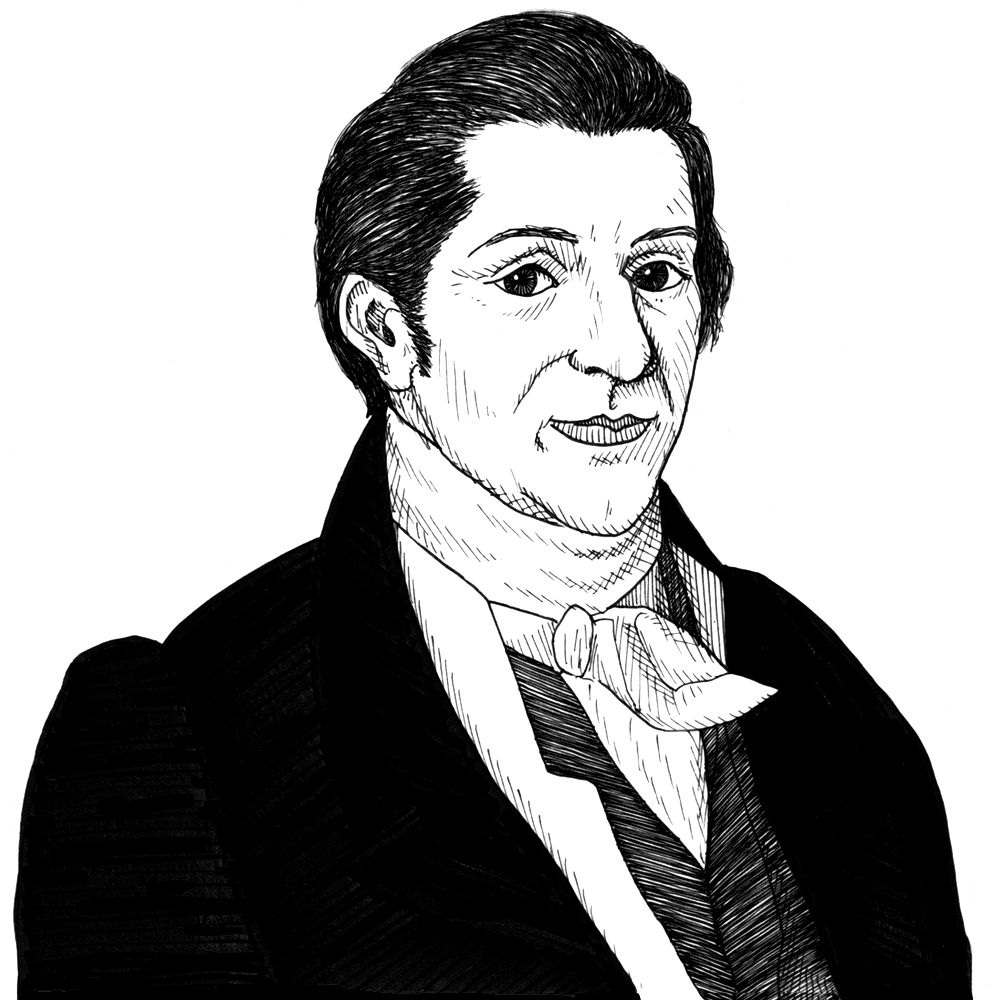
BOOK I: OF THE PRODUCTION OF WEALTH. - Jean Baptiste Say, A Treatise on Political Economy [1803]Edition used:A Treatise on Political Economy; or the Production, Distribution, and Consumption of Wealth, ed. Clement C. Biddle, trans. C. R. Prinsep from the 4th ed. of the French, (Philadelphia: Lippincott, Grambo & Co., 1855. 4th-5th ed. ).
About Liberty Fund:Liberty Fund, Inc. is a private, educational foundation established to encourage the study of the ideal of a society of free and responsible individuals. Copyright information:The text is in the public domain. Fair use statement:This material is put online to further the educational goals of Liberty Fund, Inc. Unless otherwise stated in the Copyright Information section above, this material may be used freely for educational and academic purposes. It may not be used in any way for profit.
BOOK IOF THE PRODUCTION OF WEALTH.BOOK I, CHAPTER I.OF WHAT IS TO BE UNDERSTOOD BY THE TERM, PRODUCTION.If we take the pains to inquire what that is, which mankind in a social state of existence denominate wealth, we shall find the term employed to designate an indefinite quantity of objects bearing inherent value, as of land, of metal, of coin, of grain, of stuffs, of commodities of every description. When they further extend its signification to landed securities, bills, notes of hand, and the like, it is evidently because they contain obligations to deliver things possessed of inherent value. In point of fact, wealth can only exist where there are things possessed of real and intrinsic value. Wealth is proportionate to the quantum of that value; great, when the aggregate of component value is great; small, when that aggregate is small. The value of a specific article is always vague and arbitrary, so long as it remains unacknowledged. Its owner is not a jot the richer, by setting a higher ratio upon it in his own estimation. But the moment that other persons are willing, for the purpose of obtaining it, to give in exchange a certain quantity of other articles, likewise bearing value, the one may then be said to be worth, or to be of equal value with, the other. The quantity of money, which is readily parted with to obtain a thing, is called its price. Current price, at a given time and place, is that price which the owner is sure of obtaining for a thing, if he is inclined to part with it.40 The knowledge of the real nature of wealth, thus defined, of the difficulties that must be surmounted in its attainment, of the course and order of its distribution amongst the members of society, of the uses to which it may be applied, and, further, of the consequences resulting respectively from these several circumstances, constitutes that branch of science now entitled Political Economy. The value that mankind attach to objects originates in the use it can make of them. Some afford sustenance; others serve for clothing; some defend them from the inclemencies of the season, as houses; others gratify their taste, or, at all events, their vanity, both of which are species of wants: of this class are all mere ornaments and decorations. It is universally true, that, when men attribute value to any thing, it is in consideration of its useful properties; what is good for nothing they set no price upon.41 To this inherent fitness or capability of certain things to satisfy the various wants of mankind, I shall take leave to affix the name of utility. And I will go on to say, that, to create objects which have any kind of utility, is to create wealth; for the utility of things is the ground-work of their value, and their value constitutes wealth. Objects, however, cannot be created by human means; nor is the mass of matter, of which this globe consists, capable of increase or diminution. All that man can do is, to re-produce existing materials under another form, which may give them an utility they did not before possess, or merely enlarge one they may have before presented. So that, in fact, there is a creation, not of matter, but of utility; and this I call production of wealth. In this sense, then, the word production must be understood in political economy, and throughout the whole course of the present work. Production is the creation, not of matter, but of utility. It is not to be estimated by the length, the bulk, or the weight of the product, but by the utility it presents. Although price is the measure of the value of things, and their value the measure of their utility, it would be absurd to draw the inference, that, by forcibly raising their price, their utility can be augmented. Exchangeable value, or price, is an index of the recognised utility of a thing, so long only as human dealings are exempt from every influence but that of the identical utility: in like manner as a barometer denotes the weight of the atmosphere, only while the mercury is submitted to the exclusive action of atmospheric gravity. In fact, when one man sells any product to another, he sells him the utility vested in that product; the buyer buys it only for the sake of its utility, of the use he can make of it. If, by any cause whatever, the buyer is obliged to pay more than the value to himself of that utility, he pays for value that has no existence, and consequently which he does not receive.42 This is precisely the case, when authority grants to a particular class of merchants the exclusive privilege of carrying on a certain branch of trade, the India trade for instance; the price of Indian imports is thereby raised, without any accession to their utility or intrinsic value. This excess of price is nothing more or less than so much money transferred from the pockets of the consumers into those of the privileged traders, whereby the latter are enriched exactly as much as the former are unnecessarily impoverished. In like manner, when a government imposes on wine a tax, which raises to 15 cents the bottle what would otherwise be sold for 10 cents, what does it else, but transfer 5 cents per bottle from the hands of the producers or the consumers of wine to those of the tax-gatherer?43 The particular commodity is here only the means resorted to for getting at the tax-payer with more or less convenience; and its current value is composed of two ingredients, viz. 1. Its real value originating in its utility: 2. The value of the tax that the government thinks fit to exact, for permitting its manufacture, transport, or consumption. Wherefore, there is no actual production of wealth, without a creation or augmentation of utility. Let us see in what manner this utility is to be produced. BOOK I, CHAPTER II.OF THE DIFFERENT KINDS OF INDUSTRY, AND THE MODE IN WHICH THEY CONCUR IN PRODUCTION.Some items of human consumption are the spontaneous gifts of nature, and require no exertion of man for their production; as air, water, and light, under certain circumstances. These are destitute of exchangeable value; because the want of them is never felt, others being equally provided with them as ourselves. Being neither procurable by production, nor destructible by consumption, they come not within the province of political economy. But there are abundance of others equally indispensable to our existence and to our happiness, which man would never enjoy at all, did not his industry awaken, assist, or complete the operations of nature. Such are most of the articles which serve for his food, raiment and lodging. When that industry is limited to the bare collection of natural products, it is called agricultural industry, or simply agriculture. When it is employed in severing, compounding, or fashioning the products of nature, so as to fit them to the satisfaction of our various wants, it is called manufacturing industry.44 When it is employed in placing within our reach objects of want which would otherwise be beyond reach, it is called commercial industry, or simply commerce. It is solely by means of industry that mankind can be furnished, in any degree of abundance, with actual necessaries, and with that variety of other objects, the use of which, though not altogether indispensable, yet marks the distinction between a civilized community and a tribe of savages. Nature, left entirely to itself, would provide a very scanty subsistence to a small number of human beings. Fertile but desert tracts have been found inadequate to the bare nourishment of a few wretches, cast upon them by the chances of shipwreck: while the presence of industry often exhibits the spectacle of a dense population plentifully supplied upon the most ungrateful soil. The term products is applied to things that industry furnishes to mankind. A particular product is rarely the fruit of one branch of industry exclusively. A table is a joint product of agricultural industry which has felled the tree whereof it is made, and of manufacturing industry, which has given it form. Europe is indebted for its coffee to the agricultural industry, which has planted and cultivated the bean in Arabia or elsewhere, and to the commercial industry, which hands it over to the consumer. These three branches of industry, which may at pleasure be again infinitely subdivided, are uniform in their mode of contributing to the act of production. They all either confer an utility on a substance that possessed none before, or increase one which it already possessed. The husbandman who sows a grain of wheat that yields twenty-fold, does not gain this product from nothing: he avails himself of a powerful agent; that is to say, of Nature, and merely directs an operation, whereby different substances previously scattered throughout the elements of earth, air, and water, are converted into the form of grains of wheat. Gall-nuts, sulphate of iron, and gum-arabic, are substances existing separately in nature. The joint industry of the merchant and manufacturer brings them together, and from their compound derives the black liquid, applied to the transmission of useful science. This joint operation of the merchant and manufacturer is analogous to that of the husbandman, who chooses his object and effects its attainment by precisely the same kind of means as the other two. No human being has the faculty of originally creating matter, which is more than nature itself can do. But any one may avail himself of the agents offered him by nature, to invest matter with utility. In fact, industry is nothing more or less than the human employment of natural agents; the most perfect product of labour, the one that derives nearly its whole value from its workmanship, is probably the result of the action of steel, a natural product upon some substance or other, likewise a natural product.45 Through ignorance of this principle, the economists of the 18th century, though many enlightened writers were to be reckoned amongst them, were betrayed into the most serious errors. They allowed no industry to be productive, but that which procured the raw materials; as the industry of the husbandman, the fisherman and the miner; not adverting to the distinction, that wealth consists, not in matter, but in the value of matter; because matter without value is no item of wealth; otherwise water, flint-stones, and dust of the roads, would be wealth. Wherefore, if the value of matter constitutes wealth, wealth is to be created by the annexation of value. Practically, the man who has in his warehouse a quintal of wool worked up into fine cloths, is richer than one who has the same quantity of wool in packs. To this position the economists replied, that the additional value communicated to a product by manufacture, was no more than equivalent to the value consumed by the manufacturer during the process; for, said they, the competition of manufactures prevents their ever raising the price beyond the bare amount of their own expenditure and consumption; wherefore their labour adds nothing to the total wealth of the community, because their wants on the one side destroy as much as their industry produces on the other.46 But it should have been previously demonstrated by those who made use of this argument, that the value, consumed by mechanics and artizans, must of necessity barely equal the value produced by them, which is not the fact; for it is unquestionable, that more savings are made, and more capital accumulated from the profits of trade and manufacture, than from those of agriculture.47 Besides, even admitting that the profits of manufacturing industry are consumed in the satisfaction of the necessary wants of the manufacturers and their families, that circumstance does not prevent them being positive acquisitions of wealth. For unless they were so, they could not satisfy their wants: the profits of the land-owner and agriculturist are allowed to be items of positive wealth; yet they are equally consumed in the maintenance of those classes. Commercial, in like manner as manufacturing industry, concurs in production, by augmenting the value of a product by its transport from one place to another. A quintal of Brazil cotton has acquired greater utility, and therefore larger value, by the time it reaches a warehouse in Europe, than it possessed in one at Pernambuco. The transport is a modification that the trader gives to the commodity, whereby he adapts to our use what was not before available; which modification is equally useful, complex and uncertain in the result, as any it derives from the other two branches of industry. He avails himself of the natural properties of the timber and the metals used in the construction of his ships, of the hemp whereof his rigging is composed, of the wind that fills his sails, of all the natural agents brought to concur in his purpose, with precisely the same view and the same result, and in the same manner too, as the agriculturist avails himself of the earth, the rain, and the atmosphere.48 Thus, when Raynal says of commerce, as contrasted with agriculture and the arts, that "it produces nothing of itself," he shows himself to have had no just conception of the phenomenon of production. In this instance Raynal has fallen into the same error with regard to commerce, as the economists made respecting both commerce and manufacture. They pronounced agriculture to be the sole channel of production; Raynal refers production to the two channels of agriculture and manufacture: his position is nearer the truth than the other, but still is erroneous. Condillac also is confused in his endeavour to explain the mode in which commerce produces. He pretends that, because all commodities cost to the seller less than the buyer, they derive an increase of value from the mere act of transfer from one hand to another. But this is not so; for, since a sale is nothing else but an act of barter, in which one kind of goods, silver for example, is received in lieu of another kind of goods, the loss which either of the parties dealing should sustain on one article would be equivalent to the profit he would make on the other, and there would be to the community no production of value whatsoever.49 When Spanish wine is bought at Paris, equal value is really given for equal value: the silver paid, and the wine received, are worth one the other; but the wine had not the same value before its export from Alicant: its value has really increased in the hands of the trader, by the circumstance of transport, and not by the circumstance, or at the moment, of exchange. The seller does not play the rogue, nor the buyer the fool; and Condillac has no grounds for his position, that "if men always exchanged equal value for equal value, there would be no profit to be made by the traders."50 In some particular cases the two other branches of industry produce in a manner analogous to commerce, viz. by giving a value to things to which they actually communicate no new quality, but that of approximation to the consumer. Of this description is the industry of miners. The coal or metal may exist in the earth, in a perfect state, but unpossessed of value. The miner extracts them thence, and this operation gives them a value, by fitting them for the use of mankind. So also of the herring fishery. Whether in or out of the sea, the fish is the same; but under the latter circumstances, it has acquired an utility, a value, it did not before possess.51 Examples might be infinitely multiplied, and would all bear as close an affinity, as those natural objects, which the naturalist classifies only to facilitate their description. This fundamental error of the economists, in which I have shown that their adversaries in some measure participated, led them to the strangest conclusions. According to their theory, the traders and manufacturers, being unable to add an iota to the general stock of wealth, live entirely at the expense of the sole producers, that is to say, the proprietors and cultivators of the land. Whatever new value they may communicate to things, they at the same time consume an equivalent product, furnished by the real producers: manufacturing and commercial nations, therefore, subsist wholly upon the wages they receive from their agricultural customers; in proof of which position, they alleged that Colbert ruined France by his protection of manufacturers, &c.52 The truth is, that, in whatever class of industry a person is engaged, he subsists upon the profit he derives from the additional value, or portion of value, no matter in what ratio, which his agency attaches to the product he is at work upon. The total value of products serves in this way to pay the profits of those occupied in production. The wants of mankind are supplied and satisfied out of the gross values produced and created, and not out of the net values only. A nation, or a class of a nation, engaged in manufacturing or commercial industry, is not a whit more or less in the pay of another, than one employed in agriculture. The value created by one branch is of the same nature as that created by others. Two equal values are worth one the other, although perhaps the fruit of different branches of industry: and when Poland barters its staple product, wheat, for the staple commodity of Holland, East and West India produce, Holland is no more in the pay or service of Poland, than Poland is of Holland. Nay, Poland herself, which exports at the rate of ten millions of wheat annually, and therefore, according to the economists, takes the sure road to national wealth, is, notwithstanding, poor and depopulated: and why?—Because she confines her industry to agriculture, though she might be at the same time a commercial and manufacturing state. Instead of keeping Holland in her pay, she may with more propriety be said to receive wages from the latter, for the raising of ten millions of wheat, per annum. Nor is she a jot less dependent than the nations that buy wheat of her: for she has just as much desire to sell to them, as they have to buy of her.53 Moreover, it is not true that Colbert ruined France. On the contrary, the fact is that France, under Colbert's administration, emerged from the distress that two regencies and a weak reign had involved her in. She was, indeed, afterwards ruined again; but for this second calamity, she may thank the pageantry and the wars of Louis XIV. Nay, the very prodigality of that prince is an undeniable evidence of the vast resources that Colbert had placed at his disposal. It must, however, be admitted that those resources would have been still more ample, if he had but given the same protection to agriculture, as to the other branches of industry. Thus it is evident, that the means of enlarging and multiplying wealth within the reach of every community are much less confined than the economists imagined. A nation, by their account, was unable to produce annually any values beyond the net annual produce of its lands; to which fund alone recourse could be had for the support not only of the proprietary and the idler, but likewise of the merchant, the manufacturer, and the mechanic, as well as for the total consumption of the government. Whereas we have just seen that the annual produce of a nation is composed, not of the mere net produce of its agriculture, but of the gross produce of its agriculture, commerce, and manufacture united. For, in fact, is not the sum total, that is to say, the aggregate of the gross product raised by the nation, disposable for its consumption? Is value produced less an item of wealth, because it must needs be consumed? And does not value itself originate in this very applicability to consumption. The English writer, Stewart, who may be looked upon as the leading advocate of the exclusive system, the system founded on the maxim, that the wealth of one set of men is derived from the impoverishment of another, is himself no less mistaken in asserting, that, "when once a stop is put to external commerce, the stock of internal wealth cannot be augmented."54 Wealth, it seems, can come only from abroad; but abroad, where does it come from? from abroad also. So that in tracing it from abroad to abroad, we must necessarily, in the end, exhaust every source, till at last we are compelled to look for it beyond the limits of our own planet, which is absurd. Forbonnais,55 too, builds his prohibitory system on this glaring fallacy; and to speak freely, on this fallacy are founded the exclusive systems of all the short-sighted merchants, and all the governments of Europe and of the world. They all take it for granted, that what one individual gains must needs be lost to another; that what is gained by one country is inevitably lost to another: as if the possessions of abundance of individuals and of communities could not be multiplied, without the robbery of somebody or other. If one man or set of men, could only be enriched at others' expense, how could the whole number of individuals, of whom a state is composed, be richer at one period than at another, as they now confessedly are in France, England, Holland, and Germany, compared with what they were formerly? How is it, that nations are in our days more opulent, and their wants better supplied in every respect, than they were in the seventeenth century? Whence can they have derived that portion of their present wealth, which then had no existence? Is it from the mines of the new continent? They had already advanced in wealth before the discovery of America. Besides, what is that which these mines have furnished? Metallic wealth or value. But all the other values which those nations now possess, beyond what they did in the middle ages, whence are they derived? Is it not clear, that these can be no other than created values? We must conclude, then, that wealth, which consists in the value that human industry, in aid and furtherance of natural agents, communicates to things, is susceptible of creation and destruction, of increase and diminution, within the limits of each nation and independently of external agency, according to the method it adopts to bring about those effects. An important truth, which ought to teach mankind, that the objects of rational desire are within their reach, provided they have the will and intelligence to employ the true means of obtaining them. Those means it is the purpose of this work to investigate and unfold. BOOK I, CHAPTER IIIOF THE NATURE OF CAPITAL, AND THE MODE IN WHICH IT CONCURS IN THE BUSINESS OF PRODUCTION.As we advance in the investigation of the processes of industry, we cannot fail to perceive, that mere unassisted industry is insufficient to invest things with value. The human agent of industry must, besides, be provided with pre-existing products; without which his agency, however skillful and intelligent, would never be put in motion. These pre-existing requisites are,
The value of all these items constitutes what is denominated productive capital. Under this head of productive capital must likewise be classed the value of all erections and improvements upon real or landed property, which increase its annual produce, as well as that of the farming live and dead stock, that operates as machinery in aid of human industry. Another item of productive capital, is money, whenever it is employed to facilitate the interchange of products, without which production could never make any progress. Money distributed through the whole mechanism of human industry, like the oil that greases the wheels of complex machinery, gives the requisite ease and facility to its movements. But gold and silver are not productive unless employed by industry: they are like the oil in a machine remaining in a state of inaction. And so also of all other tools and implements of human industry. It would evidently be a great mistake to suppose that the capital of a community consists solely of its money. The merchant, the manufacturer, the cultivator, commonly have the least considerable portion of the value composing their capital invested in the form of money; nay, the more active their concern is, the smaller is their relative proportion of their capital so vested to the residue. The funds of the merchant are placed out in goods on their transit by land or water, or warehoused in different directions: the capital of the manufacturer chiefly consists of the raw material in different stages of progress, of tools, implements, and necessaries for his workmen: while that of the cultivator is vested in farming buildings, live stock, fences and enclosures. They all studiously avoid burthening themselves with more money than is sufficient for current use. What is true of one, two, three, or four individuals, is true of society in the aggregate. The capital of a nation is made up of the sum total of private capitals; and, in proportion as a nation is prosperous and industrious, in the same proportion is that part of its capital, vested in the shape of money, trifling compared to the amount of the gross national capital. Neckar estimates the circulating medium in France, in the year 1784, at about 440 millions of dollars, and there are reasons for believing his estimate exaggerated; but this is not the time to state them. However, if account be taken of all the works, enclosures, live stock, utensils, machines, ships, commodities, and provisions of all sorts belonging to the French people or their government in any part of the world; and, if to these be added the furniture, decorations, jewellery, plate, and other items of luxury or convenience, whereof they were possessed, at the same period, it will be found that 440 millions of circulating medium was a mere trifle compared to the aggregate of these united values.56 Beeke estimates the total capital of Great Britain at 2300 millions sterling,57 (equal to more than 11,000 millions of dollars.) The total amount of her circulating specie, before the establishment of her present paper money, was never reckoned by the highest estimates at more than 47 millions sterling;58 that is to say, about 1-50th of her capital. Smith reckoned it at no more than 18 millions, which could not be the 1-127th part.59 Capital in the hands of a national government forms a part of the gross national capital. We shall see, by-and-by, how capital, which is subject to a continual wear and consumption in the process of production, is continually replaced by the very operation of production; or rather, how its value, when destroyed under one form, re-appears under another. At present it is enough to have a distinct conception, that, without it, industry could produce nothing. Capital must work, as it were, in concert with industry; and this concurrence is what I call the productive agency of capital. BOOK I, CHAPTER IVON NATURAL AGENTS THAT ASSIST IN THE PRODUCTION OF WEALTH, AND SPECIALLY OF LAND.Independently of the aid that industry receives from capital, that is to say, from products of her own previous creation, towards the creation of still further products, she avails herself of the agency and powers of a variety of agents not of her own creation, but offered spontaneously by nature: and from the co-operation of these natural agents derives a portion of the utility she communicates to things. Thus, when a field is ploughed and sown, besides the science and the labour employed in this operation, besides the pre-created values brought into use, the values, for instance, of the plough, the harrow, the seed-corn, the food and clothing consumed by labourers during the process of production, there is a process performed by the soil, the air, the rain, and the sun, wherein mankind bears no part, but which nevertheless concurs in the creation of the new product that will be acquired at the season of harvest. This process I call the productive agency of natural agents. The term natural agents is here employed in a very extensive sense; comprising not merely inanimate bodies, whose agency operates to the creation of value, but likewise the laws of the physical world, as gravitation, which makes the weight of a clock descend; magnetism, which points the needle of the compass: the elasticity of steel; the gravity of the atmosphere; the property of heat to discharge itself by ignition, &c. &c. The productive faculty of capital is often so interwoven with that of natural agents, that it is difficult, or perhaps impossible, to assign, with accuracy, their respective shares in the business of production. A hot-house for the raising of exotic plants, a meadow fertilized by judicious irrigation, owe the greater part of their productive powers to works and erections, the effect of antecedent production, which form a part of the capital devoted to the furtherance of actual and present production. The same may be said of land newly cleared and brought into cultivation; of farm-buildings; of enclosures; and of all other permanent ameliorations of a landed estate. These values are items of capital, though it be no longer possible to sever them from the soil they are attached to.60 In the employment of machinery, which wonderfully augments the productive power of man, the product obtained is due partly to the value of the capital vested in the machine, and partly to the agency of natural powers. Suppose a tread-mill,61 worked by ten men, to be used in place of a wind-mill, the product of the mill might be considered as the fruit of the productive agency of a capital consisting of the value of the machine, and of the labour of ten men employed in turning the wheel. If the tread-mill be supplanted by sails, it is evident that the wind, a natural agent, does the work of ten human beings. In this instance, the absence of the natural agent might be remedied, by the employment of another power; but there are many cases, in which the agency of nature could not possibly be dispensed with, and is yet equally positive and real; for example, the vegetative power of the soil, the vital principle which concurs in the production of the animals domesticated to our use. A flock of sheep is the joint result of the owner's and shepherd's care, and the capital advanced in fodder, shelter, and shearing, and of the action of the organs and viscera with which nature has furnished these animals. Thus nature is commonly the fellow-labourer of man and his instruments; a fellowship advantageous to him in proportion as he succeeds in dispensing with his own personal agency, and that of his capital, and in throwing upon nature a larger part of the burthen of production. Smith has taken infinite pains to explain, how it happens that civilized communities enjoy so great an abundance of products, in comparison with nations less polished, and in spite of the swarm of idlers and unproductive labourers that is to be met with in society. He has traced the source of that abundance to the division of labour;62 and it cannot be doubted, that the productive power of industry is wonderfully enhanced by that division, as we shall hereafter see by following his steps; but this circumstance alone is not sufficient to explain a phenomenon, that will no longer surprise, if we consider the power of the natural agents that industry and civilization set at work for our advantage. Smith admits that human intelligence, and the knowledge of the laws of nature, enable mankind to turn the resources she offers to better account: but he goes on to attribute to the division of labour this very degree of intelligence and knowledge: and he is right to a certain degree; for a man, by the exclusive pursuit of a single art or science, has ampler means of accelerating its progress towards perfection. But, when once the system of nature is discovered, the production resulting from the discovery, is no longer the product of the inventor's industry. The man who first discovered the property of fire to soften metals, was not the actual creator of the utility this process adds to smelted ore. That utility results from the physical action of fire, in concurrence, it is true, with the labour and capital of those who employ the process. But are there no processes that mankind owes the knowledge of to pure accident? or that are so self-evident, as to have required no skill to discover? When a tree, a natural product, is felled, is society put into possession of no greater produce than that of the mere labour of the woodman? From this error Smith has drawn the false conclusion, that all values produced represent pre-exerted human labour or industry, either recent or remote; or, in other words, that wealth is nothing more than labour accumulated; from which position he infers a second consequence equally erroneous, viz. that labour is the sole measure of wealth, or of value produced. This system is obviously in direct opposition to that of the economists of the eighteenth century, who, on the contrary, maintained that labour produces no value without consuming an equivalent; that, consequently, it leaves no surplus, no net produce; and that nothing but the earth produces gratuitous value,—therefore nothing else can yield net produce. Each of these positions has been reduced to system; I only cite them to warn the student of the dangerous consequences of an error in the outset,63 and to bring the science back to the simple observation of facts. Now facts demonstrate, that values produced are referable to the agency and concurrence of industry, of capital,64 and of natural agents, whereof the chief, though by no means the only one, is land capable of cultivation; and that no other but these three sources can produce value, or add to human wealth. Of natural agents, some are susceptible of appropriation, that is to say of becoming the property of an occupant, as a field, a current of water; others can not be appropriated, but remain liable to public use, as the wind, the sea, free navigable streams, the physical or chemical action of bodies one upon another, &c. &c. We shall by-and-by have an opportunity of convincing ourselves, that this alternative, of productive agents being or not being susceptible of appropriation, is highly favourable to the progress of wealth. Natural agents, like land, which are susceptible of appropriation, would not produce nearly so much, were not the proprietors certain of exclusively gathering their produce, and able to vest in them, with full confidence, the capital which so much enlarges their productiveness. On the other hand, the indefinite latitude allowed to industry to occupy at will the unappropriated natural agents, opens a boundless prospect to the extension of her agency and production. It is not nature, but ignorance and bad government, that limit the productive powers of industry. Such of the natural agents as are susceptible of appropriation, form an item of productive means; for they do not yield their concurrence without equivalent; which equivalent, as we shall see in the proper place, forms an item of the revenues of the appropriators. At present we must be content to investigate the productive operation of natural agents of every description, whether already known, or hereafter to be discovered. [40.]The numerous and difficult points arising out of the confusion of positive and relative value are discussed in different parts of this work; particularly in the leading chapters of Book II. Not to perplex the attention of the reader, I confine myself here to so much as is absolutely necessary to comprehend the phenomenon of the production of wealth. [41.]It would be out of place here to examine, whether or no the value mankind attach to a thing be always proportionate to its actual utility. The accuracy of the estimate must depend upon the comparative judgment, intelligence, habits, and prejudices of those who make it. True morality, and the clear perception of their real interests, lead mankind to the just appreciation of benefits. Political economy takes this appreciation as it finds it—as one of the data of its reasonings; leaving to the moralist and the practical man, the several duties of enlightening and of guiding their fellow-creatures, as well in this, as in other particulars of human conduct. [42.]This position will hereafter be further illustrated. For the present it is enough to know, that, whatever be the state of society, current prices approximate to the real value of things, in proportion to the liberty of production and mutual dealing. [43.]It will be shown in Book III. of this work, what proportion of the tax is paid by the producer, and what by the consumer. [44.]Since matter can only be modified, compounded, or separated, by means either mechanical or chemical, all branches of manufacturing industry may be subdivided into the mechanical and the chemical arts, according to the predominance of the one or the other in their several processes. [45.]Alagrotti in his Opuscula, by way of exemplifying the prodigious addition of the value given to an object by industry, adduces the spiral springs that check the balance-wheels of watches. A pound weight of pig-iron costs the operative manufacturer about five cents. This is worked up into steel, of which is made the little spring that moves the balance-wheel of a watch. Each of these springs weighs but the tenth part of a grain; and when completed, may be sold as high as three dollars, so that out of a pound of iron, allowing something for the loss of metal, 80,000 of these springs may be made, and a substance of five cents value be wrought into a value of 240,000 dollars. [46.]Mercier de la Riviere, in his work entitled "Ordre Naturel des Sociétés Politiques," tom. ii. p. 255, while labouring to prove, that manufacturing labour is barren and unproductive, makes use of an argument, which I think it may be of some service to refute, because it has been often repeated in different shapes, and some of them specious enough. He says, "that if the unreal products of industry are considered as realities, it is a necessary inference, that an useless multiplication of workmanship is a multiplication of wealth." But because human labour is productive of value, when it has an useful result, it by no means follows, that it is productive of value, when its result is either useless or injurious. All labour is not productive; but such only as adds a real value to any substance or thing. And the futility of this argument of the economists is put beyond all question by the circumstance, that it may be equally employed against their own system and that of their opponents. They may be told, "You admit the industry of the cultivator to be productive; therefore he has only to plough and sow his fields ten times a year to increase his productiveness ten-fold," which is absurd. [47.][Our author, in here asserting, "that more savings are made, and more capital accumulated from the profits of trade and manufacture, than from those of agriculture," has fallen into an error, which it is proper to notice. In the absence of prohibitions and restraints, the profits of agriculture, manufactures and commerce, will all be on an equality, or always nearly approaching towards it; for any material difference will cause a diversion of capital and industry to the more productive channel, and by that means restore the equilibrium. In overthrowing the hypothesis of the economists, the author has inadvertently, for a moment, lost sight of his own general principles, which so clearly establish the equality of profits in all the different branches of industry.] American Editor. [48.]Genovesi, who lectured on political economy at Naples, defines commerce to be "the exchange of superfluities for necessaries." He gives as his reason, that in every transaction of exchange, the article received appears to each of the contracting parties more necessary than that given. This is a far-fetched notion, which I think myself called on to notice, because it has obtained considerable currency. It would be difficult to prove, that a poor labourer, who goes to the alehouse on a Sunday, exchanges there his superfluity for a necessary. In all fair traffic, there occurs a mutual exchange of two things, which are worth one the other, at the time and place of exchange. Commercial production, that is to say, the value added by commerce to the things exchanged, is not operated by the act of exchange, but by the commercial operations that precede it. [49.]This circumstance has escaped the attention of Sismondi, or he would not have said, "The trader places himself between the producer and the consumer, to benefit them both at once, making his charge for that benefit upon both." (Nouveaux Principes d'Economie Pol. Liv. ii. ch. 8). He would make it appear as if the trader subsisted wholly upon the value produced by the agriculturist and the manufacturer; whereas he is maintained by the real value he himself communicates to commodities by giving them an additional modification, an useful property. It is this very notion that stirs up the popular indignation against the dealers in grain. [50.]See his work entitled, "Le Commerce et le Gouvernment considérés relativement l'un a l'auire." 1re. partie, ch. 6. [51.]We may consider as agents of the same class of industry, the cultivator of the land, the breeder of cattle, the woodcutter, the fisherman that takes fish he has been at no pains in breeding, and the miner who, from the bowels of the earth, extracts metal, stone, or combustibles, that nature has placed there in a perfect state; and, to avoid multiplicity of denominations, the whole of these occupations may be called by the name of agricultural industry, because the superficial cultivation of the earth, is the chief and most important of all. Terms are of little consequence, when the ideas are clear and definite. The wine-grower, who himself expresses the juice of his grapes, performs a mechanical operation, that partakes more of manufacture than agriculture. But it matters little whether he be classed as a manufacturer or agriculturist; provided that it be clearly comprehended in what manner his industry adds to the value of the product. If we wish to give separate consideration to every possible manner of giving value to things, industry may be infinitely subdivided. If it be the object to generalize to the utmost, it may be treated as one and the same; for every branch of it will resolve itself into this: the employment of natural substances and agents in the adaptation of products to human consumption. [52.]See the numberless writings of that sect. [53.]We shall find in the sequel, that, if any one nation can be said to be in the service of another, it is that which is the most dependent; and that the most dependent nations are, not those which have a scarcity of land, but those which have a scarcity of capital. [54.]Essay on Political Economy, b. ii. c. 26. [55.]Elemens de Commerce. [56.]Arthur Young, in his "Journey in France," in spite of the unfavourable view he gives of French Agriculture, estimates the total capital employed in that kingdom, in that branch of industry alone, at more than 2200 millions of dollars; and states his belief, that the capital of Great Britain, similarly employed, is in the proportion of two to one. [57.]Observations on the produce of the income-tax. [58.]Pitt, who is supposed to have overrated the quantity of specie, states the gold at forty-four-millions; and Price estimates the silver at three millions, making a total of forty-seven millions. [59.][The following summary recapitulation of the value of property in Great Britain and Ireland, in the year 1833, is extracted from "Table XVI. General Estimate of the Public and Private Property of England and Wales, Scotland and Ireland, (1833)," from "Pebrer on the Taxation, Debt, Capital, Resources, &c. of the whole British Empire," a work of the highest authority, published in London, April, 1833.
[60.]It is for the proprietor of the land and of the capital respectively, when the ownership is in different persons, to settle between them the respective value and efficacy of the agency of these two productive agents. The world at large may be content to comprehend, without taking the trouble of measuring, their respective shares in the production of wealth. [61.]A wheel in the form of a drum, turned by men walking inside, (roue a marchre.) [62.]Take his own words: "It is the great multiplication of the productions of all the different arts, in consequence of the division of labour, which occasions, in a well-governed society, that universal opulence, which extends itself to the lowest ranks of the people." Wealth of Nations, b. i. c. 1. [63.]Amongst other dangerous consequences of the system of the economists, is the notable one of substituting a land-tax in lieu of all other taxation; in the certainty, that this tax would affect all produced value whatever. Upon a contrary principle, and in pursuance of the maxims laid down by Smith, the net produce of land and of capital ought to be exempted from taxation altogether, if with him we take for granted, that they produce nothing spontaneously; but this would be as unjust on the opposite side. [64.]Although Smith has admitted the productive power of land, he has disregarded the completely analogous power of capital. A machine, an oil-mill for example, which employs a capital of 4000 dollars, and gives an annual net return of 200 dollars, after paying all expenses, gives a product quite as substantial as that of a real estate, that cost 4000 dollars, and brings an annual rent or net produce of 200 dollars, all charges deducted. Smith maintains, that a mill which has cost 4000 dollars, represents labour to that amount, bestowed at sundry times upon the different parts of its fabric; therefore, that the net produce of the mill is the net produce of that precedent labour. But he is mistaken: granting for argument sake, the value of the mill itself to be the value of this previous labour; yet the value daily produced by the mill is a new value altogether; just the same as the rent of a landed estate is a totally different value from the value of the estate itself, and may be consumed, without at all affecting the value of the estate. If capital contained in itself no productive faculty, independent of that of the labour which created it, how is it possible, that capital could furnish a revenue in perpetuity, independent of the profit of the industry that employed it? The labour that created the capital would receive wages after it ceased to operate—would have interminable value; which is absurd. It will be seen by-and-by, that these notions have not been mere matter of speculation. |
||||||||||||||||||||||||||||||||||||||||||||||||||||||||||||||||||||||||||||||||||||||||

Titles (by Subject)