EconlibThe LibraryOther Sites |
Front Page Titles (by Subject) A Foreign Spectator [Nicholas Collin] An Essay on the Means of Promoting Federal Sentiments in the United States: I, IV, VI, VII, X, XV, XX, XXI, XXIII - Friends of the Constitution: Writings of the Other Federalists, 1787-1788
Return to Title Page for Friends of the Constitution: Writings of the “Other” Federalists, 1787-1788The Online Library of LibertyA project of Liberty Fund, Inc.Search this Title:Also in the Library:
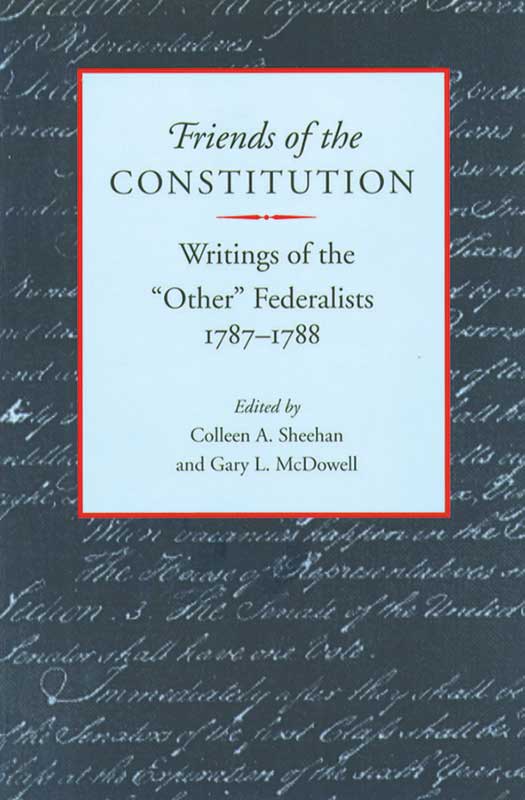
“A Foreign Spectator” [Nicholas Collin] “An Essay on the Means of Promoting Federal Sentiments in the United States”: I, IV, VI, VII, X, XV, XX, XXI, XXIII - Colleen A. Sheehan, Friends of the Constitution: Writings of the “Other” Federalists, 1787-1788 [1998]Edition used:Friends of the Constitution: Writings of the “Other” Federalists, 1787-1788, edited by Colleen A. Sheehan and Gary L. McDowell (Indianapolis: Liberty Fund, 1998).
About Liberty Fund:Liberty Fund, Inc. is a private, educational foundation established to encourage the study of the ideal of a society of free and responsible individuals. Copyright information:The copyright to this edition, in both print and electronic forms, is held by Liberty Fund, Inc. Fair use statement:This material is put online to further the educational goals of Liberty Fund, Inc. Unless otherwise stated in the Copyright Information section above, this material may be used freely for educational and academic purposes. It may not be used in any way for profit.
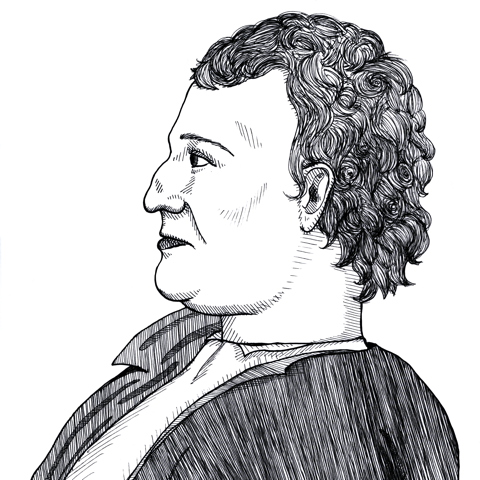
“A Foreign Spectator” [Nicholas Collin]
Independent Gazetteer, Philadelphia, 6, 10, 16, 17, 24 August and 4, 12, 13, 17 September 1787 IAn ESSAY on the Means of Promoting Federal Sentiments in the United States, by a Foreign Spectator. It is an old maxim, that no Republican Government can be lasting without the good will of its subjects. What majority of loyal citizens, or what degree of public virtue, are indispensable, depends indeed on many circumstances; but the greater they are, the more safe and happy is a state; and in many cases an apparently small defect in either may produce very critical dangers. Republican Liberty is inseparable from a certain want of energy in the Government: The indolent and selfish can often with impunity clog its most important operations: The disaffected may go deep into rebellion, before they can be legally impeached: Infernal traitors may sometimes assume the heavenly form of patriots, and while they point a dagger to the bosom of their country, are by insane multitudes idolized as its guardian angels. The people of a Federal Republic stand in the double relation, as citizens of a particular state, and citizens of the United States: In the former they think and act for their respective Republics, in the latter for the whole Confederacy. As Federal subjects it is their duty to promote the general interest—to regard their own state only as a Member of the Union—and to allow it only a just proportion. Those rights of the Federal Republic, and of each particular state, which are defined by the articles of Confederation, must be faithfully supported. The Federal Allegiance is supreme, and obligates every person to be an enemy of his own state, if it should prove treacherous to the Union. In cases not clearly defined by the Constitution, or when the occasional surrender of a right is very beneficial to the Confederacy, for another state, a generous condescension, and a Federal affection are very salutary. In Federal Monarchies or Aristocracies the people in general need not have any high Federal sentiments; it is enough, that they are attached to their own governments, and that these act their part in the Federal System. But in United Republics a general Federal spirit is necessary: because a want of it will naturally be visible in the several Legislatures, which bear the complexion of their constituents, and often are the mere interpreters of their wishes; and because Federal measures adopted by a wise and patriotic state government could not be inforced against the sense of its people. My design is to inquire, by what means this happy Federal spirit may be improved, and not to hazard any thoughts on the political arrangement of the Confederation, except what are inseparable from my subject. Four grand operations appear to me necessary—to promote a general disposition for order and Government—to limit the political Union of the respective states—to prevent any partial affection between two or more—and to render the Confederacy an object of general attachment. These operations admirably support and facilitate each other, and being more or less performed by the same means, cannot be treated separately. The Ruler of the Universe has disposed the principles of our political felicity in this charming harmony; woe be to those discordant minds, that wish to frustrate his divine design. Man is naturally an unruly animal, little capable of governing himself, and very averse to controul from others. Any person in the least acquainted with human life, knows how fatal unrestrained liberty is to the individual and society. It is absurd to expect, that a man, whose will was never curbed, can be a dutiful subject of any Government; but whoever has by a cultivated reason, and the salutary check of others, learnt to govern his passions, will easily submit to a legal civil authority. Several causes of long standing have very generally marked the American character with an overdriven sense of liberty. Parents are very indulgent to their children—very few families have private tutors—some country places have no public schools, many only at times, and often kept by indifferent masters. The facility of subsisting by very moderate industry makes every person independent. Superiority of birth, fortune, and office has hitherto been very trifling. Ecclesiastical authority has been little or nothing. The Negro slavery has no doubt often created habits of pride, dominion and severity. Taxes, and other burdens of civil Government have till the revolution been extremely easy. This high sense of liberty has indeed, even in ruder minds, produced a fierce independent spirit, without which the revolution could not have been effected, but it has also in too many created a licentiousness, at present very detrimental, and incompatible with good Government. The jealous fondness of liberty so common among republicans, makes them very loth to grant the necessary powers of Government to their duly elected Representatives: the more ignorant and turbulent pretend, that the people have a right to disobey any disagreeable law—nay, to call their Legislators to an account—a doctrine subversive of all Government. In Federal Republics these ideas are still more prevalent; because, if it is dangerous, to give full power of attorney to a person of our own choice, it is much more so to delegate it to one chosen by him. In America, an excessive love of liberty and the novelty of a Federal constitution, combine to render great numbers averse from the so necessary and rational Government of a Supreme Congress; though it has proved so worthy of the public trust. Knowledge, prudence, temperence, industry, honor, decency, justice, benevolence—all those qualities, which enable men to govern themselves, to regard the rights of others, to respect superior merit, to love order and tranquillity, are so many excellent dispositions for civil Government. They are necessary in Republics, where the energy of Government depends on a chearful obedience. As the people cannot be led as children, or drove as mules, the only method is, to make them rational beings. Men of reflection have the advantage, not only to see things in extensive combinations, and remote consequences, but to feel an important truth with more sensibility; because in a chain of reasoning the result does not forcibly strike the mind, except it can rapidly run through the links—doubts or slow apprehension dull the feeling. This accounts for the great difficulty of persuading thoughtless people in the greatest concerns, even when their understanding is at last convinced. Thus a man well acquainted with political principles, and the fate of Empires, will feelingly perceive the dreadful catastrophes, that must ensue from a weakness of Federal Union; but let an ignorant clown hear the clearest discourse on the subject—he will at the conclusion think; this may be; that looks very likely: however I’ll think farther on it. Political knowledge cannot be too much encouraged. Pope’s maxim is here applicable: a little learning is a dangerous thing—drink deep, or touch not the Castalian spring. America has many great politicians; but as a sensible gentleman very justly observed, the people in general have too much, and too little. The wretched dialogues on politics so frequent in the taverns and elsewhere, please the mirthy not less than the novel of Peregrine Pickle, while they enrage the splenetic, and grieve the serious patriot. These political tinkers think themselves capable of governing a universal monarchy: speak with contempt of their Legislators, as the servants of the public, and declaim with more than royal pride, on the Majesty of the people, meaning in fact their own servants, and their own majesty. By various excellent improvements in the public education, the institution of political societies throughout the continent, much may be done. We must however not form a Utopian scheme of making every citizen an enlightened patriot. God has not granted such perfection to human nature in the present state; but ordered the wise and good to direct their weaker brethren, and to chastise refractory members of society. Far be it from me, to recommend passive obedience, or too mechanical habits of discipline: I would rather have the people turbulent than servile. But if men submit to the fidelity and better knowledge of others in their greatest concerns—if they trust their lives in the hands of a physician—if they commit themselves, their families, and properties to the care of an experienced mariner; it is unreasonable to deny their best fellow-citizens, whom they freely chose, those powers of Government absolutely necessary for the well-being of the community, and their own. The majority of a Legislature may indeed sometimes do wrong; but it is very improbable, that there should be less wisdom and integrity in the flower of a nation, chosen as such, than in tumultuary multitudes, or the discontented individuals scattered over the country, whose number and grievances often appear great only from the loudness and frequency of their complaints. The necessity of human affairs requires even obedience to laws evidently wrong; and nothing but measures atrociously and immediately pernicious can justify resistance, when the people have the right to remonstrate, and to change the Legislators in a short time. These principles are the plain dictates of sound common sense, and should be engraved on every American heart. Religion itself sanctifies them: it commands us to be subject for conscience sake, to regard the civil power as the minister of God for our good. Rom: 13, and not to use liberty as a cloak of maliciousness 1 Pet: 2. If the almighty has made civil Government an indispensable means for human felicity, and if the greatest miseries and most horrid crimes are the certain fruits of anarchy; loyalty to a legal Government is a sacred duty to him, and disobedience an atrocious sin. This doctrine should be held up in the pulpit, and be taught in the catechism of every denomination. Grown children will understand it equally well with the first principles of morality. I would even insert the words to honor and obey the Congress, &c. Sentiments of loyalty thus imbibed with the first ideas of religion, among the best and happiest sensations of a young heart; and afterwards confirmed by reason and experience, will be dear and sacred through life. IVCivil society becomes, in its natural progress, by degrees more happy. The faculties of human nature are unfolded and improved; consequently better enabled to pursue and attain the means of felicity, which lie in man himself and in external nature—the many wants of reciprocal assistance in these pursuits call forth the social affections—the very competition of interests, and clashing of passions, teach the necessity of good manners, and moral government. I say, a natural progress—because a civil society may set out in a wrong way; or in a prosperous career be retarded, misled, and entangled by the ignorance or ill designs of the guides, or the laziness, obstinacy, disorder of its members. The progress of civilization in the United States will, if properly conducted, gradually improve the dispositions necessary for civil government, and the federal in particular. The rapid encrease of population will soon multiply and draw closer the links of society. Idleness and a slovenly œconomy will then be corrected by a sense of real want, or at least the loss of great comforts. The labouring people must work more; yet will be much happier by a greater sobriety and frugality. Smaller portions of land must be improved with more assiduous, orderly, and ingenious industry. A competition in the several trades and manufactures will produce a greater emulation, in workmanship, and complaisance to customers. Commercial dealings will require more punctuality and exactness. In Europe the payment of a small sum to the very day is often indispensable; because a trader depending on several such, cannot, if disappointed, discharge his contracts, or carry on the branches of his business; and one disappointment creates many hundred, where national industry has formed extensive and intricate connexions—In America, the neglect of payment is not so pernicious; people expect to be disappointed by each other; they can easily find credit; and the great majority, depending on agriculture, or the most useful trades, cannot at the worst want necessaries. Hence, merchants, shopkeepers, tradesmen, and farmers are in accounts with each other for years: money-hunting is a common expression, and very proper, as many hunt for days, and cannot get a shilling. The multiplicity of interests and connexions, that increases in every progressive society, and is in America quickened by a rapid population, will improve the general manners by a deeper and more frequent sense of the necessity, propriety, and advantage of an equitable, obliging, and decent conduct—men will from interest and examples learn to check rude and selfish passions; to yield, not only to the rights, but sometimes even the fancies of others; and will be easily reconciled to this self-denial, because they receive the same good treatment from others. The civil arts will in their progress visit the ruder parts of the country; procure ease and affluence, and thereby taste and means for education, reading, social pleasures, and for the genuine elegancies of human life, which improve the understanding, embellish the imagination, and refine the passions. The necessity of civil order encreases with the multiplicity and reciprocal connexion of civil affairs—The many objects of wealth and pleasure raise eager competitions, and excite the ill-disposed to acts of violence and fraud; they also produce inordinate gratifications in luxuries—Fortune and talents will claim an invidious distinction—moral prejudices and high principles of honor may sometimes raise warm contentions—Not only malice and selfishness of individuals, but in many cases their neglect, may destroy the property and lives of thousands—Local situation, wealth, &c. may expose a nation to foreign attacks—This and commercial affairs, may involve it in extensive connexions with other powers. All this will point out the necessity of legislation, police, public defence; of a general powerful government; which cannot be supported without a chearful obedience, personal services, and pecuniary contributions—Let us compare, in this respect, a peasant from a wilder part of the country with a citizen of Philadelphia. The first has every necessary of simple life within himself; he has no law-suits, fears no thieves and robbers; knows nothing of a foreign enemy—The latter finds a jail the most necessary building in the city; he must trust a great part of his property among strangers, for which a regular administration of justice is his only security—He sees the necessity of strict police, not only for conveniency, but health, life, and his dearest interests—a rude carter may drive over his children—unlucky boys may set his house on fire by their squibs—the stinking dock may cause a putrid fever, by which he may die or lose his wife. He knows, that in case of war, a frigate may burn the city, if the river is not fortified; and that the whole militia of Pennsylvania could not defend him without a federal power. The events of Massachusetts Bay confirm my assertions; the rebellion broke out in the remoter counties—Boston and other great-towns are loyal. In Europe riots are more frequent in great towns, where a numerous and indigent populace is more corrupt than the poorest country people. In America the cities have yet but a small mob; the great body of people live in the country; and numbers have, from ignorance, rude manners, and a weak sense of social dependence, dispositions very unfavorable to civil, and especially federal, government. The civil corruption, so visible in many ancient states, and aggravated by the pens of some great political writers, has made it a very common opinion—that high civilization brings on political diseases, and final dissolution. But we should consider, that a refined civilization is not principally an immense apparatus of wealth and luxury: such a corrupt national taste will indeed be fatal—that although every period of the political body, like that of the human frame, has its peculiar disorders; yet there is not such a corruption in human nature, that men by too near approach must infect each other—that the United States, whose constitution is young, and tainted with no mortal distemper, may hope by a genuine civilization to live forever. Human reason is a ray from the eternal MIND, and true goodness an image of his loveliest attribute. They can in conjunction plan the felicity of the greatest political systems; must they then be confined to narrow spheres? Must they be conquered by the night of ignorance and vice! No! the constellation of noble minds shall, we hope, shed a bright day over America till time is no more. VIIt cannot be too well considered, that as Republicans govern themselves and each other, they must be good and wise; that in this confederacy, so free and extensive, benevolence and integrity are the very elements of political union. Manners ought then to be a capital object, in all the operations of government, and patriotic exertions of individuals. There is an immediate necessity for improveing the public education. The encreasing idleness, profligacy, thieving, and robbing, among the populace of great towns, call aloud for the erection of free schools: without them Philadelphia will soon have a numerous and desperate mob. Reflect on the consequence—The mad rabble of a crazy Lord Gordon, had nearly burnt London—The children, that lisp horrid imprecations, and strike the pavement with impotent rage, may, when 12 years old, murder your son—The many idle boys, who do nothing but beg, play, and fight,—will soon be the very men for a rebel Shays. In the country, every town should have one or more good schools. For want of clergymen, schoolmasters are in many parts the only moral teachers; I hope to God then none among them will hereafter be illiterate knavish vagabonds: can such instructors and patterns qualify a people for domestic, social, and civil duties? for the important functions of jurymen, magistrates, electors, legislators? In some places we see good plantations with convenient buildings, well kept taverns, and shops with many articles of luxury; but no house of public worship, and miserable schools. Silly people may admire such improvement; for my part I lament this unequal civilization, and find ample reason for it: The owner of this fine plantation got it by cheating illiterate wretches, who did not know what they signed; another lately belonged to a spendthrift, who, because he knew no higher enjoyment, drank grog, and followed horse racing—Several likely girls have been seduced, under promise of marriage, by fellows, who are too free and independent for the bonds of matrimony; and besides cannot support a family, because they hate work, and must ride an English horse—Gentlemen of superior fortune and character, who for many years have been in civil authority, are turned out, because they are against paper money; and ignorant, knavish demagogues chosen for legislators—A number of labourers play at quoits for the whole day at the taverns, running in debt for liquors, while their wives and children want bread—Numerous law-suits arise from drunken frais, malice, lying, fraud, extortion, inability and unwillingness of paying debts—executions are common, and often ruinous to whole families. It is a great maxim in government, to balance the human passions: objects of wealth and pleasure are dangerous without a proper check of moral and religious principles, and sense to see the consequences of ill conduct, though in many cases remote and intricate: and the desire of these objects is not to be estimated by their real value, but the circumstances of the people. One person gets drunk on rum, another on claret. A common farmer may long as much for his neighbour’s meadow, as a wealthy proprietor for a fine country seat. A chintz gown is the wish of a country girl, as a diamond stomacher of a peeress; a young rake in bright buff on a fine horse is as dangerous to her, as an embroidered beau in a coach and six is to the other. The necessary moral and religious instruction in public schools need not be impeded by the difference of religious professions. Moral principles are universal—Whatsoever ye would that men should do unto you, even so do unto them, love thy neighbour as thyself: These principles of equity and benevolence, are engraven on all human hearts by the same Almighty hand; known in Japan and America, in Lapland and Otabeite. The moral precepts of Christianity are the same plain dictates of natural conscience, refined and exalted by motives of religion. I have seen in Europe, a treatise on the whole system of natural religion and morality, comprised in a small duodecimo under the title of Dialogues between an old man and a boy of eight years: the author in a clear and affecting manner impresses the young mind with a sense of every moral duty; even humanity to the brute creation; and the political virtues of citizens, and nations: such a book is a treasure. In the Christian religion, the catechism of Dr. Watts would be the best system, for perspicuity, and universality. In schools, where the bible, and moral writings are used, the great defect is: not to explain, apply, and combine the several moral duties; which a judicious teacher may do to the satisfaction of elder children. Some virtues are peculiarly important in a certain state of national affairs, or the circumstances of a particular county, and even township. There is an intimate connexion between the moral virtues; they defend, support and adorn each other, so that one cannot be violated without hurting the other. Few men are so ill disposed as to have no good affections; most have some tender part in the heart, by which they can be led—if therefore all the consequences of virtue and vice were clearly and pathetically pointed out to a young person; he would behold so much dignity in one virtue, beauty in another, delight in the third; he would feel the meanness, anguish, horror of the several vices; he would find the impossibility of indulging one vicious inclination, without stabbing his favourite virtue, the mistress of his heart—he must, if not of the worst clay, become a tolerable character; and if naturally good, grow excellent. Men do more frequently rush into crimes and miseries from blindness, than the impulse of a wicked heart. Many, when they awake from intoxicating passions, or behold the sparks wantonly thrown, kindle a dreadful fire; stand aghast at their woeful gilt; and unable to pluck the daggers from their hearts, plunge with despair into a dark eternity. That religion is a most valuable security to states, by its general influence on men of diverse characters and conditions, is an opinion held not only by all the good and wise in the world, but by every thinking man. Montesquieu values it more than all the fear of despotism, the honor of monarchies, and the political virtue of republics. There is a striking similarity in the sentiments of truly great minds in every age and country: Cyrus the Great never begun a battle, before he had sacrificed to Jupiter the ruler and preserver;* and the great Gustavus Adolphus King of Sweden used to say, that the best Christian was the best soldier.** The fears of religion have a salutary check on many: if not on every vicious disposition: on some—if not constantly; at some periods; would it then be wise, to take off one strong chain from ungovernable beasts, and to let others quite loose on society? Mixed characters are highly improved by the blended effect of hopes and fears, instruction, and a certain air of tender solemnity. Minds naturally good must derive the greatest strength and noblest elevation from a firm belief—that every deed, and every virtuous thought are known by a most holy God, who values moral excellency above all that is great and beautiful, as a mirror of his own perfection—that all the toils and sufferings in the cause of virtue, are so many dear proofs of our fidelity to HIM; and so many steps to immortal glory and perfect felicity; where the good of every nation shall meet, and the remembrance of every noble deed will be a source of rapture through all eternity. How will these sentiments warm and exalt the human mind? Happy the nation, that has such heroes and statesmen! A firm belief in the soul’s immortality is a necessary support for the best affections. You wish to mark every day of your life by some good action—You can sacrifice ease, property, health, popular applause for your duty—You can die in tortures for your country; but alas! every step in this bright career hurries you to that dark goal, where the head, that plans the felicity of an empire, and the heart that glowes with philanthropy, shall lose every thought and feeling—where an Henry the Fourth, and a Ravailac, Washington and Arnold, shall mingle in the parent-dust—at such a thought heaven soaring genius droops; virtue sighs with anguish; the noblest minds wish to be a worm. The letter of the late King of Prussia to Marshal Keith, on the death of Count Saxe, Marshal of France, breathes a spirit of melancholy horror through all the consolation of a false philosophy, and the charms of poetry.† But, he was a great man? ask that question from the many hundred thousands in the shades below; by whose blood every acre in Silesia was bought—God preserve America and the world from such great men. VIIUnbelief of a future state is often the offspring of immorality, and never fails to encrease national iniquity. Providence has awfully warned mankind against it by the ruin of the greatest empire in the world. The corruption, that like a gangrene so rapidly dissolved the Roman Republic, grew from that Epicurean doctrine dressed up by Lucretius in all the beauties of poetry. The historians and moral poets of the age prove it sufficiently. Horace, who certainly was no bigot, laments the neglect of public worship, and the ruinous condition of the temples.* The severe, but judicious Juvenal exclaims—To what dire cause can we ascribe these crimes—but to that reigning atheism of the times—ghosts, Stygian lakes—are now thought fables—He then strongly paints the grief and indignation felt in the Elysian abodes by Curius, Camillus, the Fabii, and Scipios, and by all the brave Romans slain at Canna, at seeing a glorious Republic, reared by their virtues, blood and victories, ruined by this vile doctrine. The Roman constitution was originally interwoven with strong principles of religion; which continued in force during the prosperous times of the Republic. Polybious, an eminent politician, ascribes to these her superiority over other nations, and very justly censures those as wretched politicians, who at that time endeavoured to eradicate the fear of a future state out of the minds of a people. He draws a very striking contrast between the Roman integrity, and the corruption of Greece already prophane by this false philosophy—trust, he says, but a single talent to a Greek, who has been used to finger the public money; and though you have the security of ten counterparts, drawn up by as many public notaries, backed by as many feats, and the testimony of as many witnesses; yet with all these precautions you cannot possibly prevent him from proving a rogue; whilst the Romans, who by their various offices are intrusted with large sums of public money, pay so conscientious a regard to the religion of their office oath, that they were never known to violate their faith, though restrained only by that single tie.* Wealth and dominion fostered avarice, luxury, ambition—the execrable doctrine imported from Greece, grew rapidly in this soil, destroyed public virtue—and the republic. Cicero, and Sallust paint the corruption as dreadful; conspiracies and civil wars were inevitable consequences of it. Among the** banditti of Cataline were such as had committed sacrilege, murdered parents, and made a livelihood by false swearing. In the debates of the Senate on the best mode of punishing these rebels, Caesar openly asserted, that beyond the grave is neither pleasure nor pain, and that death could not be a severe punishment to them who only regarded it as the end of all troubles.† The political corruption of the British Empire, which undoubtedly is dangerous even for a limited Republic, proceeds in a great measure from irreligion. Among the higher classes many are neither good Christians, nor sound Deists. The instruction of the lower classes has been extremely neglected, ’til the frequency and enormity of crimes has at last forced a thoughtless government into expedients which might easily have been adopted long ago. The immediate benefit from Sunday schools is a proof, how many lives would have been saved, and what losses and misfortunes avoided by that simple remedy. But alas! nations, like silly individuals, are often intent on show and pleasure, while a cancer gains on their vital parts. Irreligion is peculiarly baneful to Republics even in this respect, that it weakens or annihilates the sacredness of oaths, which are so frequent in the many public charges, and may, especially in juries and elections be considered as the bulwark of the constitution.‡ The excellent Lord Kames§ reproves the abuse and careless administration of oaths—a most salutary advice even to America—I hope, magistrates will not tender an oath in a hasty muttering manner equally prophane and disgraceful; and that other states will not learn from a neighbouring assembly to swear people for a pound of sugar, and a quart of rum. I speak here of religion only as a political blessing, given by the Universal Parent to all his children, that will accept of it. In this view we find often among dark superstitions some bright and fixed principles, that like polar stars lead mankind to virtue and happiness. Virgil’s description of a future state is not indeed perfect; but it is far superior to the picture drawn by many Christians, who people heaven with such a multitude of knaves and fools, men of faith without works, saints without common honesty, and bigotted tyrants; and doom to eternal misery a Plato and Marcus Aurelius, nay millions of the human race, and, I shudder at the thought, numbers of innocent children, who did not know the right hand from the left. In Virgil’s hell you find unkind brothers, unnatural sons and daughters, knaves, misers, adulterers, rebels and traitors. In his paradise there is not one bad character—but the good and wise, who have been the benefactors of mankind, inventors and promoters of useful arts, moral sublime poets, holy priests, and those who for their country have freely bled, and nobly died.* Contempt for religion is by no means general in America; the great mass of people has rather a spirit of devotion; which however in some cases must be animated, and in others regulated. The want of regular worship in so great a part of the country is a severe evil: many learn absolutely nothing—others acquire absurd and dangerous ideas in religion—and many of good principles degenerate, because they are seldom or never animated by the persuasive address of good and sensible teachers. A sermon every Sunday is a powerful antidote against selfish and malicious passions,—it would often dispose people for good government better than the wisest laws, and by promoting all the civil virtues, enable them to pay taxes, and to fulfil all the duties of a good citizen. This want is often caused by neglect and a penurious disposition, which throws the whole burden of supporting public worship on a few generous persons—in that case it is a mark of ignorance and a depravity incompatible with public virtue; because people, who begrudge a few shillings for what they really believe will be of importance to their future happiness, and that of their children, cannot surely be liberal in the support of government. Another cause is the mixture of several religious professions, and will I doubt not be in part removed by the progress of liberal sentiments. The greater majority hold now the sound principle, that all faithful worshipers please the Supreme Being; why then should smaller differences prevent so great a national blessing as a general public worship; why do not the several denominations, who admit of regular teachers, join in supporting some kind of worship, as in some parts of Germany and Swisserland, where Protestants and Catholics worship under one roof. Ministers, who are real Christian philosophers, would easily please all rational hearers, because they teach only what is necessary, good, and sublime—no mithology, no metaphysic jargon, no dull mysteries, no useless controversies will disgrace their preaching. It must be a bad religion, that is not preferable to irreligion. Such, says an American author,* is my veneration for every religion, that reveals the attributes of the Deity, and a future state of rewards and punishments, that I had rather see the opinions of Confucius or Mahomed inculcated upon our youth, than see them grow up wholly devoid of a system of religious principles. A sentiment so just cannot be too much enforced. The main question in matters of religion is useful truth: and even errors that improve the heart without impairing, the judgement in other things, are valuable. Without this generous association of religious professions, some of the most cultivated parts of the country will suffer yet a long time from the want of public worship, and the influence of ignorant, gloomy enthusiasts; and the scattered settlement, will become very savage. In this friendly concert the harsher notes of religious discord would be excluded; because a preacher could not without giving offence, insist on peculiarities, but must dwell on the essentials of religion. By this, only the most valuable parts of each religious system would be retained, and gradually formed into a system more refined and sublime. The limits of an essay will not permit me to pursue this important subject, but it demands a serious consideration. The clergy in America are sufficiently respected, but often badly supported; which is very detrimental to religion. A clergyman should not desire wealth; but he ought to live according to his station, and have means for private and public beneficence. If this is with-held, the clerical profession will frequently be taken up by persons of low education, who have no prospect in life, and by ignorant, intemperate devotees, who may infect multitudes with a pernicious superstition. In this lies the danger of being priest-ridden in America. The clergy are not prompted either by sentiments or circumstances to ambitious designs. The examples of hierarchy in other countries need not raise any suspicion. They arose from an overdriven and mistaken devotion, not any original plans of the clergy; and have in general been less oppressive than aristocracies.* It is reasonable to suppose some good dispositions in a person who takes upon him a sacred function, and he must be very bad not to grow better in the exercise of it. Clergymen must be sensible of the importance of civil order to the interest of religion, and the good of mankind. So far as I know, those in America are general friends of true liberty, and supporters of a federal government. XIn America, the sudden influx of money and foreign luxury, could not have produced the extravagance so much complained of without the aid of an overdriven principle of equality. I have often heard fellows complain, how hard it is that a poor man cannot get his belly full of rum like other people. However, this hardship is not deemed a disgrace; nor is a luxurious table as yet reckoned honorable in America. Besides the inferiority in costly fare can generally be concealed. But disadvantage in external appearance so visible to the public eye revolts against this levelling principle—as poverty, it is a serious evil where wealth is in high estimation—as want of gentility, it is peculiarly obnoxious to those that associate the ideas of wealth and refinement. Inequality of property dictates a difference in living; if people do not comply with this from principle; pride, luxury, vanity will urge them to a thousand tricks of knavery and violence, and perhaps to mutiny and open rebellion—extreme liberty, untempered by religious and moral principles, is the source of agrarian laws, and all the foul monsters of anarchy. I despise aristocracies, and abhor the idea of making religion an engine of slavery—but I wish to make people sensible, that Almighty God has established an order in human affairs, on which political happiness absolutely depends. Great disparity of property is bad; but some must arise from the inequality of genius and industry, inheritance, and that chance, which in fact is the disposition of providence. Whatever is the quantity of national wealth, the great body of a people can never be rich; an easy, decent competency, is the utmost they can obtain, and should be the height of their wishes. The people of America cannot complain of poverty—the land is generally fertile, and amply sufficient—all useful trades are profitable—nay, every pair of industrious hands is a competent estate—the present difficulties may easily be removed by a proper federal government. America equally removed from the distress of poverty, and the danger of wealth, has obtained from all-bountiful heaven that happy lot, which Solomon in all his glory thought the most desirable[;]* why then that love of money! which has been the root of so much evil, and pierced her through with so many sorrows.** As to distinction; integrity, goodness, manly sense, an independent spirit, invincible fortitude, patriotic virtue, are the genuine honors of a Republic; honors open to all; honors, without which all the gems of India, and all the gold of Peru, are shining toys. The wealthy are only more respectable, if they excell in these qualities: if grateful to God and their country, they enjoy their wealth with dignity, humanity, generosity and public spirit. Whoever acts honorably in a lower station, is infinitely superior to one that disgraces the highest: There is no comparison between sound feet and a dropsical head. A labourer, who by honest industry supports his family, whose heart can feel, and hand can act for his country, is a far greater man than a volumptous, idle, selfish beau, though he was covered with rubies—the one is a rough solid stone in the ground work of the federal system; the other a rotten piece in the gilded dome. That labourer’s wife, who continually studies the comfort of her husband, who toils for her numerous children, and often gives them the bread from her own mouth, is infinitely more of a lady, than those women of quality, who carry a dress twice the value of their husband’s income; who gad about from place to place to show their finery, and prattle nonsense; who find no pleasure in the nursery; nay, ruin husband and children by a cruel dissipation. These are the sentiments of the noblest men and women in every nation, and in every station of life; and they cannot be too much impressed on America. If wealth and show is the great object, people will all run mad after gugaws, scuffle and trample on each other, and raise a bloody fray. Neither laws nor habits can here authorise any man to say keep your distance; and your right to a more glittering bauble will be disputed by many—what then can be done, but to teach all poorer or richer, not to overvalue these trifles, and at any rate to acquire them honestly. In Europe, an established order of civil society prevents a general infection by luxury—the middle gentry does not emulate the first nobility; and is not rivalled by the yeomanry: such vanity would be ridiculous. In America the maid too often vies with her mistress, and a common laborer can with propriety dress like a governor. The question is not, whether other countries do not surpass America in avarice, luxury, and vanity; it is a poor consolation to a sick man, that his neighbour is worse. The symptoms of corruption so feelingly described by many good and wise Americans are not trifling, and they are founded on open well-known facts. The civil war in Massachusetts, and the treason of Rhode-Island are alarming proofs. Early marriages are marks of national prosperity, and have been very general in America; they are not so now, especially in the great towns—because women not worth a groat speak with scorn of 200 a year; and because pretty beaus and smart bucks prefer English buttons and Madeira wine to the best American girl. The patriots of America will then be sensible, that a putrid fever is not to be trifled with; principiis obsta, fera medicina paratur. A regular progress of national wealth under the direction of virtue and taste, will considerably promote national happiness. The unequal civilization of America has in a great measure occasioned that false taste so well criticized by judicious writers.* That dress, says one, which unites the articles of convenience, simplicity, and neatness in the greatest perfection, must be considered as the most elegant. But true taste goes farther—it has reference to age, to shape, to complexion, and to the season of the year. The same dress which adorns a miss of 15, will be frightful on a venerable lady of 70—But the passive disposition of Americans in receiving every mode that is offered them, sometimes reduces all ages, shapes, and complexions to a level. Our distance also from our models of dress, &c—a thin garment which will scarcely form a visible shadow, and was designed for summer dress in Europe, may just be introduced into America when frost begins. Yet the garment must be worn; for before the arrival of a proper season there will perhaps be a new fashion.—He justly commends the simplicity and neatness of the Quaker ladies, who by neglect of superfluous finery, dress with two-thirds of the common expence; and after a handsome compliment to the native charms of his country women, entreats them not to be implicitly directed by the milliners and mantoa-makers on the other side of the Atlantic. “We behold,” says Dr. Rush, “our ladies panting in a heat of ninety degrees, under a hat and cushion, which were calculated for the temperature of a British summer.* —It is high time to awake from this servility—to study our own character—to examine the age of our country—In particular, we must make ornamental accomplishments yield to principles and knowledge in the education of our women.” A good taste is not the spontaneous product of sense and delicacy; it implies an accuracy of judgment, a refinement of sentiment, a perception of order and propriety, not to be acquired without long observation on men and things. Hence the greatest genius has an imperfect taste in youth—and the taste of a young nation cannot be perfect, for want of regularity in many things. The states of Northern Europe have suffered much from an indiscreet adoption of French manners—It is no wonder that [in] America a young easy country girl should prejudice herself by an unreserved imitation of Europe, and especially of her grandam Great-Britain. XVI have now shewn, how federal sentiments must be acquired by education, manners, laws, morals, and religion; and proceed to consider how they may be promoted by civil institutions—my reader will please to remember, that the political arrangement of a federal system is my object only in this view. There can be no republican liberty, but where the great body of the people does by representatives exercise the sovereign power. A great number should therefore be qualified to rule in their turn—the far greater majority should have the knowledge and virtue of electors—the whole nation ought to have a warm zeal for liberty, integrity and courage to intimidate the boldest ambition; yet be generous enough to love and respect a good government, and to support it with their lives and fortunes. We may heartily despise those politicians, who pretend to establish a noble republican system only by a nice balance of civil powers. Can a Palladio erect a palace, that shall be the wonder of ages, with untempered mortar, soft bricks, and rotten timbers! Can a Vauban with such materials form national bulwarks, that shall mock the fury of batteries, and the disperate attack of the forlorn hope. Suppose the Turkish Sultan had a mind to transform his vast despotic empire into a federal republic, and had for this purpose all the best politicians in Europe and America, and the honorable Federal Convention; do you think, he could do it? No, a dreadful civil war would kindle from the Black Sea to Lybia, and the blood of a million would only cement the vast prison of slavery. In the republican edifice, the people are not inanimate materials, but living stones. They must not only be sound and proper, but also willing to lie, to stand, to join as the architect wishes, nay, to go into their proper places; because in a free country there is no machinery strong enough to hoist massy stones and heavy timbers against their will—no iron capable of trussing a roof, when the rafters will not join—no force to fix a kingpost against his inclination—to make the stately columns, that bear up the dome, stand in their places—The very stones of the foundation can, if they please, begin to fight, and like a fatal earthquake shake the whole fabric into a heap of rubbish. Reflect on this ye federal people! Spurn the crooked stick; let the unwieldly mass stick in the mire; despise every showy but hollow hearted tree; be like the best freestone; firm, sound, invariable, as your live oaks and evergreen cedars—consider also, that the stones, however solid, must be smoothed and joined by the yielding well tempered mortar; that discord is a bursting mine. Ye political architects! exert all your skill; poise your centers of gravity; calculate the weights and bearings; Consult the plans of Montesquieu, Harrington, Stuart, Hume, Smith,* and others—but consider that never did so much depend on the quality of the materials; ameliorate and innoble them therefore by all means; improve their solidity, firmness, cohesion; animate them with the generous spirit of true freedom: make them say—here we are, place us where we suit best: that is the post of honor, whether in the lowest part of the foundation, or in the towering arch. Then shall your masterly hands rear a grand temple of federal liberty, perennial as this western continent, and the sun that gildes it with his mild evening rays. THE PRINCIPLES of SENTIMENTAL POLITICAL UNION.Not only the necessaries and conveniencies of life, but the principal enjoyments of human nature, depend on society. The Great Creator has therefore given us strong social passions, and the best minds have the most of this moral magnetism: The little girl that weeps for her doll, will be an excellent wife and mother—A man of sensibility would in a wilderness place his affections on the most beautiful trees. A well-ordered political society is a theatre for the noblest exertions of human genius, the best feelings of the human heart. To be the guardian Angels of a nation, to chain the monsters that ravage it; to repel daring foes; to diffuse the heavenly light of virtue and knowledge; continually to open some rich source for the ease and comfort of mankind—must indeed be a glorious delightful employment. To form connexions with persons of enlightened and exalted minds; mutually to give and receive the glad applause, and respectful affection; to have the grateful esteem of the good and just; nay, to dispise the rage and falshood of the wicked; to pity and forgive well meaning enemies—all this is high enjoyment. While man is wrapt up in himself he is a mean little being; but when he steps out from his prison, he becomes great, and rises to an amazing glory. The generous patriot lives but for his country, and will gladly dye for it—his country’s love of him is his very soul, entwined with every fibre of his heart; the dear thought of it is his last in this world, and remains with him through an happy eternity. Inferior men will be also much improved by a social union. There is a native dignity in the generous affections, that strikes even the selfish, and often makes them forget themselves. Society calls many of these into play. The common object is a center, that attracts numbers of dissimilar dispositions, and thus brings them near each other—it becomes a source of reciprocal good-will, because they expect to attain it by joint endeavors; in this pursuit they frequently must exchange mutual good offices, and upon trying occasions sacrifice ease, humour, interest; leading characters will by their talents and public virtue, animate and attach the less sanguine; in action and conversation will arise the sympathetic passions of hopes and fears, grief and joy, admiration of worthy members, dislike of the bad, with all the congenial sentiments on the common cause. Self love itself, if not too sordid, is gratified in a social union—Besides a share in the common object, a new and often superior interest is acquired: the pleasure of acting as a member; the honor, dignity, importance, and whatever advantage that attend it; a participation of the merit and glory of eminent fellow citizens, and of the whole society, all which in a great measure reflect on every member. If therefore the common object of attachment is interesting, and a sufficient majority has those moral principles, which are the stamina of all rational government; the political union has a natural tendency to grow stronger—because the selfish passions will necessarily be weakened, or take a better direction; and all the sentiments of integrity, honor, private attachment, and public spirit, will encrease; by the exercise of social duties, by civil habits, and the gradual incorporation of the body politic, which will be finally moulded into an excellent form, and animated by the same generous spirit. Let us then consider the principal bonds of a sentimental political union, and apply the theory to the United States. XXThe grand federal interest, which is to preserve independency, safety and peace, requires, next to a solid military union, a concert in some other important affairs. The states must be reciprocal guarantees of their several constitutions, when they shall be properly settled; because an alteration in these may break or prejudice the union—As if any state should unanimously or by a great majority, set up monarchy, aristocracy, or democracy; or should annul the habeas corpus law, tryal by juries, and the like institutions, which are the pillars of republican liberty. If corruption becomes so rife in any state, that a party could establish itself in oppression; the federal power should redress the grievance, though it might not threaten the confederacy with danger—because such an evil may be worse than a rebellion, or a foreign invasion; and the states ought surely to guarantee each other that happiness, which is the end of all political union. All external commerce must be under a federal regulation in all cases, when it involves foreign treaties and political connexions; affects the federal revenue; or creates a collision of interest between the states. It is evident that internal commerce will also, in many cases, become a federal object in a country that has 3000 miles extent of coast, and an inland navigation of the same length, with large bays, many great rivers, and numberless inlets. There cannot be any doubt, but a federal power will, whenever its interference is necessary, manage the national commerce to the best advantage. It will obtain from foreign powers, every advantage that the situation of the United States can procure—it will prevent disagreement and war with other nations—it will do justice to the respective states, and keep peace among them, when it would be disturbed by numberless collisions. But I am persuaded, that with every exertion of federal wisdom and integrity, no subject is more likely to become a bone of contention, than this, if the states do not display that reciprocal generosity, and confidence in the federal head, which I have so warmly recommended. First, commerce is in its nature very variable, and more so in America, where its regular course has been so disturbed, and where new channels of industry from manufactures not yet formed, and products of regions not yet explored, will arise and mingle in many intricate windings—in consequence of this, the respective commercial rights of the states cannot be fixed at present, but require successive alterations. Secondly, the people of America have an overdriven spirit of trade; and great numbers that formerly derived wealth and support from it, are by the present stagnation in great difficulties, or what to some appears very hard, cannot make money as they used to do. Thirdly, many have too sanguine and unreasonable expectations of commercial benefit from the exertions of an adequate federal power. I shall beg leave to observe, that in some respects that very decay of trade so much lamented, is a real advantage. Before the war, America was continually in debt to Great-Britain for articles of luxury. After the peace, all Europe poured in an immensity of goods upon her; the one was as foolish to give, as the other to receive an unbounded credit. Many of the European merchants expected to find Mexican wealth in the United States; and these chearfully went in debt for trinkets and finery in the high spirits and golden dreams that naturally followed a war closed with so much honor and success.* “Triumphant over a great enemy, courted by the most powerful nations in the world, it was not in human nature, that America should immediately comprehend her new situation—really possessed of the means of future greatness, she anticipated the most distant benefits of the revolution, and considered them as already in her hands.” Is it not very happy that these thoughtless adventures and imprudent credits from foreign countries have ceased! that some silver and gold is left! that the demands of foreign nations are not become so great as to make us insolvents, and bring on a war to compel payment! Necessity and good sense will, I hope, stop that torrent of iniquity, which a ridiculous fondness of glittering toys has poured over the land; which threatened to annihilate the landmarks of common honesty, and to break down the barriers of national integrity, honor, liberty, and independency. Far be it from me to dissuade from those measures, which may alleviate the distresses of the commercial interest, and its dependencies; but when this is done, I sincerely wish to check, for the future, the overdriven spirit of commerce, so unsuitable to America, and in many respects pernicious. “So uninformed,” says the last mentioned author,** “or mistaken have many of us been, that commerce has been stated as the great object, and I fear it is yet believed to be the most important interest in New-England. But from the best calculations I have been able to make, I cannot raise the proportion of property, or the number of men employed in manufactures, fisheries, navigation, and trade, to one-eighth of the property and people occupied by agriculture, even in that commercial quarter of the union.” This author very judiciously ranks agriculture, manufactures, internal trade, and foreign commerce in the first, second, &c. places, respectively. It is but just to pay this gentleman the compliment, that his ideas of national œconomy are not warped by professional habits, but just and liberal. His theory corresponds with the principles of an excellent modern author, who ought to be generally perused.* At present, necessary manufactures are a great object, and may by prudent spirited exertion soon flourish beyond expectation. These will improve agriculture and promote internal trade. With them jointly, America will be a great, powerful, and in a just sense, wealthy country, without any dependence on foreign nations. She will easily obtain the few valuable articles really wanted, without any solicitations or compliments. China, Indostan, and ancient Egypt, countries of high population and wealth, have had but little external commerce. The coal trade between New-Castle and London, employs more shipping than all the carrying trade of England.** What would you think of a great Virginia proprietor turning shopkeeper! weighing a pound of sugar, drawing a quart of molasses twenty times a day; measuring inches of tobacco; disputing with sordid customers about weight and measure; cajoling and humoring huckster women, or ladies who in sentiment are not above such, for their custom; solicitous from morn till night how to make a penny. Can such a man have noble, generous, independent sentiments, suitable to his fortune? what will he be in two or three years? Is he, or will he be, qualified to command a brigade, to act as a governor, or member of Congress? America is a great heiress of an immense landed estate, with fruitful plains, charming meadows, green stately woods full of game, mountains of ore, glimmering lakes stored with fish, numberless limpid brooks that embellish and fertilise the land, fragrant orchards and blooming gardens. She can keep a plentiful table, dress in fine cloth, linen and silk of her own, build stone, brick and cedar-houses with her own materials; she can make her own ploughs, boats and fishing tackle; she need not go abroad for steel, guns and powder. By swapping a little tobacco for paint and some little trifles, she can even ride round her estate in a coach and six. Her fine flour will furnish her tea-table, and purchase rum for her hunters and fishermen. This great lady need not, with Nicholas Frog, look for suckers in every puddle, or hunt in distant forests for drugs among serpents and tigers.* She need not, with Highland Peggy, knitt stockings till her hands are all in blisters;** nor with John Bull† hammar hardware, and comb wool till she becomes sore-eyed and phthisical—coax the fancy of customers with frying-pan and gridiron-buttons, and by forcing the scarlet on a haughty lord Strutt,‡ get a black eye and a broken pate. It would require many papers to shew all the evils arising from an absurd spirit of trade. Let a few facts speak. How many robust fellows cry limes and clams about the street, who ought to work in iron forges! What number of huckster women sit with a few apples and gingerbread, who should be at the spinning-wheel! how many lads and grown men stand leaning over the rum-barrel! We have half as many sellers as buyers; how shall they live! will not shifting, turning, going in debt, gradually weaken the principles of honesty? can a continual minute attention to interest be consistent with generous and patriotic sentiments! when you continually handle brass, will not your hands smell of it? Among the country people a spirit of petty trading and sordid speculation is, in some places, too common—The most interesting conversation is how poultry and butter sell in the market—swapping horses is a favorite trade—vendues are entertainments, where they vie in buying on trust; this nuisance has occasioned a very common saying, that one vendue is the mother of many; consequently of law-suits, executions, and moral depravity, complaint of hard times, and murmurs against government. In every country excess of petty trading is marked with cunning and sordid selfishness. The Chinese are very fraudulent: I have been informed that some of the crew in the late China ships, were imposed upon by pieces of wood in the shape and colour of gammons. An extensive foreign commerce would involve America in troublesome political connexions, perhaps in wars, and undoubtedly create parties at home. A spirit of commerce is unfavourable to those high sentiments of honor and military virtue, which are the only real bulwarks of a nation. China, with a million or more of standing troops, was conquered by a small army of Tartars, who established their empire and yet have a prince of their blood on the throne. Montesquieu remarks, “that when Carthage made war with her opulence against the Roman poverty, her great disadvantage arose from what she esteemed her greatest strength and chief dependence. Gold and silver may easily be exhausted, but public virtue, constancy, firmness of mind, and fortitude are inexhaustible.” The Carthaginians in their wars employed foreign mercenaries. A defeat or two at sea obstructed their commerce and stopped the spring, which supplied their exchequer. The loss of a battle in Africa reduced them to submit to any terms. Regulus in the first punic war cooped them up in their capital after one defeat by sea, and one by land. Their final ruin arose from a mean spirit of avarice, that denied the gallant Hannibal the necessary supplies of men and money.* Holland is in great part defended by foreign mercinaries. Great-Britain to her shame cannot do without them in time of war—It is a mark of dreadful corruption, when a nation will entrust such with her safety, her honor, even that wealth she doats upon, because her own people can earn more at the loom. What is the consequence. The pretender with 6000 half disciplined ragged Highlanders took all Scotland, advanced into England, and struck a panic on London, which alone could furnish 100,000 fighting men. America was lost because Great-Britain was intent on turning buttons, and making Manchester fluff. O! horrid, base! America became independent, not by those wretches, whose political sentiments depended on hard money, salt, molasses; but by those who without shoes and stockings marched day and night in the snow; who naked and half starved, met every dreary form of death—by those who made a generous sacrafice of property, when the selfish would contribute nothing. I mean not to depreciate British valour, and I have told America harsh truth; I am neither Briton or American—what I say is evident. Had Great Britain been less commercial, and America more, this had yet been a province of the other. A rich fleet of merchantmen may be taken or destroyed only by an unlucky change of the wind: Great cities may be pillaged, or ruined by the fatal bombs:—But the land can neither sink or burn; and a brave people of a great landed interest is invincible. They cannot be starved into a compliance: If their forts are taken, every noble heart is an impregnable castle. XXIBy the 9th article of confederation “the United States in Congress assembled, have the sole and exclusive right and power of regulating the alloy and value of coin struck by their own authority, or by that of the respective states.” Consequently no state can have a right to enact tender-laws, emit any sort of paper currency, or adopt any plan of finance that may affect the union, without the consent of a federal head. Neither ought it to have any such right to the prejudice of its own people, or foreigners; because the states are guarantees to each other, and must, without any special treaty, guarantee to every foreign nation the jus gentium, mutual rights of nations, regarded as sacred in every civilized country, nay among savages. The United States are known as a nation only in their federal quality. If a nation is injured by any state it looks up to the union for satisfaction, and if refused, has a right to procure it by force. If a Spanish merchant f[or] e[xample] is defrauded by a trader of Rhode-Island, it is a private affair; but if he is injured by a tender law that pays him a dollar with a shilling, his government may demand satisfaction from Congress, and if refused, seize the property of a Philadelphian. What disgrace and danger may not then arise from such a weakness of federal power, that cannot restrain a wicked state government from robbing its own people, and the world at large! What antifederal impression must it not make on every mind! Money is a universal object, in which every person is concerned, some daily and hourly: it is a general standard by which all commodities are measured; to be harrassed, wronged, and trifled with, by a medium depending on every body’s caprice, must create hatred and contempt of the sovereign power. But a coin of permanent universal value, struck by federal authority, would impress all the citizens of the United States with a constant sense of this power, and of its salutary protection. Federal emblems and mottos on the different species of coin, would also have a good effect. As these must significantly express the most interesting federal sentiments in few words, they are objects for a fine genius. As there can be no liberty without virtue, there can be none without a very general share of learning. An overdriven spirit of wealth has, both in Great Britain and America, nearly established the false maxim, that national liberty is safest in the hands of the rich, because they have a greater share in the public interest. This can be admitted so far only as wealth is attended with superior virtue and wisdom. Avarice and luxury is as little satisfied with 10,000 l. a year, as 100 l. and a person may have his pockets full of money with empty brains. The public education throughout the states, is a great federal concern, as without it no state can be well governed, nor act its part in the confederation with dignity, honor and a federal spirit. There is of late an honorable exertion for the interest of learning very general; but, as may naturally be expected, in many cases ill directed. A smattering of Greek is nothing in comparison to the essential parts of learning which we continually want in public and private life. The great science of politics is the capital learning of republics, and three years at least should be dedicated to it in every state college, by those that expect to be legislators. What can we expect from men who know nothing but the little affairs of their own townships, who not only have no reading, but want the knowledge and reflection acquired by travelling through different parts of the country, and conversation with men of science and political experience? Their affections are too often equally narrow with their ideas—The union is an object by far too grand for them. It is a most important consideration, that ignorance creates suspicion—it is a law of nature for our good. A man of common sense, who knows nothing about fine horses, will not give 200 l. for one, without solicitous consultation with men on whose knowledge and integrity he can depend—For the same reason an ignorant assemblyman will refuse the most necessary grant of a federal requisition; because he don’t understand the fatal consequence of a refusal to the union, his own state, and finally to himself; but he knows that his neighbours must pay a share of it, and feels that some must come out of his own pocket. What is remarkable, this suspicion not seldom influences electors; they are afraid of choosing men who know too much. Hence an infatuated multitude place their confidence either in those who are too stupid to do either good or harm; or in quacks who promise to cure every political disorder with a six pence nostrum. When the public education shall distinguish many by political abilities and a polite taste; and enable great numbers to esteem these qualities; the most eminent characters will be chosen for the legislature, civil administration, and military command—consequently the government will not only in reality be so much better, but acquire that love and respect from the people, so necessary for its efficacy. What can you expect when a legislator or a magistrate can, over his bowl of grog, talk of nothing but hogs, potatoes, and the necessity of lessening the taxes! What may you not expect when such men are enlightened patriots, gentlemen in ideas, sentiments, and behaviour; who at the same time as they mix in chearful society with their fellow citizens, by instruction and example, make them wiser and better, more patriotic and federal. A gentleman under the signature of Nestor, some months ago, gave the public a hint for erecting a Federal University. How much this will promote learning in general, is evident from the situation of this young country, whose pecuniary and literary resources cannot yet be great enough for more than one illustrious assembly of the muses. It would be an excellent institution for promoting federal sentiments. In the happy spring of youth all our best affections bloom—the high sense of honor, the warmth of friendship, the glow of patriotic virtue then animate the enraptured soul—Sublime and elegant literature has then its highest relish, refines and exalts these noble passions. What glorious effects may not then a nation expect from a concourse of her best sons at the temple of wisdom! Society in the sweet enjoyment of literature, and the many social pleasures of an academic life, will create a mutual endearment, and form those charming friendships, that will continue to the grave. When after a finished education they depart to their different stations, and places of residence, they will be so many capital links of the federal union, so many stately columns under the grand fabric, so many bright luminaries to shed a radiance through the whole federal system, and so many powerful centripetal forces to give it eternal stability. Infinitely above the local prejudices of vulgar bosoms, they will think and feel as genuine sons of America. I scruple not to say, that though a State College is formed on the most liberal plan, its education cannot be so patriotic as that in a Federal University. Let us propose these questions to the respective students. Where did you spend the happiest part of your life? In, f[or] e[xample] Pennsylvania. Where did you acquire those sciences and liberal arts which you value more than Peruvian treasures? In Pennsylvania. Where did you know the best politicians, philosophers and poets? In Pennsylvania. Where are your most faithful and admired friends? In Pennsylvania. When the dearest objects of the human heart are thus confined within a narrow sphere, it must be uncommonly noble to embrace unknown persons and objects however near politically related. But all these questions are answered by the federal student—in America. His learning, his virtues, his graces, all the blessings of education were acquired in the center of the confederacy.* The friends of his youth, for whom he would die, are Americans, some in Georgia, others in New-Hampshire, or in Kentucky—Military officers, clergymen, magistrates, members of legislatures, delegates in congress. XXIIIThis institution is separate from the university, and will be on the same footing as the philosophical societies: only more extensive, both in a federal view, and to render it more respectable by a combination of all the sons of Apollo. Distant members may correspond, and besides form the like societies on a smaller scale in their respective states. This federal academy of belles letters will not require any public expense, nor any other care from government than encouragement and protection. In proportion as elegant learning is cultivated, it will tincture manners, religion, laws, and government. The great admiration of the British constitution, which is not confined to Great-Britain, is in great part owing to the enthusiastic eulogiums on it blended with the finest English compositions. When the federal system shall be established, this federal academy of polite learning will be an ornamental and not feeble support to it. The large western territory is in several views a great federal object. A firm union will prevent those dissentions, which may otherwise arise between some states about lands so valuable—Extent of dominion is immaterial, when they are united provinces of one empire—What other advantage may be had from possession, is the same, when thrown into a common stock, and impartially administered. It is highly necessary to settle this territory slowly and regularly; otherwise this part of the union can neither be civilized, governed, nor secured. Among those who flock hither from the different states, some are bold and enterprizing; many of the most idle and licentious character; not a few fled from criminal and civil justice. The well disposed will generally degenerate in bad society, under want of education, public worship, and other means of civilization. A continual warfare with the Indians will render them fierce and warlike. Constant hunting naturally creates a ferocious temper: humanity is undoubtedly weakened by the constant destruction of animals, sight of blood and mortal agonies in various forms. In consequence of all this, the back inhabitants would for a while be like the wild herds of Tartars and Arabs; and with an encreasing population form many petty states unconnected with the union, and in perpetual war among themselves—if attacked by a federal force they would unite and erect a considerable empire. This is a serious consideration; in comparison to which it is but a small evil, that so many hands withdraw into the wilderness from the scenes of industry, to the great hurt of necessary manufactures, and agriculture itself. The vast frontiers of Persia, Turkey and Russia have always been infested with rebellions—The last Russian rebel Pugaschef was a mean wretch; yet he seduced a multitude of ignorant, savage people, gave the government great trouble; and caused the destruction of many thousands:* What may not America dread from such men as Sullivan—If the letter signed by that name, and addressed to the Spanish Governor of Florida, is genuine, what may not be feared from such a daring ambition, such ardour for war, such a military genius improved by liberal knowledge. Though the federal power should not interfere in the internal management of the states; yet some extraordinary affairs demand an exception. At present the negro slavery is a federal object—It revolts against the plainest and universally established principles of humanity and common equity; it is in that respect a national disgrace; it is a standing proof and example of corruption. In a political view the effect is dangerous—A man who exercises absolute power over some hundred fellow creatures, although he should not abuse it, cannot easily have a heart-felt sensibility of the equal rights of mankind, the moderation of a republican, and a genuine love of liberty. It is impossible but the cruelty of some masters, and the obstinacy of some slaves should often create horrid excesses.* Who does not know many examples, that shock humanity! This national evil must indeed be abolished with prudence, and by degrees; but let it be done with all possible speed, and in the mean time be mitigated by the humanity and wisdom of federal government. Let no barbarian with impunity starve, mangle, and kill in lingering tortures a miserable defenceless fellow-creature! Let not a brute, who never felt parental, filial or conjugal affection, by a cruel separation inflict on husband and wife, parents and children, agonies worse than the most dreadful death—agonies from which the most affectionate bosoms often seek from the poison, the dagger, the friendly wave that relief which an impotent or inhuman government will not give. America! Africa is thy sister; thy children may one day become her slaves, if thou wilt not regard thy honor, the sacred rights of humanity, that liberty which is thy pride, and that GREAT GOD, who is the universal father of mercies, and a terrible avenger of his injured children. In all national affairs, and especially in the modern state of political society, money is a great and necessary instrument. The federal government, though frugal, has a considerable expence in time of peace: it must have certain and adequate resources for an eventual war; and for discharging the national debt. No person of any sense can believe that foreign powers will wait for ever. When they cannot even obtain interest for a generous loan, what must they think of national honor, integrity, gratitude! Will they think America worthy of their friendship, or even common civility! will they again spend their blood and treasure for her independency! In case of war with any formidable power, how will an army be raised and equipped! Will the troops again list for money, of which a month’s pay will soon scarcely buy a morning dram? Will men of honor suffer hunger and cold, bleed and dye, for a country that will not do them common justice? While the states are disputing whether they shall grant the federal requisitions or not; an enemy may penetrate into the heart of a country, and cut off some members of the union. In the midst of a debate whether a few hundred pounds more or less shall be granted, an enemies’ grenadiers may step in, and say deliver or die: raise immediately so many thousand pounds, or have your city pillaged and burnt! This is plain sense; those who will not comprehend it, are insane, and if nothing else will cure them, had better be bled by their own citizens, than massacreed by an enemy. Was I an American, my sword would not sleep in the scabbard, while sordid wretches ruined my country. Is it not horrible that at this very time the savages riot in blood and destruction, because the federal government cannot support a regiment of soldiers on the frontiers! The wail of the babe, who dies under the tomahawk on the mothers breast, the shrieks of the mother that fill the wilderness, and pierce the very rocks—the expiring groans of the father writhing in slow fires, do they not cry to heaven for vengeance over that cruel avarice, which is the cause of such woe.1 It is high time then to have done with those requisitions of Congress so neglected, and even treated with contempt.* This head of the Empire has been forced to declare publicly in pathetic addresses to the States that the confederacy is in danger, and that it cannot answer for the cruel accidents that may befall the body politic. The federal government must have a fixed and ample revenue to be furnished by certain taxes in every state, and collected by officers of its own appointment, and under its own direction. Without this we shall either have foreign soldiers or our own Shayses for collectors; or the brave and generous must join, and with the bayonet to every ignoble breast, say deliver. [* ]Xenophon’s life of Cyrus, page 367. [** ]Hart’s history of Gustavus Adolphus. [† ]Oeuvres du philosophe de sans souci. [* ]Lib. 3. Ode 6. [* ]Montague on the rise and fall of the ancient Republics. Page 304 and 307. [** ]Sallust P. 25. [† ]Ibidem, Pag. 94. [‡ ]Montague, P. 307. [§ ]Sketches—man. [* ]Aneidos lib. 6 v. 608. &c. ditto 660, &c. [* ]Thoughts upon the mode of education proper in a Republic, Page 15. [* ]Hume’s history—Moore’s travels in Italy. [* ]Prov. 30. 8 give me neither poverty nor riches. [** ]1 Tim. 6. 10. [* ]Webster[,] Pennsylvania Packet, 15th February, 1787. [* ]Thoughts upon female education—United States. page 19. a piece wrote with taste and judgment. [* ]On the wealth of nations. [* ]Principles of a commercial system for the United States, by Tench Coxe, merchant of Philadelphia. [** ]Tench Coxe. [* ]Smith on the wealth of nations. See the second book, fifth chapter. [** ]Smith, in the book and chapter mentioned. [* ]Allusion to the herring fishery, and spice trade of Holland. [** ]Scotch Highlands. [† ]England, where consumption, &c. have encreased with assiduous sedentary manufactures. [‡ ]Swift’s history of John Bull—Competition in manufactures and commerce, have created many wars. [* ]Montague on the rise and fall of the ancient republics. page 339, ditto 219. [* ]The university should be where Congress meets. [* ]Cox’s travels in Russia. [* ]See in the American Museum an account of a negro enclosed in an iron cage, and miserably devoured by birds of prey. [1. ]This paragraph was reprinted in the Freeman’s Journal, 26 September and the Pennsylvania Packet, 12 October. [* ]Col. Hamilton’s speech in the Assembly of New-York. 18th February, forcibly treats of this matter—but alas rocks will not as in ancient times move for the best music—the impost was strangled by a band of mutes. |

Titles (by Subject)