Econlib

The Library

Other Sites

Front Page arrow Titles (by Subject) arrow Energetic but Limited Government - Friends of the Constitution: Writings of the Other Federalists, 1787-1788

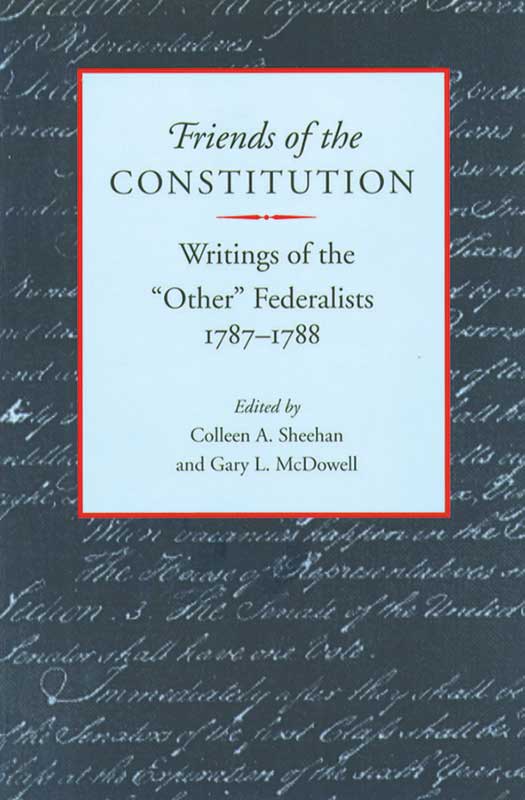
Return to Title Page for Friends of the Constitution: Writings of the “Other” Federalists, 1787-1788

Search this Title:

Energetic but Limited Government - Colleen A. Sheehan, Friends of the Constitution: Writings of the “Other” Federalists, 1787-1788 [1998]

Edition used:

Friends of the Constitution: Writings of the “Other” Federalists, 1787-1788, edited by Colleen A. Sheehan and Gary L. McDowell (Indianapolis: Liberty Fund, 1998).

About Liberty Fund:

Liberty Fund, Inc. is a private, educational foundation established to encourage the study of the ideal of a society of free and responsible individuals.


Energetic but Limited Government

The debate between the Federalists and Anti-Federalists over the nature of the Union led naturally to the issue of governmental power and responsibility. The question was not only about the power of the central government vis à vis the states but also and more fundamentally about the power of the national representatives vis à vis the people. Federalists and Anti-Federalists generally agreed that in a free government a due dependence of the representatives on the people was required, otherwise there was no security for the people’s rights and liberties. Anti-Federalists claimed that the proposed scheme of government, with a small number of representatives governing in a large territory, did not provide for the necessary degree of responsibility and that the liberty of the people was in danger. Federalists countered this charge, arguing that in the new order interest, reputation, and duty would bind the representatives to the Constitution and public opinion.

While the Federalists presented the case that the elective principle, separation of powers, bicameralism, and numerous governmental checks would work to prevent the representatives from overstepping their constitutional bounds, they did not develop a clear, united understanding about the nature of public opinion or how governmental dependence on it was to be fostered and maintained. Some Federalists echoed Anti-Federalists, arguing for a close, direct dependence of the representatives on the will of their constituents, such that the representatives would act as mirrors reflecting the people’s interests and views. Unlike the Anti-Federalists, however, such Federalist writers as “Socius,” “America,” and Roger Sherman claimed that the proposed constitutional system was sufficient to maintain a close connection between the government and the people. The interests of the representatives and the interests of the people will be the same, they asserted.

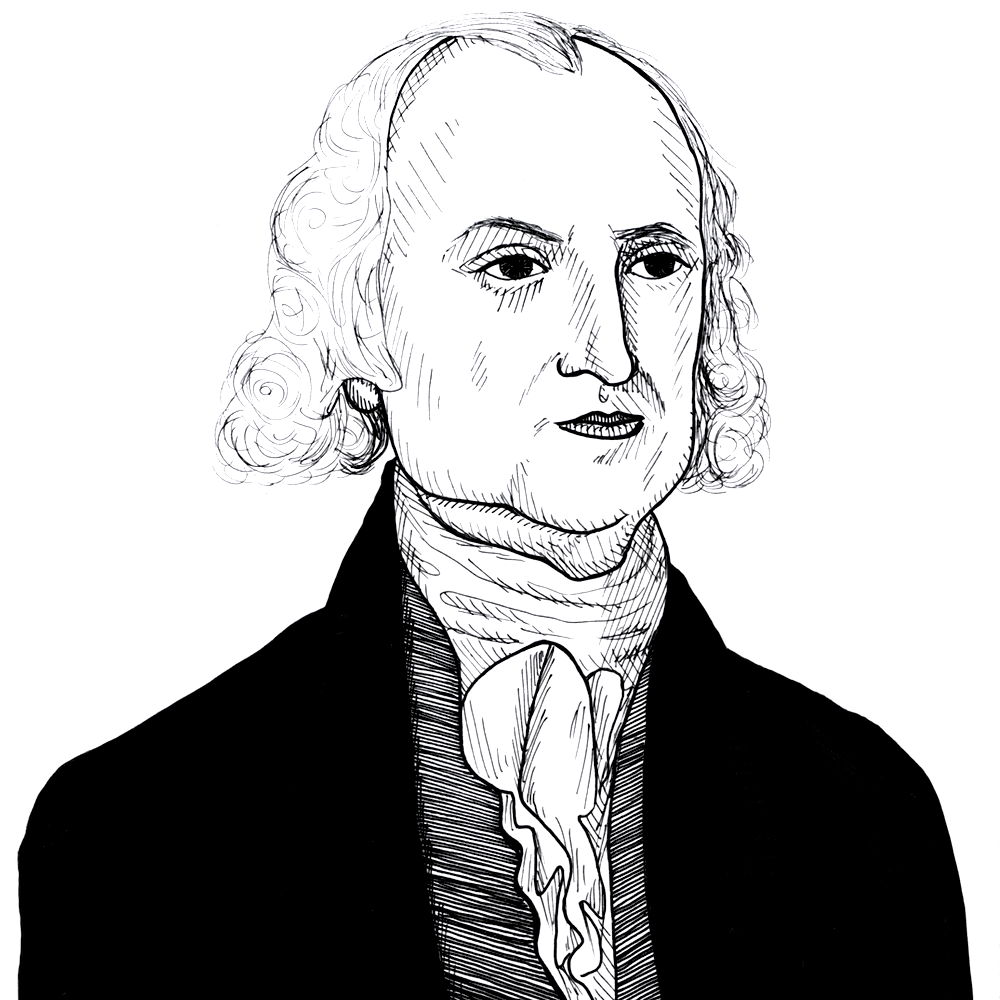
Other proponents of the Constitution, such as Fisher Ames, James Wilson, and John Dickinson, set forth a subtler theory of representation in which the governing officials were responsible to the general opinion or sense of the public but not dependent on fleeting impulses or narrow, supposed interests. While most of the leading Federalists shared in this view, their position was not without some ambiguity. United in the general claim that the authoritative force in the American republic is the reason or sense of the people, they left unresolved the issue of what precisely constituted the public sense and how it was to be achieved by the people and depended on by the representatives. Fisher Ames, for example, understood the proposed system, with its large territory and insulation from the rule of faction, to encourage a certain degree of independence in the representatives during the ordinary business of public policy-making. The power of the representatives is the power of the people, Ames said; the watchfulness of the people’s representatives is the guard of the people themselves. In the delegation of power to trustees, Ames argued, the true sovereignty of the people and the real protection of liberty become manifest. John Dickinson also believed that the will of the people must be a reasonable and not a distracted will, and that it was “the sense of the people” that the representatives were to express. However Dickinson further declared that the people’s will is the “superior will” and that to preserve liberty the people must “trust to their own spirit” and practice the “living principle of watchfulness and controul” over their representatives.

Only a few years later, in the early 1790s, there would occur a split within the Federalist camp partly because this matter of what constituted the public sense, and a due dependence of the representatives on it, was never settled. In 1792, some of the Federalists formed the first American political party—the Republican Party—to oppose the Federalist administration of government. These former Federalists, led by James Madison and Thomas Jefferson, were joined by many who had been Anti-Federalists in the 1780s. One of their major criticisms of the Federalist administration was that the government was not sufficiently responsible to public opinion, and that it was in fact charting an antirepublican course largely independent of the people themselves.

The disagreement in respect to the theory of representation between the Federalists and Anti-Federalists, as well as among the Federalists themselves, points to the fundamental democratic challenge of the Founding generation: how to retain the spirit and principles of popular government without falling prey to its defects. The leading Federalist argument demonstrated that if representation was merely a vehicle for the expression of the narrow, unmodified interests and views of the populace, then the defects of democracy are not cured. What was necessary, powerful Federalist voices contended, was the establishment of a constitutional system that effectively placed limitations on the power of governmental officials so that they could not tyrannize over the people and that also controlled the collective power of the people so that they could not tyrannize over themselves. The solution they offered is summed up in the term “constitutionalism.” American constitutionalism meant that the people are sovereign and the supreme law of the land is of their own making. Further it involved the republican idea that the people never act directly but only through the refining filter of representation. The representatives are dependent on the people’s authority, but they are responsible first and foremost to the Constitution because it embodies the most fundamental, sovereign power of the people and is the source of all legitimate governmental activity. Accordingly, the Constitution is a higher law than legislative law, and government is limited in its powers to those delegated to it by the people and enumerated in the Constitution.

In the debate between Federalists and Anti-Federalists over the need for a bill of rights, Anti-Federalists generally believed that the absence of a written declaration was a major defect of the proposed Constitution. Without a bill of rights, they claimed, the government may become one of unlimited powers and trample on the rights and liberties of the people. Most Federalists argued that a written declaration of rights was unnecessary in theory and ineffectual in practice. In practical terms, Federalists claimed that the people’s rights and liberties are protected by the numerous constitutional safeguards that provide for mutual checks among the departments of government. Further, they insisted, the real security for the people’s rights is achieved by connecting the interests of the rulers with the interests of the people so that the rulers will have no motive to invade the rights of the people; or they argued that the true security for rights and the preservation of liberty can only be achieved by the ongoing perseverance of a freedom-loving people of sound sense and honest hearts. In theoretical terms, many Federalists claimed that the very idea of a constitution of enumerated and limited powers removes the need for a bill of rights. Elaborating on the notion of constitutionalism, they maintained that because the people delegate power to the government, and not vice versa, all powers that are not delegated are necessarily reserved to them as men or as citizens. The enumeration of the rights of the people carries with it the potential for abuse, for in the future it may be presumed that only those rights listed belong to the people. And it would be sheer folly, they said, to attempt to enumerate all the rights of mankind.

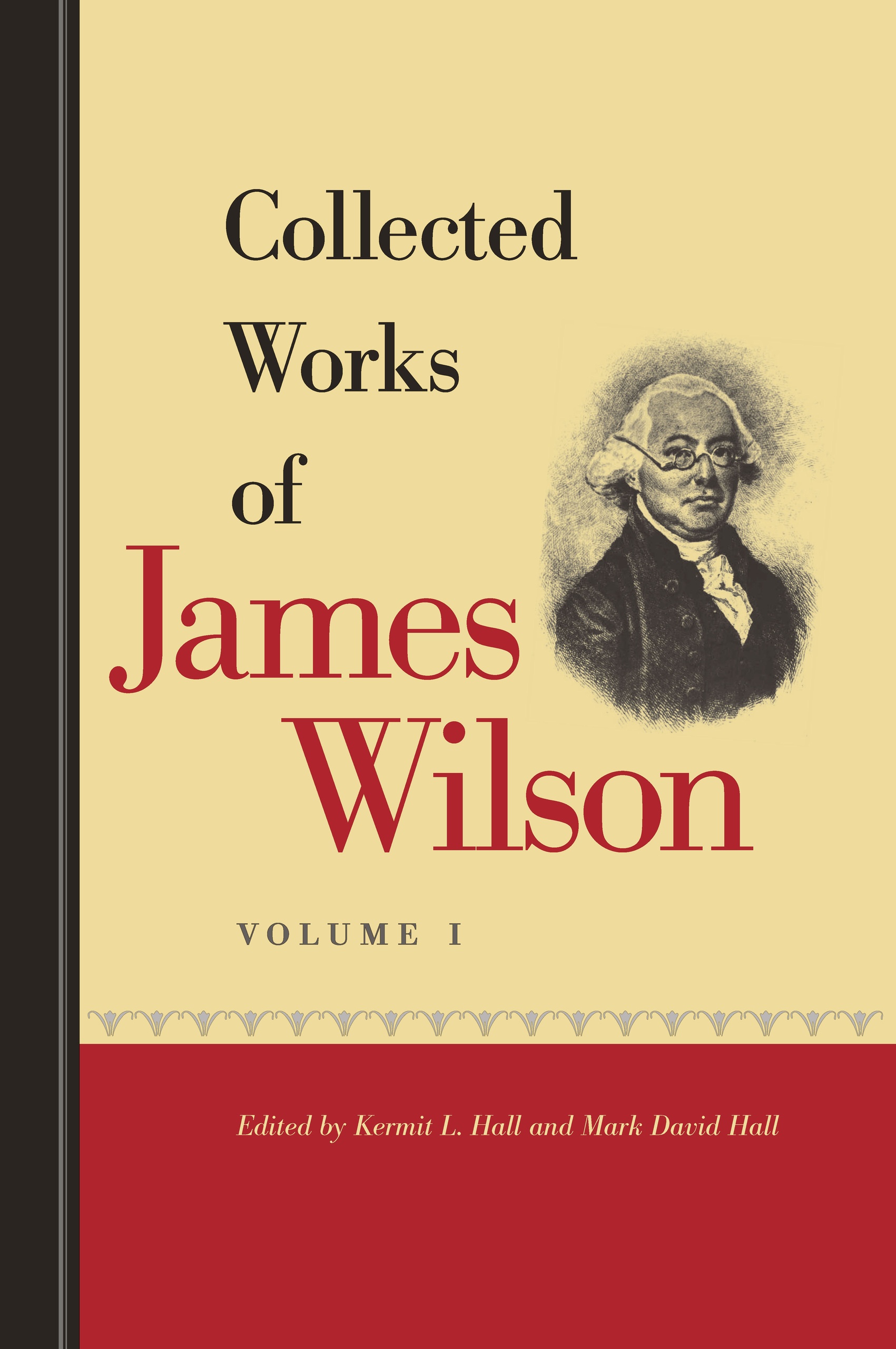
Some Federalists, James Wilson for example, demonstrated more fully the theoretical underpinnings of this argument. Wilson argued that all government derives its authority from the people, and government is obliged to act for the people; it must, however, act for the people only on the basis of the authority granted it by the people. Those who would have government do more than this misunderstand “the principle on which this system was constructed”—that is, the supreme and absolute authority of the people. The “inherent and unalienable right of the people” to establish government and organize its just powers, Wilson showed, is derived from the truths of the Declaration of Independence. In regard to the Declaration’s teaching, he proclaimed: “This is the broad basis on which our independence was placed; on the same certain and solid foundation this system is erected.” Precisely because the Constitution is erected on the foundation that all men are created equal and their rights are inalienable, there is no need for a bill of rights; because this is the only legitimate basis for government, there is no wisdom in risking a contrary understanding.

Despite the forceful reasoning of Wilson and others, the issue of where sovereignty ultimately resides in the American republic was neither unanimously agreed to nor practically solved by the Founding generation. “Alfredus,” for example, asserted that the state constitution of New Hampshire is a compact between individuals; the federal Constitution, however, “is not a compact between individuals, but between several sovereign and independent political societies already formed and organized.” Although he quotes Wilson at length and claims only to add to his reasoning, one must question whether this is a mere addition or rather a radical alteration of Wilson’s view. According to Wilson, not only do the American people possess supreme power, they have not and ought not “to part with it to any government whatsoever.” They may delegate certain powers in such proportions to the various governments as they think appropriate, but it is they, and only they, who are and always remain supremely and absolutely sovereign.

To complicate matters further, Tench Coxe blithely stated that “the contracting parties in the federal compact are the people of the several states and the federal state governments.” Thus we see that during the Founding era there is not only a divergence of opinion on the issue of sovereignty but a lack of clarity in the meaning of the term itself. Indeed the word “sovereignty” was often used in two different senses—one referring only to the federal nature of the polity and the constitutional division of power between the national and state governments, and the other referring to who or what possesses the fundamental and absolutely final authority in the regime.

In respect to the degree of power in the federal head, Federalists contended that in order to regulate trade, restore public and private credit, give respectability to the states both at home and abroad, safeguard property, and enlarge commerce, a federal government of limited powers but sufficient energy was absolutely necessary. Furthermore many of them forcefully attacked Anti-Federalist reasoning at its core, arguing that only a government of substantial energy can protect liberty. If the people are to retain their liberty, they must be protected against the influence of licentious passion within themselves. Thus drawing the distinction between liberty and license, Dickinson identified the issue of the character of the “predominant authority” in the polity as critical. His discussion of this issue sets forth the substantive republican grounds for the new Constitution and the corollary purpose for the principle of representation. He taught that nothing short of the formation of a people of sound, republican character will answer the cause of liberty in America. The predominance of “the true spirit of republicanism” requires that “life and vigor [be] communicated through the whole, by the popular representation of each part, and the close combination of all.”

“Socius”

Essay

Some THOUGHTS on the FEARS which many appear to entertain about the FEDERAL CONSTITUTION.

As the Federal Government, now under consideration, is a subject of the highest importance to our happiness, as a nation, it is certainly of great consequence, that we lay down right principles, upon which we may form the judgment of it. While the fears of the people are alarmed, on the one side or the other, they are not capable of such a cool examination, and deliberate choice, as the weight of the case requires; and it is certain that this has been the effect of such writings as have appeared upon this grand question. If the grounds of fear are real, they indeed ought to affect us; but it becomes us to submit them to a serious and impartial inquiry, before we suffer them to blind judgment or precipitate our conclusions.

The very idea of government supposes power to be committed to our rulers; and power is always capable of being abused. Various arrangements have been invented to restrain this abuse of power; but it does not appear, that any possible arrangements thereof can merely of themselves, secure the rights and liberties of the people, in all cases, from oppression. Some are without doubt, better calculated for this purpose, than others; but when the people have chosen the best devisable form, there are other sources from which they must also derive their safety, and on which they must depend.

The form of government proposed appears to be organized with great wisdom to guard against this abuse, as the very powers will be a watch upon one another, and act as centinels in giving the alarm, should any one attempt any unreasonable encroachments on our liberties. They are all of the people, and have the same rights and privileges, in all respects, to defend. They are chosen at such times as is sufficient to secure their responsibility, and in such a manner as must ever prevent their permanency. The objects of power have all a federal nature, [or are absolutely] necessary to the hon[or and safety] of the nation. But toget[her with all] this, our political liberty requires the aid of other motives and principles, which if we duly consider, with the operation and force they are allowed to have, under this constitution, it would tend greatly to allay any unreasonable fears which have been raised about it.

One great security we have of men in power, is interest, when their places are so often changeable, as is ordained in this constitution. There is no great danger of men abusing the power committed to them, to destroy those rights and liberties, in which they themselves are as much interested, as any other of the people; while they know, at the same time, that they must shortly return to that condition, which will render these privileges so precious and estimable. If they were indeed a permanent body independent [of] the people, and holding their places for themselves and their heirs, the motives to self-aggrandisement would prevail over all others, and our liberties were gone. But so far is this constitution from favouring such a permanency, that it cannot take place without the utter destruction of this plan of government. They will always be chosen by the people; and by the assemblies, which excludes every idea of permanency, though the Centinel1 has affected to argue it out according to his method of reason.

Now, apply this to some of the objections, which have been made to this plan of government. The countenancing [of] a standing army—if in the present depraved state of human nature, any military force should be necessary to support the honour, and promote the safety of the nation, and protect our trade by land or sea; surely there can be no reasonable objection against it. But to imagine that the Congress, our own representatives, whose power depends entirely on the people, and whose interests, liberties and safety are at stake, in common with every person in the union, that these should wilfully impose an unnecessary burden, or subject us to unnecessary danger, is surely an unreasonable suspicion. To speak of thirty or fifty thousands of a standing army, or any thing like it, is only calculated to alarm the fears of the people, with an evil entirely imaginary.

The same may be said of the power of direct taxation. As the grand revenue will arise from another source, this mode may never be applied to, but on such occasions, as may require great exertions; and if in such cases, the Congress should make use of this method, what reason have we to think, that it should be so dreadfully oppressive? Are not the estates of those in power, as liable as others! and if they are the great and the mighty (as one writer observes) will they not be peculiarly affected. However it is certain, that the command of a sufficient revenue should be in their hands, otherwise they can never support the dignity or safety of the United States.

Another grand security, and indeed the principal one, which the people have against the abuse of power, is the freedom of choice. This is the very essence of political liberty—while this remains it is impossible they can be enslaved, and if their rulers incroach upon their privileges it must be of their own fault, and not that of the government. Now this privilege cannot be taken away without destroying this constitution; under which no one, in the several branches of government, can hold a place, but by the fair choice of the people, immediately, or by electors chosen by them. They are still the sovereign masters, and may choose whom they will; all depends on their own virtue and the wisdom of their choice. While this freedom is allowed, and the power returns to us at proper intervals, not so near, as to keep us in a perpetual electionary ferment, nor so distant, as to prevent a proper responsibility in the rulers, there can be no danger from the government; we will be happy.

Indeed it is surmised, that the Congress may render this privilege difficult or impossible, by the power the constitution gives them over elections. But why should we fear such an injurious exercise of power as it is wantonly said this will be?—The assemblies have authority to fix the mode and places of elections in every country, yet we never have been afraid, that they would make a law, to oblige us to meet [in in]convenient places, or drag us from one country to another to give our votes, and why should we be so exceedingly jealous of our own representatives in this case? The reason of such a power appears as good in the one, as in the other. It is of consequence to our freedom that we have a fair and honest representation in Congress, and that no one be admitted as our representative who is not lawfully chos[en]. This will require a power of judging in all disputed elections, which often happen, and this implies a law, whereby the qualifications of members shall be ascertained, and as these qualifications include the regularity of the choice, as to time and mode and place, it is proper that these should be fixed by one general election-law. This will be necessary, not only to enable the respective houses to judge of the qualifications of their own members, but also for the greater case and regularity of proceeding, having all their members chosen in the same manner, and returnable at the same time. As such a law therefore will be necessary, it cannot be questioned but that the Congress is the proper authority to make it—and to assert, that, in making such a law, they would not have a regard to the ease and convenience of the people, is very unreasonable to say, that they will frame it so, as to put it out of our power to chuse, is absolutely extravagant.

The most of those fears, which have given strength to the objections against the government, have arisen from this excessive distrust in the representatives we are to chuse; surely we ought to put some confidence in them, to whom we commit so great a trust. To be so jealous, as to excite our watchfulness against their abusing their power, is useful and salutary; but to put no confidence at all in them; to believe that as soon as we chuse them, we set them at variance with our liberties, and make them enemies to all our dearest privileges; that they will surely abuse their power, to aggrandise themselves; this is a jealousy utterly unreasonable and absurd. It is an ungenerous reflection on them we chuse, and a vile reproach upon our own wisdom. It is a principle which would set aside all government intirely.—No man in common life, acts upon so absurd a principle as this, yet most of the fears about this constitution have had only this foundation—on this principle, the Centinel has raised the most alarming apprehensions, of aristocracy, a standing army, oppression of taxes, the annihilation of state assemblies, suppression of the press, and all his catalogue of evils—and upon this also the Old Whig2 appears to have raised his wonderful superstructures of possibles and probables, perhaps’s, maybe’s and awful predictions, which have so terrified him, as to conclude that “whether it is a good constitution or a bad one, it will remain forever unamended.” These writers seem to take it for granted, and I fear too many follow them in it, that we are not, nor ought to be one people; that the interest of the several states must be different from that of the union; and there must be an eternal variance between the Congress and the state Assemblies. This appears visibly in their writings, as the ground of their charges against the constitution.—The absurdity of these principles is evident, the ruin that must attend the adoption of them and proceeding upon them, every one must see, and consequently how groundless those jealousies are, which have no other foundation.

With all the securities, then, which we have against the abuse of power, why should we fear [that] the constitution is free? in its nature and construction—the interest of the rulers and ours is the same—the power of displacing them is still in our own hands—and besides these, the equality among the citizens, the prohibition of hereditary property or honours—the freedom of the press—the jealousy and watchfulness of the Assemblies, whose power, after all that has been said, I cannot see to be abridged or destroyed with respect to any branch of internal policy, or in any cases but such as are federal, except the impost, and this is by all granted to Congress. With all these securities we surely cannot be in so great danger, as is apprehended by many. But after all, if it should prove dangerous and intollerable, it is capable of alteration, and it may reasonably be expected that when the people feel it so, they will alter it. The manner of process is not more difficult, in altering than making it—and the accomplishment of the one, is an evidence that the other, if found necessary, is neither impossible nor improbable.

“America” [Noah Webster]

Essay

A lexicographer and the author of An American Dictionary of the English Language (1828), Noah Webster was a man of many interests. He was a publisher and editor of newspapers and magazines and an author of scholarly works in education, history, politics, medicine, and the natural sciences.

To the DISSENTING MEMBERS of the late Convention of Pennsylvania.

Gentlemen, Your long and elaborate publication,1 assigning the reasons for your refusing to subscribe the ratification of the NEW FEDERAL CONSTITUTION, has made its appearance in the public papers, and, I flatter myself, will be read throughout the United States. It will feed the flame of opposition among the weak, the wicked, the designing, and the factious; but it will make many new converts to the proposed Government, and furnish the old friends of it with new weapons of defence. The very attempt to excite uneasiness and disturbance in a State, about a measure legally and constitutionally adopted, after a long and ample discussion in a Convention of the people’s Delegates, marks a disposition, beyond all conception, obstinate, base, and politically wicked. But obstinacy is the leading trait in your public characters, and, as it serves to give consistency to your actions, even in error, it cannot fail to procure you that share of respect which is paid to the firmness of Satan and his fellow apostates, who, after their expulsion from Heaven, had too much pride to repent and ask for a re-admission. My address to you will not be so lengthy as your publication; your arguments are few, altho’ your harangue is long and insidious.

You begin with telling the world, that no defect was discovered in the present Confederation, till after the war. Why did you not publish the truth? You know, Gentlemen, that during six years of the war, we had no Confederation at all. You know that the war commenced in April, 1775, and that we had no Confederation till March, 1781. You know (for some of you are men of abilities and reading) or ought to know, a principle of fear, in time of war, operates more powerfully in binding together the States which have a common interest, than all the parchment compacts on earth. Could we, then, discover the defects of our present Confederation, with two years’ experience only, and an enemy in our country? You know we could not.

I will not undertake to detect the falshood of every assertion, or the fallacy of all your reasoning on each article. In the most of them the public will anticipate any thing I could say, and confute your arguments as fast as they read them. But I must tell you, Gentlemen, that your reasoning against the New Constitution resembles that of Mr. Hume on miracles. You begin with some gratis dicta, which are denied; you assume premises which are totally false, and then reason on them with great address. Your whole reasoning, and that of all the opposers of the Federal Government, is built on this false principle, that the Federal Legislature will be a body distinct from and independent of the people. Unless your opposition is grounded on that principle, it stands on nothing; and on any other supposition, your arguments are but declamatory nonsense.

But the principle is false. The Congress, under the proposed Constitution, will have the same interest as the people—they are a part of the people—their interest is inseparable from that of the people; and this union of interest will eternally remain, while the right of election shall continue in the people. Over this right Congress will have no control: the time and manner of exercising that right are very wisely vested in Congress, otherwise a delinquent State might embarrass the measures of the Union. The safety of the public requires that the Federal body should prevent any particular delinquency; but the right of election is above their control: it must remain in the people, and be exercised once in two, four or six years. A body thus organized, with thirteen Legislatures watching their measures, and several millions of jealous eyes inspecting their conduct, would not be apt to betray their constituents. Yet this is not the best ground of safety. The first and almost only principle that governs men, is interest. Love of our country is a powerful auxiliary motive to patriotic actions; but rarely or never operates against interest. The only requisite to secure liberty, is to connect the interest of the Governors with that of the governed. Blend these interests—make them inseparable—and both are safe from voluntary invasion. How shall this union be formed? This question is answered. The union is formed by the equal principles on which the people of these States hold their property and their rights. But how shall this union of interests be perpetuated? The answer is easy—bar all perpetuities of estates—prevent any exclusive rights—preserve all preferment dependent on the choice of the people—suffer no power to exist independent of the people or their Representatives. While there exists no power in a State, which is independent on the will of the electors, the rights of the people are secure. The only barrier against tyranny, that is necessary in any State, is the election of Legislators by the yeomanry of that State. Preserve that, and every privilege is safe. The Legislators thus chosen to represent the people, should have all the power that the people would have, were they assembled in one body to deliberate upon public measures. The distinction between the powers of the people and of their Representatives in the Legislature, is as absurd in theory, as it proves pernicious in practice. A distinction, which has already countenanced and supported one rebellion in America; has prevented many good measures; has produced many bad; has created animosities in many States, and embarrassments in all. It has taught the people a lesson, which, if they continue to practise, will bring laws into contempt, and frequently mark our country with blood.

You object, Gentlemen, to the powers vested in Congress. Permit me, to ask you, where will you limit their powers? What bounds will you prescribe? You will reply, we will reserve certain rights, which we deem invaluable, and restrain our rulers from abridging them. But, Gentlemen, let me ask you, how will you define these rights? would you say, the liberty of the Press shall not be restrained? Well, what is this liberty of the Press? Is it an unlimited licence to publish any thing and every thing with impunity? If so, the Author, and Printer of any treatise, however obscene and blasphemous, will be screened from punishment. You know, Gentlemen, that there are books extant, so shockingly and infamously obscene and so daringly blasphemous, that no society on earth, would be vindicable in suffering the publishers to pass unpunished. You certainly know that such cases have happened, and may happen again—nay, you know that they are probable. Would not that indefinite expression, the liberty of the Press, extend to the justification of every possible publication? Yes, Gentlemen, you know, that under such a general licence, a man who should publish a treatise to prove his maker a knave, must be screened from legal punishment. I shudder at the thought!—But the truth must not be concealed. The Constitutions of several States guarantee that very licence.

But if you attempt to define the liberty of the Press, and ascertain what cases shall fall within that privilege, during the course of centuries, where will you begin? Or rather, where will you end? Here, Gentlemen, you will be puzzled. Some publications certainly may be a breach of civil law: You will not have the effrontery to deny a truth so obvious and intuitively evident. Admit that principle; and unless you can define precisely the cases, which are, and are not a breach of law, you have no right to say, the liberty of the Press shall not be restrained; for such a license would warrant any breach of law. Rather than hazard such an abuse of privilege, is it not better to leave the right altogether with your rulers and your posterity? No attempts have ever been made by a Legislative body in America, to abridge that privilege; and in this free enlightened country, no attempts could succeed, unless the public should be convinced that an abuse of it would warrant the restriction. Should this ever be the case, you have no right to say, that a future Legislature, or that posterity shall not abridge the privilege, or punish its abuses. The very attempt to establish a permanent, unalterable Constitution, is an act of consummate arrogance. It is a presumption that we have all possible wisdom—that we can foresee all possible circumstances—and judge for future generations, better than they can for themselves.

But you will say, that trial by jury, is an unalienable right, that ought not to be trusted with our rulers. Why not? If it is such a darling privilege, will not Congress be as fond of it, as their constituents? An elevation into that Council, does not render a man insensible to his privileges, nor place him beyond the necessity of securing them. A member of Congress is liable to all the operations of law, except during his attendance on public business; and should he consent to a law, annihilating any right whatever, he deprives himself, his family and estate, of the benefit resulting from that right, as well as his constituents. This circumstance alone, is a sufficient security.

But, why this outcry about juries? If the people esteem them so highly, why do they ever neglect them, and suffer the trial by them to go into disuse? In some States, Courts of Admiralty have no juries—nor Courts of Chancery at all. In the City-Courts of some States, juries are rarely or never called, altho’ the parties may demand them; and one State, at least, has lately passed an act, empowering the parties to submit both law and fact to the Court. It is found, that the judgment of a Court, gives as much satisfaction, as the verdict of a jury, as the Court are as good judges of fact, as juries, and much better judges of law. I have no desire to abolish trials by jury, although the original design and excellence of them, is in many cases superseded.—While the people remain attached to this mode of deciding causes, I am confident, that no Congress can wrest the privilege from them.

But, Gentlemen, our legal proceedings want a reform. Involved in all the mazes of perplexity, which the chicanery of lawyers could invent, in the course of 500 years, our road to justice and redress is tedious, fatiguing and expensive. Our Judicial proceedings are capable of being simplified, and improved in almost every particular. For God’s sake, Gentlemen, do not shut the door against improvement. If the people of America, should ever spurn the shackles of opinion, and venture to leave the road, which is so overgrown with briers and thorns, as to strip a man’s cloaths from his back as he passes, I am certain they can devise a more easy, safe, and expeditious mode of administering the laws, than that which harrasses every poor mortal, that is wretched enough to want legal justice. In Pennsylvania, where very respectable merchants, have repeatedly told me, they had rather lose a debt of fifty pounds, than attempt to recover it by a legal process, one would think that men, who value liberty and property, would not restrain any Government from suggesting a remedy for such disorders.

Another right, which you would place beyond the reach of Congress, is the writ of habeas corpus. Will you say that this right may not be suspended in any case? You dare not. If it may be suspended in any case, and the Congress are to judge of the necessity, what security have you in a declaration in its favor? You had much better say nothing upon the subject.

But you are frightened at a standing army. I beg you, Gentlemen, to define a standing army. If you would refuse to give Congress power to raise troops, to guard our frontiers, and garrison forts, or in short, to enlist men for any purpose, then we understand you—you tie the hands of your rulers so that they cannot defend you against any invasion. This is protection indeed! But if Congress can raise a body of troops for a year, they can raise them for a hundred years, and your declaration against standing armies can have no other effect, than to prevent Congress from denominating their troops, a standing army. You would only introduce into this country, the English farce of mechanically passing an annual bill for the support of troops which are never disbanded.

You object to the indefinite power of taxation in Congress. You must then limit the exercise of that power by the sums of money to be raised; or leaving the sums indefinite, must prescribe the particular mode in which, and the articles on which the money is to be raised. But the sums cannot be ascertained, because the necessities of the States cannot be foreseen nor defined. It is beyond even your wisdom and profound knowledge, Gentlemen, to ascertain the public exigencies, and reduce them to the provisions of a Constitution. And if you would prescribe the mode of raising money, you will meet with equal difficulty. The different States have different modes of taxation, and I question much whether even your skill, Gentlemen, could invent a uniform system that should sit easy upon every State. It must therefore be left to experiment, with a power that can correct the errors of a system, and suit it to the habits of the people. And if no uniform mode will answer this purpose, it will be in the power of Congress to lay taxes in each State, according to its particular practice. But you know, Gentlemen, that an efficient Federal Government will render taxes unnecessary—that it will ease the people of their burdens, and remove their complaints, and therefore when you raise a clamor about the right of taxation, you must be guilty of the basest design—your hearts must be as malignant as your actions have been insidious. You know that requisitions on the States are ineffectual—That they cannot be rendered effectual, but by a compulsory power in Congress—You know that without an efficient power to raise money, Government cannot secure person, property or justice—Nay, you know further, that such power is as safely lodged in your Representatives in Congress, as it is in your Representatives in your distinct Legislatures.

You would likewise restrain Congress from requiring excessive bail, or imposing excessive fines and unusual punishment. But unless you can, in every possible instance, previously define the words excessive and unusual—if you leave the discretion of Congress to define them on occasion, any restriction of their power by a general indefinite expression, is a nullity—mere formal nonsense. What consummate arrogance must you possess, to presume you can now make better provision for the Government of these States, during the course of ages and centuries, than the future Legislatures can, on the spur of the occasion! Yet your whole reasoning on the subject implies this arrogance, and a presumption that you have a right to legislate for posterity!

But to complete the list of unalienable rights, you would insert a clause in your declaration, that every body shall, in good weather, hunt on his own land, and catch fish in rivers that are public property. Here, Gentlemen, you must have exerted the whole force of your genius! Not even the all-important subject of legislating for a world can restrain my laughter at this clause! As a supplement to that article of your bill of rights, I would suggest the following restriction:—“That Congress shall never restrain any inhabitant of America from eating and drinking, at seasonable times, or prevent his lying on his left side, in a long winter’s night, or even on his back, when he is fatigued by lying on his right.”—This article is of just as much consequence as the 8th clause of your proposed bill of rights.

But to be more serious, Gentlemen, you must have had in idea the forest-laws in Europe, when you inserted that article; for no circumstance that ever took place in America, could have suggested the thought of a declaration in favor of hunting and fishing. Will you forever persist in error? Do you not reflect that the state of property in America, is directly the reverse of what it is in Europe? Do you not consider, that the forest-laws in Europe originated in feudal tyranny, of which not a trace is to be found in America? Do you not know that in this country almost every farmer is Lord of his own soil? That instead of suffering under the oppression of a Monarch and Nobles, a class of haughty masters, totally independent of the people, almost every man in America is a Lord himself—enjoying his property in fee? Where then the necessity of laws to secure hunting and fishing? You may just as well ask for a clause, giving licence for every man to till his own land, or milk his own cows. The Barons in Europe procured forest-laws to secure the right of hunting on their own land, from the intrusion of those who had no property in lands. But the distribution of land in America, not only supersedes the necessity of any laws upon this subject, but renders them absolutely trifling. The same laws which secure the property in land, secure to the owner the right of using it as he pleases.

But you are frightened at the prospect of a consolidation of the States. I differ from you very widely. I am afraid, after all our attempts to unite the States, that contending interests, and the pride of State-Sovereignties, will either prevent our union, or render our Federal Government weak, slow and inefficient. The danger is all on this side. If any thing under Heaven now endangers our liberties and independence, it is that single circumstance.

You harp upon that clause of the New Constitution, which declares, that the laws of the United States, &c. shall be the supreme law of the land; when you know that the powers of the Congress are defined, to extend only to those matters which are in their nature and effects, general. You know, the Congress cannot meddle with the internal police of any State, or abridge its Sovereignty. And you know, at the same time, that in all general concerns, the laws of Congress must be supreme, or they must be nothing.

But the public will ask, who are these men that so violently oppose the New Constitution? I will tell them. You are the heads of that party, Gentlemen, which, on the celebration of a very glorious event in Philadelphia, at the close of the war, collected in a mob, and broke the windows of the Quakers, and committed the most detestable outrages, because their religion would not suffer them to illuminate their windows, and join in the rejoicings. You are the men, Gentlemen, that wrested the Charter from the Bank, without the least justifiable pretence; sporting with a grant which you had made, and which had never been forfeited. You are the men, that, without a show of right, took away the Charter of the University, and vested it in the hands of your own tools. Yes, Gentlemen, you are the men, who prescribed a test law and oath of abjuration in Pennsylvania, which excluded more than half the Citizens of the State from all Civil Offices. A law, which, had it not been altered by the efforts of more reasonable men, would have established you, and your adherents, as an Aristocratic junto, in all the offices and emoluments of the State. Could your base designs have been accomplished, you would have rioted in all the benefits of Government, and Pennsylvania would now, have been subject to as tyrannical an Aristocracy, as ever cursed Society. Such has been the uniformly infamous conduct of the men, who now oppose the best Constitution of Government, ever devised by human wisdom.

But the most bare-faced act of tyranny and wickedness, which has distinguished your political characters, remains to be mentioned. You are the men, Gentlemen, who have abandoned your parts of duty, and betrayed the constitutional rights of the State of Pennsylvania, by seceding from the Legislature, with the design of defeating the measures of a constitutional quorum of the House. Yes, Gentlemen, and to add to the infamy of your conduct, you have the audacity to avow the intention. Will you then attempt to palliate the crime, by saying it was necessary? Good Heavens! necessary that a State should be ruled by a minority! necessary that the sense of a legislature should be defeated by a junto, which had labored incessantly, for four years, to establish an Aristocracy in the State! The same principle which will vindicate you, will justify any one man in defeating the sense of the whole State. If a minority may prevent a law, one man may do it; but is this liberty? Is this your concern for the rights of the State? Dare you talk of rights, which you have so flagrantly invaded? Will the world expect you to be the guardians of privileges? No, Gentlemen, they will sooner expect lessons of morality from the wheel-barrowed criminals, that clank their chains along your streets.

Do you know, Gentlemen, that you are treading in the steps of the Governors before the revolution? Do you know that from the first settlement of Pennsylvania, there was a contest between the people and the deputies of the proprietaries? And that when a Governor could not bring the Assembly to resign their rights, he would prevail on certain members to leave the House, and prevent their measures. Yes, Gentlemen, you are but following the precedents of your tyrannical Governors. You have begun, and pursued, with unwearied perseverance, the same plan of Despotism which wrought the late revolution; and, with a calm, hypocritical phiz, pretend to be anxious for the liberties of the people.

These facts stare you in the face! They are felt in Pennsylvania—and known to the world! There is not a spot in the United States, where the solemnity of contracts and grants, has been so sacrilegiously violated—and the rights of men so wantonly and perseveringly abused, as by you and your junto in Pennsylvania—except only, in the little detestable corner of the Continent, called Rhode-Island. Thanks be to the Sovereign Ruler of events, you are checked in your career of tyranny—your power is dwindling into impotence—and your abuse of the respectable Convention, and of the friends of our Federal Union, will shroud you in oblivion, or accelerate your progress to merited contempt.

“A Countryman” [Roger Sherman]

The Letters: II

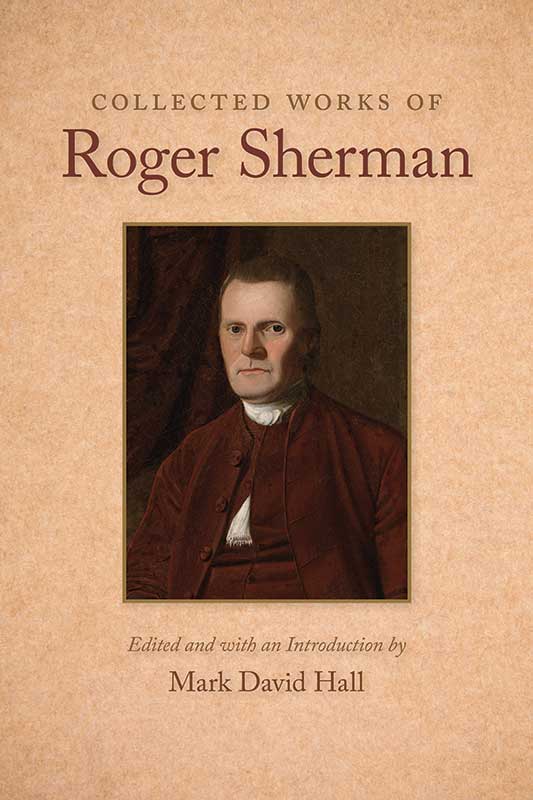
A delegate to both Continental Congresses and member of the committee that drafted the Declaration of Independence, Sherman was influential at the Constitutional Convention, wrote essays in favor of the Constitution, and supported the Constitution during ratification in Connecticut. Afterward he served in the House of Representatives (1789-91) and the Senate (1791-93).

To thePeopleof Connecticut.

It is fortunate that you have been but little distressed with that torrent of impertinence and folly, with which the newspaper politicians have overwhelmed many parts of our country.

It is enough that you should have heard, that one party has seriously urged, that we should adopt the New Constitution because it has been approved by Washington and Franklin: and the other, with all the solemnity of apostolic address to Men, Brethren, Fathers, Friends and Countrymen, have urged that we should reject, as dangerous, every clause thereof, because that Washington is more used to command as a soldier, than to reason as a politician—Franklin is old—others are young—and Wilson is haughty. You are too well informed to decide by the opinion of others, and too independent to need a caution against undue influence.

Of a very different nature, tho’ only one degree better than the other reasoning, is all that sublimity of nonsense and alarm, that has been thundered against it in every shape of metaphoric terror, on the subject of a billof rights, the liberty of the press, rights of conscience, rights of taxation and election, trials in the vicinity, freedom of speech, trial by jury, and a standing army. These last are undoubtedly important points, much too important to depend on mere paper protection. For, guard such privileges by the strongest expressions, still if you leave the legislative and executive power in the hands of those who are or may be disposed to deprive you of them—you are but slaves. Make an absolute monarch—give him the supreme authority, and guard as much as you will by bills of right, your liberty of the press, and trial by jury;—he will find means either to take them from you, or to render them useless.

The only real security that you can have for all your important rights must be in the nature of your government. If you suffer any man to govern you who is not strongly interested in supporting your privileges, you will certainly lose them. If you are about to trust your liberties with people whom it is necessary to bind by stipulation, that they shall not keep a standing army, your stipulation is not worth even the trouble of writing. No bill of rights ever yet bound the supreme power longer than the honey moon of a new married couple, unless the rulers were interested in preserving the rights; and in that case they have always been ready enough to declare the rights, and to preserve them when they were declared.—The famous English Magna Charta is but an act of parliament, which every subsequent parliament has had just as much constitutional power to repeal and annul, as the parliament which made it had to pass it at first. But the security of the nation has always been, that their government was so formed, that at least one branch of their legislature must be strongly interested to preserve the rights of the nation.

You have a bill of rights in Connecticut (i.e.) your legislature many years since enacted that the subjects of this state should enjoy certain privileges. Every assembly since that time, could, by the same authority, enact that the subjects should enjoy none of those privileges; and the only reason that it has not long since been so enacted, is that your legislature were as strongly interested in preserving those rights as any of the subjects; and this is your only security that it shall not be so enacted at the next session of assembly: and it is security enough.

Your General Assembly under your present constitution are supreme. They may keep troops on foot in the most profound peace, if they think proper. They have heretofore abridged the trial by jury in some causes, and they can again in all. They can restrain the press, and may lay the most burdensome taxes if they please, and who can forbid? But still the people are perfectly safe that not one of these events shall take place so long as the members of the General assembly are as much interested, and interested in the same manner as the other subjects.

On examining the new proposed constitution, there can not be a question, but that there is authority enough lodged in the proposed federal Congress, if abused, to do the greatest injury. And it is perfectly idle to object to it, that there is no bill of rights, or to propose to add to it a provision that a trial by jury shall in no case be omitted, or to patch it up by adding a stipulation in favor of the press, or to guard it by removing the paltry objection to the right of Congress to regulate the time and manner of elections.

If you can not prove by the best of all evidence, viz. by the interest of the rulers, that this authority will not be abused, or at least that those powers are not more likely to be abused by the Congress, than by those who now have the same powers, you must by no means adopt the constitution:—No, not with all the bills of rights and all the stipulations in favour of the people that can be made.

But if the members of Congress are to be interested just as you and I are, and just as the members of our present legislatures are interested, we shall be just as safe, with even supreme power, (if that were granted) in Congress, as in the General Assembly. If the members of Congress can take no improper step which will not affect them as much as it does us, we need not apprehend that they will usurp authorities not given them to injure that society of which they are a part.

The sole question, (so far as any apprehension of tyranny and oppression is concerned) ought to be, how are Congress formed? how far are the members interested to preserve your rights? how far have you a controul over them?—Decide this, and then all the questions about their power may be dismissed for the amusement of those politicians whose business it is to catch flies, or may occasionally furnish subjects for George Bryan’s1pomposity, or the declamations of Cato2An Old Whig3Son of Liberty4Brutus5Brutus junior6An Officer of the Continental Army,7 —the more contemptible Timoleon8 —and the residue of that rabble of writers.

“A Citizen of Philadelphia” [Peletiah Webster]

“The Weakness of Brutus Exposed”

Peletiah Webster, a Philadelphia merchant, was a staunch patriot throughout the American Revolution. This item was a pamphlet printed in Philadelphia and advertised in the Pennsylvania Packet and other newspapers. The first twenty pages were reprinted in the New York Daily Advertiser. See DH, 14:63-74.

The long piece signed Brutus,1 (which was first published in a New-York paper, and was afterwards copied into the Pennsylvania Packet of the 26th instant) is wrote in a very good stile; the language is easy, and the address is polite and insinuating: but the sentiments, I conceive, are not only unsound, but wild and chimerical; the dreary fears and apprehensions, altogether groundless; and the whole tendency of the piece, in this important crisis of our politics, very hurtful. I have therefore thought it my duty to make some animadversions on it; which I here offer, with all due deference, to the Author and to the Public.

His first question is, Whether a confederated government is best for the United States?

I answer, If Brutus, or any body else, cannot find any benefit resulting from the union of the Thirteen States; if they can do without as well as with the respectability, the protection, and the security, which the States might derive from that union, I have nothing further to say: but if that union is to be supported in any such manner as to afford respectability, protection, or security to the States, I say it must be done by an adequate government, and cannot be otherwise done.

This government must have a supreme power, superior to and able to controul each and all of its parts. ’Tis essential to all governments, that such a power be somewhere existing in it; and if the place where the proposed Constitution has fixed it, does not suit Brutus and his friends, I will give him leave to stow it away in any other place that is better: but I will not consent to have it annihilated; neither will I agree to have it cramped and pinched for room, so as to lessen its energy; for that will destroy both its nature and use.

The supreme power of government ought to be full, definite, established, and acknowledged. Powers of government too limited, or uncertain and disputed, have ever proved, like Pandora’s box, a most fruitful source of quarrels, animosities, wars, devastation, and ruin, in all shapes and degrees, in all communities, states, and kingdoms on earth.

Nothing tends more to the honour, establishment, and peace of society, than public decisions, grounded on principles of right, natural fitness, and prudence; but when the powers of government are too limited, such decisions can’t be made and enforced; so the mischief goes without a remedy: dreadful examples of which we have felt, in instances more than enough, for seven years past.

Further, where the powers of government are not definite but disputed, the administration dare not make decisions on the footing of impartial justice and right; but must temporise with the parties, lest they lose friends or make enemies: and of course the righteous go off injured and disgusted, and the wicked go grumbling too; for ’tis rare that any sacrifices of a court can satisfy a prevailing party in the state.

’Tis necessary in States, as well as in private families, that controversies should have a just, speedy, and effectual decision, that right may be done before the contention has time to grow up into habits of malignity, resentment, ill nature, and ill offices. If a controversy happens between two states, must it continue undecided, and daily increase, and be more and more aggravated, by the repeated insults and injuries of the contending parties, ’till they are ripe for the decision of the sword? or must the weaker states suffer, without remedy, the groundless demands and oppressions of their stronger neighbours, because they have no avenger, or umpire of their disputes?

Or shall we institute a supreme power with full and effectual authority to controul the animosities, and decide the disputes of these strong contending bodies? In the one proposed to us, we have perhaps every chance of a righteous judgment, that we have any reason to hope for; but I am clearly of opinion, that even a wrongful decision, would, in most cases, be preferable to the continuance of such destructive controversies.

I suppose that neither Brutus nor any of his friends would wish to see our government embroiled abroad; and therefore will admit it necessary to institute some federal authority, sufficient to punish any individual or State, who shall violate our treaties with foreign nations, insult their dignity, or abuse their citizens, and compel due reparation in all such cases.

I further apprehend, that Brutus is willing to have the general interest and welfare of the States well provided for and supported, and therefore will consent that there shall exist in the states, an authority to do all this effectually; but he seems grieved that Congress should be the judges of this general welfare of the states. If he will be kind enough to point out any other more suitable and proper judges, I will consent to have them admitted.

Indeed I begin to have hopes of Brutus, and think he may come right at last; for I observe (after all his fear and tremblings about the new government) the constitution he defines and adopts, is the very same as that which the federal convention have proposed to us, viz. “that the Thirteen States should continue thirteen confederated republics under the direction and controul of a supreme federal head, for certain defined national purposes, only.” Where we may observe,

1. That the new Constitution leaves all the Thirteen States, complete republics, as it found them, but all confederated under the direction and controul of a federal head, for certain defined national purposes only, i.e. it leaves all the dignities, authorities, and internal police of each State in free, full, and perfect condition; unless when national purposes make the controul of them by the federal head, or authority, necessary to the general benefit.

2. These powers of controul by the federal head or authority, are defined in the new constitution, as minutely as may be, in their principle; and any detail of them which may become necessary, is committed to the wisdom of Congress.

3. It extends the controuling power of the federal head to no one case, to which the jurisdiction or power of definitive decision of any one state, can be competent. And,

4. In every such case, the controuling power of the federal head, is absolutely necessary to the support, dignity, and benefit of the national government, and the safety of individuals; neither of which can, by any possibility, be secured without it.

All this falls in pretty well with Brutus’s sentiments; for he does not think that the new Constitution in its present state so very bad, but fears that it will not preserve its purity of institution; but if adopted, will immediately verge to, and terminate in a consolidation, i.e. a destruction of the state governments. For argument, he suggests the avidity of power natural to rulers; and the eager grasp with which they hold it when obtained; and their strong propensity to abuse their power, and encroach on the liberties of the people.

He dwells on the vast powers vested in Congress by the new Constitution, i.e. of levying taxes, raising armies, appointing federal courts, &c.; takes it for granted, that all these powers will be abused, and carried to an oppressive excess; and then harrangues on the dreadful case we shall be in, when our wealth is all devoured by taxes, our liberty destroyed by the power of the army, and our civil rights sacrificed by the unbounded power of the federal courts, &c.

And when he has run himself out of breath with this dreary declamation, he comes to the conclusion he set out with, viz. That the Thirteen States are too big for a republican government, which requires small territory, and can’t be supported in more extensive nations; that in large states liberty will soon be swallowed up, and lost in the magnitude of power requisite in the government, &c.

If any conclusion at all can be drawn from this baseless assemblage of gloomy thoughts, I think it must be against any union at all; against anykind of federal government. For nothing can be plainer than this, viz. that the union can’t by any possibility be supported with success, without adequate and effectual powers of government?

We must have money to support the union, and therefore the power of raising it must be lodged somewhere; we must have a military force, and of consequence the power of raising and directing it must exist; civil and criminal causes of national concern will arise, therefore there must be somewhere a power of appointing courts to hear and determine them.

These powers must be vested in Congress; for nobody pretends to wish to have them vested in any other body of men.

The Thirteen States have a territory very extensive, and inhabitants very numerous, and every day rapidly increasing; therefore the powers of government necessary to support their union must be great in proportion. If the ship is large, the mast must be proportionably great, or it will be impossible to make her sail well. The federal powers must extend to every part of the federal territory, i.e. to the utmost limits of the Thirteen States, and to every part of them; and must carry with them, sufficient authority to secure the execution of them; and these powers must be vested in Congress, and the execution of them must be under their direction and controul.

These powers are vast, I know, and the trust is of the most weighty kind that can be committed to human direction; and the execution and administration of it will require the greatest wisdom, knowledge, firmness, and integrity in that august body; and I hope they will have all the abilities and virtues necessary to their important station, and will perform their duty well; but if they fail, the fault is in them, not in the constitution. The best constitution possible, even a divine one, badly administered, will make a bad government.

The members of Congress will be the best we can get; they will all of them derive their appointment from the States, and if the States are not wise enough to send good and suitable men, great blame, great sin will lie at their door. But I suppose nobody would wish to mend this fault by taking away the election of the people, and directing the appointment of Congress to be made in any other way.

When we have gotten the best that can be obtained, we ought to be quiet and cease complaining. ’Tis not in the power of human wisdom to do more; ’tis the fate of human nature to be imperfect and to err; and no doubt but Congress, with all their dignity of station and character, with all their opportunities to gain wisdom and information, with all their inducements to virtue and integrity, will err, and abuse or misapply their powers in more or less instances. I have no expectation that they will make a court of angels, or be any thing more than men: ’tis probable many of them will be insufficient men, and some of them may be bad men.

The greatest wisdom, care, and caution, has been used in the mode of their appointment; in the restraints and checks under which they must act; in the numerous discussions and deliberations which all their acts must pass through, before they can receive the stamp of authority; in the terrors of punishment if they misbehave. I say, in all these ways the greatest care has been used to procure and form a good Congress.

The dignity and importance of their station and character will afford all the inducements to virtue and effort, which can influence a mind capable of their force.

Their own personal reputation, with the eyes of all the world on them,—the approbation of their fellow citizens, which every man in public station naturally wishes to enjoy,—and the dread of censure and shame, all contribute very forceable and strong inducements to noble, upright and worthy behavior.

The particular interest which every member of Congress has in every public order and resolution, is another strong motive to right action. For every act to which any member gives his sanction, if it be raising an army, levying a tax, instituting a court, or any other act to bind the States,—such act will equally bind himself, his nearest connections, and his posterity.

Another mighty influence to the noblest principle of action will be the fear of God before their eyes; for while they sit in the place of God, to give law, justice, and right to the States, they must be monsters indeed if they do not regard his law, and imitate his character.

If all this will not produce a Congress fit to be trusted, and worthy of the public confidence, I think we may give the matter up as impracticable. But still we must make ourselves as easy as we can, under a mischief which admits no remedy, and bear with patience an evil which can’t be cured: for a government we must have; there is no safety without it; though we know it will be imperfect, we still must prefer it to anarchy or no government at all. ’Tis the height of folly and madness to reject a necessary convenience, because it is not a perfect good.

Upon this statement of facts and principles (for the truth and reality of which, I appeal to every candid man,) I beg leave to remark,

1. That the federal Convention, in the constitution proposed to us, have exerted their utmost to produce a Congress worthy of the public confidence, who shall have abilities adequate to their important duty, and shall act under every possible inducement to execute it faithfully.

2. That this affords every chance which the nature of the thing will admit, of a wise and upright administration.

3. Yet all this notwithstanding, ’tis very possible that Congress may err, may abuse, or misapply their powers, which no precaution of human wisdom can prevent.

4. ’Tis vain, ’tis childish, ’tis contentious to object to a constitution thus framed and guarded, on pretence that the commonwealth may suffer by a bad administration of it; or to withhold the necessary powers of government, from the supreme rulers of it, least they should abuse or misapply those powers. This is an objection which will operate with equal force against every institution that can be made in this world, whether of policy, religion, commerce, or any other humane concern, which can require regulations: for ’tis not possible to form any institution however necessary, wise, and good, whose uses may not be lessened or destroyed by bad management.

If Brutus, or any body else, can point out any checks, cautions, or regulations, which have been hitherto omitted, which will make Congress more wise, more capable, more diligent, or more faithful, I am willing to attend to them. But to set Congress at the head of the government, and object to their being vested with full and sufficient power to manage all the great departments of it, appears to me absurd, quite wild, and chimerical: it would produce a plan which would destroy itself as it went along, would be a sort of counter position of contrary parts, and render it impossible for rulers to render those services, and secure those benefits to the States, which are the only great ends of their appointment.

The constitution under Brutus’s corrections, would stand thus, viz. Congress would have power to raise money, but must not direct the quantity, or mode of levying it; they might raise armies, but must not judge of the number of soldiers necessary, or direct their destination; they ought to provide for the general welfare, but must not be judges of what that welfare consists in, or in what manner ’tis to be provided for; they might controul the several States, for defined national purposes, but must not be judges of what purposes would come within that definition, &c.

Any body with half an eye, may see what sort of administration the constitution, thus corrected, would produce, e.g. it would require much greater trouble to leave the work undone, than would be necessary to get it well done, under a constitution of sufficient powers. If any one wishes to view more minutely this blessed operation, he may see a lively sample of it, in the last seven years practice of our federal government.

5. Brutus all along founds his objections, and fears on extreme cases of abuse or misapplication of supreme powers, which may possibly happen, under the administration of a wild, weak, or wicked Congress; but ’tis easy to observe that all institutions are liable to extremes, but ought not to be judged by them; they do not often appear, and perhaps never may; but if they should happen in the cases supposed, (which God forbid,) there is a remedy pointed out, in the Constitution itself.

’Tis not supposeable that such abuses could arise to any ruinous height, before they would affect the States so much, that at least two-thirds of them would unite in pursuing a remedy, in the mode prescribed by the Constitution, which will always be liable to amendment, whenever any mischiefs or abuses appear in the government, which the Constitution in its present state, can’t reach and correct.

6. Brutus thinks we can never be too much afraid of the encroaching avidity of rulers; but ’tis pretty plain, that however great the natural lust of power in rulers may be, the jealousy of the people in giving it, is about equal; these two opposite passions, will always operate in opposite directions to each other, and like action and reaction in natural bodies, will ever tend to a good ballance.

At any rate, the Congress can never get more power than the people will give, nor hold it any longer than they will permit; for should they assume tyrannical powers, and make incroachments on liberty without the consent of the people, they would soon attone for their temerity, with shame and disgrace, and probably with their heads.

But ’tis here to be noted, that all the danger does not arise from the extreme of power in the rulers; for when the ballance verges to the contrary extreme, and the power of the rulers becomes too much limited and cramped, all the nerves of government are weakened, and the administration must unavoidably sicken, and lose that energy which is absolutely necessary for the support of the State, and the security of the people. For ’tis a truth worthy of great attention, that laws are not made so much for the righteous as for the wicked; who never fail to shelter themselves from punishment, whenever they can, under the defects of the law, and the weakness of government.

I now come to consider the grand proposition which Brutus sets out with, concludes with, and interlards all along, and which seems to be the great gift of his performance, viz. That a confederation of the Thirteen States into one great republic is not best for them: and goes on to prove by a variety of arguments, that a republican form of government is not compatible, and cannot be convenient to so extensive a territory as the said States possess. He begins by taking one assumption for granted (for I can’t see that his arguments prove it at all) viz. That the Constitution proposed will melt down and destroy the jurisdiction of the particular States, and consolidate them all into one great republic.

I can’t see the least reason for this sentiment; nor the least tendency in the new Constitution to produce this effect. For the Constitution does not suffer the federal powers to controul in the least, or so much as to interfere in the internal policy, jurisdiction, or municipal rights of any particular State; except where great and manifest national purposes and interests make that controul necessary. It appears very evident to me, that the Constitution gives an establishment, support, and protection to the internal and separatepolice of each State, under the superintendency of the federal powers, which it could not possibly enjoy in an independent state. Under the confederation each State derives strength, firmness, and permanency from its compact with the other States. Like a stave in a cask well bound with hoops, it stands firmer, is not so easily shaken, bent, or broken, as it would be were it set up by itself alone, without any connexion with its neighbours.

There can be no doubt that each State will receive from the union great support and protection against the invasions and inroads of foreign enemies, as well as against riots and insurrections of their own citizens; and of consequence, the course of their internal administration will be secured by this means against any interruption or embarrassment from either of these causes.

They will also derive their share of benefit from the respectability of the union abroad, from the treaties and alliances which may be made with foreign nations, &c.

Another benefit they will receive from the controul of the supreme power of the union is this, viz. they will be restrained from making angry, oppressive, and destructive laws, from declaring ruinous wars with their neighbours, from fomenting quarrels and controversies, &c. all which ever weaken a state, tend to its fatal disorder, and often end in its dissolution. Righteousness exalts and strengthens a nation; but sin is a reproach and weakening of any people.

They will indeed have the privilege of oppressing their own citizens by bad laws or bad administration; but the moment the mischief extends beyond their own State, and begins to affect the citizens of other States strangers, or the national welfare,—the salutary controul of the supreme power will check the evil, and restore strength and security, as well as honesty and right, to the offending state.

It appears then very plain, that the natural effect and tendency of the supreme powers of the union is to give strength, establishment, and permanency to the internal police and jurisdiction of each of the particular States; not to melt down and destroy, but to support and confirm them all.

By what sort of assurance, then, can Brutus tell us that the new Constitution, if executed, must certainly and infallibly terminate in a consolidation of the whole, into one great republic, subverting all the State authorities. His only argument is, that the federal powers may be corrupted, abused, and misapplied, ’till this effect shall be produced. ’Tis true, that the constitution, like every other on earth, committed to human management, may be corrupted by a bad administration, and be made to operate to the destruction of the very capital benefits and uses, which were the great end of its institution. The same argument will prove with equal cogency, that the constitution of each particular State, may be corrupted in practice, become tyranical and inimical to liberty. In short the argument proves too much, and therefore proves nothing: ’tis empty, childish, and futile, and a serious proposal of it, is, I conceive, an affront to the human understanding.

But after all, supposing this event should take place, and by some strange fatality, the several States should be melted down, and merged in the great commonwealth, in the form of counties, or districts; I don’t see why a commonwealth mode of government, would not be as suitable and convenient for the great State, as any other form whatever; I cannot see any sufficient ground or reason, for the position pretty often and boldly advanced, that a republican form of government can never be suitable for any nation of extensive territory, and numerous population: for if Congress can be chosen by the several States, though under the form and name of counties, or election districts, and be in every respect, instituted as directed by the new constitution, I don’t see but we shall have as suitable a national council, as wise a legislative, and as strong and safe an executive power, as can be obtained under any form of government whatever; let our territory be ever so extensive or populous.

The most despotic monarch that can exist, must have his councils, and officers of state; and I can’t see any one circumstance of their being appointed under a monarchy, that can afford any chance of their being any wiser or better, than ours may be. ’Tis true indeed, the despot may, if he pleases, act without any advice at all; but when he does so, I conceive it will be very rare that the nation will receive greater advantages from his unadvised edicts, than may be drawed from the deliberate acts and orders of our supreme powers. All that can be said in favour of those, is, that they will have less chance of delay, and more of secrecy, than these; but I think it probable, that the latter will be grounded on better information, and greater wisdom; will carry more weight, and be better supported.

The Romans rose, from small beginnings, to a very great extent of territory, population, and wisdom; I don’t think their constitution of government, was near so good as the one proposed to us, yet we find their power, strength, and establishment, were raised to their utmost height, under a republican form of government. Their State received very little acquisition of territory, strength, or wealth, after their government became imperial; but soon began to weaken and decay.

The Carthagenians acquired an amazing degree of strength, wealth, and extent of dominion, under a republican form of government. Neither they or the Romans, owed their dissolation to any causes arising from that kind of government: ’twas the party rage, animosity, and violence of their citizens, which destroyed them both; it weakened them, ’till the one fell under the power of their enemy, and was thereby reduced to ruin; the other changed their form of government, to a monarchy, which proved in the end, equally fatal to them.

The same causes, if they can’t be restrained, will weaken or destroy any nation on earth, let their form of government be what it will; witness the division and dissolution of the Roman empire; the late dismemberment of Poland; the intestine divisions, rage, and wars of Italy, of France, of Spain, and of England.

No form of government can preserve a nation which can’t controul the party rage of its own citizens; when any one citizen can rise above the controul of the laws, ruin draws near. ’Tis not possible for any nation on earth, to hold their strength and establishment, when the dignity of their government is lost, and this dignity will forever depend on the wisdom and firmness of the officers of government, aided and supported by the virtue and patriotism of their citizens.

On the whole, I don’t see but that any form of government may be safe and practicable, where the controuling authority of the supreme powers, is strong enough to effect the ends of its appointment, and at the same time, sufficiently checked to keep it within due bounds, and limit it to the objects of its duty; and I think it appears, that the constitution proposed to us, has all these qualities in as great perfection, as any form we can devise.

But after all, the grand secret of forming a good government, is, to put good men into the administration: for wild, vicious, or idle men, will ever make a bad government, let its principles be ever so good; but grave, wise, and faithful men, acting under a good constitution, will afford the best chance of security, peace, and prosperity, to the citizens, which can be derived from civil police, under the present disorders, and uncertainty of all earthly things.

Fisher Ames

Speech

A brilliant lawyer and writer, Fisher Ames was a leading Federalist and would become one of the most important interpreters of the Constitution. During Washington’s administration (1789-97), he was a member of the lower house of the U.S. Congress. His distinguished public life earned him widespread fame.

I do not regret, Mr. President, that we are not unanimous upon this question. I do not consider the diversity of sentiment which prevails, as an impediment in our way to the discovery of truth. In order that we may think alike upon this subject at last, we shall be compelled to discuss it by ascending to the principles upon which the doctrine of representation is grounded.

Without premeditation, in a situation so novel, and awed by the respect which I feel for this venerable assembly, I distrust extremely my own feelings, as well as my competency to prosecute this inquiry. With the hope of an indulgent hearing, I will attempt to proceed. I am sensible, sir, that the doctrine of frequent elections has been sanctified by antiquity; and it is still more endeared to us by our recent experience, and uniform habits of thinking. Gentlemen have expressed their zealous partiality for it. They consider this as a leading question in the debate, and that the merits of many other parts of the constitution are involved in the decision. I confess, sir, and I declare, that my zeal for frequent elections is not inferior to their own. I consider it as one of the first securities for popular liberty, in which its very essence may be supposed to reside. But how shall we make the best use of this pledge and instrument of our safety?

A right principle, carried to an extreme, becomes useless. It is apparent that a declaration for a very short term, as for a single day, would defeat the design of representation. The election in that case would not seem to the people to be of any importance, and the person elected would think as lightly of his appointment. The other extreme is equally to be avoided. An election for a very long term of years, or for life, would remove the member too far from the control of the people, would be dangerous to liberty, and, in fact, repugnant to the purposes of the delegation. The truth, as usual, is placed somewhere between the extremes, and, I believe, is included in the proposition: the terms of election must be so long that the representative may understand the interests of the people, and yet so limited, that his fidelity may be secured by a dependence upon their approbation.

Before I proceed to the application of this rule, I cannot forbear to premise some remarks upon two opinions which have been suggested.

Much has been said about the people’s divesting themselves of power, when they delegate it to representatives; and that all representation is to their disadvantage, because it is but an image, a copy, fainter and more imperfect than the original, the people, in whom the light of power is primary and unborrowed, which is only reflected by their delegates. I cannot agree to either of these opinions. The representation of the people is something more than the people. I know, sir, but one purpose which the people can effect without delegation, and that is, to destroy a government. That they cannot erect a government, is evinced by our being thus assembled on their behalf. The people must govern by a majority, with whom all power resides. But how is the sense of this majority to be obtained? It has been said that a pure democracy is the best government for a small people who assemble in person. It is of small consequence to discuss it, as it would be inapplicable to the great country we inhabit. It may be of some use in this argument, however, to consider that it would be very burdensome, subject to faction and violence; decisions would often be made by surprise, in the precipitancy of passion, by men who either understand nothing, or care nothing about the subject; or by interested men, or those who vote for their own indemnity. It would be a government not by laws, but by men.

Such were the paltry democracies of Greece and Asia Minor, so much extolled, and so often proposed as a model for our imitation. I desire to be thankful, (said Mr. Ames) that our people are not under any temptation to adopt the advice. I think it will not be denied that the people are gainers by the election of representatives. They may destroy, but they cannot exercise, the powers of government in person; but by their servants they govern; they do not renounce their power; they do not sacrifice their rights; they become the true sovereigns of the country when they delegate that power, which they cannot use themselves, to their trustees.

I know, sir, that the people talk about the liberty of nature, and assert that we divest ourselves of a portion of it when we enter into society. This is declamation against matter of fact. We cannot live without society; and as to liberty, how can I be said to enjoy that which another may take from me when he pleases? The liberty of one depends not so much on the removal of all restraint from him, as on the due restraint upon the liberty of others. Without such restraint, there can be no liberty. Liberty is so far from being endangered or destroyed by this, that it is extended and secured. For I said that we do not enjoy that which another may take from us. But civil liberty cannot be taken from us, when any one may please to invade it; for we have the strength of the society on our side.

I hope, sir, that these reflections will have some tendency to remove the ill impressions which are made by proposing to divest the people of their power.

That they may never be divested of it, I repeat, that I am in favor of frequent elections. They who commend annual elections are desired to consider, that the question is, whether biennial elections are a defect in the Constitution; for it does not follow, because annual elections are safe, that biennial are dangerous; for both may be good. Nor is there any foundation for the fears of those, who say that if we, who have been accustomed to choose for one year only, now extend it to two, the next stride will be to five or seven years, and the next for term of life; for this article, with all its supposed defects, is in favor of liberty. Being inserted in the Constitution, it is not subject to be repealed by law. We are sure that it is the worst of the case. It is a fence against ambitious encroachments, too high and too strong to be passed; in this respect, we have greatly the advantage of the people of England, and of all the world. The law which limits their Parliaments is liable to be repealed.

I will not defend this article by saying, that it was a matter of compromise in the federal Convention; it has my entire approbation as it stands. I think that we ought to prefer, in this article, biennial elections to annual; and my reasons for this opinion are drawn from these sources:

  • From the extent of the country to be governed;
  • The objects of their legislation;
  • And the more perfect security of our liberty.

It seems obvious that men who are to collect in Congress from this great territory, perhaps from the Bay of Fundy, or from the banks of the Ohio, and the shore of Lake Superior, ought to have a longer term in office than the delegates of a single state, in their own legislature. It is not by riding post to and from Congress, that a man can acquire a just knowledge of the true interests of the Union. This term of election is inapplicable to the state of a country as large as Germany, or as the Roman empire in the zenith of its power.

If we consider the objects of their delegation, little doubt will remain. It is admitted that annual elections may be highly fit for the state legislature. Every citizen grows up with a knowledge of the local circumstances of the state. But the business of the federal government will be very different. The objects of their power are few and national. At least two years in office will be necessary to enable a man to judge of the trade and interests of the state which he never saw. The time, I hope, will come, when this excellent country will furnish food, and freedom (which is better than food, which is the food of the soul) for fifty millions of happy people. Will any man say, that the national business can be understood in one year?

Biennial elections appear to me, sir, an essential security to liberty. These are my reasons:

Faction and enthusiasm are the instruments by which popular governments are destroyed. We need not talk of the power of an aristocracy. The people, when they lose their liberties, are cheated out of them. They nourish factions in their bosoms, which will subsist so long as abusing their honest credulity shall be the means of acquiring power. A democracy is a volcano, which conceals the fiery materials of its own destruction. These will produce an eruption, and carry desolation in their way. The people always mean right, and, if time is allowed for reflection and information, they will do right. I would not have the first wish, the momentary impulse of the public mind, become law; for it is not always the sense of the people, with whom I admit that all power resides. On great questions, we first hear the loud clamors of passion, artifice, and faction. I consider biennial elections as a security that the sober, second thought of the people shall be law. There is a calm review of public transactions, which is made by the citizens, who have families and children, the pledges of their fidelity. To provide for popular liberty, we must take care that measures shall not be adopted without due deliberation. The member chosen for two years will feel some independence in his seat. The factions of the day will expire before the end of his term.

The people will be proportionably attentive to the merits of a candidate. Two years will afford opportunity to the member to deserve well of them, and they will require evidence that he has done it.

But, sir, the representatives are the grand inquisition of the Union. They are, by impeachment, to bring great offenders to justice. One year will not suffice to detect guilt, and to pursue it to conviction; therefore, they will escape, and the balance of the two branches will be destroyed, and the people oppressed with impunity. The senators will represent the sovereignty of the States. The representatives are to represent the people. The offices ought to bear some proportion in point of importance. This will be impossible if they are chosen for one year only.

Will the people then blind the eyes of their own watchmen? Will they bind the hands which are to hold the sword for the defence? Will they impair their own power by an unreasonable jealousy of themselves?

For these reasons, I am clearly of opinion that the article is entitled to our approbation as it stands; and as it has been demanded, why annual elections were not preferred to biennial, permit me to retort the question, and to inquire, in my turn, what reason can be given, why, if annual elections are good, biennial elections are not better?

The inquiry in the latter part of Mr. Ames’s speech being directed to the Hon. Mr. Adams, that gentleman said, he only made the inquiry for information, and that he had heard sufficient to satisfy himself of its propriety.

James Wilson

Speech

This version of Wilson’s speech is that of Thomas Lloyd. Lloyd’s notes have been included here and are indicated by { }.

Before I proceed to consider those qualities in the Constitution before us, which I think will insure it our approbation, permit me to make some remarks, and they shall be very concise, upon the objections that were offered this forenoon, by the member from Fayette (John Smilie).1 I do it, at this time, because I think it will be better to give a satisfactory answer to the whole of the objections, before I proceed to the other part of my subject. I find that the doctrine of a single legislature is not to be contended for in this Constitution. I shall therefore say nothing on that point. I shall consider that part of the system, when we come to view its excellencies. Neither shall I take particular notice of his observation on the qualified negative of the President, for he finds no fault with it; he mentions, however, that he thinks it a vain and useless power, because it can never be executed. The reason he assigns for this is, that the king of Great Britain, who has an absolute negative over the laws proposed by Parliament, has never exercised it, at least, not for many years. It is true, and the reason why he did not exercise it was, that during all that time, the king possessed a negative before the bill had passed through the two houses, a much stronger power than a negative after debate. I believe, since the Revolution, at the time of William III, it was never known that a bill disagreeable to the Crown