Econlib

The Library

Other Sites

Front Page arrow Titles (by Subject) arrow George Washington Extract of Letter to Charles Carter - Friends of the Constitution: Writings of the Other Federalists, 1787-1788

Return to Title Page for Friends of the Constitution: Writings of the “Other” Federalists, 1787-1788

Search this Title:

George Washington Extract of Letter to Charles Carter - Colleen A. Sheehan, Friends of the Constitution: Writings of the “Other” Federalists, 1787-1788 [1998]

Edition used:

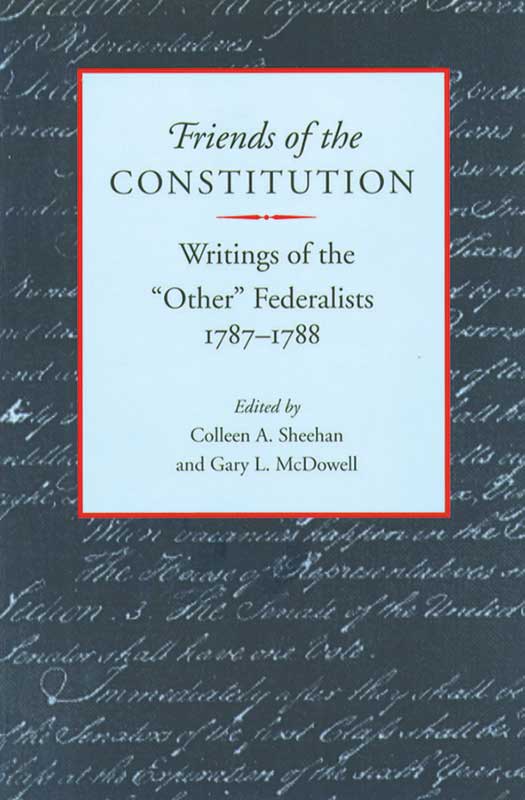
Friends of the Constitution: Writings of the “Other” Federalists, 1787-1788, edited by Colleen A. Sheehan and Gary L. McDowell (Indianapolis: Liberty Fund, 1998).

About Liberty Fund:

Liberty Fund, Inc. is a private, educational foundation established to encourage the study of the ideal of a society of free and responsible individuals.


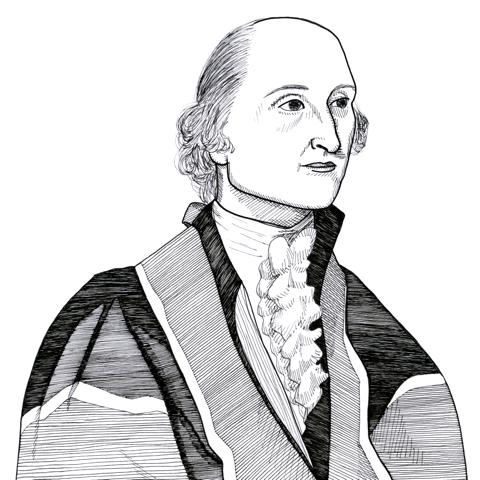
George Washington

Extract of Letter to Charles Carter

Throughout the debate over the proposed Constitution, George Washington did not make public statements endorsing the document. In private correspondence, however, Washington added his own voice to the Federalist cause. The extract of the letter reprinted here is one such example. Written to Charles Carter (1733-96), a planter in Stafford County, Virginia, the letter discusses farming matters at some length and concludes with a brief opinion on the proposed Constitution.

The letter was first published on 27 December in the Virginia Herald under the heading, “Extract of a letter of a late date from a member of the Fœderal Convention, to his friend in this town.” The letter was printed again on 3 January in the Pennsylvania Mercury and two days earlier in the Maryland Journal under the heading “from the illustrious President of the late Federal Convention.” By 27 March, Washington’s letter was reprinted in the January issue of American Museum and in forty-nine newspapers.

Washington did not object to having his opinion on the Constitution made public but told Carter in a letter of 12 January that had he known, he would have used “less exceptional language.” In the end, although both Carter and Washington were upset about the letter’s publication, James Madison, who had wanted Washington to make his views known on the document, told Washington in a letter of 20 February that the letter’s publication “may have been of service.”

I thank you for your kind Congratulation on my safe Return from the Convention, and am pleased that the Proceedings of it have met your Approbation.—My decided Opinion of the Matter is, that there is no Alternative between the Adoption of it and Anarchy. If one State (however important it may conceive itself to be) or a Minority of them, should suppose that they can dictate a Constitution to the Union (unless they have the Power of applying the ultima Ratio to good Effect) they will find themselves deceived. All the Opposition to it that I have yet seen, is, I must confess, addressed more to the Passions than to the Reason; and clear I am, if another Federal Convention is attempted, that the Sentiments of the Members will be more discordant or less accommodating than the last. In fine, that they will agree upon no general Plan. General Government is now suspended by a Thread, I might go further, and say it is really at an End, and what will be the Consequence of a fruitless Attempt to amend the one which is offered, before it is tried, or of the Delay from the Attempt, does not in my Judgment need the Gift of Prophesy to predict.

“I am not a blind Admirer (for I saw the Imperfections) of the Constitution I aided in the Birth of, before it was handed to the Public; but I am fully persuaded it is the best that can be obtained at this Time, that it is free from many of the Imperfections with which it is charged, and that it or Disunion is before us to choose from. If the first is our Election, when the Defects of it are experienced, a constitutional Door is opened for Amendments, and may be adopted in a peaceable Manner, without Tumult or Disorder.