Econlib

The Library

Other Sites

Front Page arrow Titles (by Subject) arrow PREFACE - Friends of the Constitution: Writings of the Other Federalists, 1787-1788

Return to Title Page for Friends of the Constitution: Writings of the “Other” Federalists, 1787-1788

Search this Title:

PREFACE - Colleen A. Sheehan, Friends of the Constitution: Writings of the “Other” Federalists, 1787-1788 [1998]

Edition used:

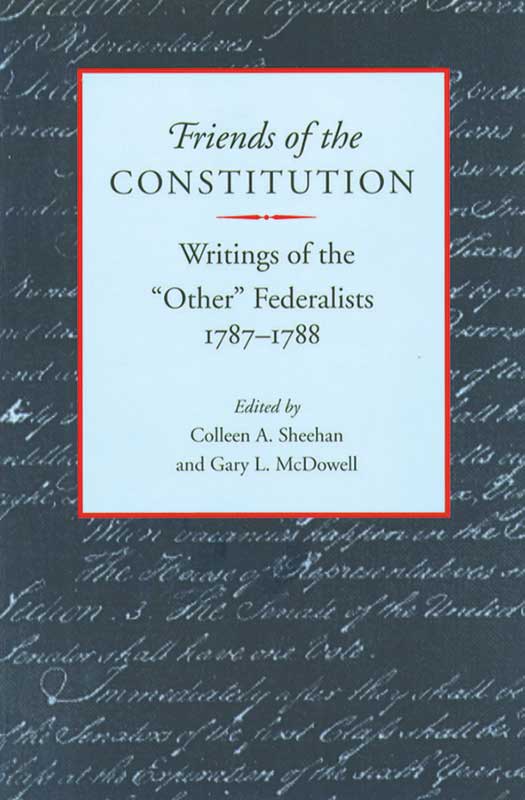
Friends of the Constitution: Writings of the “Other” Federalists, 1787-1788, edited by Colleen A. Sheehan and Gary L. McDowell (Indianapolis: Liberty Fund, 1998).

About Liberty Fund:

Liberty Fund, Inc. is a private, educational foundation established to encourage the study of the ideal of a society of free and responsible individuals.


To our teachers William B. Allen, Morton J. Frisch, Harry V. Jaffa, Ralph Lerner, and Robert A. Rutland

PREFACE

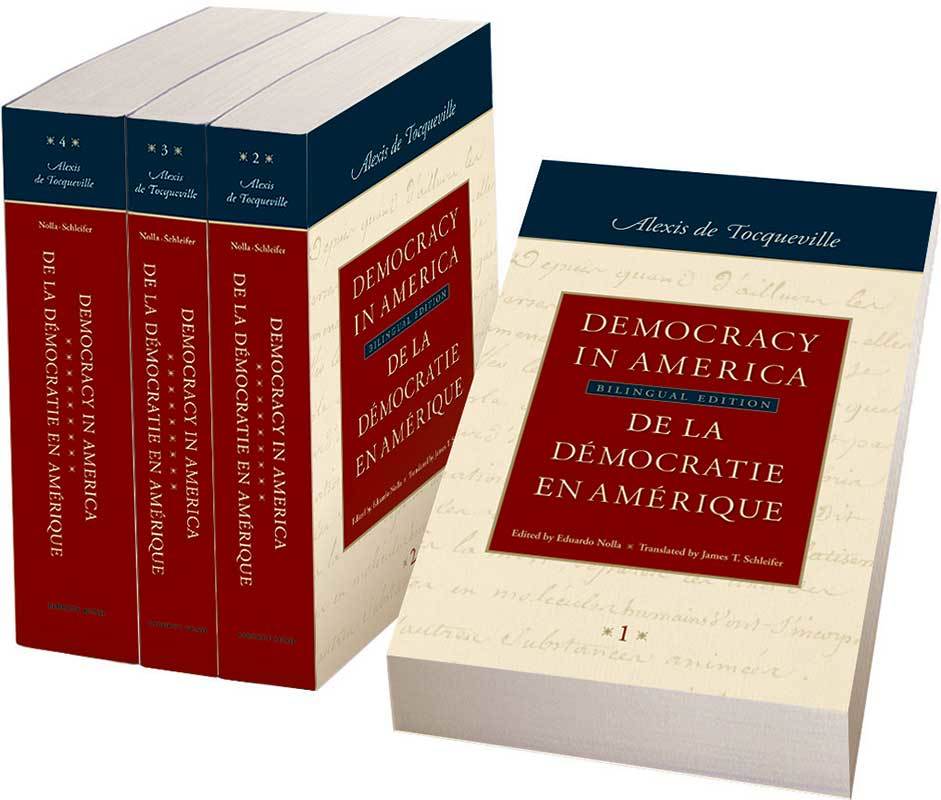
There has perhaps never been a political act of greater historical consequence than the creation of the American republic. The significance of the act derives not only from the subsequent development of the nation into a major presence in the world but also, and more important, from the purpose of the Founding. It was not hyperbole when “Publius” introduced The Federalist by noting that a monumental task seemed to have been reserved to the people of America. That task was to demonstrate “whether societies of men are really capable or not of establishing good government from reflection and choice, or whether they are forever destined to depend for their political constitutions on accident and force.”1 From the Declaration of Independence through the Federal Convention of 1787 and the struggle over ratification of the Constitution, Americans knew that the eyes of the world were upon them. What the American Founding symbolizes is the importance of principle in the ordering of man’s political life. Its purpose was nothing less than to demonstrate that mankind is capable of self-government. Alexis de Tocqueville put it best when he remarked, “I saw in America more than America.”

There are two influential perspectives in American political thinking that denigrate the role of principle in politics. The first, and perhaps the dominant one today, insists that political life is adequately explained by resort to economics, sociology, or psychology. The other perspective claims that all political and human life can be explained by deconstructionist philosophy. These academic approaches are, we believe, too narrow in their treatment of things political. Certainly human behavior is influenced by such factors as economic interest, social status, ethnicity, and relations of power. But while it is influenced by these forces, it is not controlled by them. To view a political phenomenon of such depth and consequence as the American Founding only through the lens of social science analysis or deconstructionist hermeneutics is to see it in a fragmented and distorted way. To reduce all human behavior to self-interest, or fear, or some other subrational or quasi-rational force, is to fail to consider the capacity of the human soul and the possibility of justice. It is to miss even a glimpse of Tocqueville’s vista.

A great many of the essays, letters, and pamphlets reproduced in this volume cannot be understood if one is limited by a materialistic or otherwise reductionist reading. Some of the Federalist writers, in fact, attempt to capture the reader’s spirit by entwining it with the spirit of the Founding. We should not presume that the pages they left behind were meant only to persuade and inspire their contemporaries and not to influence future generations of Americans as well. But in order to grasp their entreaty at all, we today must rediscover the openness to historical questions and human motivations that they took for granted. The need for this openness among contemporary readers is perhaps best expressed by Charles Warren:

In recent years there has been a tendency to interpret all history in terms of economics and sociology and geography—of soil, of debased currency, of land monopoly, of taxation, of class antagonism, of frontier against sea-coast, and the like—and to attribute the actions of peoples to such general materialistic causes. This may be a wise reaction from the old manner of writing history almost exclusively in terms of wars, politics, dynasties, and religions. But its fundamental defect is, that it ignores the circumstance that the actions of men are frequently based quite as much on sentiment and belief as on facts and conditions. It leaves out the souls of men and their response to the inspiration of great leaders. It forgets that there are such motives as patriotism, pride in country, unselfish devotion to the public welfare, desire for independence, inherited sentiments, and convictions of right and justice. The historian who omits to take these facts into consideration is a poor observer of human nature. No one can write true history who leaves out of account the fact that a man may have an inner zeal for principles, beliefs, and ideals.2

While economic and social considerations played their normal role in determining which side of the Founding debate individuals would take, lingering over them does not expose the fact that for most of the Founding generation the debate stemmed from a more fundamental concern: What form of government would best secure the private rights and public happiness of the people? The deepest concern of both Anti-Federalists and Federalists was to fashion the best practicable, if not the best, regime.

This volume is intended to encourage a broader and deeper understanding of the debate over the Constitution and the founding of the American republic. Further, it is designed to invite the reader to engage the questions of political philosophy via the route of thinking about our own polity. This approach of coming to philosophic questions via politics, and not vice-versa, is, we believe, of crucial importance. By employing this method we adopt the approach of the Founders themselves. Education in the politics of the American Founding, for example, provides a pathway to education in political philosophy in a way that does not neglect the political considerations at the heart of political philosophy—considerations that were vitally important to the Founders. The converse approach of treating politics solely by way of theory allows students to bypass political concerns and questions rather than think through them. It encourages them to substitute mere abstraction for genuine political understanding. The approach we encourage here stands in sharp contrast to this method. Indeed, it is intended to combat the belief that one can draw philosophic conclusions about constitutional politics without knowing anything about the politics of the Constitution.

Accordingly, this volume is designed to feature primary texts of the “other” Federalists and to encourage readers to pay serious attention to the words and views of the authors themselves. In this way the collection is a source book of primary material. By introducing the reader to the divergent opinions between the supporters and opponents of the Constitution, as well as among the supporters themselves, we have made some of the implicit, more philosophic questions explicit. As such the volume is not simply a historical source book but an introductory reader in the philosophic politics of the American Founding as well.

This collection is intended as a companion volume to The Federalist and Anti-Federalist writings. It is meant to be a representative rather than a comprehensive collection. These essays have not been chosen to achieve proportion by section of the country or simply because of the repetition or impact of a particular argument though we have endeavored not to neglect any geographic section or influential argument. Rather our primary concern in selection has been to include the most distinctive and richest of the “other” Federalists’ essays and to reveal as fully as possible the principles, the range of arguments, as well as the color and flavor of the debate. Read in conjunction with the writings of the Anti-Federalists this volume is intended to give the reader a sense of the controversy that surrounded our national birth; read with The Federalist this collection offers the reader a fuller view of the dimensions of Federalist thought. Added to the conveyable editions of The Federalist and Anti-Federalist writings currently available, this portable one-volume sampler of “other” Federalist writings makes accessible to students and citizen-readers a broader view of American Founding thought.

The idea for this collection was originally conceived by Professor Herbert Storing, who initially appended a collection of Federalist writings to his essay that now serves as the introduction to this volume. Many of Professor Storing’s selections are retained here though we have made substantial additions as well as deletions to his preliminary list. Such additions as selections from “An Essay on the Means of Promoting Federal Sentiments in the United States” by a “Foreign Spectator” were made because they add significantly to our understanding of the principles being explicated during the public debates of 1787 and 1788. Deletions were made to compact the edition and to highlight the more politically and philosophically penetrating essays.

As Professor Storing’s introduction shows, the “other” Federalists, from James Wilson and John Dickinson to the more obscure and anonymous penmen, waged the frontline battle in the public defense of the Constitution of 1787. Though often mingled with personal invective and spirited denunciations, the “other” Federalist papers contained herein present the reader with many thoughtful, and sometimes profound, discussions regarding the necessities and the nature of politics, the character of republican government, and the influence of constitutions and laws on the manners and spirit of a people. In studying these essays, the reader is asked to consider the question of the Federalists’ purpose. In addition to their general goal of attaining ratification of the proposed Constitution, what were they trying to achieve and why? And how did they think they could best attain their ends? Where did the “other” Federalists agree and disagree? In understanding the politics of the American Founding, can we understand better the philosophic underpinnings of the American republic?

Unlike “Publius” the “other” Federalists did not speak with one voice. But even though the numerous authors took on as many journalistic identities, the question remains whether there is a single body of thought that can be classified as the Federalist viewpoint. Certainly the Federalists agreed on the need for a firmer union and for an energetic but limited government. Further they concurred—not only among themselves but also with the Anti-Federalists—on the wisdom of establishing a representative rather than a direct democracy. Disagreements were present, however, about the proper task of the representative and even about the sovereign authority of the constitutional union though the latter difference of opinion is much less pronounced. And surely there was disagreement among the Federalists regarding the role of government in the formation of the character of the citizenry.

There has been much scholarly controversy in recent years about the American Founders’ conception of republican government, particularly in respect to their understanding of the purpose and philosophic character of the polity they created. Did the Founders believe that the ultimate purpose of republicanism was the formation of a virtuous citizenry? Or did they believe that the idea of free, limited government sets parameters not only to governmental powers but reduces the ends of political association as well, thereby precluding the idea of civic education? Furthermore, if republican government depends in some way on a virtuous citizenry, then who—the national government? the state governments? or the private sector?—bears the responsibility for promoting it? If, on the other hand, the idea of free government severs the connection between ethics and politics, then what legitimizes the ultimate authority in the polity?

Human nature is such that on virtually any given issue there will be some disagreement, however small the minority may be. This is certainly true when applied to the issues raised during the ratification of the Constitution, including among the Federalists themselves. Nonetheless among reasonable human beings association implies that they have something in common, be it merely a shared usefulness or a union for some higher purpose. The Federalists were united in support of the document drafted in Philadelphia—they were Friends of the Constitution. We are naturally led to ask then, what made them friends? What was the basis for their friendship? Was it mere utility and self-interest that drew them together, or is there prevalent in their writings a shared, more noble vision that inspired their political association? What was it, in sum, that made them together see in America more than America?

Colleen A. Sheehan

Villanova University

Gary L. McDowell

  • Institute of United States Studies,
    University of London

[1. ]The Federalist, No. 1, in Alexander Hamilton, James Madison, and John Jay, The Federalist Papers, ed. Clinton Rossiter (New York, 1961).

[2. ]Charles Warren, The Making of the Constitution (Boston: Little, Brown & Company, 1928), 3.