EconlibThe LibraryOther Sites |
Front Page Titles (by Subject) FOREWORD - The Ethics of Confucius
Return to Title Page for The Ethics of ConfuciusThe Online Library of LibertyA project of Liberty Fund, Inc.Search this Title:Also in the Library:
FOREWORD - Confucius, The Ethics of Confucius [1915]Edition used:The Ethics of Confucius. The Sayings of the Master and his Disciples upon the Conduct of “The Superior Man”, arranged according to the plan of Confucius with running commentary by Miles Menander Dawson, with a foreword by Wu Ting Fang (New York: G.P. Putnam’s Sons, 1915).
About Liberty Fund:Liberty Fund, Inc. is a private, educational foundation established to encourage the study of the ideal of a society of free and responsible individuals. Copyright information:The text is in the public domain. Fair use statement:This material is put online to further the educational goals of Liberty Fund, Inc. Unless otherwise stated in the Copyright Information section above, this material may be used freely for educational and academic purposes. It may not be used in any way for profit.
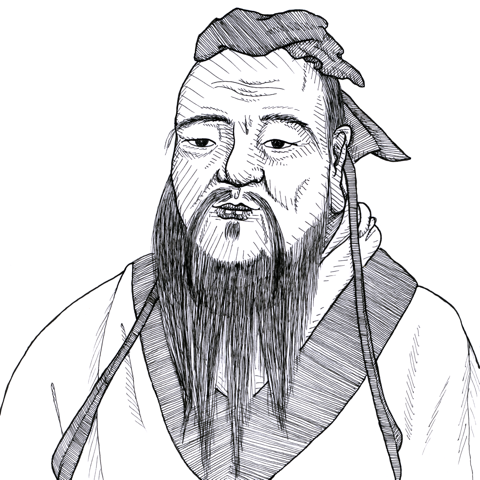
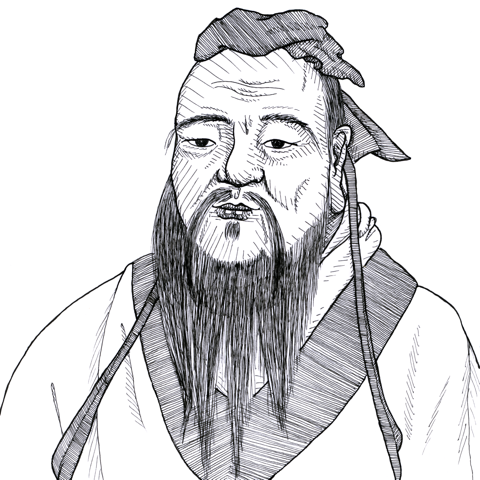
![]() CONFUCIUS From a drawing by Kiechu Yamada, Based upon an Ancient Copy of the Traditional Portrait Reproduced by the courtesy of Dr. Paul Carus To MISS JESSIE B. RITTENHOUSE, discriminating critic and unfailing friend, to whose appreciation the author’s perseverance in the arduous labor of collecting and collating the text for this book and preparing it for its readers is chiefly due, This Volume is Gratefully Inscribed. FOREWORDWhen Confucius died, it is recorded that his last words were regrets that none among the rulers then living possessed the sagacity requisite to a proper appreciation of his ethical philosophy and teachings. He died unhonoured,—died in his seventy-third year, 479 bc, feeling in the flickering beats of his failing heart that his inspiring pleas for truth and justice, industry and self-denial, moderation and public duty, though then without having awakened men’s impulses, would yet stir the depths of the social life of his land. Only the future will tell how far his staunch guide-ropes to correct conduct will be extended within China, and even be threaded through the dark and dangerous passages of existence in the lands of the Occident to lead humanity safely to that elevated plane which the lofty ideals of the philosopher aimed at establishing. Not yet has the world, sagacious as it is, appreciated the wealth of gentleness, the profound forces for good, the uplifting influences embodied in the teachings of the ancient sage, whose aim, reduced to its simplest definition, was to show “how to get through life like a courteous gentleman.” A great step forward in the dissemination of the doctrine in foreign lands is taken in “The Superior Man.” Lofty as appear the ideals, in the usual translations, they lose the effect on the average reader that the application which Mr. Dawson has now given them must create. Driving home the principles by careful compilation under different headings, the author causes the scheme of ethical conduct to attract and appeal; and the blessings it has bestowed in the vast expanses of China may yet give comfort to many people in many other lands. Confucius strove to make the human being good—a good father, a good mother, a good son, a good daughter, a good friend, a good citizen. Though his truths were unpalatable at the time of their enunciation, they have lived to bear good fruit, despite the desperate efforts of Emperor Tsin Shi-hwang to destroy them by fire, and it is gratifying to see that a still wider sphere is being more and more developed for them in the West. The movement that is now being energized in China to make the doctrine more familiar to the people, may also find reflection in foreign lands. “The Superior Man” will surely help the struggler in the mire of complexity to find his way out to the clean, substantial foothold of manliness and integrity. Shanghai, China, |

Titles (by Subject)