EconlibThe LibraryOther Sites |
Front Page Titles (by Subject) CHAPTER V - Observations on The Two Sons of Oil
Return to Title Page for Observations on “The Two Sons of Oil”The Online Library of LibertyA project of Liberty Fund, Inc.Search this Title:Also in the Library:
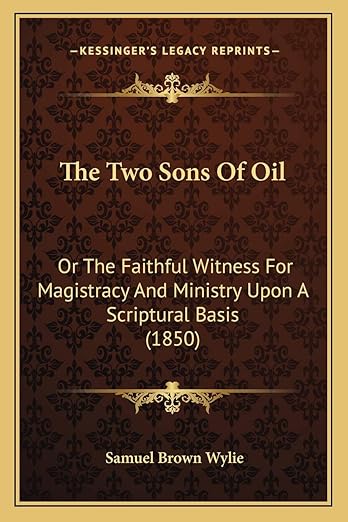
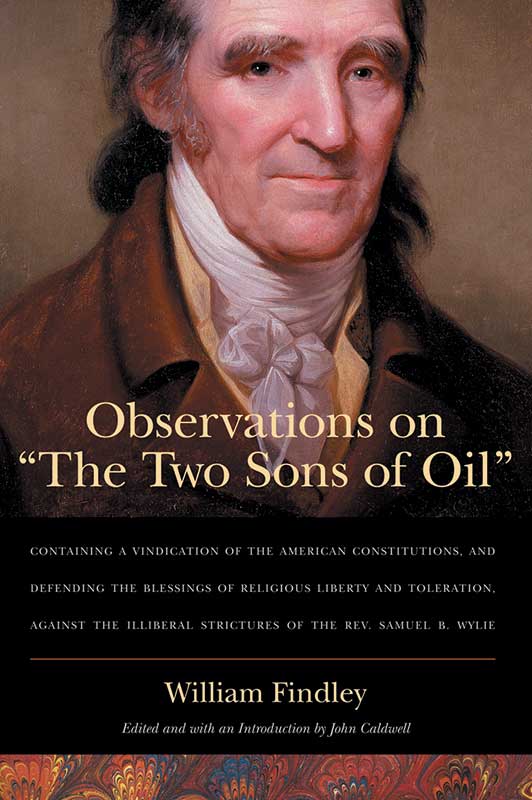
CHAPTER V - William Findley, Observations on “The Two Sons of Oil” [1812]Edition used:Observations on “The Two Sons of Oil”, Containing a Vindication of the American Constitutions, and Defending the Blessings of Religious Liberty and Toleration, against the Illiberal Strictures of the Rev. Samuel B. Wylie, edited and with an introduction by John Caldwell (Indianapolis: Liberty Fund, 2007).
About Liberty Fund:Liberty Fund, Inc. is a private, educational foundation established to encourage the study of the ideal of a society of free and responsible individuals. Copyright information:The copyright to this edition, in both print and electronic forms, is held by Liberty Fund, Inc. Fair use statement:This material is put online to further the educational goals of Liberty Fund, Inc. Unless otherwise stated in the Copyright Information section above, this material may be used freely for educational and academic purposes. It may not be used in any way for profit.
CHAPTER VOf persecution—The author’s glosses on Romans xiii. 1–7, and Mat. xxii. 21, examined and refuted, by extracts from the venerable divines of Westminster, approved by the Assembly of the church of Scotland—The testimonies of the Presbyterian clergy of England and Scotland, against Cromwell’s usurpation, and of Luther, Calvin, and other approved commentators—Martyrdom a test of sincerity, not of truth—The Protestant martyrs under Popery against the author—Thoughts on creeds—Opinions of the Reformers—Objection, that the apostles’ doctrine was not applicable to that period, refuted. The reverend author’s thirteenth supposed objection (p. 74) is, that we say, “Your principles lead to persecution, and are cruel and unmerciful.” This objection I admit in all its force. I admit also his reply to it, which is—“The church of Christ never persecuted. If our principles lead to it we are certainly wrong.” In this I perfectly agree with him; but with his following arguments to evade the force of his own concession, I do not agree. There is no principle of persecution in the religion of Jesus, the blessed Saviour of the chief of sinners; who waiteth long and is kind; who waiteth even to the eleventh, i.e. to the last hour, on careless and negligent sinners; and who brought the thief on the cross to repentance at the last hour, as he has done many sinners since; and who himself declared that he did not come to destroy men’s lives, but to save them; and who, on his last parting, gave a solemn charge to his apostles—“And he said unto them, go ye into all the world, and preach the gospel to every creature. He that believeth and is baptized, shall be saved; but he that believeth not, shall be damned.” This solemn, gracious, and awful commission is given to the ministers of the gospel, who are thereby constituted—2 Cor. v. 20. Ambassadors of Christ to pray and beseech men to be reconciled to God. There is not a word here of persecution, but of teaching or beseeching men to be reconciled to God. There is not here, nor any place else, a commission given by the Saviour to ecumenical councils or emperors to ratify or sanction his laws, in order to given them validity; nor is there any commission given them as officers of his kingdom, which he has, in the most solemn manner declared, is not of this world. There is no commission given to convert sinners by the sword, or other physical force. The author is fond of dilemmas, and ingenious in stating them; but having admitted that the church of Christ does not persecute, his detailed arguments immediately following in favour of persecution, may be safely passed without further notice, except one observation, viz. that by the church of Christ, I mean, the church or spiritual kingdom instituted by Christ and his apostles, with express provision that they should not add to his laws, under the penalty of having the plagues written in God’s book added to them—Rev. xxii. 18. The author treats on quite a different subject, viz. on what he calls a church of Christ, instituted by a Roman emperor, in connexion with a number of bishops, who laid the foundation of what is since called Popery, or the church of Rome, which has ever since been built on that foundation. The laws, in all political churches, as such, do not originate from the ratifying and sanctioning power of Christ or his apostles, but of the civil magistrate; and are subject to all the changes of the opinions of human legislatures, and all the varieties that are to be found even in the various protestant national churches. His sixth objection (p. 58) is founded on Romans, chap. 13; and his seventh (p. 66) on Mat. xxii. 21, viz. the Saviour’s answer to the question of paying tribute to Caesar. I admit the solidity of these objections to his system. The author has in p. 67, and elsewhere, appealed to approved commentators, and to such I shall now appeal. The Westminster assembly, was composed of about one hundred divines, selected for their orthodoxy, learning, and talents, many of whom were eminent commentators, joined also with four able divines from the church of Scotland, and thirty lay assessors, many of them such as Seldon, Hales, Whitelock, Pym, &c. very eminent for learning, talents, and virtue, and three lay assessors from Scotland.1 These he will not deny to be approved commentators, and I claim no other authority for them. Confession of Faith, chap. xxiii. sec. 3—“It is the duty of people to pray for magistrates, to honour their persons, to pay them tribute and other dues, to obey their lawful commands, and to be subject to their authority, for conscience sake. Infidelity and difference in religion doth not make void the magistrate’s just and legal authority, nor free the people from their due obedience to him: from which ecclesiastic persons are not exempted,” &c. The 127th question of the Larger Catechism, viz. What is the honour that inferiors owe to their superiors? The answer is quite agreeable to the above. This venerable assembly of divines, and learned noblemen and gentlemen, give this doctrine as a comment on Rom. xiii. 5–7. and on Mat. xxii. 21, and other similar texts; and with this fully corresponds the Directory for worship. We find by Neal’s History of the Puritans,2 that there was much dispute and division in both the assembly and parliament, about the form of church government and discipline; but they were unanimous in approving the doctrines of the Confession of Faith and the Catechisms—the Directory for worship passed with equal unanimity, and they were all approved and enforced by church and state in Scotland. Here is a mighty cloud of witnesses indeed. No less than one hundred divines, and more than thirty noblemen and gentlemen of England, all selected for their eminence in learning and piety, by parliament, and that parliament itself. Add to this all the puritan divines who suffered for non-conformity during the tyranny of the Stuarts, of which there were two thousand ministers ejected from the established church, and their congregations in one day, in a summary manner, by act of parliament. Among those divines are found the names of Manton, Calomy, Case, Baxter, T. Goodwin, Owen, Allen, Flavel, Henry, and many others, who, being dead, yet speak, to the edification of the christians in the protestant churches.3 These, though differing in other things, after the example and agreeable to the doctrine taught by Christ and his apostles, taught obedience to the lawful commands of an oppressive and tyrannical government, and monstrously wicked kings, such as Charles II. and James II.4 They taught also, both by their doctrine and example, to suffer in preference to obeying unlawful commands. It was in their day, and in opposition to them, that the learned deistical philosopher, Hobbes, taught the doctrine of the public conscience, i.e. the conscience of the supreme civil magistrate being the criterion of truth and error, sin and duty—whose principles, with some variation, the Rev. Mr. Wylie has copied into his system, the refuting of which employed the learned protestants of different denominations, for half a century. Such are the witnesses in favour of the objections to the author’s system, produced in England. Scotland, however, affords a mighty addition. No less than the testimony of the whole Presbyterian church of Scotland, in general assembly met, in their representative capacity. After submitting the question, the presbytery, who, as well as the parliament of that nation, approved of the Confession, Catechisms and Directory, without any exception or additional explanation on such parts as are founded on Rom. xiii. Mat. xxii. 21, &c. The above is human, and, therefore, fallible testimony, but of pious and learned men, and many of them great sufferers for what they, on the strictest examination, believed to be truth. It can scarcely be outweighed by any uninspired testimony. But as the author (p. 24) says, “an approved example is equal to a precept; but precepts are not wanting”—see Deut. xiii. 16, &c. “Were it needful, we might quote also the authority of most of the reformed churches of Europe, as also of the most eminent martyrs.” In p. 73, in answer to the objection arising from the Confession of Faith, now under consideration, he says, “The sense in which the General Assembly, as also the current of the reformers and martyrs of the seventeenth century, understood this passage, is fully stated in our testimony, as also in the letter from Stirling, by the Rev. John M‘Millan, jun.5 They distinguished between reformed and enlightened lands, and those that were unreformed and unenlightened.” Is the author really sincere in his boasts of a cloud of witnesses, of reformers, martyrs, and reformed churches, &c.? If so, why does he not produce instances? Is he really serious, in asserting, that the Westminster Assembly made such a distinction? That they taught such a public doctrine on the authority of Christ and his apostles, as equally applies to all nations and all individuals, like the moral law of nature, on which it is founded, and another doctrine for particular cases, couched in the same words? The Confession, however, makes no such distinction, nor is it founded in scripture. That it is founded in their testimony, is admitted, and it is no doubt founded in the letter to which he alludes, and which I have not seen; but this only shows what ingenuity even pious men will sometimes resort to, to vindicate a favourite mistake. This is, however, a strong example of mysticism. In the Directory for public worship, ratified and enforced in both nations in 1645, while the king and his parliament were at war about their respective claims of prerogative; while the parliament resisted what they deemed the king’s unconstitutional, i.e. unlawful commands, they at the same time acknowledged what they believed to be his constitutional or legal authority, and directed all the ministers, in their prayers before sermon, to pray for all in authority, especially for the king’s majesty—and for the conversion of the queen, &c. and in several treaties for settling the distractions of the government they treated with, and addressed him as their lawful king, and continued to do so till after the assembly at Westminster was dissolved, and the parliament purged by the army, by expelling all the Presbyterians, and leaving few members but officers of the army. Just after parliament had voted the king’s proposals at Hampton court to be satisfactory, the remaining members, with Cromwell at their head, usurped the whole governmental authority. In pursuance of this, they disowned the king’s authority, brought him to trial before a court, not known to the laws, and put him to death. This proceeding was solemnly protested against by the whole body of the Presbyterian clergy in England, and the commissioners of the church of Scotland, in language expressive of sincere loyalty. Among these are many of the names of the most respectable members of the Westminster assembly. They declare that, “though parliament took up arms in their own defence, and of the Protestant religion, and of the fundamental laws of the country, yet this cannot be plead in favour of usurping authority over the king.” And again, “Moreover, though parliament took up arms in defence of the laws, it was never their intention to do violence to the person of the king, or divest him of his royal authority.” Again, “you cannot but know, that the word of God commands obedience to magistrates; and that, consonant to scripture, this hath been the judgment of Protestant divines, at home and abroad, with whom we concur.” The commissioners of the church of Scotland solemnly protest against casting off his authority, and proceeding to try and put him to death, as absolutely inconsistent with the solemn league and covenant. The aforesaid memorial of fifty-seven eminent London ministers, tells the nation, “you have engaged by oath to preserve his majesty’s person.” The same ministers, and indeed the whole body of the Presbyterians, acted conformably to this, after the restoration. They acknowledged the legal authority of Charles II. and James II., they obeyed their lawful commands, but suffered severe persecution, in preference to obeying such as were contrary to the moral law, i.e. such as interfered with the authority of God, over the reason and judgment of his reasonable creatures, in such cases for which they are solely accountable to himself. They did the same in Scotland, except that a much greater proportion of the Presbyterian clergy conformed, and became generally the disgrace of even Episcopacy. In England, the few that conformed, such as the learned doctors Lightfoot, Reynolds, Williams, Tuckney, &c. did honour to that church, as they had done to the Westminster assembly, of which they had been eminent members.6 They were not there, however, in favour of exclusive establishments, i.e. of persecution; nor when they conformed, did they become persecutors, as the conformists in Scotland did. The non-conformists in Scotland were most cruelly persecuted; many of them left the country; a few of those who remained, took up arms in their own defence, when they were, while attending the gospel ordinances, shot down like wild beasts of the field, or otherwise murdered. They disowned the authority of the king, who had withdrawn his protection from them, and refused to pray for him. In this, however, they had no judicial concurrence of that church, but a few presbyterian ministers concurred in, or openly patronised, this conduct; it never, therefore, became the act of that national church. It was fully justifiable, however, on the principle of self-defence, if success had been probable; but that not being the case, there was no ground to expect miracles. This is the only exception to their conduct. Those who fled from the storm till it would blow over, like Athanasius, acted on the Saviour’s advice. “When they persecute you in one city, flee you to another.” The nation a few years rejected the Stuarts from being kings. In this distracted state of that church and nation, those who disowned the civil authority, as well as those who fled from its violence, were admitted to communion with the Protestant churches of the Netherlands; but after the persecution ceased, and the Presbyterian religion was restored, and politically reestablished in Scotland, these churches refused communion with such as disowned the civil authority in Scotland. In short, they were not acknowledged by any of the political Protestant churches in Europe. The author, having confidently appealed to the current of the reformers and martyrs of the 17th century, as quoted above, has occasioned this review of that period, in which it appears that the Westminster assembly and parliament, and the general assembly and parliament of Scotland, were consistent; that they did not say one thing and mean another. I appear only as an advocate for their consistency, while I think, perhaps through the circumstances of the times, they carried their loyalty too far. After the death of Cromwell, when the parliament was restored, and the Presbyterians the decided majority, they brought the perjured, unprincipled, and extremely dissipated Charles the second to the throne, without any legal restraints on his absolute power, while he had no claim but from his royal blood, or hereditary right; he had not been in possession, except in Scotland; they were under no obligation of oath or covenant to receive him as their king in England. In 1688 they had learned better. When James, the brother of Charles II. with all his royal blood, had abdicated the throne, passing over many other nearer royal stems, they fixed on a remote branch, not for the amount of the royal blood in his veins, but from political causes. This was not inconsistent with the principles laid down in the Confession of Faith, viz. that “infidelity, or difference of religion, does not make void the magistrate’s just and legal authority, nor free the people from their obedience to him.” He whom they chose was a Protestant, but of a different denomination. He appeals to the martyrs of that century—on which I observe, that martyrdom is a proof of sincerity, but not of truth. If this principle is given up, the Manichees,7 and other heretics in the fourth and fifth centuries, who opposed or perverted the truth of the christian religion, and the Donatists and Novations who suffered martyrdom for not submitting to the established order,8 could appeal to a very numerous catalogue of martyrs; and, in later times, the church of Rome can produce fifty thousand martyrs in Japan, Abyssinia, China, and elsewhere. The Arians and Socinians have also the testimony of martyrs in their favour. They were, no doubt, erroneous; some of these sects were so in a high degree—therefore we do not take their testimony, for which they suffered, as a test of truth; but it would be uncharitable not to admit it as a test of their sincerity. The thousands of martyrs under the baleful union of church and state, during its unabated reign, laboured under errors and mistakes; but the testimony for which they greatly suffered, was the gospel of Christ. The godly bishops and others, who suffered under the union of church and state in queen Mary’s reign, acknowledged the king’s headship over the church of England, though even Cranmer himself had lamented the imperfection of their reformation; but this was not what they sealed with their blood—it was the truth of the gospel of Christ, with respect to which bishop Latimer said, that though he was too old to argue for Christ, he was not too old to die for him. Yet unfortunately, on the re-establishment of the protestant religion in the reign of queen Elizabeth, on this principle, the papish rites were as the testimony of the martyrs re-established in the nation. Here was the snare arising from pinning their faith on the martyrs. The earliest idolatry in the christian church was idolizing the memories of the martyrs, and afterwards their relics or bones. In Naples, St. Janesarius is worshipped to this day, and the like is done in other superstitious churches. Let none substitute their confidence in martyrs, instead of the gospel of Christ in the scriptures of truth, which is the only sure foundation and pillar, and ground of truth—resting on any other foundation is idolatry. There were, indeed, numerous martyrs in the seventeenth century. In France, Piedmont, and other popish countries belonging to Babylon the great, the mother of harlots—drunken with the blood of the saints; and there was also the blood of martyrs shed, and other grievous oppressions inflicted, both on the spiritual and temporal interests of christians, by the little Babylons, viz. the antichristian, political, protestant establishments in Britain and elsewhere, who, after the example of the author’s standard authority of emperors and councils, usurped Christ’s legislative authority over his body, the church; but he has not told us to which of these martyrs he appeals. I am still more at a loss to know what reformers he means. I know of no reformation which took place in the seventeenth century. There were, indeed, many great and pious divines who endeavoured to promote reformation, but without success. In Britain there was a successful struggle to overturn the prelatical hierarchy, and the superstitions accompanying it; but the prevailing party in church and state substituted another tyranny in its place. Those, since called independents, consisting of such learned and godly divines as Goodwin, Burroughs, Nye, Simpson,9 &c. who had contributed largely to prepare the Confession of Faith and Catechisms, first opposed the political establishment, and then plead an exemption from the civil penalties of it, so far as to enjoy the right of ordination, &c. It was refused. They plead for toleration; it was refused. These men, who had been among the ornaments of the assembly, dissented from necessity. The army petitioned that no civil restraints should be laid on tender consciences. They said they had shed their blood to pull down the tyranny of the bishops, united with the state, but not to erect another in its place. Their petitions were treated with silence. They had arms in their hands; they turned out the majority of the parliament; the members of the assembly of divines had gradually withdrawn the Presbyterians to livings under the establishments; the Independents to their voluntary, unprotected, and unendowed congregations—hence called Congregationalists. When the army seized the government, they protected these congregations, as friends to the liberty where with Christ had made his church free; and they also protected the Presbyterians in their livings, as holding the same faith—when the government of the army was overturned, after the death of Cromwell. The parliament was restored, in which the Presbyterians were the majority; they called Charles II. to the throne, without limitations or conditions. After the election of a new parliament, the hierarchy, with all its tyranny and superstitions, with several additions, besides that of personal resentment and revenge, were restored, and the Presbyterians and Independents suffered equal severity of persecution during the two succeeding reigns. This was the greatest struggle for reformation during that century; but it is evident that only a very partial reformation was attempted. The bishops tyrannized over the lower clergy and the people, as they had done in the reign of Constantine, and supported the despotic power of the kings. Against this double tyranny, both doctrinal and political puritans joined to overturn the tyrants; the doctrinal partizans were gratified by the removal of bishops and a number of popish rites—but they only changed the tyranny into other hands; though they reformed many abuses, they still retained the fundamental principle of Popery, viz. the power of making laws over Christ’s house. They indeed declared the scriptures to be the perfect rule of faith and practice, but prescribed the exclusive sense in which christians should receive it, under civil penalties. That the Westminster parliament and assembly, and the assembly and parliament of Scotland, agreed upon and ratified a system of doctrines much more agreeable to the scriptures than any, or all the creeds established and enforced by the author’s standard councils or emperors, or all the canonical councils from the first, viz. that of Nice, ratified by Constantine, to the last, viz. that of Trent, ratified by the emperor and other sovereign princes, is admitted. The council of Trent ratified all the decrees of the former canonical councils, including those recommended by the author, and, as all the others had done, made additions and explanations to them. The doctrinal puritans were not to blame for the result. To prevent mistakes, I approve of the doctrines contained in the Westminster Confession, as the doctrine of the reformers, and agreeable to the word of God; and I take it as the exposition of my own faith, as far as I ought to do any human composition or compilation, but not on the authority of the assemblies and parliaments which ratified and enforced them by civil penalties. God forbid, that I should subject my conscience to the dictates of the consciences of other men, who cannot answer for me at the judgment seat of Christ, or that I should receive any substitute for the scripture. The expediency of creeds and confessions, as a bond of union among christian denominations, does not result from any divine command of Christ, nor from any example of the christian church, in its purest state. What is called the apostle’s creed, it is now admitted, was not known till about the fourth century, when creeds, and what has been very improperly called pious frauds, became fashionable. However, it contains such a plain and simple summary of apostolic doctrines, that both Popish and protestant churches respect it, without difference of opinion, except with respect to the descent of Christ into hell, or the state of the dead. It is taken wholly from the evangelists. The metaphysical Nicene creed, instead of promoting union, laid the foundation of endless division and bloody persecutions; and every one of the author’s standard councils did the same. Even the council of Trent laid the foundation of new controversies in the church of Rome—several of the Popish nations never received it. God having addressed both law and gospel to every man’s understanding and reason, as he shall answer for himself, and abide the pains of everlasting fire in hell, where the worm dieth not, and the fire is not quenched, as the penalty of rejecting or misimproving them; or else, on improving them, to enjoy inconceivable happiness in heaven to all eternity: and also having indued every man with that exercise of his memory, understanding, judgment, and reason, which we call conscience, which, by comparing the conduct and opinions with the divine laws, gives peace by its approbation; or, by condemning, turns even the softest bed into a bed of thorns, and the apparently most eligible situation into a kind of hell, which disturbs the slumbers, embitters the most pleasing enjoyments, and renders the approach of death tremendously awful. Considering this, I have often wondered how it entered into the heart of vain, ignorant, and sinful men, to add to the rewards and punishments of divine appointment, with respect to those things for which we are solely accountable to God; especially when it has been confirmed by near 1500 years experience, that civil punishments of the most excruciating kinds, or rewards the most flattering, never could convert a soul to Christ, not having the divine appointment for that purpose. That it was by the terrors of the Lord, and the constraining love of Christ, that the apostles persuaded men to be reconciled to God, is the scripture account. In the present divided state of the church, in order that christians, in holding communion with God, and with each other, should know each other’s opinions, in matters of such religious controversy, as prevail in the present day, it is necessary that terms of communion should be agreed on. This necessity does not arise from the nature of the christian religion, of which the scriptures are both the foundation and the rule, but from the distracted and divided state of the church. It was not so from the beginning, nor will it be so when the happy time comes, when the knowledge of the Lord shall cover the earth as the waters cover the sea; and when Jew and Gentile shall be as one stick in his hand; and when the rust, acquired through long ages of apostacy, ignorance, and distraction, shall be purged away. But let the framers of these tests of orthodoxy take care that they do not exclude such christians from church communion, as the apostles, under the immediate influence of the Holy Ghost, admitted. Doing so, is not feeding Christ’s sheep or weak lambs, but smiting and banishing them from his sheepfold. The author must have laboured under some mistake, in appealing to the reformers of the seventeenth century; that was not the age of reformation. It is the opinion of all the divines, whose works I have per used on that subject, that during that century the protestant churches were degenerating, and some of them drawing nearer to the church of Rome; while, at the same time, the church of Rome was slowly and silently becoming more enlightened, and purging off her dross. To this purpose, see the evangelical Mr. Trail’s Vindication of the Protestant Doctrine, &c.10 Certainly in no period since the reformation, were so many princes, nobles, and other protestant professors, reconciled to the church of Rome, as in the seventeenth century. During the sixteenth century, before the political establishment of the reformed churches, the learned Mosheim says, “the church of Rome lost much of her ancient splendour and majesty as soon as Luther, and the other luminaries of the reformation, had exhibited to the view of the European nations the christian religion, and restored it at least to a considerable part of its native purity, and delivered it from many of the superstitions, under which it had lain so long disguised.” Here the historian admits, that the reformation was not perfect; that purity was only restored in a considerable degree; and that the church was delivered only from many, not from all the superstitions under which she lay disguised. This indeed was a fair and a blessed beginning of reformation, but alas! its progress was stopped too soon; princes stepped into the throne of Christ, and made laws for his house; and they made it the temporal interest of the clergy to acquiesce with this usurped authority. Thus church and state combined to stop the progress of reformation, and said unto it, hitherto shalt thou come, and no further. Hence it came to pass, that, instead of a reformed church of Christ in Europe, we have a church of England, of Scotland, Holland, Sweden, Denmark, &c. each of them modelled by the authority, and agreeable to the policy or caprice of the respective civil governments. Hence arose a number of little Babylons, separated indeed by various shades of difference from the great Babylon, but, like her, in a greater or lesser degree, stained with the blood of the saints, and trading in the souls, i.e. the minds or consciences of men, and agreeing with her in the foundation on which she has erected her throne, viz. on a human legislative authority in Christ’s spiritual kingdom, paramount to the laws of Christ himself. But to return to the objections founded on Rom. xiii. 1–7, and Mat. xxii. 21. on which I have given above the opinion of the Westminster divines, and of the divines of the church of Scotland; to these I will add the opinions of some of the reformers, among which Luther and Calvin stood on high ground. On the freedom from the law of Moses, that great reformer, and eminently evangelical divine, Martin Luther, on Galatians iii. 19. shews at large, from the design and circumstances of giving that law, that it was to endure but for a short time, and on the well known allegory of the bond woman and the free—chap. iv. 21, &c. he shews the difference between the Jerusalem that then was, and was in bondage with her children, viz. the Jewish church, and the Jerusalem that is above, viz. the gospel church, which is the mother of all true believers. He agrees with the school doctors in the abolishment of the judicial and ceremonial law—but condemns the different senses they assign to scripture, and particularly their maintaining obedience even to the moral law, as a condition of acceptance with God, and that the unbelieving Jews erred in this respect, as much as in teaching obedience to the law of Moses, as a condition of justification with God. After proving this at large, he says: “There is also another abolishment of the law, which is outward, to wit, that the politic laws of Moses do nothing belong unto us.” That is to say, the parts of this law which belong to the civil administration of the Jewish government, have no relation to christians. On chap. v. 3.—“He that is circumcised, is also bound to keep the whole law. For he that receiveth Moses in one point, must of necessity receive him in all. And it helpeth nothing to say, that circumcision is necessary, but not the rest of the laws: for by the same reason that thou art bound to keep circumcision, thou art also bound to keep the whole.—Some would bind us, even at this day, to certain of Moses’ laws that please them best, as the false apostles would have done at that time. But this is in no wise to be suffered: for, if we give Moses leave to rule over us in any thing, we are bound to obey him in all things. Wherefore we will not be burthened with any law of Moses. We grant that he is to be read among us as a prophet and a witness bearer of Christ: and moreover, that out of him we may take good examples of good laws and holy life. But we will not suffer him in any wise to have dominion over the conscience.” As to this great reformer’s opinions, with respect to obedience to the lawful commands of such governments, as God, in his providence, had set over them, I have not access to his writings on that subject, but we know well his practice and his instructions to the persecuted churches; his letters to those who received his doctrine, and who were subjects to the Popish persecuting duke of Brunswick,11 who charged the reformers as inimical to his government, because they withdrew from his religion, exhorting them to loyalty and sufferings, least, by doing otherwise, they should bring reproach on the doctrine of the reformation, is well known, and perfectly corresponds with the instructions of the apostles to the churches. It is well known that the learned Melancthon,12 the intimate colleague of Luther, who wrote a common-place book or system, (received at that period as a standard authority) it is understood, maintained the same doctrine. Indeed all the Lutheran divines did the same. The great reformer Calvin, long looked up to as the great vindicator of the reformation, and teacher of the reformed churches, and whom Melancthon, an elder reformer, then called his divine by way of eminence, wrote his institution of the christian religion, dedicated to the persecuting king of France, and principally for the persecuted churches in France, of which he had been minister; this work he revised several times till his death, and it became the common-place book of divinity for all the reformed churches, till it was opposed by the Arminians. From that time till now, those who continue to preach the doctrines of the reformation are still called Calvinists. This learned work is in many hands, and from it the following extracts are taken: “But whereas. I promised to speak with what laws a christian civil state ought to be ordered. There is no cause why any man should look for a long discourse of the best kind of laws, which should be infinite, and pertained not to this present purpose and place: yet, in a few words, and as it were, by the way, I will touch what laws it may use godlily before God, and be rightly governed by them among men, which self thing I had rather have passed over in silence, if I did not understand that some do herein perilously err. For there be some that deny that a common weal is well ordered, which neglecting the civil laws of Moses, is governed by the common laws of nations. How dangerous and troublesome this sentence is, let other men consider; it shall be enough for me to have shewed that it is false and foolish. Neither in the mean time, let any man be cumbered with this doubt, that judicials and ceremonials also pertain to the moral laws. For although the old writers which have taught this division, were not ignorant that these two latter parts had their use about manners, yet because they might be changed and abrogate, the morals remaining safe they did not call them morals. They called that first part peculiarly by that name, without which cannot stand the true holiness of manners, and the unchangeable rule of living rightly. Sec. 15. “Therefore the moral law (that I may begin thereat) since it is contained in two chief points, of which the one commandeth simply to worship God with pure faith and godliness, and the other to embrace men with unfeigned love, is the true and eternal rule of righteousness prescribed to the men of all ages and times that will be willing to frame their life to the will of God. For this is his eternal and unchangeable will——The judicial law given to them for an order of civil state, gave certain rules of equity and righteousness, by which they might behave themselves harmlessly and quietly together.——As, therefore, the ceremonies might he abrogate, godliness remaining safe and undestroyed: so these judicial ordinances also being taken away, the perpetual duties and commandments of charity may continue. If this be true, verily there is liberty left to every nation to make such laws as they shall foresee to be profitable for them.——Now since it is certain that the law of God, which we call moral, is nothing else but a testimony of the natural law, and of that conscience which is engraven of God in the minds of men, the whole rule of this equity whereof we now speak is set forth therein. Therefore it alone also must be both the mark and rule and end of all laws. Whatsoever laws shall be framed after that rule, directed to that mark, and limited in that end, there is no cause why we should disallow them, howsoever they otherwise differ from the Jewish law, or one from another.” The great and learned reformer here goes on to shew, at considerable length, that the same penalties, for the same crimes, would not equally apply to all nations, nor to the same nation at all times; that the same severity that is requisite for the protection of society among a stubborn people, prone to disorder, would be unnecessary to a people peaceably disposed; and that the same penalties that often became necessary in the time of war, attended with murder and rapine, are seldom necessary in settled times of peace; that, therefore, nations have a right, and it is their duty, to change their penal laws according to circumstances; but all of them ought to have the same end in view, to punish what is condemned by the eternal and unchangeable law of God. I will give the conclusion in his own words. “For, that which some say, that the law of God given by Moses is dishonoured, when it being abrogate, new are preferred above it, is most vain. For neither are other preferred above it, when they are more allowed, not in simple comparison, but in respect of the estate of the times, place, and nation: neither is that abrogate which was never made for us. For the Lord gave not the law by the hand of Moses, which should be published into all nations, and flourish every where: but when he had received the nation of the Jews into his faith, defence, and protection, he willed to be a lawmaker peculiarly to them.” The author elsewhere calls the moral law of the ten commandments “a taste or instruction of the law of nature.” We are well informed that not only Zuinglius, the reformer of Switzerland; Hulrick Campbell, the reformer of the Grisson country,13 and all their eminent associates, but the persecuted reformers of the French churches, maintained the same principles on this question. The celebrated John Welsh, of Scotland, when at Rochelle, with the persecuted protestants, when called on to answer before the persecuting Louis XIII. for the doctrine he taught, answered, that he taught that he (Louis) was lawful king of France, and not subject to any foreign jurisdiction, i.e. not subject to the Pope. Thus testifying in favour of the legitimate authority of that Popish persecuting king; but at the same time bearing testimony against the authority of the Pope. The persecuted reformers in Savoy, Italy, Austria, Hungary and Poland, supported the same testimony. That pious and learned divine, professor of divinity and eminent preacher, David Dickson,14 who taught divinity to the other eminent Presbyterian divines in Scotland, and did honour to that church in the seventeenth century, in his Truth’s Victory over Error, containing the doctrine which he taught his students, fully supports the doctrine of the Confession of Faith on these texts—and so also did his associates and students; so also did the learned Pool,15 and other eminent commentators in England, of that century. I am, therefore, at a loss to know to which of the reformers of the sixteenth or seventeenth century, or to what learned divines and protestant churches he can turn for support. But to demonstrate that the doctrine of the reformed churches on this subject has been one at all periods, I will examine some of the learned and approved commentators of the last century, through more than half of which many of us have lived. The venerable Henry, on Mat. xxii. 21—“They say unto him Caesar’s; then saith he unto them, render, therefore, unto Caesar the things that are Caesar’s, and unto God the things that are God’s.” “His convicting them of hypocricy might have served for an answer; such captious questions deserve a reproof, not a reply; but our Lord Jesus gave a full answer to their question, and introduced it by an argument sufficient to support it, so as to lay down a rule for his church in this matter, and yet to avoid giving offence and to break the snare. He forced them, ere they were aware, to confess Caesar’s authority over them—v. 19, 20. In dealing with those that are exceptions, it is good to give our reasons, and, if possible, reasons of confessed cogency, before we give our resolutions.—The coining of money has always been looked upon as a branch of the royal prerogative, a flower of the crown, a royalty belonging to sovereign princes, and the admitting that as good and lawful money of the country, is an implicit submission to these powers.——Christ asks them, Whose image is this? and they owned it to be Caesar’s, and thereby convicted those of falsehood who said, we were never in bondage to any, and confirmed what they afterwards said, we have no king but Caesar.——From thence he inferred the lawfulness of paying tribute to Caesar. v. 11. Render, therefore, to Caesar the things that are Caesar’s, not give it him, as they expressed it (v. 17) but render it, return or restore it; if Caesar fills the purses, let Caesar command them; it is too late to dispute paying tribute to Caesar, for you are become a province of the empire, and when once a relation is admitted, the duty of it must be performed.——His disciples were instructed, and a standing rule left to the church.” The learned and evangelical Scott, an approved English commentator at the close of the eighteenth century, as Henry was at the beginning of it, on Mat. xxii. 15, 22, says, “But Jesus gave them to understand that he was fully aware of their insidious designs; yet, he chose to answer the question, because he intended to graft on it important instruction. Having, therefore, obtained the coin in which the tribute was paid, and drawn them to acknowledge that it was stamped with Caesar’s image and name, he tacitly inferred that Caesar was the civil ruler to whom God had subjected them: and, therefore, as they derived protection and the benefits of magistracy from him (of which the currency of the coin was evidence) they were not only allowed, but required, to render to him both tribute and civil honour and obedience. At the same time they must render to God that honour, worship, love, and service which his commandments claimed, and which were justly due to him, and not disobey him out of regard to any earthly sovereign.” I subjoin some extracts from Henry on Rom. xiii. 1, 5. “We are taught how to carry ourselves towards magistrates, and those that are in authority over us, called here high powers, intimating their authority; they are powers; and in their dignity, they are the higher powers; including not only the king as supreme, but all inferior magistrates under him; and yet it is expressed, not by the persons that are in that power, but the place and power itself in which they are. However, the persons themselves may be wicked, and of those vile persons which the citizens of Zion contemneth, (Psal. xv. 4.) yet the power which they have must be submitted to and obeyed.——The duty enjoined, Let every soul be subject. Every soul, i.e. every person, one as well as another, not excluding the clergy, who call themselves spiritual persons, however the church of Rome doth exempt them from subjection to the civil powers. Every soul: not that our consciences are to be subjected to the will of men; it is God’s prerogative to make laws immediately to bind the conscience, and we must render to God the things that are God’s; but it intimates that our subjection must be free and voluntary, sincere and hearty. “This subjection of soul, here required, includes inward honour (1 Pet. ii. 17.) and outward reverence and respect, both in speaking to them and speaking of them; obedience to their commands in things lawful and honest, and in other things a patient submission to the penalty without resistance; a conformity in every thing to the place and duty of subjects, bringing our minds to the relation and condition, and the inferiority and subordination of it.” The author, after shewing the expediency of such directions to christians in the Roman empire, says, “The apostle, for obviating that reproach, and the clearing of Christianity from it, shews that obedience to civil magistrates is one of the laws of Christ, whose religion helps to make people good subjects, and it is very unjust to charge upon christianity that faction and rebellion, which its principles and rules are so directly contrary to.” After describing the objects of the institution of civil magistracy, and the necessity of it, he says, “This is the intention of magistracy, and, therefore, we must, for conscience sake, be subject to it, as a constitution designed for the public good, to which all private interests must give way. But pity it is that ever this gracious intention should be perverted, and that those that bear the sword, while they countenance and connive at sin, should be a terror to those that do well. But so it is, when the vilest men are exalted—and yet, even then, the blessing and benefit of a common protection, and a face of government and order, is such, as that it is our duty in that case, rather to submit to persecution for well doing, and to take it patiently, than by irregular and disorderly practices, to attempt redress. Never did sovereign prince pervert the ends of government as Nero did, and yet to him Paul appealed, and under him had the protection of the law and the inferior magistrates more than once. Better a bad government than none at all.——Thou hast the benefit and advantage of government, and, therefore, must do what thou canst to preserve it, and nothing to disturb it. Protection draws allegiance. If we have protection from the government, we are in subjection to it; by upholding the government we keep up our own hedge. This subjection is likewise consented to by the tribute we pay. For this cause pay you tribute, as an acknowledgment of your submission, and as an acknowledgment that in conscience you think it due.” The learned Scott, on Rom. xiii. 1. says—“The Jews entertained various scruples on the lawfulness of obeying heathen magistrates; and this gave occasion to many turbulent spirits to excite scandalous and ruinous insurrection: and the same spirit might creep in among christians, to the great disgrace of it; as in later times, ecclesiasticks, especially in the church of Rome, claimed the most exorbitant exemptions in this particular. The apostle, therefore, used the most decisive language on this subject: ‘every soul,’ or person, whether a Jewish or a Gentile convert, private christian or minister, or however distinguished by miraculous gifts, or by his station in the church, was absolutely required to be subject to the authority and edicts of those, who held authority in the state; that is, in all things lawful. The higher powers at Rome were not only heathen, but oppressive, and even persecuting powers; and Nero, who was then emperor, was a monster of cruelty, caprice, and wickedness, perhaps unparalleled in the annals of mankind: yet no exception was made on that account. Christians were to look above such concerns; and to consider God as the source of all power, and civil government as his appointment for the benefit of mankind.——It was, therefore, incumbent on all christians to render a prompt and quiet obedience to those governors, under whom their lot was cast, patiently submitting to the hardships, and thankfully receiving the benefits, thence resulting; without objecting to the vices of the constitution, the administration, or the rulers, as an excuse for refusing subjection. It is evident that the apostle did not mean to determine the divine right of absolute monarchy, or exclusively of any form of government; but to inculcate subjection to the ruling powers of every place and time, in which believers lived. But as the benefits of civil government are many and great, and it is the appointment of God for maintaining order among the apostate race of men: so any man, who set himself to oppose the established government of that nation in which he lived, would be considered as resisting the providence, and rebelling against the authority of God, who gave the rulers their authority, and will himself call them to account for the use which they make of it. Whatever be the form of the existing government, or the way by which it was established; while it continues to exist, it must be regarded and submitted to as the appointment of Providence.——Some have urged, against the interpretation here given, that if this be indeed the rule of our religion, it lays it open to the charge of abetting tyranny, and being inimical to civil liberty. But I apprehend that this is not the case: for all the crimes committed by usurpers, tyrants, and oppressors, are at least as severely condemned in scripture, as those committed by rebels and traitors. Now a religion cannot justly be regarded as abetting tyranny, or as inimical to civil liberty, which denounces the severest vengeance on those who act tyrannically, and unjustly deprive men of liberty. The apostle was not writing a treatise on politics, but teaching a company of private christians their duty.—But it should be considered, on the other hand, whether the charge of being seditious, and ‘hurtful to kings and provinces,’ has not, in every age, been brought against the zealous worshippers of God? Whether this has not been, and is not at this day, the main pretext of persecutors, and of those who would exclude the preachers of the gospel out of their several districts? And whether the necessity which is laid on christians ‘to obey God rather than man,’ is not, in many cases, likely enough to exasperate the spirit of haughty princes, without openly avowing, that there are other cases, in which we are not bound to obey them? Cases, which in fact call their right to authority in question; and directly impeach their wisdom and justice. Surely this is suited to increase that jealousy against the ministers, missionaries, and professors of the gospel, in the minds of rulers, in all parts of the world, which to this day forms one grand barrier to the propagation of christianity. A barrier insurmountable, except by the power of God. Had the primitive christians explained the apostle’s doctrine, with so many exceptions and limitations, as numbers do at present, and acted accordingly; and had christianity assumed that political aspect, which it has generally borne in later ages, (arising from the circumstances of the times) nothing but a constant succession of miracles could have prevented its extirpation, by the rage of its numerous persecutors.” V. 3–5. “If the ruler abuse his authority, God will call him to an account for it; there are legal and constitutional checks upon those, who want to introduce tyranny; and, on great occasions, the people will sometimes, with one consent, arise against a cruel oppressor, and subvert his government; (as the Romans did against Nero, who was condemned by the senate to die, as an enemy to mankind, with the approbation of the whole world).——The same authority which commands children to honour their parents, commands subjects to honour their rulers: and they should honour them in the same manner.” The Rev. Matthew Henry, from whom part of the above extracts are taken, was the son of an eminent puritan minister, who was removed from his congregation for non-conformity at the restoration, and paid great attention to the education of his son, who, after being well instructed in both divinity and civil law, chose to devote himself to the ministry of the gospel, notwithstanding the prevailing persecution of non-conformists. He lived, however, and published his commentaries, after the toleration of dissenters took place. The Rev. Thomas Scott, rector, i.e. minister of Aston Sanford, (London) at present of the established church of England, is well known by some practical works, as well as by his excellent notes on the Bible. I selected the above extracts from these two eminent divines, who wrote near one hundred years apart, but (though in different communions) taught the same doctrines, and because their works are more generally consulted and relied on by the orthodox, than other commentators. Extracts to the same purpose might also be taken from the very valuable expositions of the New Testament, by Burkitt, Guise, and Doddridge, and the very learned Dr. Gill’s critical commentary.16 To demonstrate the uniformity of opinion between the approved commentators of the seventeenth century, to which the Rev. Mr. Wylie appeals, and those of the eighteenth, the perusal of the annotations of that pious and very learned divine, Matthew Pool, rector (minister) of St. Michael, in London, who employed ten years in composing his Synopsis Criticorum, in five folio volumes, a critical work on the Bible, well known to learned divines, and highly esteemed by them; and who, to the disgrace of the times, and the great loss of the church, was ejected for non-conformity, after the restoration of Charles II. He wrote also a book, entitled The Nullity of the Romish Faith, for which, finding himself in danger of being assassinated, he fled to Holland, but there did not escape the fangs of such as (with the author) believe that the legitimate method of suppressing heresy, is to kill the heretic. That great divine died at Amsterdam, in the fifty-sixth year of his age, it is still believed, by poison. The annotations on the Bible ascribed to the assembly of divines at Westminster, but done under the direction of parliament, who employed some other divines, not members of that assembly, but in which the names of the eminently pious and learned Gouge, Gataker, Sey, &c. of the Westminster divines, are recorded.17 Those, with other commentaries or annotations, wrote in that century, in Britain, Holland, &c. which I had an opportunity to consult in an early period of life, when, from the circumstances in which Providence had ordered my lot, it became my duty to examine the question, as a case of conscience. These works, to which I am under obligations for a share of such biblical information as I possess, I freely recommend to the perusal of others. In my review of them at that period, and comparing them with more modern expositors of the scriptures, which contain the words of eternal life, I find not only an agreement between the venerable, pious, and learned expositors themselves, but also between them and the doctrines taught, and examples set by Jesus Christ, and his divinely inspired apostles on this subject. This question relates to a plain and common practical case, in which the duty and interest of christians were deeply involved, at the time in which the apostles wrote, and in which they have been involved ever since, and probably may be hereafter. In such cases, all the protestant reformers believed and taught, that the instructions given by inspiration are so plain, and so easily understood, that he that runs may read, like the way of holiness, (Isa. xxxv. 8) in travelling which, the wayfaring men, though in other things fools, (i.e. simple, or men of weak capacities) shall not err or miss their way. That ingenious and acute reasoner, Alexander Shields, highly and justly recommended in the testimony of the reformed presbytery in Scotland, more than half a century since, in his observation on the question of paying tribute to Caesar, (Hind let loose, p. 210.) treats the question of paying tribute in Mat. xvii. 24. much as the above authors have done, viz. that it was probably paid for the temple service; and that the question of paying tribute to Caesar (Mat. xxii. 21.) was a different kind; that to this question our Lord returned such an answer as might either serve to answer or to evade the question, after proving at large that the Jews, first by conquest, and afterwards by their own act, became subject to the Roman empire, he says, that the opposition to the tax for which the census was taken by Augustus, viz. when the Saviour was born, was the same—the levy of which was opposed, as afterwards mentioned by Gamaliel. He decides that tribute was lawfully due to Caesar; I am sorry that his reasoning is too long to be inserted. He appeals to several eminent authors in support of his opinion, and, among others, to the great reformer Calvin. With his quotation from that celebrated author, and from the learned Chamiers,18 I will conclude the testimony of the sixteenth and seventeenth centuries. Calvin lived in the sixteenth, and Shields in the seventeenth century. Shields’ quotation from Calvin, is as follows: “ The authority of the Roman emperors was, by common use, received and approved among the Jews, whence it was manifest that the Jews had now, of their own accord, imposed on themselves a law of paying tribute, because they had passed over to the Romans the power of the sword.” We are informed by the evangelists, that the chief priests sought for, and obtained, false witnesses against Christ; and that they, before Pilate, witnessed many things against him.—Mat. xxvii. 13. and Mark xv. 3. The most important part of these many things is stated in Luke xxiii. 2. “We found this fellow perverting the nation, and forbidding to give tribute to Caesar.” The apostles have testified that this was false witness. It was a general charge, not supported by facts; when, therefore, they pressed Pilate to crucify him, he answered them, “Why! what evil hath he done?”—Mark xv. 14. and when he had maturely examined the charges, he said unto them, “Ye brought this man unto me, as one that perverteth the people; and behold, I having examined him before you, found no fault in this man, touching those things whereof you accuse him.”—Luke xxiii. 14. The chief priests and elders had added to their charge, that Jesus himself had said, that he himself was Christ, a king, and that whosoever maketh himself a king, speaketh against Caesar. This was also a false accusation. He refused to be made a king, and withdrew when they came to make him king by force; nor did he ever assume that title or character during his ministry, until after this accusation, viz. before Pilate, when he explained the spiritual nature of his kingdom so clearly and fully, as convinced Pilate that it could not interfere with the kingdom of Caesar, or any such temporal kingdoms. After this good confession, therefore, Pilate, fully convinced of his innocence, laboured the more earnestly to release him. “When the chief priests and elders cried out crucify him, crucify him, Pilate saith unto them, take ye him, and crucify him: for I find no fault in him. The Jews answered and said, we have a law, and by our law he ought to die, because he made himself the son of God.” Here they give up with all the charges of the indictment before Pilate, and resorted to their former accusations before the high priest of blasphemy. John xviii. 36, 37.–xix. 6, 7, &c. The high priests, &c. employed spies to watch him in his words, and to entangle him by questions. When the high priest asked him of his doctrine, &c. “Jesus answered him, I spake openly to the world: I ever taught in the synagogue, and in the temple, whither the Jews always resort; and in secret I have said nothing. Why askest thou me? ask them that heard me.”—John xviii. 19–21. The Saviour paid the tribute to the temple, and told the people to respect the authority, and attend to the instructions of those that set in Moses’ seat, and directed the lepers whom he had healed, to shew themselves to the priest, agreeable to the law of Moses. He faithfully and severely reproved the sins of those who administered the government, but he never declared the government itself (to whom the Jews had found it expedient to submit, and under whose dominion Providence had placed them) illegitimate or immoral—nor, that paying tribute to them was the same as compounding with a robber on the high way. How diametrically opposite is the practice and doctrine of the Rev. Mr. Wylie on this subject, to the doctrine and practice of the Saviour? and how perfectly consonant is the doctrine and practice of the apostle Paul, &c. to that of the Saviour? Which are the most infallible authorities, every christian will decide for himself. The chief priests, &c. who falsely accused the Saviour, were many of them, even then, guilty of that crime. They had rebelled in the days of the taxing, and afterwards made frequent revolts until at last, for their rebellion, the Romans took away their place and nation. It is an historical fact, well known, that through the influence of the Saviour’s prophetical advice, (Mat. xxiv. 16, 21.) and the teaching and example of the apostles, the believing Jews, by separating from those who rebelled against the Roman power, escaped the direful destruction that befel the unbelieving Jews, of which the Saviour says, that such had not been, from the foundation of the world to this time, no, nor ever again shall be. It is also a well known fact, that the christians, whether Jews or Gentiles, never rebelled against the Roman power, during what is called the ten persecutions, inflicted by the heathen Roman emperors, viz. as long as Providence had ordered their lot under that power, but served in their armies, &c. and obeyed their lawful commands. Having stated the exposition of the texts in question, as expressed by approved commentators, and of reformers, supported by their example, it is proper to give the author’s glosses on it. On the question of paying tribute to Caesar, he says, (p. 68.) “He (Christ) split their dilemma, and left the question undecided. He, on several occasions, thus baffled his adversaries.” To support this assertion he quotes several examples, which I will pass over with but few remarks. The case of the woman taken in adultery, (John viii. 4.) and the case of deciding on the division of inheritance, was not baffling. In both these cases the Saviour instructed the parties. He convicted, in the first case the woman’s accusers, taught the woman herself to sin no more, and, like a God, as he was, forgave her past sins. In the second case, he taught the hearers to beware of covetousness. In both he acted agreeably to his character, and the character of his kingdom, which is not of this world. He, as on all other occasions, declined interfering with the office and duty of the civil magistrate, viz. the kingdoms of this world. He refused to accept of it from the devil, whom (John xii. 31.) he calls the prince of this world—and also from the Jews (John vi. 15.) The divine Saviour was always consistent. What a pity it is, that those who professed to believe in Jesus, did not follow his example in keeping his spiritual kingdom separate, as he did, from the kingdoms of this world. I do not approve of the author representing the divine Jesus as a baffler, i.e. one who puts to confusion. Thomas Paine gave him no worse character than this. I defy the author to produce one instance in which the teacher sent from heaven, was asked for instruction with respect to moral duty, in which he evaded the enquiry, or baffled the enquirer. In the question respecting his own mission, he referred them to his works for testimony. With respect to the question of John Baptist’s mission, the answer turned on the same ground. John Baptist had testified that Jesus was the Lamb of God, who taketh away the sins of the world, and the Saviour testified (John v. 36.) The works that the Father hath given me to finish; the same works that I do, bear witness of me, that the Father hath sent me. In this, nor any other case alluded to, was there any evasion of the question, or baffling. The divine Jesus did not come from heaven to baffle, or confuse poor sinners, but to instruct and to save them. Why does the reverend author, who professes to be a minister of Christ, treat the character of his Divine Master in such a manner? Could deists do more to dishonour him? He says (p. 59) that if we believe and act in the manner which it is evident the Saviour, his apostles, the primitive christians and reformers have done, “then it would, on this principle, be a sin to resist the devil.” In answer to this, I only recommend the author to peruse for his edification 2 Pet. ii. 10, 12. and Jude v. 8. and compare these texts with the practice of the prophets and apostles. If we have not been misinformed by our Bible, the devil is a spirit, and governs a spiritual kingdom, in opposition to the spiritual kingdom of Christ, which is not of this world. The kingdom of Christ is within believers, (Luke xx. 21) and the kingdom of the devil is within unbelievers—“He is the spirit that now worketh in the children of disobedience,” in the warfare with whom, christians are enjoined to puton the whole (spiritual) armour of God, that they may be able to stand against the wiles of the devil—Eph. ii. 2. and vi. 11. The devil fills the heart to lie—Acts v. iii. He is described as a roaring lion, walking about seeking whom he may devour—1 Pet. v. 8. The author has before deduced civil government from the government of angels; he now considers fallen angels as kings or emperors of this world, and not as spiritual beings or powers; they must, therefore, be corporeal beings, and can be resisted with powder and ball. Why does the author use such low sophistry to deceive the simple? Every body knows that the devil was never incarnate, nor ruled a corporeal kingdom, nor can be resisted with corporeal arms. The spirits, both good and bad, are under another law of nature than men are. In the same page he goes on to say, that according to the doctrine of the apostles, as before stated, “then at the risk of damnation would tyrants and usurpers be resisted; and the justly exploded doctrine of passive obedience, would be recognized under the pain of Jehovah’s high displeasure!! and, to crown all, the people of these states, who justly and valiantly resisted the wicked domination of the British tyrant, would have thereby rendered themselves obnoxious to damnation!!!” I do not make this quotation in order to reply to it, but to shew how ignorant the author is of the subject on which he writes. What possible analogy could he find between the people of the United States’ asserting and defending their natural and chartered rights, when they were invaded, and providing, by a moral compact, for their own happiness, and the doctrine of passive obedience and non-resistance? All people have a right to provide for their own happiness, agreeable to the moral law, and their own convenience. In what text of the scripture can he find any thing to authorise him to thunder out damnation, with treble notes of astonishment, against them for doing their moral duty? Is it because they refuse to usurp God’s sovereignty over the consciences of his reasonable creatures? In page 60, he says, “This principle is equally applicable to a people under unjust and immoral government; and to no other kind of subjection was Nero, the monster, at the head of the Roman empire, entitled.” Whether Nero, Tiberius, or Caligula, or other emperors that might be named, to whom the christians submitted, was the greatest monster, is not necessary here to decide. Of Nero, however, it is known, that he reigned five years well, and that for his monstrous wickedness he was afterwards condemned to death by the Roman senate. But what is more to our purpose, is that Cornelius, the centurion, who enjoyed the smiles of heaven so much, as to have an angel specially sent to him for his direction, was under a sacramental oath of allegiance to the Roman empire, while the monster Caligula reigned. That the apostle Paul wrote the text under consideration, and, in other instances, claimed and obtained the benefit of the Roman laws, is well known. In his last trial before the Roman governor, Festus, at Cesaria, apprehensive of an unfair decision, through the undue influence of the Jews, he appealed from that subordinate court to the supreme court of the empire at Rome, in the following remarkable words: “Then said Paul, I stand at Caesar’s judgment seat, where I ought to be judged: to the Jews I have done no wrong—I appeal unto Caesar.” This Caesar was the monster Nero, and it is scarcely possible to combine so few words together more decisively expressive of the acknowledgment of Nero as the supreme organ of the government of the Roman empire. It was not an evasion; it was not baffling, as the author ascribes to the Saviour. The apostle speaks in words as decisive as human language will admit. I stand at Caesar’s judgment seat, where I ought to be judged—I appeal unto Caesar. This was a most open and a most decisive declaration of his subjection in things lawful in themselves, to “the powers that be,” perfectly agreeable to his epistles, and his conduct on other occasions, and to the Saviour’s answer to the question of paying tribute to Caesar. The author adds—“That he who has no moral right to command, can give no lawful commands;” and he speaks frequently of an immoral government, an immoral constitution, and asserts the American constitutions to be immoral, and consequently that they can give no lawful commands. While, on this principle, he overturns every government that is, or that ever was in the world, for there never has been a prefect moral government among men. It has been already demonstrated, that the national law of Israel, to be administered by sinful man, fell much short of the perfection of the moral law. He, however, in no place has defined what he means by a moral government. If he means a positive institution from God, there never was any such, except that given to Israel in the wilderness, whereby they were constituted a nation, and it is probable there never will be another. We believe that every man possesses the law of nature, which the author admits (p. 10.) and with him I agree, that this law is the standard of all the administrations of civil government. The law of nature indispensably obliges every man to pursue his own happiness, in connexion with that of his fellow men; consequently it is the duty of all men to form a civil society for their own protection, as soon as it becomes necessary for their happiness, or to put themselves under the protection of such governments as are already formed; every such society is a moral government—for no such society can exist, but what is founded, in a lesser or greater degree, on the moral law of nature; and though instituted by man, it is the ordinance of God, for common protection. But as God himself has a superior claim to our love and obedience, no human power has the authority to interfere with the conscientious obedience due to him; and, in as far as they do interfere, the commands are unlawful, and we ought to suffer rather than obey them. But the morality of the power or right to command, comes directly or indirectly from the people in whom the sovereignty is inherent. The author only expresses his own ignorance of the subject, when he considers this as savouring of passive obedience and non-resistance. It is the very reverse. It is the moral duty of the people, at all times, to pursue their own happiness; and, consequently, to change or reform the organization of their government, so as it may contribute to their greater happiness. Governments were acknowledged by the patriarchs, in all the countries through which they sojourned. The nation of Israel, both under the most pious of their judges and kings, acknowledged the moral authority of the civil societies around them, in their incorporated character, and dealt and treated with the constituted organs of those governments as moral powers. The prophets reproved those nations for their sins, and threatened judgments, but never said they had not moral authority to command what was right, as the author tells us of our governments. He says, (p. 60, 61.) “He that has no moral right to command, can give no lawful commands.” He frequently has asserted our governments to be immoral, and disowns even obedience to their lawful commands, as well as he does to Caesar’s, to whose laws and moral authority the apostle Paul appealed oftener than once, and received protection. Caesar Augustus, though he had his hands deeply stained with innocent blood, was yet, if not a much better, was a much wiser prince than Nero. They both, however, were vested with the same imperial authority, while they continued to reign. When the sceptre departed from Judah, it devolved on Augustus, the principal organ of the government of the Roman empire. He commanded that all the world (the Roman empire being then so called) should be taxed. In obedience to this command, those who feared God went to be taxed at the places appointed by authority. It is believed they were also to be registered, with their families. The blessed virgin, the mother of the Saviour, and Joseph, her espoused husband, went to Bethlehem, the city of the family of David, to be taxed, and, if commentators are right, to be registered. At least from the time that the angel announced the miraculous conception, it is well known that Joseph and Mary acted under immediate divine direction, at least until after they returned from Egypt. We know from history, confirmed by scripture, that the wicked and irreligious Jews raised an insurrection against this tax, when it came to be collected several years after the register was taken, which could not be collected till after the return was made throughout the empire. (see Acts v. 37.) Thus God so ordered it in his providence, that the desire of all nations should be born, who saves his people from their sins. When his earthly parents, acting under immediate divine direction, were in the act of acknowledging the moral authority of the Roman empire; and, as a test of this acknowledgment, came of their own free will to the place appointed, to have their names registered as taxable inhabitants, under his jurisdiction, they were not forced by arbitrary power. Some of the ancient fathers say, the Saviour himself was also registered as a Roman subject. This, however, is of no importance, when we know, that no charge could be brought against him before the Roman governor, for not obeying the lawful commands of the government; he payed the tribute demanded, and taught his disciples to pay tribute to the government which they had acknowledged, and under which God had ordered their lot, and from which they received protection; in consequence of which they owed allegiance, as an equitable equivalent, agreeable to the moral law. If the above view of the subject is supported by indubitable facts, which it is believed to be, (the patriarchs, the pious judges and kings of Israel, the pious Israelites, at the advent of the Saviour, including John the Baptist, who was greater than a prophet, and who (Luke iii. 12, 14.) taught the collectors of public taxes, and the soldiers, to discharge the duties of their respective offices faithfully, as the condition of being admitted to his baptism, which was the intermediate and connecting link of the chain, between the dispensation of the gospel under the Sinai symbolical covenant, and what is, both by the prophets and apostles, called the new covenant) it perfectly agrees with the doctrine and example of the Saviour, and of his apostles, of the primitive christians, and the reformers and martyrs during the period of the reformation. With such a cloud of witnesses, I feel myself happy in concurring, from conviction, as well as from incontestable authority. In page 61, he says, “It is farther objected here, that the apostle could not have had any other particularly in view, but Nero, or, at least, that he must be meant; because, it would otherwise render the precept useless, as to any immediate application to existing circumstances.” To this he answers, “This objection is repugnant to daily experience. Were it just, then all instruction of youth, to fill the various departments of social life, to which they might be destined, when grown to maturity, would be useless and inexpedient. To what purpose, then, would God have given Israel a constitution and laws, for their kings to walk by, while they were yet in the wilderness?” I answer, God in the wilderness constituted Israel a peculiar nation, and condescended to become their immediate king, and instituted officers to administer the government, under himself, who was always present in his sanctuary, to give them answers “in all things that they called upon him for.”—Deut. iv. 7. The government was put in operation in the wilderness, and disobedience to its authority was severely punished immediately by God, their king, and provision made for its administration when they would be settled in the promised land; and also the case foreseen, of their rejecting God as their immediate king, and choosing a king, like the nations around them. Provision was made for tolerating this departure from the national law; provided, however, that the person should be designated by God, and exercise no legislative authority, but obey, and administer the law of Moses, agreeable to the copy thereof deposited with the priests and Levites. In the books of Moses the fortunes of Israel are also foretold to the present day, and directions given how they ought to act in their various vicissitudes. When the epistle to the Romans was wrote, they were not a peculiar nation; their government was not a theocracy, i.e. immediate government of Jehovah; nor had the Romans or other Gentiles ever been so. The Saviour and his apostles organized no new civil governments in the world, because, as he expressly declares, his kingdom was not of this world; and the symbolical and local theocracy was abolished by the death of Christ. As there is, therefore, no analogy between the two cases, they cannot even illustrate each other. It is the height of absurdity, to suppose, that the law of Moses, made expressly for a peculiar people, in peculiar circumstances, could repeal the laws of Christ in the New Testament, equally applicable to all nations, at all times, to the end of the world, and made 1500 years after. The author is remarkably unfortunate in his illustrations. Who, besides himself, ever thought that the duty of parents to educate their children for future usefulness, has any analogy with the apostle’s injunction to obey the powers that be? Can words more plainly express the powers that then governed? The apostle, indeed, does not name Nero, but names the powers that be, viz. that then governed the Roman empire. The principal organs of government frequently changed. Nero was degraded, and condemned to death by the Roman senate; but the power of the Roman government over the nations of whom it was composed, continued the same. Christ and his apostles taught subjection to that government, and confirmed their doctrine by their example, during the reigns of Tiberius, Caligula, Claudius and Nero. Neither Christ nor his apostles denounced the government on that account. If the author’s principles are correct, the Saviour and his apostles have been very unfaithful testimony bearers for the truth in their day. The author himself must be much preferred to them. If these practical precepts of Christ and the apostles were not applicable to the church at that period, why did not the author inform us when they would become applicable, or if at any time, or if like Moore’s Eutopia,19 they were mere fanciful theories, never to be reduced to practice? I believe they were applicable, and reduced to practice at that time—and, with the apostle (2 Pet. i. 2.) that they were not of private interpretation, but equally applicable to all times of the church. The apostle, in confirmation of the doctrine of Christ, says, “wherefore, we must needs be subject, not only for wrath, but for conscience sake. For this cause pay we tribute also,” &c. The author says, (p. 66) “Simple payment of tribute never was considered as any homologation of the authority imposing it.” This is mere assertion, unsupported by testimony. He has appealed to approved commentators; not only these I have quoted, but all others that I have had access to, are decidedly opposed to the author’s assertion. All English dictionaries, and moral and political writers, define tribute to be an acknowledgment of the authority of the government to which it is paid. Whether paid by a tributary prince, or by a subject, the result is the same. [1. ]John Selden (1584–1654) was an English jurist and member of the Westminster Assembly; John Hales (1584–1656), English scholar—a fellow of Eton College—and theologian, offended both Archbishop Laud and Oliver Cromwell. In 1659 his collected works were published as The Golden Remains of the Ever-Memorable Mr. John Hales of Eton College; Bulstrode Whitelock (1605–1675) served as an English diplomat, member of Parliament, and lay member of the Westminster Assembly; and John Pym (1584–1648), English statesman and lay member of the Westminster Assembly, strongly supported the supremacy of parliament and opposed the arbitrary actions of James I and Charles I. He was buried in Westminster Abbey. [2. ]Daniel Neal (1678–1743), English clergyman and historian, The History of the Puritans, or Protestant Non-conformists, 4 vols. (1732). [3. ]Thomas Manton (1620–1677): English Presbyterian divine and scribe to the Westminster Assembly; Edmund Calamy (c. 1635–1685), English Presbyterian minister, Rector of Morton, and member of the Westminster Assembly, underwent ejection from his parish as a Nonconformist by the Uniformity Act of 1662; Thomas Case (1598–1682), English Rector of St. Giles-in-the-Fields and member of the Westminster Assembly, was ejected from his parish by the Uniformity Act of 1662; Richard Baxter (1615–1691), English Puritan minister and theologian, was ejected by the Uniformity Act of 1662; Thomas Goodwin (1600–1680): English Independent minister and member of the Westminster Assembly; Thomas Allen (1608–1673), English Nonconformist divine, was a fugitive in New England from 1638 to 1651, and served as minister at Norwich, England, until experiencing ejection by the Uniformity Act of 1662; and John Flavel (1630–1691), English Presbyterian minister, underwent ejection from his Dartmouth parish by the Uniformity Act of 1662. [4. ]James II (1633–1701): son of Charles I, King of England, 1685–1688. [5. ]John Macmillan (1752–1819), Scottish Reformed Presbyterian minister, was the grandson of John Macmillan (1670–1753), the founder of the Reformed Presbyterian Church. [6. ]John Lightfoot (1602–1675), English Hebraist and Presbyterian biblical scholar, was a member of the Westminster Assembly and complied with the Uniformity Act of 1662; Edward Reynolds (1599–1676), English Puritan, Bishop of Norwich, and member of the Westminster Assembly; and Anthony Tuckney (1599–1670), English Puritan and member of the Westminster Assembly, experienced ejection by the Uniformity Act of 1662. [7. ]Manichaeism was a dualist religion founded in Persia in the third century, and although often considered a Christian heresy, it was really a religion in its own right. [8. ]The Donatists, a fourth-century sect, were declared to be heretical because they refused to accept the spiritual authority of priests and bishops, who denied their Christian faith, during the Diocletian persecution of ad 303–305. The Novatians condemned apostasy, refused to accept the sacrament of penance, and refused to accept back into the church those who had lapsed during the persecutions. They were followers of Novatianus (c. ad 200–258). [9. ]Jeremiah Burroughes (1599–1646): English Congregational minister and member of the Westminster Assembly; Philip Nye (1596–1672): English Independent divine and member of the Westminster Assembly; and Sidrach Simpson (c. 1600–1655): English Independent divine and member of the Westminster Assembly. [10. ]Robert Trail (1642–1716), English Presbyterian divine, A Vindication of the Protestant Doctrine Concerning Justification, and of its Preachers and Professors, from the Unjust Charge of Antinomianism (1692). [11. ]This could be one of several dukes of Brunswick, perhaps Henry the Younger (1489–1568), Duke of Brunswick-Wolfenbüttel, who tried to restore Roman Catholicism to his realm after it had been lost to the Lutherans. [12. ]Philipp Melanchthon (1497–1560): German reformer, colleague of Martin Luther, and author of the Augsburg Confession. [13. ]Ulrich Campbell (c. 1510–1582), Swiss reformer and pastor at Coire and Süs in the Canton of Grissons, or Graubünden. [14. ]David Dickson (c. 1583–1663), Truth’s Victory Over Error (1726). [15. ]Matthew Poole (1624–1679), English dissenting minister, Synopsis Criticorum aliorumque Sacrae Scripturae Interpretum, 5 vols. (1667–1676); The Nullity of the Romish Faith, or A Blow at the Root of the Romish Church (1679). [16. ]William Burkitt (1650–1703), English Evangelical divine and biblical commentator; John Guyse (1680–1761), English dissenting minister An Exposition of the New Testament in the Form of a Paraphrase, 3 vols. (1739–1752), Philip Doddridge (1702–1751), Nonconformist divine, popular hymn writer, and biblical commentator; and John Gill (1697–1771), English Baptist minister and biblical commentator. [17. ]William Gouge (1578–1653), English Puritan minister and member of the Westminster Assembly; Thomas Gataker (1574–1654), English Puritan theologian, minister, and member of the Westminster Assembly; and William Fiennes (1582–1662), Viscount Saye and Sele, a Puritan opponent to Archbishop Laud and a member of the Westminster Assembly. In the House of Lords he was associated with the Independent faction and opposed to the Presbyterians. [18. ]Daniel Chamier (1564–1621), French Protestant divine, was killed in the Protestant city of Montauban when it was attacked by the forces of Louis XIII. [19. ]Sir Thomas More (1478–1535), English statesman, published Utopia in 1516, depicting an ideal state. |

Titles (by Subject)