Econlib

The Library

Other Sites

Front Page arrow Titles (by Subject) arrow On the Scope of Natural Theology - Natural Rights on the Threshold of the Scottish Enlightenment: The Writings of Gershom Carmichael

Return to Title Page for Natural Rights on the Threshold of the Scottish Enlightenment: The Writings of Gershom Carmichael

Search this Title:

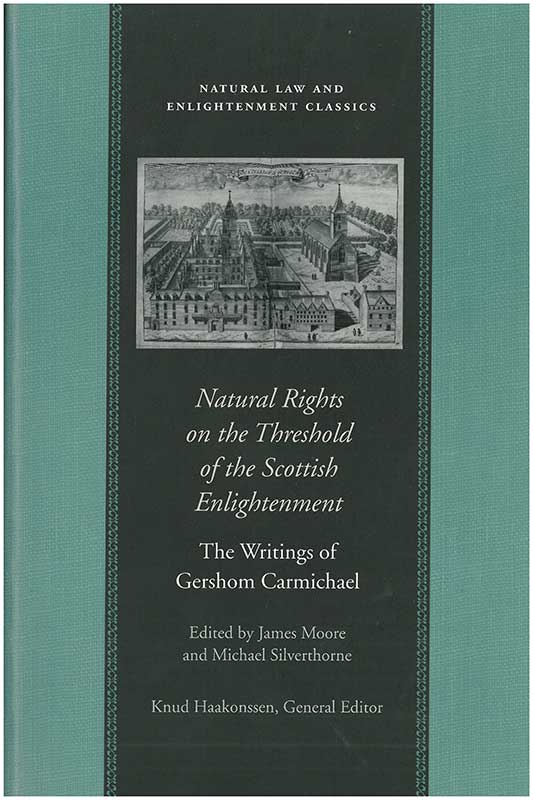
On the Scope of Natural Theology - Gershom Carmichael, Natural Rights on the Threshold of the Scottish Enlightenment: The Writings of Gershom Carmichael [1724]

Edition used:

Natural Rights on the Threshold of the Scottish Enlightenment: The Writings of Gershom Carmichael, ed. James Moore and Michael Silverthorne (Indianapolis: Liberty Fund, 2002).

About Liberty Fund:

Liberty Fund, Inc. is a private, educational foundation established to encourage the study of the ideal of a society of free and responsible individuals.


On the Scope of Natural Theology

The knowledge of God which is drawn from nature itself is usually called natural theology. As it contemplates the most noble of all objects, so it greatly exceeds in the gravity and sublimity of the truths which it sets forth all other parts of human knowledge (excepting only the teaching which is divinely inspired and sealed by the sacred oracles). It also commends itself by its utility, since the whole of the philosophy of morals is built upon the principles of this knowledge; for no distinction of moral good and evil has a properly secure basis, unless it rests upon the great and good God, creator, Lord, and disposer of all things.

If we extend the term natural theology as far as the word theology is usually extended by theologians in the case of revealed theology (theology defined as the doctrine of acknowledging God and worshipping him, where the term “worship” implies obedience to all his commands),1 moral doctrine, as we have said, will have to be considered as its second part. But the prevailing practice is to include under the name of natural theology, only the theoretical part, and to distinguish it from the practical part, which is to be taught separately. This is the subject of which we shall attempt to give a brief account, so far as our modest ability allows, under the guidance of the God we discuss. Our account will have four chapters: in the first we shall speak of the existence of God; in the second, of his incommunicable attributes; in the third, of his communicable attributes; and in the fourth, of his operations, or actions.2

[1.] This parenthesis was a footnote in Carmichael’s text.

[2.] The distinction between the incommunicable and the communicable attributes of God is a characteristic feature of Reformed scholasticism. See Heppe, Reformed Dogmatics, pp. 58 ff.; and Fatio, Méthode et théologie, pp. 160–61.