EconlibThe LibraryOther Sites |
Front Page Titles (by Subject) APPENDICES - A Treatise of the Laws of Nature
Return to Title Page for A Treatise of the Laws of NatureThe Online Library of LibertyA project of Liberty Fund, Inc.Search this Title:Also in the Library:
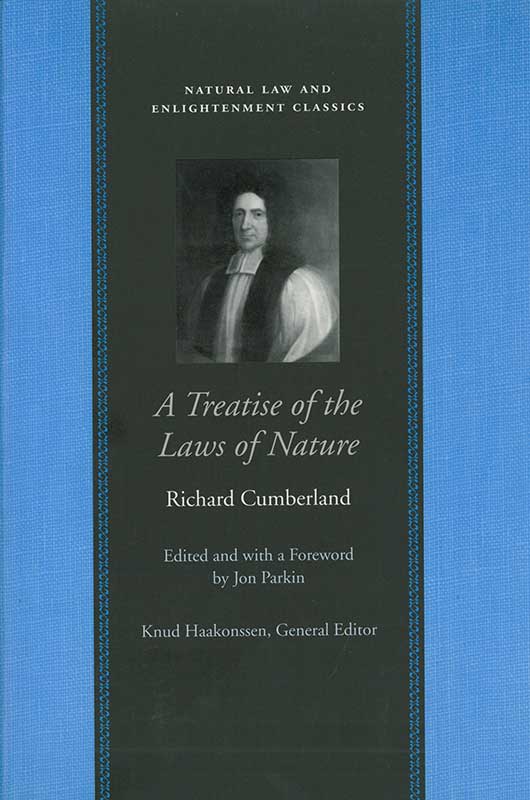
APPENDICES - Richard Cumberland, A Treatise of the Laws of Nature [1672]Edition used:A Treatise of the Laws of Nature, translated, with Introduction and Appendix, by John Maxwell (1727), edited and with a Foreword by Jon Parkin (Indianapolis: Liberty Fund, 2005).
About Liberty Fund:Liberty Fund, Inc. is a private, educational foundation established to encourage the study of the ideal of a society of free and responsible individuals. Copyright information:The copyright to this edition, in both print and electronic forms, is held by Liberty Fund, Inc. Fair use statement:This material is put online to further the educational goals of Liberty Fund, Inc. Unless otherwise stated in the Copyright Information section above, this material may be used freely for educational and academic purposes. It may not be used in any way for profit.
At the end of his own copy, Cumberland included an extra section in manuscript (Cumberland, Trinity College MS.adv.c.2.4, three leaves following p. 421). The original manuscript is in Latin, but Barbeyrac also translates the addition into French (Traité Philosophique, pp. 423–25). The text below gives an English translation translation of Cumberland’s manuscript addition prepared for this edition. §XXIV.1 It seems quite clear, in my opinion, through the observations that I have made on many of Hobbes’s principles, that whilst with one hand he offers them gifts, he holds in the other a sword ready to pierce their breast. Let us nonetheless add two other consequences which are born of these principles, equally pernicious to civil government and especially to the sovereignty of princes and monarchs. Firstly I say that princes could never be safe from the designs of their successors apparent. One always knows them, both by Hobbes’s principles and by those of other politicians. But, following the doctrine of our philosopher, there is no law, which can properly be called such, which obliges these successors to abstain from killing the kings which they must succeed. For he destroys the obligation of the natural laws, and founds the authority of the Holy Scripture on civil law alone: But this law could have no sway with regard to the person who, having treacherously slain the reigning king, seized that very power that the deceased had; and who henceforth is subject to no penalty, unless he punishes himself, which situation no-one will think to fear. The consequence of this is particularly pernicious, not only for our king, whom God preserve from such attempts on his life, for all other monarchs of this world, and all those who will succeed them, be it legitimately or by the crime in which Hobbes encourages whosoever may wish to replace the reigning king. These villainous successors will be exposed to the same danger from those around them, who are just as entitled, by Hobbes’s principles, to commit all sorts of crimes. But the real maxims of true reason forbid all that, as being contrary to the majesty of God, whose lieutenants here below are the kings, and to the well-being of all peoples, and even to the interest of those who commit such infamous deeds, by which they call down upon themselves very great evils, amongst which is that of which I have just spoken, which is included in part of the sanction of natural law, which is to say, in that part which is associated with the defense of murder, and above all the murder of kings. In his English edition of Leviathan, Hobbes himself mentions the consequence with which I am dealing here, of the danger to which he is exposing kings, namely that of being killed by their successors.2 But all that he says in response, is that such an act is contrary to reason, 1. Because one could not reasonably hope that in such a way the successor could immediately make himself master of the kingdom; and 2. because he would teach others, by his example, to undertake the same action against himself. But here is my reply to that. It is clear that such a crime can very often be committed successfully; especially if the successor has found a way of including in his party many people who, imbued with Hobbes’s principles, and believing them to be proven, are persuaded that there is no other actual law than the civil law, and that in the case in point, there is nothing to fear from this law. As for our philosopher’s second response, I say that, when reason makes the successor envisage the identical danger to which he himself will be exposed by the person who must follow him next, either it imposes this like a law that it prescribes, accompanied by a sanction which is binding with regard to exterior actions, quite apart from the fear of civil laws, or it does not impose it in this way. If Hobbes means the former, he destroys his own principles, and he recognizes a law with sufficient support from a natural sanction. If the latter, he is in truth arguing consequentially, but then he is delivering up to the dagger of a successor the life of his king and that of all other monarchs, since he leaves them no safety founded in actual law, which might shelter them from the murderous actions of their successors. These principles of Hobbes must therefore be abhorrent to all princes. I note secondly that these same principles are destructive of the safety of all sovereigns, excepting one. And who should that be, that one sovereign? We know not: unless we may conjecture, that it will be the empire of the Turk. For the arguments of our politician seem to establish, that there can be no justice on Earth, whose laws are common to all men, unless we suppose that all kingdoms and states subject them-selves to a single, common Sovereign. Either Hobbes’s arguments prove that or they prove nothing. I am persuaded that they are very false, and thus that one can draw from them no well-founded conclusion. But those who believe them to be true, must also accept the conclusion that I have just indicated. Thus, all princes have no other recourse but to reject and condemn Hobbes’s principles; unless they wish either to be perpetually at war with all others, or to be subjects of one powerful prince, that is the Turk, who is the one whom Hobbes may have had in mind as such. We must therefore believe one of two things, either that this philosopher wrote for the good of no prince or state, but recklessly poured out his wild imaginings, to corrupt the morals of all men; which is very likely: or that he desired to clear a path to universal domination for the Turk, for the destruction not only of Christianity, but also of all rights of property that subjects have over their goods. There are here certainly only the principles of the Muslims, with which Hobbes’s opinions concur, in matters ranging from the fatal necessity of all human actions, to the absolute power of sovereigns. And his lessons on atheism are closely linked with the ideas of that political sect of Turks which, if I remember correctly, Ricaut, the modern author, calls the sect of the Muserim.3 Let us also note, that all that Hobbes wrote on the duties of sovereigns, in a chapter of his treatise On The Citizen,4 is either false, or does not agree in any way with his principles. For, if the natural laws do not bind princes with regard to exterior actions, as he teaches, the princes are not obliged to do anything for the good of their people, since, according to him, neither they, nor their subjects, were bound by the natural laws to perform any exterior action, in keeping with it, before the conventions drawn up for the establishment of civil societies; and the princes themselves are in no way bound by these conventions, nor in consequence since they were made. If Hobbes takes as true and compelling the maxims that he prescribes for princes, it follows that the natural laws, whence these precepts come, bind princes at least with regard to exterior actions, but also to interior actions, or conscience, independent of the weight of conventions constituted by the state. So assuming this to be the case, all the foundations of Hobbes’s thesis and all the individual principles that he built on it, necessarily collapse. APPENDIX:
I. A Summary of the Controversy between Dr. Samuel Clark and an anonymous Author, concerning The Immateriality of Thinking Substance. II. A Treatise concerning the Obligation, Promulgation, and Observance, of the Law of Nature. LONDON: Printed in the Year M. DCC. XXVII. Appendix IA Summary of The Controversy between Dr. Samuel Clark and an anonymous Author, concerning the Immateriality of Thinking Substance.That the Soul of Man is an Immaterial Substance, and, therefore, distinct from the Body, has, in my Opinion, been set in a clear light by Dr. Samuel Clark, whose reasoning I shall, therefore, here transcribe, in his own Words, from his Defenses of an Argument made use of in a Letter to Mr. Dodwell, &c.1 Note; By Consciousness, in the following Reasoning, the Reader may understand, indifferently, either the Reflex Act, by which a Man knows his Thoughts to be his own Thoughts; (which is the strict and properest Sense of the Word;) or the Direct Act of Thinking; or the Power or Capacity of Thinking; or (which is of the same Import;) simple Sensation; or the Power of Self-motion, or of beginning Motion by the Will: The Argument holding equally in all or any of these Senses. And by Individual is understood the same with Undivided, or Single, as oppos’d to Specifick. A Material Substance cannot think.That the Soul cannot possibly be material, is demonstrable from the single Consideration, even of bare Sense and Consciousness it-self. For Matter being a divisible Substance, consisting always of separable, nay of actually separate and distinct Parts, ’tis plain, unless it were essentially conscious, in which case every Particle of Matter must consist of innumerable separate and distinct Consciousnesses, no System of it, in any possible Composition or Division can be an individual conscious Being: For suppose three, or three hundred, Particles of Matter, at a Mile, or any given Distance, one from another, is it possible, that all those separate Parts should in that State be one individual conscious Being? Suppose then all these Particles brought together into one System, so as to touch one another, will they thereby, or by any motion or composition whatsoever, become any whit less truly distinct Beings, than they were at the greatest Distance? How then can their being dispos’d in any possible System, make them one individual conscious Being? If you suppose God, by his infinite Power, superadding Consciousness to the united Particles, yet still those Particles, being really and necessarily as distinct Beings as ever, cannot be themselves the Subject, in which that individual Consciousness inheres; but the Consciousness can only be superadded by the Addition of Something, which, in all the Particles, must still it-self be but one individual Being. Suppose the smallest imaginable Particle of Matter, indued with Consciousness or Thought, yet, by the Power of God, this Particle may be divided into two distinct parts; and then what will naturally and consequently become of its Power of thinking? If that Power will continue in it unchanged, then there must either be two distinct Consciousnesses in the two separate Parts, or else the Power, continuing in the inter-mediate Space, as well as in the Parts themselves, must there subsist without a Subject; or else, not the material Substance, but some other thing, is the Subject of the Consciousness. If the Power of thinking will remain only in one of the separated Parts, then either that one Part only had at first the Power residing in it; and then the same Question will return, upon the supposition of its being likewise divided; or else it will follow, that one and the same individual Quality may be transferred from one Subject to another, which all Philosophers, of all Sects in the World, have always confess’d to be impossible. If, in the last place, it be said, that, upon the Division of the Particle, the Power of thinking, which was in it, will wholly cease; then it will follow, that That Power was never at all a real Quality inhering or residing in the Substance (in which mere Separaration of Parts makes no Alteration;) but that it was merely an external Denomination, such as is Roundness in a Globe, which perishes at its being divided. And this, I suppose, will be granted to be sufficiently absurd. The Soul, therefore, whose Power of thinking is undeniably one individual Consciousness, cannot possibly be a material Substance. “Which Argument the Doctor has reduc’d to the following fifteen Propositions.”2 I.Every System of Matter consists of a Multitude of distinct Parts.The several kinds of Qualities ascrib’d to Matter, considered.This, I think, is granted by all. II.Every real Quality inheres in some Subject.This also, I think, is granted by all: For whatever is called a Quality, and yet inheres not in any Subject, must either subsist of itself, (and then it is a Substance, not a Quality,) or else it is nothing but a mere Name. III.No individual or single Quality of one Particle of Matter can be the individual or single Quality of another Particle.The Heat of one Particle is not the Heat of another. The Gravity, the Colour, the Figure, of one Particle, is not the same individual Gravity, Colour or Figure of another Particle. The Consciousness or Sensation of one Particle (supposing it to be a Quality of Matter) is not the Consciousness or Sensation of another. If it was, it would follow, that the same thing could be Two in the same sense, and at the same time, that it is but One. Note; From hence may be drawn an evident Confutation of that absurd Notion, which Mr. Hobbes suggests in his Physicks (Chap. 25. Sect. 5.) that all Matter is essentially endued with an obscure actual Sense and Perception, but that there is required a Number and apt Composition of Parts, to make up a clear and distinct Sensation or Consciousness. For from this Notion it would follow, that the resulting Sensation or Consciousness at last, being but One distinct Sensation or Consciousness (as is that of a Man;) the Sensation or Consciousness of every one of the constituent Particles, would be the individual Sensation or Consciousness of All and Each of the rest. IV.Every real simple Quality that resides in any whole material System, resides in all the Parts of that System.The Magnitude of every Body is the Sum of the Magnitudes of its several Parts. The Motion of every Body is the Sum of the Motions of its several Parts. The Weight of every Body is the Sum of the Weights of its several Parts. The Heat3 of every Body is the Heat of its several Parts. And the same is universally true of every simple Quality residing in any System: For residing in the Whole, and not residing in the Parts, is residing in a Thing, and not residing in it, at the same time. These Qualities are always the Aggregates of Qualities of the same Kind, inhering distinctly in every part of the Material Subject. V.Every real compound Quality, that resides in any whole material System, is a Number of simple Qualities residing in all the Parts of that System; some in one part, some in another.Thus, in the Instance of mixt Colours, when the Simples, Blue, suppose, and Yellow, make the whole appear Green; in this case, that Portion of the System, in which any one of the particular simple Qualities resides, is a whole System, with respect to that Quality, and the Quality residing in it, resides in the several Particles, of which that Portion of the System is constituted: And so of the rest. VI.Every real Quality, simple or compound, that results from any whole material System, but does not reside in it, that is, neither in All its distinct Parts, nor in All the Parts of some Portion of it, according to the Explication of the two foregoing Propositions, is the Mode or Quality of some other Substance, and not of That.All sensible secondary Qualities, Heat, Colour, Smell, Taste, Sound, and the like, are of this kind, being in reality not Qualities of the Bodies they are ascrib’d to, but Modes of the Mind that perceives them. These Qualities, not really inhering in the Subject to which they are usually as cribed, but being indeed Modes excited, and residing in some other Subject, do not at all exist in that Subject to which they are usually ascribed, but in some other Subject. VII.Every Power, simple or compound, that results from any whole material System, but does not reside in it, that is, in all its Parts in the manner before explained; nor yet resides in any other Substance, as its Subject; is no real Quality at all, but must either be it-self a real Substance, (which seems unintelligible) or else it is nothing but merely an abstract Name or Notion, as all Universals are.Thus the Power resulting from the Texture of a Rose, to excite in us the Sensation of Sweetness, is nothing but an abstract Name, signifying a particular Motion and Figure of certain parts emitted. For the Sweetness of a Rose is well known, not to be a Quality really inhering in the Rose; but a Sensation, which is merely in him that smells it, and a Mode of the Thinking Substance that is in the Man. And these Qualities, in no Sense wherein they can be ascribed to a System of Matter, are individualPowers. They are Individuals, only as they are Modes of the thinking Substance that perceives them; but in the Bodies themselves, they are only specifically, not individually, single Powers; that is, they are only a Number of similar Motions or Figures of the Parts of the Body. Nay, they are not always so much as specifically single Powers. Thus compound Colours, as certain Greens, for Example, which are individual Modes in the thinking Substance that perceives them, may in the Objects be nothing but a Number of Figures or Motions even specifically different, namely, such as usually represent both Blue and Yellow. And the same may be said of Heat, Light, Taste, Sound, and all those others, which are called sensible Qualities. The Power of a Clock to shew the Hour of the Day, is nothing but one new complex Name, to express at once the several Motions of parts, and, particularly, the determinate Velocity of the last Wheel to turn round once in twelve Hours: Upon the stopping which Motion, by the Touch of a Finger or any other Impediment, without making any Alteration at all in the Number, Figure, or Disposition of the parts of the Clock, the Power wholly ceases; and, upon removing the Impediment, by which nothing is restored but mere Motion, the Power returns again, which is, therefore, no new real Quality of the whole, but only the mere Motion of the Parts. The Power of a Pin to prick, is nothing distinct from its mere Figure permitting it to enter the Skin. The Power of a Weight in one Scale of a Balance, to ascend or descend, upon increasing or diminishing the Counterpoise in the other Scale, is not a new real Quality, distinct from its absolute Gravity, tho’ it occasions a new Effect, there being no alteration at all made in the Weight itself. The Power of the Eye to see, is not a real Quality of the whole Eye, but merely an abstract Name, signifying a transmitting and refracting of the Rays of Light in a certain manner thro’ its several parts; which Effect, by the Interposition or Removal of an opake Body, is destroyed or renewed, without any Alteration at all in the Eye it-self. A Key, by having many new Locks made to fit it, acquires a new Power of producing Effects, which it could not before; and yet no new real Quality is produced, nor any Alteration at all made in the Key it-self. And so, universally, of all Powers of this kind: These Qualities not really inhering in any Subject at all, but being mere abstract Names, or external Denominations, to express certain complex Ideas framed in our Imaginations; or certain general extrinsick and relative Effects, produced upon particular Systems of Matter by foreign Agents, or certain Dispositions of the particular Systems of Matter, requisite towards the producing of those Effects, such as are Magnetism, Electricity, Attraction, Reflexibility, Refrangibility, and the like. These have no real Existence, by way of proper inhering, in any Subject. If these Powers were any thing else, but mere abstract Names, they would signify Qualities subsisting without any Subject at all; that is, such as must themselves be distinct Substances, which is unintelligible. VIII.Consciousness is neither a mere abstract Name, (such as the Powers mentioned in Prop. VII.) nor a Power of exciting or occasioning different Modes in a foreign Substance, (such as are all the sensible Qualities of Bodies Prop. VII.) but a real Quality, truly and properly inherent in the Subject it-self, the thinking Substance.If it was a mere abstract Name, it would be nothing at all, in the Person that thinks, or in the thinking Substance it-self, but only a Notion framed by the Imagination of some other Being: For all those Powers, which are only abstract Names, are not at all in the Things whose Powers they are called; but are only Notions, framed in the Imagination, by the Mind that observes, compares and reasons about different Objects without it-self. If it was a Power of exciting or occasioning different Modes in a foreign Substance, then the Power of thinking must be, before, in that foreign Substance; and that foreign Substance alone would in reality be conscious, and not This, which excites the different Modes in That foreign Substance: For the Power that is in one Substance, of exciting different Modes in another Substance, pre-supposes necessarily, in that other Substance, the Foundation of those Modes; the Power of thinking is, beforehand, in that Being, wherein those Qualities excite or occasion different Modes of thinking. It remains, therefore, that it must of necessity be a real Quality, truly and properly inhering in the Subject it-self, the thinking Substance; there being no other Species of Powers or Qualities left, to which it can possibly be referred. And this indeed is, of it-self, as evident by every Man’s Experience, as it can be render’d by any Explication or Proof whatsoever. IX.No real Quality can result from the Composition of different Qualities, so as to be a new Quality in the same Subject, of a different Kind or Species, from all and every one of the component Qualities.If it could, it would be a Creation of something out of nothing. From compound Motion can arise nothing but Motion: From Magnitudes, nothing but Magnitude: From Figures, nothing but Figure: From Compositions of Magnitude, Figure and Motion together, nothing but Magnitude, Figure and Motion: From mechanical Powers nothing but mechanical Powers: From a composition of Colours, nothing but Colour, which it-self (as appears by Microscopes) is still the simple Colours of which it was compounded. From Mixtures of Chymical Liquors, nothing but Ferments, which are only mere Motions of the Particles in mixing, such Motions, as arise from placing of Iron and a Loadstone near each other. Gravity is not a Quality of Matter, arising from its Texture, or any other Powers in it; but merely an Endeavour to Motion, excited by some foreign Force or Power. Magnetism or Electricity are not new Qualities, resulting from different and unknown Powers; but merely Emission of certain Steams of Matter, which produce certain determinate Motions. Compositions of Colours can never contribute to produce a Sound, nor Compositions of Magnitude and Figure to produce a Motion; nor necessary and determinate Motion, to produce a free and indetermined Power of Self-motion; nor any mechanical Powers whatsoever, to produce a Power not mechanical. And the same must of necessity hold universally true, of all Qualities and Powers whatsoever, whether known or un-known; because otherwise, as hath been before said, there would in the Compound be something created out of nothing. X.Consciousness, therefore, being a real Quality, (Prop. VIII.) and of a kind specifically different from all other Qualities, whether known or unknown, which are themselves acknowledged to be void of Consciousness, can never possibly result from any Composition of such Qualities.This is as evident from the foregoing Propositions, as that a Sound cannot be the Result of a Mixture of Colours and Smells; nor Extension the Result of a Composition of parts unextended; nor Solidity the Result of parts not solid, whatever other different Qualities, known or unknown, those constituent parts may be supposed to be endued with. XI.No individual Quality can be transferred from one Subject to another.This is granted by all. XII.The Spirits and Particles of the Brain, being loose and in perpetual Flux, cannot, therefore, be the Seat of that Consciousness, by which a Man not only remembers things done many Years since; but also is conscious that he himself, the same individual conscious Being, was the Doer of them.This follows evidently from the foregoing. XIII.The Consciousness that a Man has at one and the same time, is one Consciousness, and not a Multitude of Consciousnesses; as the Solidity, Motion or Colour of any piece of Matter, is a multitude of distinct Solidities, Motions or Colours.This is granted by all, who deny that the Particles of the Brain, which they suppose to constitute a conscious Substance, are themselves each of them conscious. XIV.Consciousness, therefore, cannot at all reside in the Substance of the Brain or Spirits, or in any other material System, as its Subject, but must be a Quality of some immaterial Substance.This follows necessarily from the foregoing Propositions compared together: For, since every possible Power of Matter, whether known or unknown, must needs be either, First, A real Quality of the Matter to which it is ascribed; and then it must inhere in the several distinct parts: Or, Secondly, A Power of exciting or occasioning certain Modes in some other Subject; and then it is truly the Quality, not of the Matter, but of that other Subject: Or, Thirdly, A mere abstract Name or Notion of what is, properly speaking, no real Quality at all, and inheres in no real Subject at all: And Consciousness is acknowledged to be none of these: It follows unavoidably, that it must of necessity be a Quality of some immaterial Substance. XV.Difficulties that arise, afterwards, concerning other Qualities of that Immaterial Substance, as, whether it be extended or unextended; do not at all affect the present Argument.For thus even abstract mathematical Demonstrations; as those concerning the infinite Divisibility of Quantity, the Eternity of God, and his Immensity, have almost insuperable Difficulties on the other side: And yet no Man, who understands those Matters, thinks that those Difficulties do at all weaken the Force, or diminish the Certainty, of the Demonstrations. What follows, is the Sum of Objections that have been made to the foregoing Reasoning, and of the Answers, that have been given to those Objections by Dr. Clark.4 Objections against the foregoing Reasoning,It is Objected, That there are some real Qualities, truly and properly inhering in the Subject to which they are ascribed; which yet are not, like Magnitude and Motion, Sums or Aggregates of Powers or Qualities of the same Kind, inhering distinctly in the several Parts of the Subject: And that, therefore, thinking, though it be not an Aggregate of the Powers of the same kind, may, nevertheless, be a real Quality inhering in Matter. That numerical Powers, or particular and individual Modes, are such real inherent Qualities, residing in a System of Matter, without inhering distinctly in its several Parts; in contradistinction to generical Powers, such as Magnitude and Motion, which the Objector acknowledges to be the Sums of the Magnitudes and Motions of the several Parts. That, for Instance, the Power of the Eye to contribute to the Act of Seeing; the Power of a Clock, to shew the Hour of the Day; the Power of a Musical Instrument, to produce in us harmonious Sounds; the particular Figures, such as Roundness or Squareness; and particular or individual Modes of Motion, are such numerical Powers, not at all resulting from any Powers of the same kind, inhering in the parts of the System: And that Thinking, therefore, in like manner, not being an Aggregate of Powers of the same kind, may yet inhere in a System of Matter, as one of those numerical or individual Modes of some generical Power. That, upon this Supposition, of Thinking being a numerical Mode of some generical Power of Matter, it may be conceived, that as the Roundness of a Body is not the Sum of the Roundnesses of the Parts; nor the Squareness of a Body, the Sum of the Squarenesses of the Parts, nor the Power of a musical Instrument to cause an harmonious Sound, the Sum of the Powers of the same kind in the Parts singly considered; nor any particular Mode of Motion, the Sum of the same Modes of Motion in all the several Parts; so the Consciousness that inheres in a System of Matter, may yet not be the Sum of the Consciousnesses of the Parts. That the Argument, therefore, drawn from Consciousness not being made up of several Consciousnesses, concludes no more against the Possibility of its residing in a System of Matter, than the like Argument would conclude against the Possibility of the Existence of Roundness, or any other numerical Mode in a Body. For Roundness no more consists of several Roundnesses, than Thinking or Consciousness does of several Consciousnesses. And Roundness is as specifically different from other Figures, of which it may be composed, as Consciousness is from a circular Motion. So that Sensation may be conceived to be in the parts of an Animal’s Body, just as Roundness is in the parts that compose a round Body: Each part has as much of Sensation, singly consider’d, as each part of a round Body has of Roundness: And when the parts are duly disposed, whole Thinking is performed, as whole Roundness exists by the Conjunction of parts. For Consciousness, being supposed to be a real numerical Power, such as Roundness is, may result from the Composition of different Qualities, as Roundness does from different Species of Figure: and is consequently a new Quality in the same Subject, of a different kind or Species from all the component Qualities considered together. Wherefore, tho’ Consciousness be a real Quality, and different from all other Qualities, whether known or unknown, which are themselves acknowledged to be void of Consciousness; yet it may result from such Qualities, as, singly considered, are void of Consciousness; In like manneras Roundness is a real Quality specifically different from other Qualities void of Roundness, and yet may be the Result or Composition of such Qualities. That Consciousness may be considered particularly, as an individual Mode or Species of Motion. For, as nothing more goes to the Composition of Roundness, than the Conjunction of several Particles, not singly indued with Roundness; so, upon this Supposition, nothing more needs go to the Power of Thinking, than the Conjunction of several Particles, not each indued with that Species of Motion called Thinking. Answered.To this (says Dr. Clark) I answer, as follows.5 Every real Quality of any material System, resides distinctly in the several parts of the System, the Qualities of the parts being of the same kind with that of the whole.It is absolutely impossible, that any real Quality should truly inhere in a System of Matter, without being the Aggregate of a Number of Qualities, residing distinctly in the several Parts of the System, and being always of the same kind with the whole that results from them. For, as the Substance it-self of a System of Matter is nothing but a Sum of its parts, existing distinctly and independently from each other, and the whole cannot but be of the same kind with the parts that constitute it; so no Power or Quality of the Substance can be any thing else, but the Aggregate of the Powers of the several Parts: and that Aggregate, without a Creation of something out of nothing, cannot but be of the same kind with the Powers that constitute it. If the Parts of the Substance be similar, the System it-self is an uniform or homogeneous Substance: If the Parts be dissimilar, then the Substance is difform or heterogeneous; but still always of the same kind or kinds with the parts that compose it. In like manner, if the Powers of the several Parts of the System be similar, the Power of the whole will be a simple and uniform Power: If the Powers of the several Parts be dissimilar, the Power of the whole will be a compound difform Power; but still always necessarily of the same kind or kinds, with the Powers of which it is compounded. Since therefore you acknowledge Thinking to be a Power not compos’d of a multitude of Thinkings; and ’tis evident (as shall in the Sequel be made fully appear) that no Power void of thinking can be made of the same kind with the Power of thinking, so as to be Parts of it, and that from a Composition of them the Power of thinking may arise; it follows, that Thinking is not made up at all of Parts, and consequently, that it cannot reside in a Substance, that consists of distinct and independent Parts, such as all Matter is confessed to be. To suppose any real Power or Quality arising from, or belonging to, any whole System of Matter without belonging to the several Parts of which that Whole consists, is an express Contradiction: ’Tis supposing, either an Universal to exist without Particulars, or an Effect to be produced without a Cause, or to have more in it than was in the Cause, or that a Quality is, by the Power of God, made so to arise out of nothing, as to be superadded to a Subject, and to subsist without inhering in that Subject, to which it is, at the same time, supposed to belong. For, if the whole, or Result, be specifically different from all and every one of the particular Powers contributing to it; as Thinking manifestly is, from all the Powers of Particles not indued with Thought, it is certain that such a particular Power is a Whole bigger than all its parts; a Whole that contains something in it, besides all and every one of its Parts; which is, evidently, an Universal without Particulars. As if it were asserted, that a Smell and a Colour could be joined together to make up a Sound; or, as if Hardness and Figure could be the Particulars contributing to constitute a Motion. Tho’ the different Powers, in the single and separate Parts of a System of Matter, (as for Instance, their Magnitude, Situation, Figure and Motion,) may, by uniting in one Operation or Power to operate, be the cause of the Existence of another Power of the same Species, which did not exist in the Particles, singly considered; that is, may constitute another Magnitude, another Figure, another Motion, than was in the single Particles; just as twenty different Numbers, added together, constitute a new Number, different from any of the Particulars: Yet those Powers cannot, without an evident Contradiction, be the cause of the Existence of any other Power of a different Species, (as Thinking is confessedly of a different Species from Magnitude, Figure, Motion, or whatever other Properties may belong to unthinking Particles of Matter;) for the same reason, as that the Addition of different Numbers in Arithmetick cannot, without a manifest Contradiction, be the Cause of the Existence of a Line or a Figure; or the mixture of Tastes constitute a Colour; namely, because thus the Effect would contain more in it than was in the Cause; that is, something would, without any Efficient, be produced out of nothing. Because Wholes are nothing specically different from their Parts;That which has been apt to deceive Men, in this matter, is this; that they imagine Compounds to be somewhat specifically different from the things of which they are compounded; which is a very great Mistake; As when two Triangles, put together, make a Square, that Square is still nothing but two Triangles: And in short, every thing, by Composition, Division or Motion, is nothing else but the very same it was before, taken either in the Whole, or by Parts, or in different Place or Order, so as to excite in our Minds different complex Notions, and occasion new abstract Names of things, but by no means to produce any new real Quality in the things themselves, such as Consciousness is agreed to be, inhering truly and properly in the Subject it is ascribed to. For Instance: All possible Changes of Figure, are still nothing but Figure: Of Magnitude, but Magnitude: Of Motion, but Motion: All Compositions of Magnitude, Figure and Motion together, are still nothing but Magnitude, Figure and Motion. and the mutual Relations of things to one another are not really Qualities of the things themselves:The true State of this case seems, in brief, to be this. Sometimes we consider one and the same Quality of a thing, indifferent Circumstances and Respects, and with relation to other different things, which Relation may be changed, by the Alteration or Removal of those other things, and a new Effect be produced, without any Alteration at all of the thing it-self, or any of its Qualities; and yet, then, we give it a new Name, and are apt to think that new Name a new Quality. Sometimes we consider several distinct Qualities of different Parcels of Matter, together; and, because some new Effect is thereby occasioned in some other Being, we give the imaginary Whole a new Name, and think that new Denominati on a new Quality. But with how little reason this is done, will abundantly appear by the following Instances. The same Particle of Matter, which makes a Point in the Surface of a Globe, may, by other Parts being shaved off, become the Point of the Angle of a Cube, without undergoing any Alteration it-self, and produce an Effect which it could not produce before: But is this truly a new Quality or Power in the Point it-self? Blue and Yellow Powder, mingled together, occasion a new Effect, and are called by a new Name, Green: But is this really a new Quality or Power? Is it not plainly the same two Qualities, which they had when separate, acting still distinctly, as appears in a Microscope? As is evident from the Power of a Clock to shew the Hour of the Day,That particular and determinate degree of Velocity in a Wheel, whereby it turns once round, precisely, in twelve Hours, is that which is called the Power of a Clock to shew the time of the Day; and, because such a determinate Velocity of Motion is made use of by us for the Measure of Time, and has an abstract Name given it to express that use, is it therefore a new Quality or Power, distinct from the Motion it-self? As the Number a thousand is the Sum of a great many Numbers, but cannot with any Sense be imagined to be a Composition of Sounds and Colours, so the numerical Power of a Clock, being it-self nothing but Motion and Figure, cannot be the Result of any other Powers in the Parts, but such as are themselves singly of the same kind, in the manner before explain’d; namely, Motions and Figures: And in like manner my present numerical Consciousness, if it were at all a Quality inhering in a System of Matter; tho’ it need not indeed be the Sum of the like individual Thoughts, inhering in the several distinct parts of the System; yet it must be the Sum of such Powers in the Parts, as would themselves singly be of the samekind, namely, Consciousness or Thoughts. It being equally, and for the very same reason, impossible that my Consciousness should be the Result of such Powers in the parts of my Brain, as are, toto genere, different from Thinking; (such as are Figure and Motion, and all other Powers which are void of Consciousness;) as that the fore-mentioned number a thousand, should be a Composition of Sounds or Colours, or of any thing else but Numbers. When a Weight, in one Scale of a Balance, does, by taking one part of the Weight that was in the other Scale, begin to preponderate, which it did not before; Is this any Quality or real Power in the Weight that is not altered, different from what it had before? of a musical Instrument to produce harmonious Sounds,The Power of a musical Instrument to produce harmonious Sounds, is not indeed a Result from the like individual Powers, residing in the several Parts of the Instrument; any more than the Circumference of a Circle is made up of a Number of the like whole Circumferences: But, as the Circumference of a Circle is a Sum of a Multitude of convex Arches of like Curvity, but cannot be an Aggregate of strait Lines, or of Cubick Bodies, or of Arches of unlike Curvity; so the Harmony produced by a musical Instrument, being, it-self, in the Mind that perceives it, nothing but Sound; and, in the Instrument, and in the Air, and in the Organs of Sensation, nothing but a Motion of Parts, cannot be the Result or Composition of any other Powers, but what are themselves singly of the same kind in the several Subjects respectively; namely, in the Mind that perceives them, Sounds likewise; and in the Instrument it-self, and in the Air, and in the Organs of Sensation, Motion of the Parts. And in like manner Consciousness, if it were a Power inhering in a System of Matter, could not be the Result of any other Powers in the Parts, but some sorts of Consciousness; for the very same reason as the Circumference of a Circle cannot (as we before said) be an Aggregate of strait Lines, or of Cubick Bodies; nor an harmonious Sound a Composition of Colours, or of any thing else beside Sounds. and of the Eye to see.The Power of the Eye to see, is nothing else but such a Power as is in the Object-Glasses of Telescopes, of transmitting and refracting Rays of Light, so as to paint the Image of the Object in the bottom of the Eye. And this is evidently nothing but a Sum of Powers of the same kind, namely, Powers of transmitting and refracting of Rays, residing distinctly in the several Parts of the Eye, or of the Glass. Every part of the Eye transmits and refracts Rays, and those Rays paint several Parts of the Image: And the whole Image differs no otherwise from all its parts; nor that which you call the numerical Power of the whole Eye, from the single Power of all its Parts; than the Idea of a Dozen differs from the Idea of twelve Units: Which, if it be as great a Difference, as is between the Idea of Consciousness, and the Idea of a Circular or any other Motion, I confess I have lost my Understanding. Moreover, to shew the Unhappiness of chusing the Power of the Eye to see for an instance in the present Argument; even every Part of the Eye has the same Power as the whole, (differing only in degree,) of painting at the Bottom the whole Image of the Object. For, as each Half of a broken Object-Glass of a Telescope, or any Piece of it that retains the Polish on both Surfaces, will represent distinctly the whole Object, only with less Brightness and Luminousness than the whole Glass would do; so each part of the Eye, paints every part of the whole Object: And, if half of the Eye, or almost the whole Eye, be covered, so that you look only through a Pin-hole; still the whole Object is seen distinctly, even by that very small part of the Eye, and, consequently, the Power of the Eye is the same, both in the Whole and in every Part. For the clearer Explication of the present Argument, the Ambiguity of the Words [kind] and [species], [of the same kind] and [of the same species] is cleared up.For the clear Explication of this whole Argument, and to vindicate the Notion from all the Objections, and pretended Instances brought to the contrary; it is to be observ’d, that the Terms, Kind and Species, and of the same Kind or Species, are very ambiguous Terms. For Example: It is an evident Truth, that All Circles of four Foot Diameter, are of one and the same kind or Species; and this is what the Logicians call Species specialissima. It is true in another Sense, that all Circles whatever, are of the same Species: In another Sense, that all curvilinear Figures, are of the same Species: In another, that all plain Figures, both strait-lin’d and curvilinear, as oppos’d to Solids, are of the same Species: And in another, that All Figures whatsoever, whether plain or solid, are of the same kind or Species, as contradistinguished from Motion or Thinking, or from any thing else of a totally different kind. This is what they call the Genus generalius. And it is not true to say, that Figure and Motion, or Figure and Colour, or Figure and Thought are of the same Kind; because there is nothing common in their Ideas, by which they can be rank’d together; save only, as they are all comprehended, perhaps, under the mere abstract Name of Quality in general. Which makes it appear, by the by, with what Truth and Sense the Objector affirms, that Roundness is as specifically different from all other Figures, as Consciousness is from a circular Motion; That is, that a Circle differs as much from an Ellipsis, not only as it differs from a Cube, but even as much as it differs from the Reason of a Man: Or, as the Logicians would express it, that the Species specialior differs as much from the Species next and immediately superior to it, as it does from the Genus generalissimum; and not only so, but as it does also from any thing that is not so much as included even in That Genus. In what Sense the Powers or Qualities of the whole, and of its parts, are said to be of the same kind;Now, to apply this to my present Question: When I affirm, that every real Power or Quality, inhering in a System of Matter, must, of necessity, be the Sum of Powers of the same kind, residing distinctly in the several Parts of that System; ’tis manifest, that by this Term, of the same kind, is not to be understood the Species specialissima, but some of the Species generaliores. For Example, When I say the Magnitude of a Cubick Foot of Gold, is the Sum of the Magnitude of its Parts; I do not mean to say, that it is a Sum or Aggregate of Cubick Feet, but of other Magnitudes which constitute a Cubit Foot, and which are of the same kind with it, in the Sense that all Magnitudes are of the same kind, and may be parts of one another: But Magnitude and Motion, or Magnitude and Figure, are not in any sense of the same kind, and cannot be part, one of another; neither can Figure or Motion be a piece of a Thought. applied to the Objector’s favourite Instance of the Roundness of a Globe,In like manner: When I say Roundness or Globosity, or any other Figure of a Body, must needs be the Sum of Qualities of the same kind, inhering in the several parts; ’tis plain I do not mean to affirm, that Globosity is made up of Globosities, any more than the Number Twenty is made up of Twenties, or the Motion of a Cubick Foot of Matter made up of the Motions of Cubick Feet: But that a whole round Figure must necessarily be made up of Pieces of Roundness, which are all of the same kind with it; just as the Numbers, which are Parts of Twenty, are of the same kind with the whole, and the Motions of the Particles of a Cubick Foot of Matter, which are Parts of the Motion of the whole, are of the same kind with the whole Motion. But Figure, and whatever is not Figure, are not in any sense of the same kind; neither can any thing that is void of Figure, be part of any Figure whatsoever; nor any thing that is void of Curvity in particular, be part of a round Circumference; nor any thing that is void of that particular Degree of Curvity, which makes a Circle of a determinate Diameter, be part of the Circumference of that Circle; nor any thing that is void of Thinking, be a Part or Constituent of a Thought. It is as evident, that the superficial Roundness of a Globe, is the Sum of its convex Surfaces of its outward parts; and its solid Figure, the Sum of all its solid Parts, taken together, considered like so many concentrick Shells, or any other Figures, which can be constituent Parts of the solid Content of a Globe; as it is that the Motion of a Globe, is the Sum of the Motions of its Parts. And the convex Outsides of its outward parts, and the concentrick Roundnesses of its inward parts, are as much of the same kind with the whole Roundness, or the whole Globosity of which they are Pieces, as the several distinct Motions or Magnitudes of its parts are of the same kind with the whole Motion or Magnitude which they constitute. For why is not a Semicircle of the same kind with the Circumference of a Circle; as much as the Motion or Magnitude of half a Foot Cube of Matter, is of the same kind with the Motion or Magnitude of the whole Foot Cube? As the individual Roundness of a Globe, is a numerical Quality of that individual Globe, so the Objector can only say, that the individual Consciousness, which I find in my-self, at any particular Moment of Time, is a numerical Mode of some Power, inhering in that System of Matter, which constitutes my Brain. Now, as the individual Roundness of a Globe, is not indeed made up of a number of the like whole Roundnesses, (even as the Number a Hundred is not made up of Hundreds;) but yet must needs be made up of such Figures as are Parts of Roundness, nay, Parts indued with that particular numerical Degree of Curvity or Roundness; and cannot be made up of strait Lines, nor of any Figures which are not Pieces of Roundness, or not Pieces indued with that particular determinate Degree of Curvity or Roundness: So the individual Consciousness, that I find in my-self, at any particular Moment of Time, (supposing it to be a Quality inhering in a System of Matter,) must be made up, though not indeed of a Number of the very same Consciousnesses, yet of such Powers, as are much of the same kind with that numerical Consciousness, as Arches of Circles are of the same kind with the whole circular Circumference: That is, it must be made up of different Consciousnesses indeed, but still of Consciousnesses only, and not Motions or Figures or any thing else, any more than the Roundness of a Circle can be made up of strait Lines, or of Colours, or Sounds, or any thing else besides Pieces of circular Roundness. Every part of the Circumference of a Circle is not only not wholly void of Roundness, but has really as much Roundness or Curvity (as much in Degree, tho’notas much of it in Quantity) as the whole Circle it-self has: And therefore Consciousness, in like manner, if it was a Quality answering to, or that could be compared with, the Roundness of a Circle; must consist of Parts, every one of which would have as much Consciousness (in Degree) as the whole. It is evident, that no whole can possibly differ from all its parts in any thing else, but only in the abstract Name, the mere external Denomination of its being a whole, which is nothing at all in the thing it-self, but merely a manner of Conception, a Conjunction of Ideas in the Imagination of the Person that thinks upon it. Thinking, if it was the Quality of a System of Matter, that is, the Sum or whole of the Powers of its Parts; must differ from the distinct Powers of those Parts, no otherwise, than as the Idea of the Roundness of a Circle differs from the Idea of two Semicircles joined together, or as the Idea of twice six, differs from the Idea of the Number Twelve. If, therefore, Thinking was, as the Objector supposes, a Composition or Result of several Powers, and those Powers such, as were themselves utterly void of Consciousness; Thinking would be either a mere outward Denomination, and nothing at all really in the thinking Substance it-self; just as a Dozen is only a mere Name, and nothing at all different really in the thing it-self from twelve Units: or else it must unavoidably be a Whole bigger than all its Parts; that is, containing all its Parts, and Thinking besides: As a Cube would be bigger than all its Parts, if it were made up of Parts, that had none of them singly any Magnitude at all. As nothing that is not Curve can have any Tendency towards Curvity; as nothing that is not Colour, can have any Tendency towards Colour; as nothing that is not Sound, can have any Tendency towards Sound: So nothing that is not Consciousness, can have any Tendency towards Consciousness: As it is plainly impossible, that any Colour should have any Tendency towards being any Sound, nor that any Figure should have any Tendency towards being any Motion; so it is likewise ridiculous to imagine, that any Motion, or any other Quality of Matter void of Consciousness, should have any Tendency towards being Consciousness. The Curvities of several little Arches, that constitute the Circumference of a Circle, are not properly Tendencies towards Roundness, but they are themselves, taken together, the whole Circle, or the Roundness it-self. and to the Squareness of a quadrilateral Figure.To the Objection, That a Square Figure may consist of Parts, that are none of them singly indued with any thing like Squareness: I answer, that the Squareness of the Figure of a Body, is a mere external Denomination, a mere Relative, comparing together, in the Imagination, the Bounds of a Surface, the Situation of four strait Lines, with Respect one to another; and has not properly any real Existence in things themselves, so as Consciousness is acknowledged to have in the Thinking Substance. And Roundness it-self, being considered in the same manner, might this way likewise afford a just Answer to the Argument drawn from thence. Arguments to prove, that Consciousness cannot be a Mode of Motion;To prove the Absurdity of supposing Consciousness to be a Mode of Motion, I offer the following Arguments. I. Every Mode of any Power or Quality, is nothing else but That Power or Quality, of which it is a Mode, understood with some particular Limitation; that is to say, ’tis nothing but a particular Instance of that general Power or Quality, considered under this or that particular Modification.I.Blue and Red, and all other Modes of Colour, are nothing but several particular Colours, and can contain nothing in their Idea, beyond the Genus of Colour. Acute and Grave, and all other Modes of Sound, are nothing but several particular Sounds, and can contain nothing in their Idea beyond the Genus of Sound. Circular and Triangular, and all other Modes of Figure, are nothing but several particular Figures, and can contain nothing in their Idea beyond the Genus of Figure. In like manner, All Modes of Motion, are nothing else but merely particular Motions, and cannot contain any thing in their Idea beyond the Genus of Motion. Now, if simple Ideas be the Foundation of all our Knowledge, and clear and distinct Perception of the Agreement or Disagreement of those Ideas, be the best and greatest Criterion of Truth, that our Faculties enable us to attain to; then it is as evident as any Truth in the World, that Consciousness cannot possibly be a Mode of Motion. For I have as clear and distinct Perception, that the Idea of Consciousness contains something in it, besides and beyond the Genus of Motion, as I have that it contains something in it beyond the Genus of Figure. The Idea of Consciousness is totally and generically different from the Idea of circular Motion, or an elliptical Motion, or any other Mode of Motion whatsoever, as it is from the Idea of a Circle or a Cube, or any other Mode of Figure whatsoever. I have, therefore, exactly the same intuitive Certainty, that Consciousness cannot be a Mode of Motion, as I have that a Circle or a Cube is not a Thought, or that an Acute Sound is not a Purple Colour, or that any one thing in the World is not another, whose Idea is the remotest and most different from it, that can be imagined. Local Motion can have no other Effect upon any System of Matter, than only producing in it a different juxta-position of Parts: To which to ascribe Wisdom and Knowledge, nothing would be more absurd. For unthinking Particles of Matter, however put together, can have nothing thereby added to them, but a new relation of Position, which ’tis impossible should give Thought and Knowledge to them. Lock’s Essay, Book IV. Chap. 10. Sect. 16. To this Argument it has been objected; That we have no Idea of all the possible Modes of Motion; that, though we have, indeed, Ideas of the more simple Modes of Motion, yet of the very complex ones we have no Distinction in our Minds; that, therefore, we can no more prove or know, that Thinking is not one of these more complex Modes of Motion, than we can know, whether two things agree or differ from one another, that we have no Idea of at all; that it is not possible for us to say, that Thinking does not consist in the peculiar Motion of the Spirits in the Brain, till we have a particular Idea of the Motion of those Spirits, and an Idea of Thinking, as something distinct from a Mode of Motion; that Thinking has the Genus of Motion, by arising from Motion, by being varied by Motion, by producing other Motions, by having Succession, and Parts, and innumerable Modifications; that no Idea of human Consciousness can be produced beyond the Genus of Motion: that saying we have an intuitive Certainty, that Consciousness cannot be a Mode of Motion, is only affirming the Question in Debate, which can signify nothing to any body that wants Conviction. In this is, at last, declared the fundamental Error (ϖρῶτον Ψεῦδος) of the Objector’s whole Hypothesis; namely, that he intends to make Thinking, not a real Quality, but a mere empty Name, or external Denomination, such as I at first ranked under the Third Head: For the most complex Modes of Motion possible, whatever Name we call them by, are still nothing but Motions; and the Name we give them, is nothing but a mere external Denomination. Thinking, therefore, according to the Objector, being only a very complex Mode of Motion (or of any other Quality of Matter,) is nothing but a mere external Name or Denomination of that Mode. Every Man has, within himself, the Idea of Consciousness, which, tho’ he cannot produce (as the Objector absurdly requires,) that is, cannot define, nor describe, any more than the Objector can describe his Idea of any Colour or Sound; yet he as certainly knows it not to be any complex Mode of Motion, as the Objector knows his Idea of Colour not to be any complex Mode of Sound; which intuitive Certainty, if it be only a bare affirming the Question in Debate in one case, and can signify nothing to any Body that wants Conviction; ’tis so in the other likewise: And then there’s an End of all human Knowledge, and no Man can pretend to know any one thing not to be any other. Thinking has, indeed, Succession and Modes, and many other things, in common with Motion; but so has every thing with every thing. We cannot, indeed, frame in our Minds distinct Images of the more complex Modes, as we can of the more simple ones: But are we not, nevertheless, equally certain, that they are alike imaginable, though our narrow Imaginations cannot comprehend them? And that, if we could represent them to our Imaginations, they would all appear as remote from the Idea of Thinking, as any one of them does? Because we cannot comprehend, in our Imagination, a distinct Conception of a vast number in Arithmetick, as we can a small one, do we not, therefore, know, but that a vast Number may possibly prove so different from a small one, as to turn into a Plant or an Animal? Because we cannot form, in our Minds, an Image of a Space ten thousand Millions of Miles square, as we can of ten Foot square; are we not, therefore, sure, that such a great Space may possibly be something, whose true Idea shall have no Similitude, no Relation, to Extension? II.II. If Thinking was any Mode or Species of Motion, it would follow, that All Motion would be some degree or kind of Thinking: For Motion, in the thing moved, excepting only the Difference of Degrees, of its Swiftness or Slowness, is a similar Quality, and has no Variety in it: All its different Determinations, Modes, or Species, being nothing really in the Body it-self, that is moved; but mere abstract Notions, or external Denominations, conceived only in our Imagination. For, moving with one Determination, or with another; from North to South, or from South to North, is merely relative, and not really a different thing from the Body moved, that one of these Motions should be Consciousness, the other not. In like manner, circular Motion, or Motion in any other Figure, is not any thing, really and truly inherent in the Body it-self, different from Motion in a strait Line. For the Determination of any Body, that moves in a Circle, is nothing else, at any given Point of Time, but a Determination to move in a certain strait Line; and, at another given Point of Time, to move in another strait Line; and so on: So that there is no such thing as a circular Motion, of any Particle of Matter, co-existent at once; but all Motion is, strictly and properly speaking, a similar and uniform Quality, to wit, a Body’s Going on according to its Determination; which Determination is always in a strait Line, and causes the Body to go on actually in a strait Line, where it meets with no Resistance; and where it meets with Resistance, by Intervals, there to go on into new strait Lines successively, into which it is diverted by such Resistance; and where it meets with continual Resistance, there to go on in a curve Line, into which it is continually diverted: And every such curvilinear Motion, whether circular or of any other Species whatsoever, is but the Idea of a Number of successive Motions of a Body, never existent together; apure Ens Rationis, or Operation of the Mind; which considering past Motion and future, and recollecting the whole, by the Memory and Fancy, calls that whole, sometimes by one Denomination, and sometimes by another. How then can any of those Modes of Motion be the Efficient of Thought, or (according to the Objector’s Supposition) be themselves Thought; when they are, evidently, nothing, but the Effect and Product of it, viz. Ideas fram’d merely by the Imagination and Memory? And the same, that has been said concerning the Modes of Motion of a single Body, may, easily, be applied to the Modes of Motion of any Number of Bodies, in any System or Composition whatsoever. It being very evident, that, if the Progression of one Particle of Matter directly in a strait Line, be not Consciousness or Thought; the like Progression of twenty Particles at the same time in strait Lines, cannot be Consciousness neither: The Position of those Lines with respect to one another, which determines the particular Mode of Motion of the whole System, being merely imaginary, relative, and comparative; a Figment only in the Mind or Imagination, and not any thing really existing in the Bodies themselves, at any one and the same Moment of Time. In like manner, the Impulse also, or Beating of one Particle of Matter against another, is a thing similar, and in all Cases alike; differing in nothing, but in the Degrees or Quantity of the Force: And, therefore, must always, and in all cases, if ever in any case at all, be some Degree of Thought. From whence it would follow, that there must be as many several incoherent Consciousnesses, as there are Particles of the Brain or Spirits, or of any other Matter in any System, that ever dash one against another. With respect to this Argument, the Objector allows, that every Motion is a Degree of Thought, in that Sense, wherein it is proper to say, that every Motion is a Degree of Fire, &c. That is, he allows every Motion, to be as much a Degree of the Sensation itself, of Heat, for Instance, or of any other Sensation or Thought arising in the Mind, as it is a Degree of that Mode of Motion in Matter, which excites in us such or such a particular Sensation: Which is allowing every the slowest Motion of a Needle, to be as much, and as properly, a Degree of Pain, as it is a Degree of that Motion, which causes it to prick the Skin. III.III. No particular Mode of any Power can contain under it so great a Variety of Modes as the superior Power it-self does; for the same reason that quadrilateral Figure, which is a Mode of Figure, cannot contain under it so great a Variety of Modes, as Figure in general does: And, therefore, if Thinking was a particular Mode of Motion, there could not possibly be so many Modes of Thinking, as there are of Motion. But, now, on the contrary, ’tis evident, there are more Modes of Thinking, than there are of Motion, because every Mode of Motion has a Mode of Thinking (an Idea) answering to it, and there are innumerable other Modes of Thinking besides: Thinking, therefore, cannot possibly be a Mode of Motion. [And the same Argument holds against the Possibility of its being a Mode of any other Power of Matter whatsoever.] There are as many Ideas of Figure, as there are Figures; and as many Ideas of Motion, as there are Modes of Motion; and as many Ideas of other things, as there are other things in the World, that can be thought upon: And all these Ideas are Modes, and Sorts or Kinds of Thinking. Now, if Thinking is a Power more various, more extensive, than Motion, ’tis manifest, that it cannot be a Mode or Species of Motion, as Roundness is a Mode or Species of Figure. IV.IV. “If it was the Motion” of the parts of a corporeal System, “on which its Thinking” depends; “all the Thoughts, there, must be unavoidably accidental and limited,” because each one of “the Particles, that by Motion cause Thought, being in it-self without any Thought, cannot regulate its own Motions; much less be regulated by the Thought of the whole; since that Thought” of the whole, “is not the Cause of Motion, (for then it must be Antecedent to it, and so without it,) but the Consequence of it; whereby Freedom, Power, Choice, and all rational, and wise thinking or acting, will be quite taken away: So that such a thinking Being, would be no better nor wiser, than pure blind Matter; since to resolve all into the accidental unguided Motions of blind Matter, or into Thought depending on unguided Motions of blind Matter, is the same thing: Not to mention the narrowness of such Thought and Knowledge, that must depend on the Motion of such Parts. But there needs no enumeration of any more Absurdities and Impossibilities in this Hypothesis, (however full of them it be,) than that before mentioned; since, let this Thinking System be All, or a Part of, the Matter of the Universe; it is impossible, that any one Particle should either know its own, or the Motion of any other Particle, or the whole know the Motion of every particular, and so regulate its own Thoughts or Motions, or, indeed, have Thought resulting from such Motion.” Lock’s Essay, Book IV. Chap. 10. Sect. 17. or if any other Property of Matter, whether known or unknown.The same Arguments prove no less strongly, that it is not possible for Thinking to be a Mode of Figure, or of any other known Property of Matter; and, also, that it is not possible for it to be a Mode of any un-known Power of Matter, which in the general is void of Thinking: Because every unknown Power, which is void of Thinking, is as different from Thinking, as Motion it-self is, or Figure, or any other known Power; for the same reason, that a Smell or a Taste, or any other known or un-known Quality, which is not a Colour, must of necessity be as different from Blue or Scarlet, as the Sound of a Trumpet is. Nor, since it would imply a Contradiction, is it possible, that the Power of Thinking should be superadded to Matter.The Argument, drawn from the Divisibility of Matter, proves, that Matter is not a Subject capable of having the Power of Thinking super-added to it, even by the divine Omnipotence. And, if it be not, then recurring to the divine Omnipotence for the making out an Impossibility, is not magnifying, but destroying the Power of God. For the same reason, it is of no consequence, in the present Argument, what Properties, unknown to us, Matter may be indued with; Thinking cannot be the Result or Effect of any such, because it is inconsistent with one of its certainly known Properties. Our being tired with Contemplation; Forgetfulness upon Discomposures of the Brain, &c. do not prove the Soul it-self a bodily Organ.Our being tired with Contemplation; the mutual Reaction of our Ideas and Words; our Forgetfulness, that follows upon certain Defects or Discomposures of the Brain, &c. do not prove, that the Soul it-self is a bodily Organ; but only, that it acts upon, and is acted upon by, bodily Organs; and is assisted by them, as Instruments in its Operations. Experience shews us, that the Sight is better’d by the use of good Telescopes, and the Hearing by Instruments of conveying Sounds; but not that those Instruments, therefore, hear or see: That all Sensation is better’d by good Organs of Sense; but not that the Organs themselves are sensible: That Imagination and Memory depend on the Brain; but not that the Brain imagines or remembers. The Organs of the Senses are intirely distinct from one another; but the thing, which perceives by those different Organs, is one and the same thing; one Thinking Being, which every Man calls himself. And this one Thinking Being has not some Powers in some Parts, and other Powers in other Parts; some Actions in some Parts, and other Actions in other Parts; but all its Powers are the Powers of the Whole; and all its Actions are the Actions of the Whole. The Whole Thinking Substance sees both the whole Object, and every part of it; the same whole Substance hears every Sound, smells every Odour, tastes every Savour, and feels every thing, that touches any part of the Body. Every Imagination, every Volition, and every Thought, is the Imagination, Will and Thought, of that whole thinking Substance, which I call my-self. And if this one Substance (which we equally style the Soul or Mind) has no parts, that can act separately, it may as well be conceived to have none, that can exist separately, and so to be absolutely indivisible. If the fleeting Substance of a material System were the Subject of Thinking, it would be impossible for us to preserve the Consciousness of our past Actions;In answer to the foregoing twelfth Proposition, it is alledg’d; That, in order to retain the Consciousness of an Action, it is only necessary to revive the Idea of it before any considerable Flux of Particles; and, by reviving the Idea of that Action, is imprinted afresh the Consciousness of having done that Action, by which the Brain has as lively an Impression of Consciousness (though it be not intirely composed of the same Particles) as it had the Day after it did the Action, or as it has of a Triangle, or any other new Idea not before imprinted on it. Consciousness of having done that Action, is an Idea imprinted on the Brain, by recollecting or bringing into view our Ideas, before they are quite worn out; which Idea continues in me, not only the Memory of the Action it-self, but that I did it. And if there is, every now and then, a Recollection of a past Action; it may hereby be conceived, that a Man may be conscious of things done by him, tho’ he has not one Particle of Matter the same that he had at the doing of those things; without Consciousness being transferred from one Subject to another, in any absurd Sense of those Words. And again: If Matter can know at this Instant, that it thinks, the Objector can see no reason, why it may not remember Tomorrow, what it thinks of to-day, though some Particles will be then wanting which it has at present: And, if it can remember at all, then the Memory of things may be continued, even after we have lost all the Particles of Matter that we had at the doing them, by continual intermediate repeating or imprinting afresh our Ideas, before they are quite lost or worn out. But the Fallacy of this Reply is very evident: For to affirm, that new Matter perpetually added to a fleeting System may, by repeated Impressions and Recollections of Ideas, participate and have communicated to it a Memory of what was formerly done by the whole System; is not explaining or proving, but begging the Question, by affirming an impossible Hypothesis: For how is it possible, That new Ideas, printed upon new Particles, should be a Memory of old Ideas, printed upon old Particles? But supposing, if it were possible, That the Memory, in general, of such or such an Action’s having been done, might be preserv’d in the Manner supposed; yet it is a manifest Contradiction, that the Consciousness of its being done by me, by my own individual self in particular, should continue in me after my whole Substance is chang’d, unless Consciousness could be transferr’d from one Subject to another, in the absurdest Sense of these Words. For, to suppose, That one Substance should be conscious of an Action’s having been done by it-self, which really was not done by it, but by another Substance; is as plainly supposing an individual Quality to be transferred from one Subject to another, in the most absurd Sense, as it is plain, that Consciousness is a real individual Quality, and different from bare General Memory. And there would be no Principle of individual Personality in Man;If it be answered, That what we call Consciousness, is not a fixt individual numerical Quality, like the numerical Figure or Motion of a solid Body; but a fleeting transferrible Mode or Power, like the Roundness or Mode of Motion of Circles upon the Face of a running Stream; and, That the Person may still be the same, by a continued Super-Addition of the like Consciousness, notwithstanding the whole Substance be chang’d: This, I say, is to make individual Personality, to be a mere external imaginary Denomination, and nothing at all in Reality: Just as a Ship is called the same Ship, after the whole Substance is changed by frequent Repairs; or a River is called the same River, tho’ the Water of it be every day new. The Name of the Ship is the same; but the Ship itself is not at all the same: And the continued Name of the River, signifies Water running in the same Channel, but not at all the same Water. So, if a Man, at Forty Years of Age, has nothing of the same Substance in him, neither material nor immaterial, that he had at Twenty, he may be called the same Person, by a mere external imaginary Denomination; in such Sense as the aforesaid Ship: But he cannot be really and truly the same Person, unless the same individual numerical Consciousness can be transferred from one Subject to another. For, the continued Addition or exciting of a like Consciousness in the new-acquired Parts, after the Manner supposed, is nothing but a Deception and Delusion, under the Form of Memory; a making the Man seem to himself to be conscious of having done that, which really was not done by him, but by another. Nor Justice in rewarding or punishing a man, after a Change of his Substance.And such a Consciousness in a Man, whose Substance is wholly chang’d, can no more make it just and equitable, for such a Man to be punished for an Action done by another Substance; then the Addition of the like Consciousness (by the Power of God) to two or more new created Men, or to any Number of Men now living, by giving a like Modification to the Motions in the Spirits of the Brain of each of them respectively, could make them all to be one and the same individual Person, at the same time that they remain several and distinct Persons; or make it just and reasonable, for all and every one of them to be punished for one and the same individual Action, done by one only, or, perhaps, by none of them at all. The Objector replies, A Man who, during a short Frenzy, kills another, and then returns to himself, without the least Consciousness of what he has done, cannot attribute that Action to himself, and therefore the mad Man and the sober Man, are really two as distinct Persons, as any two other Men in the World, and will be so considered in a Court of Judicature. Extraordinary Reasoning indeed! because, in a figurative Sense, a Man, when he is mad, is said not to be himself, and, in a Forensick Sense, is look’d upon, as not answerable for his own Actions: Therefore in the natural and philosophical Sense also, his Actions are not his own Actions, but another Persons; and the same Man is really two distinct Persons. And it would be possible for two different Men at the same time to be the same Man.To say, that God’s Justice and Goodness will not permit him to put any such inevitable Deceit upon Men, is nothing to the purpose: For, if it be but naturally possible for him to do that, which, upon Supposition of the Truth of the Objector’s Notion, will be a plain Contradiction; this is a certain Demonstration, that the Notion is false. And I think it a Contradiction plain enough, to say, that God’s impressing permanently upon an hundred Mens Minds, after the manner of the Representation of a Dream, the like Consciousness with that which I find in my own Mind, would make every one of them, to be, not Persons like me, but the same individual Person with my-self. The Indivisibility of a Thinking Substance infers necessarily, that its Power of Thinking can never be destroy’d by any Power of Nature;It is Objected, that, though Consciousness were allowed necessarily to infer Indivisibility, and Indivisibility to infer Immateriality: yet, even then, not the Soul, the thinking immaterial Being, but only the bare immaterial Subject or Substance it-self would be proved to be naturally immortal; since Thinking is a Power which may commence after the Existence of its Subject, and may cease, its Subject still remaining: It is answered, that the contrary is evidently true; namely, that, not only the bare immaterial Subject, but the Subject and the Power together, the thinking immaterial Being it-self, is hereby proved to be naturally immortal: Because, whatever Substance is wholly indiscerpible, is plainly by Virtue of that Property, not only it-self incapable of being destroy’d by any natural Power (for so also is the most discerpible Substance likewise;) but all its Qualities and Modes also, are utterly incapable of being affected in any measure, or changed in any degree, by any Power of Nature; for all real and inherent Qualities of any Substance, are either Modifications of the Substance it-self, or else Powers super-added and connected to the Substance, by the immediate Power of God; and, in either of these cases, ’tis manifest, no Quality can be altered by any natural Power, which is not able to affect and make some Alteration (in the Disposition of the Parts at least) of the Substance it-self; which, in an indiscerpible Substance, ’tis evident cannot be done. The Soul, therefore, the whole conscious Being; the Power of Thinking, as well as the bare immaterial Subject or Substance it-self; (whatever may be said concerning the Power of God in this Question;) will clearly, notwithstanding what any finite Power can do, of necessity be naturally immortal. The Truth of this Reasoning is evident, from what we cannot but observe, even in the material World; namely, that all the Changes, which are caused therein by any Powers of Nature, are nothing but Changes of the Order, and Disposition of the Parts of compound Bodies. The original and perfectly solid Particles of Matter, which are, (not indeed absolutely in themselves, but) to any Power of Nature, in discerpible; are utterly incapable of having, not only their Substance, but even any of their Qualities or Properties altered, in any measure, by any Power of Nature: As is evident, from the Form or Species of those we vulgarly call simple or elementary Bodies, remaining always unalterably the same, and indued continually with the same Powers and Qualities. Tho’ they may be acted upon by other Substances.I do not here mean, that indiscerpible Substances cannot be acted upon at all by any Power of Nature. But, as the solid Particles of Matter may be acted upon, and struck by each other, may be removed this way or that way, upwards or downwards; all which make no real Alteration in them: So an indiscerpible immaterial thinking Substance, tho’ it may be transferred from one part of the Universe to another, tho’ it may be acted upon by a Multitude of things, tho’ it may have different Ideas represented to it, tho’ the Organs of the Senses may, at times, transmit different Species, or hinder them from being transmitted to it; yet all this makes no real Alteration, either in the Substance, or its inherent Powers; nor can its Power of Thinking be destroy’d or altered by these, or any other natural Powers; any more than the Mobility or Hardness of the original perfectly-solid Particles of Matter can be destroy’d, by any of their Actings one upon another. Immaterial Substance may be indivisible, tho’ it were extended, tho’ whether it be extended or no, we are not certain, nor is it material in the present Argument;It is objected, that immaterial Substance, also, may, as well as Matter, be conceived capable of Division, and, consequently, incapable of Thought; supposing Extension not excluded out of the Idea of Immateriality. I answer: That in immaterial Beings we do not know of any such Properties, as any way simplies Discerpibility. It cannot be collected from any Property we know of them, but that they may be such Beings, as can no more be divided than annihilated, that is, whose whole Essence may be necessarily one, and their Substance essentially indivisible, upon the same ground as their Existence continues: Nay, the only Properties we certainly and indisputably know of them, namely Consciousness and its Modes, do prove (as hath been before shewn) that they must necessarily be such indiscerpible Beings: As evidently as the known Properties of Matter prove it to be certainly a discerpible Substance, whatever other un-known Properties it may be indued with; so evidently the known and confessed Properties of immaterial Beings prove them to be indiscerpible, whatever other unknown Properties they likewise may be indued with. How far such Indiscerpibility can be reconciled, and be consistent, with some kind of Expansion; that is, what unknown Properties are joined together, with these known ones of Consciousness and Indiscerpibility; is another Question of considerable Difficulty, but of no Necessity to be resolved in the present Argument. As the Parts (improperly so called) of Space or Expansion it-self, depend upon each other for their Existence; not only because of its Infinity, but because of the Contradiction, which a Separation of them manifestly would imply, and they can therefore demonstrably be proved to be absolutely indiscerpible; so it ought not to be reckon’d an insuperable Difficulty, to imagine, that all immaterial thinking Substances (upon Supposition that Expansion is not excluded out of their Idea) may be so likewise. No more than it is, whether they always act in a material Vehicle, or whether they always actually think or no.In like manner, other Difficulties, that arise from any other Hypothesis concerning other Properties of immaterial indiscerpible Substance, as whether it acts wholly separate, or always in some material Vehicle, whether it always actually thinks, or no, and the like, affect only the particular Hypothesis, from which they arise. Lastly, It is objected, That, by the foremention’d Argument, all the sensible Creatures in the Universe are put in the same Condition with Man, and made capable of eternal Happiness, as well as he; or else that, to avoid this consequence, all those Creatures must be supposed, to be only mere Machines;Lastly, the foregoing Doctrine does not put the Souls of Men and Brutes upon a Level, with respect to future Rewards and Punishments. or else, that their Souls shall be annihilated at the Dissolution of their Bodies; And if so, then the Proof of the natural Immortality of Mens Souls, from their Immateriality, tends not to prove, that their Souls shall really be immortal. It is answered, That, though all sensible Creatures have certainly something in them that is immaterial, yet it does not at all follow, either that they must needs be annihilated upon the Dissolution of their Bodies, or else that they must be capable of eternal Happiness as well as Man. As their present subsisting implies not, that they must needs be capable of the Expectations and Conditions of eternal Happiness as well as Man; so neither does their future eternal Existence, if they should never be annihilated or reduced to a state of Insensibility, prove that they shall enjoy eternal Happiness, as well as Man. This is just such an Argument, as if a Man should conclude, that whatsoever is not exactly like himself, can therefore have no being at all: Or that all the Stars of Heaven, if they be not exactly like our Globe of Earth, cannot possibly be any Globes at all. Certainly, the omnipotent and infinitely wise God, may, without Difficulty, be suppos’d to have more ways of disposing of his Creatures, than we are at present let into the secret of. He may, indeed, if he pleases, annihilate them, at the Dissolution of their Bodies; (and so he might, if he thought fit, annihilate the Souls of Men; and yet it would be nevertheless true, that they are in their own Nature immortal;) or he may, if he pleases, without either annihilating them, or suffering them to fall into a State of Inactivity, dispose of them into numberless States, concerning the particular Nature of which we are not now able to make the least Conjecture. So far Dr. Clark. The following Reasoning, upon the same Subject, is Mr. Ditton’s, in his Appendix to his Discourse concerning the Resurrection of Jesus Christ.6 To argue or infer one thing from another, is wholly irreconcilable to, and simply impossible to be effected by, any mere mechanical Laws. Thinking cannot be mechanical.For, the same Parts of Matter, cohering together after the same manner, moving in the same Direction, and with the same Velocity, in the same Space or System, will continue to produce the very same Effect, whatever that Effect be, which was once produced by them. And, therefore, if Thought be the Result of any sort of Motion, Pressure, or Contranitency, of the solid, figured, divisible Parts of Matter; it is necessary, that in the Production of different sorts of Acts, of Thought and Reflexion, if all other Circumstances continue the same, the Circumstance of Motion should be some way diversified, either as to Velocity, or Direction, or both: And, vice versâ, if in different Acts of Thought and Reflexion, the Circumstance of Motion continue unvaried, as to Velocity and Direction; there must needs be some Variation in the other Circumstances. Suppose then, in order to diversify our Ideas or Modes of Thinking, that the Change is made in point of Motion; for it will come to the same thing, were the Change supposed in the Solidity, Cohesion or Configuration of the Parts of Matter. This Change in the Motion, whether with respect to the Velocity or Direction, must be by the Impulse of some external Mover. For they cannot change their own Condition, and throw themselves out of one Motion and Direction into another: This Mover must still be Matter, and must therefore be moved or acted on it-self, by some prior Mover, and so on in infinitum. And this must be the case of every individual Thought. But how absurd such an infinite Progression is, let the Philosophical Reader judge. If, to avoid this Difficulty, it be alledg’d, that the Parts of Matter determine themselves to the Production of those Effects, then All Matter is made active and self-moving, and indued with an innate Power of Thinking, which is as contrary to the Supposition, as it is to all Experience and Philosophy. Appendix IIA Treatise concerning the Obligation, Promulgation, and Observance of the Law of NatureCHAPTER I.The Obligation of the Law of Nature.The Notion of the Law of Nature, according to the Jews.The Law of Nature is a moral Law, discover’d to all Men by the Light of Nature. The Jews divide the Precepts of their Law into “Intellectual” and “those which are received by Tradition.”1 The former are such Precepts, as, tho’ not written, the Understanding would find out; such as the Precept of honouring Parents, against Homicide, Theft, false Witness, Adultery, and such like. Christian Fathers, So the Fathers of the Christian Church say. “Before the Law of Moses, written in Tables of Stone, there was an unwritten Law, which was discovered by the Light of Nature.—Before the Jews receiv’d the Law, all Nations and the whole World receiv’d the Law of Nature.—That Law, which is written in the Heart, extendeth to all Nations, and no Man is unacquainted with it.—We have, in our-selves, a natural Discernment of the Good from the Evil.—What is the Law of Nature? Our Conscience hath given us plain Notice of it, and hath made the Knowledge of the Things that are honest, and that are otherwise, to be self-taught.”2 Civilians,The Civilians sometimes, unwarily, extend the Law of Nature to irrational Animals; yet, when they define it properly and accurately, they do it agreeably to the Sense of the Christian Fathers. “The Law of Nature is the Rule of right Agency, which Nature discovers, and flows from natural Affection and Reason.”3 Modern Divines, and School-men,Modern Divines, and School-men, define it thus, “The Law of Nature is that which proceedeth from the Institution of Nature it-self, and this is common to all.”4 and also of the Heathen Philosophers.The learned Heathens define it “Reason from the Nature of Things, which enjoineth the Things which ought to be done, and forbiddeth the contrary.”5 By Aristotle it is call’d, “The Law, which is common to all, that just and unjust, which is by Nature, and common to all.”6 The Notion of the Law of Nature is Twofold;Therefore, the Law of Nature, according to all these Definitions, is, the true Moral Philosophy; a Law of the great Morals of Nature’s Institution. But this great Law must be several Ways distinguish’d: For it must be consider’d, under a two-fold Notion, in a three-fold Respect: In Respect of the Obligation, Promulgation, and Observance of it. First, in respect of its Obligation.First, in Respect of its Obligation, it is of a two-fold Notion; for the Law of Nature signifieth what is, in its own Nature, Law to all intelligent Agents; and it is, also, Law to all intelligent created Agents, by an Obligation from Authority. But, antecedently to this Obligation from superior Authority, it is of an Obligatory Nature, and must be consider’d as what is, in its own Nature, Matter of Law, or of Obligation; for, that this Law is of this Nature, will appear, as from other Considerations, so from a due Explanation of the Good, which it requireth, and of the Evil, which it forbiddeth. Of the Meaning of the Word, Good.§2. Altho’ Mankind are, by Nature, furnish’d with, and agree in, the true Notions of Good and Evil, Just and Unjust, Decorous and Indecorous; yet they are not of one Mind about the Application of those Names to the Things themselves, to which they belong; and this is the matter of their Disagreement. There is no Appearance, indeed, of any considerable Disagreement, amongst the ancient Philosophers, touching the Definition of Good: But such a Disagreement there is in the Christian Schools; for the Metaphysicians, and learned Writers of Morality, are not agreed about the Notion of (Bonum) Good, the principal Source of which Disagreement is, an unavoidable Ambiguity in the Word. For, sometimes, it is used Ironically; because Men are denominated Good, upon account of their Innocence and Harmlessness; hence, among the Heathen, it became a Term of Reproach, and, so us’d, it importeth Silliness. O bone, ne tu frustrere, Horat. Satyr. 2. O bone, num ignoras? Pers. Sat. 6. Bone custos, defensorque Provinciae, Cicer. 7. Ver. 10. Ehodum, bone vir, quid ais? Terent. Andr. 3. 5. 10.7 But, except when the Name Good is thus us’d Ironically, it always denotes, what is to be lik’d, and, in some Degree, commended, either really for sufficient Cause and Reason, or in the Opinion of the Speaker; for so it signifies, even when it is connected with Vices and C |

Titles (by Subject)