EconlibThe LibraryOther Sites |
Front Page Titles (by Subject) CHAPTER VIII: Of the Moral Virtues in particular . - A Treatise of the Laws of Nature
Return to Title Page for A Treatise of the Laws of NatureThe Online Library of LibertyA project of Liberty Fund, Inc.Search this Title:Also in the Library:
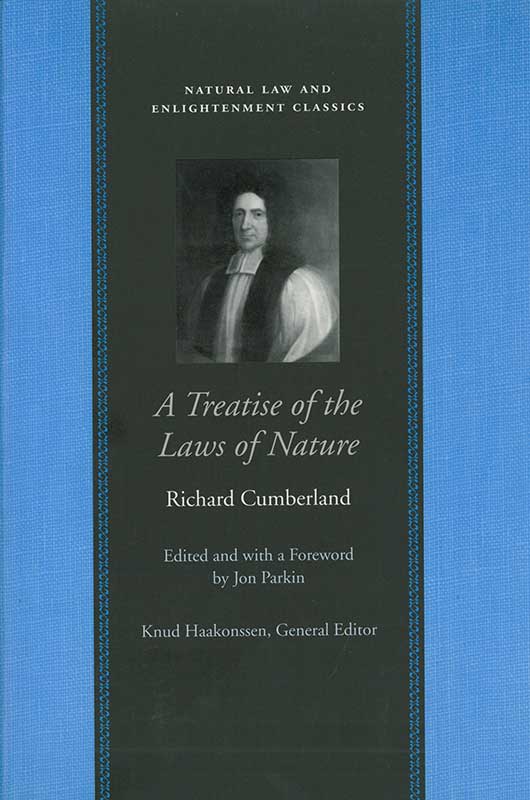
CHAPTER VIII: Of the Moral Virtues in particular . - Richard Cumberland, A Treatise of the Laws of Nature [1672]Edition used:A Treatise of the Laws of Nature, translated, with Introduction and Appendix, by John Maxwell (1727), edited and with a Foreword by Jon Parkin (Indianapolis: Liberty Fund, 2005).
About Liberty Fund:Liberty Fund, Inc. is a private, educational foundation established to encourage the study of the ideal of a society of free and responsible individuals. Copyright information:The copyright to this edition, in both print and electronic forms, is held by Liberty Fund, Inc. Fair use statement:This material is put online to further the educational goals of Liberty Fund, Inc. Unless otherwise stated in the Copyright Information section above, this material may be used freely for educational and academic purposes. It may not be used in any way for profit.
CHAPTER VIIIOf the Moral Virtues in particular.The Author proceeds to a particular Description of the more limited Moral Virtues.Having explain’d the Original of Dominion, and, by the way, declar’d its Progress thro’ all Society, whether Sacred, or Civil, or between different States, or between the different Parts of the same Family; I will now “proceed to a particular Description of the more limited Moral Virtues.” Something upon this Head I have already suggested in the foregoing Discourse, where I have shew’d, “That they were contain’d as Parts in that Universal Benevolence enjoyn’d by the Law of Nature.” But, because these Virtues are properly conversant only about such Matter, as is, of right, in our own Power; and because in these there is a distinction between Debts and Gifts, between Superiors and Inferiors, between different States, and between the several Members of the same State, and between the Parts of a Church, or Family; it was necessary to lay down something, in general, concerning the Original of Dominion over Things and Persons, whence all these different Relations arise; and that it was to be deduc’d from Principles, which did not suppose any Obligation to the special Acts of the Virtues. All Obligation to the exercise of Moral Virtues, arises immediately from this, “That such Actions are commanded by the Law of Nature.”First, then, we are to observe, that, “As Universal Justice is a Moral Perfection, to which we are therefore oblig’d, because such a Will, or Inclination of Mind, is commanded by the Universal Law of Nature, enjoining the settling and preserving to every one his Rights; So we ought to possess all particular Virtues, or we are therefore oblig’d by them, because they are commanded by some particular Law of Nature, which is contain’d in that Universal One, which I have mention’d.” They are indeed, in their own Nature, Good, tho’ there were no Law, because they conduce to the Good State of the Universe: But Moral Obligation, and the Nature of a Debt thence arising, is unintelligible without a respect to a Law, at least, of Nature. Nay, farther; the very Honour, from which Actions are distinguish’d by the Title of [Honestas] laudable Practice, or are called Honourable, seems wholly to come from this, “That they are prais’d by the Law of the supreme Ruler, discover’d by the Light of Nature, and honour’d with the greatest Rewards, among which is to be reckon’d the concurring Praise of Good Men.”1 And justly they are called naturally Lawful and Honourable, because the Law, which makes them such, does not depend upon the Pleasure of the Civil Power, but arises necessarily, in the Manner already explain’d, from the very Nature of Things, and is altogether unchangeable, whilst Nature remains unchang’d. From the Law requiring the settlement of Property, in order to the Publick Good, are inferr’d the Duties 1. Of Giving to others. 2. Of Receiving to our-selves, those Things, which are either necessary, or highly serviceable, to this End.§II. The special Laws of the Moral Virtues may, after this Manner, be deduc’d from the Law of Universal Justice. There being a Law given, which fixes and preserves the Rights of particular Persons, for this End only, That the Common Good of all be promoted by every one, all will be laid under these two Obligations, in order to that End: 1. To contribute to others such a Share of those Things which are committed to their Trust, as may not destroy that Part which is necessary to themselves for the same End: 2. To reserve to themselves that Use of what is their own, as may be most advantageous to, or at least consistent with, the Good of others. In order to explain these Laws, it is to be observ’d, “That others and our-selves are Terms, which, in every one’s Mind, divide the whole System of Rational Beings; and may, indifferently, be referr’d to God and Men”; whence both “his Honour is to be regarded by Men in the consideration of the Common Good”; and he himself may be understood, by an easy Analogy, “to act towards other Rational Agents, according to the Rules of the Moral Virtues.” The former Law, which commands us “to regard others in order to the Common Good,” enjoins Liberality, and the Virtues of common Conversation2 in a strict Sense, (for in a large Sense every part of Universal Justice promotes Conversation with others;) the latter Law enjoins Temperance and Moderation about those Things which are to be reserv’d to our-selves, so as may best enable us most effectually to promote the Publick Good, of God and all Mankind, and, in a particular Manner, of our native Country and Family. All the Virtues, Parts of Universal Justice, and consequently connected, but not confounded.In both Laws, both Members of the Division, that is, the Whole, of which we our-selves and others are Parts, comes into consideration; and, therefore, “All the Virtues prefer the Publick Good before the Private Advantages of any one, tho’ some of them may be said to regard one Part of that Whole, more immediately than another.” For this Reason some may perhaps think, “That these parts of Justice, and, consequently, all the particular Virtues, are not sufficiently distinguish’d from one another, but confounded.” But whoever throughly considers the Matter will see, “That their mutual natural Connexion, and the reciprocal Assistance which they mutually afford to one another, and to the Common Happiness, can hardly otherwise be more conveniently express’d.” And, therefore, no-one can say, “that these Virtues are confounded,” who would not accuse Nature it-self of Confusion; because she provides for the Health of the whole Body, and of a particular Part, by the same Motions of the Blood, and by the same Arteries and Veins. Thus, for Example, the Animal Nature performs these two Offices by straining the Blood thro’ the Vessels of the Liver: 1. It prepares fit Blood (which would otherwise produce a Jaundice) for all the other Parts, being in the mean time not forgetful of nourishing the Liver it-self:2. It nourishes the Liver, at the same time not forgetting the other Parts. Thus the Publick Office of the Liver is naturally interwove indeed, but not confounded, with the Private.3 These two Offices may be understood distinctly, and some Peculiarities may be ascrib’d to each of them thus consider’d; and this is sufficient to prevent Confusion. Yet these two Offices cannot be actually separated from one another in a healthful State, or whilst Nature remains undisturb’d. So neither can the subordinate Virtues be really divided from one another, consistently with Justice, or the Publick Good; yet there is no Confusion, whilst each may be consider’d separately, by its respect to those Parts, which it immediately regards, tho’ they all ultimately promote the Good of the Whole. The ultimate End and Effect of both Laws, and, consequently, of all the Virtues enjoin’d by them, is one and the same; but the immediate Ends which they regard, and Effects which they attain, are no less various, than are the several Parts of the System of Rational Agents, each of which may be provided for, in order to the greatest Good of the Whole. The Minds of Men, in the Practice of all the Virtues, are always conversant, tho’ not always explicitly, about the Common Good.§III. Hence we may understand the Reason, “Why the Minds of Men do not always very explicitly view and intend the Common Good, even when they act according to the rule of Virtue”: ’Tis this, “The immediate Object of their Pursuit is some Part thereof, but which they otherwise very well know, to be perfectly consistent with its other Parts, and necessary to the Composition of this Whole.” But in every act of Virtue there are many Things which prove, “That the Care of the Common Good is never laid aside.” For, in these, Care is always taken, “That every one confine himself within the Bounds of his own Rights, and invade not those of another.” But, “Rights cannot be consider’d as so limited, without some respect to the Rights of others; and, consequently, to the Good of all others, on account of which the Properties of all are limited.” All States, and their Founders, “acknowledge that general Division of Rights and Property, whereby certain Things are appropriated to God as Sacred, and their proper Bounds are assign’d to other Nations”; by their acknowledging their own Territories to be bounded, by their practising Religion, and entering into Leagues and Commerce with other States. Private Persons, because they subject themselves to, and govern themselves by, the Laws of their own Country, “whilst they give themselves up to the Practice of Virtue, of necessity do so far consent with their own and other States, that such general Division of Dominion is necessary to the Good of the Whole.” Lastly; because in every Virtue the Mind is dispos’d to give their Rights to God and to all Men, to Foreigners, to Members of the same State, to those of the same Family; and that always in this Order, that the Rights of God should take the first Place, those which are common to all Nations the second, and the Rights of any particular State the third; those of lesser Societies, such as Corporations, Colleges, Families, following: Hence is easily inferr’d, “That their principal End is the Common Good of the whole System of Rational Agents”; for “this is not really distinguish’d from the Good of those Parts, consider’d in that Order, and mutually united by those Bonds, of Society.” Mediocrity consists in giving to no Part more or less, than a due regard to the Whole requires.“From this End, and the Parts thereof consider’d in the Order now mention’d, is to be taken the Measure of all Actions and Affections, so that they may justly be said to be faulty thro’ excess, or defect, if at any time they give more, or less, to any Part, than the Preservation of the Good of the Whole will permit.” Thus may easily be found out a certain Measure of Action from stated and known Rules, namely, “The Laws which determine the Rights of God, of Nations, of that State under which every one lives, and of lesser Societies, and Individuals”; so that it is without doubt, “That all those Actions are within the Bounds of Mediocrity, which violate none of these Laws”; and as certain, “That every Action departs from thence, or is Vitious, that breaks any of these Laws.” I suppose “these Laws to agree among themselves, so that the Rights of lesser Societies may in all Things be consistent with the Rights of the Superior; That, in Families, nothing can be rightfully enjoin’d, which contradicts the Laws of that State, of which they are Parts; in States, that nothing can be commanded rightfully, contrary to the Laws binding all Nations, (such are those concerning the Division of Dominion, or the not violating Property, concerning keeping Faith, &c.) And in these, that nothing contradict the Dominion of God over his Creatures.” For “all the Force which inferior Laws have to oblige, is deriv’d to them, from the Force of the Superior; which Power of obliging must, therefore, be wholly wanting in those Laws, which contradict others of a higher Nature.” For “an Inferior Power cannot abrogate the Law of a Superior; tho’ it may variously limit the Liberty left by the Law of the Superior”; because the Power of further determining, in Cases undetermin’d by a Superior, is perfectly consistent with Subordination; nay, and is the chief Reason, why subordinate Rulers are appointed.” From the former of the two Laws are deduc’d Precepts 1st. Concerning Gifts, in which Liberality, and 2dly, Concerning Conversation, in which the Virtues peculiar to that are conspicuous. The Virtues observant of the First Law, are,§IV. Having explain’d the Measure of that Mediocrity, which is usually requir’d in Moral Virtues,4 it is easy to describe them separately, because their Essence consists in “the Inclination of the Will to obey the Laws deduc’d from the general Law of Justice.” Let us, therefore, consider those two former Laws, which I have just now shewn to be deriv’d from the Law settling Dominion, or Property, for the Common Good. The former of these commands us, for this End, to communicate of our own to others in such Manner, that we may, nevertheless, reserve to our selves sufficient to pursue our own Happiness. It is obvious enough that this is commanded, “Because it is evidently necessary to the Common Happiness, without which it is absurd to expect our own private Happiness,” as I have already shewn at large. In this Law are contain’d, both a Regulation concerning “Gifts,” for which either no Reward is expected, or where it is left wholly to the Will and Opportunities, of him who receives the Benefit; and also a Precept concerning “that less, but most useful, Benevolence, which is practis’d in all kind of Agreements, Compacts, and Commerce, in which we either promise, or perform, any Thing to others, under a Condition to be by them executed.” We may bestow upon others, either our Goods, or our Services, or both. The Will to obey this Law is conspicuous, either in beneficent Actions, which are its proper Effects, and, therefore, natural Signs of it; or in the voluntary Signs of it. To the first Head belongs Liberality; to the Second, the Virtues of common Conversation. Liberality,§V. Liberality is Justice conspicuous in Actions, bestowing gratis upon others what is our own.5 I make Liberality a Species of Justice, to avoid repeating the Definition of Justice, viz. A Will to obey the Law of Nature, and to shew by the same Word, “that the Necessity and true Measure thereof was to be taken from the Law.” For, “every Part of Justice ought to be conformable to a Law; and all the Laws an Agent is subject to, (the Natural and Positive Law of God, the Laws of Nations, Laws Civil and Municipal, and those of smaller Societies,) are to be consider’d, before his Action can be pronounc’d Just, or Virtuous.” For, in all these, the best End, and the particular Parts thereof,” (the Honour of God, the Peace and mutual Commerce of different Nations, the proper Polity of particular States, the Wealth and Security of smaller Societies, and of Families,) “are regarded.” And all, either Excess, or Defect in free Gifts is forbid, by which any of these is violated: “But such a free bestowing of Things and Services, as tends to establish and enlarge the particular Parts of this End in their proper Order, is commanded.” (with the Virtues subservient thereto,But, because “it is impossible to support a liberal Expence, without an honest Endeavour to acquire, and to preserve our Acquisitions,” this also is commanded by the Precepts and Admonitions deduc’d from the Consideration of the same End, and of the particular Parts thereof, consider’d in the same Order; and, therefore, “The same Liberality, which principally denotes a Will to expend, subordinately at least includes a Will obedient to the same Commands in Acquiring and Preserving”: That is called Providence, or Prudence, and is oppos’d, both to Rapacity, and improvident Negligence; this is call’d Frugality, or Parsimony; which, on the one hand, is oppos’d to sordid Niggardliness,6 and, on the other, to Prodigality. So Providence and FrugalityProvidence and Frugality;) may be defin’d Justice in acquiring and in preserving, and the same correspond to Justice in laying out, and are subservient to it. and the different Branches of Liberality, as Generosity,Liberality is distinguish’d by various Names, according to the Variety of Objects, upon which it is exercis’d: For, if it exerts it-self in Things of signal Publick Use, it is call’d Generosity, or Publick-Spiritedness;7 to which, on the one hand, is oppos’d the Lavishness of the Ambitious; and, on the other, the Mean-Spiritedness of sordid Wretches. Towards the Miserable, it is called Compassion;Compassion, Alms-giving, Hospitality: and towards the Poor in particular, Almsgiving. Toward Strangers it is called Hospitality, especially, if we entertain them in our Houses. In all these, the Measure of Beneficence is taken “from that which is most conducive to the various Parts of the chief End; to Piety, which establishes some kind of Society between God and Men; to mutual Assistance, Fidelity, and Commerce among various States; to Concord, and the other Duties of the Parts of the same State towards one another; and to the most flourishing State of lesser Societies and Families, which can be obtain’d consistently with prior Obligations.” I have explain’d these Things the more distinctly, in settling the Mediocrity, or Measure, of this first special Virtue, “to supersede the Necessity of adding more, to discover the Method of deducing with the greatest Certainty, the true Measure of the following Virtues.” And the Virtues of common Conversation§VI. Let us now proceed to the Virtues of common Conversation, which consist in Obedience to the same Law. I define them thus in General. The Virtues of common Conversation are Justice, doing good to others by a Use of voluntary Signs subservient to the Common Good. I have express’d the End in the Definition, not that it was necessary, because a respect to that is included in the general Notion of Justice, which aims thereat wholly; but for Perspicuity. By voluntary Signs I understand, chiefly indeed Speech, but I respect also the Gesture and Habit of the Body, and all Motions of the Countenance, which make a voluntary Discovery of the Mind. Gravity and Courteousness observe a just Measure in all these. But with respect to Speech especially, Taciturnity, Veracity, (which in Promises is call’d Fidelity,) and Urbanity, keep us within due Limits. Of each of these in particular I shall treat briefly.8 and, in particular, Gravity and Courteousness,I cannot better explain Gravity and Courteousness, than by considering, that all the various acts of Justice towards others, require, in the Agent, true Prudence and extensive Benevolence, as I have already shewn. But the Conversation of a Man, in which are conspicuous all the various Signs of a just Prudence, is call’d Grave. And that, in which all the Marks of a sincere Benevolence shine, is call’d Courteous. Wherefore I would define Gravity to be A Virtue of common Conversation which is distinguish’d by proper Signs of Prudence; Courteousness, A Virtue of common Conversation adorn’d with the Marks of great Benevolence. These two are as consistent with one another, as Prudence and Benevolence, of which they are Marks. Hence the opposite Vices may easily be understood: To Gravity are oppos’d, on the one hand, a certain affected Severity and Stiffness of Manners, when one uses either more such Signs than the Nature of the End requires, or such as are not proper to promote, either the Honour of God, or the Happiness of Men, (which are the Parts of it;) or when one neglects the Thing it-self, whilst he industriously affects the Signs of it: On the other hand, Levity, which the Reader may easily understand, from the Description of the contrary Virtue, and opposite Vice. In like Manner are opposed to Courteousness and an obliging Civility of Manners, on the one hand, Flattery, or the soothing Arts of the Parasite; on the other, Moroseness. But, because Speech is the principal Interpreter of the Mind, and peculiar to Mankind, therefore the Law of Nature commanding us, on proper occasions, to express a prudent Benevolence towards others, does, more particularly and expressly, prescribe to our Words a Measure, which various Virtues do observe with care. For, in the first place, we are enjoin’d to be sometimes Silent; namely, whenever the Reverence due to God, or to others our Superiours, requires it; or to avoid revealing, to any one’s Prejudice, either the Secrets of the State, or of our Friends, or Family, or our own, when the concealing them will more effectually promote the Publick Good. TaciturnityTaciturnity, pays Obedience to these Laws, which is a Virtue of common Conversation, keeping Silence, when the Common Good requires it. The Excess of this is an unseasonable Niggardliness of Speech, which greatly prevents the Communication of Knowledge, and the principal Advantages of Human Society. Again; we are sometimes by the same Law commanded to speak to others, when the Common Good requires it; there is no Name of any one Virtue, which can fully, in one Word, express the Obedience due to this Law: It may, perhaps not improperly, be called, a Prudent Liberty of Speech, or a just and due Liberty in Speaking, and consists in “a readiness of the Mind to express every Thing in Words, which Reason suggests may be any way advantageous to the Community of Rational Agents.” The Words, about which this Law is conversant, either respect Things past and present; concerning which it commands us, in order to this End, “to declare the Matter as it is, so far as it is known to us,” in which consists Veracity:Veracity, or they respect Things hereafter to be done by us, with respect to which it commands us, “to promise such Things to others as “may turn to the Publick Advantage”; and that, either without a Condition, or with one, as the nature of the best End requires. “Promises, mutually agreed upon among several,” form a Covenant, Contract, or Compact, to which is owing almost all the Commerce that is among Rational Agents. There is no Name of any one particular Virtue, which obliges Rational Beings to make such Promises, or Contracts, as may most effectually promote the Publick Good; but that Virtue, which keeps such Promises and Compacts, is every where celebrated by the Name of Faith, or Fidelity.Faith, or Fidelity, They are Acts of the same Disposition of Mind, and of the same Virtue, to will the making such Compacts, and to will the Observance of them, when made. Nor is it lawful to observe Compacts, unless the Performance of the Thing covenanted be Lawful, that is, permitted by the Laws of Nature, as consistent with the Publick Good. It is so far from being true, that all Justice (which properly consists in the Observance of the Laws) may be resolv’d into Fidelity in observing Compacts, that, on the contrary, before it can be known, “Whether any Compact ought to be observed,” it ought to be certain, That the Laws of Nature enjoin’d, or at least permitted, the making that Compact.”9Lastly, “The greatest Benevolence is not express’d in our Conversation, except something Pleasant be seasonably intermix’d therewith, according to every One’s Talent that way,” which is what is called Urbanity, or Facetiousness.Urbanity, or Facetiousness. This Virtue is limited by all the Parts of the chief End, in the same Manner as the rest. For it is enjoin’d Universally, “That nothing be said, tho’ it were but in Jest, which may diminish the Honour of God, or the Happiness of Mankind”; which we shall observe, “If we do not, by a base and wanton Satyricalness, expose, to Contempt and Ridicule, the Laws of Religion; nor the Rights of Nations, nor of particular States, nor of smaller Societies, or Families, or of particular Persons.” They who, by their Jesting, transgress these Laws, are justly tax’d with Scurrility. They, who in their own Conversation wholly neglect, or condemn in that of Others, innocent Pleasantness of Speech, fall into Rusticity. And so much may suffice for the first special Law deriv’d from the general Law of Justice, and for all its different Branches, together with their correspondent Virtues. Virtues observant of the second Law, are the several Branches of a limited Self-Love;§VII. The second special Law of the Moral Virtues is thus deriv’d from the Law of Universal Justice. There being given a Law (of Universal Justice) fixing and preserving the Rights of every particular Person for this End only, that every One may promote the Common Good of All, every One is oblig’d, in the second Place, so to consult his own Interest in the Use of his own Advantages, that they may be of the most Advantage to all Others, or at least may diminish no Part of their Common Good. The Meaning of these Words has been explain’d just now, when I deduc’d the two special Laws from the general Law of Justice. This Law is observ’d, “When we limit our Love of our-selves, by the Bounds prescrib’d by Universal Justice, which gives to God and Men their several Rights.” This limited Self-love, being enjoin’d in this Law of Nature, and that in order to the best End, cannot but be Just and Laudable. Nay, as I have shewn, “That some Rights ought necessarily to be given to every One, that it might be well with All”;10 we may, by a Parity of Reason, infer, “The necessity of a Law commanding every one constantly to use his own Things in order to his own Happiness, where that is no way Inconsistent with, or Prejudicial to, the Happiness of the whole Community”; for “The Happiness of the Whole consists in the Happiness of all the Parts”; and therefore “The Care of the former being commanded, the Care of the latter also must of necessity be commanded therein”; nor can the Happiness of every One be procured by Others, if they neglect Themselves. with regard, First, to our Essential Parts, the Mind and the Body.Seeing “every Man’s essential Parts are his Mind and Body,” this Law is understood to command “The proper Improvements of both, in order to the Common Good, and by Means agreeable to that End, that is, by making use of our own Rights over Things and Persons, and not invading those of others.” I need not inculcate any Thing particularly, concerning the Method of cultivating the Mind, because it is the whole Business of “Moral Philosophy, and every Thing subservient to it, to instruct and improve and fit the Mind for this End.” The Care of our Body, in order to this End, is commanded by those Precepts, or Laws of Moral Philosophy, the Observance whereof is distinguish’d by the Name of Temperance. For the Moral Laws concerning Meat, Drink, Sleep, Exercise, and Venereal Enjoyments, are distinguish’d from the Precepts given by the Physicians concerning the same Things, in this, “That all these Things, which Physicians prescribe only for the Health of particular Persons, the immediate End of Medicine, are in Morality directed to a higher End.” I, certainly, would not call him Temperate, that is, Virtuous, “Who most diligently observ’d all the Precepts of the Physician relating to the Preservation of Health, without any regard to the Laws providing for the Common Good, and, consequently, to the End propos’d by them.” It is, however, sufficient to make Actions Virtuous, “If the Mind of the Agent has a general Inclination to do those Things, which are acceptable to God, and to all Men, proceeding from an habitual Intention to promote this End, and, consequently, from an Assent formerly given to such Practical Propositions and Laws.” For the whole Force of practical Habits arises “from the Assent of the Understanding to Practical Propositions, formerly given, and still remaining in the Memory.” Temperance in the Moderation of our Natural Desires, respecting the Preservation.§VIII. Temperance may, therefore, be defin’d, Justice towards our-selves, employ’d in taking Care of our Body, in order to the Common Good. If “any one, while he indulges his Body, is so far forgetful of his Mind, as to drown, or lessen its Powers, and render himself less qualified for Things Divine, or Human, Civil, or Domestick; altho’ this may sometimes be done consistently with Health, and, consequently, with the Rules of the Physicians,” he is Intemperate. For Instance, if any one breaks a Religious Fast, which may, consistently with Health, be either observ’d, or neglected; or fares so Luxuriously, but without loss of Health, as to waste his Fortune, and become unable to pay the Publick Taxes, he is certainly guilty of Intemperance. But “they who impair their Health by their pursuit of Pleasures, do not prejudice themselves only, but, in some measure, both their Friends and their Country, so far as their want of Health renders them less qualified to do Good to others.” We may estimate this from the “Proportion Health bears to Life.” Civil Laws (which take care of Matters of greater Consequence only) usually judge a Self-Murderer injurious, not to himself alone, but to the Publick also, which he robs of a Subject; and that Fact is justly reckon’d amongst the greatest Crimes. Every voluntary Diminution of our Health approaches to this Crime against the Publick Good, in the same Proportion, that the Value of Health lost does to the Value of Life; both the Health and Life being estimated, chiefly in relation to Publick Duties, the Execution whereof is in some Measure expected from All. The Matter will become yet plainer, if we consider particularly, “That the Care of Our Body consists in the Moderation of our Natural Desires, which respect the Preservation, either of the Individual, or of the Species.” of the Individual, with respect 1. to Meats.To the Preservation of the Individual, belongs the Desire 1. of Meats, which Abstinence limits, with respect to the End aforesaid; to which are oppos’d, both a keeping the Body too low, and Gluttony. 2. Of Drinks, the desire of which is limited by Sobriety, to which is oppos’d Drunkenness.2. Drink. 3. Of Sleep, the desire of which is limited by Watchfulness, which shakes off the opposite Drowsiness. 4. Of Recreations and Exercises, the Virtue setting Bounds to which, has no proper Name (that I know of,) nor the Vices opposite thereto, either in Excess, or Defect.3. Sleep. 5. Of Ornaments belonging to outward Decency, in Furniture, Cloaths, and Buildings; Neatness and Elegance, in Proportion to every Man’s Fortune,4. Recreation and Exercise. observing a due Measure in these; which Niceness exceeds, and Nastiness, or Slovenliness, does not come up to. 5. The Ornaments of Life.§IX. Lastly; to the Preservation of the Species belongs the Appetite to Venereal Enjoyments, to which Chastity, from the same Rules, fixes Bounds, which Incontinence breaks thro’; whose various Kinds are too well known to need Enumeration. We may hence easily perceive, “How we may be many ways injurious to Others, in an intemperate indulging Ourselves; both as he who hurts himself, wounds a Member of a Family,Of the Species, with respect to Chastity, of a State, of Mankind; which, whilst sound, is in numberless ways subservient to the Good of Others: and as hence follows some Neglect of Piety, and of all severer Studies, for which the Intemperate Person is wholly unqualified; which is a loss to the whole System of Rational Beings, which had a Right hence to expect some Advantage.” Not to insist upon this, “That Men are incited to seize the Property of Others, to satisfy their own Intemperate Desires; that Intemperance raises the Price of Victuals, to the great Mischief of the Poor: What Mischief does not Drunkenness produce?”11 The publick Inconveniencies which flow from Incontinence, are too filthy to be mention’d with Modesty, too manifest to need an Enumeration. It may be sufficient to mention, “That Crimes of this kind cannot be committed without a Partner,” whence they cannot be confin’d to the breast of One alone, but are communicated to more; hence Families, and the Rights of Succession are confounded; whence the hidden Mischief spreads, and bears hard upon all those, who had a Right to expect any thing from the abused Family, or from the Inheritance; and thus by this Crime whole States are sometimes reduc’d to great Streights, and the Condition of all Mankind is made worse. Nor is it less manifest, “That the Business and Tendency of the known Laws of Chastity,12 both in a single and married State, is, not only to benefit the Minds and Bodies of the Chast; but to found new Families, to preserve old Ones, and to extend Friendships, rising from Affinity by Marriage”; whence arises a closer Union and Society between the Parts of the same State, and also between the Members of different States, and, consequently, of all Mankind. For this Cause, in my Opinion, has Natural Reason instructed almostall Nations, (since Mankind has been multiplied into numerous Families, and the Memory of their Primitive Relation, by descent from the same First Parents, came to have little Influence on them;) “To prohibit Marriage between the nearest Relations”; for this very Cause, I say, “That Marriages might unite and engage distant Families, whom Relation could not, into greater Friendships and Intimacies”: For Example; Marriages between Brothers and Sisters are now forbidden by the Dictates of Reason consulting the Common Good of Mankind, by a more widely extending the Friendships of Affinity, which Marriages in the first Age of the World were Lawful; because necessary to propagate that Race of Men, and to raise those Families, which Reason now endeavours to Preserve, by prohibiting such Marriages, in order to extend Friendships. Thus the Sovereign Goodness of the same End renders it Just, both to grant that Liberty in the beginning, and to forbid it afterwards, when the State of Human Affairs was chang’d. and Affection in the Preservation and Education of our Posterity.Lastly; because “The desire of preserving our Off-spring,” which is call’d Natural Affection, is only a Continuation of that Appetite, by which Animals are inclin’d to Procreation; it is evident, “That Natural Affection ought to be both excited and limited by a respect to the same chief End, and the several Parts thereof”: We ought, so far, to love our Children, as that conduces to the Honour of God upon Earth, and to the Happiness of all Nations, of our respective Countries and Families. It is evident, “That the Happiness of all Posterity depends upon the Care of Educating our Off-spring”: And, because our Off-spring is a kind of Compound of Our-selves and Others, it is plain, “That our Care thereof affords a Specimen of the Virtues, which relate both to Our-selves and to Others.” Secondly, to the Goods of Fortune:§X. But the due Care of Our-selves, in order to the Common Good, implies, not only the Consideration of those Parts, of which we are each of us compounded, the Mind and Body, of which I have already treated; but also of the Means, (even the remote Ones,) by which both Parts of us may be any way assisted; which the Lawyers call by the general Name of our Goods and Rights over Things and Persons, in plenty whereof consist every One’s Riches and Honours. Riches,Therefore the same Law of Nature, which limits our Will, and, consequently, all our Affections toward Our-selves, by their relation to the best End, will, for a like Reason, from the consideration of all the Parts of this End, limit all our Affections about the acquiring and preserving Wealth and Honour. For these are sought after by all, for no other reason, than as Means to the Happiness of their Possessors; which I have prov’d, “No-one is to look for in any other Measure, than what is subordinate to, or at least consistent with, the Common Happiness of All.” What I have already, by the way, said concerning the Limitation of our Care of acquiring and preserving Riches, as a necessary Means, in order to Liberality, may be sufficient to limit our Desires about them, as Means to our Happiness. and Honour;All that I have to add upon this Head, is, in few Words to admonish my Reader, “That all are commanded by this Law to pursue Honours, in such Measure only, and by such Means, as are not only consistent with the Health both of Body and Mind, but also with a due Care of their Family, lest we ruin that in pursuit of Honours; and with the Peace of the State, lest any One should raise Himself to Dignities by seditious Practices; with the Peace of other Nations, lest the Rights of Nations should be violated, in order to swell our Titles; and lastly, with Piety towards God, lest any one, to encrease the Glory of his Name, become guilty of Profaneness against the Divine Majesty, or violate Things and Offices Sacred.” Modesty,The Will, when its Motions are agreeable to these Laws, has obtain’d that just Mediocrity, which ought to be observ’d in pursuing Honours, and avoiding Infamy; the Virtue of such a Disposition is called Modesty, which may be defin’d, Justice toward our-selves, consisting in a pursuit of Honours subordinate to the Common Good. The same Modesty, “as it restrains the Will from pursuing Things higher than what are consistent with this End,” is call’d Humility: But, “as it raises the Mind to the Pursuit of the greatest Honours subservient to this End,” is true Magnanimity.13with its Branches, Humility, and Magnanimity; The Vices opposite being Pride (including Ambition, Arrogance, and Vain-glory) and Pusillanimity. I suppose every one knows, “That it belongs to the same Virtue, to acquire and preserve Honour, and to avoid and ward off Infamy.” From these Definitions of the Virtues, the Nature of the Vices opposite is easily discover’d: For Pride, which displays it-self in Ambition, Arrogance, and Vain-Glory, is in direct opposition to Humility; as Pusillanimity is to Magnanimity. §XI. I have thus briefly consider’d all the Virtues, and made it appear, “That in each of them is contain’d some respect to the Common Good of Rational Beings,” (which I take leave to call the City, or Kingdom, of God in the largest Sense;) “and that, whether they more immediately concern Others,All sorts of Virtues respect the Publick Good: and Man, acting according to them, pursues that Good; either in the Synthetick way, as does the Private Man; or Our-selves, the greatest Good of all is always ultimately intended.” The Mind of Man, acting according to the Precepts of Virtue, prosecutes this Common Good, both in the Synthetick, and in the Analytick, Way.14 A private Person imitates the former Method, when he so regulates his several Cares, that, beginning at his own proper Affairs, he does nothing in the Management of them, which the settling, the preserving, or advancing and improving his Family, does not persuade, or at least permit: In his Provision for his Family, he does nothing inconsistent with his greater Care to preserve the State: In his regard for the State, nothing but what is accommodated to, or at least permitted by, the Happiness of other Nations; which he is oblig’d, at least, not to diminish, and even to promote, as far as is in his Power. Lastly, in his pursuit of the Good of Mankind, nothing inconsistent with the Honour of the Divine Majesty, and the Preservation of the Rights of the Kingdom of God, in which are contain’d all Things both Divine and Human; and these several Rights he generally supposes already settled and appropriated. or in the Analytick Method, as do Legislators.But they who preside over others, and have a Power to distribute such Rights, begin at their Regard to the whole System, and so rather pursue the Analytick Method. They think they sufficiently discharge their Duty to the whole Kingdom of God, by paying him, as Sovereign King, supreme Honours, and giving to all Nations, as his Subjects, their several Rights over Things and Persons; the Regard due to the Rights of each several Nation is satisfied, by a just Care of the Rights of the several lesser Societies, Families especially, comprized in it; as the lesser Societies are sufficiently provided for, if the Goods and Interest of the several Members be taken care of. It was very easy and necessary, to use this Method in the first Division, or Settlement of Property over Things and Persons, when our First Parents (reserving to God his Rights) divided all other Things among their Children;15 for the Happiness of the whole Rational System is that single End, in its own Nature the best and greatest, (because the Sum of all Good Things, and therefore Naturally better and greater than any Part thereof, that is, than any other Good,) which they who rightly understand, cannot but pursue; and the Necessity of pursuing it renders Necessary the Settlement of distinct Properties over Things and Persons, that is, gives Original, both to all Laws, and to the Rights every one derives from them. But, when we proceed from the Care of the Whole to the Care of the Parts, it is evident, that the Analytick Method takes place. Hence Mankind are possess’d of an unerring Rule of Virtuous Actions.§XII. These Laws being establish’d, which regulate and bind the several Societies and Relations between God and Men, between different Nations, and also between the Members of the same State and Family, we have undoubted Marks, by which we can judge of Piety, and of all kinds of Virtue; so that their Name given to Actions overturning the Rights of Religion, of Nations, States, or Families, need deceive no-one hereafter. For it is evident, “That all the Parts of Universal Justice,” (which I have briefly recounted,) “and all the Acts of every Virtue, are commanded by these Laws for the Common Good alone”; for “such Acts do,” as is evident by constant Experience, “Naturally either give Honour to God, or promote the Peace and Happiness of different Nations, or benefit some State, or smaller Society, or some particular Person”; but “of these Parts, consider’d in this Order, is the Common Good wholly made up.” Wherein right Reason, prescribing Mediocrity in Human Actions, consists.Farther; hence may very clearly be explain’d, “What is that right Reason, which enables the Prudent Man to prescribe that Mediocrity, which ought to be observ’d in Human Actions.” For it consists wholly, in“such Practical Propositions, as propose to us the greatest End, and discover to us the proper Means in our Power, by which we may attain it.” Now they are, “Those Human Actions that are commanded by the Laws, which found, preserve, and regulate, Religious Worship, the mutual Commerce of Nations, the Interest of States and Families; or directed by the Dictates of Private Men; provided such Laws and Dictates be agreeable to our Experience, concerning the natural Efficacy of Human Actions.” Thus the Means, by which we may obtain or hinder our own Happiness, or that of others, are ultimately resolv’d into the Natural Powers of Actions to help, or hurt, Men, consider’d either singly, or jointly, as in a Family, or in one, or more Nations.16 We judge of those Things which belong to, or are proper Expressions of, the Honour of God, by Analogy drawn from those Actions, which tend to Honour Men. And Experience no less evidently teaches, “what kind of Human Actions are beneficial or hurtful to most others”; than it shews, “what kind of Food nourishes and refreshes most Men, what on the contrary breeds Distempers and hastens Death.” All our Moral Knowledge is ultimately resolv’d into our Experience of the Powers of Natural Causes.17 Nor do we with greater difficulty learn from Experience the Truth of these Propositions, “That it is necessary to the Common Good, that a distribution of Things and mutual Services should be made”; and, “That it should be preserved, by acting, both with respect to Others and Ourselves, as the Preservation of Nations, single States and Families, whereof we are Part, requires”: (From which all the Laws of Nature, and the Virtues proceed:) Than we learn, “That it is necessary to the Life and Health of an Animated Body, that Nourishment should be communicated to all its Parts, and that the Distribution made by Nature should be preserv’d by every Member so discharging its proper Office;In this § is explain’d the Manner of naturally deducing these Dictates of Reason, by which all our Actions are regulated according to all the Virtues, that first the principal Parts, then the less Principal, and the Meanest, may have their Obstructions remov’d, their Decays repair’d, and their Growth continued, ’till they arrive at the Stature and Strength prescrib’d by Nature.” The truth in both Cases is resolv’d into these, or such like, Propositions; “That those Things which preserve the Whole, preserve all its Parts”; and “That the Preservation of the less Principal or subordinate Parts, proceeds from the Preservation of the Principal”; which, because they are evident from the Definitions of such Causes, may justly be said to be discover’d by the Nature of Things to our Experience. For, “Definitions are learn’d from our Experimental Knowledge of the Nature of Things.” by an unerring Method,18 Farther; as the whole Certainty of the rules of Medicine and Diet proceeds from the unchangeable Efficacy of such corporeal Causes to produce their Effects in an Animate Body; in like manner all Certainty of those practical Propositions, which are Laws of Nature, and which compose Moral Philosophy, and determine the Nature of all the Virtues, proceeds from the unchangeable Influence of Human Actions, upon the Preservation or Damage of particular Men, of Families, of Common wealths, and of all Nations. in all Variety of Circumstances,Moreover; that Variety of Actions which is enjoin’d Men, with respect to their various Conditions, Families, Commonwealths, and other Circumstances, is no more inconsistent with that necessary and constant Care of preserving and perfecting all the Parts of the best End, which I have often enumerated; than Diversity of Diet in diverse Climates, Ages, and Constitutions, of Men, is inconsistent with that constant Care in all, of every where nourishing all their Members, and every where satisfying their natural Necessities, with relation to Hunger and Thirst, and Sleep, and of prescribing Bounds to their Exercises, their Venery, and their Affections, according as their several Natures require. Tho’ not to a Mathematical exactness,In these, as in Things necessary to the Publick Good, we can not attain our End, by acting any Thing at pleasure: But the Nature of the End sets some Limits, tho’ our Understanding cannot reach Mathematical Exactness in settling them. which is not necessary.We take sufficient Care of our Life, without Lessius’s Method of weighing our Food;19 and, in like manner, we may truly promote the Publick Good according to our Power, tho’ we cannot reach what is exactly best in all Cases; provided we endeavour, as far as we can, to reach it in all given Circumstances. The Common Good is the proper Measure of every lesser Good and Evil, and of their comparative value;§XIII. This I think necessary here to add, “That the Common Good of all Rational Beings, on this very account, that it is the Sum of all Things naturally Good, and, therefore, the greatest Good, is the fittest natural Measure, by a comparison of other good Things with which, we may safely pronounce, whether they be Great, or Small; and, therefore, whether they ought to have the first Place in our Desires, or should be postpon’d to others.” The same Measure, by which we compare the Proportion that good Things bear to one another, affords likewise a true Standard for the measuring Evils, and therefore discovers, what is more, or less, to be avoided, or griev’d for. Hence we shall likewise learn, “what kind of Affections ought to prevail over others, and which should give way”; since it is certain, “that only that Measure of all our Affections is consistent with the Nature of a Rational Being, and of the Universe, which exactly corresponds to the true Valuation of those Things, Good and Evil, by which they are excited.” because it is naturally determin’d,20Because the Government of our Affections is an affair of the utmost Importance, (as that from which every Virtue, and every Degree of Happiness in our own Power, proceeds;) and because That Government (as I have now hinted) depends intirely upon the Knowledge of the true Measure, according to which all Things, Good and Evil, are to be esteem’d Great, or Little; I therefore think proper, more largely to explain what I have just now affirm’d, “That the Common Good is this Measure,” and, “That it is fix’d by the Nature of Things.” This is evident, from what I have already shewn, “That the Common Good of all Rational Beings is the End, to the pursuit whereof all are naturally oblig’d.” But “the End is more known than the Means, and is the Measure by which Rational Beings must (from the Condition of their Nature) rate the greater or lesser Goodness of all the Means”; therefore, “this being establish’d as the principal End, the Good of any particular Person will be a Means to the Good of the whole Rational System”; as the Soundness of any Member in an Animal, is a Means to the Soundness of the whole Animal. and divided into proper Parts;Nor is it at all unusual, to find out the Quantities of Things by a Measure greater than the Things to be measured, with this only Precaution, “That the Measure be divided into Parts small enough, every one of which has a known Proportion to the Whole.” For Instance; we may measure a Line shorter than the tenth Part of a Foot, by a two or three-foot Rule, provided this be divided into Feet, and the Feet into Twelve, a Hundred, or a Thousand, equal Parts: Just in the same manner, altho’ the Common Good be by far the greatest, yet because its Parts, both the greater and the smaller, are known, and the Proportion of each of them to the Whole is sufficiently understood; we can, therefore, most commodiously determine by this Measure, both how great every Good is, and among good Things, which is Greater, or Less. by means whereof the Value of all Good and Evil,21 The Parts, into which the Common Good, consider’d as a Rule, is divided, are, “All the Advantages of All, which are contain’d in the happiest State of the System of Rational Beings, and are subordinate thereto”: Such are those which belong, to the Worship of God, or to Religion; to the Peace and mutual Assistance of Nations; and those which belong to the happiest Condition of single States, Families, and Persons, which can be procur’d by Human Industry; this Order of the Parts among themselves being preserv’d, in order to the Preservation of the Whole. Farther; as, from a Division of a Rule into Feet, of a Foot into Tenth, Twelfth, or any other Parts, and of these into Hundredth Parts, and so on, the Proportion of the smallest Part to the Whole may become known: So, from the known Order and Proportion of the several good Things to one another, and of them all to the Common Good, the Proportion, of any Good assign’d, to that greatest Good, which is the Collection of all others, is easily discover’d. Thus, from the known Proportion of any true Proposition to Science, of Science to the Tranquillity of the Mind, and Government of the Affections, of this to the Happiness of the Person, of the Person to the Family, of the Family to the State, of the State to all Nations, and of these to the whole System of Rational Beings; it at length becomes known, “How much the Knowledge of one Truth contributes to the Good of the Universe.” Like to this is the Method of valuing the Advantages of the Body; we estimate what Proportion, for Instance, the Soundness of the smallest Member, or the Benefit of a Garment, or Portion of Meat, bears to the Preservation of the Body; and may, by the like method, find out the Proportion of the Body to the whole Man, to the Family, to the State, and at length to the Universe. Lastly; the most Skilful in Mensuration, I mean the Geometricians, are wont to use this Method of determining the Proportion of Quantities, by comparing them with the greatest, to which they can bereferr’d. The Reason of this Method can easily be accommodated to our present Purpose. ’Tis this; the smallest Quantities escape both our Senses and our Understandings; the intermediate Ones, between the Greatest and the Smallest, are Infinite; nor is there any Reason, why one of them should be taken for a Measure, rather than another; nay, the same Quantity is called both great and small; with respect to different Quantities: But the Greatest is but One, and is more obvious to our Understandings than the rest; it is, therefore, the fittest to be taken for a Measure, in which is requir’d, “That it should be a determinate Quantity, and better known.” Thus the Mathematicians discover the Length of Lines inscrib’d in a Circle, by comparing them with the Diameter, which, of all the Lines inscrib’d, is the Greatest. And the determining the Sines, in the Table of Sines, by comparing them with the Radius, comes to the same Thing. For the Sines are the Halves of Lines inscrib’d subtending double their Arches, and the Radius is Half the Diameter. And it is obvious, “That Halves are in Proportion as their Wholes.” So also the Regular Bodies are measur’d, by comparing them with the Sphere, which is the greatest Body, in which all the rest are inscrib’d.22 But I care not to be tedious in such Examples. and, consequently, the Measure of all Affections conversant about them, may be naturally ascertain’d.The only Reason, why I have said thus much concerning the Measure of Good Things, is, “That we may esteem Good, or Evil, Great; not as it is more Helpful, or Hurtful, to Our-selves only, but as it adds more to, or detracts from, the Common Happiness: And, in comparing Good Things, may reckon that Greater, which is the greater Part of the Publick Happiness; that Less, which adds less to the Common Advantage.” For from hence, I think, may be drawn “An universal Remedy for all irregular Affections, injurious to Others, or Destructive of our own Quiet, which generally proceed from too great a love of Ourselves.” He, who esteems nothing a Great Good, but what contributes much to the Common Happiness, will never inordinately desire any Thing; and, consequently, will never so offend against the Publick Good, as to be disturb’d with the Conscience of any Crime; nor, if Human Affairs suffer by the Wickedness of Others, or by Causes superior to the Power of Man, will this rob him of his Tranquillity; partly, because he knows these Things to be out of his Power; partly, because, being well aware of that Inconstancy to which all Human Affairs are subject, he expects many such Events Daily; but especially, because it is certain, from the Experience of so many Ages, that the innumerable Revolutions of Human Affairs have left us the World in a better, rather than in a worse; State, whence we have just reason to hope, that it can hardly happen otherwise with our Posterity. [1. ]The language here echoes Cicero’s discussion of true glory from Tusculan Disputations, III.ii.3. [2. ]Maxwell cites Cumberland’s Latin in a footnote: “Virtutes homileticae.” [3. ]Cumberland’s knowledge of the functions of the liver appears to come from Glisson’s Anatomia Hepatis, cited in ch. 2, n. 83. [4. ]Cf. 6.7–8, where Cumberland links this position to the virtuous mean of Aristotelian moral theory. [5. ]Cumberland draws upon Aristotle’s discussion of liberality in Nicomachean Ethics, IV.1. [6. ]Cumberland’s Latin phrase (De Legibus Naturae, p. 362) is “Sordidae Euclionum parcitati,” a reference to the miser Euclio in Plautus’ Aulularia. Cumberland adds a note in the manuscript mistakenly attributing the character to Terence, but this is corrected by Bentley. See also Barbeyrac, Traité Philosophique, p. 369, n. 2. [7. ]Cf. Aristotle, Nicomachean Ethics, IV.2. [8. ]What follows draws upon Aristotle’s account of the social virtues in Nicomachean Ethics, IV.6–9. [9. ][Maxwell] “See note at the End of Chap. 7. §. 9” [ch. 7, n. 12]. [10. ]See ch. 8.2. [11. ]In the original text, Cumberland (De Legibus Naturae, p. 369) italicizes the quotation, which is from Horace, Epistulae, I.v.16: “Quid non ebrietas designat?” [12. ]Maxwell departs from the Latin (De Legibus Naturae, p. 369), which has “civitatis” rather than “castitatis.” Barbeyrac (Traité Philosophique, p. 376, n. 2) points out that, although the original text is not correct grammatically, it is closer to Cumberland’s meaning. Cumberland is referring to the known laws of the state concerning the single and married condition. [13. ]Cf. Aristotle, Nicomachean Ethics, IV.3. [14. ]Maxwell translates “genetico” as “Synthetick,” but it is not clear that Cumberland wanted to contrast analytic with synthetic. The subsequent sentences indicate the suggestion that the mind of man prosecutes the common good both in terms of their construction and their analysis. See Barbeyrac, Traité Philosophique, p. 378, n.1. [15. ][Maxwell] “This Supposition of a Division actually made by Adam and Eve, as it is not necessary to our Author’s Scheme, so it is precarious. The Grant of the Use of all Things was not confin’d to them; so that the World was made Negatively Common to Mankind, so that any one might, without Consent of the rest, use what was not occupied, as we now may do with running Water and Air; and not positively Common, like a Theater, or Common of a Town, which cannot be appropriated without Consent of All, nor can be used by any, but the joint-Proprietors, without their Consent.” Barbeyrac comments on this passage, Traité Philosophique, p. 378, n. 3. [16. ][Maxwell] “In the Original it runs thus, [Sic ultima tandem Resolutio fit in vires Naturales, &c.] Resolution of what? The Word [mediorum] seems plainly to be wanting after [Resolutio] which, the Sense requiring it, I have accordingly supplied.” [17. ]Section XIII of the Latin text begins here. Cumberland, De Legibus Naturae, p. 374. [18. ]Section XIV of the Latin text begins here. Ibid. [19. ]Cumberland refers to Leonard Lessius’s Hygiasticon (1613), a popular treatise on preserving strength and achieving longevity. [20. ]Section XV of the Latin text begins here. Cumberland, De Legibus Naturae, p. 376. [21. ]Section XVI of the Latin text begins here. Ibid., p. 377. [22. ]Section XVII of the Latin text begins here. Ibid., p. 378. |

Titles (by Subject)