EconlibThe LibraryOther Sites |
Front Page Titles (by Subject) CHAPTER V: Of the Law of Nature, and its Obligation. - A Treatise of the Laws of Nature
Return to Title Page for A Treatise of the Laws of NatureThe Online Library of LibertyA project of Liberty Fund, Inc.Search this Title:Also in the Library:
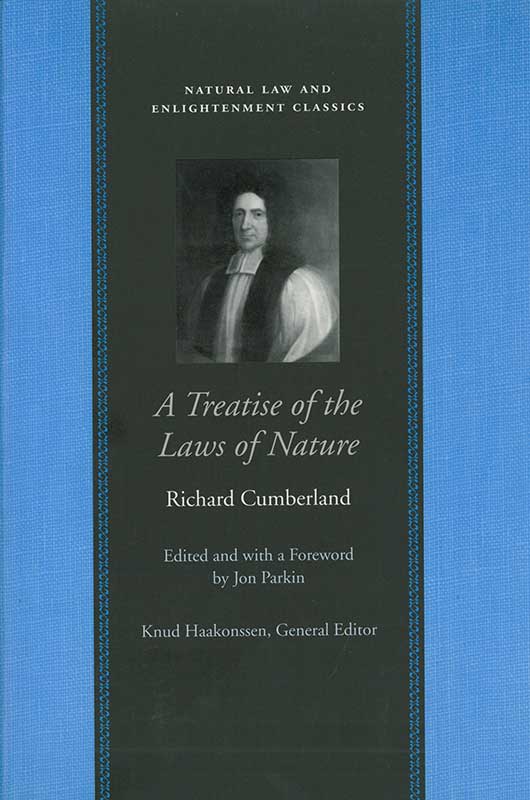
CHAPTER V: Of the Law of Nature, and its Obligation. - Richard Cumberland, A Treatise of the Laws of Nature [1672]Edition used:A Treatise of the Laws of Nature, translated, with Introduction and Appendix, by John Maxwell (1727), edited and with a Foreword by Jon Parkin (Indianapolis: Liberty Fund, 2005).
About Liberty Fund:Liberty Fund, Inc. is a private, educational foundation established to encourage the study of the ideal of a society of free and responsible individuals. Copyright information:The copyright to this edition, in both print and electronic forms, is held by Liberty Fund, Inc. Fair use statement:This material is put online to further the educational goals of Liberty Fund, Inc. Unless otherwise stated in the Copyright Information section above, this material may be used freely for educational and academic purposes. It may not be used in any way for profit.
CHAPTER VOf the Law of Nature, and its Obligation.The Law of Nature defined. Having prepar’d the Way for all that is to follow, I shall begin this Chapter with the Definition of the Law of Nature.1The Law of Nature is a Proposition, proposed to the Observation of, or impress’d upon, the Mind, with sufficient Clearness, by the Nature of Things, from the Will of the first Cause, which points out that possible Action of a rational Agent, which will chiefly promote the common Good, and by which only the intire Happiness of particular Persons can be obtain’d. The former Part of this Definition contains the Precept, the latter, the Sanction; and the Mind receives the Impression of both, from the Nature of Things. “Those Rewards and Punishments are sufficient, which are so great and so certain,2 as to make it evidently conduce to the intire Happiness of particular Persons,” (which the Nature of Things, both compels them to desire, and makes possible for them to obtain,) “if they continually promote the public Good, more than if they attempt any thing to the contrary.” And whereas Privations are best understood by means of their opposite Positives, Actions and Omissions contrary to this End, and the Mischiefs connected with them, seem by this Method to be both discovered and prohibited. For “Right” (or strait) “shews what is crooked, as well as what is strait.” That which takes the shortest Way from the given Term, or State of Things, to this End, is called Right, by a Metaphor taken from the Definition of a right Line, in use among Mathematicians. An Action, attaining the most desireable Effect in the quickest Manner, takes the shortest Way to this End. Therefore it is Right. And that very Comparison, by which such Action is discover’d, supposes all things so consider’d, that it is known, both what will less conduce to the End, and (with much greater Ease) what would obstruct the effecting it. It is a true Proposition.I will now consider the Particulars of the Definition given. A Proposition] Viz. a true one, as what follows will make evident. This Word seem’d more simple and plain than the Phrase, The Dictate of right Reason, which yet comes to the same thing, when all Ambiguity in the Expression is taken away. Nor did I think it proper, to make use of the word Oration for the Genus, as Hobbes has done,3 lest any should in a Mistake imagine, that the use and knowledge of Words, or any arbitrary Signs whatsoever, were essential to a Law. The Knowledge (or Ideas form’d in the Mind) of Human Actions, of Consequences good or evil to human Nature, but, especially, of Rewards and Punishments naturally connected with such Actions, and those Ideas reduc’d into the Form of Practical Propositions, such as I have describ’d, are all that is essential to a Law. Such Ideas may be produc’d, by Observation, in the Minds of those who are born Deaf, tho’ they form no notion of the sound or force of Words; and so the Laws of Nature will become known, even to them. Imprinted by the NatureBy Nature] It was proper, to mention the efficient Cause in this Definition, because we were not inquiring into the Definition of a Law in general, but of the Law of Nature, which Word denotes the Author or efficient Cause. of ThingsThe Nature of Things] Does not only signify this Lower World, whereof we are a Part, but its Creator and supreme Governor, GOD. For, to our forming a true Judgment of Actions necessary to the publick Good, conspire (1.) the World without us, especially, those Men with whom we have to do, who, as Objects, excite us to think of, and consider, them; (2.) ourselves, both as parts of Mankind, and as free Causes of our own Actions; (3.) God, as the common Cause, and supreme Governor of all Things, whose Authority comes often into consideration. It is certain, “That only true Propositions, whether speculative or practical, are imprinted on our Minds by the Nature of Things”; because a natural Action points out that only which exists, and is never the Cause of any Falshood, which proceeds wholly from a voluntary Rashness, joining or separating Notions, which Nature has not join’d or separated. If therefore the Terms are connected by Nature, a true affirmative Proposition may be form’d of them. The Terms are connected, when the different Ideas (for the most part inadequate or incomplete) of an Object are imprinted upon the Mind, by the same Object view’d in different Lights, or compar’d with different Things. It is hence easy, to form a Judgment of true negative Propositions. It is, therefore, with great justness, that these Laws or Propositions are ascrib’d to Nature, since Nature exposes to the Observation of the Mind, both the Terms of those Propositions, and the Connexion of those Terms. on our Minds,Farther; “Rational Agents are so fram’d, that, whilst they continue in this State, they are led, by Necessity of Nature, to perceive or apprehend the Terms of these Propositions; nay, are also inclin’d, by an inward Propension, to compare them, so as to frame affirmative Propositions of those which agree, negative, of those which disagree; nay farther, so to compare two Propositions among themselves, as to draw from these, as Premises, a third in the Form of a Conclusion.” The Nature of a rational Agent exacts, that self-evident Propositions (especially, concerning the Consequences of our own Actions, relating to our own Happiness, or that of others) be form’d, such are the primary Laws of Nature; and from them be deduced other Propositions or Conclusions, which may be call’d the secondary, or less obvious, Laws of Nature. from the Will of the first Cause,We cannot doubt of the Nature of created Beings, but that both Things external, exciting Thoughts in us, and our Mind comparing these Thoughts, are the Causes of necessary Truths.4 As to the Nature of the Creator, there will remain no doubt, but that he too is to be look’d upon as the Cause of those Truths, if we seriously consider, both what has been already said, and what we now think proper to add; which is, “That all Truth is from the first Cause of those Things, in which it is founded, and the uncorrupt Effect or Work of God, without any Tincture from the preternatural Stain of Mankind.” Therefore, if any true Proposition declares, what ought to be done, it declares so from God. Nor is it more certain, “That those natural Things are form’d by God, to produce their natural Effects, the Sun, for Instance, to enlighten the Air, and Rain to moisten the Earth”; than “That such Propositions as naturally regulate our Actions, are given to us by God for that very Purpose.” For that Regulation is the only Effect they can have, and that they do necessarily, from their own inward Nature. with sufficient Clearness.“That Proposition is propos’d, or imprinted by the Objects, with sufficient plainness, whose Terms, and their natural Connexion, are so expos’d to the Senses and Thoughts, by obvious and common Experience, that the Mind of an adult Person, not labouring under any Impediment, if it will attend or take Notice, may easily observe it.” Such, for Example, are these Propositions; “That a Man may be kill’d, by a profuse Loss of Blood, by Suffocation, by Want of Food, &c. That Life may for some time be preserv’d by Air, Nourishment, and Cloathing: That the mutual Assistance of Men contributes much to a happy Life.” But, if any one has a Mind to add, to these Reasons, another from the Effect, and will affirm, “That the Laws of Nature are so called, because they supply its Necessities, and are the principal Means of perfecting it,” I will not contradict him; because the same Person, and, much more, different Persons, may have different Reasons for imposing the same Name on Things. (Justinian’s Definition of the Law of Nature, oppos’d, by Authority,§II. But, because the Law or Right (for these Words are there used in the same Sense) of Nature is defin’d in another Sense by the Civilians,5 both in the Pandects, and Institutions, Lib. I. “That which Nature has taught all Animals”;6 and they thus distinguish it from “the Law of Nations, which all Nations use, and which natural Reason establishes among all Men”:7 I think it proper, to oppose to so great an Authority, both an equal Authority, and Reason, which is of greater Authority among Philosophers. As to the First, the same Justinian, (in Instit. Lib. 2.) treating of Property, expresses himself thus. “We acquire a property in some things by the Law of Nature, which, as we are inform’d, is call’d the Law of Nations.”8 Behold, how here the Law of Nature does with him signify the same Thing with the Law of Nations, which he defines in the same manner, as to sense, that we do the Law of Nature! And Cicero also, who, as to proper Latin, will not give Way, even to the Emperor, in the third Book of his Offices, has made use of these two expressions, as signifying the same thing, “By Nature, that is, by the Law of Nations.”9 And, as part of the Law of Nature, he reckons the Precepts of Religion, which are peculiar to Man, and not common to him with other Animals.10 Hence it appears, that these antient Authors us’d the Law of Nature and of Nations in the same sense; so that it would be superfluous to prove, that modern Philosophers us’d the same way of speaking.by Reason.) The Reason, why I affirm the Laws of Nature to be proper to Man alone, is this, because they are Propositions concerning consequences depending upon the influence of actions, or Determinations of the Judgment compounding or dividing Terms, whose chief Authority depends upon this, “That they are known to proceed from God.” And I meet with nothing to convince me, “That Brutes form Propositions,” such as these especially, “and regulate their Lives by them,” much less can they know, “That they are imprinted upon them by God.” which points out§III. I am not ignorant of what Modestinus affirms, “The Law has power to command, forbid, permit, punish,”11. to which may also be added, to reward. And yet I have mention’d none of these, in the Definition of the Law of Nature, which, nevertheless, I acknowledge to have all those powers.12 For they all seem to follow from this one, wherein their whole force consists, the pointing out of those Actions, which are most conducive to the Common Good. Philosophy, and those Notices, which are impress’d upon us by external Objects, shew, of what Kind those actions are, and what they do. These expressions, to command, &c. seem more adapted to the Style of Magistrates, when they signify their Will, than to the simple Indications afforded by Things; from which, however, the whole force of Commands, Prohibitions, Punishments, and Rewards, is easily deduc’d. (and, by doing so,For, “after the supreme Governor of the World has declar’d plainly, that he wills the Publick Good; he plainly commands, by pointing it out, what promotes that, and, by that Command, evidently forbids contrary Actions or Omissions. And he, whose Will it is, that every Man’s particular Happiness, and peace of Conscience, should depend upon his endeavours to perform these things, and upon the publick Happiness, in which it is contain’d, hath decreed a certain Reward to such Actions, as procure the Common Good, and hath added the sanction of a Punishment to contrary Actions; which is, his Want of that part of the Publick Good, which would have fallen to his share, if he had endeavour’d to promote it.”commands, forbids, rewards, punishes, permits) The Law of Nature may be said to permit those things, which it discovers, not to be necessarily requisite to the Common Good, and yet to be consistent with it. If such things were unnecessarily restrain’d by Rulers, it is plain, that Nature would be hurt, which consists in such motion, as tends to perpetual Variety. Positive Rewards and Punishments will be considered hereafter. All these points will be better understood, after I have explained the nature and causes of the Publick Good. that possible ActionThe following words insinuate the subject Matter of the Laws of Nature, which are such Actions as the Schoolmen call Human; those, for Instance, which we can govern by Counsel, and which are, therefore, not either Necessary, nor Impossible. For the Law of Nature, or “Reason, weighing the powers of Nature, cannot propose to us that which is impossible, as an End, nor prescribe the making use of such Means, as exceed the limits of our power”; because both would be vain, and inconsistent with our faculties. But Reason is plainly averse to vain attempts and inconsistencies.13 For, tho’ it may happen, thro’ an unforeseen concurrence of external causes, that affairs (in this Life) may succeed very prosperously with those, who have neglected to use the best means in their power to promote their own happiness: Yet, because such Effects are, with respect to us, purely contingent, and do but rarely happen, it is evident, that our Reason, or Judgment, does not advise, much less does the Law of Nature command, any such Actions. This, however, Natural Reason teaches evidently enough, “That it will much more probably promote our Happiness, that we should act for a foreseen End, and by the best Means in our power adapted to that End, than that, laying aside Counsel, we should commit our-selves to uncertain chance.” Nor does the Law of Nature promise greater Happiness, than what arises from a rational behaviour toward God and Man, beyond what can be hop’d for from a Life, whose conduct is committed to rashness and chance. The ground of this greater hope is founded upon this, “That our Reason will not hinder the accession of such good things, as may come to us from any other quarter, without our care, but will add there to all those, which it can effect or obtain from God and Men.” Beside, I would exclude from the title of Human Actions, those, which throw the whole affair upon Fortune, without the least probable cause of hoping for a good, rather than an evil Event. (i.e. Series of Actions)The Action, here describ’d, is to be understood universally,14 not the action of one Man only, nor those of a Day; but all the human Actions of all Men, thro’ their whole Life, ought to be directed to the Common Good of all. I chose to treat expresly of the actions of Men only, because they are well known to us by daily Experience; and, if the Law of Nature leads us at all to philosophize, concerning the actions of God or Angels, it is to be deduc’d from an analogy or resemblance, founded on Human Actions. of a (i.e. Every) Rational Agent.The words [of a Rational Agent] plac’d in the Definition, are indefinite, and are, therefore, applicable to any Man whomsoever; for Example, to the first Man, yet alone; and then the Common Good would be, whatsoever would be acceptable to God and Him. But this indefinite proposition, connecting those things which are in nature necessarily connected, amounts to, or is in sense, an Universal; i.e. after more than one Man is suppos’d, it extends to all and every one, taken jointly or severally. This I thought proper to mention, for this reason, because the most known Laws of Nature, which direct to the practice of Justice and Charity among Men, suppose them to have increas’d to some Number; and do chiefly aim at this point, to manifest to them, by what mutual actions they may make one another most happy. The Laws of Nature therefore speak, as Civil Laws usually do, to many at once. Hence the Lawyers call the Law, a common command;15 and we have an account, that Solon (if I remember right) expresly provided for it by a Law, “That no Law should be made for the case of any particular person.”16 Beside, the joint endeavours and Actions of many may effect something considerable toward the common Good; and, therefore, the truth of this Proposition, “Fidelity, Gratitude, natural Affection, or the Innocence of all or many, conduces to the Publick Good,” is more evident, than that such Actions in any single person should have the same effect. which will chiefly promote the Common Good.§IV. “The principal, and most distinguishing, Character of the Laws of Nature, is taken from the Effect of those Actions they prescribe, which is, the Publick Good.” That it should be so, the matter it-self requires. For, since the Nature of Actions, which are the Objects of Laws, is best perceiv’d by their Effects; since these Laws, as being Propositions, and, consequently, form’d of Ideas combin’d among themselves, are distinguish’d from all Laws of different kinds, by their Objects, the inward nature of the Laws themselves must be seen in the Effects, to which they direct. This, the greatest End of human Actions,The Effect (as the Idea thereof, preconceiv’d in the Mind, first moves a Rational Agent to intend the producing it, and afterwards limits his actions in order thereto) is called the End. All agree, that whoever acts deliberately, must (1) propose an End to himself, then (2) search out, chuse, and apply the Means, by which it may be obtain’d. “Therefore Laws, perfectly fitted to a Rational Nature, must both point out the best End, and the most suitable Means for obtaining it.” Wherefore, in the given Definition, for the End, I propose the Publick Good, (in a more extensive sense than Ulpian, who defines the Publick Good “That which conduces to the benefit of the Roman state, and consists in sacred Rites, Priests, and Magistrates”;17 for my notion of it includes the Good of all Men, and the Honour of God,) which is certainly the greatest End, which can possibly be propos’d by us: For the Means, I propose all those Actions, which are in our power, and, in the given circumstances, are most effectual to obtain that End. is here consider’d as their Effects,But, because the words, End and Means, are of very doubtful signification, and suppose the free, the mutable, intention of a rational Agent, which can never be certainly known; and because they, consequently, present to our Minds a matter not so proper for Demonstration; I thought it fit, without changing the matter in hand, to consider it under another notion; that is, because the connexion is more conspicuous, and perfectly inseparable, between Efficient Causes, and their Effects; and continual experience and frequent observation plainly discover, what Effects will follow Causes assign’d; therefore “I have laid down in the Definition, the Publick Good as the Effect, our Actions and Powers, from which any thing of that kind is hop’d for, as the Efficient Causes.” and Morality thereby render’d more Demonstrable.“By this means, Moral and Political Questions are converted into Terms in use among Natural Philosophers, Whether these Efficient Causes can produce this Effect, or no? And to Questions thus express’d, an Answer may be given, which is capable of Demonstration, from the formerly-observ’d efficacy of human Actions, consider’d, both by themselves, and in concurrence with other Causes, not unlike those at present suppos’d.” Altho’, while we deliberate, we may truly be called Free, and the future effects of our Actions, with respect to that Liberty, may, with great propriety, be called Contingent; yet, after we have determin’d to act, the connexion, between our Actions, and all the Effects thence depending, is necessarily and plainly natural, and, therefore, capable of Demonstration; we may observe this in Mathematical operations, which are not less free than any other human actions. Therefore, “as a long series of consequences, beyond the expectation of such as are not vers’d in such matters, concerning the mutual proportion of Lines or Angles, may be demonstrated from this, That a few Lines have been drawn according to Geometrical Rules: So, from the principles of Natural Philosophy, may be demonstrated many Effects of a Human Action, communicating a known motion to a Body in a known system of other Bodies; and, consequently, often, what will prejudice the Life of Man, the soundness, intireness, and power of beginning Motion (in the use of which consists Liberty, as it is oppos’d to external restraint) in his Members, or even the Goods which he possesseth; or what, on the contrary, will benefit any one Man, or many.” A rational inquiry into Nature hath demonstrated, (if I am not mistaken,) “That all the changes of all Bodies, even Human, which are produc’d by external Causes,” (for determinations, arising from the inward Liberty of the Will, must be excepted,)“whether they are for the better or the worse, are produc’d, according to those Theorems concerning Motion, which are investigated and demonstrated by a Geometrical Analysis.” I confess, they are but few things, tho’ of great moment, which have yet been produc’d upon this Subject: Yet a method has been shewn, of subjecting all Motions, however complicated, to a Geometrical Calculation, and of finding out all Theorems, concerning Lines, Figures, and the determinations of Motion thence arising; and, consequently, (since the whole Nature of Body is to be resolv’d into its Extension, Figure, and variously-compounded motions;) “a general Method is discovered, of reducing all the effects of Body to Demonstration.”18 I take Notice of these Things by the way, only that I might shew, “in what method we must proceed, to come at a perfect demonstraion, from the necessary connexion of the Terms, of those things which are well enough known, from common observation and continual experience, to exist in Nature, and to depend mutually on each other, as Causes and Effects,” and which others endeavour to deduce from other natural principles. Such are those Actions, by which Men usually destroy, or preserv the Lives, Liberties, and Fortunes of others. Virtue and the only Good.§V. Upon this head, the Stoicks are to be reprehended, who affirm’d, “nothing to be Good, but Virtue; nothing Evil, but Vice.”19 For, whilst they endeavour to establish the transcendent Goodness of Virtue, and the egregious Evil of Vice, they, incautiously, intirely take away the only reason, why Virtue is Good, and Vice, Evil. For Virtue is therefore Good, (and in truth it is the greatest Good,) because it determines Human Actions to such effects, as are principal parts of the Publick Natural Good; and, consequently, tends to improve in all Men the Natural perfections, both of Mind and Body, and to promote, as much as possible, the Honour of God, by imitating the Divine Beneficence. Further, seeing one part of Universal Justice (which is Virtue it-self conspicuous among Men) consists in Innocence, that is, in restraining Murder, Theft, &c. it is manifest, “That they can give no reason of the Law prohibiting such Injuries, unless they acknowledge, that such actions, as the robbing an Innocent person of his Life or Goods, (by which Life is preserv’d,) are Evil, or hurtful to one or more, antecedently to all Laws, and, consequently, without respect to Virtue, which consists in paying obedience to Law.” Good and Evil antecedent to Civil Laws.Whether this be denied by Hobbes, or no, I know not; for he openly allows, that there is a Damage in such actions, and that it is Evil to him who is thereby the sufferer, in these words. “In the Commonwealth, if any one hurts another, with whom he has enter’d into no Compact, he damages him, upon whom he has brought the Evil; he injures him only, who has the power of the Commonwealth.”20 Elsewhere he as expressly contends, That “Civil Laws are the Rules of Good and Evil, and that, therefore, what the Legislator hath commanded, is to be esteem’d Good; what he has forbid, Evil; and that it is seditious to say, that the knowledge of Good and Evil belongs to private persons.”21 I would willingly reconcile these passages, by distinguishing a word of doubtful Signification, and supposing, that Evil in the former passage signifies that which is hurtful to Nature; but in the latter, that which disagrees with the Laws. But I am afraid, this way of reconciling him to himself will not please him, because from this concession may be inferr’d, “That some things may be known, before the declaration of the Law, to be Evil, or hurtful, either to a single person, or to a multitude, and thence some Civil Constitutions may be prov’d Evil or hurtful to the People.” To avoid this inconvenience, he determines, “That no Definition, no Reasoning, in all Mathematicks, Natural Philosophy, or Politicks, should be acknowledg’d, unless approv’d by the Civil Powers.”22 Truly, what he denies of “Christ, that he came into the World to teach Logick,”23 that he contends belongs to the Prerogative of Monarchs and all supreme Powers. They, truly, are rais’d to the Throne, to teach Logick and other Natural Sciences. O happy times, not ours only, but even all times of all Nations! All Kings and Republicks have perpetually philosophiz’d; and the Decrees of them all have been acknowledged Axioms, however they may have contradicted, either themselves, or one another. But let him reconcile these his inconsistencies more happily himself; and, at the same time, I intreat him to remove this scruple, “How all effects (beneficial and hurtful, good and evil) of Natural Agents, and even of Men themselves, are necessary: And yet it depends upon the mutable Will of Princes, to determine, whether these same effects be Good or Evil ”? Which are two Fundamental doctrines of his, tho’ they are in direct contradiction to one another. What is more; the latter opinion is inconsistent with those things, which are necessarily and essentially requisite to Society, and acknowledged by Hobbes himself for Laws of Nature (cap. 3 de Cive) such as, the rejecting a right over all things and persons, keeping Faith in Compacts, and Gratitude.24 Certainly, if any Prince should enact general Laws contrary to these, in order to establish his State, he would do it with the same Success, as if he should decree the use of Poison, or of Air and Garments infected with the Plague, for preserving the health of his Subjects. For the force and efficacy of such methods do, with as great certainty, introduce the Evils of Discord, Murder, Robbery, and the like, among Men, as Poison or the Plague corrupts the Blood. Xerxes may lash the Hellespont,25 but it will not obey him; nor will things hurtful change their Natures, and become profitable, in obedience to the Decrees of Princes. Suppose a Law, commanding the Subjects of any State, to kill one another, without any regard to Sex, Age, or Actions by them done; to break all Compacts; to be universally ungrateful: Suppose it universally obey’d, and see, whether it would not immediately introduce a general Slaughter, (nothwithstanding any obligation of Conscience to the contrary, which he would seem to acknowledge, only to impose upon the unwary;) till at last only One surviv’d, whom now elated with the murder of the rest, no fear of a greater power (the only obligation acknowledg’d by Hobbes) would restrain from killing his Prince, whom we may, without absurdity, suppose less strong than his Subject. Let him likewise shew, “How all his Philosophy is Demonstrative, and necessarily true, when as yet it has been confirm’d by no Prince whomsoever; but on the contrary, many of his opinions (particularly that concerning Necessity, in opposition to Free-will) are condemn’d by almost all Princes professing Christianity.” Whatever his real Sentiments may be, it is not very material; yet it is a more favourable construction to judge, “That he was either deceiv’d by the ambiguity of the words, Good and Evil, or was willing to deceive his unwary Readers”; than to believe him come to that pitch of Madness, “as to think natural Good and Evil (that is, such Actions, especially Human, as benefit or hurt the Bodies or Minds of Men, singly or collectively) are not determin’d by their own Nature, to produce their natural effects, but advantage or prejudice us, merely at the Pleasure of Princes. The Principles of Human Actions, as naturally Good or Evil, as are their Effects.§VI. We may, therefore, suppose the following sensible Phenomena, which are confirmed by constant Experience, if not already demonstrated, are capable of being demonstrated from the Principles of Natural Philosophy, (whose business it is, to discover and demonstrate the Causes and Effects of such things;) “That Men, by a proper course of Diet, by mutual Benevolence, by permitting every one by his own labour to acquire things necessary for Life and Health, by Innocence and Beneficence, by observing Compacts, by Gratitude to our Benefactors, by a particular Affection for our Children and Kindred, both in the ascending and descending Line” (who are distinguish’d from others by that peculiar character of a Sameness of Natural Principles deriv’d from one and the same fountain;) that by such methods (I say) “Men formerly were of mutual advantage, and that, the more they pursue the like Methods, they will hereafter be of the greater advantage to one another, both with respect to the health and strength of the Body, and the Knowledge, Prudence, Joy, Tranquillity in every state, and well-grounded Hope of the Mind, even in Death it-self.” On the other Hand, “That, from actions of a contrary kind, arise Errors and grievous Anxieties of Mind; to the Body, loss of Limbs, Distempers, the inconveniencies of Hunger and Thirst, and to many Men Death it-self”; Evils, which, by using our power otherwise, might have been prevented. Wars arise from Discord, Drunkenness, breach of Faith, &c. as from their natural causes. Hence Massacres, Plundering of Goods, and Burning of Houses, arise as necessarily and naturally, as Men die in consequence of the Plague; or as the ruin and swallowing up of a City sometimes proceeds from a great Earthquake; so that both are equally natural, and equally publick Evils. In the same manner, a well-regulated Diet, mutual Concord, Fidelity and Gratitude, are as truly natural and publick Advantages, as are uncorrupted Air, or the benign influence of the Sun, which are beneficial to all. For the powers of these dispositions (tho’ they lie scatter’d among particular persons) may be jointly consider’d, and they are truly natural causes, affecting the whole body of Mankind, or a considerable part thereof: Just as the several seeds of Animals and Plants, tho’ Nature hath assign’d to each their peculiar place, wherein only they exert their powers, may, nevertheless, be consider’d jointly; and it may truly be affirm’d of them, that they are Principles and necessary Causes of Life, Increase, and innumerable other effects in Plants and Animals. For the whole collection of Effects is no less necessarily connected with the whole collection of Causes, than particular Effects are with their particular Causes. It may, therefore, be look’d upon as certain, “That Propositions of eternal truth may be form’d concerning the Effects of external Human Actions, whether virtuous or vicious”: And, on the contrary, “That from the Effects of human Action, hurtful or beneficial to particular persons, but especially to many, it may be known, whether the internal practical Principles were advantageous or prejudicial, that is, naturally Good or Evil.” The difficulty of calculating future effects, arises from mixture of concurrent causes.All the difficulty of foreseeing, “whether a good or ill Effect will follow from any Action suppos’d,” arises hence, “That it is generally not known, what Concurrence there will be of other causes with that.” For hence it may happen, that what at first seem’d to have a good tendency, may afterwards have a bad effect. As Mathematicians demonstrate the Genesis of Lines and Figures from natural Motion, abstractedly consider’d; several things are with ease demonstrated, concerning Human Actions and their Effects, under the same abstract and general consideration. Hence it is evident, “That the greatest perfection of Moral and Political Prudence, consists in a through Knowledge of the circumstances, concurring with Human Actions to produce their effects, or obstructing them; whose principal part is an intimate Knowledge of those particular persons, with whom we are to act in conjunction, or whom we are to oppose, as well with respect to their Understanding and practical Principles, as their peculiar turns of Affection; as also with respect to their Friends, Servants, Possessions, and assistance from the State, now Commonwealths are founded.” A summary of the foregoing fourth and sixth sections.§VII. This is the Sum of what I have said, “That the consideration of our Powers and Actions, as Causes, and the End desir’d, as the Effect, seems the most convenient general method of resolving moral Rules into the Phaenomena, or appearances, of Nature”; which ought to be the principal scope, both of a Writer upon the Law of Nature, or of him who would live according to it. For certain Actions, and their Object, (which in this case is one or more Men,) being suppos’d, Natural Philosophy will discover, “whether the Preservation and Perfection of the Object, which is Good; and its Corruption or Damage, which is call’d Evil, will ensue.” By this means, in order to foresee what Effect will follow, we bring under our view and deliberation, all we know of the nature of our Powers, and of other Causes co-operating with us, as also of those persons, who are to be the Objects of our Action. But the consequence of our considering and comparing, among them-selves, the various Effects, which would follow the various Actions in our power, is this, that we shall take sufficient care of these Two things,(1.) That we alwaies propose a possible End (or Effect,) and, of those which we can attain, the best: (2.) That we apply those Actions as Means, which are the most suitable and adequate Causes of the foreseen intended Effect. In these two consists the Whole of Moral and Political Prudence. The Dictates of Prudence, directing Human Actions every where to the Greatest Possible Good of all rational Agents, are the very Laws of Nature. When these procure the assent of any Man’s Under-standing, and so actually determine his Will, that they influence his Actions, and, being treasur’d up in his Memory, return upon proper occasions to determine him, they are the Habit of moral Virtue. If to these Dictates of Prudence there be any thing added, which respects the particular constitution of any State, or the Publick office and Private affairs of any Person therein, they then become Civil, Political, or Private Prudence, according as that addition requires. But, perhaps, I have already said too much upon this head in this place. A further explanation of [Common] Good, the End or the Effect of the Law of Nature§VIII. I proceed, more fully to explain the [Common] (which also I call the Publick) Good. By these words I understand “the Aggregate or sum of all those good things, which, either we can contribute towards, or are necessary to, the Happiness of all rational Beings, consider’d as collected into one Body, each in his proper order.” For I consider God, and all Men, upon account of some resemblance in Reason, or an intelligent Nature, as represented under one Notion, which is extended to every particular by the word, All. ’Tis easy for every Man, to form an Idea of rational Being in General, and to conceive the meaning of the word, All. Both which are above the capacity of Brutes, who can neither Abstract from Particulars, nor cast up Sums, much less perceive that Agreement in Nature, which is between God and Man. For which reason, amongst others, “They cannot regard the Common Good, and are, therefore, incapable of Virtue, and of Society with Men, which is founded in the consideration of the Common Good.” Altho’ I affirm’d, “That the Common Good of rational Beings is immediately regarded in the Laws of our Nature,” I would not however, deny, “That they extend our care to things of inferior Nature, to things irrational and corporeal”; They oblige us, for Example, to feed Animals, sow Vegetables, and till the very Ground, as far as these Actions promote the Honour of God, and Happiness of Men; but, while we are so imploy’d, the perfection of these things is not properly, at least not ultimately, sought after; their use, and concurrence with our Actions towards the Good of rational Beings, is the thing intended. For, in examining Nature, we observe, “That all Bodies are govern’d by God, the Supreme Rational Agent”: And, whilst we experience, that, at the command of our Judgment and Will, our Muscles and many neighbouring Bodies are moved, we see, “That our own Bodies, and, by means of them, very many others, are necessarily determin’d by Human Reason”; and thus, by the constitution of the Universe, we find the subordination of Bodies, one to another: For the Mind cannot but conceive some order, between that which determines and those things which are determined, so that what determines must be before, what is determin’d must be after, in acting. But it is our interest, to observe the order settled by Nature, and by that means, as far as lies in our power, to promote our own perfection. Whence I may justly conclude, by the way, “That he, who seeks the chief Good of rational Agents, seeks the Good and order of the whole World; and that, from the slightest observation of the natural Determinations of Motion, some notion of Order and dependence is produc’d in the Mind; which regular Dependence, as it proceeds from the judgment of a rational Mind, is properly called Government.” Wherefore, since we are perfectly conscious of such manner of proceeding within our-selves, and, by the natural assistance of our Senses, we see the like transacted without us; we may truly affirm, “That we have receiv’d the Idea of Order and Government from Nature.” So much may suffice for the word Publick or Common. Of [Good] Natural, with respect both to the Creatour and his Creatures.§IX. By the word [Good] plac’d in the Definition, I understand, “That which by the Philosophers is usually call’d Natural Good, and, which I have already defin’d, with respect to Created Beings, as that which preserves, or renders them more perfect or happy: With respect to the Divine Nature, as being completely happy in himself, what is grateful or pleasing to him”; i.e. by Analogy or resemblance, because what things we perceive to preserve or perfect us, those we call grateful to us, that is, they leave the Mind in a state of Tranquillity and Joy. Now, though it is inconsistent with the infinite perfection of God, that he should be preserv’d or render’d more perfect; yet, because Tranquillity, Joy, or Complacency, may be conceiv’d separately from Imperfection, these may safely be ascrib’d to the Divine Majesty. Those things which are Naturally Good and belong to Man, subdivided into advantages of the Mind,But, to return to Man, his Natural good things, or Advantages, are of two kinds, (1) Those, which adorn and chear the Mind, the foundation of all which seems to be laid in such things as perfect the Knowledge and Judgment, to which if the Will consents, it is likewise perfect. (2) Those, which preserve and increase the powers of the Body. For publick good things are the same with the good things of particular persons; and, from a true Idea of any Man’s Happiness, may easily be deduc’d, by Analogy, the happiness to be sought after for any Civil State, or even for all Men jointly consider’d.Body. For a Society, compos’d of particular persons, is only then happy, when each of its members, especially the principal ones, have their Minds endow’d with the natural perfections of the Understanding and Will, and their Bodies sound, and with vigor ministring to their Minds. The Reader is to observe, “That I have called these things Naturally Good, in that sense, in which these words, as being of a more extensive signification, (and, consequently, more general and first known in the order of Nature,) are distinguish’d from things Morally Good”;Moral Good. for these are only voluntary actions conformable to some Law, especially, that of Nature. Therefore Good is not to be taken in this sense, when it is inserted in the Definition of the Law of Nature, because it is absurd, to Define any thing, by what supposes the thing Defin’d, already known. There are many things Naturally Good, that is, such as contribute somewhat to the Happiness of Man, which are not Morally Good, as being either not voluntary Actions, or not commanded by any Law: such are an enlarg’d Understanding, the ornaments of the Sciences, a tenacious Memory, strength of Body, the assistance of external Possessions, &c. On the contrary, I am of opinion, “That no action of the Will is enjoin’d or recommended by the Law of Nature, and, consequently, Morally Good, which does not, in its own nature, contribute somewhat to the Happiness of Men.” The Moral Philosopher supposes, “That it is known from Natural Philosophy or Experience, what preserves or increases the powers of the Mind, and what renders Life more vigorous and lasting; and that, above the rest, some Human Actions, which are distinguish’d by the name of Virtues, contribute much to these effects, and that all these Actions are very consistent with one another.” The Mind of Man, conscious of its power to perform such Actions, observing these things, in particular instances or examples belonging to it-self or some other known person, concludes, “That such kind of Actions will make all Men happier, or, at least, consist with the happiness of all Men.” Such general Conclusions are Laws of Nature. So, from the observ’d resemblance between Human Bodies, and from the experienc’d advantage of Meats and Drinks, of Sleep and Exercises, and of the whole Materia medica, are form’d general Aphorisms, with relation to Diet and Medicine, in use among all Nations; tho’ many medicinal precepts, according to the variety of Soils and Climates, may vary, and indeed are various, as the Civil Laws of different States. When, afterwards we act in pursuance of these Conclusions, and, upon comparison, find our actions conformable to them; beside the previously known appellation of natural Goodness, there accrues to these actions this, that they are morally Good, from their conformity with the Laws of Nature already enacted. I will add nothing here, concerning the word [possible], which I inserted, because the utmost bounds of Obligation to action, never exceed the limits of the Faculty oblig’d. Altho’ the words ‘Publick Good ’ have a great sound, no man is oblig’d to promote it beyond his ability. The word [chiefly] shews, that the Affirmative Laws of Nature, or those enjoining Action, are Comparative Dictates of Reason, and prescribe the best action, we can either think or say, is in the given circumstances in our power; alwaies the Best.26 It is, however, to be observ’d, That what is equal to the Best, may justly be called the Best, and, when we can perceive no material difference, we may act either way. In such cases, the Law of Nature has left us at Liberty. Now I have here describ’d Affirmative Laws only, because Negative Laws may easily be thence deduced; and Nature, which consists wholly in things Positive, seems to imprint immediately these only. The last words, concerning [the necessity of promoting the Common Good, in order to intire private happiness,] explain’d.§X. The last words of our Definition implied, “That the Law of Nature alwaies declares those actions only, which tend to promote the Publick Good, sufficient to procure the intire and chief Happiness of particular agents”; and they express “The Sanction of these Laws, which is discover’d from the happiness annex’d to their observance, and the misery consequent upon their violation.” I affirm’d, “That the intire and chief happiness possible was aim’d at in them,” because all men naturally and necessarily desire, not any part only thereof, but the whole which seems possible to them, according to the will of the First Cause. And this desire is highly rational, and evidently more conducing to our perfection, than the desire of any less Good. To this it is owing, (which is of great importance with respect to Universal Justice,) that no proposition is to be look’d upon as a Law of Nature, which declares what sort of actions can procure bodily Pleasure, Wealth, Honours, or any other portion of Happiness, for a time, but those only, which certainly foreshew, by what methods, we may procure the greatest quantity of all good things, especially the Greatest, which may render our Minds perpetually Happy. It is, for this reason, necessary, “That we should deliberate and determine with our-selves, not with respect to any small parts of our Life, (for example, what we ought to do to-day, in order to spend this day happily,) but with respect to our whole life to come, what will conduce alwaies, and in all circumstances, to our perpetual Happiness.” Because in the whole series of actions, to be perform’d thro’ the whole course of our future life, is contain’d, as in its cause, that whole Happiness, which is or will be in our power, which we naturally desire. “Almost all the Crimes of Wicked Men arise hence, that they regard only Corporeal and Immediate Pleasures, and regulate their actions accordingly, not at all solicitous about those, which respect the Mind, or which are not to happen, till after a long series of Actions.” These words [the happiness of particular agents, &c.] insinuate, “That some part of those good things, which are, by the will of the First Cause, as it were laid up at the Creation for the Common Happiness,27 is by the same act allow’d and given to particular persons in the ordinary preservation of the World, and, therefore, that the measure of each one’s share may be adjusted by Human Reason, in that proportion, which particular persons bear to the whole collective Body of rational Agents.” As the Heart, by the same Circulation of the mass of Blood, preserves the Life of the whole Animal, and distributes a justly-proportioned nourishment to every Member. Only there is this difference, “That, by the Members of the Body, their proportion is imbib’d without Reason: But, in Men, the judgment of Reason, considering each man’s proportion, claims to itself that share of good things, which is consistent with the welfare of the Whole.” §XI. Before I come to consider, “What kinds of actions are necessary to the Publick Good, or consistent with it,” I thought it necessary to shew these Two things, The Law of Nature has the whole force of a proper Law.(1.) That, in this our Definition, are contain’d (at least, by an easy consequence, may be thence deduced) all those things, which are requisite to the general nature of a Law; (2.) Also those things, which are peculiar to the Law of Nature. The obligation of a Law arises from the Legislator’s annexing Rewards and Punishments to it.As to the First, that Passage of Modestinus, before cited out of the Digests, comes pertinently into consideration; “The force of a Law is to command, forbid, permit, punish,”28 to which also may be added, in some Laws, to confer rewards: In these words are certainly contain’d, what some express by the Metaphorical words of Obliging and creating a Duty. Obligation is defin’d by Justinian “That bond of the Law, by which we are tied with the necessity of paying any thing, according to the Laws of that State to which we belong.”29 Where it is to be observ’d, “That he respects the Laws of his own State only, that of Rome; whereas Papinian, with much greater reason, acknowledges a Natural Obligation (distinct from the Civil,) which is supported by the bond of Equity only”:30 As also, “That it breeds obscurity, that he uses Metaphorical words, which are generally of doubtful meaning.” For those words, bond and tied, are not more easily understood, than Obligation, which is to be defin’d. But, if we consider the matter attentively, this is plainly insinuated, “That Punishments, and also Immunities and Privileges, are annex’d to the Laws, by the authority enacting them; and that Men, partly from the prospect of Good arising from obedience, partly from the fear of Evil from disobedience, are determined, or at least in some measure moved, to act as the Laws prescribe.” For no other necessity determines the mind of Men to act, than that of shunning apparent Evil, and of obtaining apparent Good. All (that I know of) acknowledge this Necessity, which is consistent with the freest power of inquiring into the goodness of things, to be essential to Human Nature. Therefore the whole force of Obligation is this, That the Legislator has annex’d to the observance of his Laws, Good; to the transgression, Evil; and those Natural, in prospect whereof men are moved to perform actions, rather agreeing than disagreeing with the Laws. The Greatest Good, and Evil, connected with our Actions observing, or violating the Law of Nature.The good Things, connected with the observance of the Laws of Nature, are the very same, which compose mens chief happiness, and, therefore, they are evidently the Greatest: Those Evils also, which are the consequence of a state in perpetual opposition to those Laws, are those, which produce the greatest Misery. The connexion of these with Human Actions, is Natural and Necessary, that is, does not wholly depend upon the pleasure of sovereign Powers; (tho’ in every Civil State some part of these Rewards and Punishments are dispensed according to the will of the Governors;) but, if there were no Civil Government, they would partly follow from the nature of the actions, and partly be necessarily added by private persons: And, now that Civil Government is every where set up, the well-known necessity of preserving that Nature, which is common to all Political societies, every where determines Rulers to exact Punishments and confer Rewards, tho’ with some diversity in different times and places. This Connexion is either Immediate or Mediate.§XII. But, because this is the chief debate in this controversy, I must shew, more accurately, “The Connexion between all the actions of every particular person, directed (as far as may be) thro’ the whole course of Life, to promote the Publick Good, and the greatest possible happiness and perfection of Each.” And it is twofold, (1.) Immediate, (2.) Mediate, upon account of Good procur’d, by such actions, from Men, nay, from God himself. 1. Immediate Happiness consisting in the due exercise of all our Faculties about the Common Good.I intend to treat first of the former, because it is a reward of Virtue, inseparable from the very action, and the most easily demonstrable, as being present, not liable to uncertain chances of Futurity, nor intangled in that multiplicity of Causes, on which Future Rewards depend. The immediate connexion, between every man’s greatest happiness of Mind, that is in his power; and the actions, which he performs to promote most effectually the common Good of God and Men, consists in this; “That these are the very actions, in the exercise and inward consciousness whereof, every man’s Happiness (as far as it is in his own power) consists.” The same actions consider’d, “As distinguish’d, from all others of a different kind, by their Objects and most extensive external Effect,” are call’d Actions promoting the Publick Good: But, consider’d, “As the exercise of the Agent’s greatest powers, or as his greatest perfections, producing Tranquillity and the greatest Joy to him from a consciousness of them,” are called the greatest Happiness he can procure to himself. After the same manner, as we perceive a connexion, between the Health and unimpair’d Powers of the Body, and its Actions; both Natural (relating to nourishment and generation,) and Animal. This evinced from some Observations concerning (1.) the Perfection of the Mind in General,I suppose what follows in this Paragraph, known from the study of Nature, or learn’d by Experience, (1.) in General, “That it conduces to the natural perfection of the Mind of Man, that his Faculties, of Understanding and Will, be conversant about Objects of all kinds, especially, about God and Men.” For they have a nature resembling, or analogous to, the Mind of every Man, and, so far, capable of being known from our own Actions, of which we cannot but be conscious; and, beside, most of their actions very nearly affect our-selves; and they (as acting according to right Reason) may be mov’d by our Actions, to concur with us in promoting our Happiness. (2) the perfection of the Understanding in particular, and(2.) In Particular, that there are requir’d to the perfection of the Understanding (1.) “That it abstract Universal Ideas from particulars, and compare them with others, and observe, that their necessary Attributes belong to other individuals we meet with”; for Example, that, from a Knowledge of it-self, abstracting what is peculiar, it may learn the Essential Properties of the Rational, or Animal, &c. Nature; and, among other things, observe, in all, some endeavours to their own preservation and perfection. (2.) “That it search into the productive and preserving Causes of things, in some measure, dependent upon our power.”(3.) “That it form like Judgments in like cases, and alwaies agree with itself, after once it has form’d a right Judgment.” (4) “That it deduce, not speculative Propositions only, but practical ones also, from known Principles.” (5.) That it follow the order of Nature, as occasion requires, some times in the Analytick, sometimes in the Synthetick method. To this head31 is to be reduc’d that known Axiom, That the perfection of a rational Agent requires, that he should resolve upon the End before theMeans: Or, that he should consider, as throughly as he can, the Effect propos’d, before he makes use of Means to produce it. And that, therefore, he should first propose to himself the End of his whole future Life, before he can reasonably enter upon Actions; the influence whereof, as of Means or Causes, may affect his whole Life, and render it more or less happy. We shall easily perceive the use of this observation, in what follows, where we shall see, “That all and every one of our actions may increase the whole of our Happiness, nay, that they must necessarily, either improve or diminish it; and that Reason enjoins a Uniform direction of all our future actions to this End.” Nay, the Synthetick method of considering the intire trayn of our voluntary Actions, comes to the same thing. For, if voluntary Action be consider’d in General, without respect to this or that particular case, “Its Object and Effect is Good, even the most diffusively extensive, whether acceptable to the Doer, or to any others whomsoever.” The other Property of Voluntary Action in General, is, “The Avoiding all manner of Evil, whether it be Evil to one, or to many, whether it thwart our own Good, or that of others.” Our Acts of the Will, whether Chusing, or Refusing, according to the degree of Good or Evil, and other circumstances, are call’d by the names of several Passions, on the one hand, of Love, Desire, Hope, Joy; on the other, of Hatred, Fear, Aversion, Grief. At length, we proceed “To the consideration, of particular actions, both those, which may be perform’d at present, and those, which will probably be exerted hereafter; and, of that Order among those actions, by the assistance whereof arises (as it were the Sum of a Geometrical Progression) the greatest Sum of good things, which can be done, or enjoy’d, thro’ the whole course of Life.” This is call’d every Man’s Happiness, or chief Good. Of the Will.I judge it requisite to the natural perfection of the Human Will, “That it follow the most perfect Reason, both in its calmer resolutions, which are simply call’d Desires and Aversions; and in those more vehement ones, which usually go under the name of Passions.” Hence we may perceive, “That Actions, contrary to these, are Imperfections and Diseases of the Mind, as Lameness, or Paralytick and Convulsive Motions are Symptoms of Diseases of the Body.” Such are the Assents given to contradictory Propositions, because it is certain, that one member of a Contradiction must be false: Unlike Judgments in like Cases, &c. The same prov’d from hence, that, “Happiness consisting in the vigorous employment of our Faculties on their noblest Objects”; God and Man, whose Common Good we pursue, are such.§XIII. I have no inclination, very curiously to inquire, “Whether the Happiness of Man be an Aggregate of the most vigorous Actions, which can proceed from our Faculties; or rather a most grateful Sense of them, join’d with Tranquillity and Joy, which by some is call’d Pleasure.” These are inseparably connected, and both necessary to Happiness. This I will affirm, that we have nothing more in our power, towards making ourselves happy, than Actions: And that Actions are incapable of any other Augmentation, than what is to be perceiv’d in their own inward Vigour, and the natural excellency of the Object or Effect. Therefore, seeing the Common Good of God and Man is the greatest and most excellent Object we can imploy ourselves about; (for the Happiness of every one contains his Perfection, and the Common Good unites the Happiness of all;) our most vigorous Actions respecting that Object, and the Complacency arising from the consciousness of them, will, beyond any thing in our power, render us the most Happy. Most of the wiser Philosophers placed, both the Happiness and Virtue of the Human Mind, in Action, or in the right use of both its Faculties, which Plutarch has compriz’d in a few Words, “Happiness consists in right reasonings ending in a steady disposition of Mind.”32 Yet all do not sufficiently explain, “about what object and effect all these Actions conducing to Happiness, are immediately and adequately to be imploy’d.” For, to assign Happiness, as that Object or that End, is not satisfactory. For, since Happiness itself is a certain Aggregate, whose parts we are continually enjoying, and itself is confess’d to consist in Action; to say, We act for Happiness, is to say no more than that, We act, that we may act. When we say that, the Object and Effect of those our Actions which render us happy, are the Honour and Glory of God, we say, indeed, something; but, instead of the whole, we express part only, of the Object about which They are conversant, who live well and happily. It may indeed be affirm’d, “That the Knowledge of our-selves and others, and also Charity and Justice towards Men, may be deduced from the Study of God’s Glory.” But the Knowledge and Love of our-selves and other Men include a natural Perfection, (in possession whereof some part of Human Happiness consists,) essential and proper to themselves, which we can come to the Knowledge of, without deducing it from God’s Honour. Nay, we seem first to know and love Man, before the Mind raises it-self to the knowledge and love of God, whose Being, and amiable Goodness are discovered from his Works, and chiefly from Man. Be it, therefore, concluded, “That God and Men are the immediate and intire Object, what is grateful and good to Them is the Effect, of those Actions, which are principally conducive to our Happiness.” Certainly, there cannot be a greater Object of Beatifick Actions, than what comprizes all Things and their mutual Relation to one another, nor can that Object be consider’d under a notion more General, Perfect and Pleasant, than that by which it is represented in these Words, the COMMON GOOD. For, beside that Good is as extensive as Being, and so takes in all Individuals, especially Rational; there is this further consideration, that it does not only respect the internal and essential Perfections of things, but all those Ornaments, which can afterwards accrue to them, whether consider’d singly in themselves, or in whatever Relation: And beside; Beings are consider’d only as they are capable of Doing or Receiving Good, when voluntary Actions, relating to them, are directed by Laws: Hence it is, that the infinite Extent of such an Object, calls forth, exercises and suffices, the whole force of the most capacious Faculties, and delights the same with perpetual Pleasure, (for nothing can be pleasanter than Happiness.) Surely he is stupid, whom the Sight, even of Trees and Herbs flourishing in Spring and Summer, does not much more delight, than when Winter has carried off their Bloom and Verdure. But he has intirely divested himself of Human Nature, who, fore seeing in his mind the greatest Happiness which would arise from the observance of the best Laws, is not greatly delighted with the prospect and hope thereof. It is looked upon as a Fault in the Eye, if a Person in the Jaundice sees every thing ting’d with his own Colour only, or if nothing but a Man’s own Image were always presented to his Sight; much more is it an Imperfection and unhappiness of the Mind, to imploy its thoughts upon the Preservation of One only Body united to it-self, and to neglect all others. The Pleasures of Beneficence further shewn.§XIV. However it is certain, “That Nature has furnish’d almost all Men of sound Mind and Body with such Powers, that, without any detriment to themselves, they may do many things of great advantage to others, which would be of little or no use to themselves”; such as, “To counsel others in the preservation of their Life or Health, to shew the way to him that knows it not, &c.”33 If such Powers are not exercised upon proper occasions, they are vain, and a perpetual reproach to their owner; like an uncultivated field, and seed spoil’d thro’ neglect, which, sown, would have commended and rewarded the Husbandman’s care and pains. For to act (which we certainly do, when we serve others) contributes more to our Health and Pleasure, than to be wholly idle; for, by Exercise, we recollect what we can do, which is a Pleasure to the Able; we preserve, and often augment, our Faculties; and strengthen those Habits, which render us expert in Acting: Without Acting, both the Habits would be lost, and the Faculties themselves grow languid. It is evident, “That no Action relating to others can be consistent with those necessary and right Actions conducing to our own Good, unless the Practical Dictates of Reason, by which we are determin’d to that Action, be plainly conformable to those, by which we are directed in pursuit of our own Happiness, that is, unless they enjoin us to desire such things to them as to our-selves.” For we must of necessity desire like things, to things which are necessarily judg’d alike, i.e. of equal importance to the Whole; unless the Understanding judges Falsly or Inconsistently, or the Will resist its Judgment; either of which destroys that Internal Peace, that is necessary to Happiness. Hence we desire to others, equally Innocent or Useful, equally Free or Bound, &c. like Advantages as to our-selves. And such Judgments are so essential to the Understanding, that whoever acts accordingly, acts agreeably to his Intellectual Nature. And what is agreeable to Nature, gives it Pleasure. This hinders not, but that from Generation,34 in Families, and from Compacts, in Civil States, may arise an Inequality, or Superiority of some over others. Further; because it is very agreeable to the Mind of Man, to succeed as much as possible, in what he labours to obtain, and vain Endeavours are extremely disagreeable; therefore, He will be much more happy, in bestowing his pains in benefiting, than in endeavouring to hurt, Many. For most Men will very willingly accept of, and second, our Benevolent Endeavours, who, if they should perceive us endeavouring to hurt them, would vigorously oppose us; so that attempts of that kind would generally be in vain. Those Enjoyments, which are necessary to the preservation of Life, are therefore more distinctly known, and desir’d, by all, because necessary Causes are naturally connected with their Effects, and can only be deduced from them: And their deduction and application to their Effects, is very agreeable to the Mind of Man, which is always in pursuit of the greatest Certainty. Further; greater Knowledge, and Sagacity, and Industry, are requir’d to preserve and perfect Human Nature, for Example, than to destroy and corrupt it; which may be easily effected by mere Neglect or Ignorance, and is often effected by the Strength of very weak Men, or perhaps of some other most despicable Animal. But the prosecution of the Publick Good (which contains every Good of every Man, and consequently is the greatest) requires the greatest Wisdom; and the least Folly may in some measure lessen, and disturb it. But I suppose Wisdom to be much more natural, than Folly, to any Rational Nature. Our Volitions, therefore, and external Endeavours to promote the Publick Good, must needs be naturally more perfect, grateful and agreeable to that same Rational Nature; unless, perhaps, some Error of the Judgment, or Habit arising from Error, and consequently Evil, have been introduc’d into the Mind; which may make what is hurtful to Nature, seem acceptable to it, as too much Drink appears to one in a Dropsy, or a Fever. For it is certain, “That the inward and natural perfection of the Will, or of the Man, consists in Willing what the Wisest Understanding (most perfectly comprehending the most and the best of things) shall have most truly determin’d, to be most highly beneficial to the most and best of Beings.” Consent and Harmony between the actions of the same Man, (one of which, (the Act of the Understanding,) is acknowledg’d to be right and perfective of Nature;) are better proofs of a right disposition of Mind, than their Disagreement, by which a Person is at variance with, and opposes, himself: Therefore, where the Understanding is suppos’d to act most perfectly, (which is, when it considers, and puts together, the most and best Objects, in such a manner, that thence, in Idea, arises the best state and order of the Universe, wherein all, Rational Beings especially, enjoy the happiest and most convenient Peace and Agreement;) there a Will perfectly right must of necessity approve such a Judgment. And, consequently, since it is the Business of both Faculties, to determine our Actions, whether Immanent or Transient,35 when they are dispos’d as above, (i.e. are Right) they must determine us to do as much Good, and to as many, as we can. That the Care of the Common Good, as of the greatest End, implies actions of this sort (i.e. Beneficent and Consistent,) is too evident to need proof: As also, that the Internal Perfections of our Mind require us to employ all our Faculties, in their natural and proper order, in an active and vigorous pursuit of Good; of the Good of the Noblest Beings, with whom we are concerned; of the Greatest Good of all those Beings. These Reasons confirm’d by Experience.§XV. This Reason, by which we have prov’d the Happiness of the Will to consist in the most extensive Benevolence, is greatly confirm’d by Experience, which gives us vast Pleasure in the acts of Love, Hope and Joy, whether employ’d about our own Good, or that of others. These Affections are Essential Ingredients of Happiness; they bring Pleasure along with them, and we find them continually mov’d by the Happiness of others. He, therefore, robs Man of great part of his Happiness, who deprives him of that most pleasant affection of Love and Benevolence towards others, and of that Joy, which arises from their Happiness. Our own Advantages can afford but small matter of Joy; the Subject will be exceedingly inlarged, if we are delighted with the Happiness of every other person. For This to That will bear the same Proportion, which the Infinite Happiness of God and of all Mankind has to the scanty imaginary Happiness, with which the Goods of Fortune can supply one Man, and him too, Envious and Malevolent. For, certainly, no virtue can adorn his Mind, who has divested himself of all Benevolent Affections toward Mankind. Nay, Hatred and Envy, which fill the Mind of him who regards his own Good only, are necessarily accompanied with Trouble and Sadness, Fear and a Solitary State, which are evidently inconsistent with a Happy Life. If we examine our Faculties separately, we shall perceive, after we have arriv’d at Man’s Estate, that they grow, as it were, Prolific, and too great, to be confin’d and exercised about ourselves only. The Understanding has a strong Natural Propension, to make itself Master of those things, which may be useful to others as well as to ourselves. Hence all the Sciences, which have been found out by great application of Mind, and made Publick for the Common Benefit, have taken their rise. The pleasanter Affections of the Will (which are conversant about Good) such as Love, Desire and Joy, in the rational use whereof consists our chief Happiness, are seldom found in a Timon, a Man-hater.36 ’Tis certain, they can neither be frequent, nor afford much Pleasure, unless we are diligent in our endeavors after the Good of many, Common Reason enjoins us to exert all our Faculties in pursuit of the Publick Good, as the most effectual method of obtaining our own Happiness. When we have added to the Common Stock by our greatest Industry, we may take out our own share with Innocence, and enjoy it with Pleasure. Private Good cannot be the greatest End prescrib’d by Reason.§XVI. Because much of what I have to say concerning Morality, depends upon what I am now laying down, I will add more to the same purpose. Since it is certain, from the Nature of the Will and of voluntary Action, that the effecting the Greatest Good is the Greatest End prescrib’d by Reason; That Good must either be the greatest Common Good (wherein I include whatever is consistent with it,) or the greatest Private Good, which every Man can desire or propose to himself as Possible, and to which he directs all his Actions. For the Good of any particular Family or Commonwealth, is either not yet suppos’d to be consider’d; or, if it be consider’d, it is press’d with almost the same Consequences with the prosecution of the Private Good of any particular person. Reason will not suffer, that the greatest Private Good should be propos’d as the ultimate End. For, since that Action is certainly Good, which will lead directly, or the shortest way, to that End, which is truly ultimate; supposing different ultimate Ends, whose Causes are opposite, Actions truly Good will be in mutual opposition to one another, which is impossible. For Example; if right Reason instructs Titius, that his greatest Happiness, which he is to pursue as his ultimate End, consists in the enjoyment of a plenary Property in the Possessions, and an absolute Dominion over the Persons, of Seius and Sempronius, and of all others: Right Reason cannot dictate to Seius and Sempronius, that their Happiness, the object of their pursuits, consists in the enjoyment of plenary Property in the Possessions, and Dominion over the Person, of Titius, and of all others. For these contain a manifest Contradiction; and, there-fore, one only of these Dictates can be suppos’d true. But, since there is no, Cause, why the Happiness of one of these should be his ultimate End, rather than the Happiness of another should likewise be his ultimate End; we may conclude, that Reason dictates to neither, that he should propose to himself his own Happiness only, as his greatest End, but to every one, rather his own in conjunction with the Happiness of others; and this is that Common Good, which we contend is to be sought after. For that only is that one End, which is consistent with, and most promotes, the greatest possible Happiness of every particular person. In that End, alone, can agree, both natural Instinct, regarding its own, and Reason, respecting the Common Good. It is, certainly, essential to the perfection of Practical Reason, or of Prudence, (in what subject soever it be seated,) “That to all, who are to be guided by right Reason, one only End be propos’d, as a Common Standard of Good and Evil to all”; or, “That all Rational Agents should intend one and the same Effect”; whose essential parts and causes, whether they contribute to its Existence, Preservation, or Perfection, are called Good; and those which hinder its Existence, &c. Evil. Otherwise, the Terms, Good and Evil, will be uncertain, and altogether Equivocal, signifying differently, when they are made use of by different persons; and whatever is called Good by one, because it answers his particular purposes, That all others will call Evil, because it is not subservient to their desires; which is inconsistent with the design of Speech, which is the communication of Knowledge. But if these words be applied to signify those things, which are of common benefit to Mankind, they have a determin’d meaning of great advantage to all. I add further; if any one would regard his own Good only, and endeavour to force all Rational Agents to carry on that only, as the chief end they ought to pursue, he would be able to effect nothing, but, perhaps, draw down his own destruction upon himself. For it is evidently impossible, “That all, both Things and Persons, should be order’d according to the Wills of all particular persons willing things contrary.” The effect of every volition upon things external, is some determination of Local Motion; as is evident in the taking of Nourishment, Cloathing, Attendants, &c. But contrary determinations of the Motions of Natural Bodies mutually destroy one another. For, if any Body were at the same time mov’d toward opposite points, it must of necessity be in different places at the same time. But, if it is impossible for every particular Person, to subject all Persons and Things to himself, that Reason, which proposes this end to every one, which can happen to one only, would, oftener than a Million of times, propose an impossibility, and, once only, what was possible; and, therefore, any one may easily calculate, whether that Reason were Right or Erroneous. Others have both their Natural Powers, and Innocent Appetites, which, whether we will or no, they will obey; they have Reason also, which, directing them to pursue greater things than the pleasure of any one Man, they will by all means follow; and Strength, to defend themselves with ease from the overbearing of one or a few; so that he must needs be a Mad-man, not a Reasonable Creature, who could not foresee these consequences, but would attempt, by force of arms, to assert to himself that prodigious Right, which Mr. Hobbes maintains every Man has over every Thing and Person. He himself defines “Right” to be “a Faculty of acting according to right Reason. ”37 Now I should call that Practical Reason only, Right, which directs us to endeavour after things possible only, and not ingage us in the fruitless, if not destructive, attempt of gaining an Universal Dominion over all Things and Persons. See his Chap. 1. §. 10, 12.38On the contrary, when any one serves the Publick, he never loses his labour; his Power, though it perhaps, immediately, reach but one only, is often, in its consequences, useful to many; and, sometimes, when we expected no other fruit of our Beneficence, than that Joy which arises in our minds from the prosperity of others, brings ourselves home a plentiful Harvest. Benevolence to all Rational Beings is necessarily connected with our own most perfect Estate.Further; to study, and endeavour after the Common Good of all Rational Beings, superadds to the attempts of an Innocent Self-love, many noble Actions in favour of Objects like our-selves, and thereby begets and compleats a Habit of Love towards Mankind, of which Philanthropy the Love of our-selves is but a finall Portion. I suppose every one seeks his own Good, and that to act in pursuit thereof, adds to the perfection of his Nature. Therefore, to act in like manner with respect to others, (among whom is God by far more excellent than himself,) will add a perfection of the same nature with that, which consists in acting in pursuit of one’s own Good; namely, a Joy arising from the Harmony and Agreement of our Actions. For it is more pleasing to the Mind of Man, to observe agreement in it-self and its own actions, than in Musical Notes and Geometrical Figures. As ’tis a Perfection of the Human Mind, to form like Judgments, so is it, to entertain like Affections, concerning like Things. To have contrary Judgments of like Things, implies a Contradiction, and is a kind of Madness, and, in Speculation, is shunn’d as a Disease of the Mind. In Practice, it argues as great an imperfection, and is a direct contradiction, in cases perfectly alike to have different Judgments, and different Volitions, according as my-self or another is concern’d. Nay, since every one’s Nature, as always intimately present, is fully known to himself; since, from thence, the Nature of other Men is not less known, as to those essential and general things, in which all agree, and in which, both our own Right, and that of others to the means necessary to the preservation of Life, is founded; it follows, “That he, who, with respect to a like Right, determines otherwise in another man’s case than in his own, contradicts himself in a most known matter, which lies perpetually before him.” And such a Contradiction, above all others, greatly hurts the Soundness, Peace, and Contentment, of the Mind in its Actions; as Uniformity in these Matters produces the greatest Tranquillity. The Common Good, the only End, in which Mens equal Claims to Happiness can unite.§XVII. To this Head it belongs, “That whoever has judg’d any Actions necessary to his own Happiness, cannot, with Reason, but consent, that any other should judge, in like manner, the same Actions necessary to his Happiness, and, in pursuance of that Judgment, put them in execution.” Therefore, if any one takes an exact survey of what is contain’d in those practical Propositions, which determine every Man to endeavour his own preservation, he will perceive something that dictates Self-preservation to others as well as himself, and that will hinder him from opposing any others in the same pursuit. For, in this Proposition, “It is lawful for Human Nature (in Hobbes) to take those things which will preserve, and perfect its Faculties,” is included, as Antecedent in Nature, this indefinite Proposition, (which, by the necessary relation of Identity in the Terms, becomes Universal, and, therefore, holds equally true in all cases;) “It is lawful for Human Nature (in any person) to take, or to do, those things, which will preserve and perfect its Faculties.” Let Hobbes tell me, what the addition of a proper name does, toward making the former Proposition a more evident Dictate of Reason, that is, a Law of Nature, than the latter, which affirms the same with respect to every one? But, if he assert, “That every one thence acquires a Right to act at pleasure,” (as he contends Chap. 1. §. 10.) because I have already shewn the Absurdities thence arising,39 I think it sufficient to make this reply, “That the application of such a general Law to the Nature of any particular person (Hobbes for instance) can neither immediately, nor by good consequence, contradict a like application of it to any other person: Nor can any one’s Right or Liberty, allow’d by any Law, extend so far, as to make it lawful to oppose those things, which the same Law commands to be done by others.” Nay, without doubt, any person’s delighting in a good Law, and inclination to Uniformity in Action, and Reverence to the Law-giver, will influence him to assist others in observing the same Law, as far as he can without any prejudice to himself; the effect of which will be, “That every one will promote the Common Good, who, with due deliberation, considers the Principles enjoining Self-preservation.” The following Reasoning, in the form of a Syllogism, will finish this Argument, and prepare the way to what follows relating to the Mediate, or more remote, Effects of Benevolent Actions. “Those Actions of ours, which make us perfectly conscious, That we have, to our power, contributed to the Happiness, both of our-selves and others, do affect us with the most pleasing Joy, and, therefore, render us happy. Actions promoting the Publick Good effect this, Therefore, &c.” The Major is taken from the Definition of our Happiness (as far as it is in our own power;) and, therefore, needs no Proof. The Minor is very easily prov’d, by considering, that Human Nature is such, that it cannot but be perfectly conscious of its own deliberate Actions; and we alwaies suppose every Wise person, studious of the Common Good, to act in such a deliberate manner. But he cannot neglect his own Happiness, who wisely endeavours to profit that Whole, of which he himself is a Part. His care of the End will cause him to preserve and increase all his own Powers and Perfections, because they are the only Means, by which he can attain that End. Nor can any thing more effectually procure him the favour and concurrence of God, of Men, and of all the most operative Causes, in his endeavours to promote his own Happiness jointly with that of others. For what can more effectually procure him the assistance, both of God and Men, than such sincere Affections and Endeavours of doing things acceptable to all? Certainly, since there is nothing greater in Human Faculties, nothing greater can be expected from Man, by God or Men. Lastly, among the Rewards, immediately connected by Nature with our Endeavours to promote the Publick Good, is to be reckon’d that manifold Pleasure, which arises from the exercise of all those Powers and Inclinations, which I have shewn at large to be implanted in Human Nature, and to be chiefly fitted for this very purpose, in the Chapter concerning Human Nature, whither I refer the Reader.40 2. The Mediate connexion of Happiness with acts of Universal Benevolence, is upon account of Advantages procured by such Actions from God and Men.§XVIII. Let us proceed to consider the good Effects, we may, with certainty, expect from God, and, with greater probability, hope to obtain from Men, by a continual course of Universal Benevolence, than by arrogating to our-selves all things by Fraud or Force. We shall be able, more distinctly, to foresee the consequence, if the whole state of Life be, in both cases, compar’d, than if a few Actions only; and to those who deliberate upon future Actions, of which they must of necessity chuse one, ’tis sufficient to shew, when Demonstration cannot be had on either side of the Question, that on this lies the more probable expectation of the greater Good. Upon this account it was, that Seneca long ago complain’d, and not without reason, “That Men, tho’ they deliberated concerning parts of their Life, did not deliberate concerning” (the uniform conduct of) “the whole.”41The Good or Bad Actions of Men will probably gain the Favour or Hatred of other Men; If they did this, they could not but see most evidently, “That the Man, who, disregarding the Rights of God and all other Men, alwaies arrogated all things to himself, and made himself, alone, the only End of all his Actions, must be hateful, both to God and all Men, and must needs pull down Destruction upon himself.” On the contrary, “That He, who, by Love and Obedience to God, by Innocence and Benevolence towards all Men, sought his own Happiness, in consistence with that of others, and in dependence upon their Concurrence, acts more advisedly, and may very justly hope for better success.” Altho’ the judgment we make of the future Actions of other Men, whose Favour we endeavour to procure, be probable only, yet, because it has the greatest Evidence we can obtain about such Future Contingencies; and, because the necessity of affairs requires, that the Mind, taking a Prospect of the future Actions of Men, should not remain in a state of perfect Indifference, but must incline to believe, that rather such Actions shall come to pass than others; hence it is, that it is more reasonable, to do that, which will more probably turn to our increase of Happiness; than either, by doing nothing, neglect all opportunities of procuring to our-selves the assistance of Men, or, by attempting Men by Force or Fraud, commit our Hopes to the uncertain Chance of War. For, among Future Contingencies, some are much more probable than others; and the Hope of Those is of much greater Value than that of These. And Reason, supported by Experience, knows how to ascertain the Difference between the values of this and that Hope, and reduce it to an exact Mathematical Calculation, (which Huygens has made evident in his reasonings upon that subject in his Treatise of the chances of the Dice.42 ) Therefore the same right Reason will command us, where greater Certainty cannot be obtained, to chuse that way, which, upon account of the Assistance of other Men, most probably leads to Happiness. Hence we may conclude, “If we cannot procure the external Necessaries and Conveniences of Life, by deserving as well as we can at the hands of all; that, then, those Advantages are to be reckon’d among those things, which are not in our Power”; and this is the Foundation of that Rule of the Law of Nature, “What we cannot do lawfully, is to be reckon’d amongst Impossibilities.”43 This, in the Matter before us, is therefore with more safety injoin’d, because it is most certain, that, “by acting for the Good of the Whole, the main point is insured.” For, by this course, we shall do, both all that is in our own Power, and what is of the greatest Importance toward making our Life happy, as I have already shewn: And the Favour of God (the supreme Disposer of all things) will most certainlymost certainly the Favour or Displeasure of God.be procured, as I shall presently make appear, from Principles acknowledg’d, both by Hobbes and Epicurus. For, since Men can pay nothing more than Love, and the consequences thereof, toward all Rational Beings, (the Head whereof is God,) it is most evident by the Light of Nature, that he owes nothing more, because we cannot be oblig’d to Impossibilities; and, therefore, that nothing more than Love is requir’d of him. Now no One who acknowledges, from the Light of Nature, “That God is the Governour of the World,” will ever deny, “That those, who have perform’d their Duty toward God and Men, shall find themselves highly favoured by Him.” Reason, therefore, may dictate, “That Innocence and Benevolence are the most effectual Means of promoting our own Happiness, as well as that of other Men”; tho’ we cannot demonstrate, “That They will act with Benevolence and Gratitude towards us, and be faithful in the Observance of their Compacts.” This prov’d from two Topicks.§XIX. I will briefly lay down what I have to say upon this Head. Every Man’s Obligation, to act in pursuance of the Common Good of all, (which is the Summary of the Laws of Nature,) becomes known by those methods, by which we know, “That God, the First Cause of all Things, wills that such Actions should be performed by Men”; or, “That, in his ordinary Government of this World, he has so order’d or adjusted the Powers of all things, that such Actions should be rewarded, and the contrary punished.” It is of no consequence, whether this Distribution of Rewards and Punishments be made immediately, or put off for a time; provided, that interval of Time be compensated by the greatness of the Rewards and Punishments; and the Reasons for believing that Compensation, manifestly, outweigh all grounds of suspecting the contrary. Waving, in the present Argument, the consideration of Revelation made by the Prophets in the Scriptures, the Will of God, in these matters, is naturally known, (1.) From those his known Attributes, which, in the order of distinct Knowledge in the Synthetick way,44 go before and incline his Will, to put these things in execution, and may, therefore, be consider’d as Causes of his Willing and Acting thus. (2.) From the Effects, arising from his Will before determined so to act. Of this latter Method of knowing the Divine Will, I have said somewhat already, and more remains yet to be spoken. On the former I shall insist more sparingly, because our Adversaries will hardly grant any thing relating thereunto, and all the Attributes of God are to be deduced by us in the Analytical Method, from his Effects.45 I have, however, thought fit to suggest the little that follows. 1. From the Knowledge of those things, which, as it were, antecedently incline Him to act thus, The Perfection of His Understanding and Will.We must needs conceive, that the Framer of the World is endow’d with Reason, Wisdom, Prudence, and Constancy. For “these are Perfections, which, in some degree, we are sensible of in ourselves (his Workman-ship;) nor is it possible, that any Perfection should be found in the Effect, which is not contained in its Cause. But these Perfections are prior to such a Will as we are now inquiring about, and, as it were, lead to it. Therefore we know such a Will to be in God.” The Minor is prov’d by this, That the Practical Right Reason of Man, and the consequent Volition, must, of necessity, agree with the Jud |

Titles (by Subject)