EconlibThe LibraryOther Sites |
Front Page Titles (by Subject) CHAPTER III: Of Natural Good . - A Treatise of the Laws of Nature
Return to Title Page for A Treatise of the Laws of NatureThe Online Library of LibertyA project of Liberty Fund, Inc.Search this Title:Also in the Library:
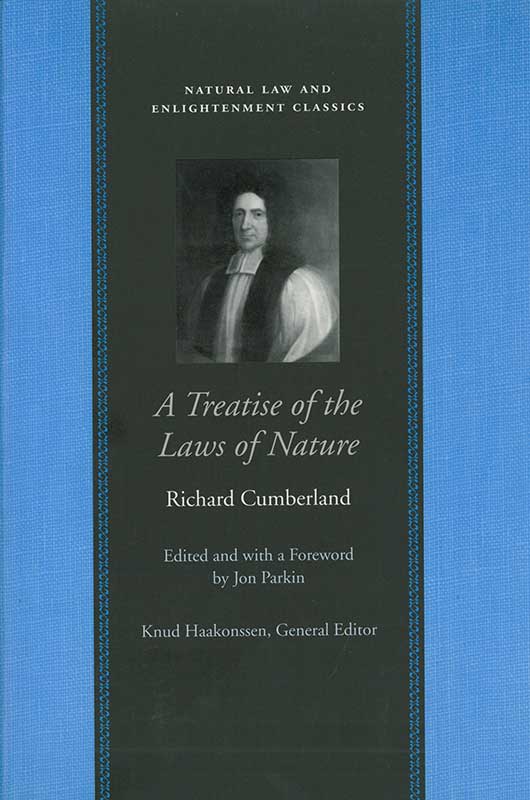
CHAPTER III: Of Natural Good . - Richard Cumberland, A Treatise of the Laws of Nature [1672]Edition used:A Treatise of the Laws of Nature, translated, with Introduction and Appendix, by John Maxwell (1727), edited and with a Foreword by Jon Parkin (Indianapolis: Liberty Fund, 2005).
About Liberty Fund:Liberty Fund, Inc. is a private, educational foundation established to encourage the study of the ideal of a society of free and responsible individuals. Copyright information:The copyright to this edition, in both print and electronic forms, is held by Liberty Fund, Inc. Fair use statement:This material is put online to further the educational goals of Liberty Fund, Inc. Unless otherwise stated in the Copyright Information section above, this material may be used freely for educational and academic purposes. It may not be used in any way for profit.
CHAPTER IIIOf Natural Good.Natural Good is defin’d, and divided into Good, proper to one, and common to many.Good, is that which preserves, or enlarges and perfects, the Faculties of any one Thing, or of several. For, in these Effects, is discover’d that particular Agreement of one thing with another, which is requisite to denominate any thing good, to the Nature of this thing, rather than of others.1 In the Definition of Good, I chose to avoid the Word [Agreement], because of its very uncertain Signification. Nevertheless, those things, whose Actions or Motions conduce to the Preservation, or Increase, of the Powers of other things, consistently with the nature of the Individual, may justly be said to agree with them. For we do not otherwise use to judge, whether the Nature or Essence of any thing agrees with another, or no, than by the Effects of the Actions thence proceeding. The Effects are what disclose the hidden Powers and inward Constitution of all things; these strike our Senses, and afford us a Knowledge of those things, whence they flow. In Actions are laid the Foundations of all Respects or Relations, to explain which, is almost the whole Business of Philosophy. So that is Good to Man, which preserves or enlarges the Powers of the Mind and Body, or of either, without Prejudice to the other. “That is Good to any thing, which preserves it,” says Aristotle, (Pol. 1. 2.c. 1.) speaking of Cities.2 What I affirm concerning any one particular thing, I would have understood concerning a Series of many things, in which some things profitable are inseparably connected with others that are hurtful; in which case, those things which hurt, are to be compar’d with those that profit, and the whole is to be denominated from the prevailing Power, whether of hurting or profiting. Good of this kind, of which we form an Idea, without the Consideration of any Laws whatsoever, I call natural Good; both because it respects the Nature of a thing, a Brute, for instance, or a Tree, whose Powers are capable of Preservation and Increase; and, beside, such is the Effect of such kind of Beings,3 nay, of the Earth it self, that they may be subservient to the Preservation of their own Natures, or even of ours, or to our Improvement by farther Knowledge. It is distinguish’d, by its greater Extensiveness, from that Good, which is called Moral, which is ascrib’d only to such Actions and Habits of rational Agents, as are agreeable to Laws, whether Natural or Civil, and is ultimately resolv’d into the natural common Good, to the Preservation and Increase of which alone all the Laws of Nature, and all just civil Laws, do direct us. Of Moral Good, more hereafter; let us now turn our Thoughts, for a while, to that which is Natural. Such Actions and Habits of moral Agents, as may be subservient to the common natural Good of all, are enforc’d by Laws; and, when such Acts or Habits are embrac’d, upon account of their agreement with moral Rules, they are call’d morally Good.Having shewn, “That neither the Notion, nor the Name, of Good, does confine it to him only, who thinks or speaks of it, but that it may likewise relate to every other Man, nay, and to all other Animals,” (to say nothing of inanimate Beings, which are capable of Preservation, or further Perfection, consisting in the Order or Motion of their Parts;) we must proceed to the Consideration of those Aggregates, which may be form’d of many, nay of all, Animals of the same Species; I add, and of all Beings making use of Reason, how much soever they may otherwise differ, such as Man and God. For, as the Mind considers them under an indefinite Notion, equally applicable to all, it can also unite them into one general Body, in order to discover what is Good or Evil for it, which we shall therefore call the common or publick Good or Evil of Mankind, or even of all rational Agents; and can likewise judge, of the diverse good or evil things propos’d, which is possible or impossible, greater or less. Nor, in most Cases, is this very difficult to determine, at least in general; for, since they all have the same Nature, when we know wherein the Happiness of any one consists, we thence know, what kind of Happiness is to be sought for by every Individual. For it is evident, “That those natural Perfections of the Mind, and that Health and Vigour of Body, in which the whole Happiness of one consists, do also comprehend, when universally extended, all the Happiness of all,4 consequently, both the different Degrees of Happiness, and the nature of Means generally necessary to each, in order to attain it, may be equally apprehended in relation to all: That all require Nourishment, for instance, Exercise, Sleep, &c.” because such things are necessary to each, and the whole is the same with all its Parts: hence also, “Whatever adds any thing, tho but to one part of this whole, without changing, and, consequently, without hurting the rest, that increases the whole, which is compos’d of that, and the other Parts.” He who does Good to one Man, without hurting any other, may justly be said to do Good to the whole Aggregate of Mankind, which may with reason encourage every one of us, from the Consideration of the publick Good, “So to take care of our selves, as not to hurt any other Person.” (Hobbes’s Opinion concerning Good, stated,§II. I own, therefore, “That to be call’d Good, which agrees with another, and, consequently, that the Term is Relative”; but it is not always referr’d to the Desire, nor always to that one Person only, who desires it. In these two Points Hobbes has often err’d grosly, (tho he sometimes comes out with the Truth, in Contradiction to himself;) and on these fundamental Mistakes is supported most of what he has writ amiss, concerning the Right of War of all against all, in a State of Nature, and a Right of exercising arbitrary Power, in a State of civil Society. Concerning Hobbes’s Opinion, that any thing is therefore call’d Good, because it is desir’d. See De Homine, cap. 11. § 4. “All things (saith he) which are desir’d, are, as such, call’d by the common Name of Good, and all things which are shun’d, Evil, &c. whereas different Persons desire and shun different things, it must needs be, that many things which are good to some, should be evil to others, &c. Therefore Good and Evil are Correlatives to Desire and Aversion.”5 Of a Piece with which, is what he has written in his Treatise of Human Nature, where he teaches, that “That Motion, wherein” he thinks “our Conceptions of Things consist, passes from the Brain to the Heart, without any Intervention of Judgment, and there,” (says he,) “As it either helpeth or hindreth its vital Motion, is said to please or displease. And every Man, for his own part, calleth that which pleaseth and is delightful to himself, Good; and that Evil, which displeaseth him. Insomuch, that while every Man differeth from other in Constitution, they differ also from one another,” (naturally, and therefore necessarily, and, according to his Opinion, in a State of Nature, unblameably; why not so in civil Society, where, the soundest Philosophers think, natural Necessity takes away Fault?) “Concerning the common Distinction of Good and Evil.”6 And says he, “Such is the Nature of Man, that every one calls that Good, which he desires for himself, Evil, which he avoids. It therefore happens, thro’ the Diversity of Affections, that what one calls Good, another calls Evil; and that what the same Man now calls Good, he presently calls Evil; and that he looks upon the same thing to be Good for himself, and Evil for another; for we all estimate Good and Evil, from the Pleasure and Uneasiness it creates to us.”7 This, he contends, arises, not from a Fault of the Will, which may be avoided, but from the Nature of Man, and that it is therefore necessary and perpetual, and, before civil Laws are fram’d, blameless. In his Leviathan, chap. 6. he expresses himself in like manner, and adds, “These words of Good, Evil, and Contemptible, are ever used with respect to the Person that useth them, there being nothing simply or absolutely so; nor anycommon Rule of Good and Evil, to be taken from the Nature of the Objects themselves, but from the Person of the Man, (where there is no Commonwealth;) or, (in a Commonwealth,) from the Person that representeth it; or from an Arbitrator, or Judge, whom Men, disagreeing, shall by consent set up, and make his Sentence the Rule thereof. ”8 and confuted by the Author,I, on the contrary, am of Opinion, “That things are first judg’d to be Good, and that they are afterwards desir’d, only so far as they seem Good: That any thing is therefore truly judg’d Good, because its Effect or Force truly helps Nature: That a Private Good, is that which profits One; Publick, which is of advantage to Many; not because it is desir’d from Opinion, whether true or false; or delights, for this or that Moment of time.” The Nature of Man requires, “That Reason, examining the Nature of Things, should, from the Evidence thence unalterably arising, first determine and judge what is Good, (whether in relation to our selves, or others) before we desire it, or are delighted therewith”: And it is the Part of Brutes only, “To measure the Goodness of Things, or of Actions, by Affection only, without the Guidance of Reason.” Men of brutish Dispositions, experience in themselves such a way of acting, and are pleas’d with being told by Hobbes, That this is agreeable to Nature: Out of this Set of Men, the number of his Followers is increas’d. It is, however, more certain, “That a Mad-man suffers a real Evil, tho he be wonderfully pleas’d with his own Madness”; and, on the contrary, “That a Remedy is good for the Patient, tho he should ever so obstinately refuse it.” and contradicted by Hobbes himself,)And even Hobbes himself sometimes relapses into a just way of thinking, and, tho he elsewhere most frequently inculcates, “That any thing is Good or Evil at the Pleasure of the supreme Powers, or of any private Person, without any respect had to the Good of Civil Society”; yet, Leviath. chap. 30. where he reckons it among the Duties of a supreme Governour, that he should frame good Laws, he plainly affirms, “That all Laws are not Good, tho they are for the Benefit of the Sovereign”; and he defines “Good Laws” to be such, “as are needful for the Good of the People, and withal perspicuous.”9 Behold the Good of the People, which is certainly common to Many, acknowledg’d by himself, as the End, which ought to be propos’d by the Legislator! But the End is supposed to be first known, and, consequently, its Nature determin’d, before the Law have prescrib’d to the People, what is Good or Evil. So also, Leviath. chap. 6. he defines “Benevolence and Charity” to be a “Desire of Good to another”: Nor do I believe he would have defined this Affection, if he had not thought it possible. In the English Edition of his Leviathan, he acknowledges this Affection, when it extends itself to all Men, to be “Good-Nature”: But in the Latin Edition he has omitted this; I suppose, as not consisting with his other Opinions.10 For the nature of Good, and the efficacy of Things, to the Preservation and Perfection of the Nature of one or more Persons, is perfectly determin’d, and is to be estimated from the agreement of Things with all the Faculties of human Nature, or the Principles11 of those Faculties; taking likewise in to Consideration, either the whole Course of Life, or its better part: not from any unreasonable Affection, and transient Motion of the Blood, either somewhat promoted or retarded, from a superficial Apprehension of Things. The Necessity of establishing the true Notion of Good.§III. It is of the last consequence, to establish a well-grounded and irrefragable Notion of Good; because, if this totters and wavers, we must, necessarily, be fluctuating and uncertain in our Opinions of Happiness, (which is the greatest Good of every particular Person;) and of the Laws of Nature; and of particular Virtues, Justice, &c. which are nothing else, but the means of obtaining that Good, and, in some respect, the Causes, in part, thereof. Men agree in the general nature of Good, and in the principal Branches of the Law of Nature concerning it.Altho, because of something peculiar in the different Constitutions of Men, it sometimes happens, “That the same Nourishment or Medicine is prejudicial to one, which to most is harmless, or, perhaps, wholesome”; the like to which we may observe, “In the Genius and Manners of Nations,12 some widely differing from others in some particular Establishments” yet, this no more destroys the Consent of Men in the general Nature of Good, and its principal Parts or Kinds, than a light diversityof Countenances takes away the Agreement among Men, in the common Definition of Man, or the Resemblance that is among them, in the Conformity and Use of their principal Parts. There is no Nation, which is not sensible, “That our Love of God, and Observance of the Laws of Nature, in Instances which shall be just now mention’d, afford both present Pleasure, and a well-grounded Hope of future Happiness.” And this Hobbes himself somewhere confesses, as de Cive, cap. 15. § 9. and the following;13 tho elsewhere he affirms, That the Honour due to God consists in Fear only, and an Opinion of his Power; as in Leviath. Part I. chap. 10, 11.14 There is no Nation, which is not sensible, “That Gratitude towards Parents and Benefactors, is beneficial to all Mankind.” No difference of Constitution causes any one to imagine, “That it is not for the Good of the Whole, that the Lives, Limbs, and Liberties of particular innocent Persons should be preserv’d”; and, therefore, the Murder of the Innocent is every where prohibited. What Man is of so particular a Taste, as “Not to think it good for single Families, and, consequently, for all Nations, that the Faith of the Marriage-bed be preserv’d unviolated?” And the same may be said of the Right of using and enjoying those out-ward Things, which are necessary to Life, Health, Fame or Honour, the Education of Children, and the cultivating Friendship. In judging of the Goodness of these Things, to take care of which is the whole Business of the Laws of Nature, and of most Civil Laws, all Men every where agree, as much as Animals do in the Motion of the Heart, and Pulse of the Arteries, or all Men, in their Opinion of the Whiteness of Snow, and the Brightness of the Sun. Even Hobbes himself acknowledges, that Civil Laws teach the same thing; “That in all Cases omitted by Civil Laws,” (which he acknowledges to be “Almost Infinite,” (c. 14. § 14) and may produce infinite Disputes,) “The Law of natural Equity is to be follow’d.”15 He therefore grants, that the Laws of natural Equity may be discover’d, without the help of the Laws of the State, and that more Cases may be sufficiently determin’d thereby, than are determin’d by civil Laws, which are not “Almost Infinite.” This is all I contend for at present, “That since Rules of Equity are, naturally, so well known, that no Men, of common Understanding, differ about them. ” On the other hand, I freely grant, “That there are many things indifferent, or concerning which human Reason cannot universally pronounce, that it is necessary to the common Good, that the Matter should be transacted this way rather than that.” In such cases, the different Constitutions of different States take place, which, altho they might, without a Crime, have been oppos’d, before they were enacted into Laws; yet, after once they have been establish’d by publick Authority, are to be most religiously observ’d, both out of Conscience toward God, whose Vicegerents Magistrates are, and for the publick Happiness of the Subjects, which is chiefly secur’d by the supreme Authority’s being preserv’d unviolated. For it evidently conduces more to the publick Good, “That the Opinion of the Magistrates should prevail; in things indifferent and doubtful, and that the Subjects should take that for Good, which seems such to the supreme Power, rather than eternal Broils should continue among them, whence may reasonably be expected Wars and Murders, which are, without all question, Evil.”16 It is a Mistake in Hobbes to assert, That Man pursues only his own private Good.§IV. There is another Error of Hobbes, concerning Good, which is, that “The Object of the” human “Will is that, which every Man thinks good forhimself. ”17 Which he thus expresses elsewhere, “Every one is presum’d to pursue his own Good, naturally; that which is just, for Peace only, and by Accident.”18 What is just, respects the Good of others, which he does not think any Man seeks, unless from a Fear of those Evils, which arise from a State of War. Of a Piece with these Passages, are the places above quoted out of him; and numberless others, scatter’d thro’ his Writings, insinuate the same thing. Upon this is grounded that Passage, “Whatever is done voluntarily, is done for some Good to him who wills it.”19 All these Passages have this one Tendency, to prove, that “Men are so fram’d, that it is contrary to their Nature, and, consequently, plainly impossible, that they should desire any thing but their own Advantage, and their own Glory.”20That, therefore, since it is evident, that every one can more effectually obtain these things, by Dominion over, than by Society with, others, “All naturally desire such Dominion, and are, consequently, led into a State of War against all, for the sake of obtaining it”; that “They are with-held from War, and forc’d to accept the Conditions of Society, by Fear only.” But if we examine what led him into an Opinion, so contrary to that of all Philosophers, I can see nothing, but that one Hint, which he affords, by the Bye, in the same Section, where he explains “Nature” by “The Affections planted in every Animal, till by inconvenient Consequences, or by Precepts, it is effected, that the desire of things present is check’d by the remembrance of things past.” He judges of human Nature, and the adequate Object of the Will, from those Affections, which are previous to the use of Reason, to Experience, and to Discipline, such as are found in Children and Mad-Men; see his Preface to his Treatise de Cive.21 But I, as well as all other Philosophers, that I know of, think, “That we are to take an Estimate of the Nature of Man, rather from Reason, (and that therefore the Will may extend it self to those things, which Reason dictates to be agreeable to the Nature of any Person;) since such irrational Affections are to be look’d on, rather as Perturbations of the Mind, and, consequently, as Preternatural”; which even Hobbes himself, since the publishing his Book de Cive, confesses in his Treatise de Homine.”22 I also own it possible, thro’ an Abuse of his Free-will, “That a Man (thro’ his own Fault) of a narrow Soul, may consider nothing beside himself, and may therefore desire almost nothing, but what he judges profitable to himself ”; but I could never observe any Symptoms of such a Will, in any Man, except in Hobbes only. Others are certainly of a more generous Disposition, “Who do not think that alone to be Good, which is such to themselves; but whatever conduces to the Preservation and Perfection, to the Order and Beauty of Mankind, or even of the whole Universe, as far as we have any Conception of it; that they think Good, that they will and desire, that they hope for, for the future, and rejoice in, when present.” Nor see I any thing to hinder, but that what I judge agreeable to any Nature, I may desire should happen to it; nay, that I should endeavour, as far as in me lies, that it should be effected. But whatever any Faculty (and, consequently, the Will) can be employ’d about, is included in the adequate Object of that Faculty. To this appertains that Precept of Aristotle, concerning Legislators, “It is the Duty of a good Law-giver, to consider how his Country, and all Mankind, and every particular Community, may live honestly, and enjoy all possible Happiness.”23 And elsewhere, “That is uniformly right, which conduces to the Advantage of the whole Commonwealth, and to the common Good of all its Members.”24 For what Aristotle asserts, in this last place, concerning the Laws of the State, “That in them, not the Good of a part, but of the whole, is to be taken care of; which is to be look’d upon as the measure of Right by the Legislator”; this sufficiently instructs us, if the whole World be consider’d, as one State, what is universally Right, and, consequently, ought to be intended in the Laws of the Universe, or of Nature. For, since every Legislator is only a Man, and he both can, and ought, to provide for the publick Good, that being the end for which he is appointed, what hinders, but that we may allow it, to be in other Men’s Powers, to do the same? Nay, this may be demonstrated à priori, to those, who acknowledge the Nature of the Will to consist, in the Consent of the Mind with the Judgment of the Understanding, concerning things agreeing among themselves. For it is certain, “That the Understanding is capable of judging, what promotes the Good of others, as well as what promotes our own”; nor is there any Reason, “Why we cannot will those same things, which we have judg’d to be good.” (Nay, it is hardly possible, that we should not will those things, which we have judg’d to be good.) But it is to be observ’d, “That, whatever a Man can will, he can also resolve to effect the same, as far as it is in his Power.” Good thus will’d by us, is said to be intended, and, by virtue of this Intention, it assumes the complete Nature of an End: Therefore the common Good of the Universe may be an End propos’d by Men. And, because that is the greatest Good, which we can will, the Understanding, forming a right Judgment, will affirm such a Volition, to be more necessarily and essentially connected with the Perfection of Men, possess’d with a just Notion of the publick Good; than the Volition of any smaller Good. But, for the present, it is sufficient to have prov’d, “That the common Good may be the End of Man, and the principal one too; provided it be prov’d, to be greater than any other Good.” But, whether any Man be oblig’d to pursue this End, we shall afterwards discover, when we inquire, concerning the Obligation of the Laws of Nature. Here I will only add, that Hobbes himself, in the Latin Edition of his Leviathan, Cap. 31. in the last Section, contradicts all that he had advanc’d, concerning Man’s seeking, only, his own proper Good; and does not only acknowledge, that the publick Good may be regarded, but openly declares, that he hopes his Leviathan will, sometime or other, be serviceable to that End. His words are these, I do not despair, but that hereafter, when Princes shall have more attentively consider’d their Rights, and Professors their Duty, and that of Subjects, this very Doctrine, softned by Custom, shall, sometime or other, be commonly receiv’d, to the Benefit of the Publick.”25 Here, truly, he presages, that his Doctrine, tho not yet establish’d by Princes, shall, hereafter, promote the publick Good; and insinuates, that it is adapted to the Good (not of one State only, but) of all the Nations in the World. Of the Falshood of which, tho I am abundantly convinc’d, yet it is a sufficient Proof, that his Thoughts were sometimes employ’d about this End, and that he knew it might be sincerely intended, otherwise he would, not only, not intend it, but he would not so much as pretend, that he had intended it. What is more; That to please others, is naturally pleasant, and consequently seems good, to Man, may be prov’d from Hobbes himself, because in his Treatise of Human Nature, Chap. 9. § 15. he plainly asserts, “That even venereal Pleasure is, partly, a pleasure of the Mind, taking its Rise from this, That we are sensible we please another.”26 But it is highly absurd, “That he should acknowledge a Pleasure of the Mind to arise hence, that something grateful is done to one Person only, and that in a Matter of the smallest Consequence,” when in the mean time he will not acknowledge, “That the Mind of Man receives a greater Pleasure from this, that we at once more highly gratify many in more important Matters, when we benefit both their Minds and Bodies, in procuring the common Good, by Fidelity, Gratitude, and Humanity, even when we are not subject to the same civil Power.” Lastly, in his Treatise de Homine, cap. 11. § 14. where he purposely inquires, among good Things, which is greater, and which less, he plainly declares, that the Good, which is a Benefit to many, is greater (other Considerations being equal) than that which is so to few.27 General Remarks on Chapter IIIIt would have been very proper for the Author in this Chapter, to have briefly enumerated or compar’d the chief of the human Pleasures. What follows, (taken from Wollaston’s Religion of Nature, Sect. 2.)28 seems here pertinent. Prop. I. Pleasure is a Consciousness of something agreeable, Pain of the contrary; and they are proportionable to the Perceptions and Sense of the Subjects, or Persons affected with them. Note on Chap. 5. § 6.) Prop. II. Pain consider’d in it self is a real Evil, Pleasure a real Good. Prop. III. By the general Idea of Good and Evil, the one [Pleasure] is in it self desirable, the other [Pain] to be avoided. What is here said, respects mere Pleasure and Pain, abstracted from all Circumstances, Consequences, &c. But because there are some of these generally adhering to them, and such as enter so deep into their Nature, that unless these be taken in, the full and true Character of the other cannot be had, nor can it therefore be known what Happiness is, I must proceed to some other Propositions relating to this subject. IV. Pleasure compar’d with Pain may either be equal, or more, or less: also Pleasures may be compar’d with other Pleasures, and Pains with Pains. Because all the Moments of the Pleasure must bear some respect, or be in some Ratio to all the Moments of Pain: as also all the degrees of one to all the degrees of the other: and so must those of one Pleasure, or one Pain, be to those of another. And if the degrees of intenseness be multiply’d by the Moments of duration, there must still be some Ratio of the one Product to the other. That this Proposition is true, appears from the general Conduct of Mankind; tho in some Particulars they may err, and wrong themselves, some more, some less. For what doth all this Hurry of Business, what do all the Labours and Travels of Men tend to, but to gain such Advantages, as they think do exceed all their Trouble? What are all their Abstinencies and Self-denials for, if they do not think some Pleasures less than the Pain, that would succeed them? Do not the various Methods of Life shew, that Men prefer one sort of Pleasure to another, and submit to one sort of Pain rather than to have another? And within our selves we cannot but find an indifference as to many things, not caring, whether we have the Pain with the Pleasure obtain’d by it, or miss the Pleasure, being excus’d from the Pain. V. When Pleasures and Pains are equal, they mutually destroy each other: when the one exceeds, the Excess gives the true Quantity of Pleasure or Pain. For nine degrees of Pleasure, less by nine degrees of Pain, are equal to nothing: but nine degrees of one, less by three degrees of the other, give six of the former net and true. VI. As therefore there may be true Pleasure and Pain: so there may be some Pleasures, which compar’d with what attends or follows them, not only may vanish into nothing, but may even degenerate into Pain, and ought to be reckon’d as Pains; and v. v. some Pains, that may be annumerated to Pleasures. For the true Quantity of Pleasure differs not from that Quantity of true Pleasure; or it is so much of that kind of Pleasure, which is true (clear of all Discounts and future Payments): nor can the true Quantity of Pain not be the same with that Quantity of true or mere Pain. Then, the Man who enjoys three degrees of such Pleasure as will bring upon him nine degrees of Pain, when three degrees of Pain are set off to balance and sink the three of Pleasure, can have remaining to him only six degrees of Pain: and into these therefore is his Pleasure finally resolv’d. And so the three degrees of Pain, which any one endures to obtain nine of Pleasure, end in six of the latter. By the same manner of computing, some Pleasures will be found to be the loss of Pleasure, compar’d with greater: and some Pains the Alleviation of Pain; because by undergoing them greater are evaded. Thus the Natures of Pleasures and Pains are varied, and sometimes transmuted: which ought never to be forgot. Nor this neither. As in the Sense of most Men, I believe, a little Pain will weigh against a great deal of Pleasure: so perhaps there may be some Pains, which exceed all Pleasures; that is, such Pains as no Man would choose to suffer for any Pleasure whatever, or at least any that we know of in this World. So that it is possible the difference, or excess of Pain, may rise so high as to become immense: and then the Pleasure to be set against that Pain will be but a Point, or Cypher; a Quantity of no Value. VII. Happiness differs not from the true Quantity of Pleasure, Unhappiness of Pain. Or, any Being may be said to be so far happy, as his Pleasures are true, &c. That cannot be the Happiness of any Being, which is bad for him: nor can Happiness be disagreeable. It must be something, therefore, that is both agreeable and good for the Possessor. Now present Pleasure is for the present indeed agreeable; but if it be not true, and he who enjoys it must pay more for it than it is worth, it cannot be for his Good, or good for him. This therefore cannot be his Happiness. Nor, again, can that Pleasure be reckon’d Happiness, for which one pays the full Price in Pain: because these are quantities which mutually destroy each other. But yet since Happiness is something, which, by the general Idea of it, must be desirable, and therefore agreeable, it must be some kind of Pleasure: and this, from what has been said, can only be such Pleasure as is true. That only can be both agreeable and good for him. And thus every one’s Happiness will be as his true Quantity of Pleasure. One, that loves to make Objections, may demand here, whether there may not be Happiness without Pleasure; whether a Man may not be said to be happy in respect to those Evils, which he escapes, and yet knows nothing of: and whether there may not be such a thing as negative Happiness. I answer, an Exemption from Misfortunes and Pains is a high Privilege, tho we should not be sensible what those Misfortunes or Dangers are, from which we are deliver’d, and in the larger use of the Word may be styled a Happiness. Also, the Absence of Pain or Unhappiness may perhaps be called negative Happiness, since the meaning of that Phrase is known. But in proper speaking Happiness always includes something positive. For mere Indolence resulting from Insensibility, or joined with it, if it be Happiness, is a Happiness infinitely diminish’d: that is, it is no more a Happiness, than it is an Unhappiness; upon the confine of both, but neither. At best, it is but the Happiness of Stocks and Stones: and to these I think Happiness can hardly be in strictness allow’d. ’Tis the Privilege of a Stock to be what it is, rather than to be a miserable Being: this we are sensible of, and therefore, joining this Privilege with our own Sense of it, we call it Happiness; but this is what it is in our manner of apprehending it, not what it is in the Stock itself. A Sense indeed of being free from Pains and Troubles is attended with Happiness: but then the Happiness flows from the Sense of the Case, and is a positive Happiness. Whilst a Man reflects upon his negative Happiness, as it is called, and enjoys it, he makes it positive: and perhaps a Sense of Immunity from the Afflictions and Miseries every where so obvious to our Observation is one of the greatest Pleasures in this World. VIII. That Being may be said to be ultimately happy, in some degree or other, the sum Total of whose Pleasures exceeds the Sum of all his Pains: or, ultimate Happiness is the Sum of Happiness, or true Pleasure, at the Foot of the Account. And so on the other side, that Being may be said to be ultimately unhappy, the Sum of all whose Pains exceeds that of all his Pleasures. IX. To make itself happy is a Duty, which every Being, in proportion to its Capacity, owes to itself; and that, which every intelligent Being may be supposed to aim at, in general. For Happiness is some Quantity of true Pleasure: and that Pleasure, which I call true, may be consider’d by itself, and so will be justly desirable (according to Prop. II, and III.) On the contrary, Unhappiness is certainly to be avoided: because being a Quantity of mere Pain, it may be consider’d by itself, as a real, mere Evil, &c. and because, if I am oblig’d to pursue Happiness, I am at the same time oblig’d to recede, as far as I can, from its contrary. All this is self-evident. And hence it follows, that, X. We cannot act with respect to either our selves, or other Men, as being what we and they are, unless both are consider’d as Beings susceptive of Happiness and Unhappiness, and naturally desirous of the one and averse to the other. Other Animals may be consider’d after the same manner in proportion to their several degrees of Apprehension. But that the Nature of Happiness, and the Road to it, which is so very apt to be mistaken, may be better understood; and true Pleasures more certainly distinguish’d from false; the following Propositions must still be added. XI. As the true and ultimate Happiness of no Being can be produced by any thing, that interferes with Truth, and denies the Natures of Things: So neither can the Practice of Truth make any Being ultimately unhappy. For that, which contradicts Nature and Truth, opposes the Will of the Author of Nature; and to suppose, that an inferior Being may, in opposition to his Will, break through the Constitution of Things, and, by so doing, make himself happy, is to suppose that Being more potent than the Author of Nature, and, consequently, than that very Being himself, which is absurd. And it is also absurd to think, that by the Constitution of Nature and Will of its Author, any being should be finally miserable, only for conforming himself to Truth. As if God had made it natural to contradict Nature; or unnatural, and therefore punishable, to act according to Nature and Reality. Which must come to pass, either thro a defect of Power in him to cause a better and more equitable Scheme, or from some delight, which he finds in the Misery of his Dependents. The former cannot be ascribed to the first Cause, who is the Fountain of Power; nor the latter to him, who gives so many Proofs of his Goodness and Beneficence. XII. The genuine Happiness of every Being must be something, that is not incompatible with or destructive of its Nature, or the superior or better part of it, if it be mixt. For instance, nothing can be the true Happiness of a rational Being, that is inconsistent with Reason. For all Pleasure, and therefore be sure all clear Pleasure and true Happiness must be something agreeable (Prop. I.): and nothing can be agreeable to a reasoning Nature, or (which is the same) to the Reason of that Nature, which is repugnant and disagreeable to reason. If any thing becomes agreeable to a rational Being, which is not agreeable to Reason, it is plain his Reason is lost, his Nature deprest, and that he now lists himself among Irrationals, at least as to that Particular. If a Being finds Pleasure in any thing unreasonable, he has an unreasonable Pleasure; but a rational Nature can like nothing of that Kind without a Contradiction to itself. For to do this, would be to act, as if it was the contrary to what it is. Lastly, if we find hereafter, that whatever interferes with Reason, interferes with Truth, and to contradict either of them is the same thing; then what has been said under the former Proposition, does also confirm this: as what has been said in proof of this, does also confirm the former. XIII. Those Pleasures are true, and to be reckon’d into our Happiness, against which there lies no Reason. For when there is no Reason against any Pleasure, there is always one for it, included in the Term. So when there is no reason for undergoing Pain (or venturing it), there is one against it. Obs. There is therefore no Necessity for Men to torture their Inventions in finding out Arguments to justify themselves in the Pursuits after worldly Advantages and Enjoyments, provided that neither these Enjoyments, nor the means by which they are attained, contain the Violation of any Truth, by being unjust, immoderate, or the like. For in this Case there is no reason why we should not desire them, and a direct one, why we should; viz. because they are Enjoyments. XIV. To conclude this Section, The way to Happiness and the Practice of Truth incur the one into the other. For no Being can be styled happy, that is not ultimately so: because if all his Pains exceed all his Pleasures, he is so far from being happy, that he is a Being unhappy, or miserable, in proportion to that Excess. Now by Prop. XI. nothing can produce the ultimate Happiness of any Being, which interferes with Truth: and therefore whatever doth produce that, must be something which is consistent and coincident with this. Two things then (but such as are met together, and embrace each other), which are to be religiously regarded in all our Conduct, are Truth (of which in the preceding Sect.) and Happiness, that is, such Pleasures, as accompany, or follow the Practice of Truth, or are not inconsistent with it: (of which I have been treating in this). And as that Religion, which arises from the Distinction between moral Good and Evil, was called Natural, because grounded upon Truth and the Natures of Things: so perhaps may that too, which proposes Happiness for its End, in as much as it proceeds upon that difference, which there is between true Pleasure and Pain, which are Physical (or Natural) Good and Evil. And since both these unite so amicably, and are at last the same, here is one Religion which may be called natural upon two accounts. [1. ]A definition drawn from Aristotle, Politics, II.2, and one echoed by many of Cumberland’s latitudinarian contemporaries. See, for example, Wilkins, On the Principles and Duties of Natural Religion (1675), p. 12. [2. ]Cumberland’s reference is misleading; the quotation comes from Aristotle, Politics, II.2, 1261b9–10. [3. ][Maxwell] “That is, such kind of Beings, as, having neither Reason nor Will, are incapable of Laws.” [4. ][Maxwell] “The Author means, That we can as well compute the degrees of Happiness arising from any State or Circumstances of others, or of a whole Species, as we can the degrees of Happiness, from like Circumstances, enjoy’d by our selves.” [5. ]Hobbes, De Homine, 11.4, p. 62. [6. ]The first section of this quotation (“That Motion . . . displease”) paraphrases Hobbes’s Humane Nature (the English version of the Elements of Law) 7.1, p. 69. The second half (beginning, “And every Man . . .”) quotes 7.3, p. 71. [7. ]Hobbes, On the Citizen, 14.17, p. 162. [8. ]Hobbes, Leviathan, ch. 6, pp. 28–29. [9. ]Ibid., ch. 30, p. 229. [10. ]Ibid. The English text reads: “Desire of good to another, BENEVOLENCE, GOOD WILL, CHARITY. If to man generally, GOOD NATURE.” In the Latin edition, the last sentence, as Cumberland rightly observes, is dropped, probably because it opens the possibility of a generalized standard of good, which works against the relativism of his other definitions. [11. ]Cumberland and Bentley have amended “principiis” to “praecipuis” (particulars). [12. ][Maxwell] “Diversity of Manners, in various Nations, and Ages, may be thus accounted for: [13. ]Hobbes, On the Citizen, 15.9, pp. 175–76. This section is only tangentially related to Cumberland’s case, dealing as it does with defining honor as a subjective appreciation of power and goodness. This perhaps explains why it is not quoted. [14. ]Hobbes, Leviathan, ch. 11, pp. 62–63. Cumberland also refers to ch. 10 of Leviathan, but the issue is not discussed there. Hobbes does discuss fear as the root of religion in ch. 12. [15. ]Hobbes, On the Citizen, 14.14, p. 161. [16. ]Cumberland’s admission of a positive role for an arbiter may reflect the debate over the role of the magistrate in religion, a live issue in the discussion of toleration during the period and one that framed much of the discussion of Hobbes in the later 1660s. See Parkin, Science, Religion, and Politics, ch. 1. [17. ]Hobbes, On the Citizen, 1.2, p. 23. [18. ]Ibid., 3.21, p. 52. [19. ]Ibid., 2.8, p. 35. [20. ]Ibid., 1.2, p. 23: “For since a society is a voluntary arrangement, what is sought in every society is an Object of will, i.e., something which seems to each one of the members to be Good for himself. Whatever seems Good is pleasant, and affects either the organs (of the body) or the mind. Every pleasure of the mind is either glory (or a good opinion of oneself), or ultimately relates to glory; the others are sensual or lead to something sensual, and can all be comprised under the name of advantages.” [21. ]Ibid., preface to the readers, p. 11. [22. ]Hobbes, De Homine, 12.1, p. 67: “They [the emotions] are called perturbations because they frequently obstruct right reasoning.” [23. ]Aristotle, Politics, VII.2, 1325a7–11. Cumberland quotes in Greek, De Legibus Naturae, p. 169. [24. ]Aristotle, Politics, III.7, 1283b40–43. [25. ]Hobbes, Leviathan, ch. 31, pp. 244 and 244, n. 15. [26. ]Hobbes, Humane Nature, 9.15, pp. 105–6. [27. ]Hobbes, De Homine, 11.14, p. 66. [28. ]Wollaston, The Religion of Nature Delineated (1722), pp. 23–29. |

Titles (by Subject)