Econlib

The Library

Other Sites

Front Page arrow Titles (by Subject) arrow Guardian, No. 99 - Cato: A Tragedy and Selected Essays

Return to Title Page for Cato: A Tragedy and Selected Essays

Search this Title:

Guardian, No. 99 - Joseph Addison, Cato: A Tragedy and Selected Essays [1710]

Edition used:

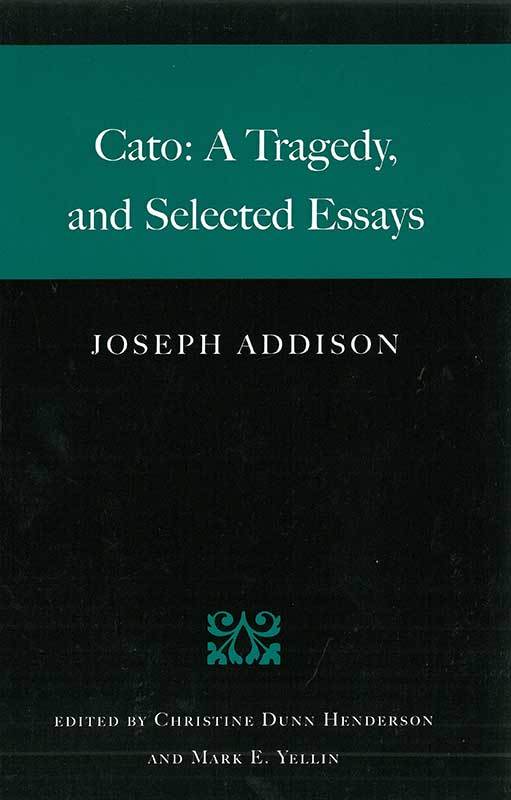
Cato: A Tragedy and Selected Essays, ed. by Christine Dunn Henderson and Mark E. Yellin, with a Foreword by Forrest McDonald (Indianapolis: Liberty Fund, 2004).

About Liberty Fund:

Liberty Fund, Inc. is a private, educational foundation established to encourage the study of the ideal of a society of free and responsible individuals.


Guardian, No. 99

  • Justum, et tenacem propositi virum
  • Non civium ardor prava jubentium,
  • Non vultus instantis tyranni
  • Mente quatit solidâ, neque Auster
  • Dux inquieti turbidus Adriae,
  • Nec fulminantis magna Jovis manus:
  • Si fractus illabatur orbis,
  • Impavidum ferient ruinae.

There is no virtue so truly great and godlike as Justice. Most of the other virtues are the virtues of created Beings, or accommodated to our nature as we are men. Justice is that which is practised by God himself, and to be practised in its perfection by none but him. Omniscience and Omnipotence are requisite for the full exertion of it. The one, to discover every degree of uprightness or iniquity in thoughts, words and actions. The other, to measure out and impart suitable rewards and punishments.

As to be perfectly just is an attribute in the divine nature, to be so to the utmost of our abilities is the glory of a man. Such an one who has the publick administration in his hands, acts like the representative of his Maker, in recompencing the virtuous, and punishing the offender. By the extirpating of a criminal he averts the judgments of heaven, when ready to fall upon an impious people; or, as my friend Cato expresses it much better in a sentiment conformable to his character,

  • When by just vengeance impious mortals perish,
  • The Gods behold their punishment with pleasure,
  • And lay th’uplifted thunder-bolt aside.2

When a nation once loses its regard to justice; when they do not look upon it as something venerable, holy and inviolable; when any of them dare presume to lessen, affront or terrifie those who have the distribution of it in their hands; when a judge is capable of being influenced by any thing but law, or a cause may be recommended by any thing that is foreign to its own merits, we may venture to pronounce that such a nation is hastening to its ruin.

For this reason the best law that has ever past in our days is that, which continues our Judges in their posts during their good behaviour, without leaving them to the mercy of such who in ill times might, by an undue influence over them, trouble and pervert the course of justice. I dare say the extraordinary person who is now posted in the Chief Station of the law, would have been the same had that act never past;3 but it is a great satisfaction to all honest men, that while we see the greatest ornament of the profession in its highest post, we are sure he cannot hurt himself by that assiduous, regular and impartial administration of justice, for which he is so universally celebrated by the whole kingdom. Such men are to be reckoned among the greatest national blessings, and should have that honour paid them whilst they are yet living, which will not fail to crown their memory when dead.

I always rejoice when I see a tribunal filled with a man of an upright and inflexible temper, who in the execution of his country’s laws can overcome all private fear, resentment, solicitation, and even pity it self. Whatever passion enters into a sentence or decision, so far will there be in it a tincture of injustice. In short, justice discards party, friendship, kindred, and is therefore always represented as blind, that we may suppose her thoughts are wholly intent on the equity of a cause, without being diverted or prejudiced by objects foreign to it.

I shall conclude this paper with a Persian story,4 which is very suitable to my present subject. It will not a little please the Reader, if he has the same taste of it which I my self have.

As one of the Sultans lay encamped on the plains of Avala, a certain great man of the army entered by force into a peasant’s house, and finding his wife very handsome, turned the good man out of his dwelling, and went to bed to her. The peasant complained the next morning to the Sultan, and desired redress; but was not able to point out the criminal. The Emperor, who was very much incensed at the injury done to the poor man, told him that probably the offender might give his wife another visit, and if he did, commanded him immediately to repair to his tent and acquaint him with it. Accordingly within two or three days the Officer entered again the peasant’s house, and turned the owner out of doors; who thereupon applied himself to the imperial tent, as he was ordered. The Sultan went in person, with his guards, to the poor man’s house, where he arrived about midnight. As the attendants carried each of them a flambeau5 in their hands, the Sultan, after having ordered all the lights to be put out, gave the word to enter the house, find out the criminal and put him to death. This was immediately executed, and the corps laid out upon the floor by the Emperor’s command. He then bid every one light his flambeau, and stand about the dead body. The Sultan approaching it looked upon the face, and immediately fell upon his knees in prayer. Upon his rising up he ordered the peasant to set before him whatever food he had in the house. The peasant brought out a great deal of coarse fare, of which the Emperor eat very heartily. The peasant seeing him in good humour, presumed to ask of him, why he had ordered the flambeaux to be put out before he had commanded the adulterer should be slain? Why, upon their being lighted again, he looked upon the face of the dead body, and fell down by it in prayer? and why, after this, he had ordered meat to be set before him, of which he now eat so heartily? The Sultan, being willing to gratifie the curiosity of his host, answered him in this manner. “Upon hearing the greatness of the offence which had been committed by one of the army, I had reason to think it might have been one of my own sons, for who else would have been so audacious and presuming? I gave orders therefore for the lights to be extinguished, that I might not be led astray, by partiality or compassion, from doing justice on the criminal. Upon the lighting of the flambeaux a second time, I looked upon the face of the dead person, and to my unspeakable joy, found that it was not my son. It was for this reason that I immediately fell upon my knees, and gave thanks to God. As for my eating heartily of the food you have set before me, you will cease to wonder at it, when you know that the great anxiety of mind I have been in, upon this occasion, since the first complaints you brought me, has hindered my eating any thing from that time till this very moment.”

[1. ]

  • When a man is just and firm in his purpose,
  • The citizens burning to approve a wrong
  • Or the frowning looks of a tyrant
  • Do not shake his fixed mind, nor the Southwind.
  • Wild lord of the uneasy Adriatic,
  • Nor the thunder in the mighty hand of Jove:
  • Should the heavens crack and tumble down,
  • As the ruins crushed him he would not fear.
Horace Odes 3.3, translated by Joseph P. Clancy (Chicago: University of Chicago Press, 1960).

[2. ]Cato III.5. 68–70 (p. 68, above).

[3. ]On January 15, 1641, Charles I instituted the standard of judges serving for good behavior. Evan Haynes, The Selection and Tenure of Judges (National Conference of Judicial Councils, 1944), 63. Subsequent rulers continued to meddle in judicial tenure, until George III established by statute that judges would hold their positions for good behavior during the king’s reign and the reigns of his successors. In his History of England, Hume calls the institution of the standard of good behavior for judicial tenure “a circumstance of the greatest moment toward securing their independency, and barring the entrance of arbitrary power into the ordinary courts of the judicature.” David Hume, The History of England, vol. 5 (Indianapolis: Liberty Fund, 1983), 331.

[4. ]We have been unable to locate a source for this story.

[5. ]A torch.