Econlib

The Library

Other Sites

Front Page arrow Titles (by Subject) arrow Spectator, No. 257 - Cato: A Tragedy and Selected Essays

Return to Title Page for Cato: A Tragedy and Selected Essays

Search this Title:

Spectator, No. 257 - Joseph Addison, Cato: A Tragedy and Selected Essays [1710]

Edition used:

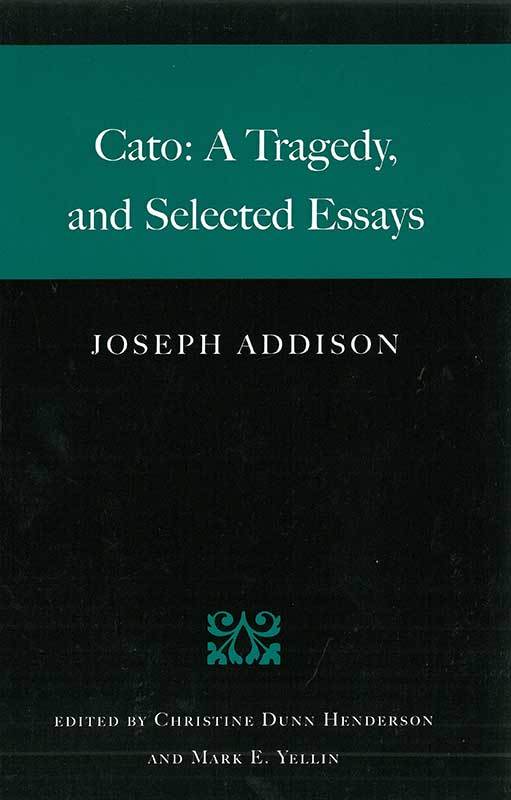
Cato: A Tragedy and Selected Essays, ed. by Christine Dunn Henderson and Mark E. Yellin, with a Foreword by Forrest McDonald (Indianapolis: Liberty Fund, 2004).

About Liberty Fund:

Liberty Fund, Inc. is a private, educational foundation established to encourage the study of the ideal of a society of free and responsible individuals.


Spectator, No. 257

Οὐχ’ εὕδει Διὸϛ ᾽Οφθαλμόϛ· ἐγγὺϛ δ’ ἔστι καὶ παρὼν πόνῳ.

That I might not lose my self upon a Subject of so great Extent as that of Fame, I have treated it in a particular Order and Method. I have first of all considered the Reasons why Providence may have implanted in our Minds such a Principle of Action. I have in the next Place shewn, from many Considerations, first, that Fame is a thing difficult to be obtained, and easily lost; Secondly, that it brings the ambitious Man very little Happiness, but subjects him to much Uneasiness and Dissatisfaction. I shall in the last Place shew, that it hinders us from obtaining an End which we have Abilities to acquire, and which is accompanied with fullness of Satisfaction. I need not tell my Reader, that I mean by this End, that Happiness which is reserved for us in another World, which every one has Abilities to procure, and which will bring along with it fullness of Joy, and Pleasures for evermore.

How the Pursuit after Fame may hinder us in the Attainment of this great End, I shall leave the Reader to collect from the three following Considerations.

First, Because the strong Desire of Fame breeds several vicious Habits in the Mind.

Secondly, Because many of those Actions, which are apt to procure Fame, are not in their Nature conducive to this our ultimate Happiness.

Thirdly, Because if we should allow the same Actions to be the proper Instruments, both of acquiring Fame, and of procuring this Happiness, they would nevertheless fail in the Attainment of this last End, if they proceeded from a Desire of the first.

These three Propositions are self-evident to those who are versed in Speculations of Morality. For which Reason I shall not enlarge upon them, but proceed to a Point of the same Nature, which may open to us a more uncommon Field of Speculation.

From what has been already observed, I think we may make a natural Conclusion, that it is the greatest Folly to seek the Praise or Approbation of any Being, besides the Supream, and that for these two Reasons, because no other Being can make a right Judgment of us, and esteem us according to our Merits; and because we can procure no considerable Benefit or Advantage from the Esteem and Approbation of any other Being.

In the first Place no other Being can make a right Judgment of us, and esteem us according to our Merits. Created Beings see nothing but our Outside, and can therefore only frame a Judgment of us from our exteriour Actions and Behaviour; but how unfit these are to give us a right Notion of each others Perfections, may appear from several Considerations. There are many Virtues, which in their own nature are incapable of any outward Representation: Many silent Perfections in the Soul of a good Man, which are great Ornaments to Human Nature, but not able to discover themselves to the Knowledge of others; they are transacted in private, without noise or show, and are only visible to the great Searcher of Hearts. What Actions can express the entire Purity of Thought which refines and sanctifies a virtuous Man? That secret Rest and Contentedness of Mind, which gives him a perfect Enjoyment of his present Condition? That inward Pleasure and Complacency, which he feels in doing Good? That Delight and Satisfaction which he takes in the Prosperity and Happiness of another? These and the like Virtues are the hidden Beauties of a Soul, the secret Graces which cannot be discovered by a Mortal Eye, but make the Soul lovely and precious in his Sight, from whom no Secrets are concealed. Again, there are many Virtues which want an Opportunity of exerting and shewing themselves in Actions. Every Virtue requires Time and Place, a proper Object and a fit Conjuncture of Circumstances, for the due Exercise of it. A State of Poverty obscures all the Virtues of Liberality and Munificence. The Patience and Fortitude of a Martyr or Confessor lye concealed in the flourishing Times of Christianity. Some Virtues are only seen in Affliction, and some in Prosperity; some in a Private, and others in a Publick Capacity. But the great Sovereign of the World beholds every Perfection in its Obscurity, and not only sees what we do, but what we would do. He views our Behaviour in every Concurrence of Affairs, and sees us engaged in all the Possibilities of Action. He discovers the Martyr and Confessor without the Tryal of Flames and Tortures, and will hereafter entitle many to the Reward of Actions, which they had never the Opportunity of performing. Another Reason why Men cannot form a right Judgment of us is, because the same Actions may be aimed at different Ends, and arise from quite contrary Principles. Actions are of so mixt a Nature, and so full of Circumstances, that as Men pry into them more or less, or observe some Parts more than others, they take different Hints, and put contrary Interpretations on them; so that the same Actions may represent a Man as Hypocritical and Designing to one, which make him appear a Saint or Hero to another. He therefore who looks upon the Soul through its outward Actions, often sees it through a deceitful Medium, which is apt to discolour and pervert the Object: So that on this account also, he is the only proper Judge of our Perfections, who does not guess at the Sincerity of our Intentions from the Goodness of our Actions; but weighs the Goodness of our Actions by the Sincerity of our Intentions.

But further; it is impossible for outward Actions to represent the Perfections of the Soul, because they can never shew the Strength of those Principles from whence they proceed. They are not adequate Expressions of our Virtues, and can only shew us what Habits are in the Soul, without discovering the Degree and Perfection of such Habits. They are at best but weak Resemblances of our Intentions, faint and imperfect Copies that may acquaint us with the general Design, but can never express the Beauty and Life of the Original. But the great Judge of all the Earth knows every different State and Degree of Human Improvement, from those weak Stirrings and Tendencies of the Will which have not yet formed themselves into regular Purposes and Designs, to the last entire finishing and consummation of a good Habit. He beholds the first imperfect Rudiments of a Virtue in the Soul, and keeps a watchful Eye over it in all its Progress, ’till it has received every Grace it is capable of, and appears in its full Beauty and Perfection. Thus we see that none but the Supreme Being can esteem us according to our proper Merits, since all others must judge of us from our outward Actions, which can never give them a just Estimate of us, since there are many Perfections of a Man which are not capable of appearing in Actions; many which, allowing no natural Incapacity of shewing themselves, want an Opportunity of doing it, or should they all meet with an Opportunity of appearing by Actions, yet those Actions may be misinterpreted, and applied to wrong Principles, or though they plainly discovered the Principles from whence they proceeded, they could never shew the Degree, Strength and Perfection of those Principles.

And as the Supreme Being is the only proper Judge of our Perfections, so is he the only fit Rewarder of them. This is a Consideration that comes home to our Interest, as the other adapts it self to our Ambition. And what could the most aspiring, or the most selfish Man desire more, were he to form the Notion of a Being to whom he would recommend himself, than such a Knowledge as can discover the least Appearance of Perfection in him, and such a Goodness as will proportion a Reward to it?

Let the Ambitious Man therefore turn all his desire of Fame this way; and, that he may propose to himself a Fame worthy of his Ambition, let him consider that if he employs his Abilities to the best Advantage, the Time will come when the Supreme Governor of the World, the Great Judge of Mankind, who sees every degree of Perfection in others, and possesses all possible Perfection in himself, shall proclaim his Worth before Men and Angels, and pronounce to him in the Presence of the whole Creation that best and most significant of Applauses, Well done thou good and faithful Servant, enter thou into thy Master’s Joy.2

[1. ]“The eye of Zeus does not sleep, and it is near and present to labor.” Joannes Stobaeus (fifth century a.d.) (translation courtesy of John T. Kirby).

[2. ]Matthew 25:21. Addison changes the passage, which reads as follows in its entirety: “His lord said to him, Well done, thou good and faithful servant: thou hast been faithful over a few things, I will make thee ruler over many things: enter thou into the joy of thy lord.”