EconlibThe LibraryOther Sites |
Front Page Titles (by Subject) Spectator, No. 219 - Cato: A Tragedy and Selected Essays
Return to Title Page for Cato: A Tragedy and Selected EssaysThe Online Library of LibertyA project of Liberty Fund, Inc.Search this Title:Also in the Library:
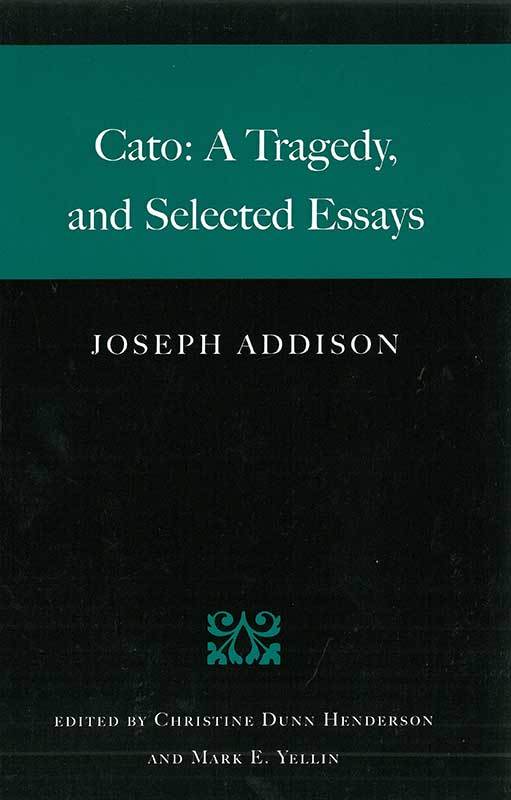
Spectator, No. 219 - Joseph Addison, Cato: A Tragedy and Selected Essays [1710]Edition used:Cato: A Tragedy and Selected Essays, ed. by Christine Dunn Henderson and Mark E. Yellin, with a Foreword by Forrest McDonald (Indianapolis: Liberty Fund, 2004).
About Liberty Fund:Liberty Fund, Inc. is a private, educational foundation established to encourage the study of the ideal of a society of free and responsible individuals. Copyright information:The copyright to this edition, in both print and electronic forms, is held by Liberty Fund, Inc. Fair use statement:This material is put online to further the educational goals of Liberty Fund, Inc. Unless otherwise stated in the Copyright Information section above, this material may be used freely for educational and academic purposes. It may not be used in any way for profit.
Spectator, No. 219Saturday, November 10, 1711 Vix ea nostra voco . . . There are but few Men who are not Ambitious of distinguishing themselves in the Nation or Country where they live, and of growing Considerable among those with whom they converse. There is a kind of Grandeur and Respect, which the meanest and most insignificant part of Mankind endeavour to procure in the little Circle of their Friends and Acquaintance. The poorest Mechanick, nay, the Man who lives upon common Alms, gets him his Sett of Admirers, and delights in that Superiority which he enjoys over those who are in some Respects beneath him. This Ambition, which is natural to the Soul of Man, might methinks receive a very happy turn; and, if it were rightly directed, contribute as much to a Person’s Advantage, as it generally does to his Uneasiness and Disquiet. I shall therefore put together some Thoughts on this Subject, which I have not met with in other Writers, and shall set them down as they have occurred to me, without being at the Pains to Connect or Methodise them. All Superiority and Praeeminence that one Man can have over another, may be reduced to the Notion of Quality, which considered at large, is either that of Fortune, Body, or Mind. The first is that which consists in Birth, Title or Riches, and is the most foreign to our Natures, and what we can the least call our own of any of the three kinds of Quality. In relation to the Body, Quality arises from Health, Strength or Beauty, which are nearer to us, and more a Part of our selves than the former. Quality as it regards the Mind, has its rise from Knowledge or Vertue, and is that which is more essential to us, and more intimately united with us than either of the other two. The Quality of Fortune, tho’ a Man has less reason to value himself upon it than on that of the Body or Mind, is however the kind of Quality which makes the most shining Figure in the Eye of the World. As Vertue is the most reasonable and genuine Source of Honour, we generally find in Titles an Intimation of some particular Merit that should recommend Men to the high Stations which they possess. Holiness is ascribed to the Pope; Majesty to Kings; Serenity or Mildness of Temper to Princes; Excellence or Perfection to Ambassadors; Grace to Arch-Bishops; Honour to Peers; Worship or Venerable Behaviour to Magistrates; and Reverence, which is of the same Import as the former, to the inferior Clergy. In the Founders of great Families such Attributes of Honour are generally correspondent with the Vertues of that Person to whom they are applied; but in the Descendants they are too often the Marks rather of Grandeur than of Merit. The Stamp and Denomination still continues, but the Intrinsick Value is frequently lost. The Death-Bed shews the Emptiness of Titles in a true Light. A poor dispirited Sinner lies trembling under the Apprehensions of the State he is entring on; and is asked by a grave Attendant how his Holiness does? Another hears himself addressed to under the Title of Highness or Excellency, who lies under such mean Circumstances of Mortality as are the Disgrace of Human Nature. Titles at such a time look rather like Insults and Mockery than Respect. The truth of it is, Honours are in this World under no Regulation; true Quality is neglected, Vertue is oppressed, and Vice triumphant. The last Day will rectifie this Disorder, and assign to every one a Station suitable to the Dignity of his Character; Ranks will be then adjusted, and Precedency2 set right. Methinks we should have an Ambition, if not to advance our selves in another World, at least to preserve our Post in it, and outshine our Inferiors in Vertue here, that they may not be put above us in a State which is to settle the Distinction for Eternity. Men in Scripture are called Strangers and Sojourners upon Earth,3 and Life a Pilgrimage.4 Several Heathen as well as Christian Authors, under the same kind of Metaphor, have represented the World as an Inn, which was only designed to furnish us with Accommodations in this our Passage. It is therefore very absurd to think of setting up our Rest before we come to our Journey’s End, and not rather to take care of the Reception we shall there meet, than to fix our Thoughts on the little Conveniences and Advantages which we enjoy one above another in the Way to it. Epictetus makes use of another kind of Allusion, which is very beautiful, and wonderfully proper to incline us to be satisfyed with the Post in which Providence has placed us. We are here, says he, as in a Theatre, where every one has a Part allotted to him. The great Duty which lies upon a Man is to act his Part in Perfection. We may, indeed, say that our Part does not suit us, and that we could act another better. But this (says the Philosopher) is not our Business. All that we are concerned in is to excell in the Part which is given us. If it be an improper one the Fault is not in us, but in him who has cast our several Parts, and is the great Disposer of the Drama.5 The Part which was acted by this Philosopher himself was but a very indifferent one, for he lived and died a Slave. His Motive to Contentment in this particular receives a very great Inforcement from the abovementioned Consideration, if we remember that our Parts in the other World will be new cast, and that Mankind will be there ranged in different Stations of Superiority and Praeeminence, in Proportion as they have here excelled one another in Vertue, and performed in their several Posts of Life the Duties which belong to them. There are many beautiful Passages in the little Apocryphal Book, entitled, The Wisdom of Solomon, to set forth the Vanity of Honour, and the like Temporal Blessings, which are in so great Repute among Men, and to comfort those who have not the Possession of them. It represents in very warm and noble Terms this Advancement of a good Man in the other World, and the great Surprize which it will produce among those who are his Superiors in this. “Then shall the Righteous Man stand in great Boldness before the Face of such as have afflicted him, and made no Account of his Labours. When they see it they shall be troubled with terrible Fear, and shall be amazed at the strangeness of his Salvation, so far beyond all that they looked for. And they repenting, and groaning for Anguish of Spirit, shall say within themselves, This was he whom we had sometime in Derision, and a Proverb of Reproach. We Fools accounted his Life Madness, and his End to be without Honour. How is he numbered among the Children of God, and his Lot is among the Saints!”6 If the Reader would see the Description of a Life that is passed away in Vanity, and among the Shadows of Pomp and Greatness, he may see it very finely drawn in the same Place. In the mean time, since it is necessary, in the present Constitution of things, that Order and Distinction should be kept up in the World, we should be happy if those who enjoy the upper Stations in it would endeavour to surpass others in Vertue, as much as in Rank, and by their Humanity and Condescention make their Superiority easy and acceptable to those who are beneath them; and if, on the contrary, those who are in meaner Posts of Life, would consider how they may better their Condition hereafter, and by a just Deference and Submission to their Superiors make them happy in those Blessings with which Providence has thought fit to distinguish them. [1. ]“I call those in no true sense our own.” Ovid Metamorphoses 13.141. [2. ]Precedence. [3. ]Psalms 39:12. [4. ]Genesis 47:9. [5. ]Epictetus (55–135) Encheiridion 17. [6. ]Wisdom of Solomon 5:1–5. |

Titles (by Subject)