EconlibThe LibraryOther Sites |
Front Page Titles (by Subject) Spectator, No. 125 - Cato: A Tragedy and Selected Essays
Return to Title Page for Cato: A Tragedy and Selected EssaysThe Online Library of LibertyA project of Liberty Fund, Inc.Search this Title:Also in the Library:
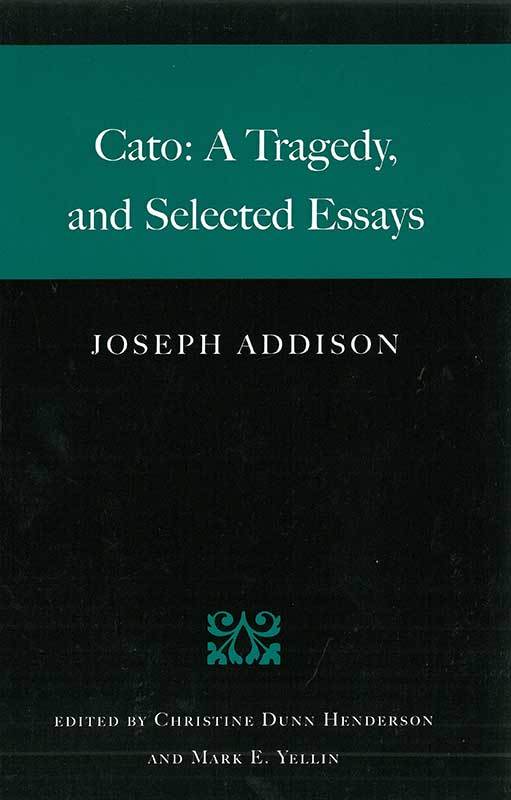
Spectator, No. 125 - Joseph Addison, Cato: A Tragedy and Selected Essays [1710]Edition used:Cato: A Tragedy and Selected Essays, ed. by Christine Dunn Henderson and Mark E. Yellin, with a Foreword by Forrest McDonald (Indianapolis: Liberty Fund, 2004).
About Liberty Fund:Liberty Fund, Inc. is a private, educational foundation established to encourage the study of the ideal of a society of free and responsible individuals. Copyright information:The copyright to this edition, in both print and electronic forms, is held by Liberty Fund, Inc. Fair use statement:This material is put online to further the educational goals of Liberty Fund, Inc. Unless otherwise stated in the Copyright Information section above, this material may be used freely for educational and academic purposes. It may not be used in any way for profit.
Spectator, No. 125Tuesday, July 24, 1711 Ne pueri, ne tanta animis assuescite bella: Neu patriae validas in viscera vertite vires. My worthy Friend Sir Roger,2 when we are talking of the Malice of Parties, very frequently tells us an Accident that happened to him when he was a School-boy, which was at a time when the Feuds ran high between the Round-heads and Cavaliers. This worthy Knight being then but a Stripling, had Occasion to enquire which was the Way to St. Ann’s Lane, upon which the Person whom he spoke to, instead of answering his Question, called him a young Popish Cur, and asked him who had made Ann a Saint? The Boy being in some Confusion, enquired of the next he met, which was the way to Ann’s Lane, but was called a Prick-eared Curr for his Pains, and instead of being shown the Way was told, that she had been a Saint before he was born, and would be one after he was hang’d. Upon this, says Sir Roger, I did not think fit to repeat the former Question, but going into every Lane of the Neighbourhood, asked what they called the Name of that Lane. By which ingenious Artifice he found out the Place he enquired after, without giving Offence to any Party. Sir Roger generally closes this Narrative with Reflections on the Mischief that Parties do in the Country; how they spoil good Neighbourhood, and make honest Gentlemen hate one another; besides that they manifestly tend to the Prejudice of the Land-Tax, and the Destruction of the Game. There cannot a greater Judgment befall a Country than such a dreadful Spirit of Division as rends a Government into two distinct People, and makes them greater Strangers and more averse to one another, than if they were actually two different Nations. The Effects of such a Division are pernicious to the last degree, not only with regard to those Advantages which they give the Common Enemy, but to those private Evils which they produce in the Heart of almost every particular Person. This Influence is very fatal both to Mens Morals and their Understandings; It sinks the Virtue of a Nation, and not only so, but destroys even Common Sense. A furious Party Spirit, when it rages in its full Violence, exerts it self in Civil War and Blood-shed; and when it is under its greatest Restraints naturally breaks out in Falshood, Detraction, Calumny, and a partial Administration of Justice. In a word, It fills a Nation with Spleen and Rancour, and extinguishes all the Seeds of Good-nature, Compassion and Humanity. Plutarch says very finely, that a Man should not allow himself to hate even his Enemies, because, says he, if you indulge this Passion in some Occasions, it will rise of it self in others; if you hate your Enemies, you will contract such a vicious Habit of Mind, as by Degrees will break out upon those who are your Friends, or those who are indifferent to you.3 I might here observe how admirably this Precept of Morality (which derives the Malignity of Hatred from the Passion it self, and not from its Object) answers to that great Rule which was dictated to the World about an hundred years before this Philosopher wrote; but instead of that, I shall only take notice, with a real Grief of Heart, that the Minds of many good Men among us appear sowered with Party-Principles, and alienated from one another in such a manner, as seems to me altogether inconsistent with the Dictates either of Reason or Religion. Zeal for a Publick Cause is apt to breed Passions in the Hearts of virtuous Persons, to which the Regard of their own private Interest would never have betrayed them. If this Party Spirit has so ill an Effect on our Morals, it has likewise a very great one upon our Judgments. We often hear a poor insipid Paper or Pamphlet cryed up, and sometimes a noble Piece depretiated by those who are of a different Principle from the Author. One who is actuated by this Spirit is almost under an Incapacity of discerning either real Blemishes or Beauties. A Man of Merit in a different Principle, is like an Object seen in two different Mediums, that appears crooked or broken, however streight and entire it may be in it self. For this Reason there is scarce a Person of any Figure in England who does not go by two contrary Characters, as opposite to one another as Light and Darkness. Knowledge and Learning suffer in a particular manner from this strange Prejudice, which at present prevails amongst all Ranks and Degrees in the British Nation. As Men formerly became eminent in learned Societies by their Parts and Acquisitions, they now distinguish themselves by the Warmth and Violence with which they espouse their respective Parties. Books are valued upon the like Considerations: An Abusive, Scurrilous Style passes for Satyr, and a dull Scheme of Party Notions is called fine Writing. There is one Piece of Sophistry practised by both Sides, and that is the taking any scandalous Story that has been ever whispered or invented of a Private Man, for a known undoubted Truth, and raising suitable Speculations upon it. Calumnies that have been never proved, or have been often refuted, are the ordinary Postulatums of these infamous Scriblers, upon which they proceed as upon first Principles granted by all Men, though in their Hearts they know they are false, or at best very doubtful. When they have laid these Foundations of Scurrility, it is no wonder that their Superstructure is every way answerable to them. If this shameless Practice of the present Age endures much longer, Praise and Reproach will cease to be Motives of Action in good Men. There are certain Periods of Time in all Governments when this inhuman Spirit prevails. Italy was long torn in pieces by the Guelfes and Gibellines,4 and France by those who were for and against the League,5 but it is very unhappy for a Man to be born in such a stormy and tempestuous Season. It is the restless Ambition of Artful Men that thus breaks a People into Factions, and draws several well-meaning Persons to their Interest, by a Specious Concern for their Country. How many honest Minds are filled with uncharitable and barbarous Notions, out of their Zeal for the Publick Good? What Cruelties and Outrages would they not commit against Men of an adverse Party, whom they would honour and esteem, if instead of considering them as they are represented, they knew them as they are? Thus are Persons of the greatest Probity seduced into shameful Errors and Prejudices, and made bad Men even by that noblest of Principles, the Love of their Country. I cannot here forbear mentioning the Famous Spanish Proverb,6If there were neither Fools nor Knaves in the World, all People would be of one Mind. For my own part, I could heartily wish that all Honest Men would enter into an Association, for the Support of one another against the Endeavours of those whom they ought to look upon as their common Enemies, whatsoever side they may belong to. Were there such an honest Body of Neutral Forces, we should never see the worst of Men in great Figures of Life, because they are useful to a Party; nor the best unregarded, because they are above practising those Methods which would be grateful to their Faction. We should then single every Criminal out of the Herd, and hunt him down, however formidable and overgrown he might appear: On the contrary, we should shelter distressed Innocence, and defend Virtue, however beset with Contempt or Ridicule, Envy or Defamation. In short, we should not any longer regard our Fellow-Subjects as Whigs or Tories, but should make the Man of Merit our Friend, and the Villain our Enemy. [1. ]“O my sons, make not a home within your hearts for such warfare, nor upon your country’s very vitals turn her vigour and valour!” Virgil, Aeneid, 6.832–33. [2. ]Roger de Coverley, a character created by Addison and Steele to give voice to the views of the typical landed gentleman. [3. ]Plutarch Moralia 91c: “Moreover, knavery, deceit, and intrigue, which seem not bad or unjust when employed against an enemy, if once they find lodgement, acquire a permanent tenure, and are hard to eject. The next thing is that men of themselves employ these against their friends through force of habit.” [4. ]Opposing political factions during the Middle Ages, the Guelphs were the papal party and the Ghibellines were the imperial party. [5. ]The Catholic League was formed by Henry, Duke of Guise, in 1576, against the Huguenots in France. [6. ]The source of this proverb is unknown. |

Titles (by Subject)