Econlib

The Library

Other Sites

Front Page arrow Titles (by Subject) arrow SCENE V - Cato: A Tragedy and Selected Essays

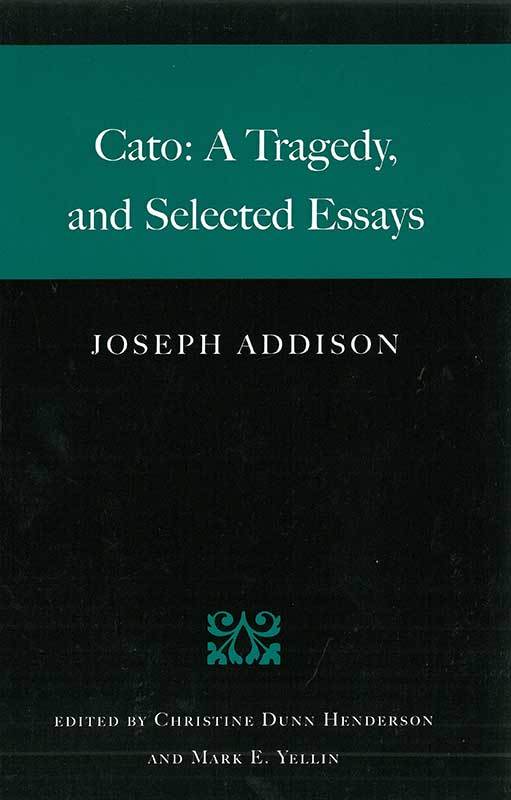
Return to Title Page for Cato: A Tragedy and Selected Essays

Search this Title:

SCENE V - Joseph Addison, Cato: A Tragedy and Selected Essays [1710]

Edition used:

Cato: A Tragedy and Selected Essays, ed. by Christine Dunn Henderson and Mark E. Yellin, with a Foreword by Forrest McDonald (Indianapolis: Liberty Fund, 2004).

About Liberty Fund:

Liberty Fund, Inc. is a private, educational foundation established to encourage the study of the ideal of a society of free and responsible individuals.


SCENE V

Syphax, Juba.

Syphax

  • How’s this, my prince; what! covered with confusion?
  • You look as if yon stern philosopher17
  • Had just now chid18 you.

Juba

  •   Syphax, I’m undone!

Syphax

  • I know it well.

Juba

  •   Cato thinks meanly of me.

Syphax

  • And so will all mankind.

Juba

  •   I’ve opened to him
  • The weakness of my soul, my love for Marcia.

Syphax

  • Cato’s a proper person to intrust
  • A love-tale with!

Juba

  • Oh! I could pierce my heart,
  • My foolish heart! was ever wretch like Juba?

Syphax

  • Alas! my prince, how are you changed of late!
  • I’ve known young Juba rise before the sun,
  • To beat the thicket where the tiger slept,
  • Or seek the lion in his dreadful haunts:
  • How did the colour mount into your cheeks,
  • When first you roused him to the chase! I’ve seen you,
  • Even in the Libyan dog-days, hunt him down,
  • Then charge him close, provoke him to the rage
  • Of fangs and claws, and stooping from your horse
  • Rivet the panting savage to the ground.

Juba

  • Prithee,19 no more!

Syphax

  •   How would the old king smile
  • To see you weigh the paws, when tipped with gold,
  • And throw the shaggy spoils about your shoulders!

Juba

  • Syphax, this old man’s talk (though honey flowed
  • In every word) would now lose all its sweetness.
  • Cato’s displeased, and Marcia lost for ever!

Syphax

  • Young prince, I yet could give you good advice.
  • Marcia might still be yours.

Juba

  • What say’st thou, Syphax?
  • By heavens, thou turn’st me all into attention.

Syphax

  • Marcia might still be yours.

Juba

  •   As how, dear Syphax?

Syphax

  • Juba commands Numidia’s hardy troops,
  • Mounted on steeds, unused to the restraint
  • Of curbs or bits, and fleeter than the winds:
  • Give but the word, we’ll snatch this damsel up
  • And bear her off.

Juba

  •   Can such dishonest thoughts
  • Rise up in man! wouldst thou seduce my youth
  • To do an act that would destroy my honour?

Syphax

  • Gods! I could tear my beard to hear you talk!
  • Honour’s a fine imaginary notion,
  • That draws in raw and unexperienced men
  • To real mischiefs, while they hunt a shadow.20

Juba

  • Wouldst thou degrade thy prince into a ruffian?

Syphax

  • The boasted ancestors of these great men,
  • Whose virtues you admire, were all such ruffians.
  • This dread of nations, this almighty Rome,
  • That comprehends in her wide empire’s bounds
  • All under heaven, was founded on a rape.
  • Your Scipios, Caesars, Pompeys, and your Catos,
  • (These gods on earth,) are all the spurious brood
  • Of violated maids, of ravished Sabines.21

Juba

  • Syphax, I fear that hoary22 head of thine
  • Abounds too much in our Numidian wiles.

Syphax

  • Indeed, my prince, you want to know the world;
  • You have not read mankind; your youth admires
  • The throws and swellings of a Roman soul,
  • Cato’s bold flights, the extravagance of virtue.

Juba

  • If knowledge of the world makes man perfidious,
  • May Juba ever live in ignorance?

Syphax

  • Go, go, you’re young.

Juba

  •   Gods! must I tamely bear
  • This arrogance unanswered! thou’rt a traitor,
  • A false old traitor.

Syphax

  •   I have gone too far.  [Aside.]

Juba

  • Cato shall know the baseness of thy soul.

Syphax

  • I must appease this storm, or perish in it.  [Aside.]
  • Young prince, behold these locks that are grown white
  • Beneath a helmet in your father’s battles.23

Juba

  • Those locks shall ne’er protect thy insolence.

Syphax

  • Must one rash word, the infirmity of age,
  • Throw down the merit of my better years?
  • This the reward of a whole life of service!
  • —Curse on the boy! how steadily he hears me!  [Aside.]

Juba

  • Is it because the throne of my forefathers
  • Still stands unfilled, and that Numidia’s crown
  • Hangs doubtful yet, whose head it shall enclose,
  • Thou thus presum’st to treat thy prince with scorn?

Syphax

  • Why will you rive24 my heart with such expressions?
  • Does not old Syphax follow you to war?
  • What are his aims? why does he load with darts
  • His trembling hand, and crush beneath a casque25
  • His wrinkled brows? what is it he aspires to?
  • Is it not this, to shed the slow remains,
  • His last poor ebb of blood, in your defence?

Juba

  • Syphax, no more! I would not hear you talk.

Syphax

  • Not hear me talk! what, when my faith to Juba,
  • My royal master’s son, is called in question?
  • My prince may strike me dead, and I’ll be dumb:
  • But whilst I live I must not hold my tongue,
  • And languish out old age in his displeasure.

Juba

  • Thou know’st the way too well into my heart,
  • I do believe thee loyal to thy prince.

Syphax

  • What greater instance can I give? I’ve offered
  • To do an action, which my soul abhors,
  • And gain you whom you love at any price.

Juba

  • Was this thy motive? I have been too hasty.

Syphax

  • And ’tis for this my prince has called me traitor.

Juba

  • Sure thou mistak’st; I did not call thee so.

Syphax

  • You did indeed, my prince, you called me traitor:
  • Nay, further, threatened you’d complain to Cato.
  • Of what, my prince, would you complain to Cato?
  • That Syphax loves you, and would sacrifice
  • His life, nay, more, his honour in your service.

Juba

  • Syphax, I know thou lov’st me, but indeed
  • Thy zeal for Juba carried thee too far.
  • Honour’s a sacred tie,26 the law of kings,
  • The noble mind’s distinguishing perfection,
  • That aids and strengthens virtue where it meets her,
  • And imitates her actions, where she is not:
  • It ought not to be sported with.

Syphax

  •   By heavens,
  • I’m ravished when you talk thus, though you chide me!
  • Alas! I’ve hitherto been used to think
  • A blind, officious zeal to serve my king
  • The ruling principle that ought to burn
  • And quench all others in a subject’s heart.
  • Happy the people, who preserve their honour
  • By the same duties that oblige their prince!

Juba

  • Syphax, thou now begin’st to speak thyself.
  • Numidia’s grown a scorn among the nations
  • For breach of public vows. Our Punic faith27
  • Is infamous, and branded to a proverb.
  • Syphax, we’ll join our cares, to purge away
  • Our country’s crimes, and clear her reputation.

Syphax

  • Believe me, prince, you make old Syphax weep
  • To hear you talk—but ’tis with tears of joy.
  • If e’er your father’s crown adorn your brows,
  • Numidia will be blest by Cato’s lectures.

Juba

  • Syphax, thy hand! we’ll mutually forget
  • The warmth of youth, and forwardness of age:
  • Thy prince esteems thy worth, and loves thy person.
  • If e’er the sceptre comes into my hand,
  • Syphax shall stand the second in my kingdom.

Syphax

  • Why will you overwhelm my age with kindness?
  • My joy grows burdensome, I sha’n’t support it.

Juba

  • Syphax, farewell, I’ll hence, and try to find
  • Some blest occasion that may set me right
  • In Cato’s thoughts. I’d rather have that man
  • Approve my deeds, than worlds for my admirers.

Syphax, solus

  • Young men soon give, and soon forget affronts;
  • Old age is slow in both—A false old traitor!
  • Those words, rash boy, may chance to cost thee dear.
  • My heart had still some foolish fondness for thee:
  • But hence! ’tis gone: I give it to the winds:—
  • Caesar, I’m wholly thine—

[17. ]See note at I.4 (p. 20, n. 31).

[18. ]Chided.

[19. ]I pray thee.

[20. ]See Guardian 161 (pp. 194–97) and Shakespeare’s Henry IV, Part I, V.i.129–40.

[21. ]According to legend, after Romulus founded Rome, he and his men needed wives, so they invited neighboring Sabine women to a feast and kidnapped them. This led to war with the Sabines. As part of the peace agreement, Titus Tatius, the Sabine leader, was invited to share power with Romulus, who later killed him (see Livy, History. I.9).

[22. ]Grey or white with age.

[23. ]—George Washington paraphrased these lines when addressing the mutinous officers at Newburgh in 1783.

[24. ]To tear apart by pulling.

[25. ]Helmet.

[26. ]See Guardian 161 and Spectator 219.

[27. ]Faithlessness; Romans characterized Carthaginians as treacherous.