Econlib

The Library

Other Sites

Front Page arrow Titles (by Subject) arrow CATO: A TRAGEDY - Cato: A Tragedy and Selected Essays

Return to Title Page for Cato: A Tragedy and Selected Essays

Search this Title:

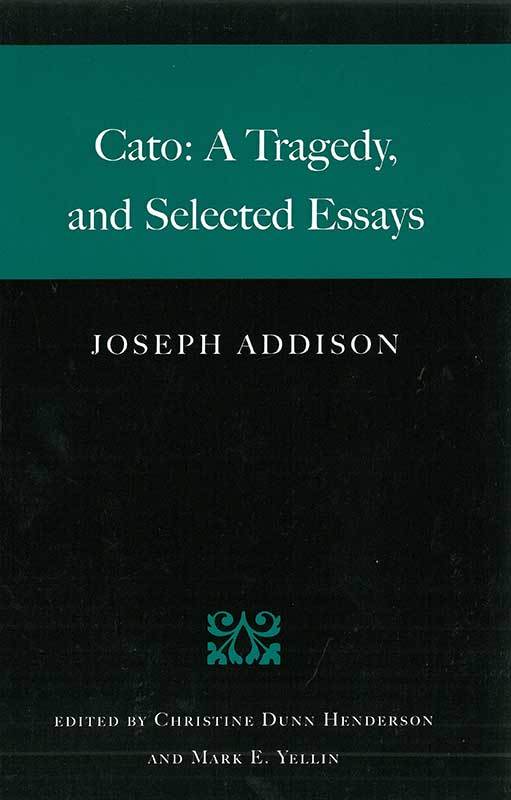
CATO: A TRAGEDY - Joseph Addison, Cato: A Tragedy and Selected Essays [1710]

Edition used:

Cato: A Tragedy and Selected Essays, ed. by Christine Dunn Henderson and Mark E. Yellin, with a Foreword by Forrest McDonald (Indianapolis: Liberty Fund, 2004).

About Liberty Fund:

Liberty Fund, Inc. is a private, educational foundation established to encourage the study of the ideal of a society of free and responsible individuals.


CATO: A TRAGEDY

As it is acted at the Theatre Royal, in Drury Lane, by his majesty’s servants

Ecce spectaculum dignum, ad quod respiciat, intentus operi suo, Deus! Ecce par Deo dignum, vir fortis cum malâ fortunâ compositus! Non video, inquam, quid habeat in terris Jupiter pulchrius, si convertere animum velit, quam ut spectet Catonem, jam partibus non semel fractis, nihilominus inter ruinas publicas erectum.

PROLOGUE BY MR. POPE2

Spoken by Mr. Wilks3

  • To wake the soul by tender strokes of art,
  • To raise the genius and to mend the heart,
  • To make mankind in conscious virtue bold,
  • Live o’er each scene, and be what they behold;—
  • For this the tragic muse first trod the stage,
  • Commanding tears to stream through every age;
  • Tyrants no more their savage nature kept,
  • And foes to virtue wondered how they wept.
  • Our author shuns by vulgar springs to move
  • The hero’s glory, or the virgin’s love;
  • In pitying love we but our weakness show,
  • And wild ambition well deserves its woe.
  • Here tears shall flow from a more generous cause,
  • Such tears as patriots shed for dying laws:
  • He bids your breasts with ancient ardour rise,
  • And calls forth Roman drops from British eyes;
  • Virtue confest in human shape he draws,
  • What Plato thought, and godlike Cato was:
  • No common object to your sight displays,
  • But, what with pleasure heaven itself surveys,
  • A brave man struggling in the storms of fate,
  • And greatly falling with a falling state!
  • While Cato gives his little senate laws,
  • What bosom beats not in his country’s cause?
  • Who sees him act, but envies every deed?
  • Who hears him groan, and does not wish to bleed?
  • Ev’n then proud Caesar, ’midst triumphal cars,
  • The spoils of nations, and the pomp of wars,
  • Ignobly vain, and impotently great,
  • Showed Rome her Cato’s figure drawn in state.
  • As her dead father’s reverend image past,
  • The pomp was darkened, and the day o’ercast,
  • The triumph ceased—tears gushed from every eye,
  • The world’s great victor passed unheeded by;
  • Her last good man dejected Rome adored,
  • And honoured Caesar’s less than Cato’s sword.
  •   Britons, attend: be worth like this approved,
  • And show you have the virtue to be moved.
  • With honest scorn the first famed Cato4 viewed
  • Rome learning arts from Greece, whom she subdued.
  • Our scene precariously subsists too long
  • On French translation, and Italian song:
  • Dare to have sense yourselves; assert the stage,
  • Be justly warmed with your own native rage.
  • Such plays alone should please a British ear,
  • As Cato’s self had not disdained to hear.

DRAMATIS PERSONAE

Men
CATO,MR. BOOTH
LUCIUS, a Senator,MR. KEEN
SEMPRONIUS, a Senator,MR. MILLS
JUBA, Prince of Numidia,MR. WILKS
SYPHAX, General of the Numidians,MR. CIBBER
PORTIUS, Son of Cato,MR. POWELL
MARCUS, Son of Cato,MR. RYAN
DECIUS, Ambassador from Caesar,MR. BOWMAN
Mutineers, Guards, &c.
Women
MARCIA, Daughter to Cato,MRS. OLDFIELD
LUCIA, Daughter to Lucius,MRS. PORTER

Scene, A large Hall in the Governor’s Palace of Utica.

ACT I —

SCENE I

Portius, Marcus.

Portius

  • The dawn is overcast, the morning lowers,
  • And heavily in clouds brings on the day,
  • The great, the important day, big with the fate
  • Of Cato and of Rome.—Our father’s death
  • Would fill up all the guilt of civil war,5
  • And close the scene of blood. Already Caesar6
  • Has ravaged more than half the globe, and sees
  • Mankind grown thin by his destructive sword:
  • Should he go further, numbers would be wanting
  • To form new battles, and support his crimes.
  • Ye gods, what havoc does ambition make
  • Among your works!

Marcus

  •     Thy steady temper, Portius,
  • Can look on guilt, rebellion, fraud, and Caesar,
  • In the calm lights of mild philosophy;7
  • I’m tortured ev’n to madness, when I think
  • On the proud victor: every time he’s named
  • Pharsalia8 rises to my view!—I see
  • The insulting tyrant, prancing o’er the field
  • Strowed with Rome’s citizens, and drenched in slaughter,
  • His horse’s hoofs wet with Patrician9 blood!
  • Oh, Portius! is there not some chosen curse,
  • Some hidden thunder in the stores of heaven,
  • Red with uncommon wrath, to blast the man
  • Who owes his greatness to his country’s ruin?

Portius

  • Believe me, Marcus, ’tis an impious greatness,
  • And mixt with too much horror to be envied.
  • How does the lustre of our father’s actions,
  • Through the dark cloud of ills that cover him,
  • Break out, and burn with more triumphant brightness!
  • His sufferings shine, and spread a glory round him;
  • Greatly unfortunate, he fights the cause
  • Of honour, virtue, liberty, and Rome.
  • His sword ne’er fell but on the guilty head;
  • Oppression, tyranny, and power usurped,
  • Draw all the vengeance of his arm upon ’em.

Marcus

  • Who knows not this? but what can Cato do
  • Against a world, a base, degenerate world,
  • That courts the yoke, and bows the neck to Caesar?
  • Pent up in Utica10 he vainly forms
  • A poor epitome of Roman greatness,
  • And, covered with Numidian11 guards, directs
  • A feeble army, and an empty senate,
  • Remnants of mighty battles fought in vain.
  • By heavens, such virtues, joined with such success,
  • Distract my very soul: our father’s fortune
  • Would almost tempt us to renounce his precepts.12

Portius

  • Remember what our father oft has told us:
  • The ways of heaven are dark and intricate,
  • Puzzled in mazes, and perplexed with errors:
  • Our understanding traces ’em in vain,
  • Lost and bewildered in the fruitless search;
  • Nor sees with how much art the windings run,
  • Nor where the regular confusion ends.

Marcus

  • These are suggestions of a mind at ease:
  • Oh, Portius! didst thou taste but half the griefs
  • That wring my soul, thou couldst not talk thus coldly.
  • Passion unpitied, and successless love,
  • Plant daggers in my heart, and aggravate
  • My other griefs. Were but my Lucia kind!—

Portius

  • Thou seest not that thy brother is thy rival:
  • But I must hide it, for I know thy temper.  [Aside.]
  •   Now, Marcus, now, thy virtue’s on the proof:13
  • Put forth thy utmost strength, work every nerve,
  • And call up all thy father in thy soul:
  • To quell the tyrant Love, and guard thy heart
  • On this weak side, where most our nature fails,
  • Would be a conquest worthy Cato’s son.

Marcus

  • Portius, the counsel which I cannot take,
  • Instead of healing, but upbraids my weakness.
  • Bid me for honour plunge into a war
  • Of thickest foes, and rush on certain death,
  • Then shalt thou see that Marcus is not slow
  • To follow glory, and confess his father.
  • Love is not to be reasoned down, or lost
  • In high ambition, and a thirst of greatness;
  • ’Tis second life, it grows into the soul,
  • Warms every vein, and beats in every pulse,
  • I feel it here: my resolution melts—

Portius

  • Behold young Juba, the Numidian prince!
  • With how much care he forms himself to glory,
  • And breaks the fierceness of his native temper
  • To copy out our father’s bright example.
  • He loves our sister Marcia, greatly loves her,
  • His eyes, his looks, his actions all betray it:
  • But still the smothered fondness burns within him.
  • When most it swells, and labours for a vent,
  • The sense of honour and desire of fame14
  • Drive the big passion back into his heart.
  • What! shall an African, shall Juba’s heir,15
  • Reproach great Cato’s son, and show the world
  • A virtue wanting in a Roman soul?

Marcus

  • Portius, no more! your words leave stings behind ’em.
  • Whene’er did Juba, or did Portius, show
  • A virtue that has cast me at a distance,
  • And thrown me out in the pursuits of honour?

Portius

  • Marcus, I know thy generous temper well;
  • Fling but the appearance of dishonour on it,
  • It straight takes fire, and mounts into a blaze.

Marcus

  • A brother’s sufferings claim a brother’s pity.

Portius

  • Heaven knows I pity thee: behold my eyes
  • Ev’n whilst I speak—Do they not swim in tears?
  • Were but my heart as naked to thy view,
  • Marcus would see it bleed in his behalf.

Marcus

  • Why then dost treat me with rebukes, instead
  • Of kind, condoling cares, and friendly sorrow?

Portius

  • O Marcus! did I know the way to ease
  • Thy troubled heart, and mitigate thy pains,
  • Marcus, believe me, I could die to do it.

Marcus

  • Thou best of brothers, and thou best of friends!
  • Pardon a weak, distempered soul, that swells
  • With csudden gusts, and sinks as soon in calms,
  • The sport of passions:—but Sempronius comes:
  • He must not find this softness hanging on me.  [Exit.]

SCENE II

Sempronius, solus.

Sempronius

  • Conspiracies no sooner should be formed
  • Than executed.16 What means Portius here?
  • I like not that cold youth. I must dissemble,
  • And speak a language foreign to my heart.

Sempronius, Portius.

  • Good-morrow, Portius! let us once embrace,
  • Once more embrace; whilst yet we both are free.
  • To-morrow should we thus express our friendship,
  • Each might receive a slave into his arms:
  • This sun, perhaps, this morning sun’s the last,
  • That e’er shall rise on Roman liberty.

Portius

  • My father has this morning called together
  • To this poor hall his little Roman senate,17
  • (The leavings of Pharsalia,) to consult
  • If yet he can oppose the mighty torrent
  • Thou bears down Rome, and all her gods, before it,
  • Or must at length give up the world to Caesar.

Sempronius

  • Not all the pomp and majesty of Rome
  • Can raise her senate more than Cato’s presence.
  • His virtues render our assembly awful,18
  • They strike with something like religious fear,
  • And make ev’n Caesar tremble at the head
  • Of armies flushed with conquest: O my Portius!
  • Could I but call that wondrous man my father,
  • Would but thy sister Marcia be propitious
  • To thy friend’s vows, I might be blessed indeed!

Portius

  • Alas! Sempronius, wouldst thou talk of love
  • To Marcia, whilst her father’s life’s in danger?
  • Thou might’st as well court the pale trembling vestal,
  • When she beholds the holy flame expiring.

Sempronius

  • The more I see the wonders of thy race,
  • The more I’m charmed. Thou must take heed, my Portius!
  • The world has all its eyes on Cato’s son.
  • Thy father’s merit sets thee up to view,
  • And shows thee in the fairest point of light,
  • To make thy virtues, or thy faults, conspicuous.

Portius

  • Well dost thou seem to check my lingering here
  • On this important hour!—I’ll straight away,
  • And while the fathers of the senate meet
  • In close debate to weigh the events of war,
  • I’ll animate the soldiers’ drooping courage,
  • With love of freedom, and contempt of life:
  • I’ll thunder in their ears their country’s cause,
  • And try to rouse up all that’s Roman in ’em.
  • ’Tis not in mortals to command success,19
  • But we’ll do more, Sempronius; we’ll deserve it.  [Exit.]

Sempronius, solus

  • Curse on the stripling! how he apes his sire!
  • Ambitiously sententious!20 —but I wonder
  • Old Syphax comes not; his Numidian genius
  • Is well disposed to mischief, were he prompt
  • And eager on it; but he must be spurred,
  • And every moment quickened to the course.
  • —Cato has used me ill: he has refused
  • His daughter Marcia to my ardent vows.
  • Besides, his baffled21 arms, and ruined cause,
  • Are bars to my ambition. Caesar’s favour,
  • That showers down greatness on his friends, will raise me
  • To Rome’s first honours. If I give up Cato,
  • I claim in my reward his captive daughter.
  • But Syphax comes!—

SCENE III

Syphax, Sempronius.

Syphax

  •     Sempronius, all is ready,
  • I’ve sounded my Numidians, man by man,
  • And find ’em ripe for a revolt: they all
  • Complain aloud of Cato’s discipline,
  • And wait but the command to change their master.

Sempronius

  • Believe me, Syphax, there’s no time to waste;
  • Ev’n whilst we speak, our conqueror comes on,
  • And gathers ground upon us every moment.
  • Alas! thou know’st not Caesar’s active soul,22
  • With what a dreadful course he rushes on
  • From war to war: in vain has nature formed
  • Mountains and oceans to oppose his passage;
  • He bounds o’er all, victorious in his march;
  • The Alps and Pyreneans23 sink before him,
  • Through winds and waves and storms he works his way,
  • Impatient for the battle: one day more
  • Will set the victor thundering at our gates.
  • But tell me, hast thou yet drawn o’er young Juba?
  • That still would recommend thee more to Caesar,
  • And challenge better terms.

Syphax

  •     Alas! he’s lost,
  • He’s lost, Sempronius; all his thoughts are full
  • Of Cato’s virtues:—but I’ll try once more
  • (For every instant I expect him here)
  • If yet I can subdue those stubborn principles
  • Of faith, of honour, and I know not what,
  • That have corrupted his Numidian temper,
  • And struck the infection into all his soul.

Sempronius

  • Be sure to press upon him every motive.
  • Juba’s surrender, since his father’s death,
  • Would give up Afric into Caesar’s hands,
  • And make him lord of half the burning zone.

Syphax

  • But is it true, Sempronius, that your senate
  • Is called together? Gods! thou must be cautious!
  • Cato has piercing eyes, and will discern
  • Our frauds, unless they’re covered thick with art.24

Sempronius

  • Let me alone, good Syphax, I’ll conceal
  • My thoughts in passion (’tis the surest way);
  • I’ll bellow out for Rome and for my country,
  • And mouth at Caesar till I shake the senate.
  • Your cold hypocrisy’s a stale device,
  • A worn-out trick: wouldst thou be thought in earnest?
  • Clothe thy feigned zeal in rage, in fire, in fury!

Syphax

  • In troth, thou ’rt able to instruct grey-hairs,
  • And teach the wily African deceit!

Sempronius

  • Once more, be sure to try thy skill on Juba.
  • Meanwhile I’ll hasten to my Roman soldiers,
  • Inflame the mutiny, and underhand
  • Blow up their discontents, till they break out
  • Unlooked for, and discharge themselves on Cato.
  • Remember, Syphax, we must work in haste:
  • Oh think what anxious moments pass between
  • The birth of plots and their last fatal periods.
  • Oh! ’tis a dreadful interval of time,
  • Filled up with horror all, and big with death!
  • Destruction hangs on every word we speak,
  • On every thought, till the concluding stroke
  • Determines all, and closes our design.  [Exit.]

Syphax, solus

  • I’ll try if yet I can reduce to reason
  • This head-strong youth, and make him spurn at Cato.
  • The time is short, Caesar comes rushing on us—
  • But hold! young Juba sees me, and approaches.

SCENE IV

Juba, Syphax.

Juba

  • Syphax, I joy to meet thee thus alone.
  • I have observed of late thy looks are fallen,
  • O’ercast with gloomy cares and discontent;
  • Then tell me, Syphax, I conjure25 thee, tell me,
  • What are the thoughts that knit thy brow in frowns,
  • And turn thine eye thus coldly on thy prince?

Syphax

  • ’Tis not my talent to conceal my thoughts,
  • Or carry smiles and sunshine in my face,
  • When discontent sits heavy at my heart.
  • I have not yet so much the Roman in me.

Juba

  • Why dost thou cast out such ungenerous terms
  • Against the lords and sovereigns of the world?
  • Dost thou not see mankind fall down before them,
  • And own the force of their superior virtue?
  • Is there a nation in the wilds of Afric,
  • Amidst our barren rocks and burning sands,
  • That does not tremble at the Roman name?

Syphax

  • Gods! where’s the worth that sets this people up
  • Above your own Numidia’s tawny sons!
  • Do they with tougher sinews bend the bow?
  • Or flies the javelin swifter to its mark,
  • Launched from the vigour of a Roman arm?
  • Who like our active African instructs
  • The fiery steed, and trains him to his hand?
  • Or guides in troops the embattled elephant,
  • Loaden with war? these, these are arts, my prince,
  • In which your Zama26 does not stoop to Rome.

Juba

  • These all are virtues of a meaner rank,
  • Perfections that are placed in bones and nerves.
  • A Roman soul is bent on higher views:27
  • To civilize the rude, unpolished world,
  • And lay it under the restraint of laws;
  • To make man mild, and sociable to man;
  • To cultivate the wild, licentious savage
  • With wisdom, discipline, and liberal arts—
  • The embellishments of life; virtues like these
  • Make human nature shine, reform the soul,
  • And break our fierce barbarians28 into men.

Syphax

  • Patience, kind heavens!—excuse an old man’s warmth!
  • What are these wondrous civilizing arts,
  • This Roman polish, and this smooth behaviour,
  • That render man thus tractable and tame?
  • Are they not only to disguise our passions,
  • To set our looks at variance with our thoughts,
  • To check the starts and sallies of the soul,
  • And break off all its commerce with the tongue;
  • In short, to change us into other creatures,
  • Than what our nature and the gods designed us?

Juba

  • To strike thee dumb, turn up thy eyes to Cato!
  • There may’st thou see to what a godlike height
  • The Roman virtues lift up mortal man.
  • While good, and just, and anxious for his friends,
  • He’s still severely bent against himself;
  • Renouncing sleep, and rest, and food, and ease,
  • He strives with thirst and hunger, toil and heat;
  • And when his fortune sets before him all
  • The pomps and pleasures that his soul can wish,
  • His rigid virtue will accept of none.

Syphax

  • Believe me, prince, there’s not an African
  • That traverses our vast Numidian deserts
  • In quest of prey, and lives upon his bow,
  • But better practises these boasted virtues.
  • Coarse are his meals, the fortune of the chase,
  • Amidst the running stream he slakes his thirst,
  • Toils all the day, and at the approach of night
  • On the first friendly bank he throws him down,
  • Or rests his head upon a rock till morn:
  • Then rises fresh, pursues his wonted29 game,
  • And if the following day he chance to find
  • A new repast, or an untasted spring,
  • Blesses his stars, and thinks it luxury.

Juba

  • Thy prejudices, Syphax, won’t discern
  • What virtues grow from ignorance and choice,30
  • Nor how the hero differs from the brute.
  • But grant that others could with equal glory
  • Look down on pleasures, and the baits of sense;
  • Where shall we find the man that bears affliction,
  • Great and majestic in his griefs, like Cato?
  • Heavens! with what strength, what steadiness of mind,
  • He triumphs in the midst of all his sufferings!
  • How does he rise against a load of woes,
  • And thank the gods that throw the weight upon him!

Syphax

  • ’Tis pride, rank pride, and haughtiness of soul:
  • I think the Romans call it stoicism.31
  • Had not your royal father thought so highly
  • Of Roman virtue, and of Cato’s cause,
  • He had not fallen by a slave’s hand, inglorious:
  • Nor would his slaughtered army now have lain
  • On Afric’s sands, disfigured with their wounds,
  • To gorge the wolves and vultures of Numidia.

Juba

  • Why dost thou call my sorrows up afresh?
  • My father’s name brings tears into my eyes.

Syphax

  • Oh! that you’d profit by your father’s ills!

Juba

  • What wouldst thou have me do?

Syphax

  •     Abandon Cato.

Juba

  • Syphax, I should be more than twice an orphan
  • By such a loss.

Syphax

  •     Ay, there’s the tie that binds you!
  • You long to call him father. Marcia’s charms
  • Work in your heart unseen, and plead for Cato.
  • No wonder you are deaf to all I say.

Juba

  • Syphax, your zeal becomes importunate;32
  • I’ve hitherto permitted it to rave,
  • And talk at large; but learn to keep it in,
  • Lest it should take more freedom than I’ll give it.

Syphax

  • Sir, your great father never used me thus.
  • Alas! he’s dead! but can you e’er forget
  • The tender sorrows, and the pangs of nature,
  • The fond embraces, and repeated blessings,
  • Which you drew from him in your last farewell?
  • Still must I cherish the dear, sad remembrance,
  • At once to torture and to please my soul.
  • The good old king at parting wrung my hand,
  • (His eyes brimful of tears,) then sighing cried,
  • Prithee, be careful of my son!—his grief
  • Swelled up so high, he could not utter more.

Juba

  • Alas! thy story melts away my soul.
  • That best of fathers! how shall I discharge
  • The gratitude and duty which I owe him!

Syphax

  • By laying up his counsels in your heart.

Juba

  • His counsels bade me yield to thy directions:
  • Then, Syphax, chide me in severest terms,
  • Vent all thy passion, and I’ll stand its shock,
  • Calm and unruffled as a summer sea,
  • When not a breath of wind flies o’er its surface.

Syphax

  • Alas! my prince, I’d guide you to your safety.

Juba

  • I do believe thou wouldst: but tell me how?

Syphax

  • Fly from the fate that follows Caesar’s foes.

Juba

  • My father scorned to do it.

Syphax

  •     And therefore died.

Juba

  • Better to die ten thousand thousand deaths,
  • Than wound my honour.33

Syphax

  •     Rather say, your love.

Juba

  • Syphax, I’ve promised to preserve my temper.
  • Why wilt thou urge me to confess a flame
  • I long have stifled, and would fain conceal?

Syphax

  • Believe me, prince, though hard to conquer love,
  • ’Tis easy to divert and break its force:
  • Absence might cure it, or a second mistress
  • Light up another flame, and put out this.
  • The glowing dames of Zama’s royal court
  • Have faces flusht with more exalted charms;
  • The sun, that rolls his chariot o’er their heads,
  • Works up more fire and colour in their cheeks:
  • Were you with these, my prince, you’d soon forget
  • The pale, unripened beauties of the north.

Juba

  • ’Tis not a set of features, or complexion,
  • The tincture of a skin, that I admire.
  • Beauty soon grows familiar to the lover,
  • Fades in his eye, and palls upon the sense.
  • The virtuous Marcia towers above her sex:
  • True, she is fair, (oh how divinely fair!)
  • But still the lovely maid improves her charms
  • With inward greatness, unaffected wisdom,
  • And sanctity of manners. Cato’s soul
  • Shines out in everything she acts or speaks,
  • While winning mildness and attractive smiles
  • Dwell in her looks, and with becoming grace
  • Soften the rigour of her father’s virtues.

Syphax

  • How does your tongue grow wanton in her praise!
  • But on my knees I beg you would consider—
  •     [Enter Marcia and Lucia.]

Juba

  • Hah! Syphax, is’t not she?—she moves this way:
  • And with her Lucia, Lucius’s fair daughter.
  • My heart beats thick—I prithee, Syphax, leave me.

Syphax

  • Ten thousand curses fasten on ’em both!
  • Now will this woman, with a single glance,
  • Undo what I’ve been labouring all this while.  [Exit.]

SCENE V

Juba, Marcia, Lucia.

Juba

  • Hail, charming maid! how does thy beauty smooth
  • The face of war, and make ev’n horror smile!
  • At sight of thee my heart shakes off its sorrows;
  • I feel a dawn of joy break in upon me,
  • And for a while forget the approach of Caesar.

Marcia

  • I should be grieved, young prince, to think my presence
  • Unbent your thoughts, and slackened ’em to arms,
  • While, warm with slaughter, our victorious foe
  • Threatens aloud, and calls you to the field.

Juba

  • O Marcia, let me hope thy kind concerns
  • And gentle wishes follow me to battle!
  • The thought will give new vigour to my arm,
  • Add strength and weight to my descending sword,
  • And drive it in a tempest on the foe.

Marcia

  • My prayers and wishes always shall attend
  • The friends of Rome, the glorious cause of virtue,
  • And men approved of by the gods and Cato.

Juba

  • That Juba may deserve thy pious cares,
  • I’ll gaze for ever on thy godlike father,
  • Transplanting, one by one, into my life,
  • His bright perfections, till I shine like him.

Marcia

  • My father never, at a time like this,
  • Would lay out his great soul in words, and waste
  • Such precious moments.

Juba

  •     Thy reproofs are just,
  • Thou virtuous maid; I’ll hasten to my troops,
  • And fire their languid souls with Cato’s virtue.
  • If e’er I lead them to the field, when all
  • The war shall stand ranged in its just array,
  • And dreadful pomp; then will I think on thee!
  • O lovely maid, then will I think on thee!
  • And, in the shock of charging hosts, remember
  • What glorious deeds should grace the man who hopes
  • For Marcia’s love.  [Exit.]

SCENE VI

Lucia, Marcia.

Lucia

  •     Marcia, you’re too severe:
  • How could you chide the young good-natured prince,
  • And drive him from you with so stern an air;
  • A prince that loves and dotes on you to death?

Marcia

  • ’Tis therefore, Lucia, that I chide him from me.
  • His air, his voice, his looks, and honest soul
  • Speak all so movingly in his behalf,
  • I dare not trust myself to hear him talk.

Lucia

  • Why will you fight against so sweet a passion,
  • And steel your heart to such a world of charms?

Marcia

  • How, Lucia! wouldst thou have me sink away
  • In pleasing dreams, and lose myself in love,
  • When every moment Cato’s life’s at stake?
  • Caesar comes armed with terror and revenge,
  • And aims his thunder at my father’s head:
  • Should not the sad occasion swallow up
  • My other cares, and draw them all into it?

Lucia

  • Why have not I this constancy of mind,
  • Who have so many griefs to try its force?
  • Sure, nature formed me of her softest mould,
  • Enfeebled all my soul with tender passions,
  • And sunk me ev’n below my own weak sex:
  • Pity and love, by turns, oppress my heart.

Marcia

  • Lucia, disburthen all thy cares on me,
  • And let me share thy most retired34 distress;
  • Tell me who raises up this conflict in thee?

Lucia

  • I need not blush to name them, when I tell thee
  • They’re Marcia’s brothers, and the sons of Cato.

Marcia

  • They both behold thee with their sister’s eyes;
  • And often have revealed their passion to me.
  • But tell me whose address thou favourest most;
  • I long to know, and yet I dread to hear it.

Lucia

  • Which is it Marcia wishes for?

Marcia

  •     For neither—
  • And yet for both;—the youths have equal share
  • In Marcia’s wishes, and divide their sister:
  • But tell me, which of them is Lucia’s choice?

Lucia

  • Marcia, they both are high in my esteem,
  • But in my love—why wilt thou make me name him?
  • Thou know’st it is a blind and foolish passion,
  • Pleased and disgusted with it knows not what—

Marcia

  • O Lucia, I’m perplexed, oh tell me which
  • I must hereafter call my happy brother?

Lucia

  • Suppose ’twere Portius, could you blame my choice?
  • —O Portius, thou hast stolen away my soul!
  • With what a graceful tenderness he loves!
  • And breathes the softest, the sincerest vows!
  • Complacency, and truth, and manly sweetness
  • Dwell ever on his tongue, and smooth his thoughts.
  • Marcus is over-warm, his fond complaints
  • Have so much earnestness and passion in them,
  • I hear him with a secret kind of horror,
  • And tremble at his vehemence of temper.

Marcia

  • Alas, poor youth! how canst thou throw him from thee?
  • Lucia, thou know’st not half the love he bears thee;
  • Whene’er he speaks of thee, his heart’s in flames,
  • He sends out all his soul in every word,
  • And thinks, and talks, and looks like one transported.
  • Unhappy youth! how will thy coldness raise
  • Tempests and storms in his afflicted bosom!
  • I dread the consequence.

Lucia

  •     You seem to plead
  • Against your brother Portius.

Marcia

  •     Heaven forbid!
  • Had Portius been the unsuccessful lover,
  • The same compassion would have fallen on him.

Lucia

  • Was ever virgin love distressed like mine!
  • Portius himself oft falls in tears before me,
  • As if he mourned his rival’s ill success,
  • Then bids me hide the motions of my heart,
  • Nor show which way it turns. So much he fears
  • The sad effects that it would have on Marcus.

Marcia

  • He knows too well how easily he’s fired,
  • And would not plunge his brother in despair,
  • But waits for happier times, and kinder moments.

Lucia

  • Alas! too late I find myself involved
  • In endless griefs, and labyrinths of woe,
  • Born to afflict my Marcia’s family,
  • And sow dissension in the hearts of brothers.
  • Tormenting thought! it cuts into my soul.

Marcia

  • Let us not, Lucia, aggravate our sorrows,
  • But to the gods permit the event of things.
  • Our lives, discoloured with our present woes,
  • May still grow white, and smile with happier hours.
  •   So the pure limpid stream, when foul with stains
  • Of rushing torrents and descending rains,
  • Works itself clear, and as it runs, refines;
  • Till, by degrees, the floating mirror shines,
  • Reflects each flower that on the border grows,
  • And a new heaven in its fair bosom shows.  [Exeunt.]

ACT II —

SCENE I

The Senate.

Sempronius, Lucius.

Sempronius

  • Rome still survives in this assembled senate!
  • Let us remember we are Cato’s friends,
  • And act like men who claim that glorious title.

Lucius

  • Cato will soon be here, and open to us
  • The occasion of our meeting. Hark! he comes!
  •     [A sound of trumpets.]
  • May all the guardian gods of Rome direct him!

Sempronius

  •   My voice is still for war.
  • Gods! can a Roman senate long debate
  • Which of the two to choose, slavery or death!
  • No, let us rise at once, gird on our swords,
  • And, at the head of our remaining troops,
  • Attack the foe, break through the thick array
  • Of his thronged legions, and charge home upon him.
  • Perhaps some arm, more lucky than the rest,
  • May reach his heart, and free the world from bondage.
  • Rise, fathers, rise! ’tis Rome demands your help;
  • Rise, and revenge her slaughtered citizens,
  • Or share their fate! the corps of half her senate
  • Manure the fields of Thessaly, while we
  • Sit here, deliberating in cold debates,
  • If we should sacrifice our lives to honour,
  • Or wear them out in servitude and chains.
  • Rouse up, for shame! our brothers of Pharsalia
  • Point at their wounds, and cry aloud—To battle!
  • Great Pompey’s shade2 complains that we are slow,
  • And Scipio’s ghost walks unrevenged amongst us!

Cato

  • Let not a torrent of impetuous zeal
  • Transport thee thus beyond the bounds of reason:3
  • True fortitude is seen in great exploits,
  • That justice warrants, and that wisdom guides,
  • All else is towering phrensy4 and distraction.
  • Are not the lives of those who draw the sword
  • In Rome’s defence intrusted to our care?
  • Should we thus lead them to a field of slaughter,
  • Might not the impartial world with reason say
  • We lavished at our deaths the blood of thousands,
  • To grace our fall, and make our ruin glorious?
  • Lucius, we next would know what’s your opinion.

Lucius

  • My thoughts, I must confess, are turned on peace.
  • Already have our quarrels filled the world
  • With widows and with orphans: Scythia5 mourns
  • Our guilty wars, and earth’s remotest regions
  • Lie half unpeopled by the feuds of Rome:
  • ’Tis time to sheath the sword, and spare mankind.
  • It is not Caesar, but the gods, my fathers,
  • The gods declare against us, and repel
  • Our vain attempts. To urge the foe to battle,
  • (Prompted by blind revenge and wild despair,)
  • Were to refuse the awards of Providence,
  • And not to rest in Heaven’s determination.
  • Already have we shown our love to Rome,
  • Now let us show submission to the gods.
  • We took up arms, not to revenge ourselves,
  • But free the commonwealth; when this end fails,
  • Arms have no further use: our country’s cause,
  • That drew our swords, now wrests ’em from our hands,
  • And bids us not delight in Roman blood,
  • Unprofitably shed; what men could do
  • Is done already: heaven and earth will witness,
  • If Rome must fall, that we are innocent.

Sempronius

  • This smooth discourse and wild behaviour oft
  • Conceal a traitor—something whispers me
  • All is not right—Cato, beware of Lucius.  [Aside to Cato.]

Cato

  • Let us appear nor rash nor diffident:
  • Immoderate valour swells into a fault,
  • And fear, admitted into public councils,
  • Betrays like treason. Let us shun ’em both.
  • Fathers, I cannot see that our affairs
  • Are grown thus desperate. We have bulwarks round us;
  • Within our walls are troops inured to toil
  • In Afric’s heats, and seasoned to the sun;
  • Numidia’s spacious kingdom lies behind us,
  • Ready to rise at its young prince’s call.
  • While there is hope, do not distrust the gods;
  • But wait at least till Caesar’s near approach
  • Force us to yield. ’Twill never be too late
  • To sue6 for chains and own7 a conqueror.
  • Why should Rome fall a moment ere her time?
  • No, let us draw her term of freedom out
  • In its full length, and spin it to the last,
  • So shall we gain still one day’s liberty;
  • And let me perish, but in Cato’s judgment,
  • A day, an hour, of virtuous liberty
  • Is worth a whole eternity in bondage.

Cato

  • By your permission, fathers, bid him enter.  [Exit Marcus.]
  • Decius was once my friend, but other prospects
  • Have loosed those ties, and bound him fast to Caesar.
  • His message may determine our resolves.

SCENE II

Decius, Cato.

Decius

  • Caesar sends health to Cato.—

Cato

  •   Could he send it
  • To Cato’s slaughtered friends, it would be welcome.
  • Are not your orders to address the senate?

Decius

  • My business is with Cato: Caesar sees
  • The straits to which you’re driven; and, as he knows
  • Cato’s high worth, is anxious for your life.

Cato

  • My life is grafted on the fate of Rome:
  • Would he save Cato? Bid him spare his country.
  • Tell your dictator this: and tell him Cato
  • Disdains a life which he has power to offer.

Decius

  • Rome and her senators submit to Caesar;
  • Her generals and her consuls are no more,
  • Who checked his conquests, and denied his triumphs.8
  • Why will not Cato be this Caesar’s friend?

Cato

  • Those very reasons thou hast urged forbid it.

Decius

  • Cato, I’ve orders to expostulate
  • And reason with you, as from friend to friend:
  • Think on the storm that gathers o’er your head,
  • And threatens every hour to burst upon it;
  • Still may you stand high in your country’s honours,
  • Do but comply, and make your peace with Caesar.
  • Rome will rejoice, and cast its eyes on Cato,
  • As on the second of mankind.

Cato

  •   No more!
  • I must not think of life on such conditions.

Decius

  • Caesar is well acquainted with your virtues,
  • And therefore sets this value on your life:
  • Let him but know the price of Cato’s friendship,
  • And name your terms.

Cato

  • Bid him disband his legions,
  • Restore the commonwealth to liberty,
  • Submit his actions to the public censure,
  • And stand the judgment of a Roman senate:
  • Bid him do this, and Cato is his friend.

Decius

  • Cato, the world talks loudly of your wisdom—

Cato

  • Nay more, though Cato’s voice was ne’er employed
  • To clear the guilty, and to varnish crimes,
  • Myself will mount the rostrum9 in his favour,
  • And strive to gain his pardon from the people.

Decius

  • A style like this becomes a conqueror.

Cato

  • Decius, a style like this becomes a Roman.

Decius

  • What is a Roman, that is Caesar’s foe?

Cato

  • Greater than Caesar: he’s a friend to virtue.

Decius

  • Consider, Cato, you’re in Utica,
  • And at the head of your own little senate;
  • You don’t now thunder in the Capitol,
  • With all the mouths of Rome to second you.

Cato

  • Let him consider that, who drives us hither:
  • ’Tis Caesar’s sword has made Rome’s senate little,
  • And thinned its ranks. Alas! thy dazzled eye
  • Beholds this man in a false glaring light,
  • Which conquest and success have thrown upon him;
  • Didst thou but view him right, thou’dst see him black
  • With murder, treason, sacrilege, and crimes
  • That strike my soul with horror but to name ’em.
  • I know thou look’st on me, as on a wretch
  • Beset with ills, and covered with misfortunes;
  • But, by the gods I swear, millions of worlds
  • Should never buy me to be like that Caesar.

Decius

  • Does Cato send this answer back to Caesar,
  • For all his generous cares, and proffered friendship?

Cato

  • His cares for me are insolent and vain:
  • Presumptuous man! the gods take care of Cato.
  • Would Caesar show the greatness of his soul,
  • Bid him employ his care for these my friends,
  • And make good use of his ill-gotten power,
  • By sheltering men much better than himself.

Decius

  • Your high unconquered heart makes you forget
  • You are a man. You rush on your destruction—
  • But I have done. When I relate hereafter
  • The tale of this unhappy embassy,
  • All Rome will be in tears.  [Exit Decius.]

SCENE III

Sempronius, Lucius, Cato.

Sempronius

  • Cato, we thank thee.
  • The mighty genius of immortal Rome
  • Speaks in thy voice, thy soul breathes liberty:
  • Caesar will shrink to hear the words thou utterest,
  • And shudder in the midst of all his conquests.

Lucius

  • The senate owns its gratitude to Cato,
  • Who with so great a soul consults its safety,
  • And guards our lives, while he neglects his own.

Sempronius

  • Sempronius gives no thanks on this account.
  • Lucius seems fond of life; but what is life?
  • ’Tis not to stalk about, and draw fresh air
  • From time to time, or gaze upon the sun;
  • ’Tis to be free. When liberty is gone,
  • Life grows insipid, and has lost its relish.
  • Oh, could my dying hand but lodge a sword
  • In Caesar’s bosom, and revenge my country,
  • By heavens, I could enjoy the pangs of death,
  • And smile in agony.

Lucius

  •   Others perhaps
  • May serve their country with as warm a zeal,
  • Though ’tis not kindled into so much rage.

Sempronius

  • This sober conduct is a mighty virtue
  • In lukewarm patriots.

Cato

  • Come! no more, Sempronius,
  • All here are friends to Rome, and to each other.
  • Let us not weaken still the weaker side
  • By our divisions.

Sempronius

  •   Cato, my resentments
  • Are sacrificed to Rome—I stand reproved.

Cato

  • Fathers, ’tis time you come to a resolve.

Lucius

  • Cato, we all go into your opinion.
  • Caesar’s behaviour has convinced the senate
  • We ought to hold it out till terms arrive.10

Sempronius

  • We ought to hold it out till death; but, Cato,
  • My private voice is drowned amid the senate’s.

Cato

  • Then let us rise, my friends, and strive to fill
  • This little interval, this pause of life,
  • (While yet our liberty and fates are doubtful,)
  • With resolution, friendship, Roman bravery,
  • And all the virtues we can crowd into it;
  • That heaven may say, it ought to be prolonged.
  • Fathers, farewell—The young Numidian prince
  • Comes forward, and expects to know our counsels.

SCENE IV

Cato, Juba.

Cato

  • Juba, the Roman senate has resolved,
  • Till time give better prospects, still to keep
  • The sword unsheathed, and turn its edge on Caesar.

Juba

  • The resolution fits a Roman senate.
  • But, Cato, lend me for a while thy patience,
  • And condescend to hear a young man speak.
  •   My father, when some days before his death
  • He ordered me to march for Utica,
  • (Alas! I thought not then his death so near!)
  • Wept o’er me, prest me in his aged arms,
  • And, as his griefs gave way, “My son,” said he,
  • “Whatever fortune shall befall thy father,
  • Be Cato’s friend, he’ll train thee up to great
  • And virtuous deeds: do but observe him well,
  • Thou ’lt shun misfortunes, or thou ’lt learn to bear ’em.”

Cato

  • Juba, thy father was a worthy prince,
  • And merited, alas! a better fate;
  • But heaven thought otherwise.

Juba

  •   My father’s fate,
  • In spite of all the fortitude that shines
  • Before my face, in Cato’s great example,
  • Subdues my soul, and fills my eyes with tears.

Cato

  • It is an honest sorrow, and becomes thee.

Juba

  • My father drew respect from foreign climes:
  • The kings of Afric sought him for their friend;
  • Kings far remote, that rule, as fame reports,
  • Behind the hidden sources of the Nile,
  • In distant worlds, on t’ other side the sun:
  • Oft have their black ambassadors appeared,
  • Loaden with gifts, and filled the courts of Zama.

Cato

  • I am no stranger to thy father’s greatness!

Juba

  • I would not boast the greatness of my father,
  • But point out new alliances to Cato.
  • Had we not better leave this Utica,
  • To arm Numidia in our cause, and court
  • The assistance of my father’s powerful friends?
  • Did they know Cato, our remotest kings
  • Would pour embattled multitudes about him;
  • Their swarthy hosts would darken all our plains,
  • Doubling the native horror of the war,
  • And making death more grim.

Cato

  •   And canst thou think
  • Cato will fly before the sword of Caesar?
  • Reduced, like Hannibal,11 to seek relief
  • From court to court, and wander up and down,
  • A vagabond in Afric!

Juba

  • Cato, perhaps
  • I’m too officious, but my forward cares12
  • Would fain13 preserve a life of so much value.
  • My heart is wounded, when I see such virtue
  • Afflicted by the weight of such misfortunes.

Cato

  • Thy nobleness of soul obliges me.
  • But know, young prince, that valour soars above
  • What the world calls misfortune and affliction.
  • These are not ills; else would they never fall
  • On heaven’s first favourites, and the best of men:
  • The gods, in bounty, work up storms about us,
  • That give mankind occasion to exert
  • Their hidden strength, and throw out into practice
  • Virtues which shun the day, and lie concealed
  • In the smooth seasons and the calms of life.14

Juba

  • I’m charmed whene’er thou talk’st! I pant for virtue!
  • And all my soul endeavours at perfection.

Cato

  • Dost thou love watchings,15 abstinence, and toil,
  • Laborious virtues all? learn them from Cato:
  • Success and fortune must thou learn from Caesar.

Juba

  • The best good fortune that can fall on Juba,
  • The whole success at which my heart aspires,
  • Depends on Cato.

Cato

  • What does Juba say?
  • Thy words confound me.

Juba

  •   I would fain retract them,
  • Give ’em me back again. They aimed at nothing.

Cato

  • Tell me thy wish, young prince; make not my ear
  • A stranger to thy thoughts.

Juba

  •   Oh! they’re extravagant;
  • Still let me hide them.

Cato

  •   What can Juba ask
  • That Cato will refuse!

Juba

  •   I fear to name it.
  • Marcia—inherits all her father’s virtues.

Cato

  • What wouldst thou say?

Juba

  •   Cato, thou hast a daughter.

Cato

  • Adieu, young prince: I would not hear a word
  • Should lessen thee in my esteem: remember
  • The hand of fate is over us, and heaven
  • Exacts severity from all our thoughts:
  • It is not now a time to talk of aught
  • But chains or conquest, liberty or death.16

SCENE V

Syphax, Juba.

Syphax

  • How’s this, my prince; what! covered with confusion?
  • You look as if yon stern philosopher17
  • Had just now chid18 you.

Juba

  •   Syphax, I’m undone!

Syphax

  • I know it well.

Juba

  •   Cato thinks meanly of me.

Syphax

  • And so will all mankind.

Juba

  •   I’ve opened to him
  • The weakness of my soul, my love for Marcia.

Syphax

  • Cato’s a proper person to intrust
  • A love-tale with!

Juba

  • Oh! I could pierce my heart,
  • My foolish heart! was ever wretch like Juba?

Syphax

  • Alas! my prince, how are you changed of late!
  • I’ve known young Juba rise before the sun,
  • To beat the thicket where the tiger slept,
  • Or seek the lion in his dreadful haunts:
  • How did the colour mount into your cheeks,
  • When first you roused him to the chase! I’ve seen you,
  • Even in the Libyan dog-days, hunt him down,
  • Then charge him close, provoke him to the rage
  • Of fangs and claws, and stooping from your horse
  • Rivet the panting savage to the ground.

Juba

  • Prithee,19 no more!

Syphax

  •   How would the old king smile
  • To see you weigh the paws, when tipped with gold,
  • And throw the shaggy spoils about your shoulders!

Juba

  • Syphax, this old man’s talk (though honey flowed
  • In every word) would now lose all its sweetness.
  • Cato’s displeased, and Marcia lost for ever!

Syphax

  • Young prince, I yet could give you good advice.
  • Marcia might still be yours.

Juba

  • What say’st thou, Syphax?
  • By heavens, thou turn’st me all into attention.

Syphax

  • Marcia might still be yours.

Juba

  •   As how, dear Syphax?

Syphax

  • Juba commands Numidia’s hardy troops,
  • Mounted on steeds, unused to the restraint
  • Of curbs or bits, and fleeter than the winds:
  • Give but the word, we’ll snatch this damsel up
  • And bear her off.

Juba

  •   Can such dishonest thoughts
  • Rise up in man! wouldst thou seduce my youth
  • To do an act that would destroy my honour?

Syphax

  • Gods! I could tear my beard to hear you talk!
  • Honour’s a fine imaginary notion,
  • That draws in raw and unexperienced men
  • To real mischiefs, while they hunt a shadow.20

Juba

  • Wouldst thou degrade thy prince into a ruffian?

Syphax

  • The boasted ancestors of these great men,
  • Whose virtues you admire, were all such ruffians.
  • This dread of nations, this almighty Rome,
  • That comprehends in her wide empire’s bounds
  • All under heaven, was founded on a rape.
  • Your Scipios, Caesars, Pompeys, and your Catos,
  • (These gods on earth,) are all the spurious brood
  • Of violated maids, of ravished Sabines.21

Juba

  • Syphax, I fear that hoary22 head of thine
  • Abounds too much in our Numidian wiles.

Syphax

  • Indeed, my prince, you want to know the world;
  • You have not read mankind; your youth admires
  • The throws and swellings of a Roman soul,
  • Cato’s bold flights, the extravagance of virtue.

Juba

  • If knowledge of the world makes man perfidious,
  • May Juba ever live in ignorance?

Syphax

  • Go, go, you’re young.

Juba

  •   Gods! must I tamely bear
  • This arrogance unanswered! thou’rt a traitor,
  • A false old traitor.

Syphax

  •   I have gone too far.  [Aside.]

Juba

  • Cato shall know the baseness of thy soul.

Syphax

  • I must appease this storm, or perish in it.  [Aside.]
  • Young prince, behold these locks that are grown white
  • Beneath a helmet in your father’s battles.23

Juba

  • Those locks shall ne’er protect thy insolence.

Syphax

  • Must one rash word, the infirmity of age,
  • Throw down the merit of my better years?
  • This the reward of a whole life of service!
  • —Curse on the boy! how steadily he hears me!  [Aside.]

Juba

  • Is it because the throne of my forefathers
  • Still stands unfilled, and that Numidia’s crown
  • Hangs doubtful yet, whose head it shall enclose,
  • Thou thus presum’st to treat thy prince with scorn?

Syphax

  • Why will you rive24 my heart with such expressions?
  • Does not old Syphax follow you to war?
  • What are his aims? why does he load with darts
  • His trembling hand, and crush beneath a casque25
  • His wrinkled brows? what is it he aspires to?
  • Is it not this, to shed the slow remains,
  • His last poor ebb of blood, in your defence?

Juba

  • Syphax, no more! I would not hear you talk.

Syphax

  • Not hear me talk! what, when my faith to Juba,
  • My royal master’s son, is called in question?
  • My prince may strike me dead, and I’ll be dumb:
  • But whilst I live I must not hold my tongue,
  • And languish out old age in his displeasure.

Juba

  • Thou know’st the way too well into my heart,
  • I do believe thee loyal to thy prince.

Syphax

  • What greater instance can I give? I’ve offered
  • To do an action, which my soul abhors,
  • And gain you whom you love at any price.

Juba

  • Was this thy motive? I have been too hasty.

Syphax

  • And ’tis for this my prince has called me traitor.

Juba

  • Sure thou mistak’st; I did not call thee so.

Syphax

  • You did indeed, my prince, you called me traitor:
  • Nay, further, threatened you’d complain to Cato.
  • Of what, my prince, would you complain to Cato?
  • That Syphax loves you, and would sacrifice
  • His life, nay, more, his honour in your service.

Juba

  • Syphax, I know thou lov’st me, but indeed
  • Thy zeal for Juba carried thee too far.
  • Honour’s a sacred tie,26 the law of kings,
  • The noble mind’s distinguishing perfection,
  • That aids and strengthens virtue where it meets her,
  • And imitates her actions, where she is not:
  • It ought not to be sported with.

Syphax

  •   By heavens,
  • I’m ravished when you talk thus, though you chide me!
  • Alas! I’ve hitherto been used to think
  • A blind, officious zeal to serve my king
  • The ruling principle that ought to burn
  • And quench all others in a subject’s heart.
  • Happy the people, who preserve their honour
  • By the same duties that oblige their prince!

Juba

  • Syphax, thou now begin’st to speak thyself.
  • Numidia’s grown a scorn among the nations
  • For breach of public vows. Our Punic faith27
  • Is infamous, and branded to a proverb.
  • Syphax, we’ll join our cares, to purge away
  • Our country’s crimes, and clear her reputation.

Syphax

  • Believe me, prince, you make old Syphax weep
  • To hear you talk—but ’tis with tears of joy.
  • If e’er your father’s crown adorn your brows,
  • Numidia will be blest by Cato’s lectures.

Juba

  • Syphax, thy hand! we’ll mutually forget
  • The warmth of youth, and forwardness of age:
  • Thy prince esteems thy worth, and loves thy person.
  • If e’er the sceptre comes into my hand,
  • Syphax shall stand the second in my kingdom.

Syphax

  • Why will you overwhelm my age with kindness?
  • My joy grows burdensome, I sha’n’t support it.

Juba

  • Syphax, farewell, I’ll hence, and try to find
  • Some blest occasion that may set me right
  • In Cato’s thoughts. I’d rather have that man
  • Approve my deeds, than worlds for my admirers.

Syphax, solus

  • Young men soon give, and soon forget affronts;
  • Old age is slow in both—A false old traitor!
  • Those words, rash boy, may chance to cost thee dear.
  • My heart had still some foolish fondness for thee:
  • But hence! ’tis gone: I give it to the winds:—
  • Caesar, I’m wholly thine—

SCENE VI

Syphax, Sempronius.

Syphax

  •   All hail, Sempronius!
  • Well, Cato’s senate is resolved to wait
  • The fury of a siege before it yields.

Sempronius

  • Syphax, we both were on the verge of fate:
  • Lucius declared for peace, and terms were offered
  • To Cato by a messenger from Caesar.
  • Should they submit, ere our designs are ripe,
  • We both must perish in the common wreck,
  • Lost in a general, undistinguished ruin.

Syphax

  • But how stands Cato?

Sempronius

  • Thou hast seen Mount Atlas:28
  • While storms and tempests thunder on its brows,
  • And oceans break their billows at its feet,
  • It stands unmoved, and glories in its height.
  • Such is that haughty man; his towering soul,
  • ’Midst all the shocks and injuries of fortune,
  • Rises superior, and looks down on Caesar."

Syphax

  • But what’s this messenger?

Sempronius

  •   I’ve practised with him,
  • And found a means to let the victor know
  • That Syphax and Sempronius are his friends.
  • But let me now examine in my turn:
  • Is Juba fixt?

Syphax

  •   Yes—but it is to Cato.
  • I’ve tried the force of every reason on him,
  • Soothed and caressed, been angry, soothed again,
  • Laid safety, life, and interest in his sight,
  • But all are vain, he scorns them all for Cato.

Sempronius

  • Come, ’tis no matter, we shall do without him.
  • He’ll make a pretty figure in a triumph,
  • And serve to trip before the victor’s chariot.
  • Syphax, I now may hope thou hast forsook
  • Thy Juba’s cause, and wishest Marcia mine.

Syphax

  • May she be thine as fast as thou wouldst have her!

Sempronius

  • Syphax, I love that woman; though I curse
  • Her and myself, yet, spite of me, I love her.

Syphax

  • Make Cato sure, and give up Utica,
  • Caesar will ne’er refuse thee such a trifle.
  • But are thy troops prepared for a revolt?
  • Does the sedition catch from man to man,
  • And run among their ranks?

Sempronius

  •   All, all is ready.
  • The factious leaders are our friends, that spread
  • Murmurs and discontents among the soldiers.
  • They count their toilsome marches, long fatigues,
  • Unusual fastings, and will bear no more
  • This medley of philosophy and war.
  • Within an hour they’ll storm the senate-house.

Syphax

  • Meanwhile I’ll draw up my Numidian troops
  • Within the square, to exercise their arms,
  • And, as I see occasion, favour thee.
  • I laugh to think how your unshaken Cato
  • Will look aghast, while unforeseen destruction
  • Pours in upon him thus from every side.
  • So, where our wide Numidian wastes extend,
  • Sudden, the impetuous hurricanes descend,
  • Wheel through the air, in circling eddies play,
  • Tear up the sands, and sweep whole plains away.
  • The helpless traveller, with wild surprise,
  • Sees the dry desert all around him rise,
  • And smothered in the dusty whirlwind dies.

ACT III —

SCENE I

Marcus, Portius.

Marcus

  • Thanks to my stars, I have not ranged about
  • The wilds of life, ere I could find a friend;
  • Nature first pointed out my Portius to me,
  • And early taught me, by her secret force,
  • To love thy person, ere I knew thy merit;
  • Till, what was instinct, grew up into friendship.

Portius

  • Marcus, the friendships of the world are oft
  • Confederacies in vice, or leagues of pleasure;
  • Ours has severest virtue for its basis,
  • And such a friendship ends not but with life.

Marcus

  • Portius, thou know’st my soul in all its weakness,
  • Then prithee spare me on its tender side,
  • Indulge me but in love, my other passions
  • Shall rise and fall by virtue’s nicest1 rules.

Portius

  • When love’s well-timed ’tis not a fault to love;
  • The strong, the brave, the virtuous, and the wise
  • Sink in the soft captivity together.
  • I would not urge thee to dismiss thy passion,
  • (I know ’twere vain,) but to suppress its force,
  • Till better times may make it look more graceful.

Marcus

  • Alas! thou talk’st like one who never felt
  • The impatient throbs and longings of a soul
  • That pants and reaches after distant good.
  • A lover does not live by vulgar2 time:
  • Believe me, Portius, in my Lucia’s absence
  • Life hangs upon me, and becomes a burden;
  • And yet, when I behold the charming maid,
  • I’m ten times more undone; while hope, and fear,
  • And grief, and rage, and love, rise up at once,
  • And with variety of pain distract me.

Portius

  • What can thy Portius do to give thee help?

Marcus

  • Portius, thou oft enjoy’st the fair one’s presence:
  • Then undertake my cause, and plead it to her
  • With all the strength and heats of eloquence
  • Fraternal love and friendship can inspire.
  • Tell her thy brother languishes to death,
  • And fades away, and withers in his bloom;
  • That he forgets his sleep, and loathes his food,
  • That youth, and health, and war, are joyless to him.
  • Describe his anxious days and restless nights,
  • And all the torments that thou seest me suffer.

Portius

  • Marcus, I beg thee give me not an office
  • That suiteth me so ill. Thou know’st my temper.

Marcus

  • Wilt thou behold me sinking in my woes?
  • And wilt thou not reach out a friendly arm,
  • To raise me from amidst this plunge of sorrows?

Portius

  • Marcus, thou canst not ask what I’d refuse.
  • But here believe me, I’ve a thousand reasons—

Marcus

  • I know thou’lt say my passion’s out of season;
  • That Cato’s great example and misfortunes
  • Should both conspire to drive it from my thoughts.
  • But what’s all this to one who loves like me!
  • Oh, Portius, Portius, from my soul I wish
  • Thou didst but know thyself what ’tis to love!
  • Then wouldst thou pity and assist thy brother.

Portius

  • What should I do? if I disclose my passion
  • Our friendship’s at an end: if I conceal it,
  • The world will call me false to a friend and brother.  [Aside.]

Marcus

  • But see where Lucia, at her wonted hour,
  • Amid the cool of yon high marble arch,
  • Enjoys the noon-day breeze! observe her, Portius!
  • That face, that shape, those eyes, that heaven of beauty!
  • Observe her well, and blame me, if thou canst.

Portius

  • She sees us, and advances—

Marcus

  •   I’ll withdraw,
  • And leave you for awhile. Remember, Portius,
  • Thy brother’s life depends upon thy tongue.

SCENE II

Lucia, Portius.

Lucia

  • Did not I see your brother Marcus here?
  • Why did he fly the place, and shun my presence?

Portius

  • Oh, Lucia, language is too faint to show
  • His rage of love; it preys upon his life;
  • He pines, he sickens, he despairs, he dies:
  • His passions and his virtues lie confused,
  • And mixt together in so wild a tumult,
  • That the whole man is quite disfigured in him.
  • Heavens! would one think ’twere possible for love
  • To make such ravage in a noble soul!
  • Oh, Lucia, I’m distrest! my heart bleeds for him;
  • Ev’n now, while thus I stand blest in thy presence,
  • A secret damp of grief comes o’er my thoughts,
  • And I’m unhappy, though thou smil’st upon me.

Lucia

  • How wilt thou guard thy honour, in the shock
  • Of love and friendship! think betimes,3 my Portius,
  • Think how the nuptial tie, that might insure
  • Our mutual bliss, would raise to such a height
  • Thy brother’s griefs, as might perhaps destroy him.

Portius

  • Alas, poor youth! what dost thou think, my Lucia?
  • His generous, open, undesigning heart
  • Has begged his rival to solicit for him.
  • Then do not strike him dead with a denial,
  • But hold him up in life, and cheer his soul
  • With the faint glimmering of a doubtful hope:
  • Perhaps, when we have passed these gloomy hours,
  • And weathered out the storm that beats upon us—

Lucia

  • No, Portius, no! I see thy sister’s tears,
  • Thy father’s anguish, and thy brother’s death,
  • In the pursuit of our ill-fated loves.
  • And, Portius, here I swear, to heaven I swear,
  • To heaven, and all the powers that judge mankind,
  • Never to mix my plighted hands with thine,
  • While such a cloud of mischiefs hangs about us,
  • But to forget our loves, and drive thee out
  • From all my thoughts, as far—as I am able.

Portius

  • What hast thou said! I’m thunder-struck!—recall
  • Those hasty words, or I am lost for ever.

Lucia

  • Has not the vow already passed my lips?
  • The gods have heard it, and ’tis sealed in heaven.
  • May all the vengeance that was ever poured
  • On perjured heads o’erwhelm me, if I break it!  [After a pause.]

Portius

  • Fixt in astonishment, I gaze upon thee;
  • Like one just blasted by a stroke from heaven,
  • Who pants for breath, and stiffens, yet alive,
  • In dreadful looks:—a monument of wrath!

Lucia

  • At length I’ve acted my severest part,
  • I feel the woman breaking in upon me,
  • And melt about my heart! my tears will flow.
  • But oh I’ll think no more! the hand of fate
  • Has torn thee from me, and I must forget thee.

Portius

  • Hard-hearted, cruel maid!

Lucia

  •   Oh stop those sounds,
  • Those killing sounds! why dost thou frown upon me?
  • My blood runs cold, my heart forgets to heave,
  • And life itself goes out at thy displeasure.
  • The gods forbid us to indulge our loves,
  • But, oh! I cannot bear thy hate and live!

Portius

  • Talk not of love, thou never knew’st its force,
  • I’ve been deluded, led into a dream
  • Of fancied bliss. Oh Lucia, cruel maid!
  • Thy dreadful vow, loaden with death, still sounds
  • In my stunned ears. What shall I say or do?
  • Quick, let us part! perdition’s in thy presence,
  • And horror dwells about thee!—hah, she faints!
  • Wretch that I am! what has my rashness done!
  • Lucia, thou injured innocence! thou best
  • And loveliest of thy sex! awake, my Lucia,
  • Or Portius rushes on his sword to join thee.
  • —Her imprecations reach not to the tomb,
  • They shut not out society in death—
  • But, hah! she moves! life wanders up and down
  • Through all her face, and lights up every charm.

Lucia

  • O Portius, was this well!—to frown on her
  • That lives upon thy smiles! to call in doubt
  • The faith of one expiring at thy feet,
  • That loves thee more than ever woman loved!
  • —What do I say? my half-recovered sense
  • Forgets the vow in which my soul is bound.
  • Destruction stands betwixt us! we must part.

Portius

  • Name not the word, my frighted thoughts run back,
  • And startle into madness at the sound.

Lucia

  • What wouldst thou have me do? consider well
  • The train of ills our love would draw behind it.
  • Think, Portius, think, thou seest thy dying brother
  • Stabbed at his heart, and all besmeared with blood,
  • Storming at heaven and thee! thy awful sire
  • Sternly demands the cause, the accursed cause,
  • That robs him of his son! poor Marcia trembles,
  • Then tears her hair, and frantic in her griefs
  • Calls out on Lucia! What could Lucia answer?
  • Or how stand up in such a scene of sorrow?

Portius

  • To my confusion and eternal grief,
  • I must approve the sentence that destroys me.
  • The mist that hung about my mind clears up;
  • And now, athwart the terrors that thy vow
  • Has planted round thee, thou appear’st more fair,
  • More amiable, and risest in thy charms.
  • Loveliest of women! heaven is in thy soul,
  • Beauty and virtue shine for ever round thee,
  • Brightening each other! thou art all divine!

Lucia

  • Portius, no more! thy words shoot through my heart,
  • Melt my resolves, and turn me all to love.
  • Why are those tears of fondness in thy eyes?
  • Why heaves thy heart? why swells thy soul with sorrow?
  • It softens me too much—farewell, my Portius,
  • Farewell, though death is in the word, for ever!

Portius

  • Stay, Lucia, stay! what dost thou say? For ever?

Lucia

  • Have I not sworn? if, Portius, thy success
  • Must throw thy brother on his fate, farewell—
  • Oh, how shall I repeat the word?—for ever!

Portius

  • Thus o’er the dying lamp the unsteady flame
  • Hangs quivering on a point, leaps off by fits,
  • And falls again, as loth to quit its hold.
  • —Thou must not go, my soul still hovers o’er thee,
  • And can’t get loose.

Lucia

  •   If the firm Portius shake
  • To hear of parting, think what Lucia suffers!

Portius

  • ’Tis true; unruffled and serene I’ve met
  • The common accidents of life, but here
  • Such an unlooked-for storm of ills falls on me,
  • It beats down all my strength. I cannot bear it.
  • We must not part.

Lucia

  •   What dost thou say? not part?
  • Hast thou forgot the vow that I have made?
  • Are there not heavens, and gods, and thunder o’er us?
  • —But see! thy brother Marcus bends this way!
  • I sicken at the sight. Once more, farewell,
  • Farewell, and know thou wrong’st me, if thou think’st
  • Ever was love, or ever grief, like mine.  [Exit.]

SCENE III

Marcus, Portius.

Marcus

  • Portius, what hopes? how stands she? am I doomed
  • To life or death?